
The tip of my nose was icy. It had been the only part of my body uncovered during the night. I had put the clothes for the next day inside my sleeping bag, knowing that these would be freezing cold in the morning. When I said good morning to my roommate, a cloud of steam floated from my mouth. I changed inside the sleeping bag, finding a flexibility I did not know I had. The contortions were fascinating, especially in the dark.
At 4am, our kind guide Julio came to each one of our huts with hot coca tea. We soon realised it was colder inside the hut than outside. I walked to the bathroom to wash my face with icy water – at least it truly woke me up. My head was still hurting slightly after the quick descent from the Humantay Lake the day before. I swallowed an ibuprofen after breakfast, and soon had some relief.
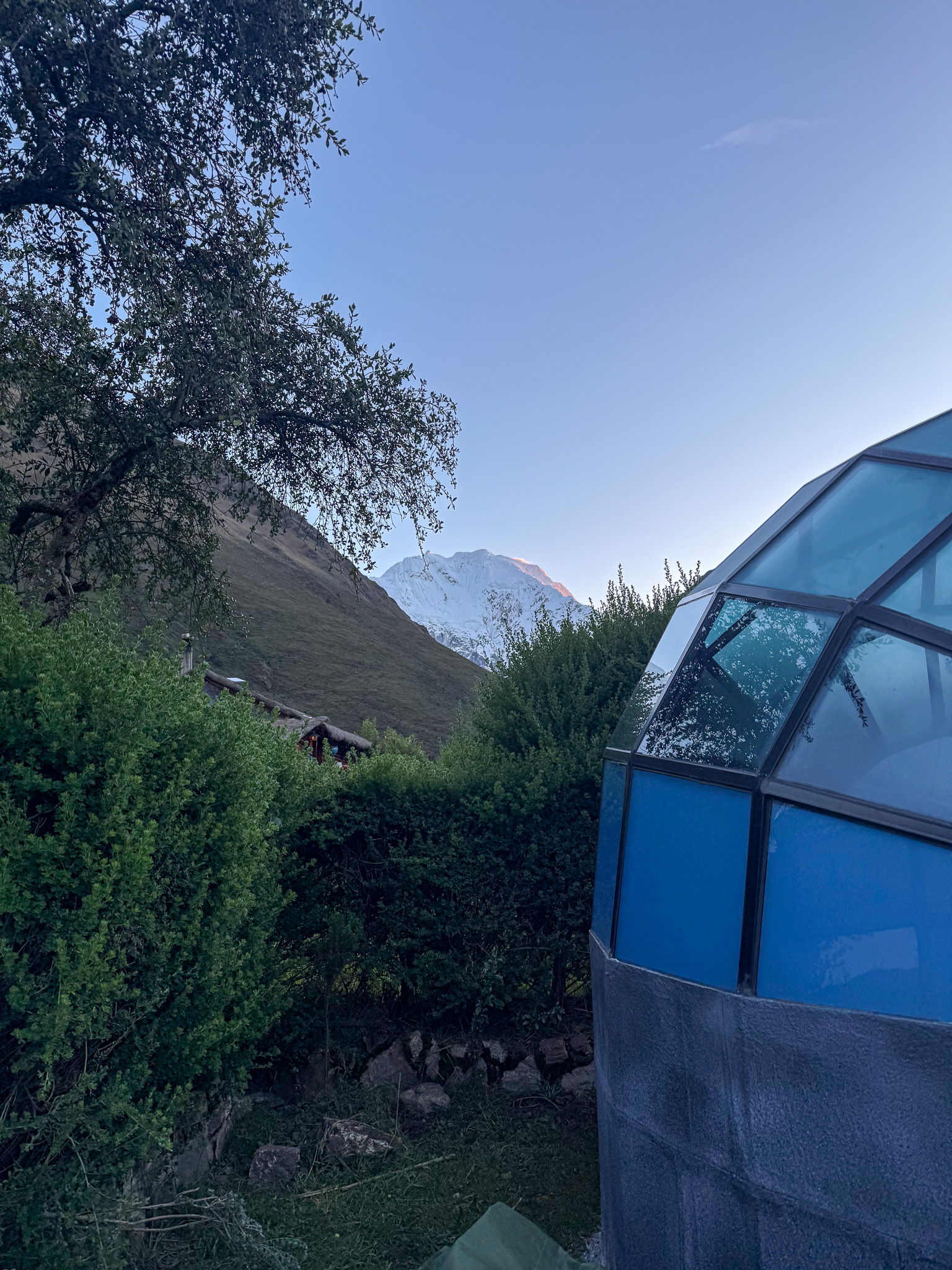
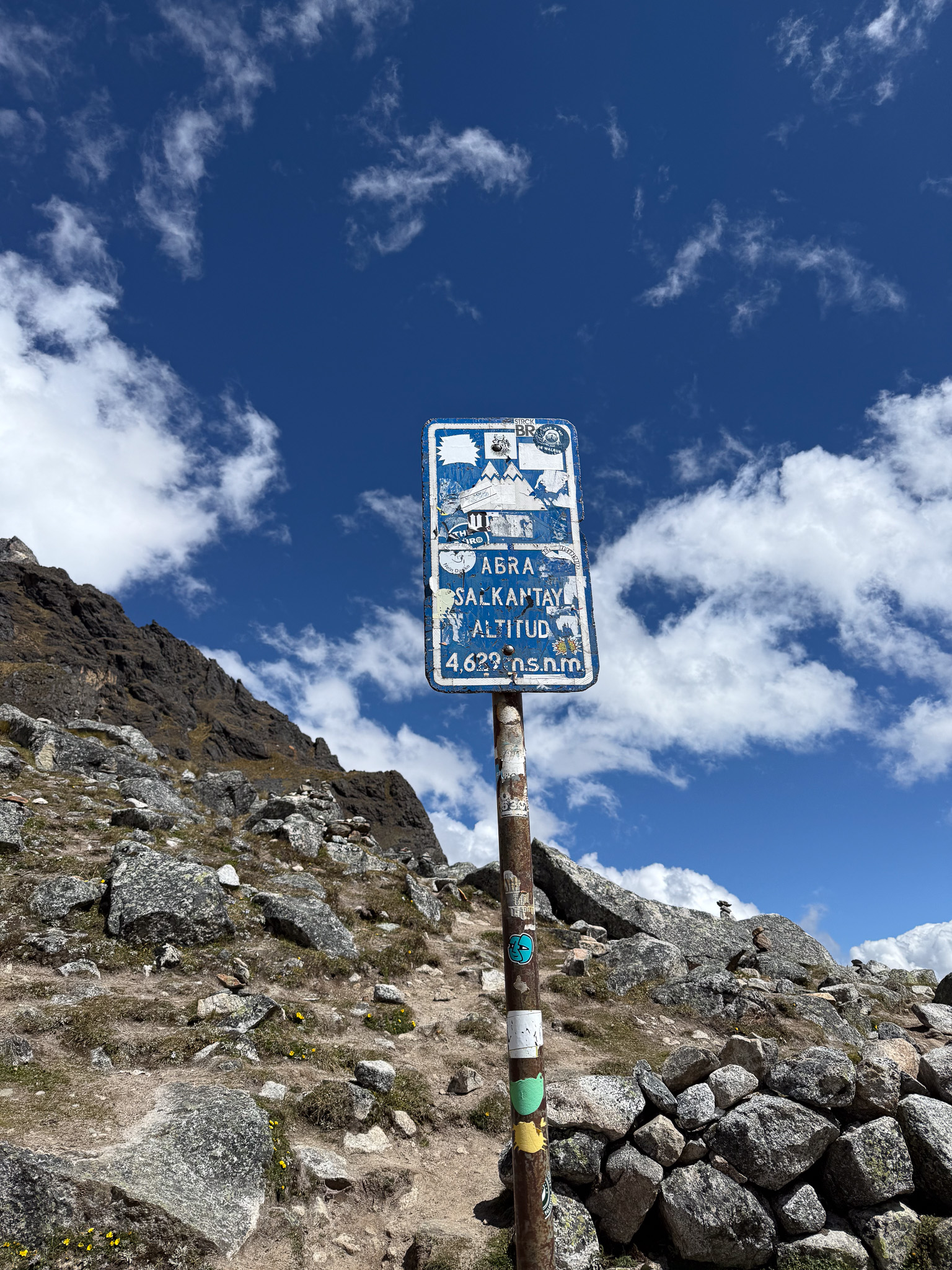
The second day of the trek is known to be the hardest. It’s the day we climb up to the highest point, the Salkantay pass, at 4,630 metres above sea level. At 5:30am, we started the climb – seven kilometers going up.
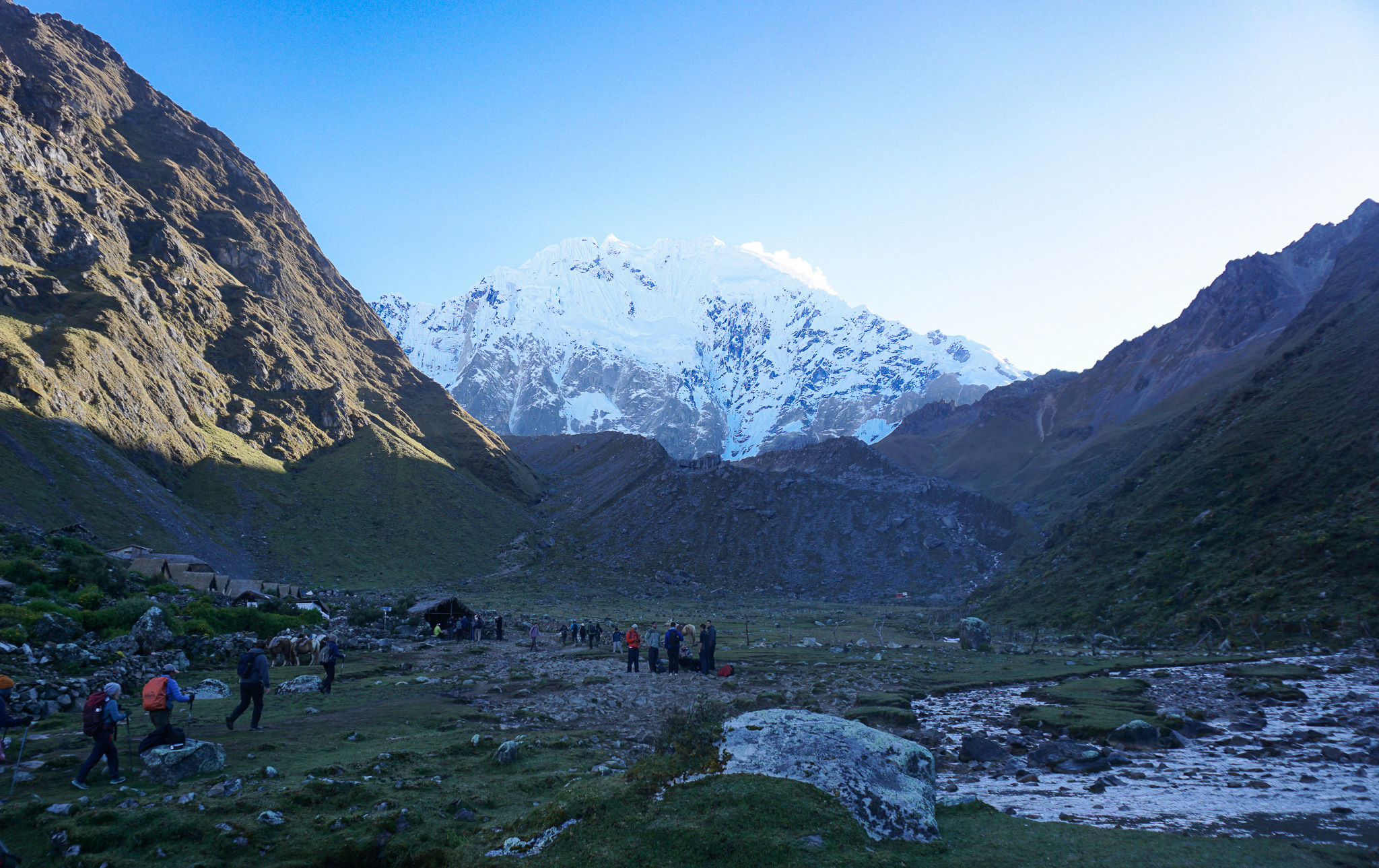
It was freezing. I had my gloves on and my bones ached. I looked to my companions, their hands already exposed to the elements. How, I asked them? I was clearly taking a lot longer to warm up. We joked that my Portuguese physique was just not made for the cold – at this point I was walking with the Germans and the Canadians. However, whilst it took me a while to warm up, seeing a new day beginning in the mountains must be one of the most beautiful experiences I could have had. Julio had told us we were so lucky with the weather – from the camp, we could see clearly the Humantay mountain, its white peak in the glorious morning light.
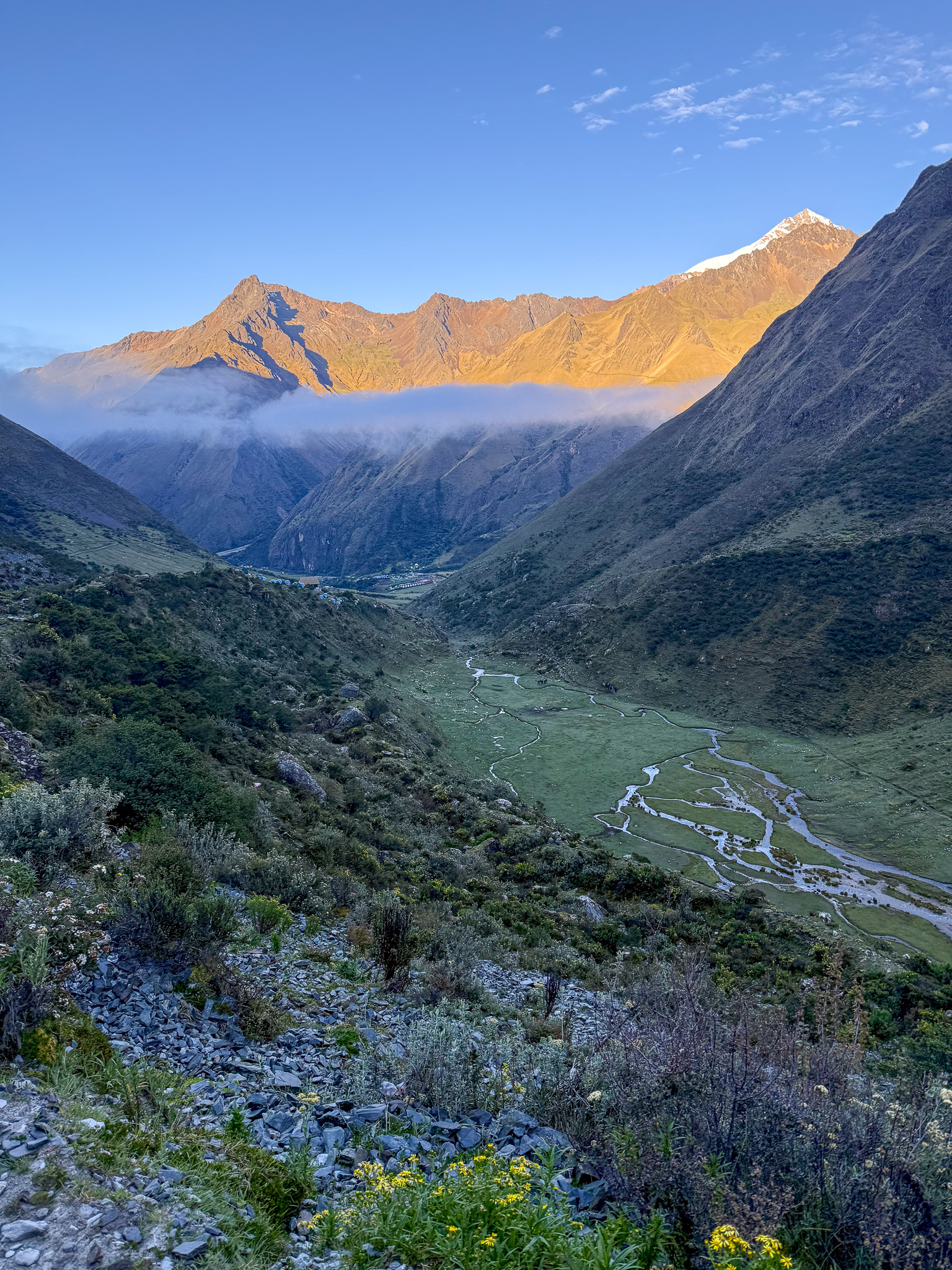
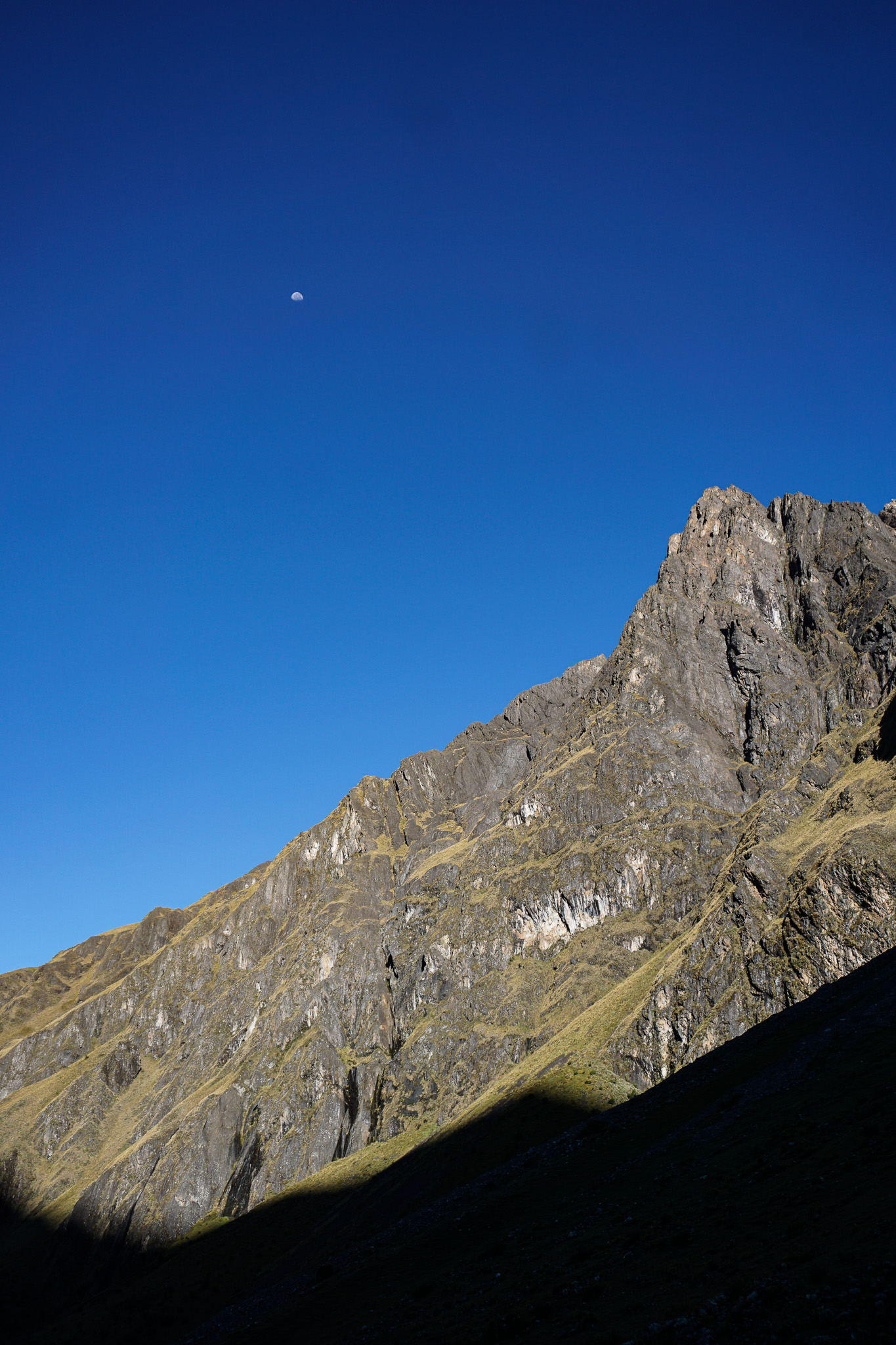
At some point I stopped for a few seconds to remove my gloves. I was finally warm enough. I looked around and watched a slow dance of clouds below the mountain peaks, a veil of mist drifting through the valleys, the rays of light gently guiding it away. Golden light exposed the green slopes and the textures around me, revealing the veins of streams in the valley below.
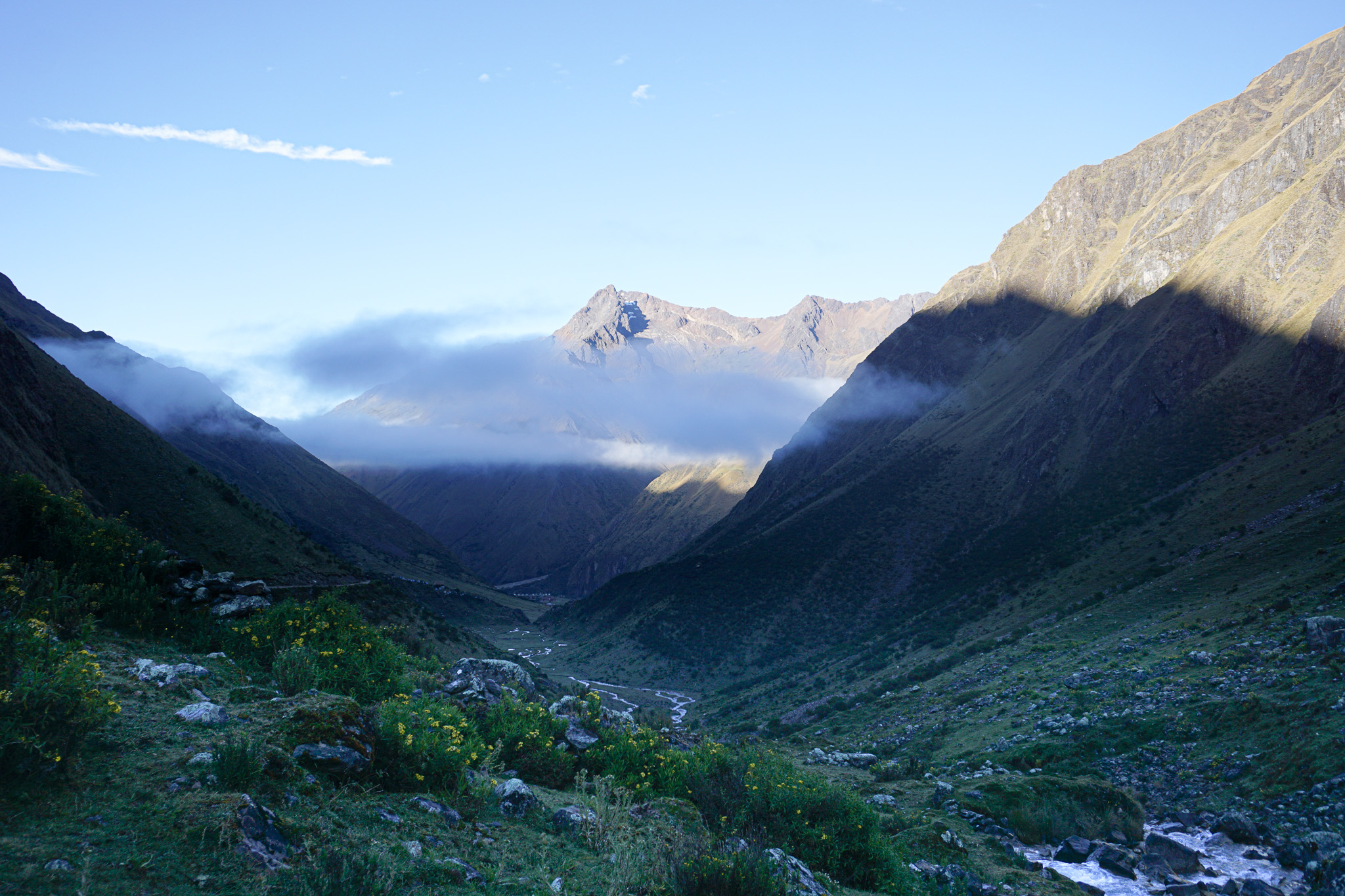
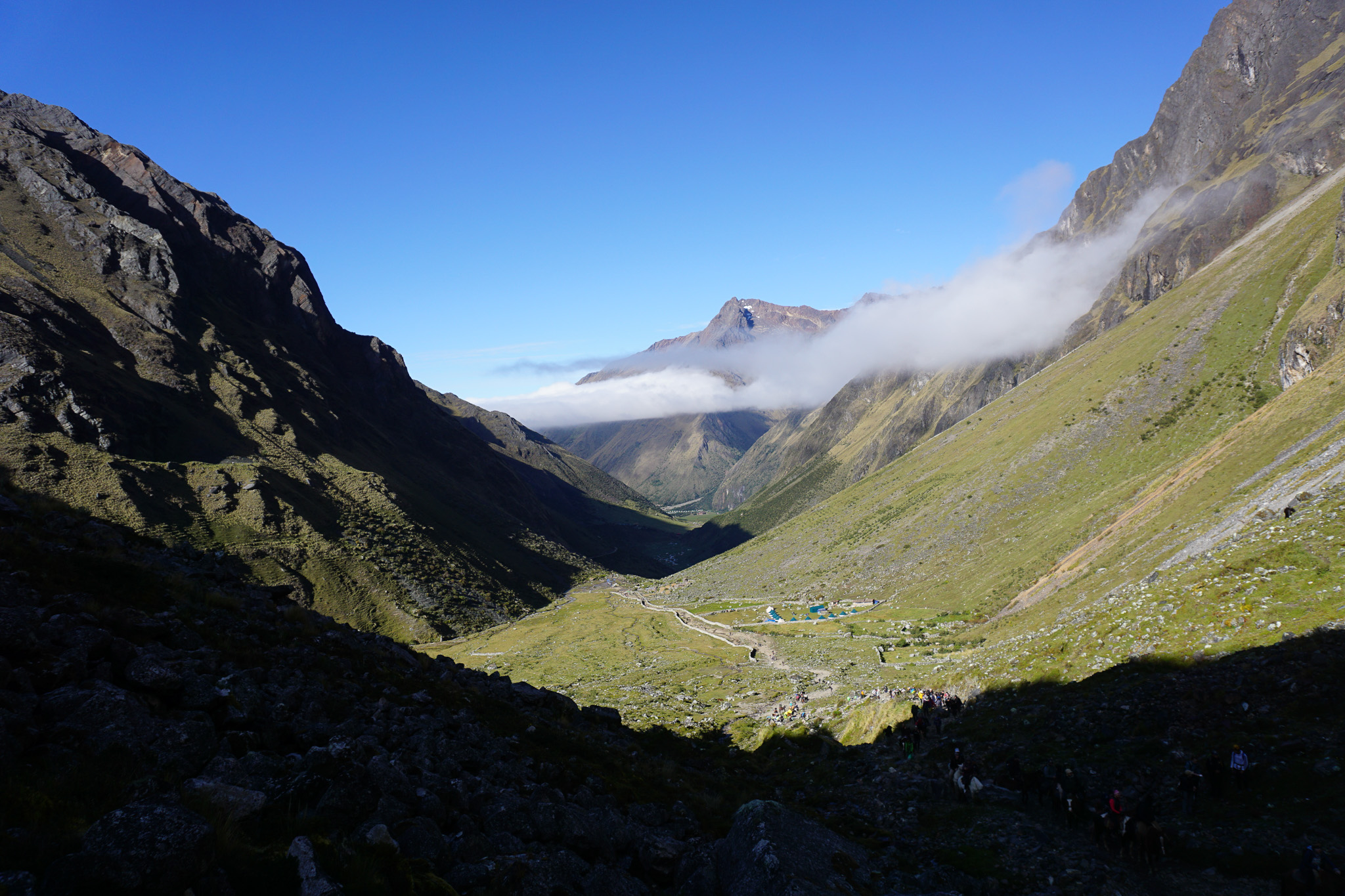
The day before, when climbing through some of the same paths to get to the Humantay Lake, had been so hard. I questioned my choices, my fitness level. I was finding it so much easier now, I was even dubious of myself. Maybe I really just needed some proper sleep. Perhaps my body had still been adjusting to the altitude. All I could tell is that I was doing well, better than expected.
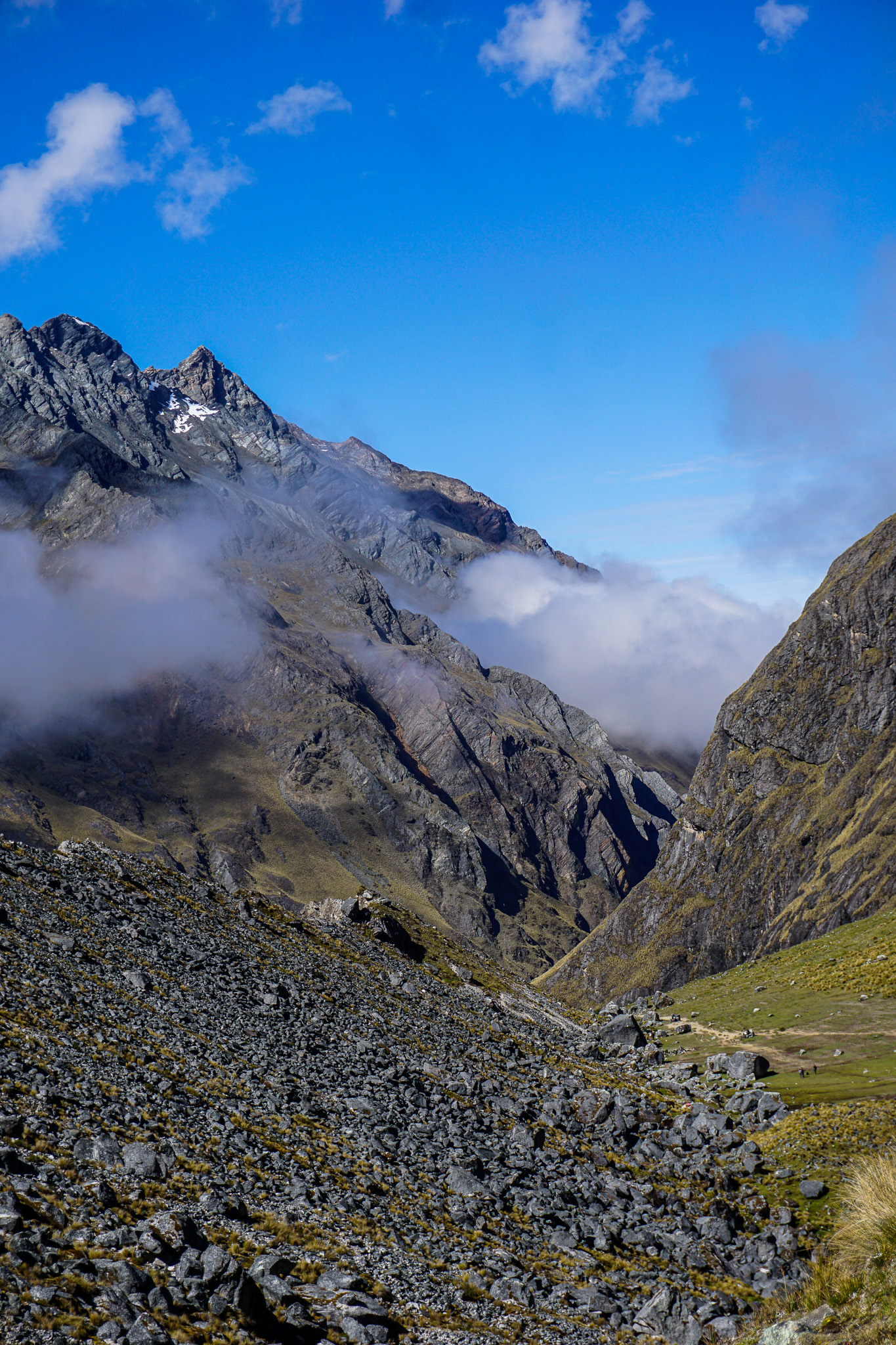
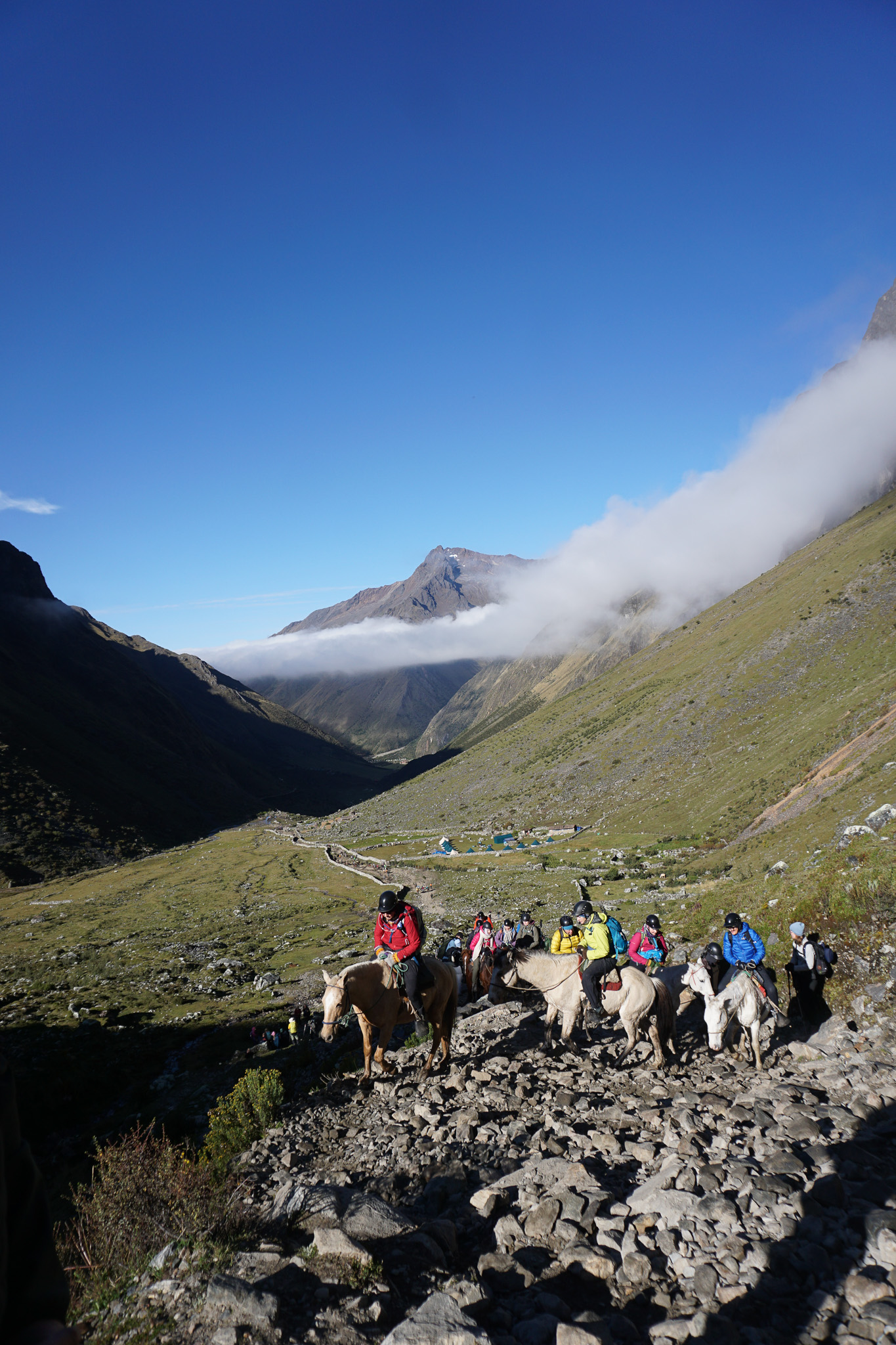
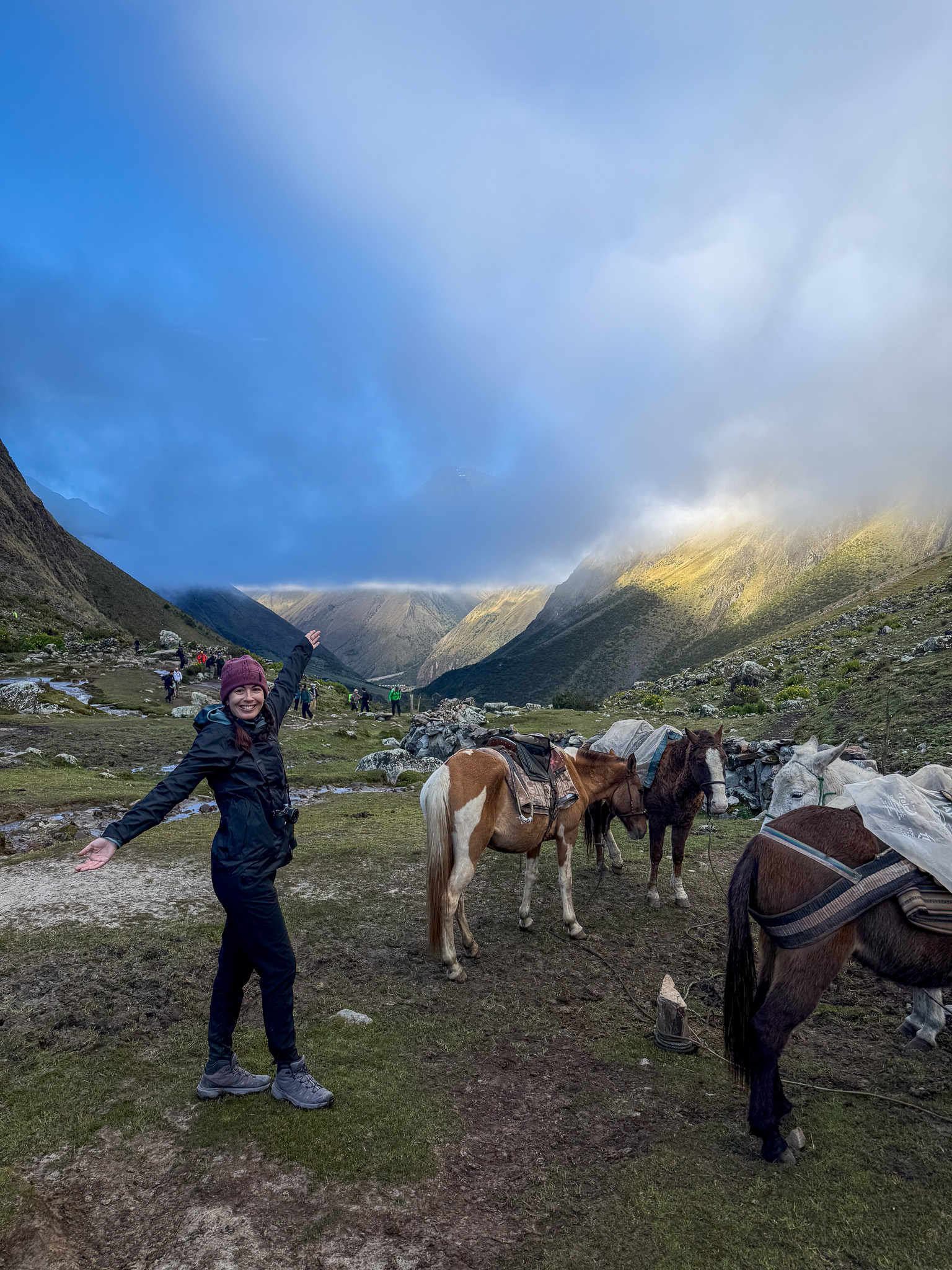
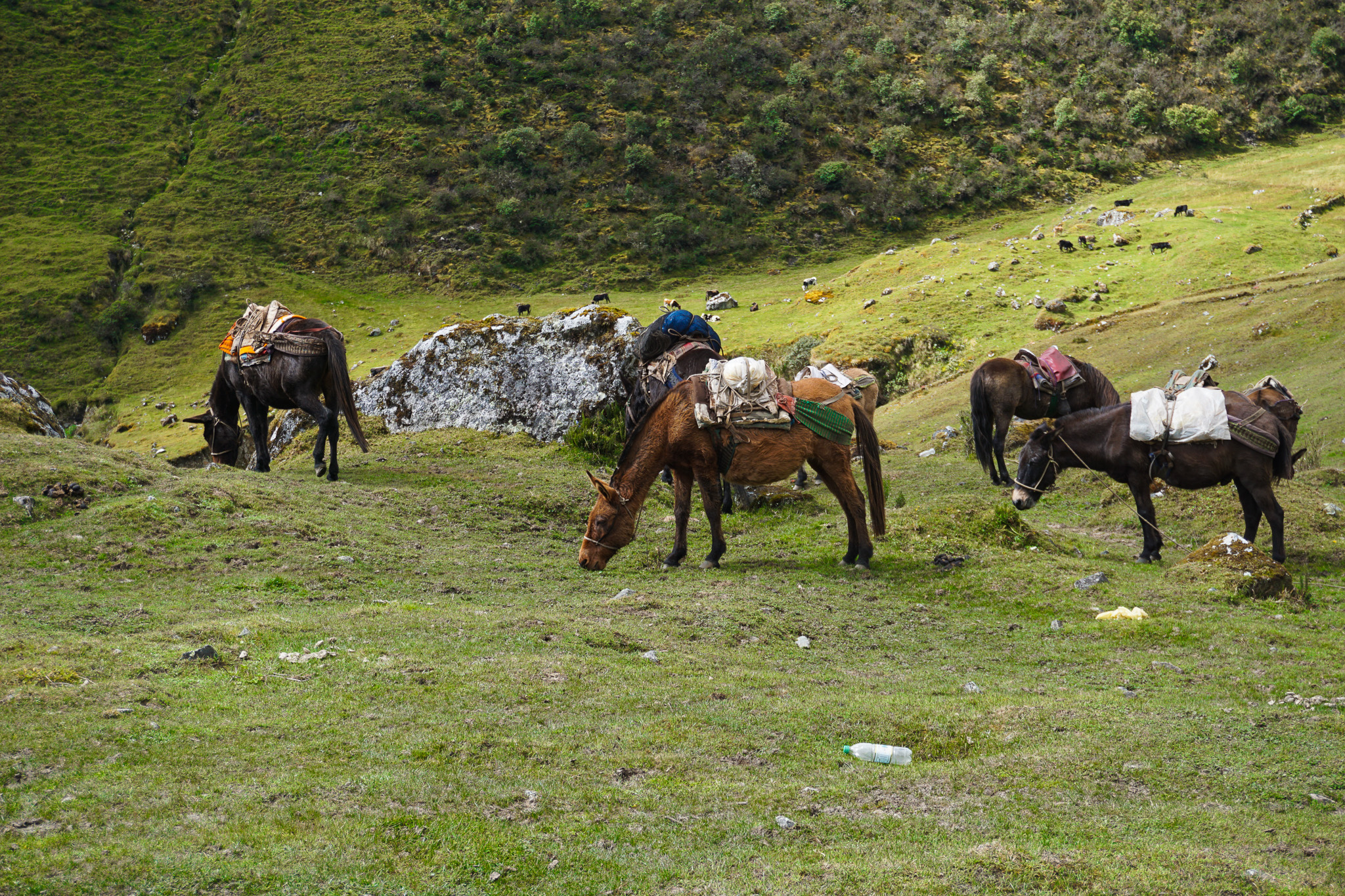
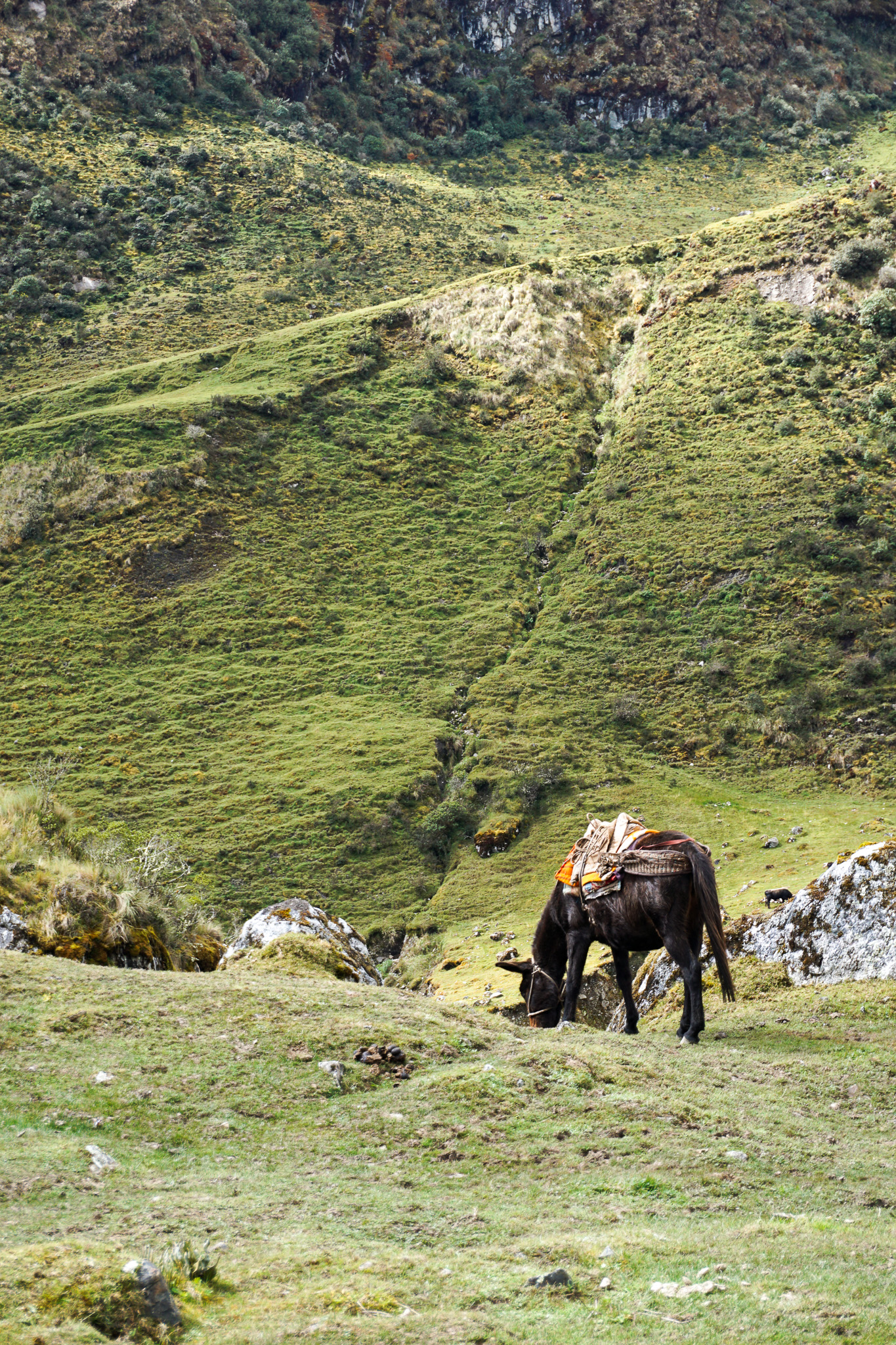
At one point, we hit heavy traffic – horse traffic. Duffelbags were carried by horses, and some just did not want to move. My chest tightened, that familiar bitter taste in my mouth. It’s part of their culture, using animals to carry loads, especially in the mountains, where no other transportation is available. One of them was also carrying my duffelbag, which had been one of the reasons I had kept it below 5Kg.
Back at the camp, we were given a choice to climb to the pass by horseback. I understand that it is a difficult climb, but the way the horses quickly trotted over the rocks, sometimes with a speed that was dangerous for us hikers, made it look quite scary. And some of the horses clearly would have preferred to stay grazing.
My worries about the animals were attenuated by their appearance. Theylooked so well cared for – and when my guide spotted a tourist hitting the horse with his boot to try to make it move, he immediately told the guy to not hit the horse.
There was certainly something going on with the horses that morning – often we had to stop and wait for them to move, when a particularly stubborn one went on a little strike. Ironically, you’d assume this would make the hike a bit easier, as with more breaks, you would have time to rest.
It did not. When you stop, your muscles cool down. So I tried to keep moving in the same place. As the sun got higher, so did we. As much as blue skies are great for a trek, when there is no protection from our bright star, the sun blinds your eyes and sweat soaks through your base layers, the difficulty level goes up.
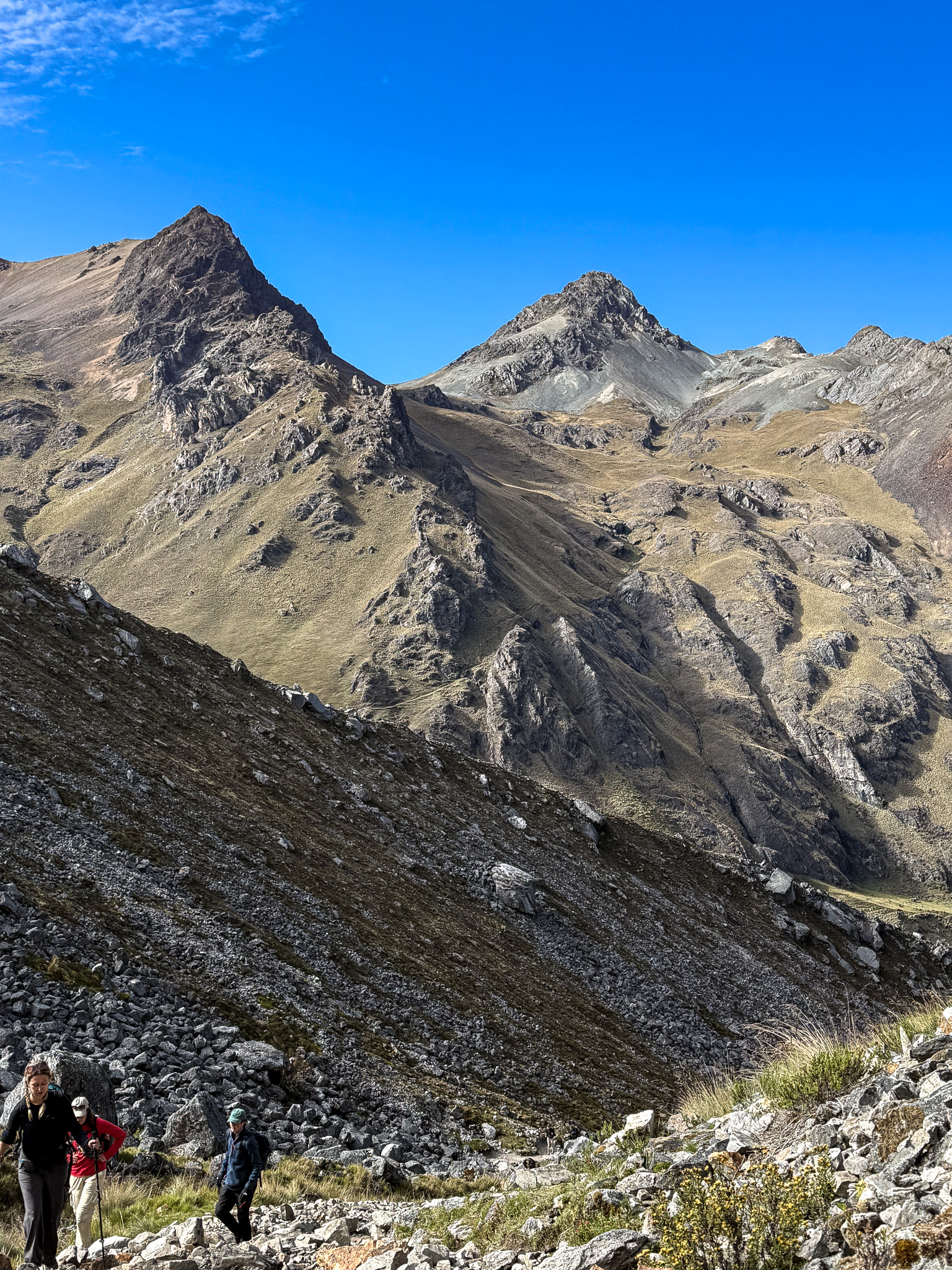
I tried not to try to guess how much we had left. The feeling of time passing didn’t quite exist. All that mattered was the present. Focused on where I was putting my feet, time stopped existing. Being a little human in that vastness, not even the concept of distances made sense. Tik, tak, tik, tak… the sound of the walking sticks. The sound of my breathing. The sound of my heart. That was all. And that was enough.
And then, we were there. The arrival at the Salkantay pass was almost a silent celebration. We looked at one another, flushed faces, and there was a smile on our dry lips. We made it to the pass. We bloody made it.
It was sublime. The mountain, the glacier. Simply sublime.
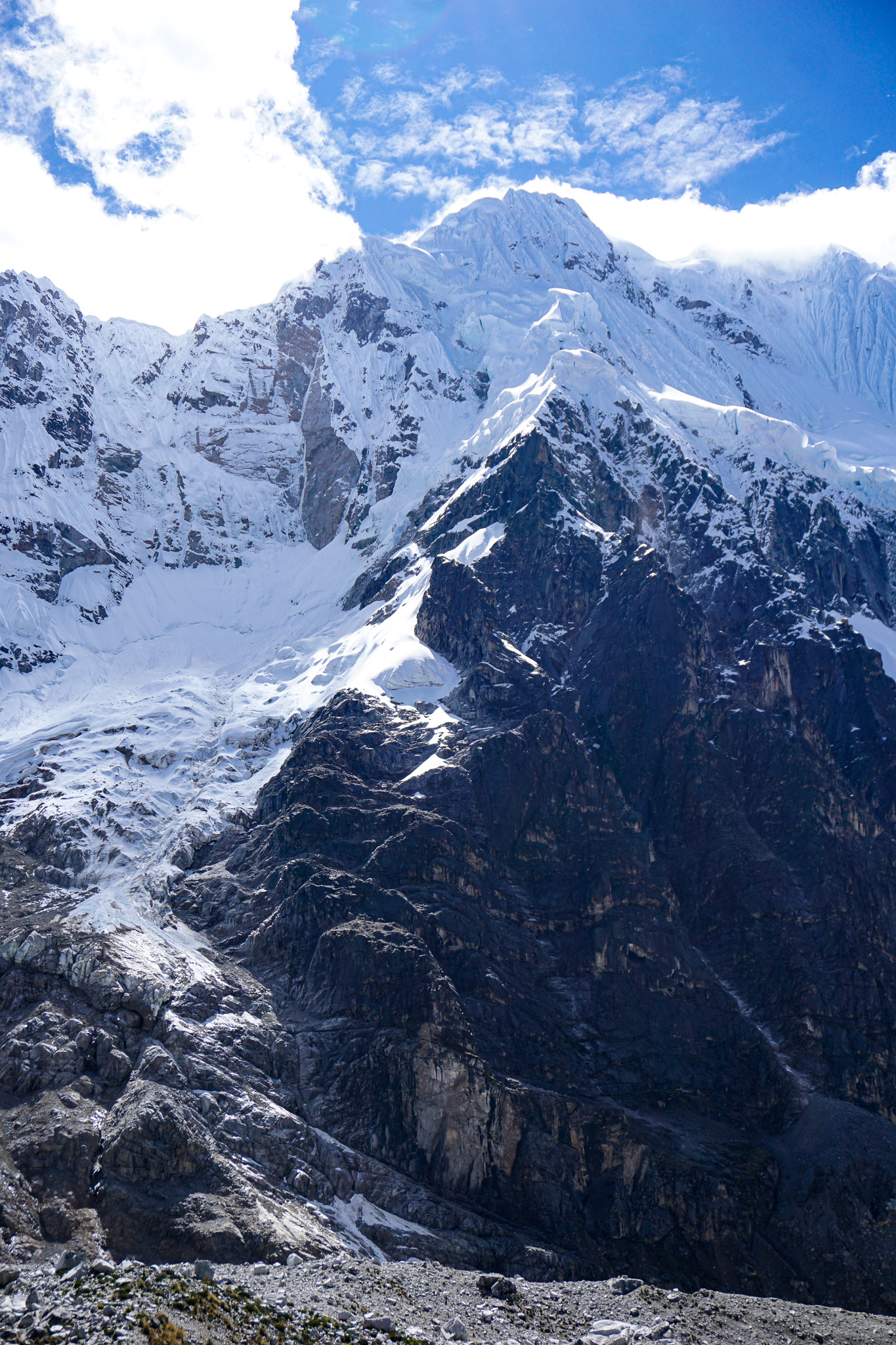
I had the same feeling of drunkenness I had had the day before when reaching the Humantay Lake. Lightness, giddiness, impossible to stop the corners of my mouth from moving upwards.
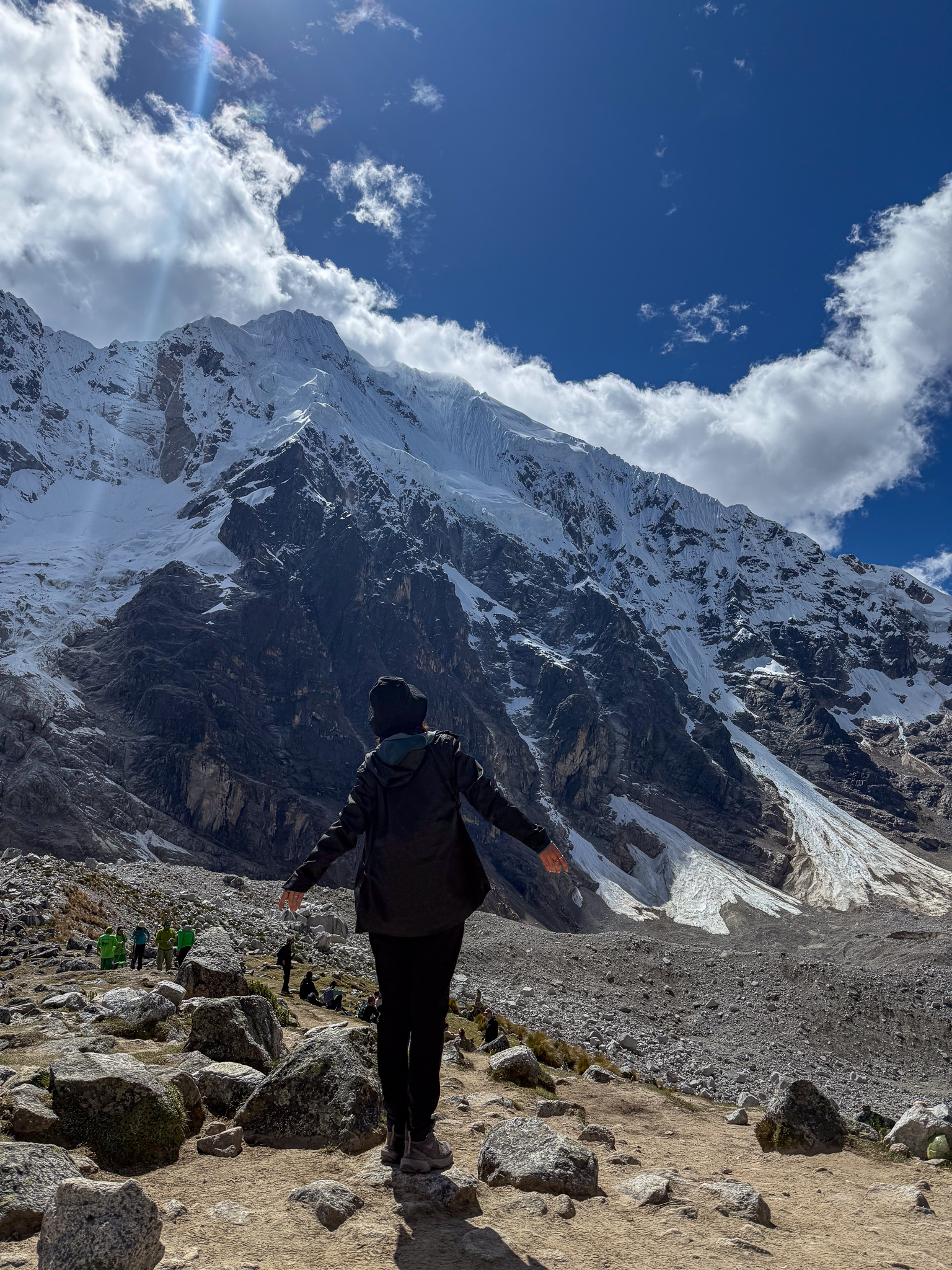
And it was not because I felt I had conquered the mountain My dislike for the idea of “conquest” is particularly strong when it comes to nature. No, you cannot conquer a mountain – how could you? She is just there, solid, almost insolent, being marvellous and majestic. And in the Andean culture, mountains are protectors. They are living beings, above us all, deserving of respect.
We drank some coca tea, and ate our sandwiches. And then we practice a little local ritual.
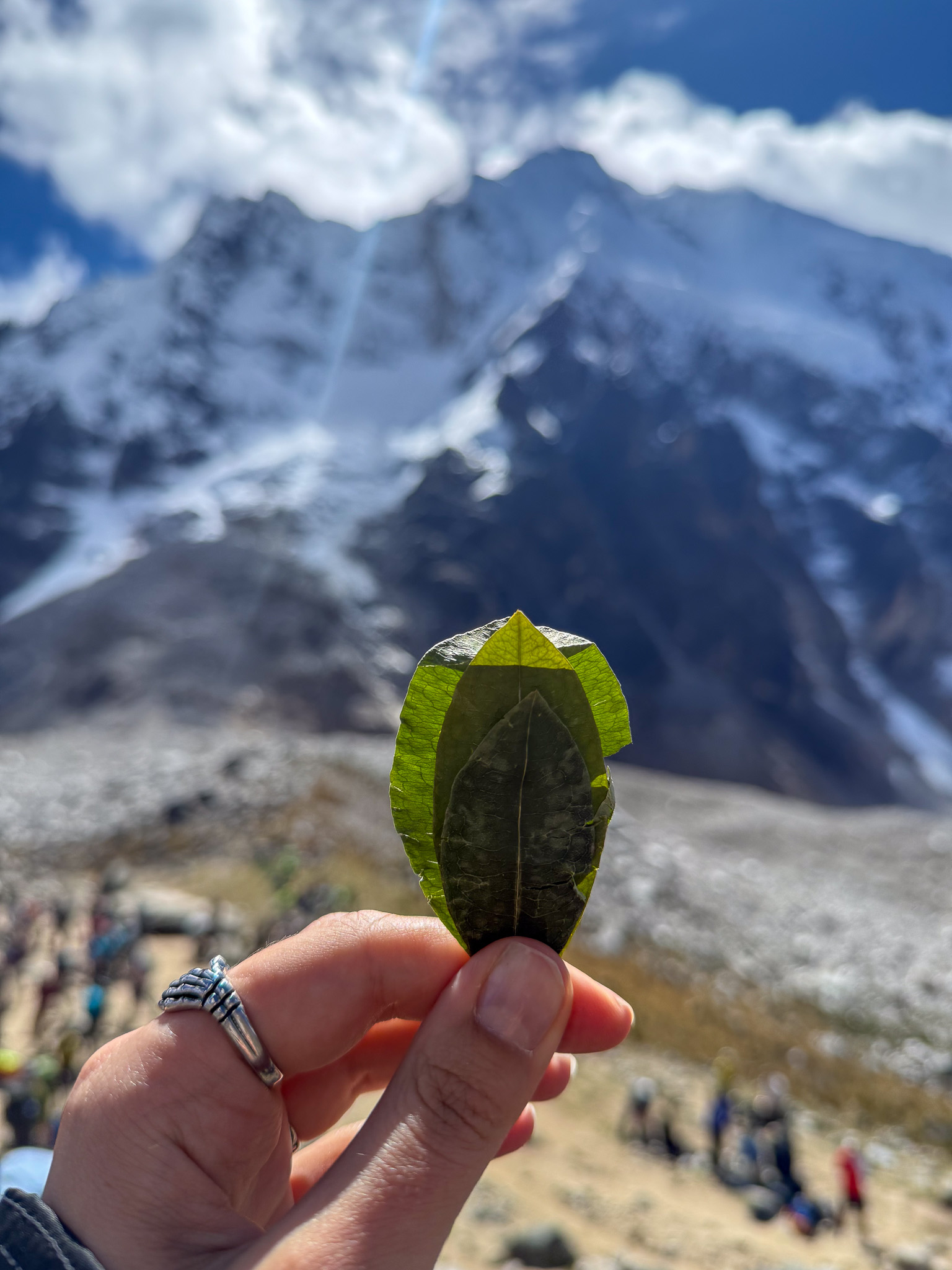
Each one of us grabbed three coca leaves, and silently asked for permission from the Salkantay mountain, to let us pass, to protect us. We also could make a wish, which I did. This is the way. Not of conquest of nature nor domination. We are simply passing inhabitants of this earth, little creatures of nature. We are tthe mountain’s subjects, not the other way around.
I had not conquered the mountain. I was conquering myself. Facing the reality that the limits I thought I had in me were pure imagination. Beliefs turned into fallacies.
This is where my giddiness came from – some sort of euphoria, madness, which, though temporary, overcame my body and soul. And that was the most beautiful place to be mad. The perfect place. Mad with love, mad with hope, mad with faith.
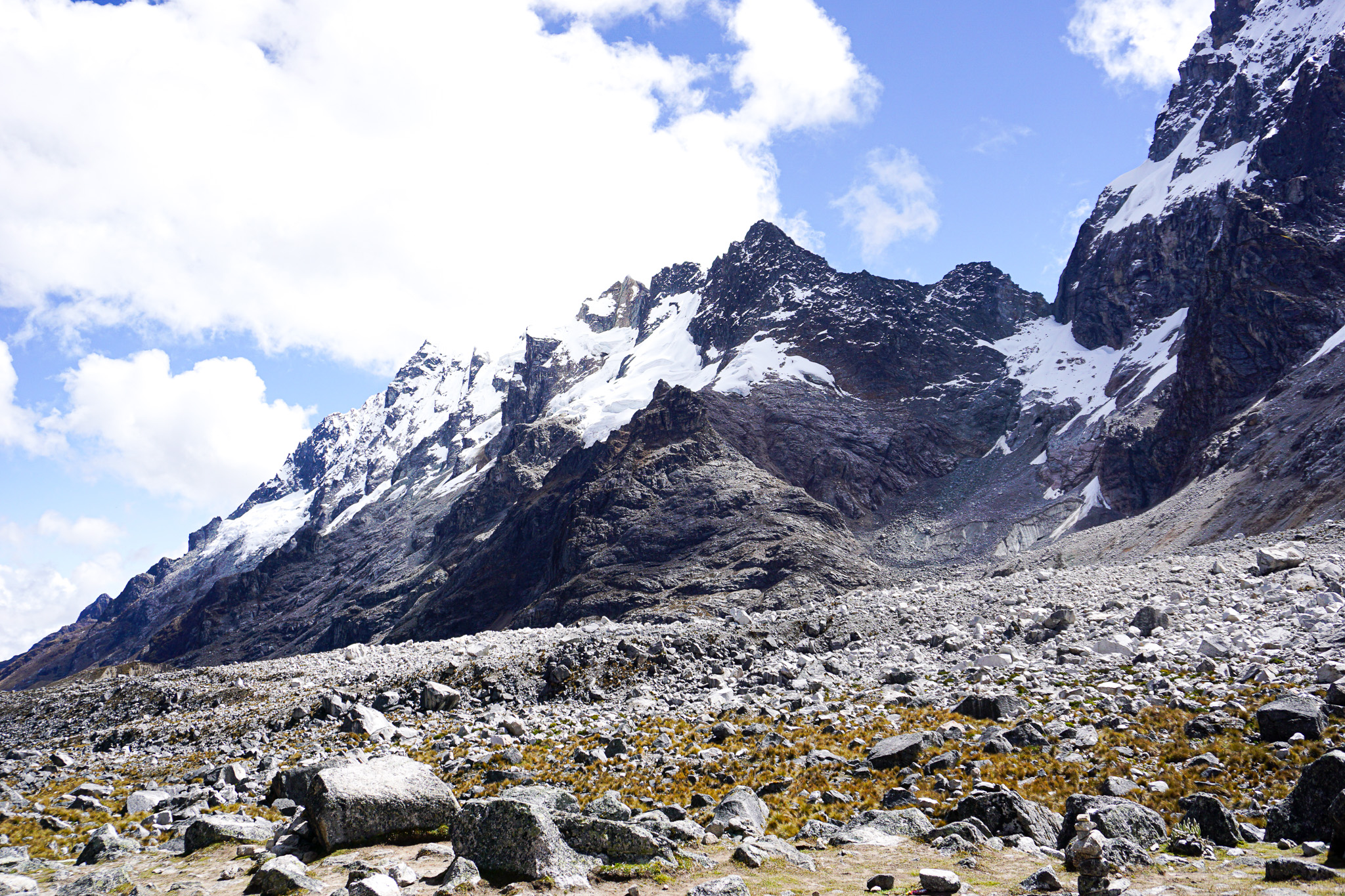
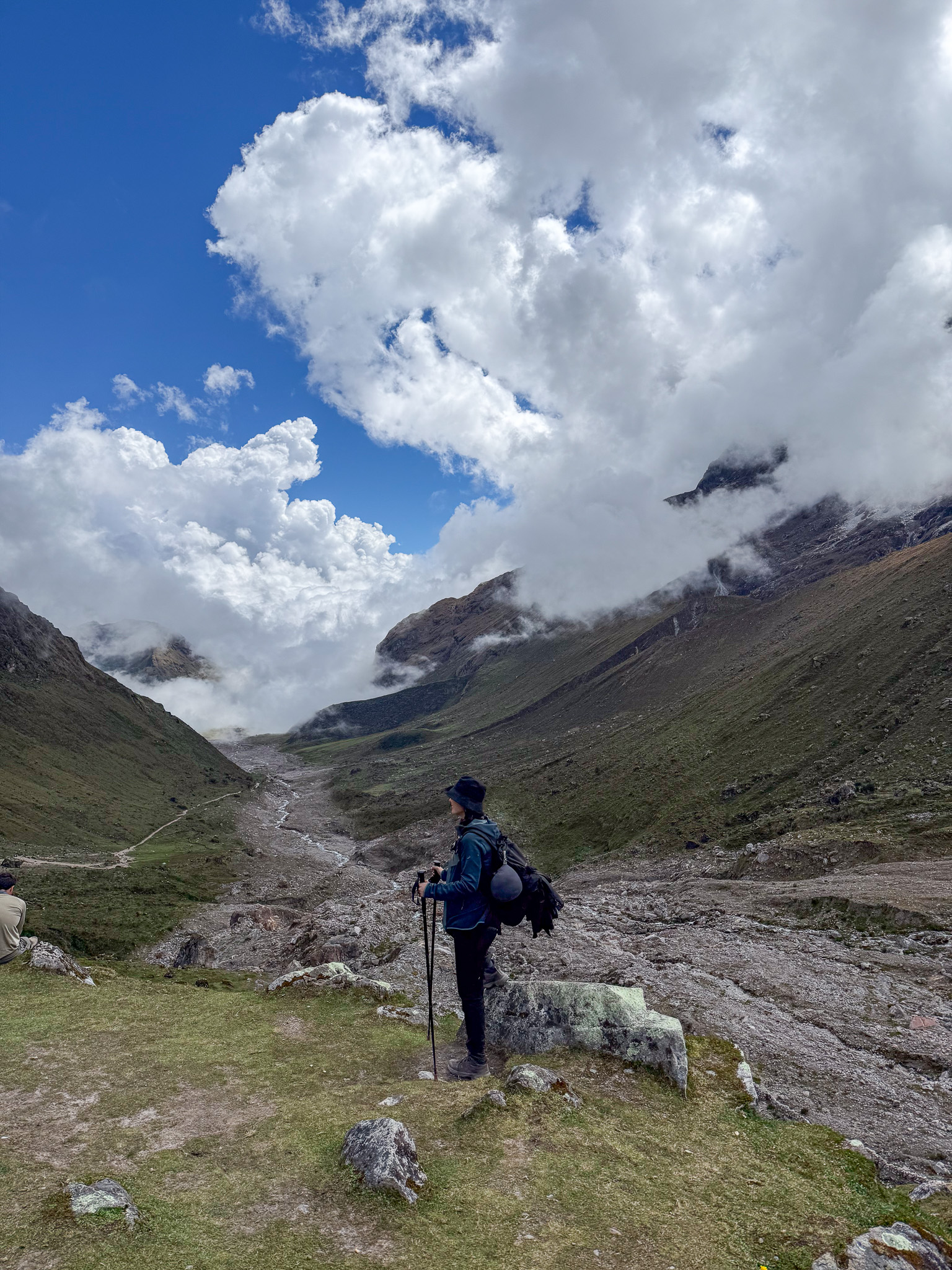
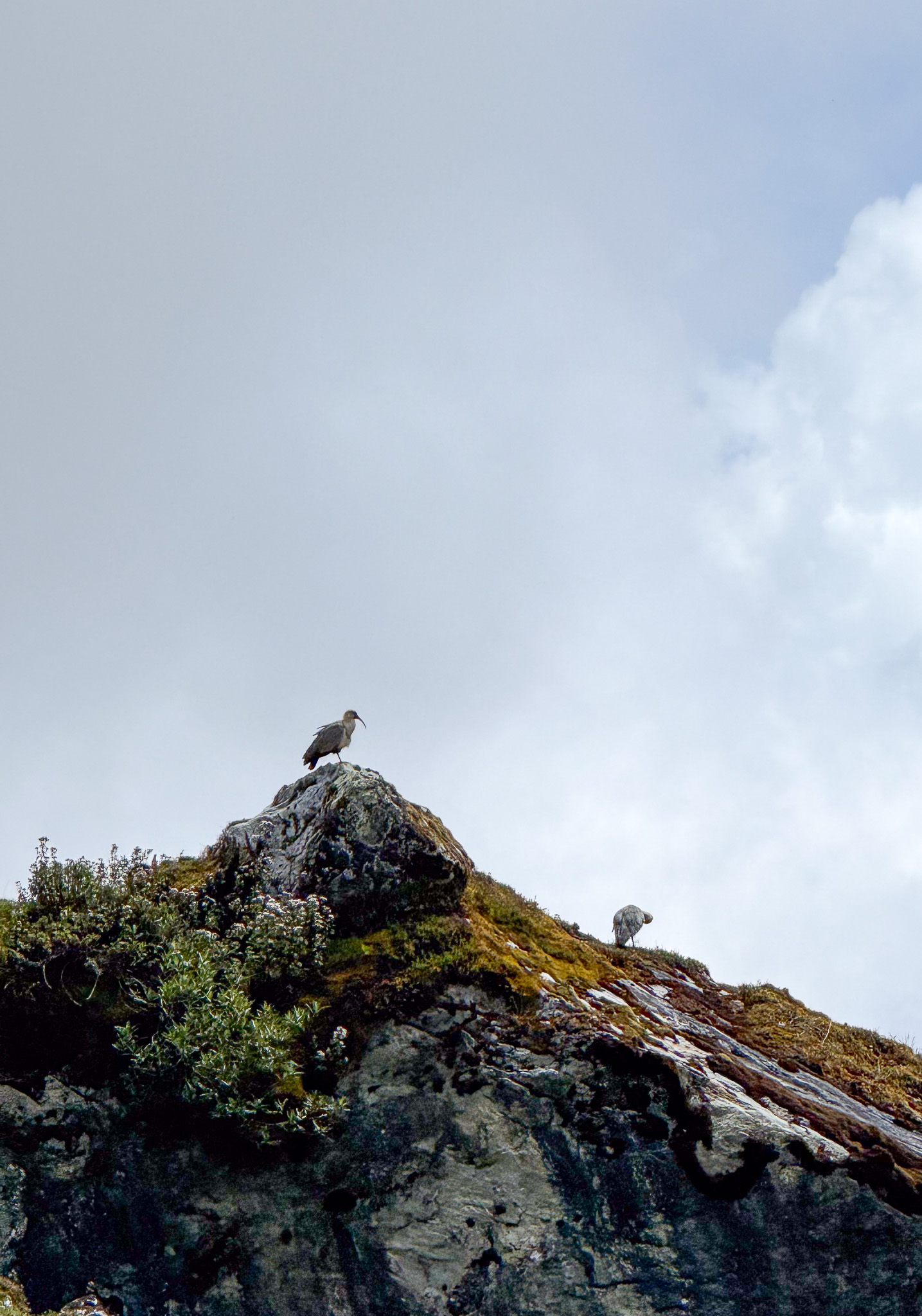
The next stretch was ridiculously stunning – the puna zone. With mountains to my left and to my right, the path was almost like a miracle opening for simple creatures to pass through. It softened, and was rich in low vegetation, with little streams here and there. I saw chinchillas jumping in the distance, and spotted an Andean ibis looked for prey, with a patience I envied.
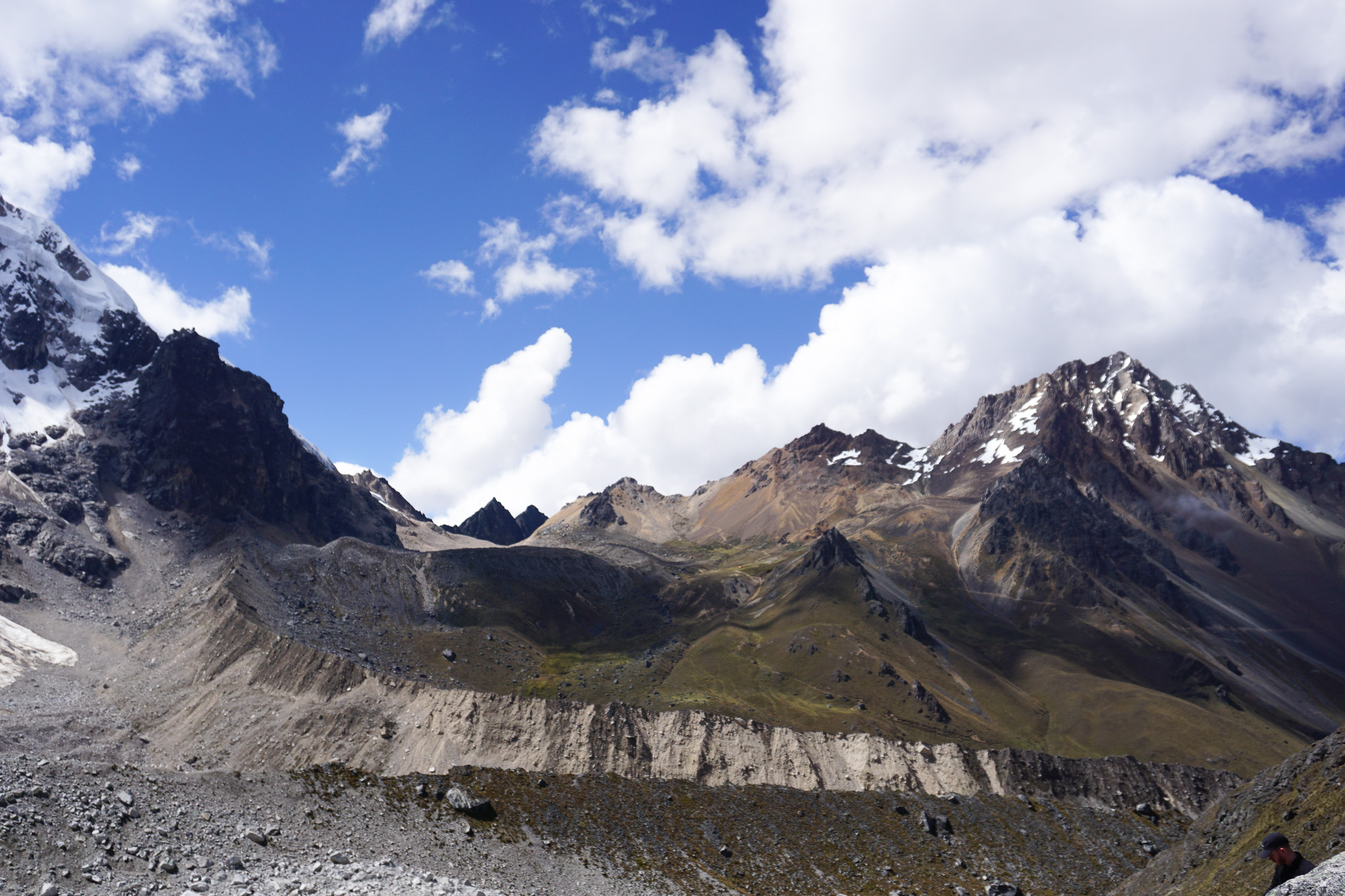
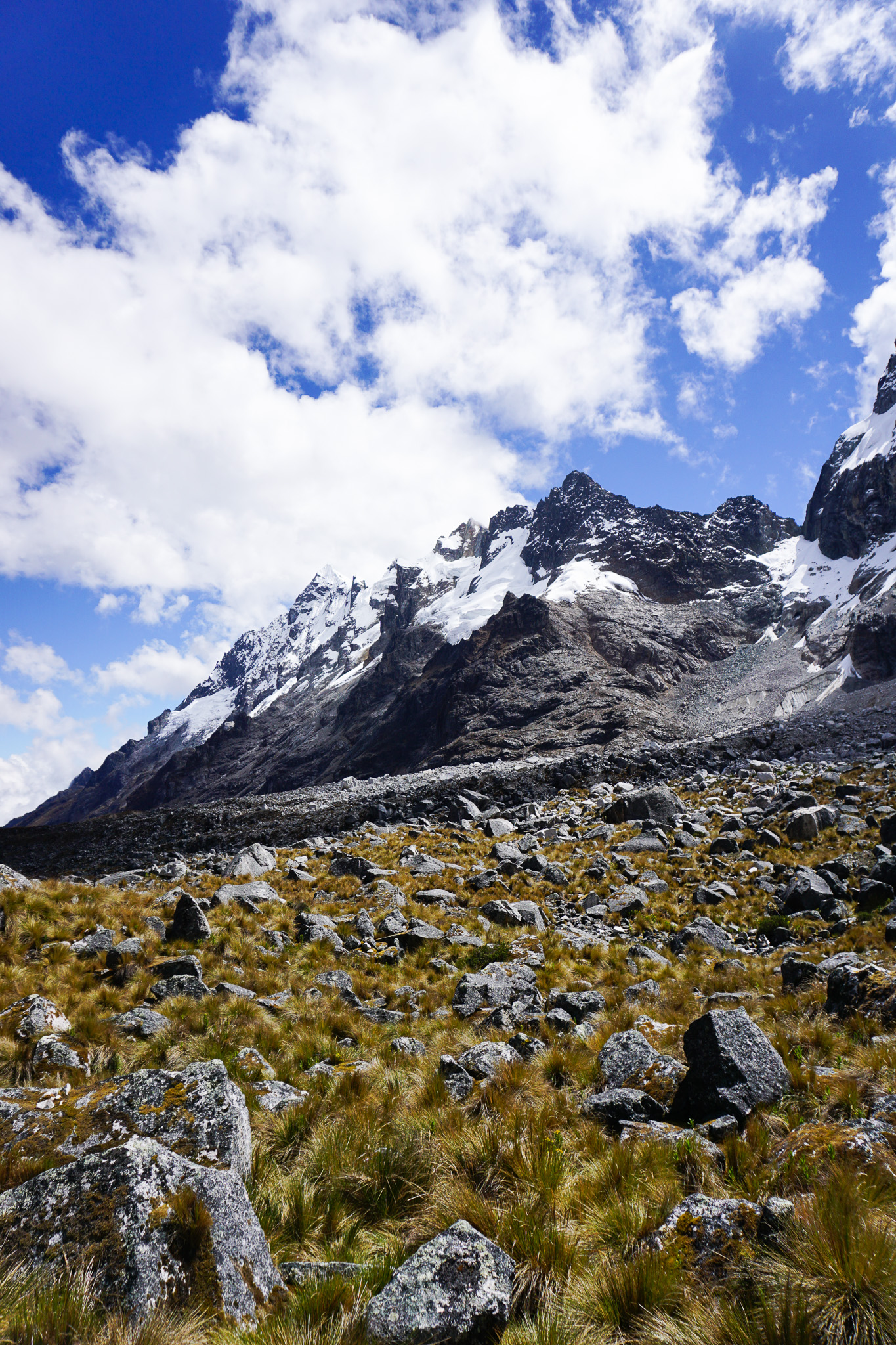
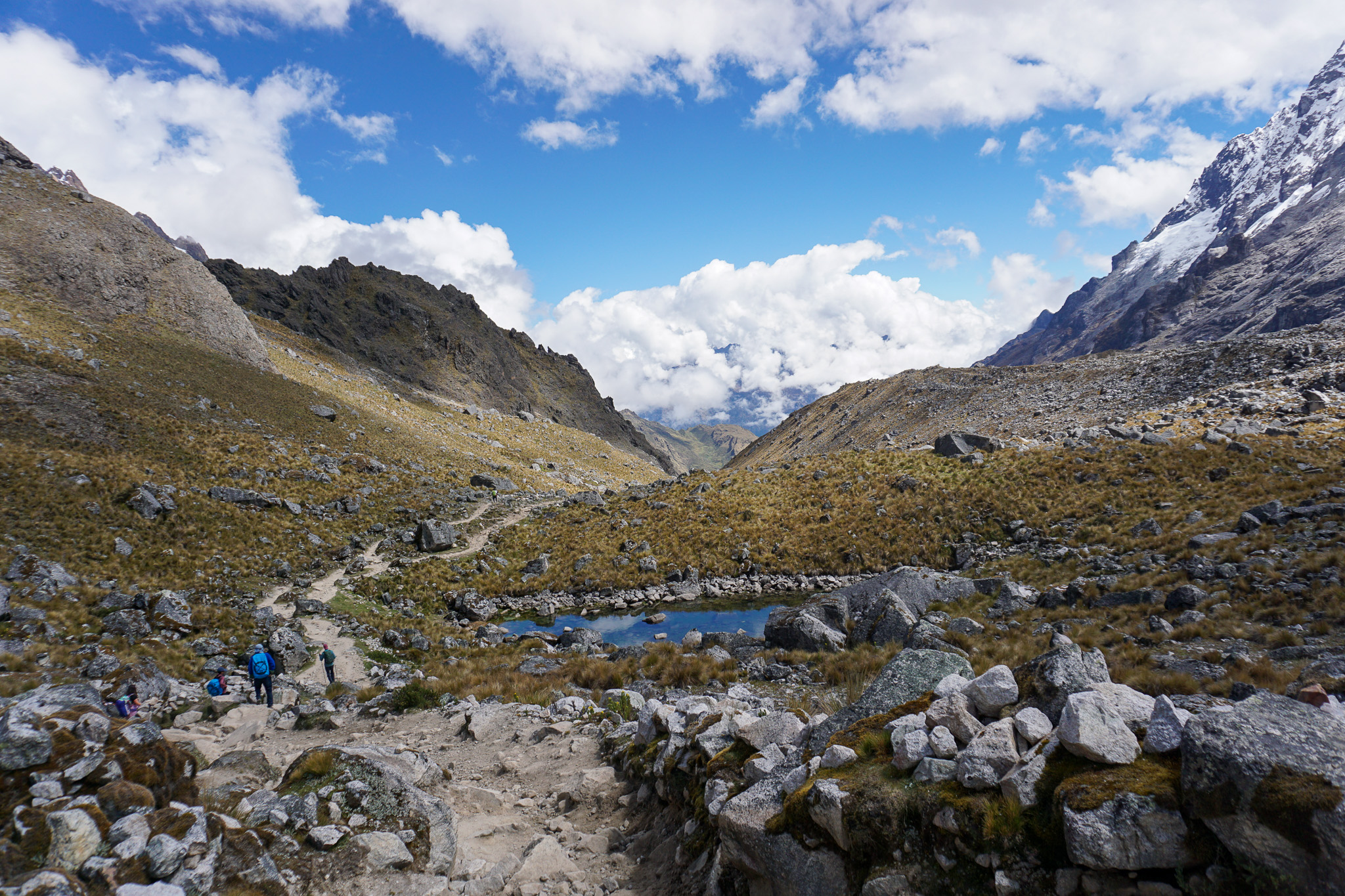
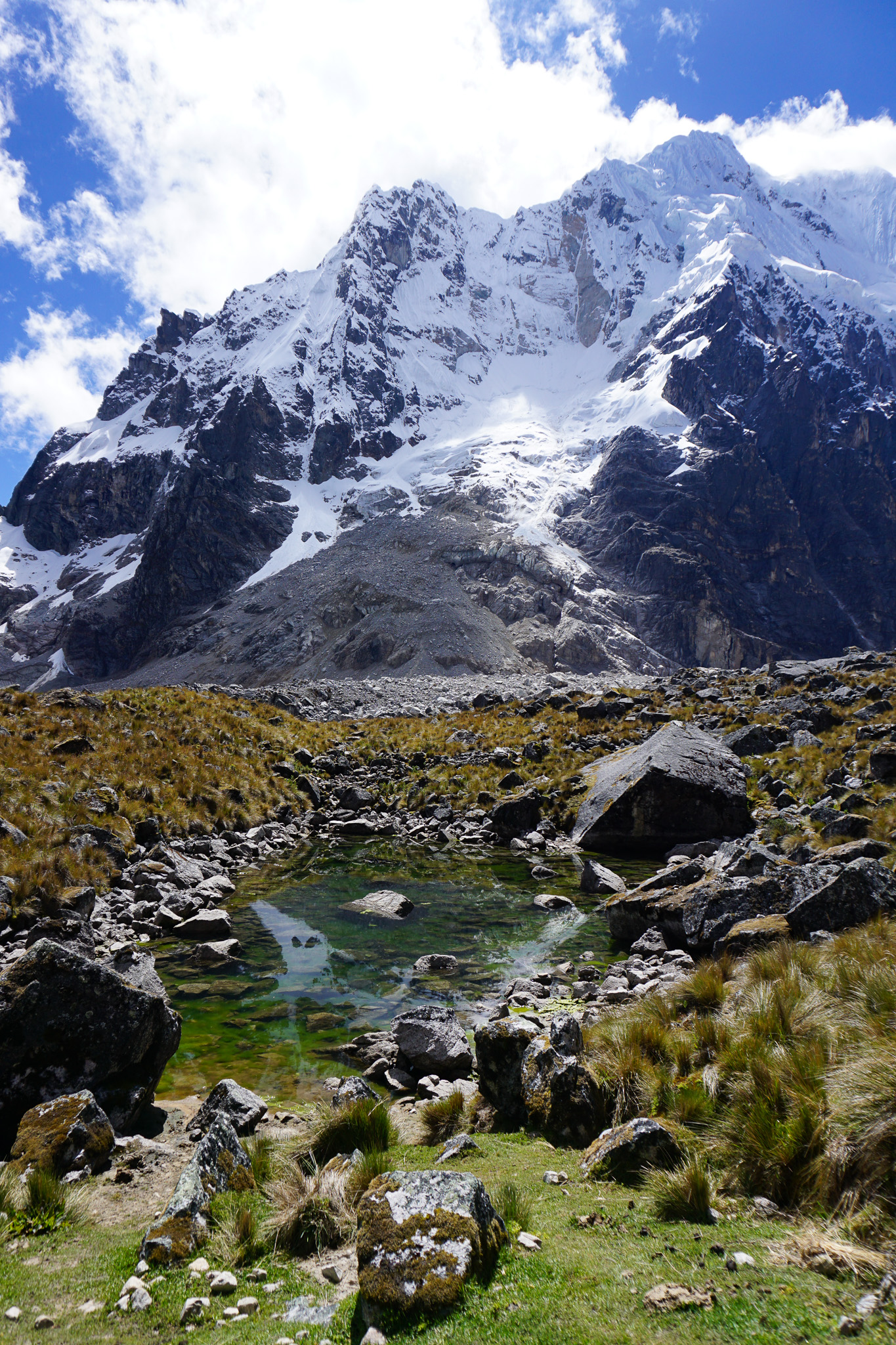
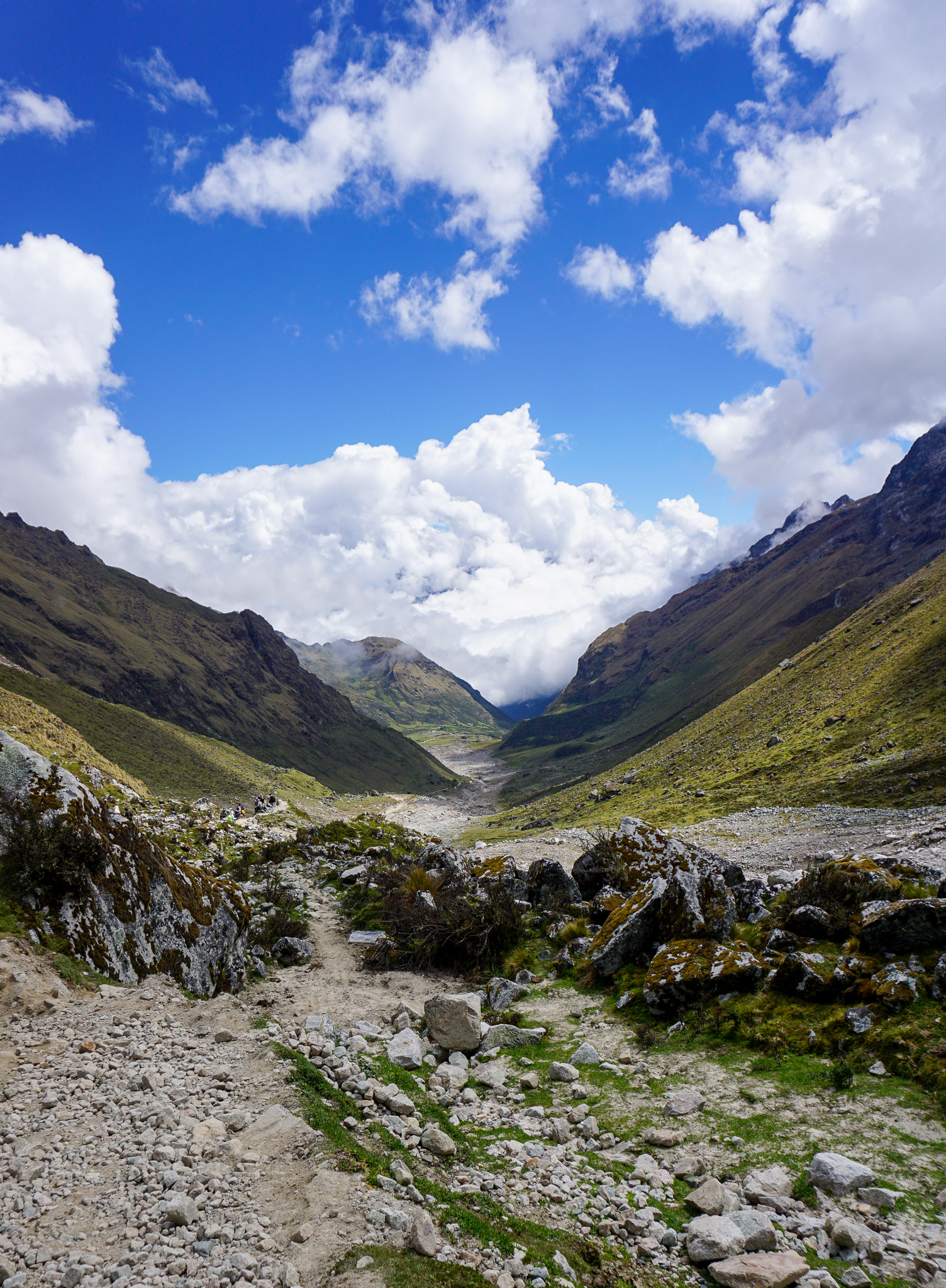
I mentioned earlier how time and distance lose meaning in the mountains. Somehow, the 7 km we had to descend to each our lunch spot in Huayracmachay seemed a lot longer than the 7km climbing towards the Salkantay trek. Perhaps because the adrenaline had worn off, or simply my body was begging for a decent meal. Or because the mountains were playing a trick on us… or the laws of physics had stopped making sense. My left knee started to complain, hurting with every single step.
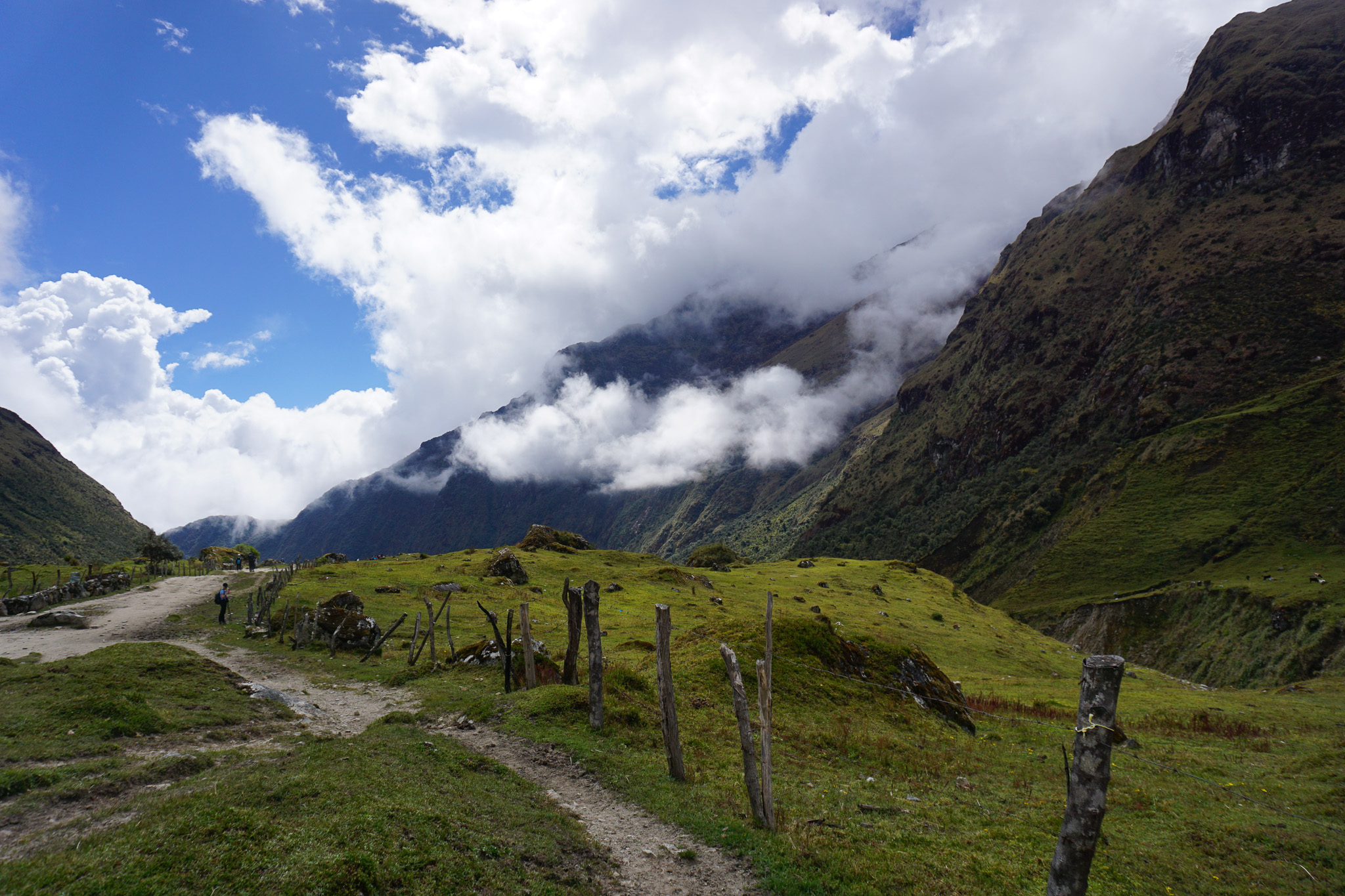
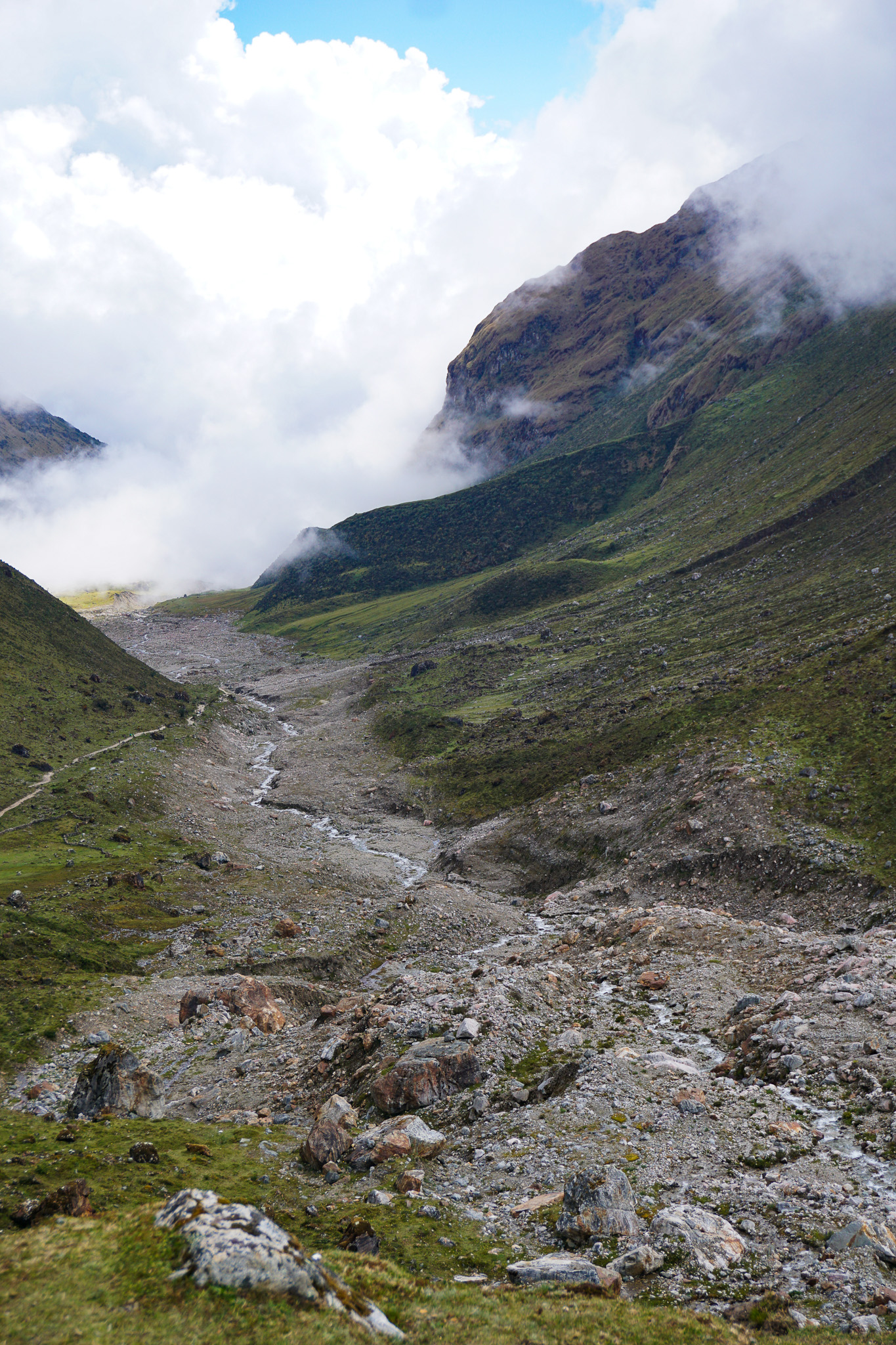
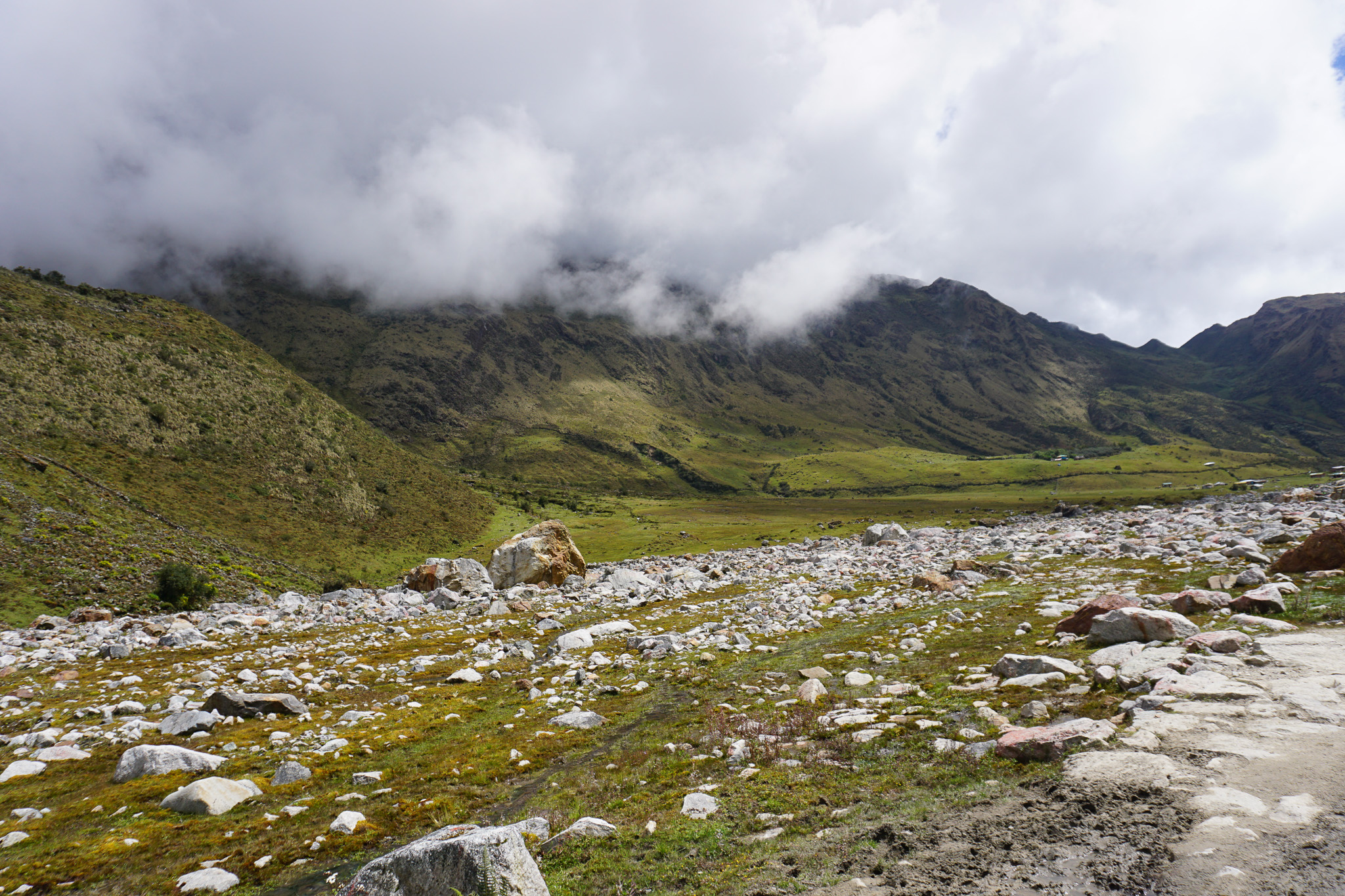
But what can I say. Even in pain, hungry and exhausted, the remedy was all around me. It was just breathtaking. The bad mood I would have developed anywhere else simply could not touch me then.
Still, my face probably mirrored the despair of my body. Julio checked on me a few times, looking our for signs altitude sickness. I assured him that I was perfectly fine. I’m just a pale person by nature, and yes my face often betrays me. And sometimes, when I’m lost in thought and wonder, my expression can be blank. Eventually, I did say I had a little headache, but it had happened the day before during the descent as well. It was due to the pressure. He smiled and said that I was probably thinking too much.
He might have been right. I always do. The overthinker.
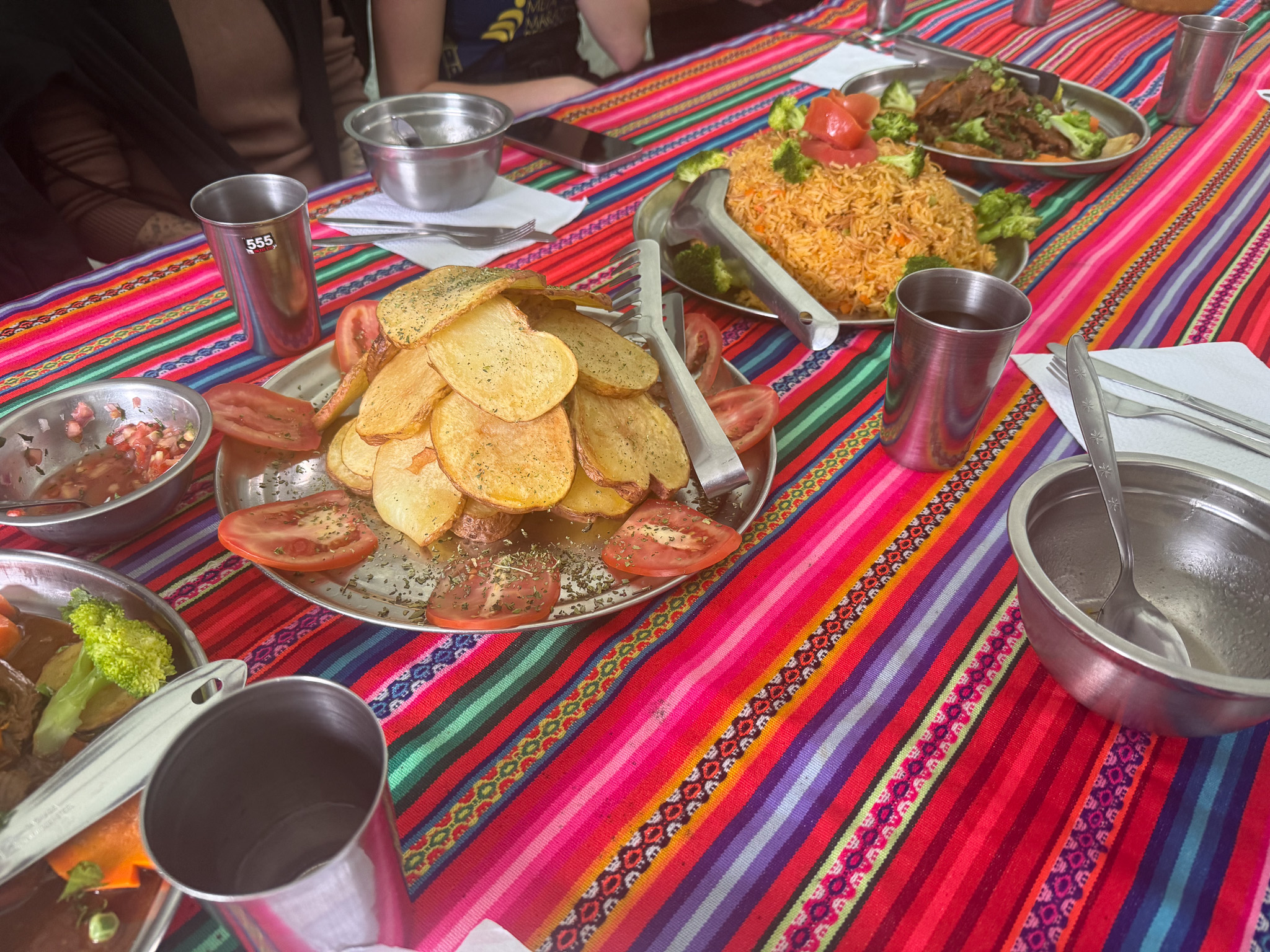
Food never tasted better. Altitude had taken my appetite away – even for breakfast, I was not able to eat much. But suddenly, now that we were descending, my body was demanding energy to be replenished quickly. I greedily ate everything that was put in front of me. The food was also always so damn good – even when I didn’t have an appetite, I felt sorry for myself. I truly wanted to eat, I just could not.
Yet, after lunch, there was more to walk. Another 7 km descending. The temperatures had really gone up by that point, and once again the descent seemed to last forever. You may think that descents are easy, in comparison to climbs – that is simply not true. Each has its own challenges – and my right knee was a big one.
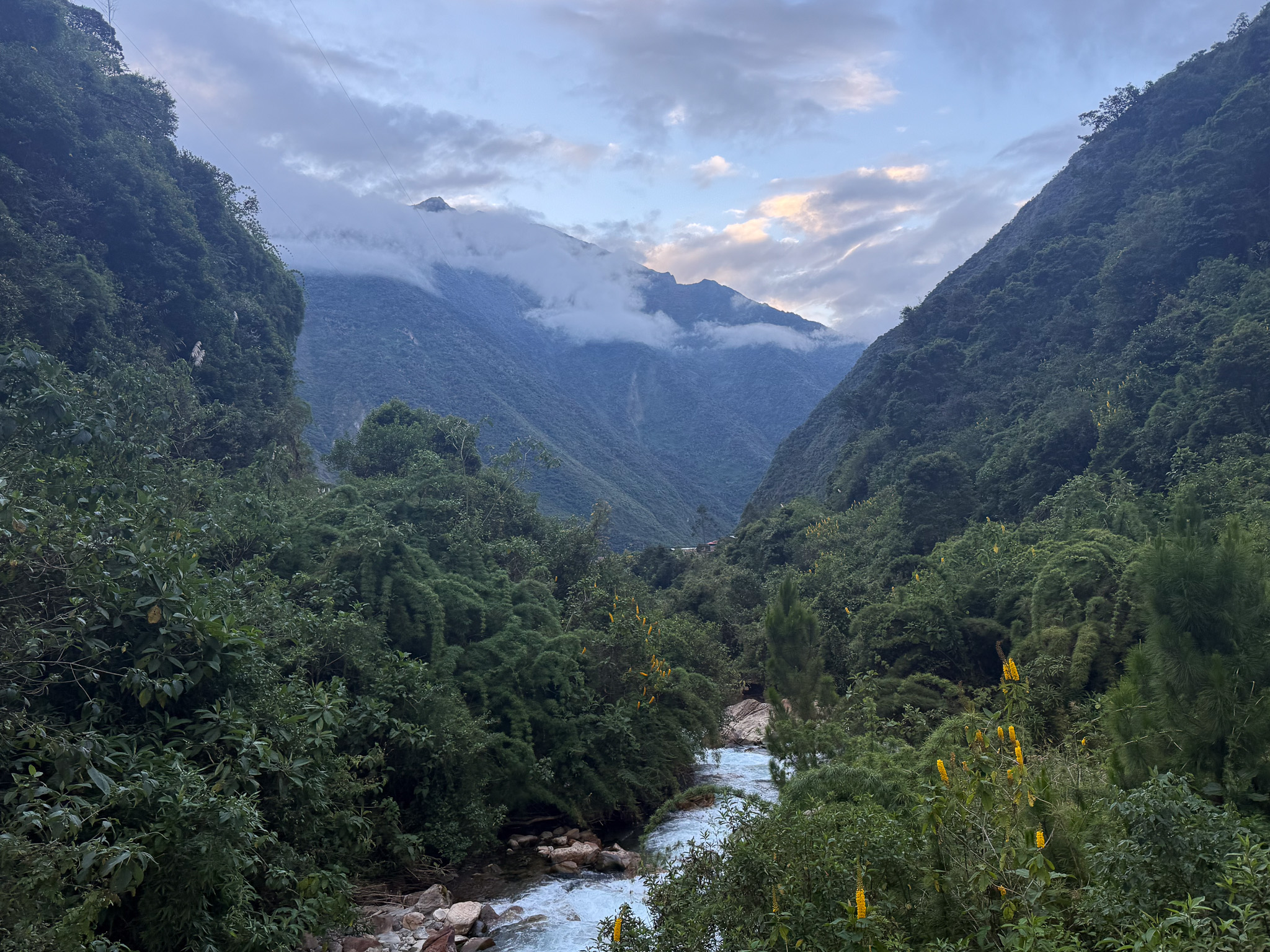
At some point, we finally started to see camps. That meant we were not far from our own. The vegetation had changed, becoming greener and denser, and we were once again walking along the mountain slope. We arrived at Colpapampa, and were given our own huts.
And this is when something completely unexpected happened. I had not only my own hut, but also my own bathroom with hot showers. I couldn’t believe it. I had gone on this trek thinking I’d probably only be able to wash my hair in the hotel at Aguas Calientes, basically four days without a proper wash. And there was I. Showering properly, a whole beautiful hut just for myself. The skies were overcast and sadly I could not see any stars.
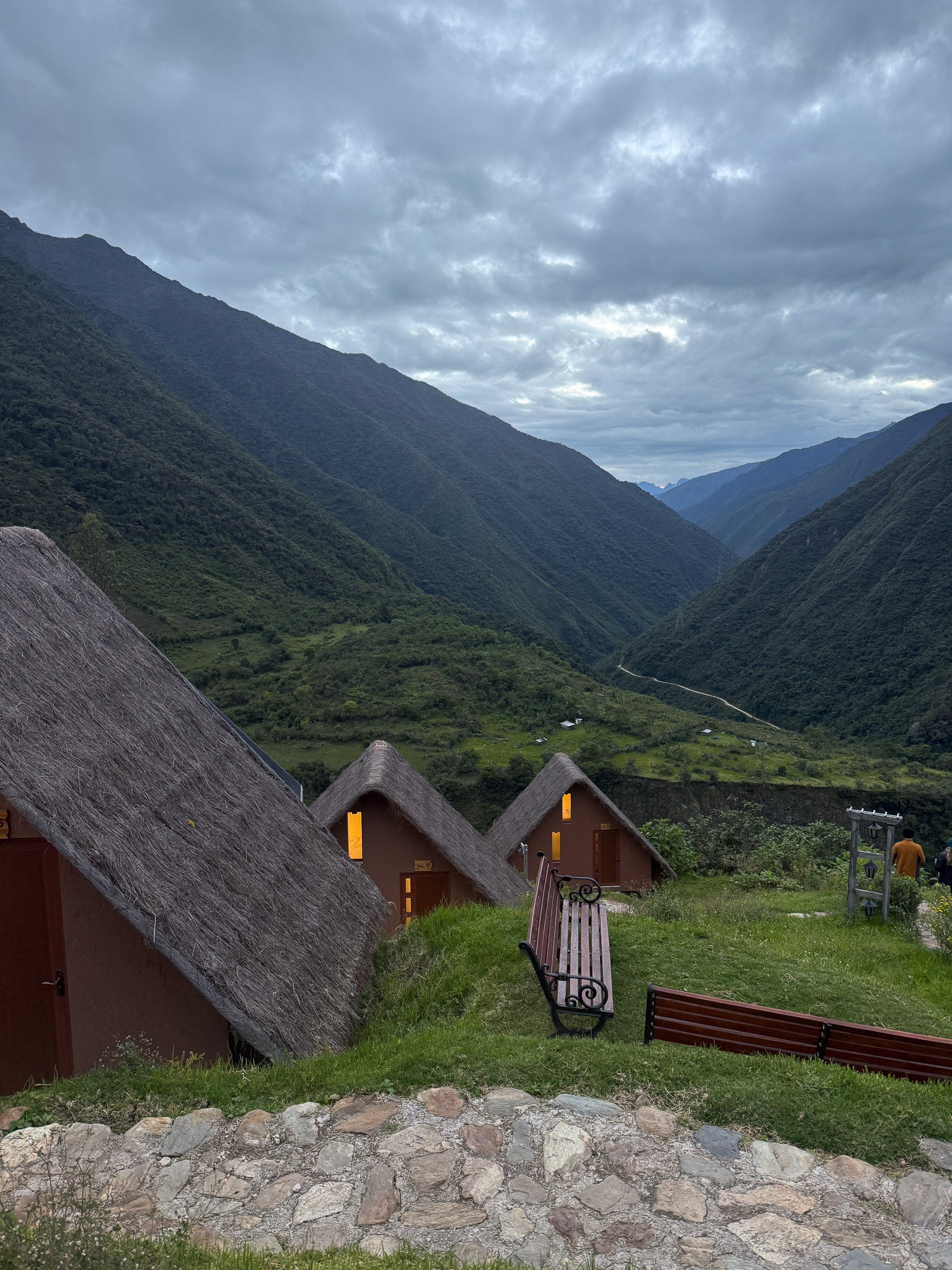
Beyond my knee, only hurting when descending, I felt all right. I was even surprised. But my leg work wasn’t done for the day. The dining hall was located at the top of the hill where the huts were, and my hut was at the base… and after showering, after my legs had cooled down, going up the stairs to get food was an absolute torment. But at 2,950 meters of altitude now, lower than I had been in Cusco, my appetite was on. I ate well, and soon was ready to sleep… and painfully and slowly went down the stairs, with my legs literally shaking.
It had been all worth it. That day, I had become larger than the story I had been telling myself.
Love, Nic
 The Winged Bone
The views are amazing- what an experience it must have been despite the aches and pains. The huts look so nice and a freshing shower too!
LikeLike