
“Nicole, I’m making you the leader. Decide: do we keep going or do we go back?”
What. The. Hell.
We were just an hour away from Reykjavik. The weather was disastrous. Unrelenting rain and strong winds. I could feel the van swerving on the road. We had stopped at a service station, and I struggled to walk towards the shop, the wind blowing straight into my face, making it physically difficult to move forward.
I wasn’t worried. I kept remembering what I’d been told in Iceland: if you don’t like the weather, wait two minutes.
But when I got back into the warmth of the van, I noticed someone talking to my guide. They were speaking English, so I could understand. The other guide was from the same company and was supposed to be doing the same tour, but with a bigger group on a larger bus. They had decided to turn back to Reykjavik and cancel the tour.
Oh no, not again, I thought.
Both my whale-watching tour and my boat tour at the Glacier Lagoon had been cancelled in the previous days. And what would I do in Reykjavik? At that point, I had explored the city enough… I suppose I could visit some of its museums if we ended up going back.
So, when everyone was back on the bus, my guide explained that the other guy was turning back. He seemed surprised and didn’t appear convinced it was necessary. He tried calling his boss, but there was no answer.
This was when he turned to me and made me the centre of attention. Why does this happen to me all the time? It’s like I have a target on my back.
“I don’t really want to go back,” I said. “I say we keep going?” I added timidly.
What if it wasn’t safe? I mean, shouldn’t he be the one to know whether we should keep going or not? I’m telling you, Icelanders are… something else.
He then asked the Americans. They said we should keep going. I felt relieved.And yet, I had no idea what we were getting ourselves into… The winds were reaching 130 km/h.
Then his boss called back. Apparently, he agreed with my guide’s decision and said, “You’ve driven on worse roads. There isn’t even any ice!”. I can understand why ice would be a reason to cancel. One thing is a van swerving on a normal road. Another is a van swerving on an icy road. That would have been the end of us…
And to be fair, it was the end of the trip for someone else anyway. A campervan had literally been blown off the road. Thankfully, everyone was safe. But it made me think twice about my plans to eventually come back and drive myself around Iceland.
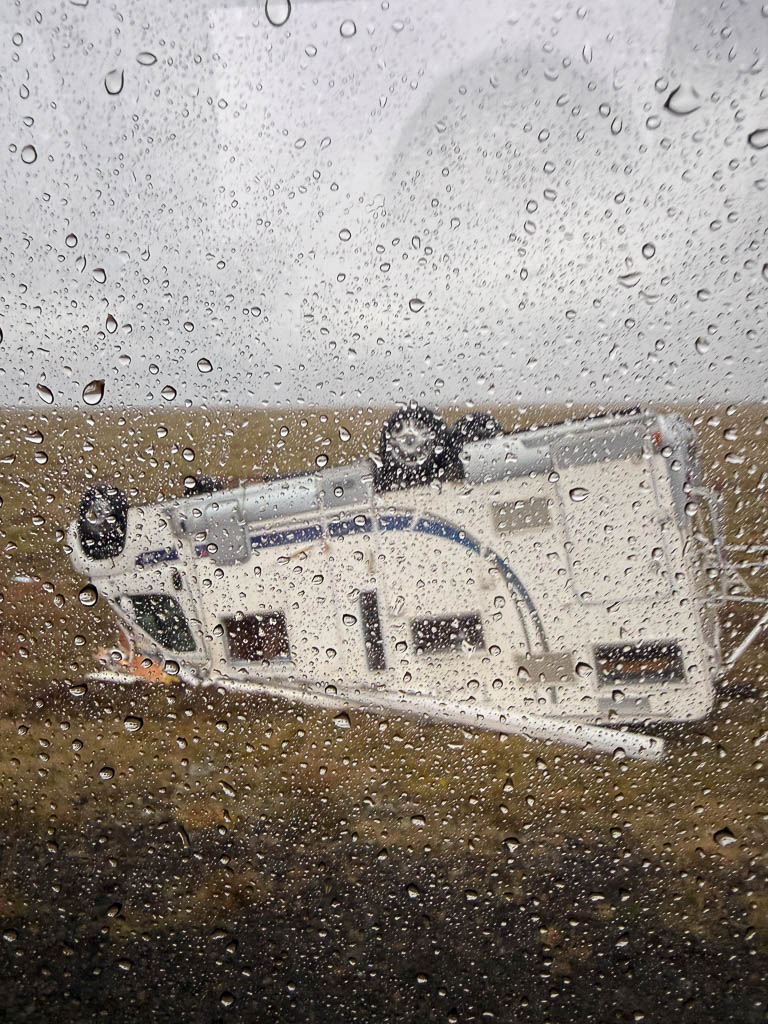
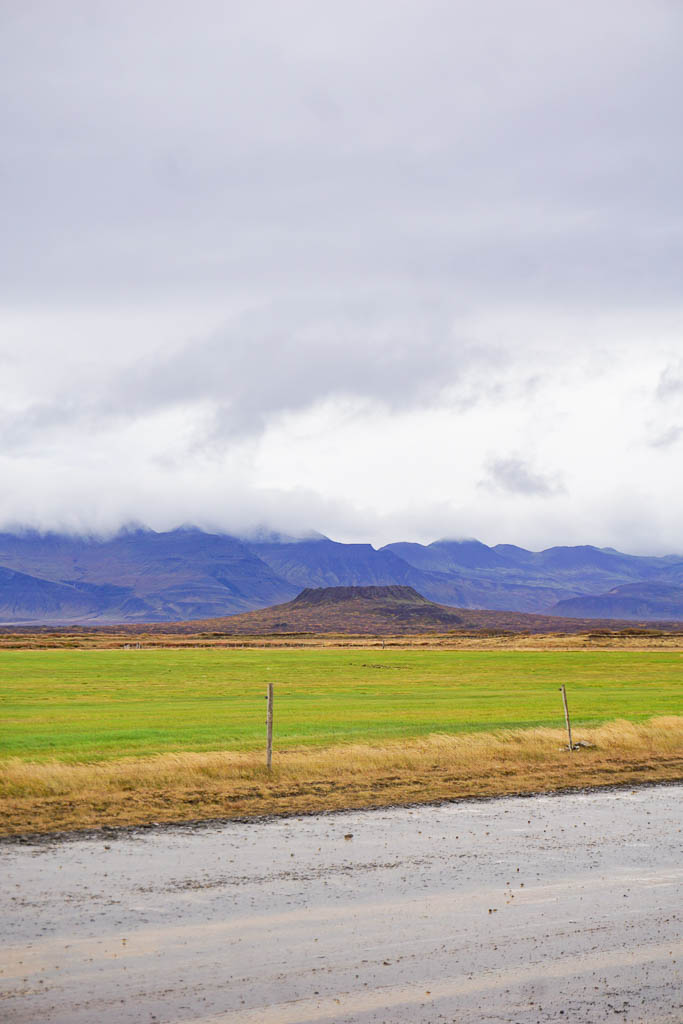
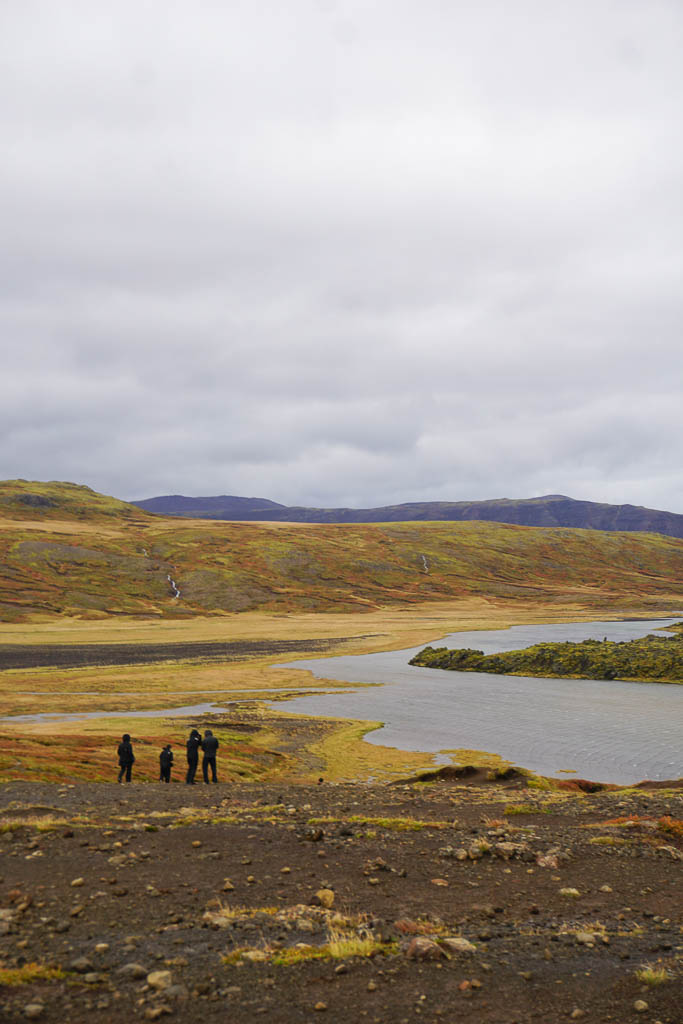
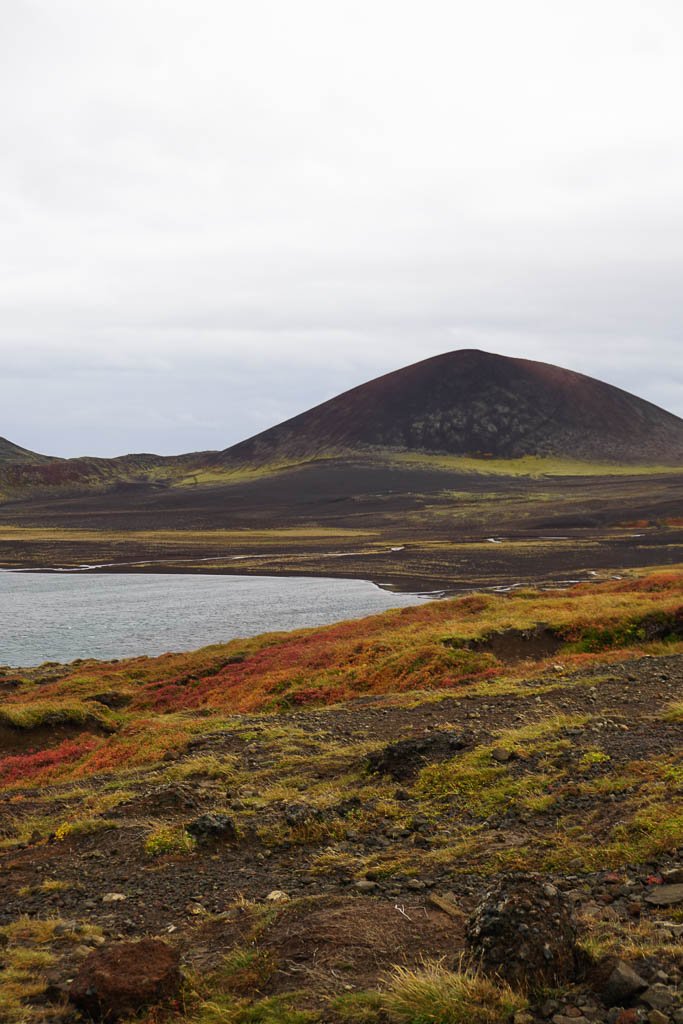
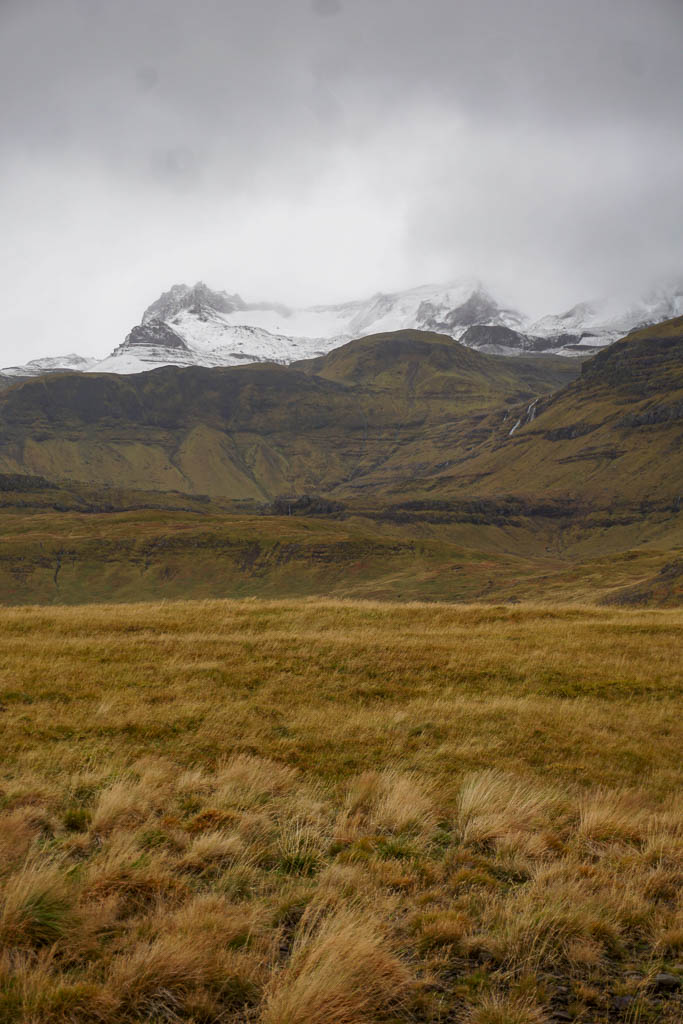
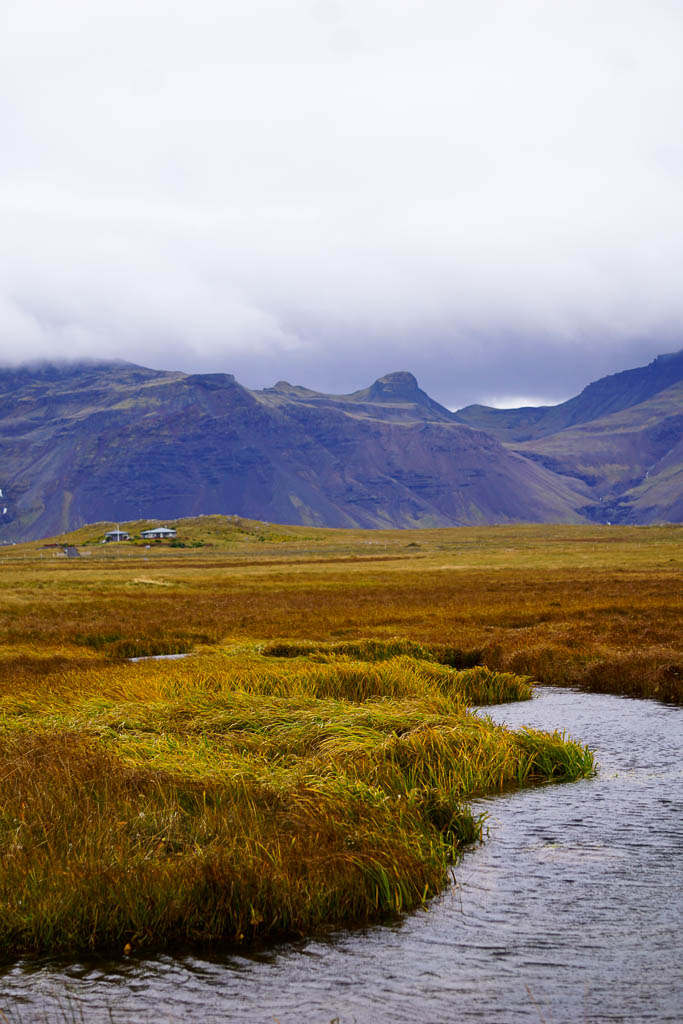
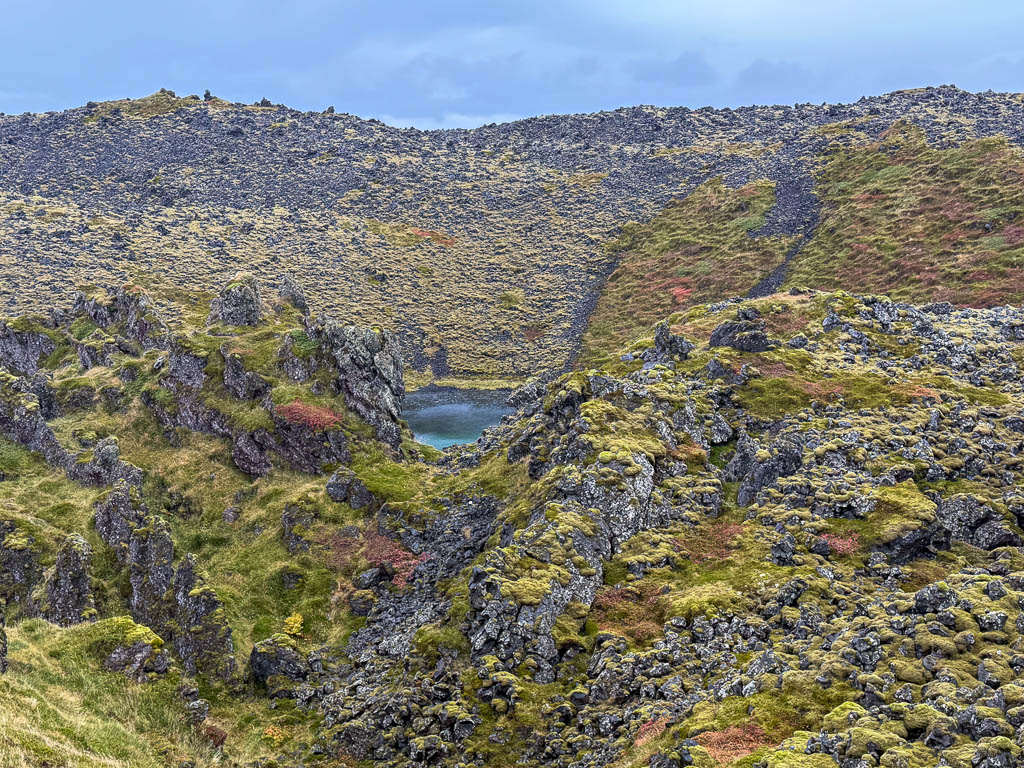
Through rain-speckled windows, I admired the volcanic landscape of Snæfellsnes. An eruption around 4,000 years ago formed the Berserkjahraun lava fields. Moss-covered fields of rock, with craters visible in the distance. It’s truly otherworldly, even in the rain.
How could I even care about the weather? I can honestly say I couldn’t have cared less. Sometimes I must remind myself that there isn’t really such a thing as bad weather. There is inconvenient weather, but not bad weather. We need all kinds, don’t we? And that wind, that rain, that cold… they are native to these lands. Experiencing them felt more like a privilege than an inconvenience. So what if I couldn’t take photos? It’s the living that counts.
This guide was something else. He made the guy from my South Coast tour look tame in comparison. He was absolutely unhinged, carefree with his humour to the point of touching on sensitive and controversial topics.
He kept reminding the Americans how healthcare in Iceland was free, education was free… how even the police didn’t routinely carry guns.
At one point, one of them remarked that we only ever hear the bad stories about America, and I chuckled. The United States is known abroad for being one of the most polarised countries in the world, and I have often found it fascinating how black-and-white some perspectives can be, including the tendency to view Europe as if it were a single country with a single culture.
I kept my thoughts to myself, of course. At least they didn’t seem to be taking any of his jokes to heart.
“In Iceland, we have amazing swimming pools. For us, it’s super normal to be naked in front of each other. Swimming lessons are compulsory for kids, so they’re used to it. Not like in America, you guys are quite conservative, right? Imagine, a few years ago, I was showering after going to the swimming pool, and next to me was our president. Can you imagine? Super normal. Could you say you’d have the opportunity to shower naked next to your president?”
I could not stop laughing. The Americans were saying they were very happy to skip that opportunity.
The rain did subside significantly after a while. The skies remained grey and the winds strong. But I was so grateful we hadn’t turned back. I had made the righ decision. I had trusted the shifting nature of Icelandic weather.
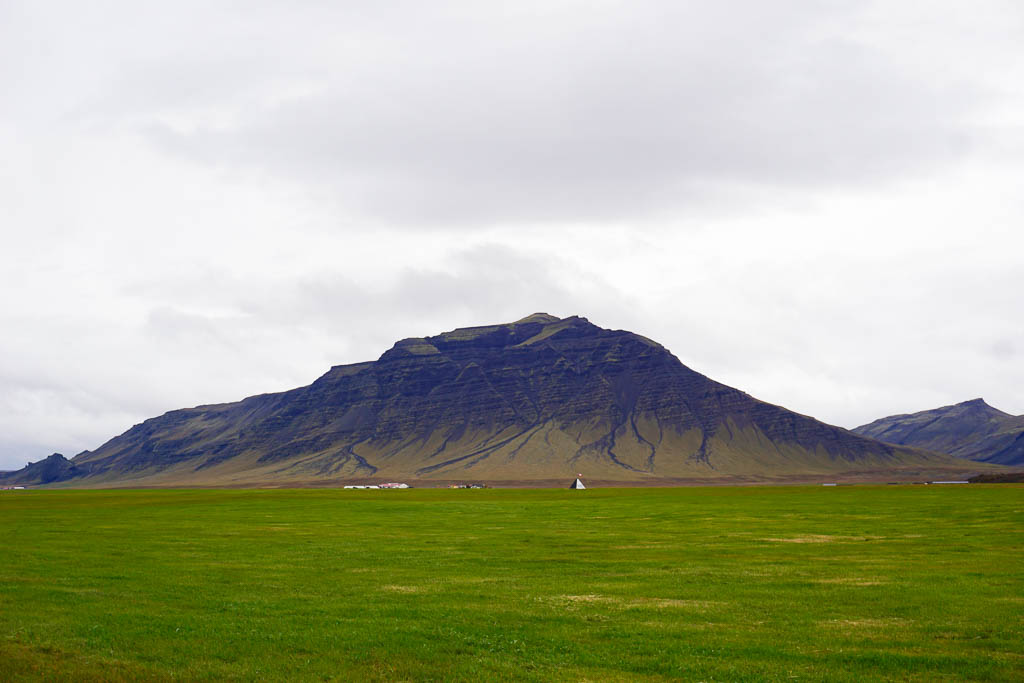
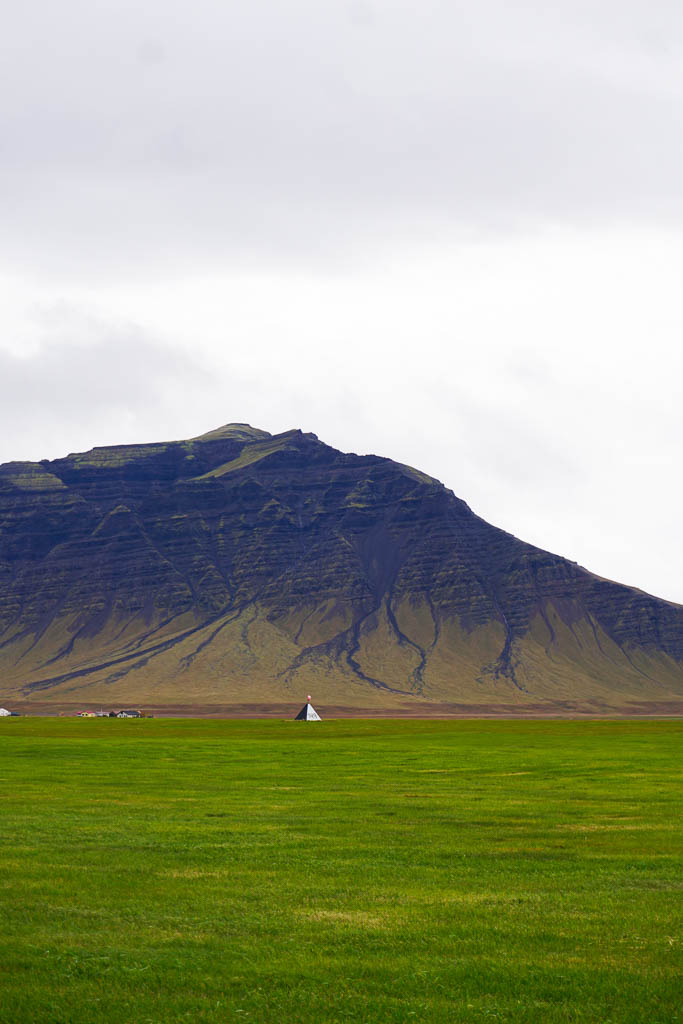
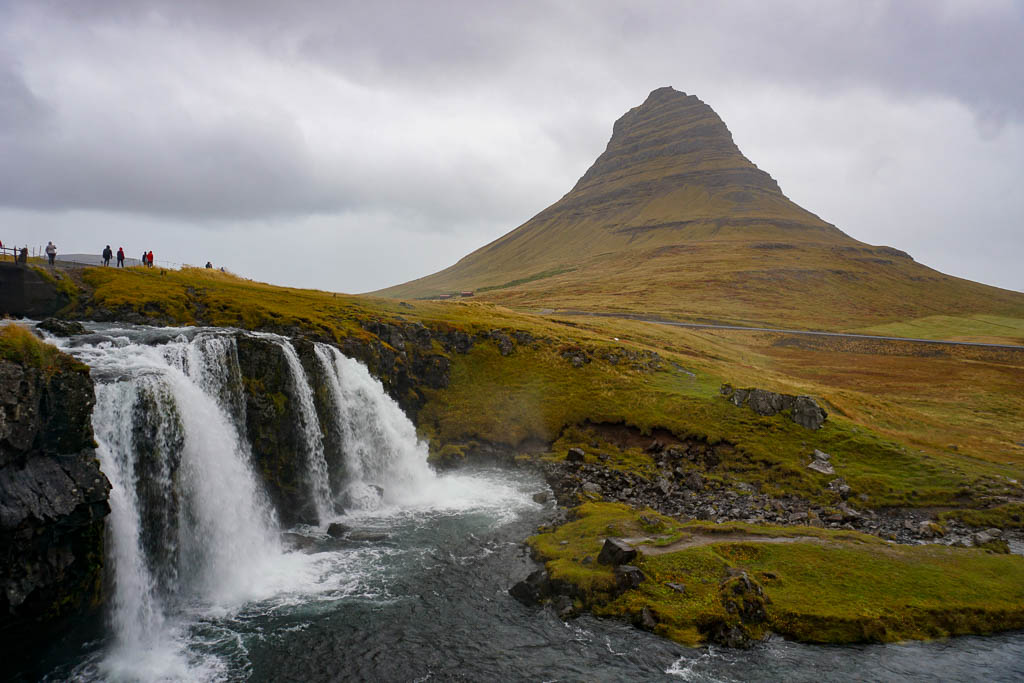
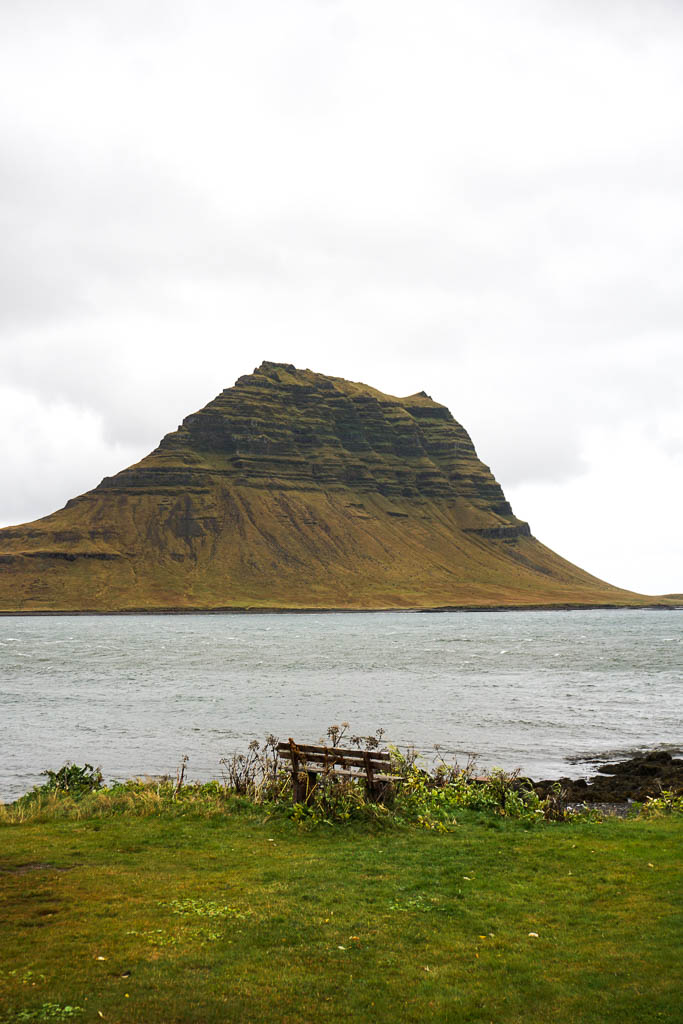
I would have missed the beautiful Mount Kirkjufell, considered one of the country’s most photographed mountains. Whilst relatively small, at only 463 metres high, it stands prominently against the surrounding landscape, making it impossible to miss. This was also a special guest in Game of Thrones, a show that I adore. The Arrowhead Mountain, as it’s called in the series.
And of course, our guide made a point of telling us he had been an extra during filming, showing us a picture of himself in costume. However, apparently his scene was cut. This guy told us the craziest things, to the point where I started wondering how much of it was actually true.
“Have you tried hákarl, the fermented shark snack?” I was one of those who shook my head. And I didn’t want to, thank you very much. I’m open-minded, but not THAT much. And then I was even happier I hadn’t tried it.
Still, the story behind it is fascinating. Imagine a time when hunger was prevalent in Iceland. With food often scarce, people had to find ways to make use of whatever resources were available to them, including Greenland shark, whose fresh meat is toxic to humans. How they discovered a way to make it safe to eat is intriguing in itself. It must have involved some rather unpleasant trial and error. Instead of simply giving up, they developed a method of processing the meat.
Traditionally, the shark would be buried or otherwise left to ferment for several weeks before being hung to dry in the open air for months. This process helps reduce the high levels of urea and trimethylamine oxide that make the fresh meat unsafe to consume.
But according to our guide, “The smell is unbelievable. It’s like urine. People say it’s like eating an old mattress that’s been peed on for years.”
Sounds delicious, does it not?
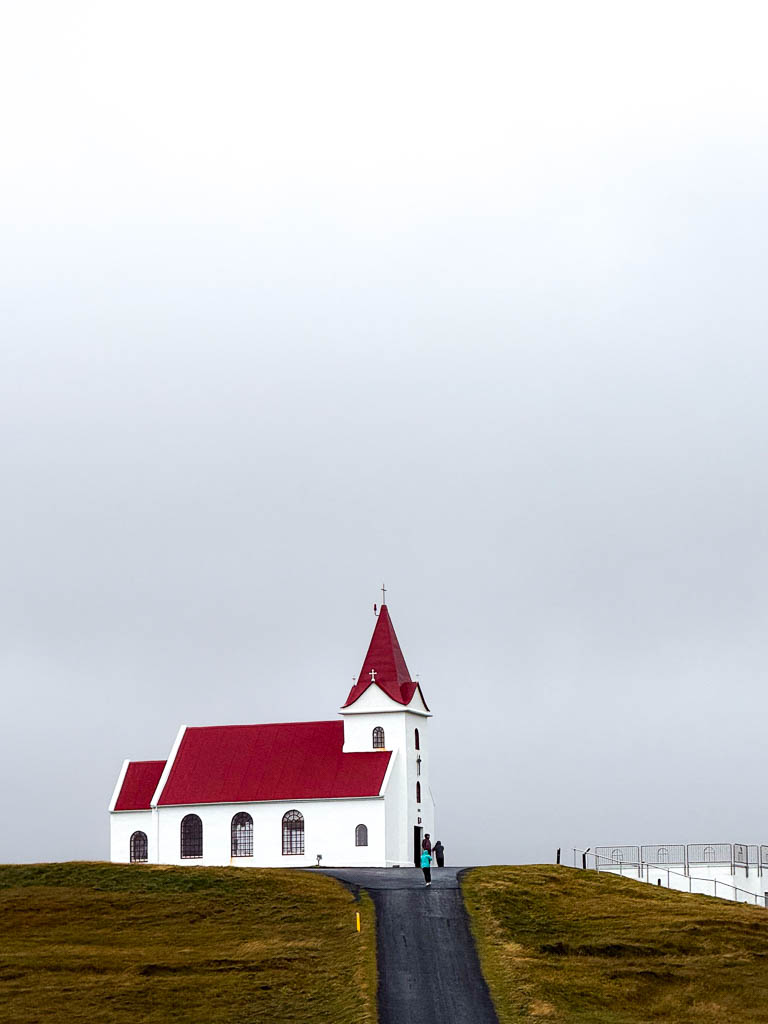
We also made a quick stop to see what is sometimes called the Chinese Church, which of course has nothing to do with China. In fact, this church has apparently become a familiar sight in Chinese eye tests. How strange is that? It’s called Ingjaldshólskirkja. My eye tests usually feature a boat. It seems that in China, they randomly have this church in Iceland, located so far away from China and in such a remote part of the country.
Our guide was telling us about the next stop, Djúpalónssandur Black Sand Beach, and how, back in the day, local fishermen would test their strength here by lifting stones of varying weights. To be considered for a spot on a fishing boat, a prospective fisherman would need to lift a 54 kg stone.
Men always like to brag about their strength, and my guide was no exception.
“Icelandic men are the strongest in the world. After all, we are descendants of Vikings. And the women are the most beautiful in the world, because when the Vikings took them from Ireland, Wales and England, they chose well.”
And this is what I would call a joke in poor taste.
He did add afterwards that he was joking and, of course, that what happened was horrific. But still. I felt a shiver thinking about the women who were kidnapped, raped and enslaved by the Vikings.
But as men love to measure their strength, this stop has its own test. There are four traditional lifting stones, ranging from Amlóði (Useless), weighing 23 kg, to Hálfdrættingur (Half Carrier), weighing 54 kg, Hálfsterkur (Half Strength), weighing 100 kg, and Fullsterkur (Full Strength), weighing 154 kg.
“Nicole, I bet you can lift 23 kg at least.”. Not me again. Dude, there is no way. My arms are sticks. I literally have my acupuncturist telling me I have two holes in my back instead of muscles. Just because I’m tall? I know I’m big, but not that kind of big.
Still, I was persuaded to try, and I failed miserably. In fact, my arms were hurting afterwards. Sorry to disappoint you, but you just lost your money.
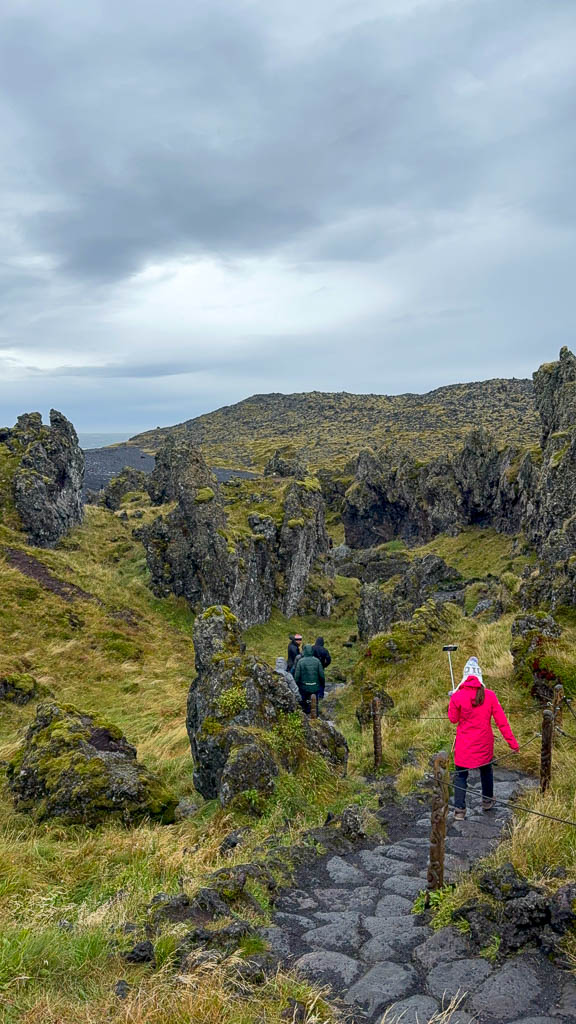
I was way more interested in the black landscape surrounding me. The winds were still strong, but seemed to have subsided enough for us to walk along the beach without eating sand. And this beach is extra special.
In 1948, fourteen men lost their lives when the British trawler Epine GY7 was wrecked in stormy seas. Here, you can still see pieces of the wreck scattered across the beach. They have been left as a memorial to this tragedy and a reminder of the dangers faced by those who made their living at sea.
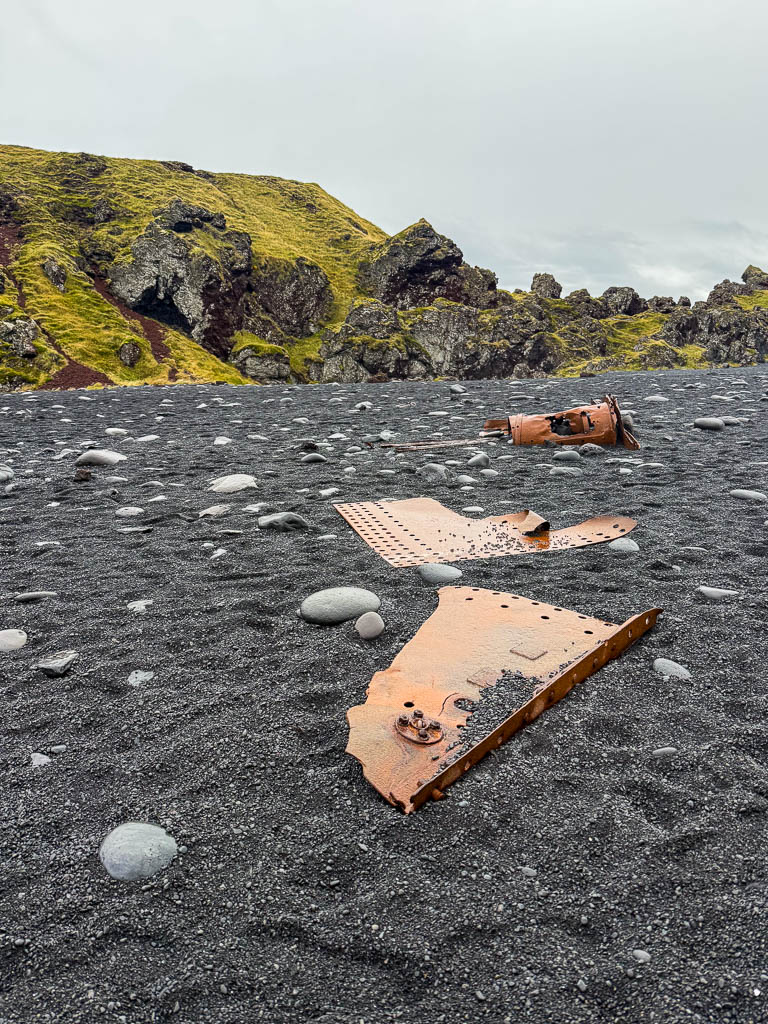
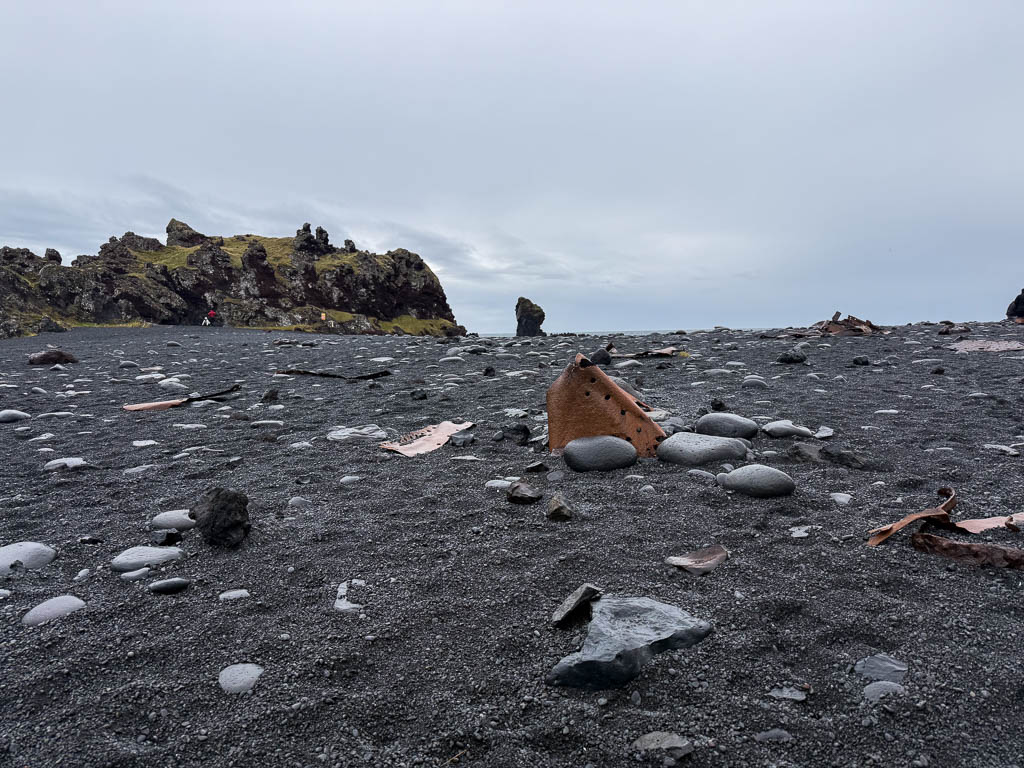
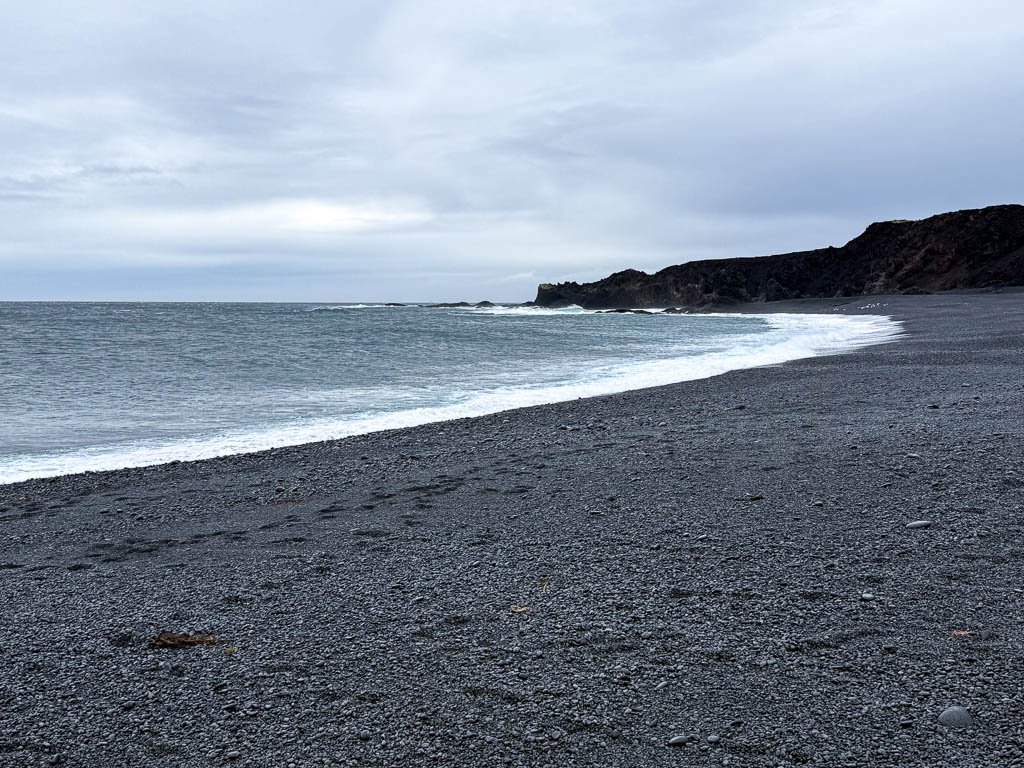
I was always taught to respect the sea. Growing up by the Atlantic, I have seen how misleading its currents can be, how quickly they change, how the sea can pull you under in seconds. “Never turn your back on the sea,” my parents always said.
A big wave can catch you off guard.
Yes, the sea is life. But it’s also death.
Always respect it.
Tourists sometimes forget this, and guides talk about terrible accidents that have happened when people got too close.
So, as usual, I made sure I didn’t.
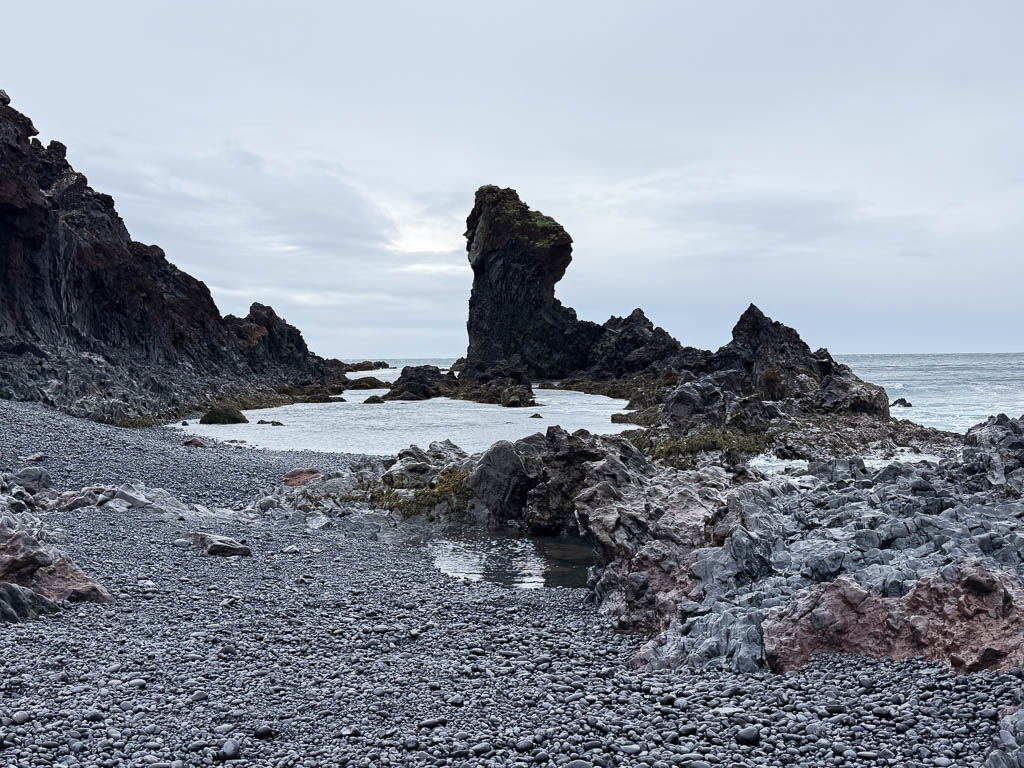
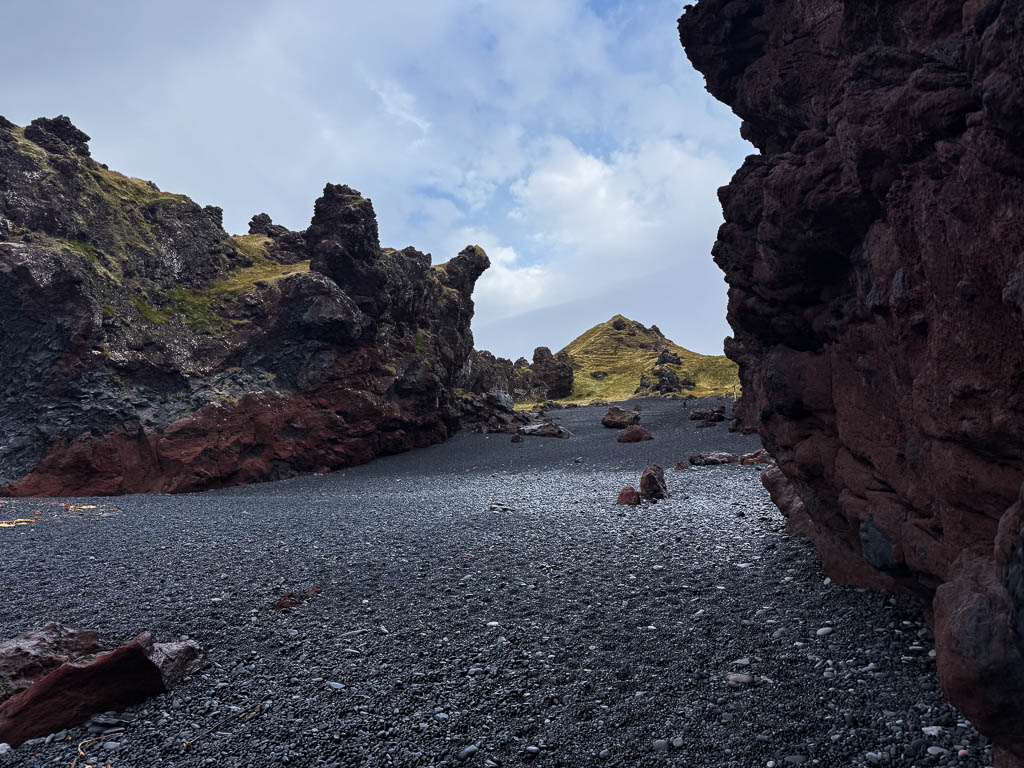
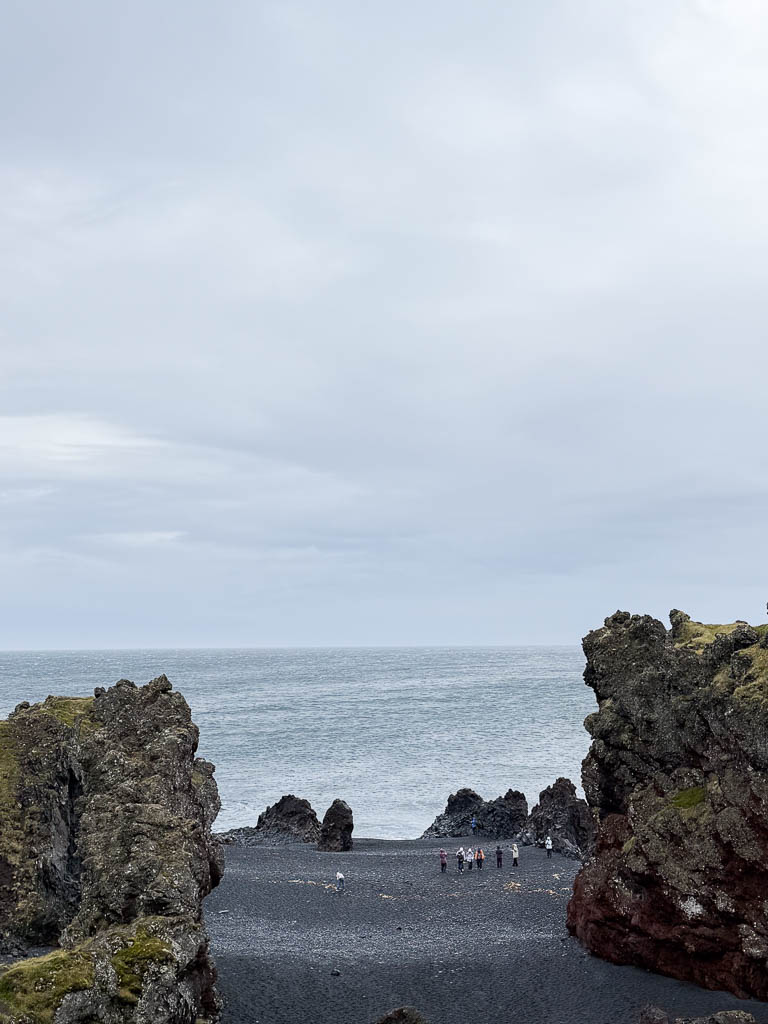
I have been to many beautiful beaches, with white sand, turquoise waters and palm trees lining the shore. Yet my favourite ones are still those back home in Portugal. Rugged coastlines, yellow sands, rock formations in so many shapes. Rough seas, calm seas. It’s never boring.
But the Icelandic coastline is a fair competitor. Also rugged, with stunning rock formations… but it’s volcanic. Black. My favourite colour (yes, I know people claim it’s not a colour, but IT IS). The ocean is the same, perhaps colder.
Something about being there just felt grounding, anchoring. A part of it did feel like home, the yin to a yang. The same, but different.
Historically, Icelanders believed in trolls. And visiting Snæfellsnes also means delving deep into the folklore of these lands.
Trolls were believed to be strictly nocturnal creatures, and if caught in sunlight, they would turn into stone. Some of the mountains and rock formations are, in fact, believed to be petrified trolls.
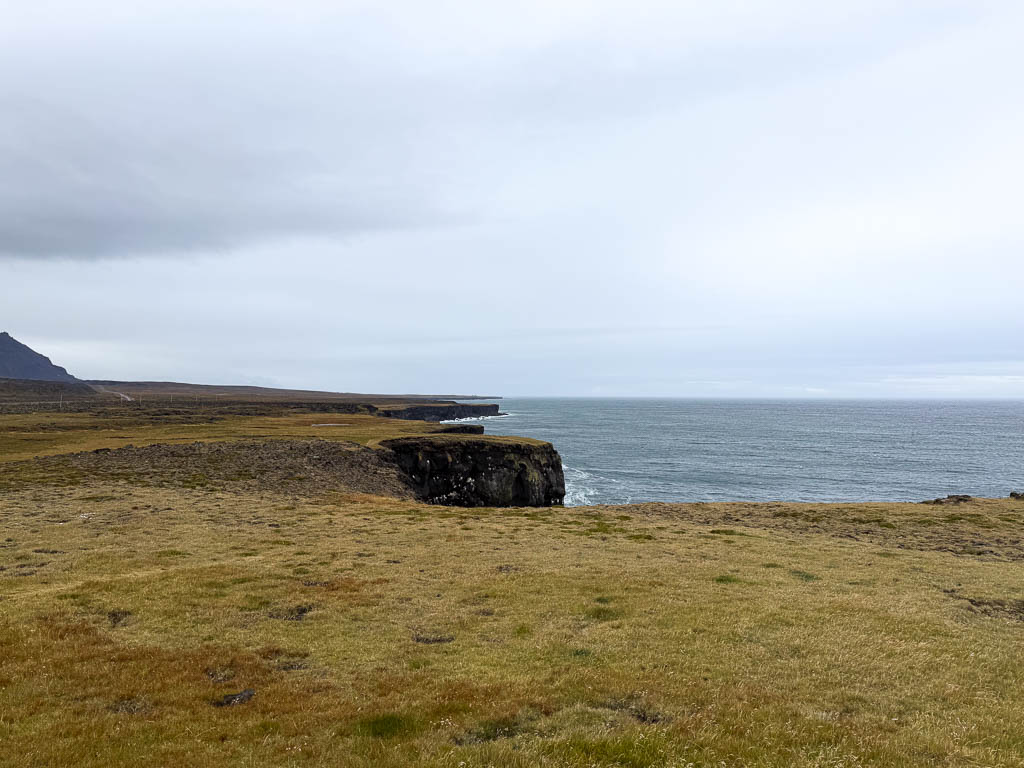
Personally, I love such tales and want to share them with you.
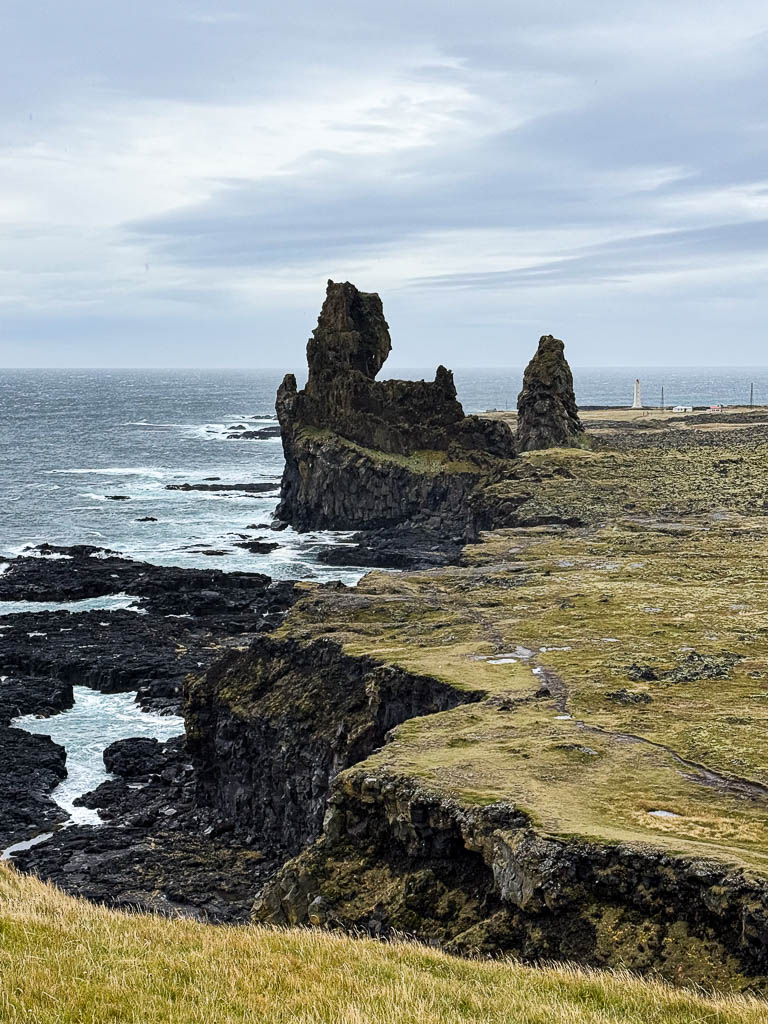
Our first encounter with one of these stories was at the Lóndrangar pinnacles, on the southern side of the peninsula. These pinnacles are remnants of an ancient volcanic crater, formed from basalt that the sea has been chiselling away at for centuries.
My guide kept referring to the troll and the ship.
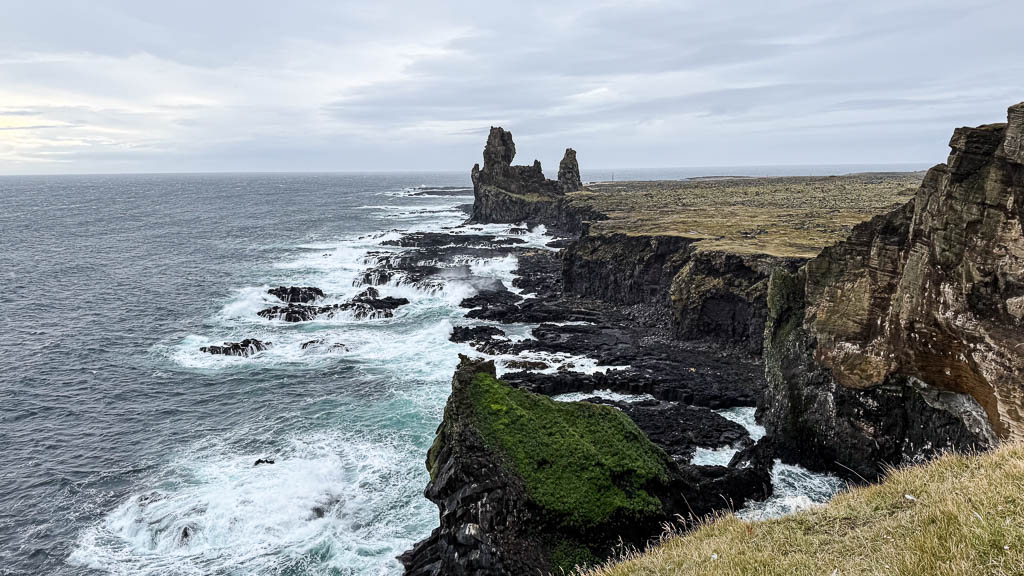
The story he told us goes that a troll was wandering along the beach at night when he spotted a ship. Driven by mischief, he decided to venture into the freezing water to push it towards the shore. This wasn’t an easy task, and the troll became so distracted by his attempts that he lost track of time. The sun came up, and he was turned into stone.
Looking at my photos, can you see the troll and the ship?
We then stopped by the village of Arnarstapi, where there is a towering, multi-tonne stone sculpture of Bárður Snæfellsás. And who was he?
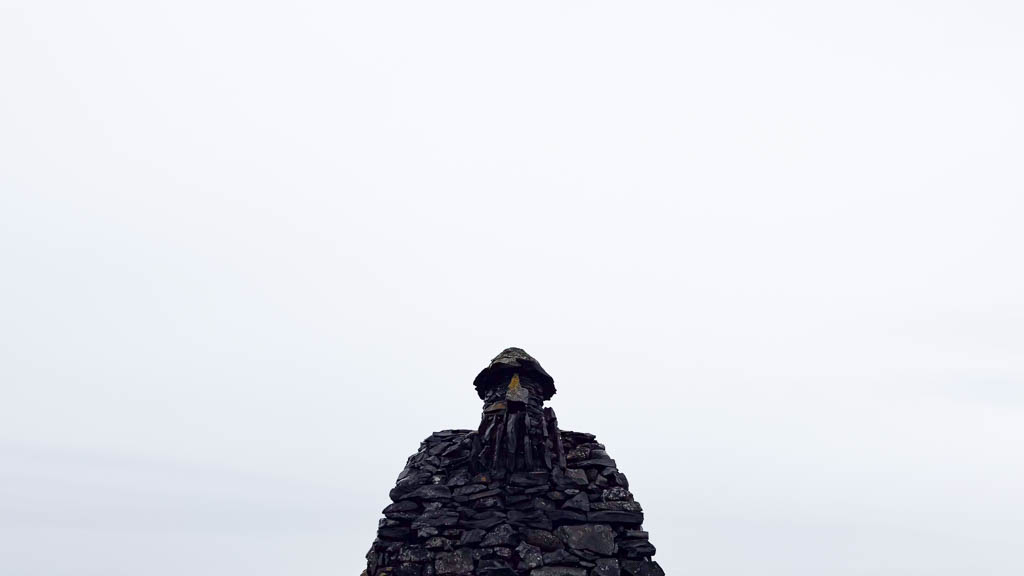
A half-giant, half-troll who settled in the area. He had a beloved daughter named Helga. One day, she was playing with her cousin down by the shore when he pushed her onto a massive piece of drifting ice. A sudden northerly wind caught the ice, and Helga drifted far out into the freezing Atlantic.
When her father, Bárður, found out, he was consumed by blind rage and grief. He took terrible revenge on his nephews, leading to a violent confrontation with his brother.
So broken-hearted and disillusioned was he that he could no longer live amongst humans. He retreated into the wilderness of Snæfellsjökull, eventually becoming the guardian spirit of the peninsula, believed to protect those who find themselves lost or in danger in the mountains.
Plot twist: Helga actually survived, ending up in Greenland. There, she went on to have adventures of her own and became an important figure in the saga. When she eventually returned to Iceland, though, she struggled to find her place again. She couldn’t simply return to her old life with her father and spent her remaining days wandering through the remote Icelandic wilderness.
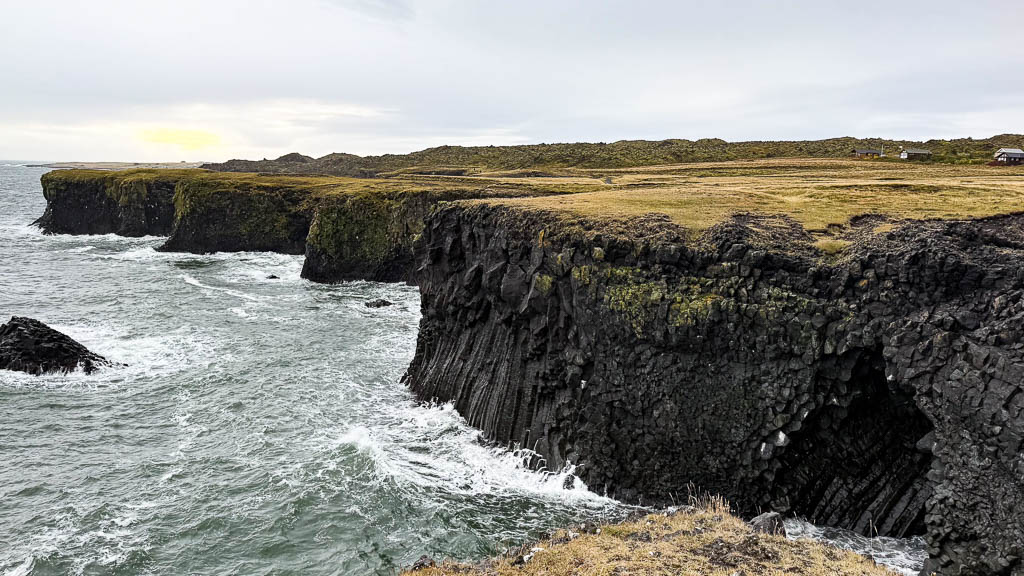
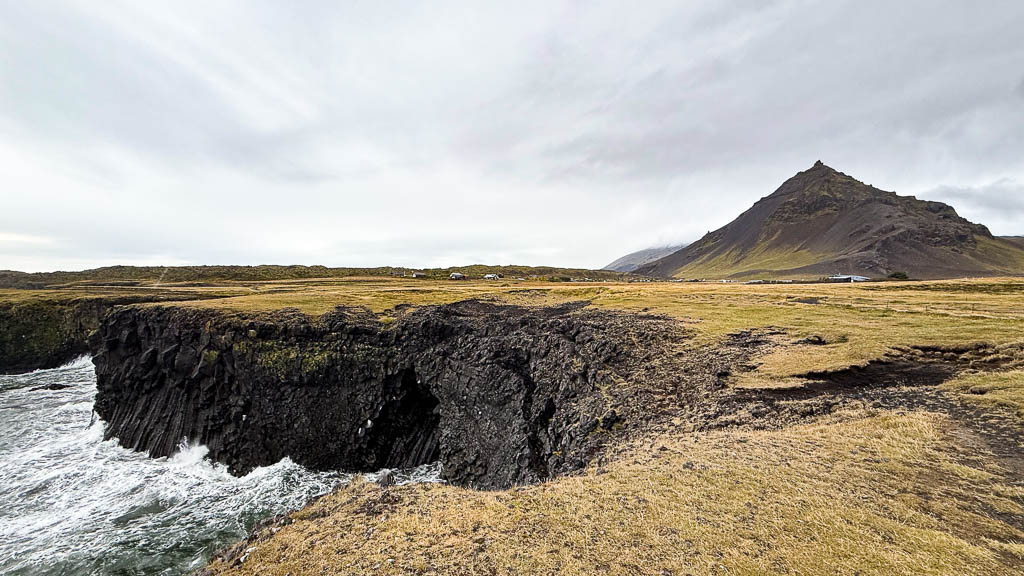
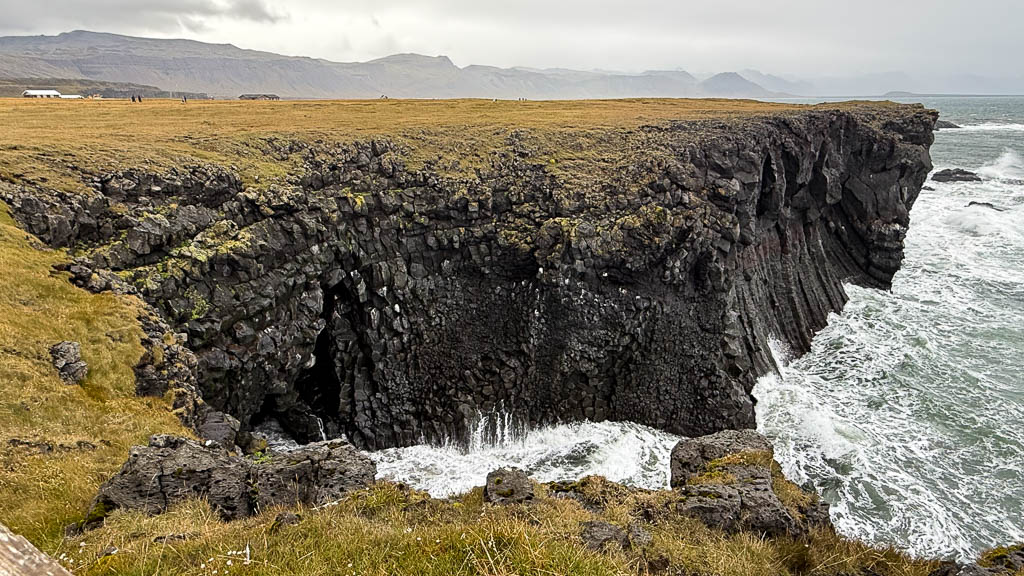
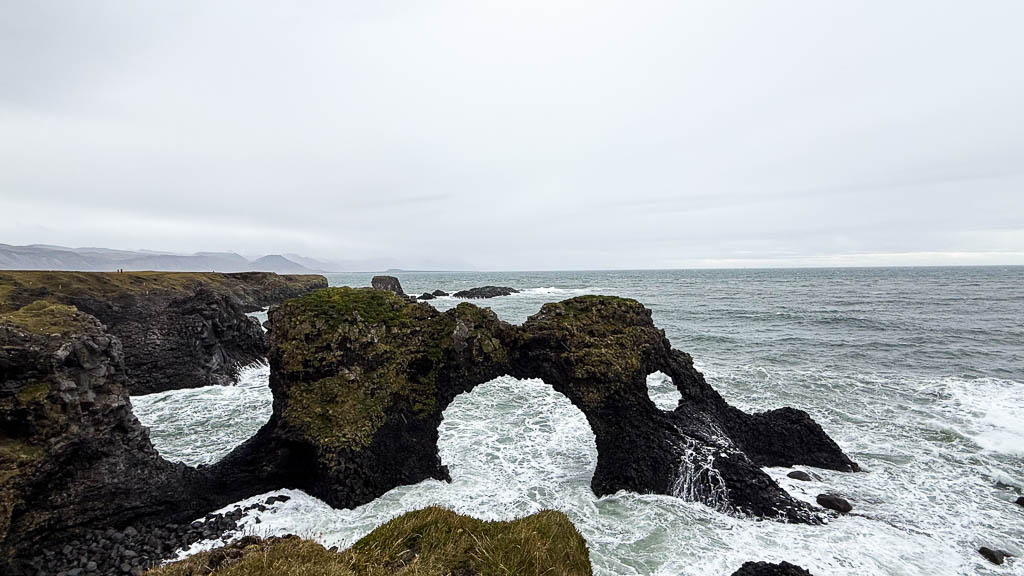
It’s easy to see why Arnarstapi inspired such poignant folklore tales. The coastal views are incredible, and the natural stone arch is something to behold. The sea has eroded the cliffs over time, creating a beautiful bridge of rock.
The winds were getting stronger again, and for the first time in my life, I experienced horizontal rain… which was piercing the little skin I had exposed, like an acupuncture session no one had asked for.
I realised some of the drops were actually tiny pieces of ice. I wondered about the wellness benefits of horizontal icy rain. I hoped there were a few.
Now, my guide loved the sound of his own voice. He kept asking us to give him a topic. I eventually asked him for another folktale, and I got to hear the tale of the farmer, the troll and the cow.
A local farmer had a cow that was his most prized possession, but one day, the cow disappeared. A troll had stolen her and dragged her into a cave. The farmer ventured into the mountain looking for his cow. He found her, and they started running. But the troll realised quickly enough what was happening and began pursuing them. No matter what obstacles the farmer threw in her way, she always managed to catch up.
But this cow was magical. First, the cow said, “Give me a drop of water,” and transformed it into a river. The troll crossed it. Then came a massive forest. Once again, the troll managed to get through. Finally, the farmer and his cow managed to stall her long enough for the sun to rise, turning the troll into a giant, harmless boulder on the hillside.
It is true that, with a little imagination, some of these rock formations look like troll faces.
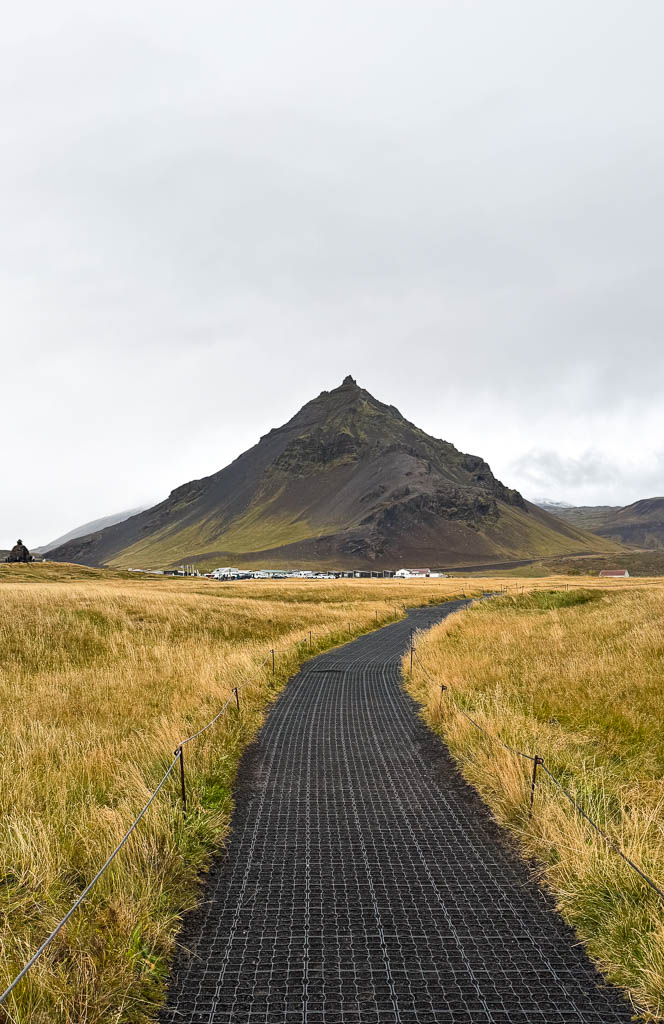
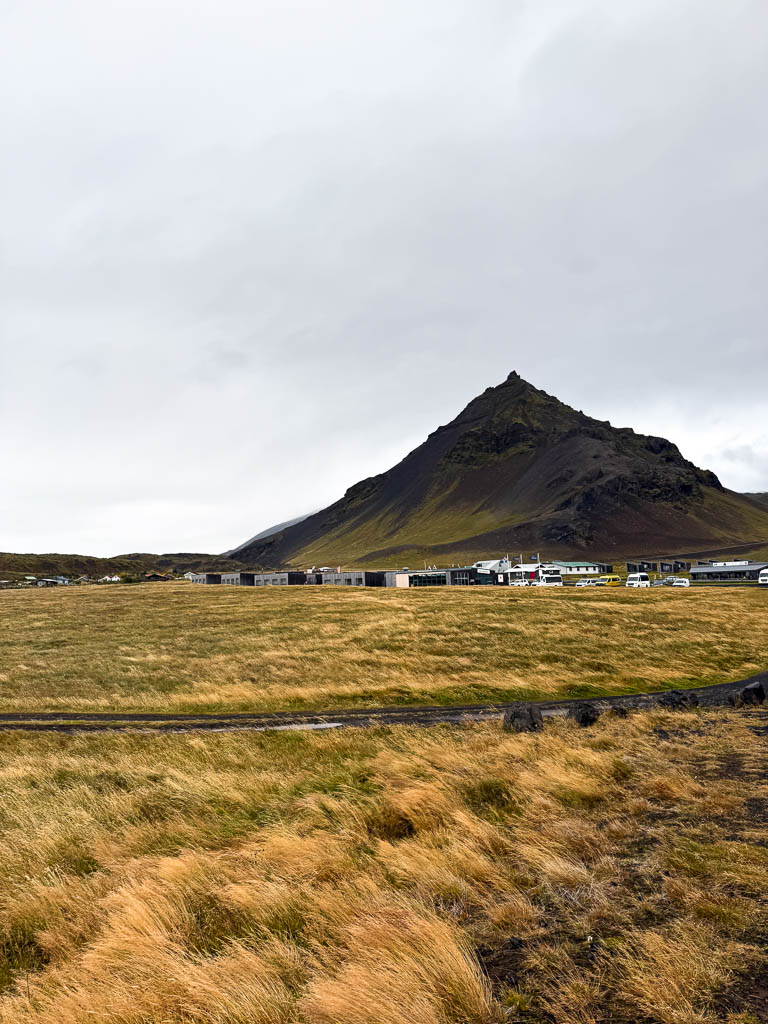
Back in the day, when people needed to find explanations for everyday events, or perhaps even create a little fear in children so they would be careful and respect the dangers of nature, trolls were easy to bring into the conversation.
In contrast to all this talk of trolls, our next stop was a church, Búðir Black Church.
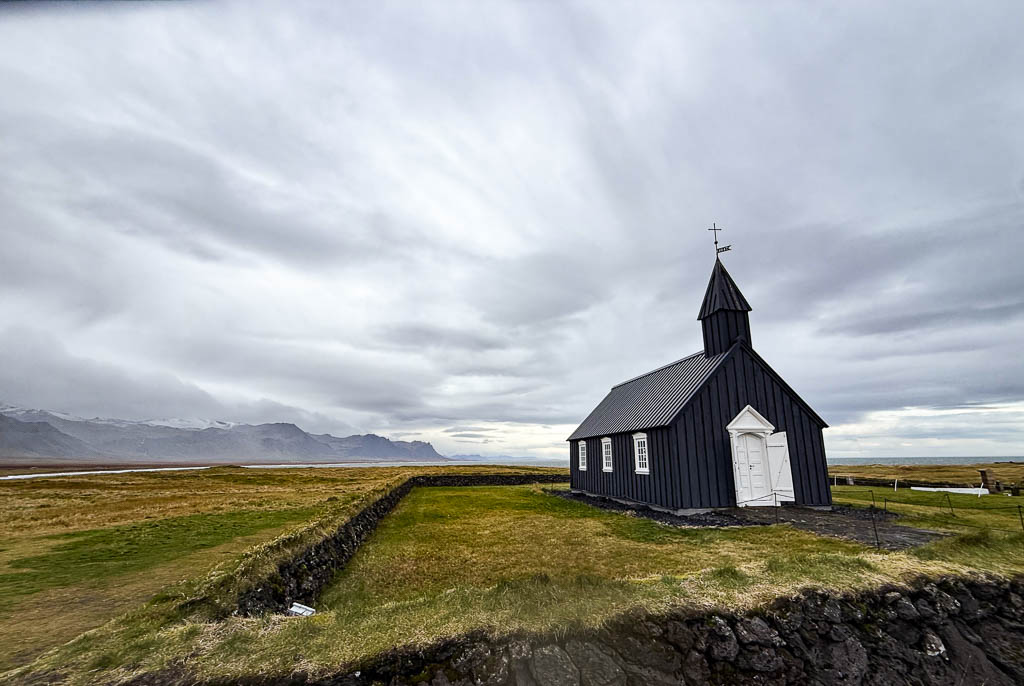
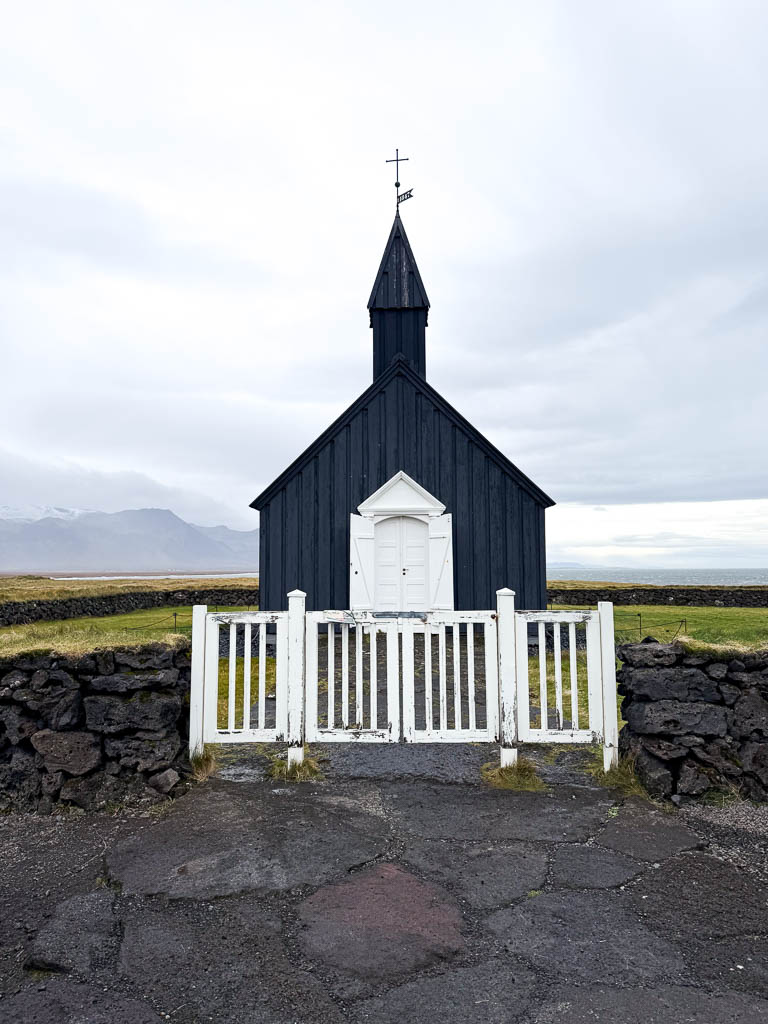
The current church dates back to 1848 and underwent restoration work during the 20th century. Its remote location, the striking black exterior contrasting with the bleak surroundings, created an ominous atmosphere that I can say, without shame, I absolutely adored.
The last stop was Ytri-Tunga Beach. This place is famous for seal spotting. Guess what… the seals weren’t resting on the shore, as they so often do. It’s fine.
I had my 200 mm camera lens and was fascinated by the ducks riding the waves, spotting interesting birds and scanning the water to see if I could find a seal. Now, I am the first to admit that I have an incredible ability to space out. I was very focused on looking through my lens.
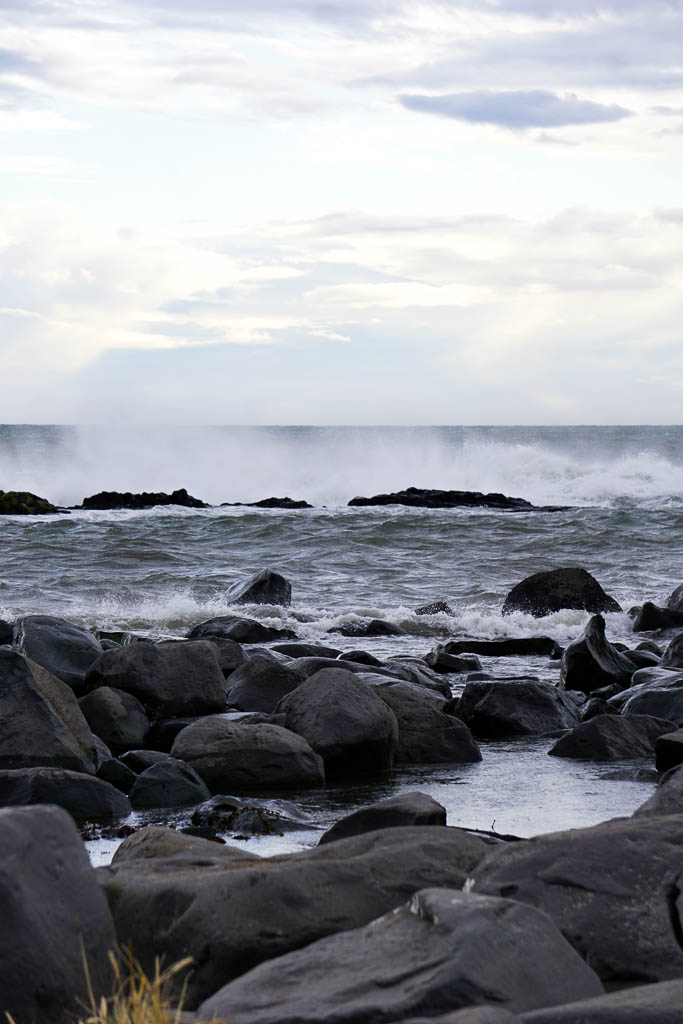
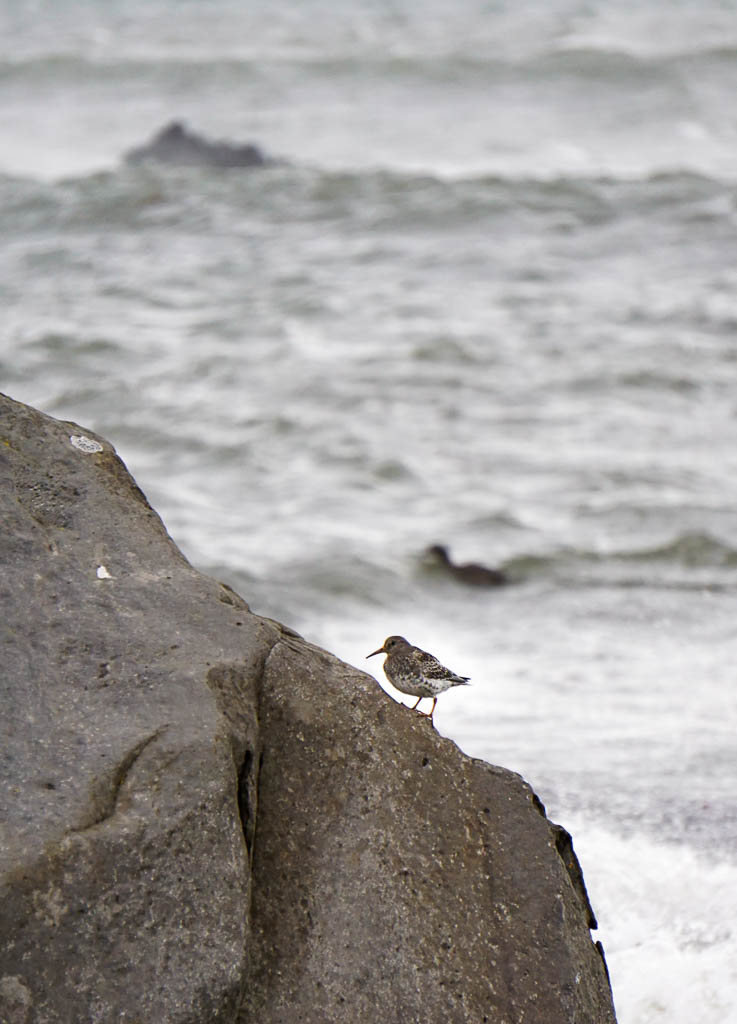
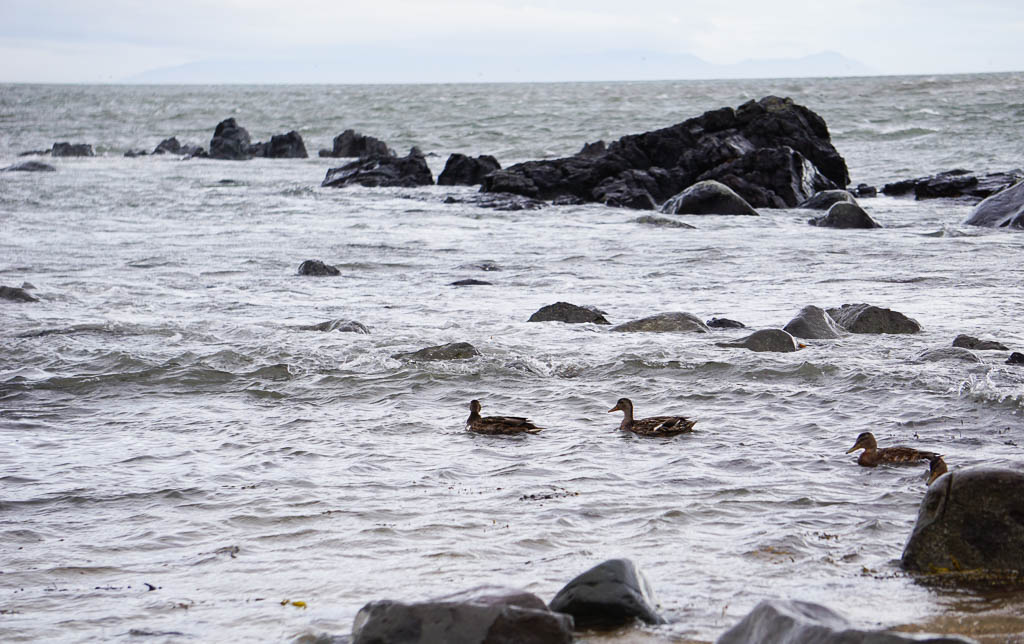
At one point, I remember hearing someone repeatedly saying, “Oh, that’s nice,” and then again, “That’s nice.” Bear in mind that it was windy, I had a woolly hat covering my ears, plus my windbreaker’s hood pulled up, so that voice seemed to be coming from very far away.
But then I felt a sharp tap on my shoulder. I turned around, thinking someone was about to tell me where a seal had just appeared. But no. It was an angry woman. Horrified, I realised I had been standing in her line of sight, and the repeated “that’s nice” comments had been directed at me. I apologised immediately and moved. “I’m so sorry, I was distracted. I didn’t notice,” I said, and she responded, “And of course I couldn’t move.”
I realised then that she had been attempting to tie her hair or something, holding her bag between her knees, which was apparently why she “couldn’t move”.
The passive-aggressiveness was unnecessary. We were tourists there, minding our own business, and sometimes someone gets in the way. And how many times does that happen on purpose? I’m quite sure very few. No one has anything to gain from doing that.
This left a sour taste in my mouth, but I didn’t let it ruin the experience. I continued taking my photos, enduring the wind. Later, we crossed paths in the bathroom, and I gave her a dirty look. I’m sorry, I’m no saint.
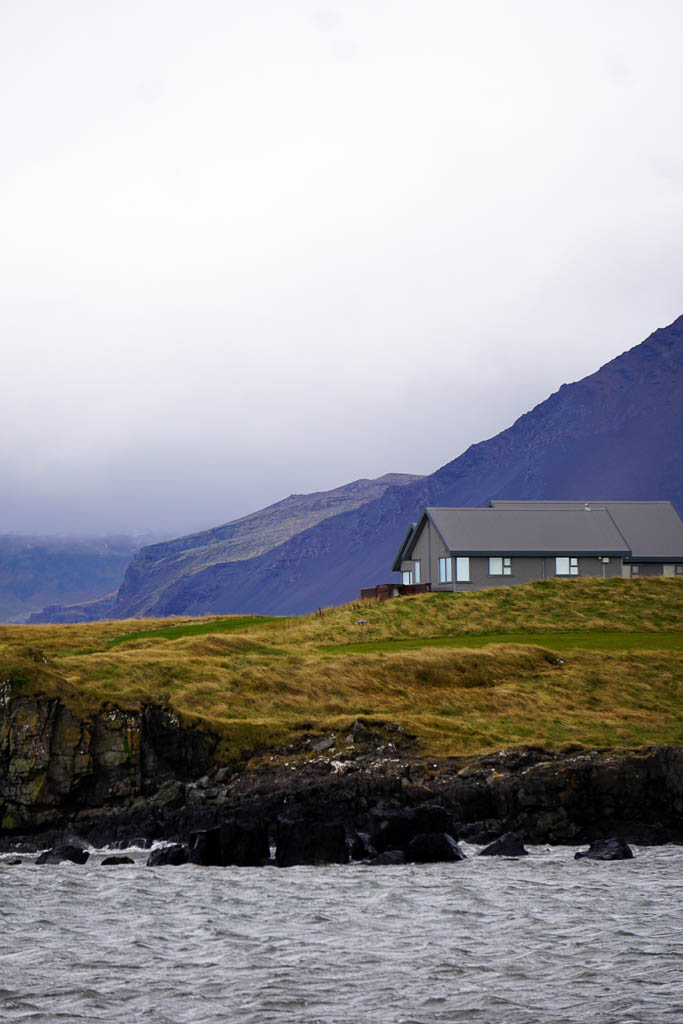
The drive back to Reykjavik was lovely. The sun was finally coming out just as the day was drawing to a close.
I think, for the first time in my life, I spotted a perfect, complete rainbow, stretching from one end to the other.
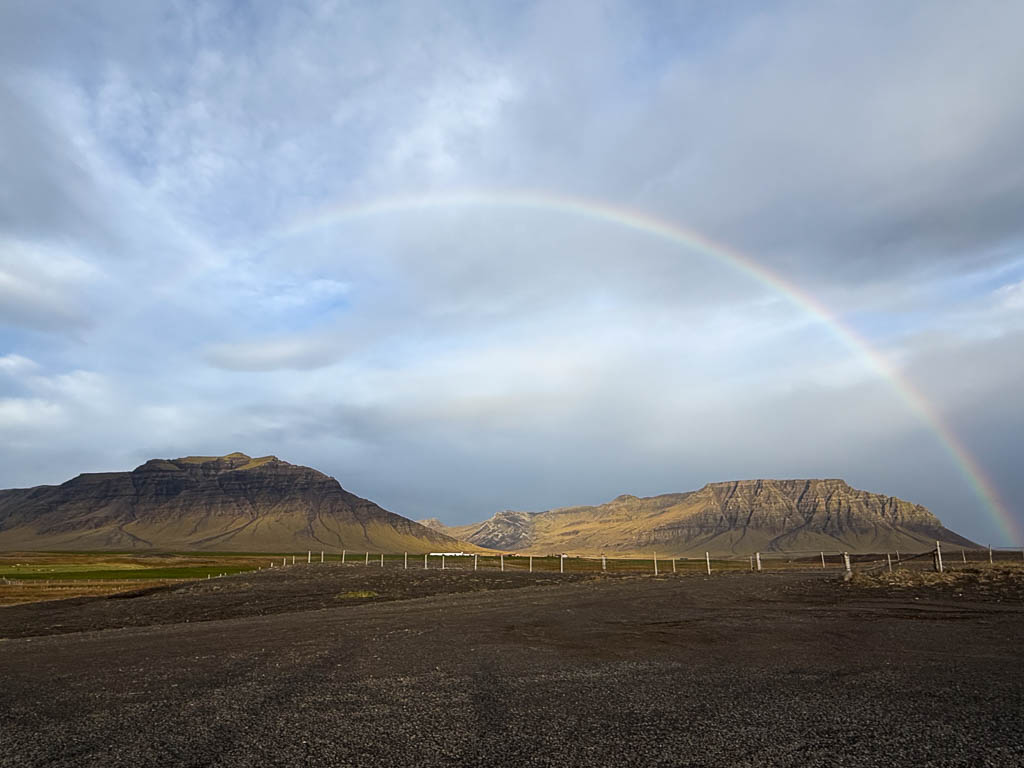
This was my last tour in Iceland. The next day, I would be back in London.
All I could think about was how much I wanted to return, perhaps in summer, and do some proper hiking. Yes, that would be wonderful.
But of course, my guide couldn’t let us go without one last laugh. As we were being dropped off, he started playing Time to Say Goodbye by Andrea Bocelli over the van’s speakers.
Is there any better way to end my Icelandic adventure?
Love,
Nic
Where I styed in Reykjavik (and recommend): Oddsson Downtown
Snæfellsnes Peninsula Tour with: Bus Travel
P.S. Some links are affiliate links. If you click through and make a purchase I will receive a small commission at now extra cost to you.

