
… or anywhere else, for that matter?
Visiting Iceland during the equinox was intentional. I was trying to increase my chances of witnessing the phenomenon of Aurora Borealis, or the Northern Lights, as they’re commonly known. I wasn’t naive; I knew there was little I could control here. It’s quite humbling, in fact – the natural world owes us nothing, really.
If you’ve read my posts about my trip to Iceland, you’ll know I didn’t rent a car. As a solo traveller, it would have been too expensive and, to be quite honest, risky. I only drive when I go home to Portugal twice a year, on familiar roads, so I’m not the most comfortable behind the wheel without someone there to support me.
Another important factor to bear in mind in Iceland is the weather – it’s unpredictable, and it can make driving dangerous, especially when you’re not used to those conditions. I’ve become a veteran at navigating London’s train and Tube systems, surviving sardine-packed trains, and a champion at enduring long waits or finding alternatives when cancellations and delays happen (which is all the time). But driving in heavy rain and strong winds? Nah.
I ended up exploring quite a bit with some fantastic tours… and to see the Northern Lights, I booked a tour as well.
Now… there are three conditions that need to align for you to see them: darkness, clear skies and, well… sufficient auroral activity. And for these to come together, add a pinch of luck.
Let’s nerd out for a little bit here, because I love this stuff.
The dancing lights that so often grace the polar skies during the dark winter months are caused by interactions between charged particles from the Sun and Earth’s magnetic field and atmosphere. The Sun constantly emits a stream of charged particles known as the solar wind, while solar storms can send disturbances and additional energy towards Earth.
When these disturbances interact with Earth’s magnetic field, energy is transferred into Earth’s magnetic environment, accelerating charged particles along magnetic field lines towards the polar regions.
These particles then collide with gases in our upper atmosphere. Energetic electrons interact with oxygen and nitrogen atoms and molecules, exciting them and temporarily raising their energy levels. When they return to lower energy states, they release that energy as photons (light).
The most common colour is green, generally produced around 100–200 km above Earth – this is caused by oxygen. The rarer red lights are also caused by oxygen, but at higher altitudes, due to a different energy transition. Pink, purple and blue hues can also appear, produced through emissions involving nitrogen molecules and ions.
Our Star and our Home really do interact in magnificent ways. How beautiful, how majestic, how magical.
Except that it all really just comes down to physics.
But let’s get to the point of this post: shall we bite the bullet and book a tour?
This is when things get complicated.
I had a Northern Lights tour booked well in advance, as this was part of the package I had booked with Icelandair (tour + flights + accommodation). However, I had little hope of seeing the Northern Lights even before landing in Iceland. The weather forecast was ridiculously bad, with rain every day. That meant clouds and little chance of even catching a glimpse of green.
In many cases, tour operators will cancel the tour if conditions aren’t favourable – depending on their policy, you may get a refund or the opportunity to reschedule. Even if the conditions seem favourable and you don’t see the lights, some operators offer you a second chance to rebook with them for free.
My tour was booked for Sunday night. It had been cloudy the whole day. The Northern Lights forecast was at 1 – you can check it on the local Icelandic weather website here. The scale goes from 0–9, with 0 indicating very little activity and 9… I guess the show of your life!
The tour started at 10pm, and I was pretty certain it was going to get cancelled.
It was not.
We were driven to a spot near Þingvellir, where the bus parked. We were told to stand outside and look up at the sky, with some tips on what to look for and how to take photos.
I was a little bit on the fence – the sky was completely clouded over. There was no wind, so the clouds weren’t moving. The guides clearly knew there was little chance of us seeing anything. They were sitting in a corner, chit-chatting for the whole hour and a half we stood outside in the cold, looking up at the dark, cloud-filled sky.
I’m not going to lie – I felt misled. Not because I didn’t see the Northern Lights – I knew there was a good chance I wouldn’t. Why hadn’t they cancelled when the forecast was so unfavourable?
Eventually, I went back to the warmth of the bus, and about 20 minutes later, everyone else came in.
What a disappointment.
But don’t worry, you get a second chance!
Now, you do get a second chance if three conditions align:
- You still have enough days left in the country, with free evenings.
- The weather actually improves.
- There are still spaces available on the dates you want!
I’m not going to lie. I was a bit sour going to bed that evening, quite late. They didn’t cancel it so they could keep their money. That’s what it felt like.
And yet, when I looked at the pictures I took that night, I noticed something curious. My phone had captured a faint green glow across the sky, almost as if something had been happening behind the clouds all along.
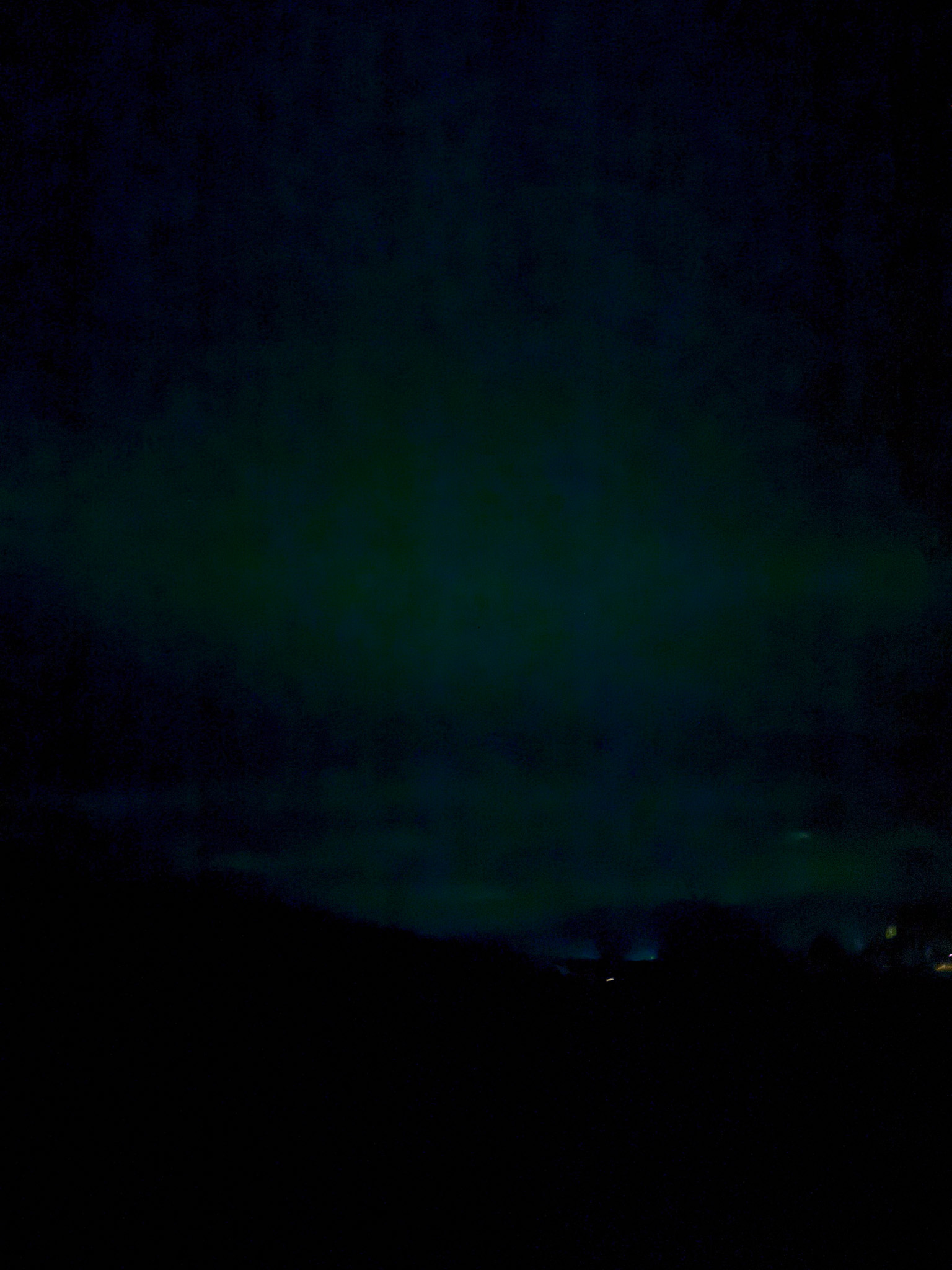
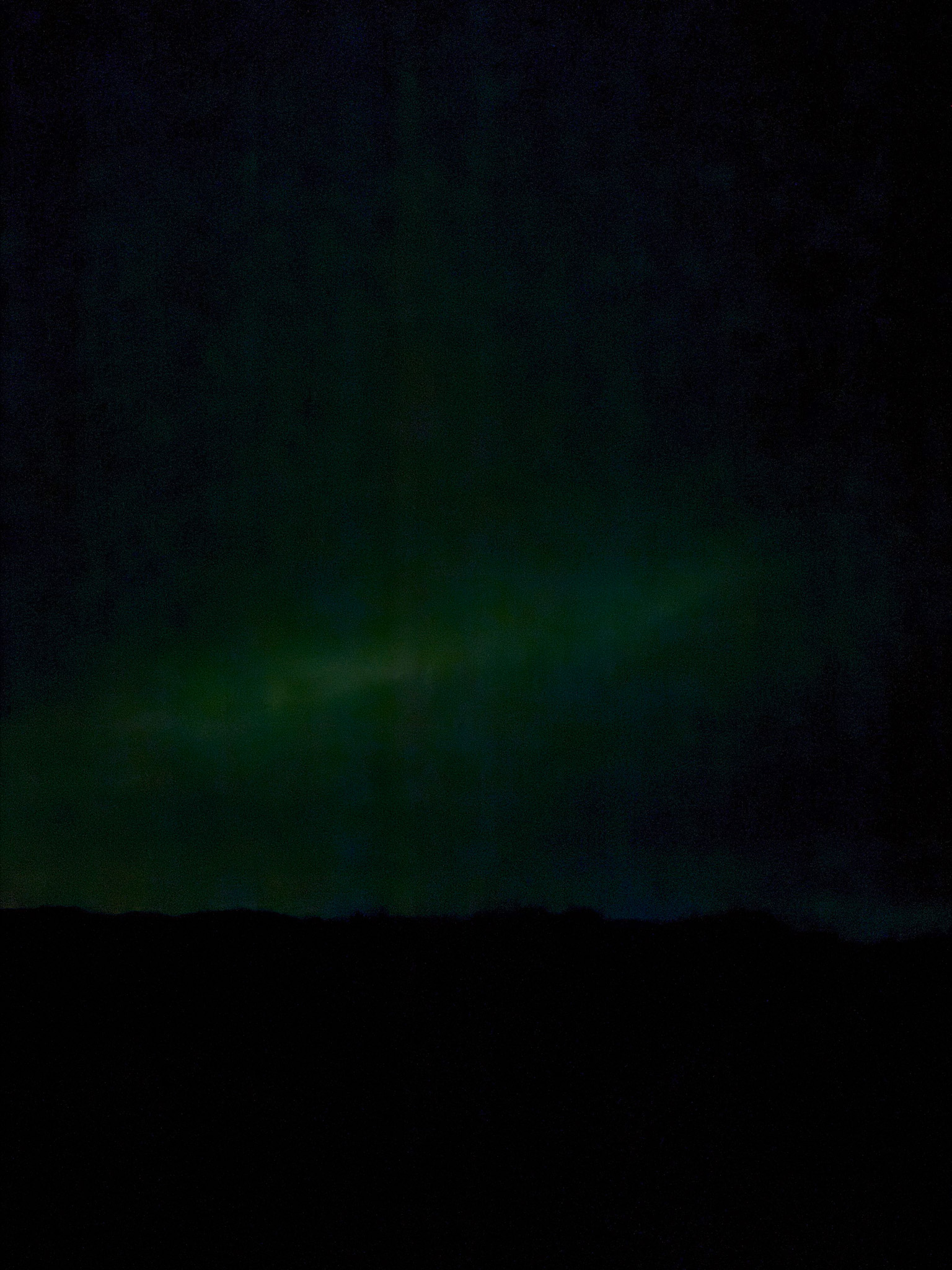
Perhaps there was some auroral activity after all. I couldn’t see it properly with my own eyes, and I can’t say for certain what my camera picked up. But it’s fascinating to think that, while we stood there believing we were seeing nothing, there might have been something happening above us all along.
Now – on Wednesday, I was relaxing at the Sky Lagoon at around 6:30pm, admiring the beautiful views of the sunset, the cloudless sky, the peaceful ocean…
Wait! Cloudless sky!?
I quickly checked the forecast on my phone. It was at 4!
I checked multiple operators and ended up finding one that had exactly one spot left. This was with Troll.is. They also provided hot chocolate.
I booked it on the spot, just an hour and a half before the tour started. It was impulsive. But if there was a chance, I wasn’t going to pass it up.
Plus, if I didn’t see the Northern Lights again, at least I would have hot chocolate… a very expensive one, but oh well.
Spoiler alert: I didn’t see them.
So yes, it was an expensive hot chocolate.
But there was a massive difference with this operator (besides the hot chocolate). This truly felt like a hunt. We didn’t just stay in one place – potentially a benefit of being in a small van rather than a big bus, like I had been with Reykjavik Excursions.
Our guide drove us around, following the forecast, communicating with his colleagues, doing his best. It wasn’t boring like the first attempt, because all of us felt – even if it was just an illusion – that we had some sort of control.
Now – should you book a Northern Lights tour?
I’m not going to say no. If you don’t have a car and therefore don’t have the luxury of going hunting for them yourself, you have to take the risk. But I would say, if you can, try to book a few days in advance or even on the same day, depending on the forecast.
But remember – so much needs to align for you to see them, and even with a positive forecast, things can still fail, as they did for me.
Travelling also means giving up control, being willing to do so and keeping a smile on your face.
It was Nature, after all; I smile at her and say, next time.
Love,
Nic
Where I styed in Reykjavik (and recommend): Oddsson Downtown
P.S. Some links are affiliate links. If you click through and make a purchase I will receive a small commission at now extra cost to you.

