
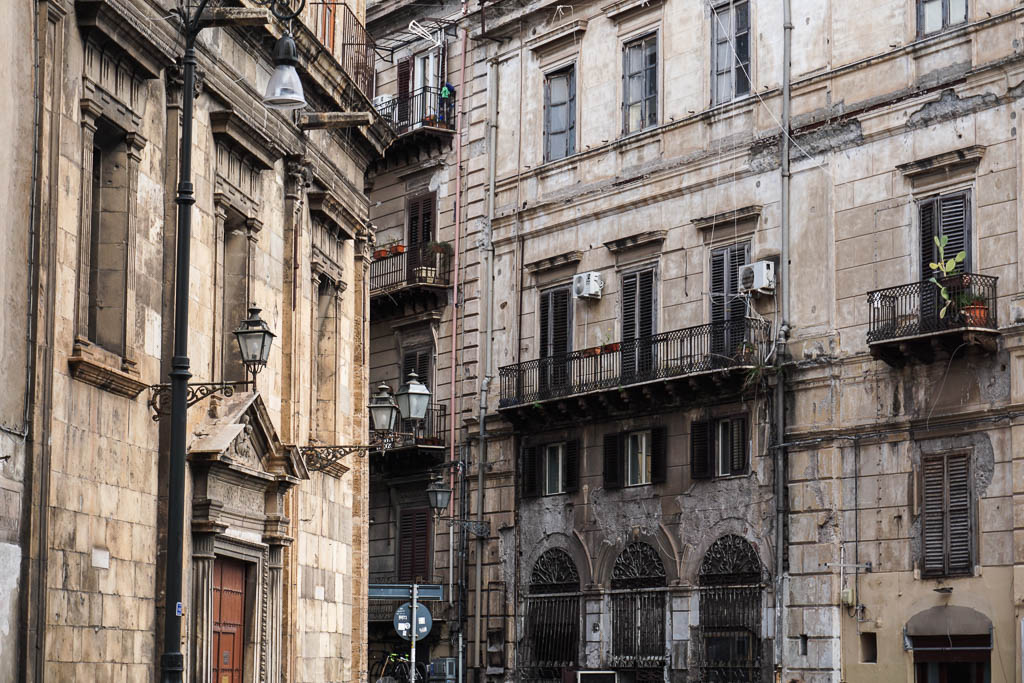
On my first morning in Palermo, I woke to the song of the seagulls. Lovely, right? That was immediately followed by the aggressive, rhythmic crunch of breaking glass -the true anthem of the Sicilian trash truck. Even in a “quiet” residential area, Palermo cannot help itself; it is a city that lives out loud.
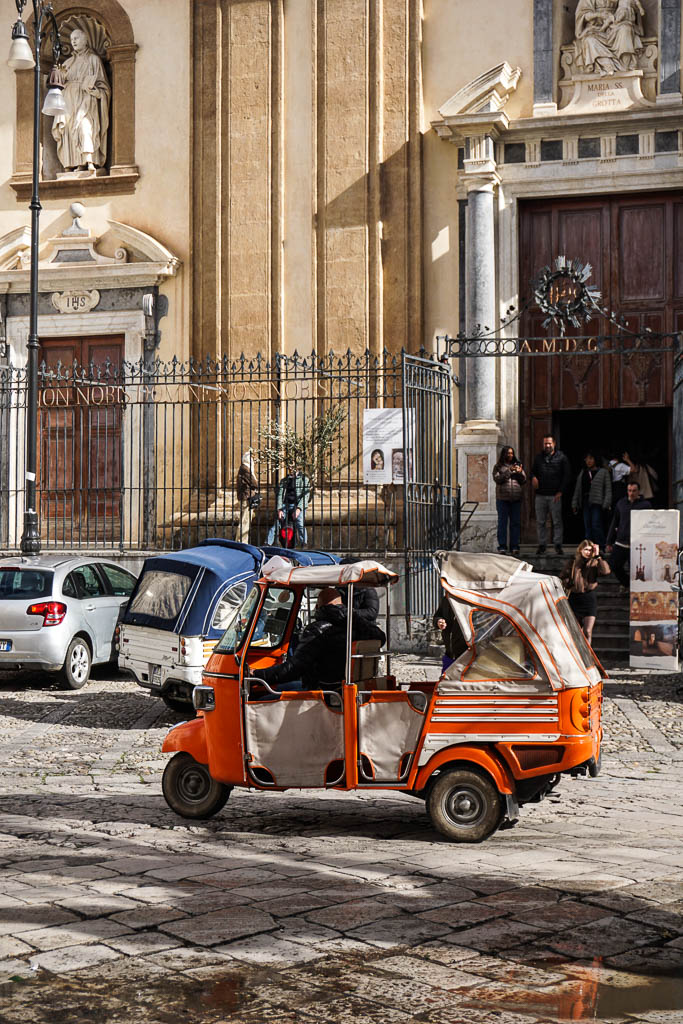
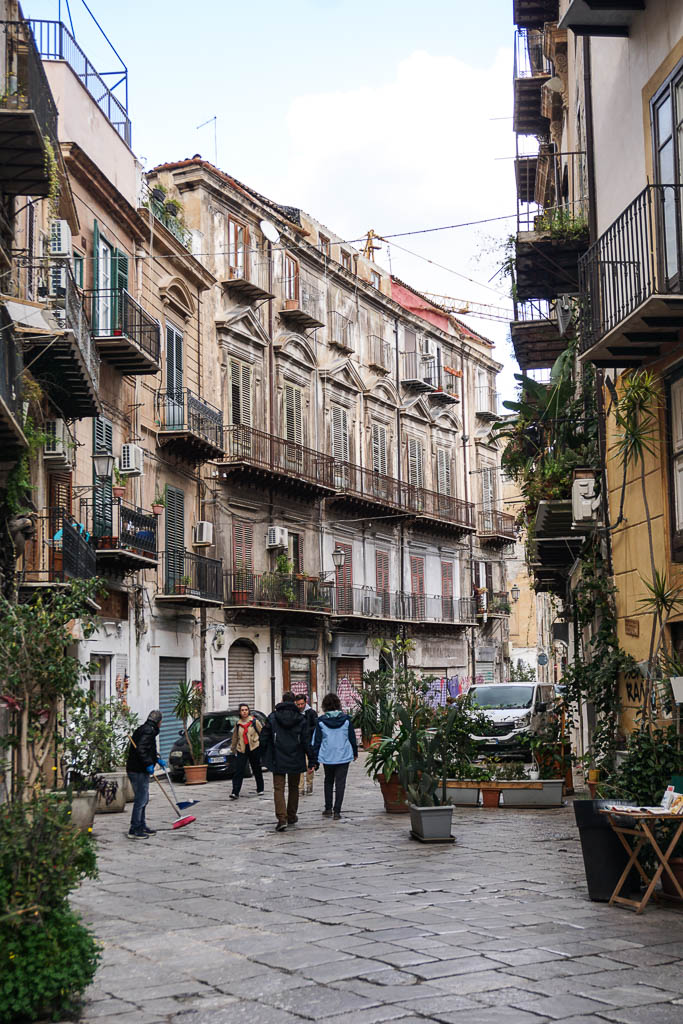
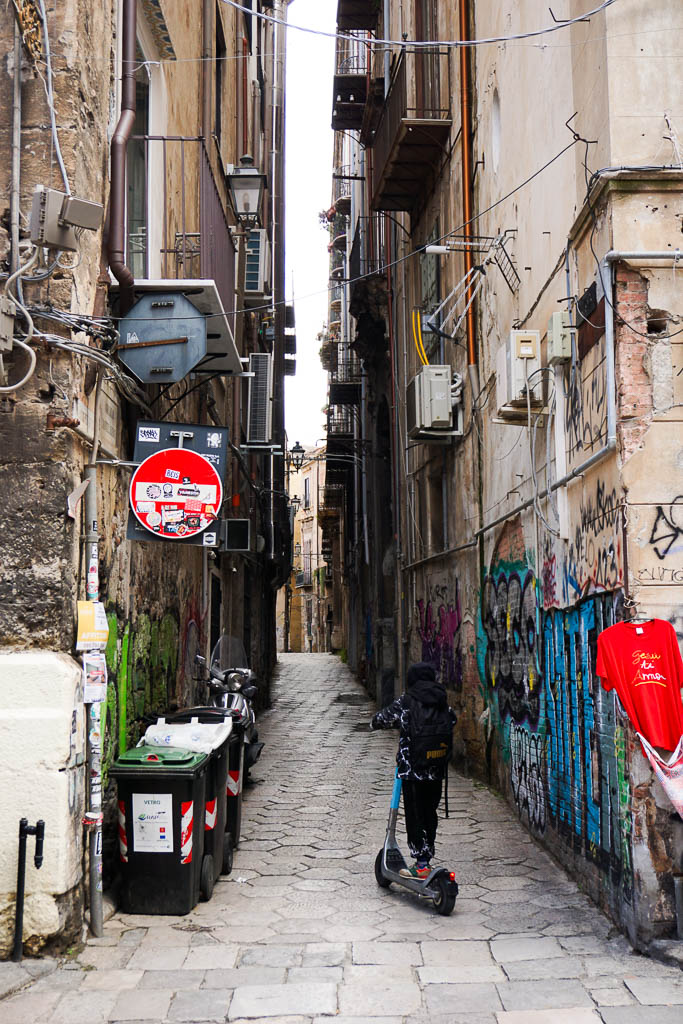
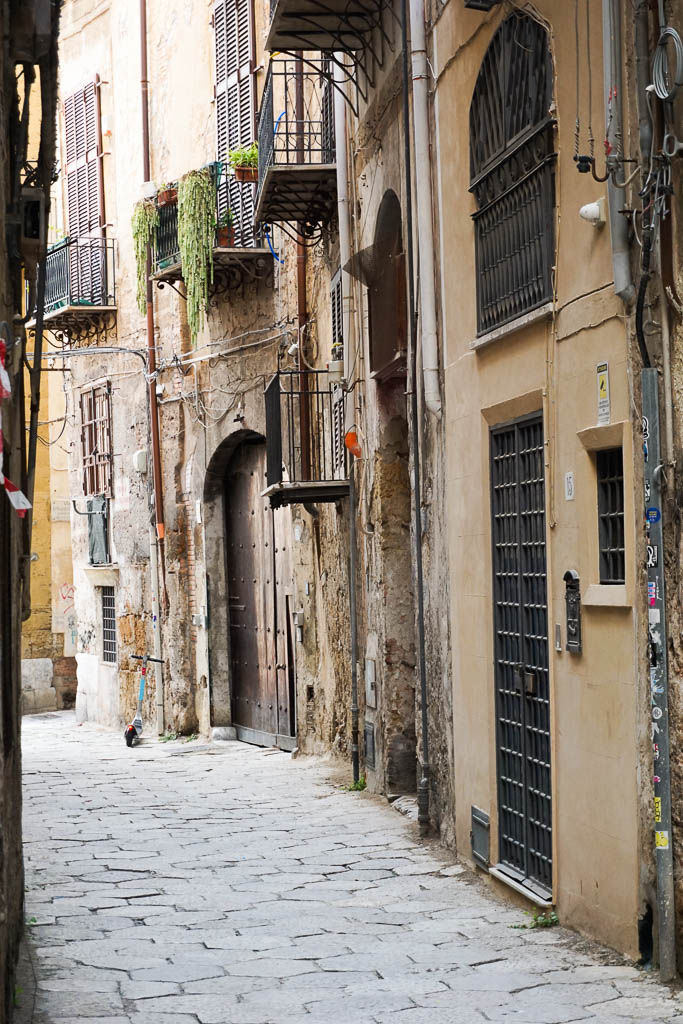
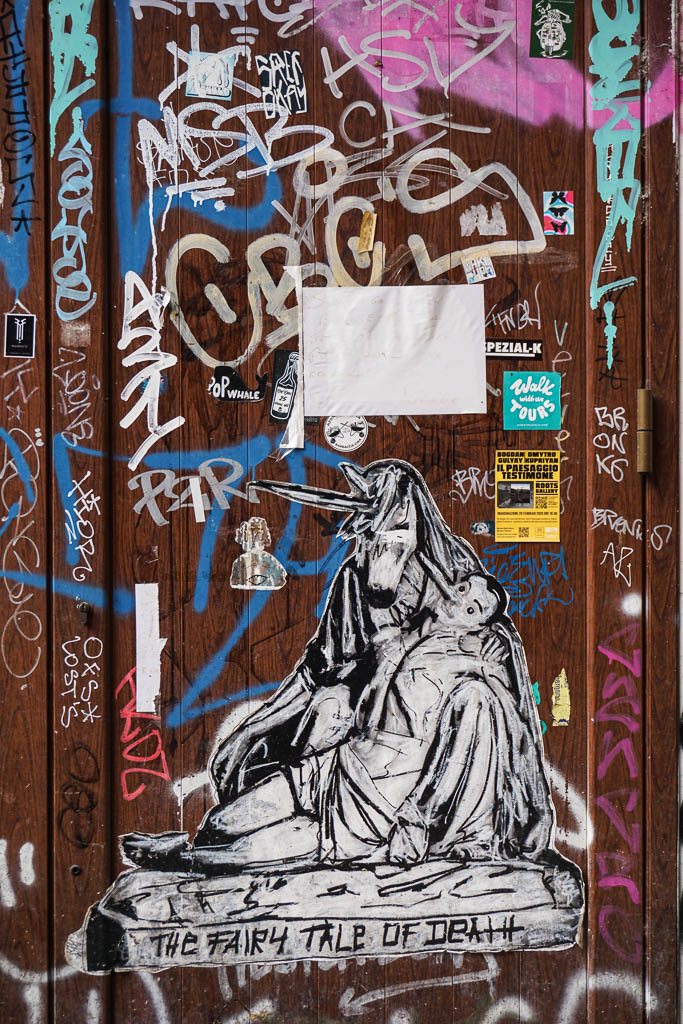
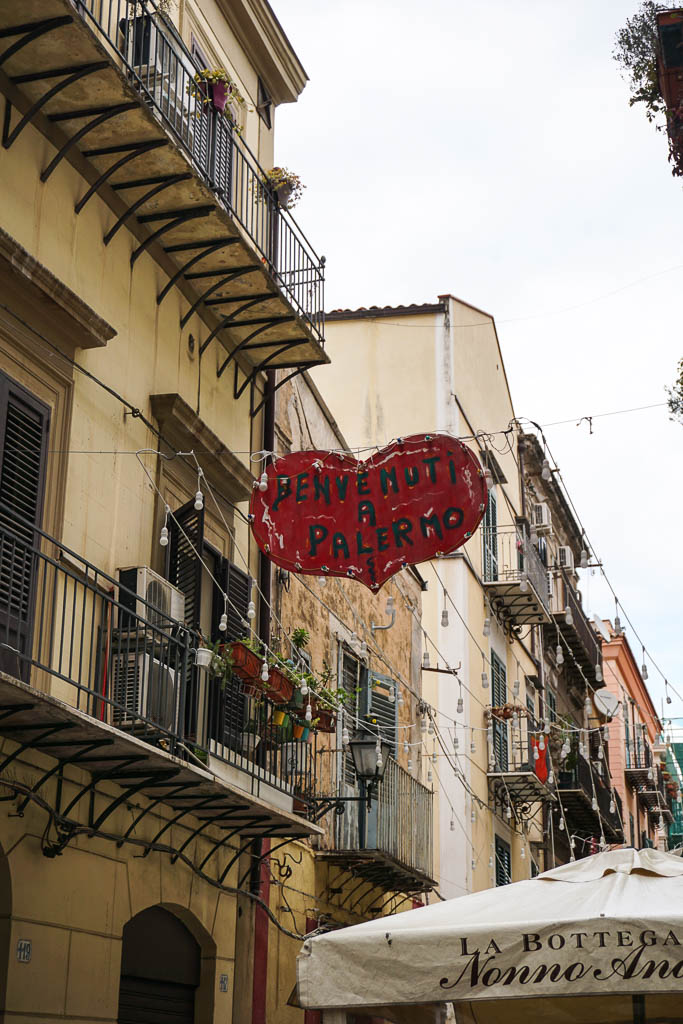
That loudness is also visual. There is a lot going on and it can be daunting. Graffited walls, buildings in decay, rubbish sort of everywhere… if you truly walk Palermo, not just the tourist bubbles, these are the things that you’ll see. The things that make Palermo real. A real city, lived, experienced, every day by real people.
Palermo is an onion: layered, complex and easily misunderstood. It does not cater and it does not perform. It is what it is. I photographed Palermo away, intrigued by these layers – the decay that comes with decades of complex and often uncertain history. The neglect that seems abandonment but could hint at something deeper. I photographed Palermo away, I had been starved for such an interesting subject for my lens.
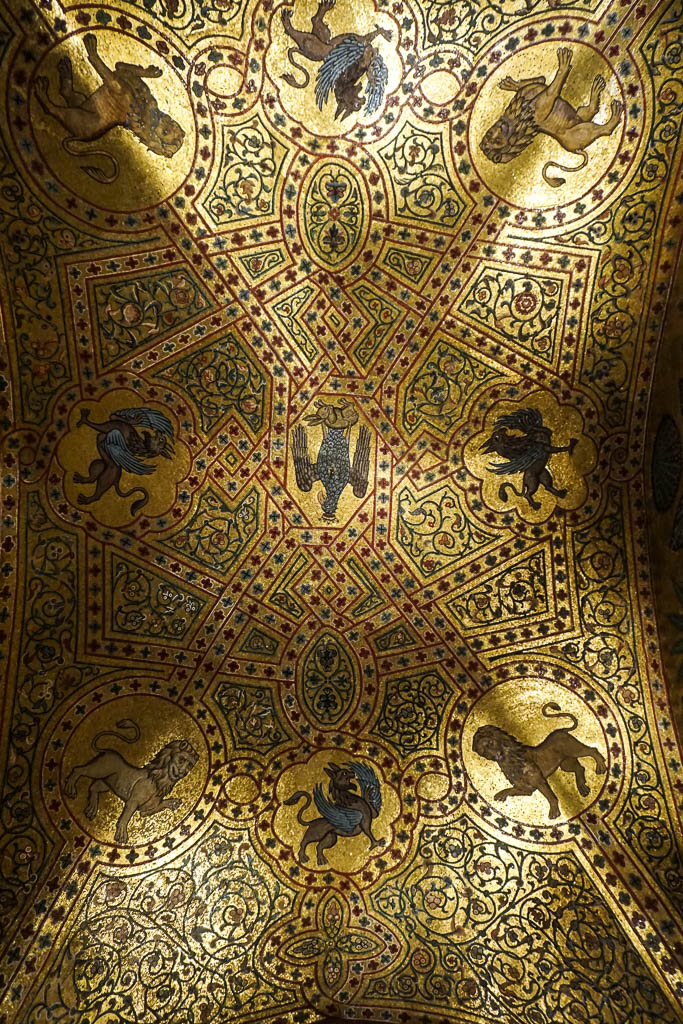
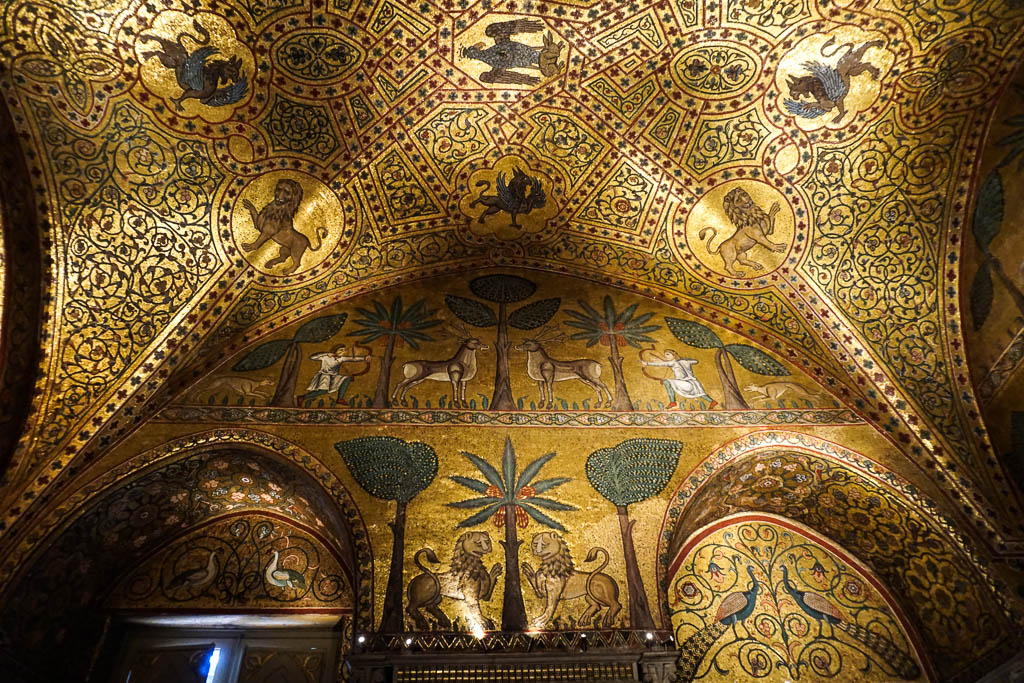
The Palazzo dei Normanni was a highlight – not just because of the famous Palatine chapel but mostly because of the contrasting simplicity of its outlines with the rich interiors. Sala di Ruggero II is incredible covered in mosaics depicting hunting scenes – which I would never usually call beautiful bearing in mind my passion for animals and being against hunting for sport in general – reflecting a wonderul blend of norman and Byzantin styles. Just be careful with your neck – I spent too much time staring at the stunning ceilings.
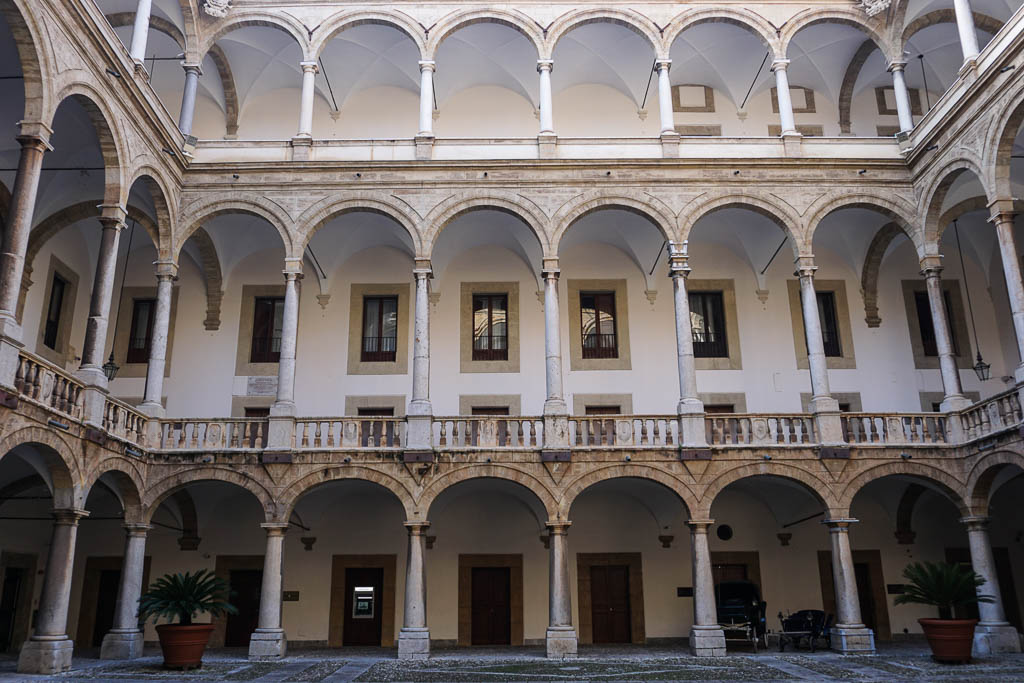
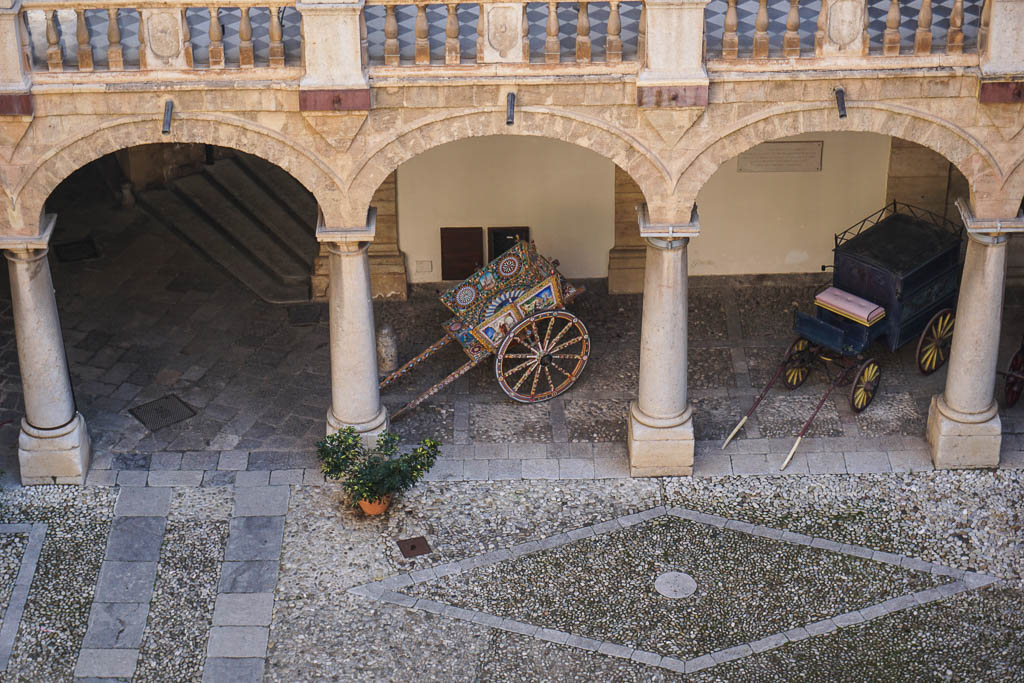
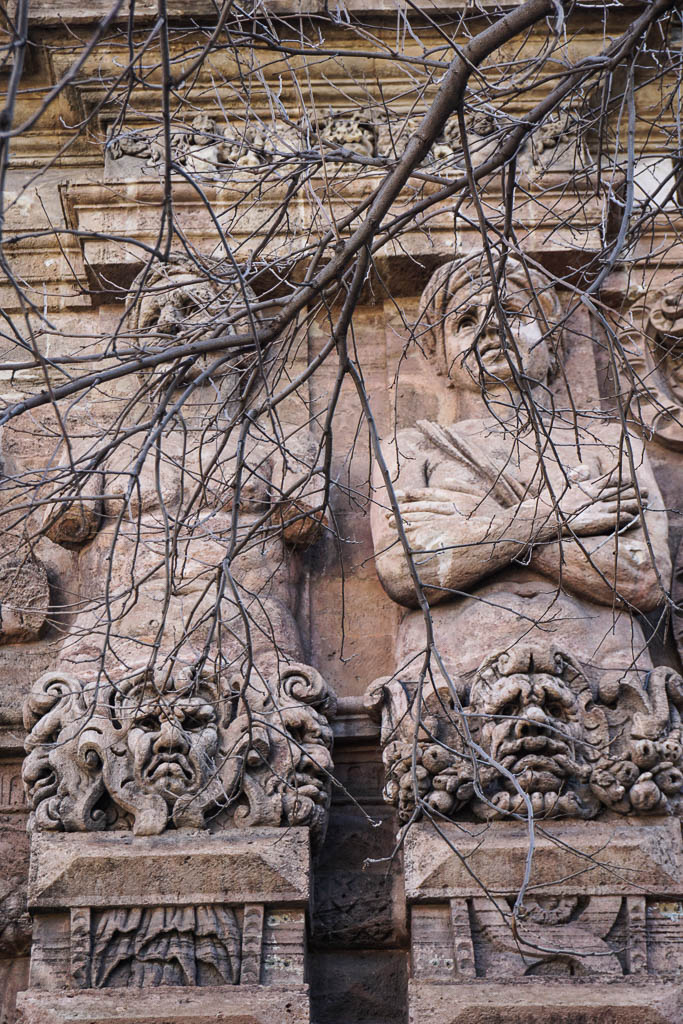
I won’t talk again of the churches – you can read it all about here. But outside if the Palazzo and churches, Palermo shows a rawness that is hard to ignore, even in its main commercial street Via Vittorio Emanuele. It leads you to the famous piazza Quattro Canti, translated to Four Corners. This is considered the centre of the city and it was always so busy! Most times I had to pass through it to go back to my accomodation, which was located near Teatro Massimo.
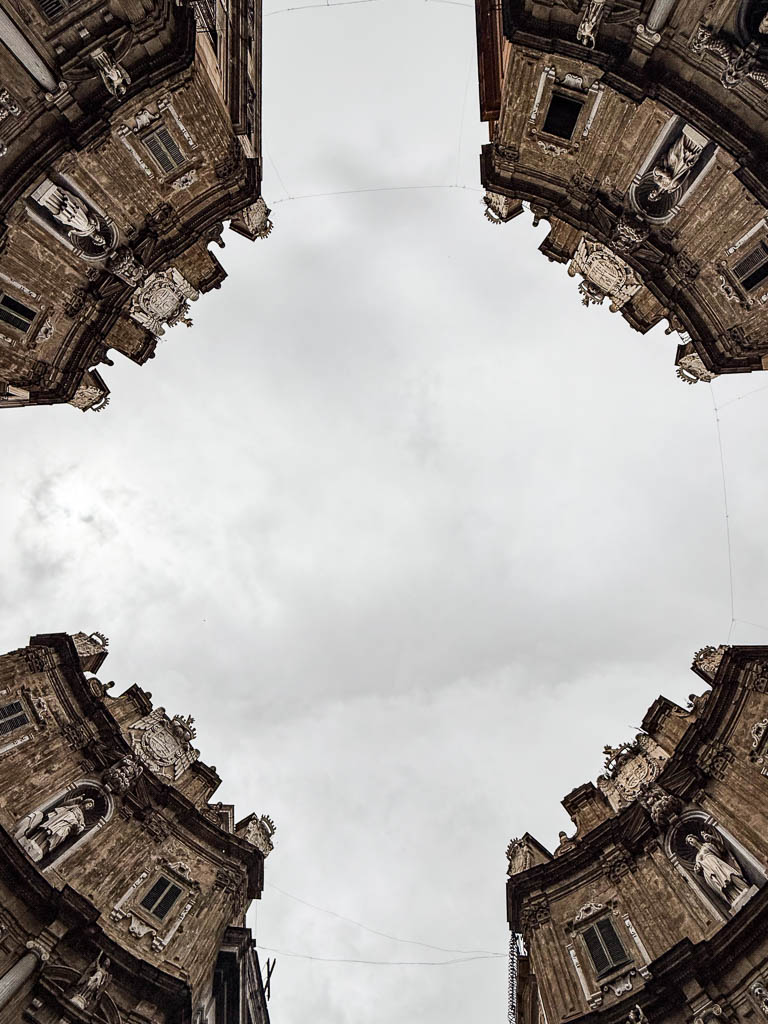
Try to see it early to fully admire the symmetry – it truly is the epicenter of Palermo. Dates back to the early 1600s when Sicily was under Spanish domain. There was a newfoudn stability that allowd for a facelift of Palermo, taking on the latets Barroque trends that were already spreading from Rome to the rest of Italy. The Piazza sits exactly at the intersection of Palermo’s two main historic streets – Via Maqueda and Corso Vittorio Emanuele. Each corner is a curved Barroque facade designed to miror the others. whils teach facade is dressed to impressed, they are also embeded in symbolism. The bottom level has statuies representing the four seasons, the middle level statues of the Spanish kings of Sicily and at the top level the statues of the patron saints of Palermo’s four historic districts.
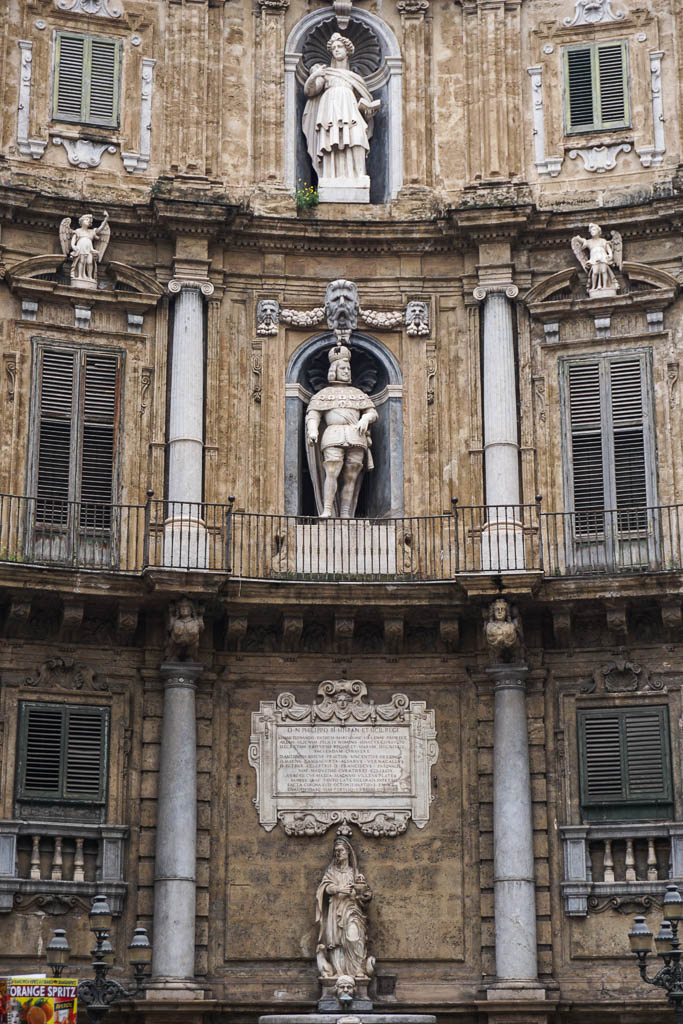
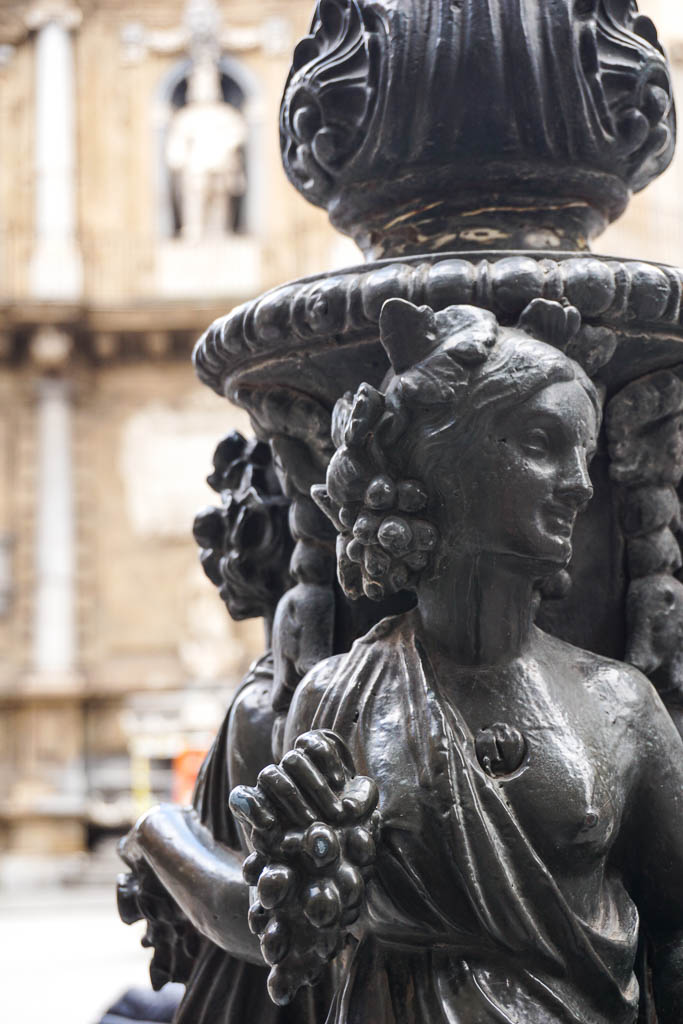
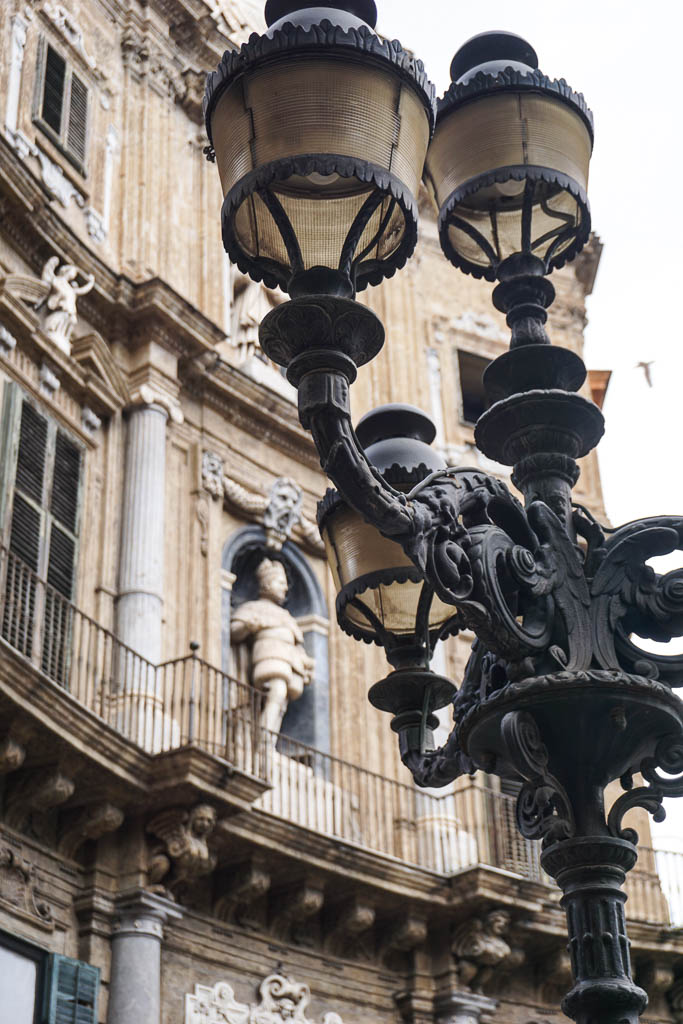
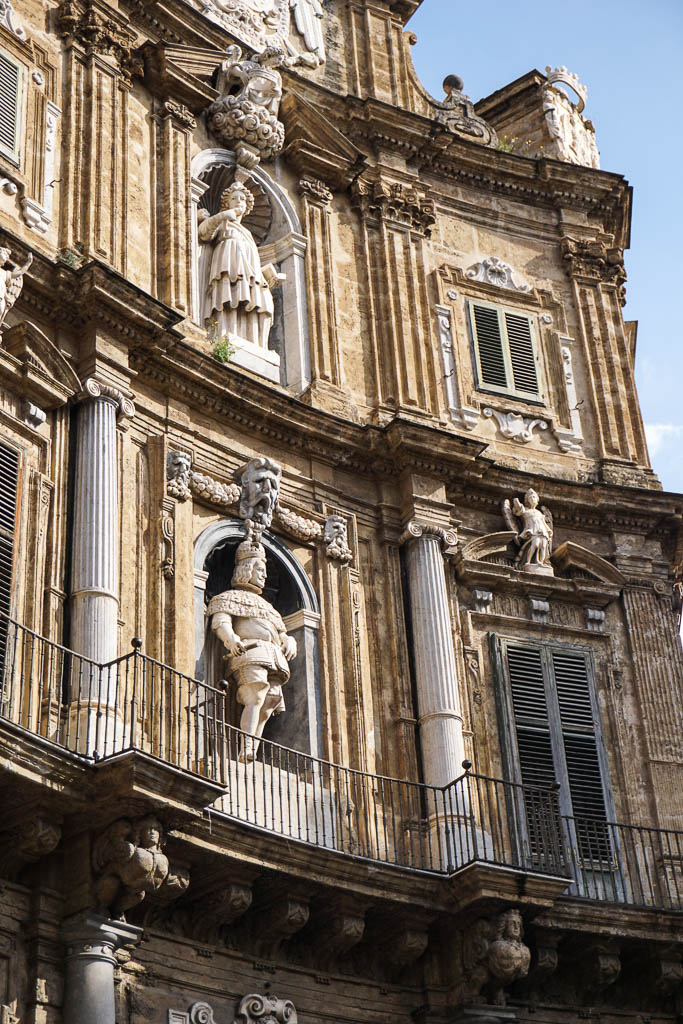
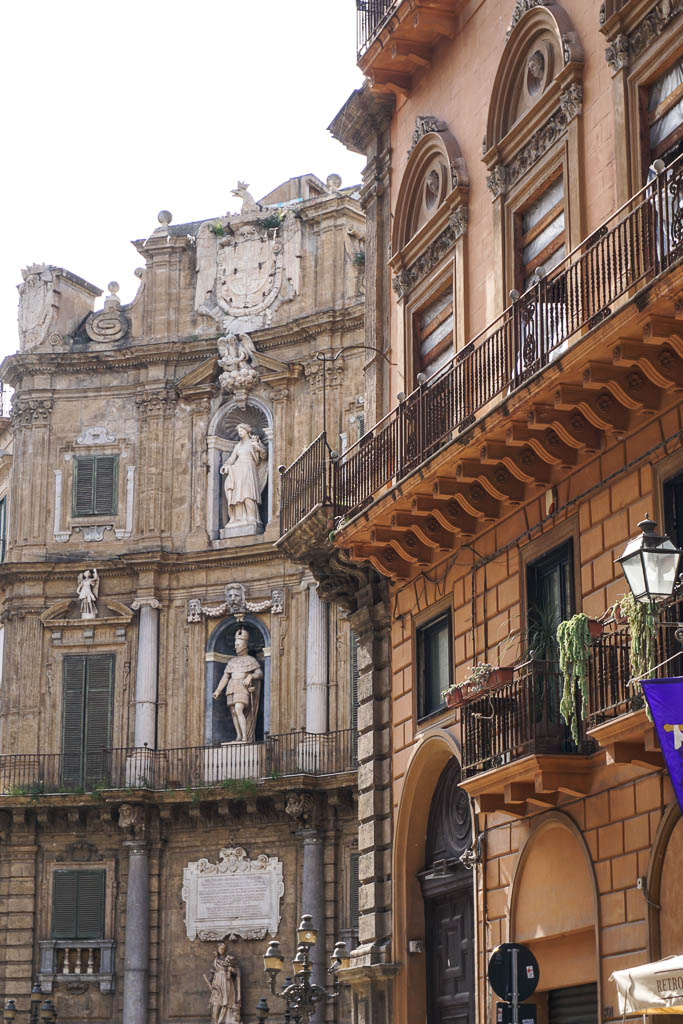
And the most wonderful part – in a sunny day, at least one of the facades is always lit but sunlight – it’s never completely still.
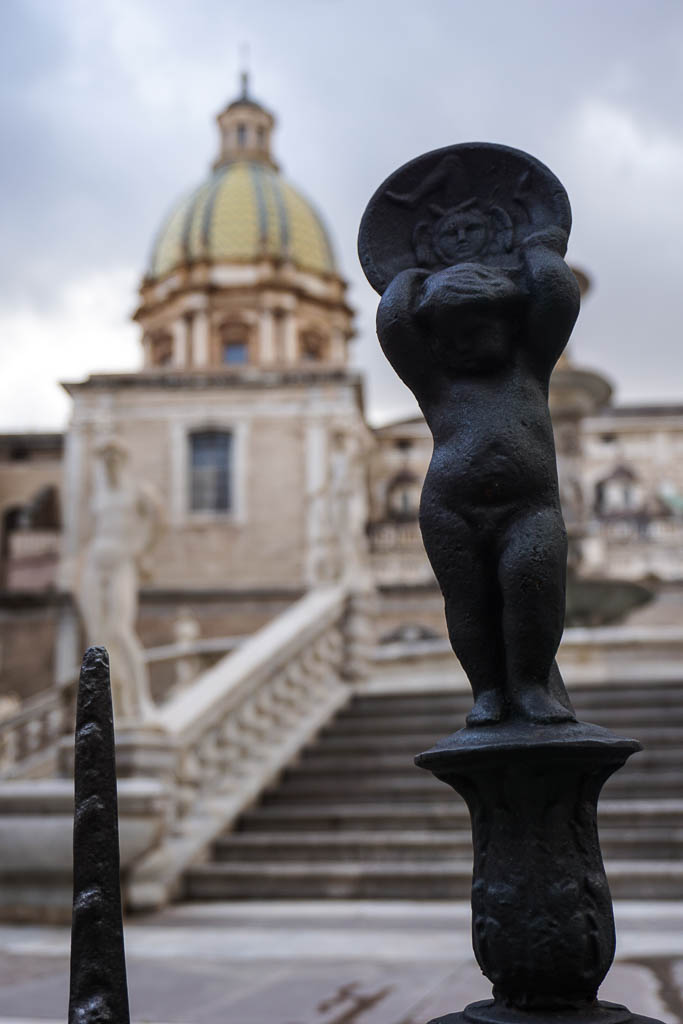
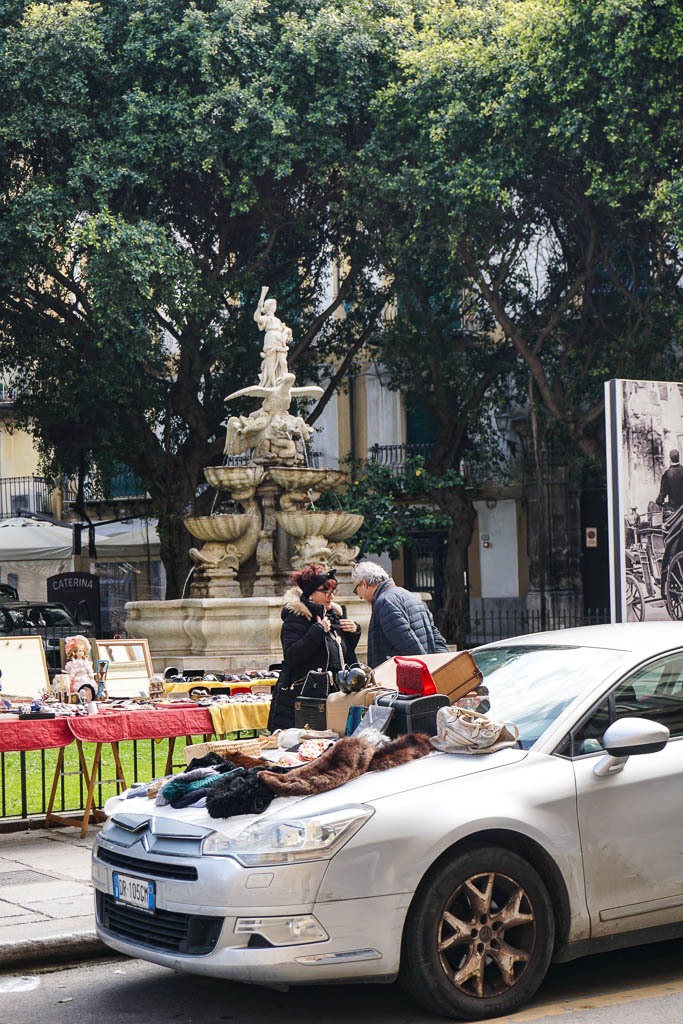
Not far, you’ll find the Fountain of Pretoria – older than Cuattro Canti by a few decades, this was designed in Florenace during the Renaissance period and it was quite scandalous at the time, due to all of the nude statues.
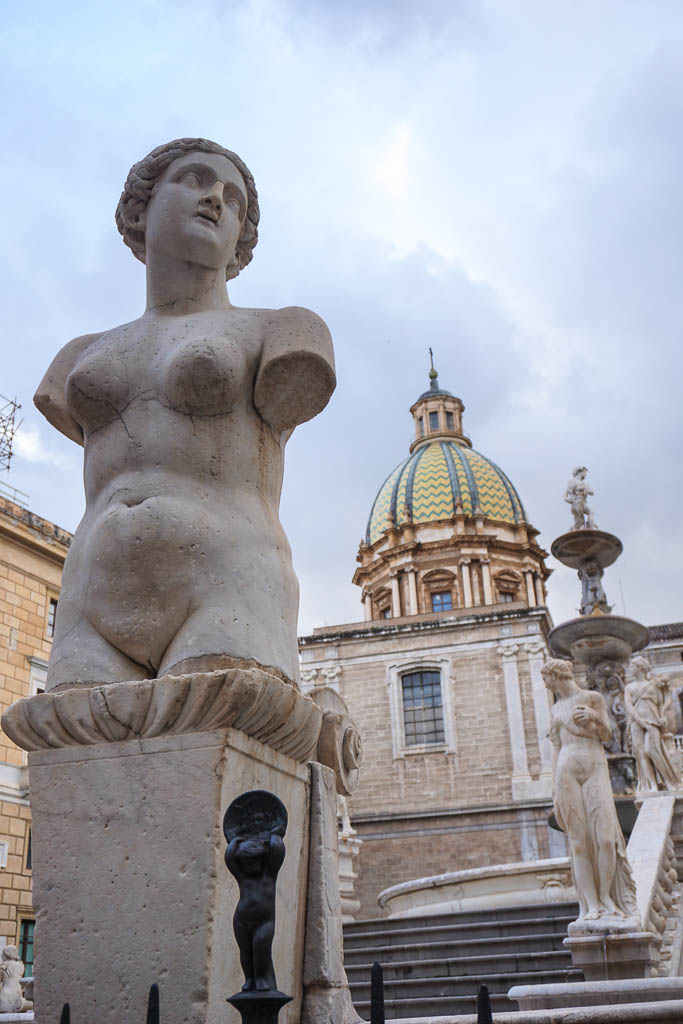
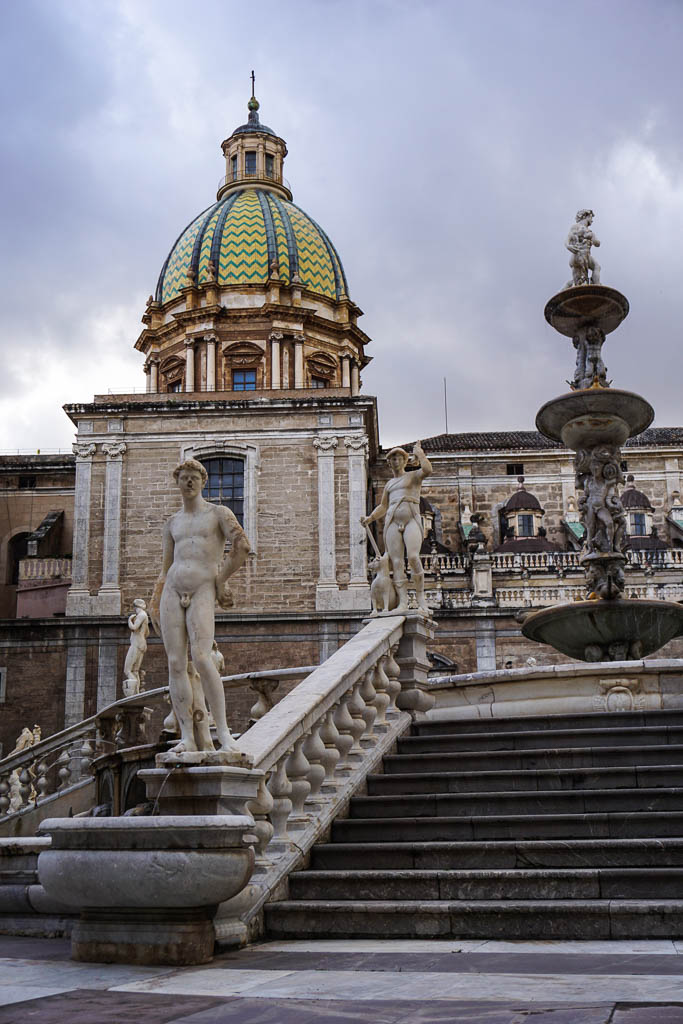
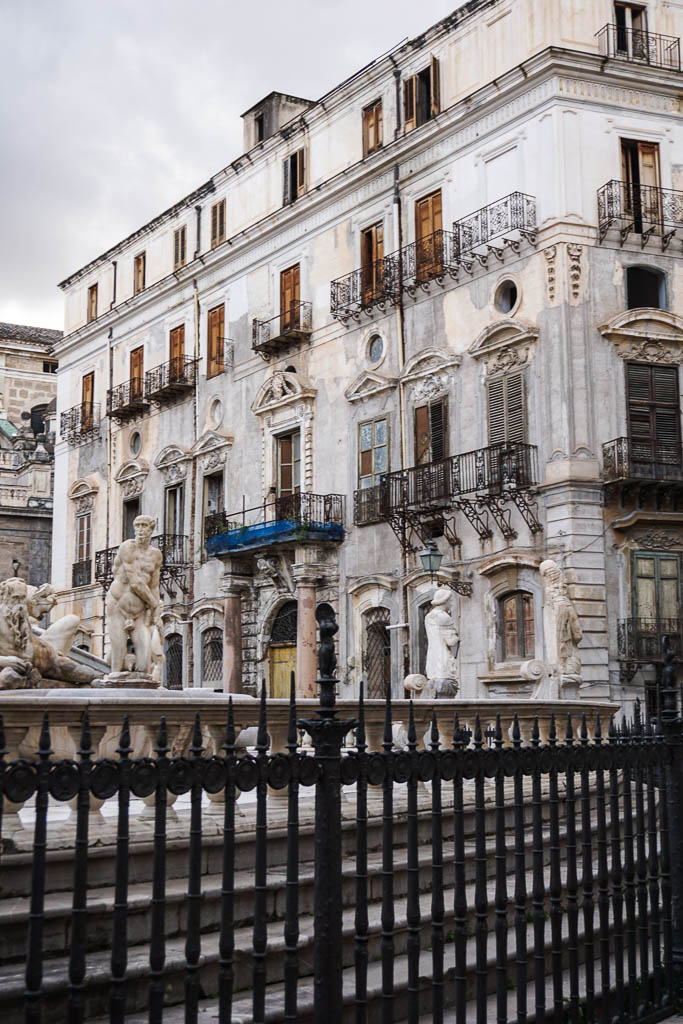
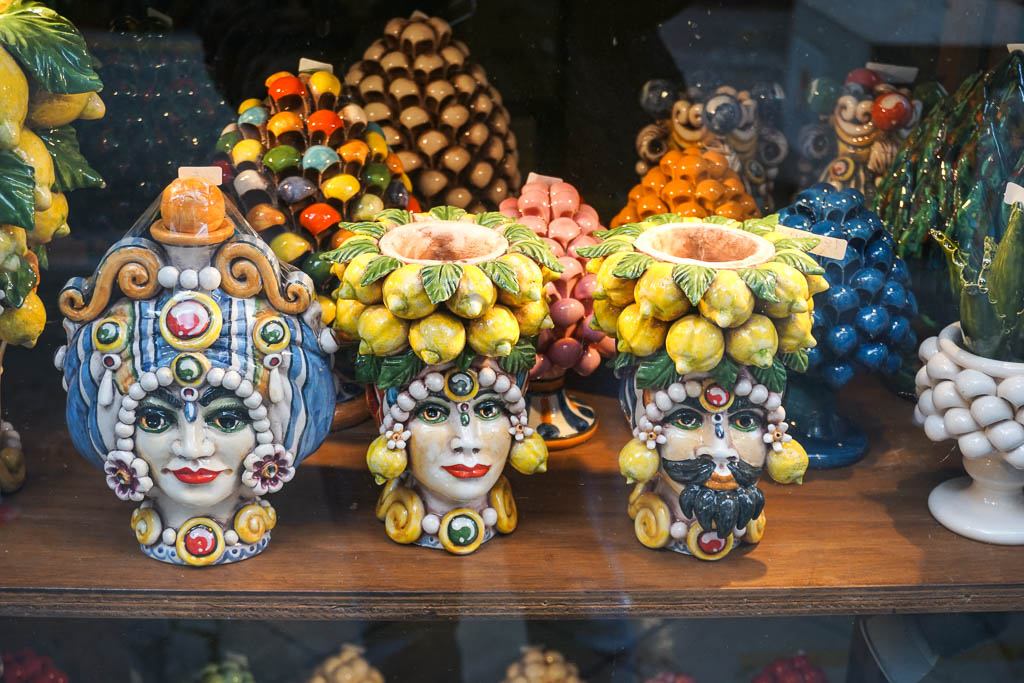
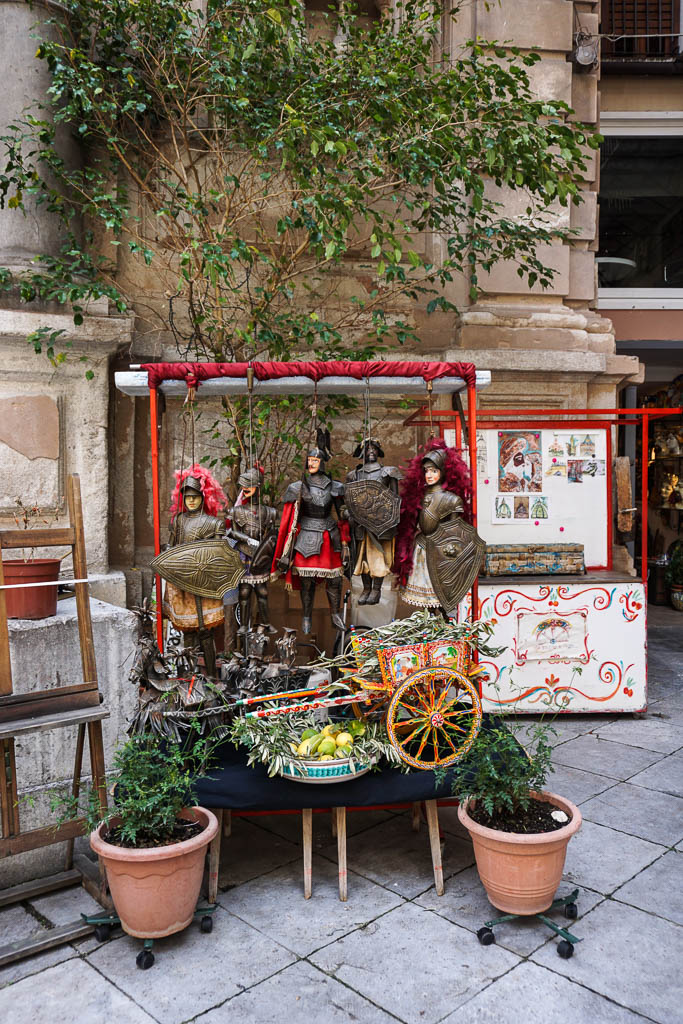
I find this quite funny, bearing in mind that one of the things that you do see everywhre in Palermos are ceramic heads of a man and a woman, usually with flowers or fruit at the top of their heads – the Sicilian Moor’s heads. These are tied to the tale often called the story of the Moor and the maiden – a local woman fell in love with a Moor and they get involved in a passionate affair. She then finds out he has a wife and children back home. So what does she do? Kills him, cuts his head off, and uses it as a pot to plant basil.
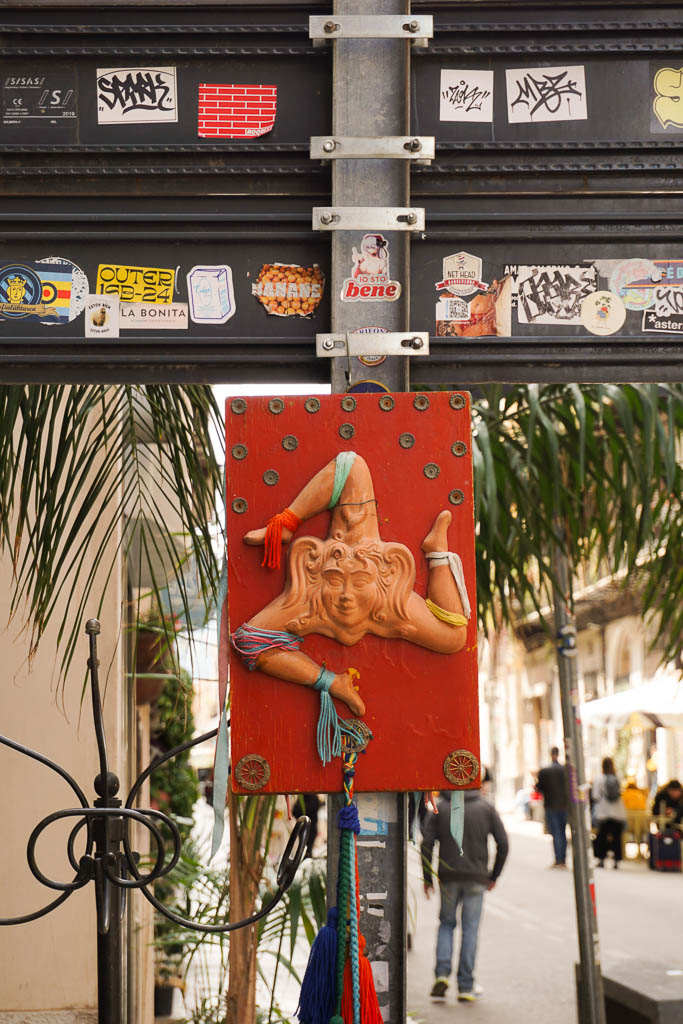
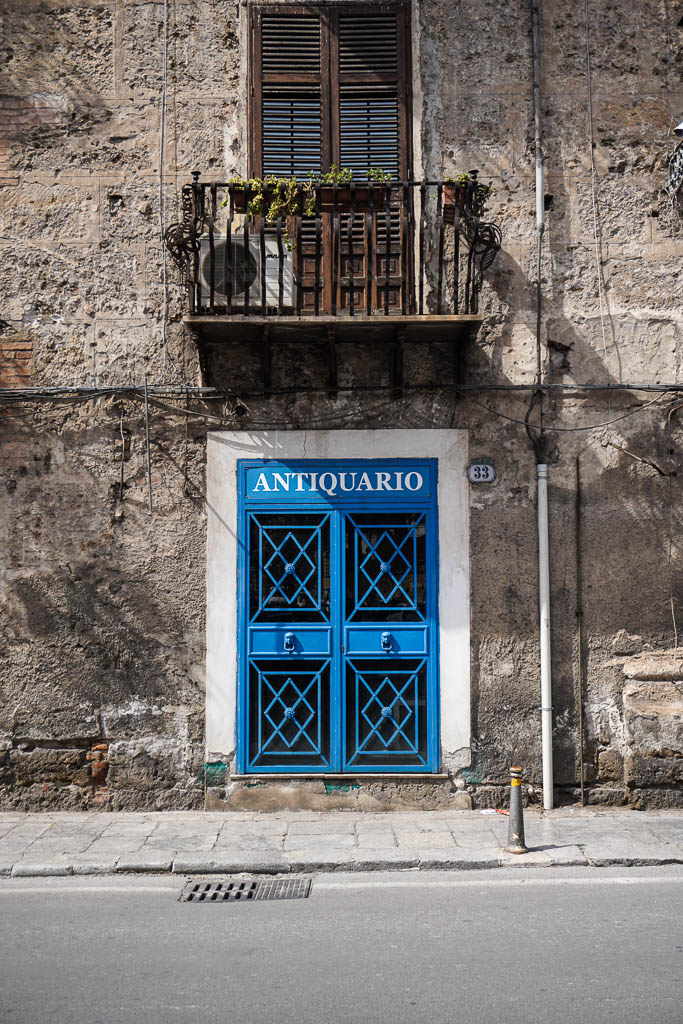
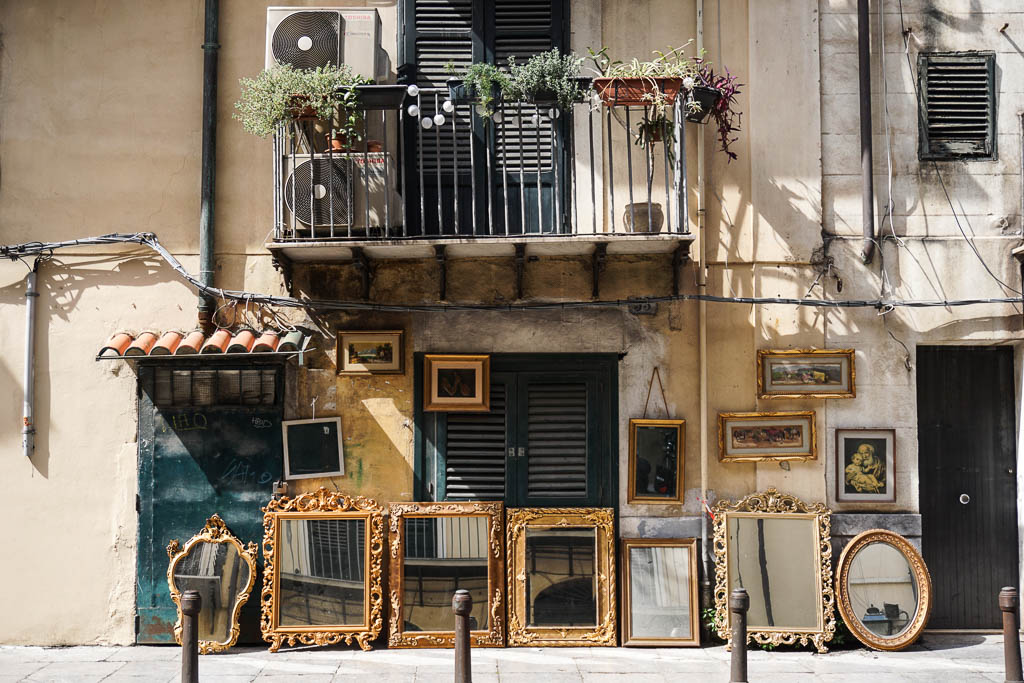
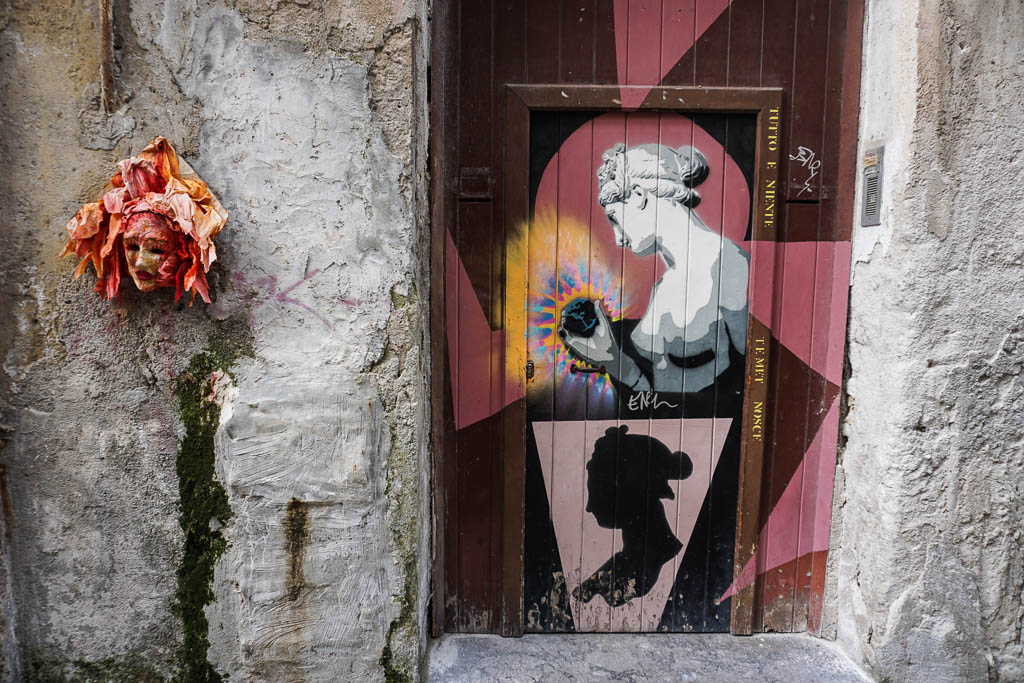
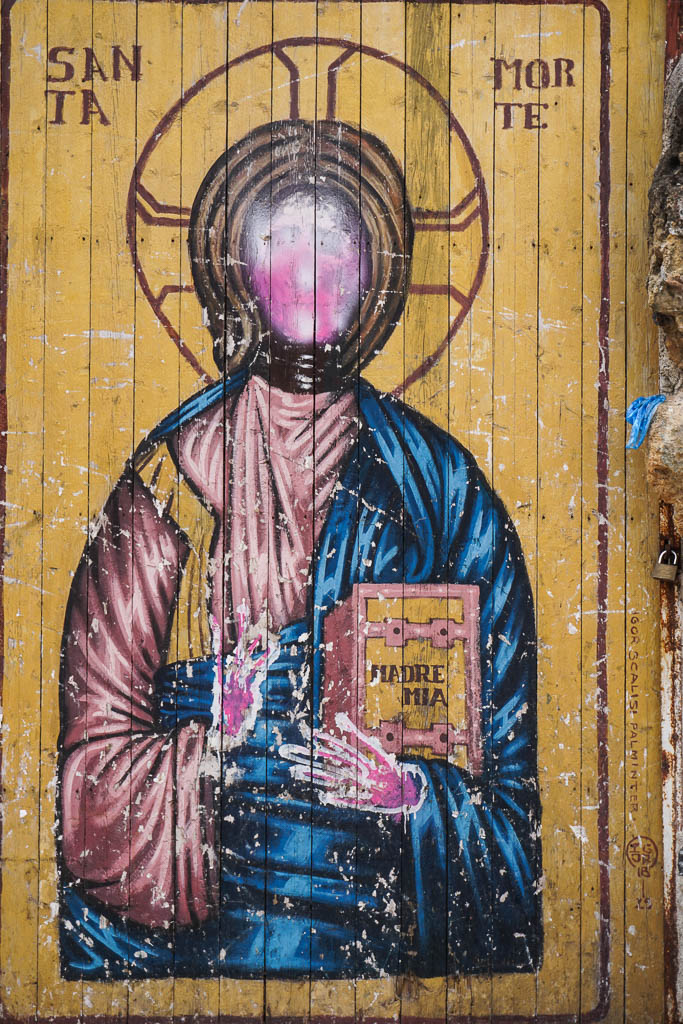
And here’s to more contradiction and layers – which really makes me love Palermo even more. So do not just visit the churches and the palazos – walk these streets that have seen and lived so much. These streets that are still so much alive – and bursting with creativity. Not just from the old standing ceramics traditions – but it’s a pure delight to see street art that is felt so rooted in Sicilian culture.
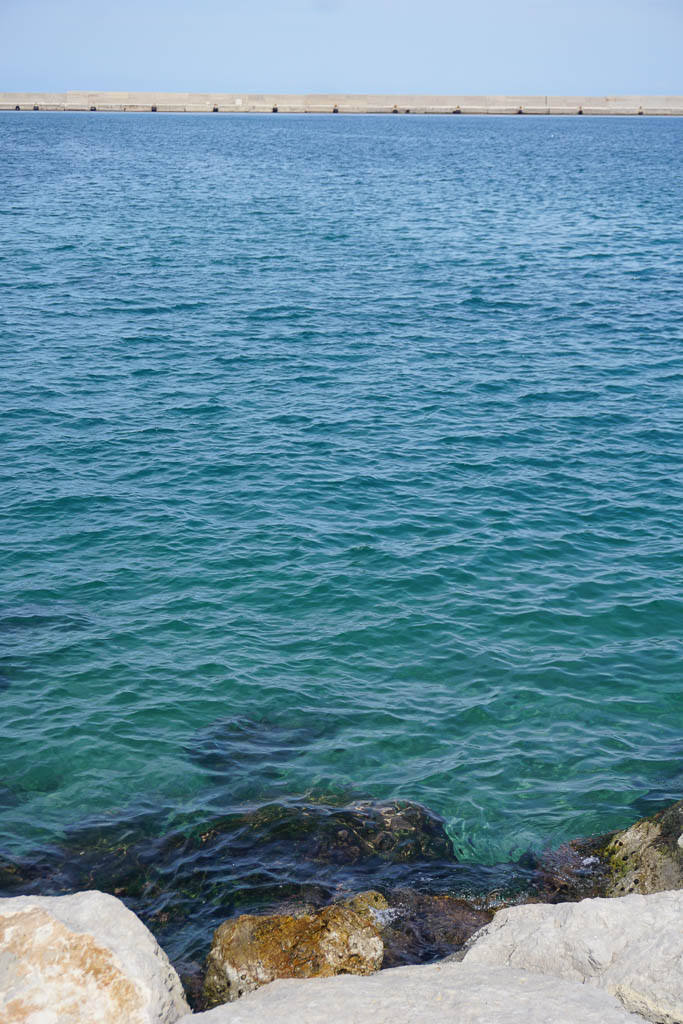
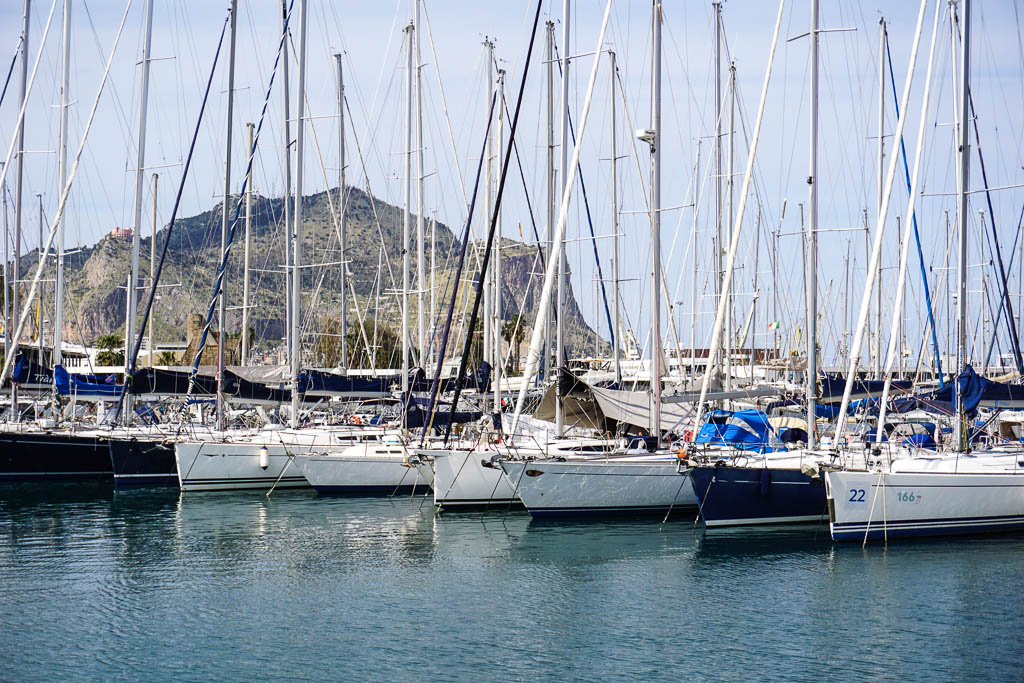
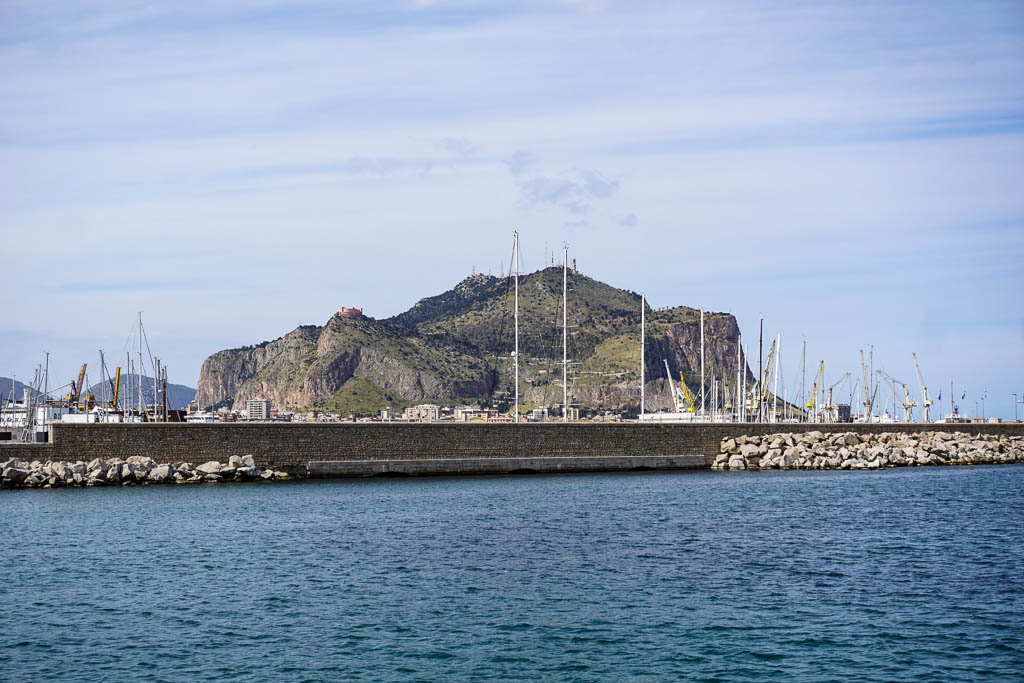
I decided of course to walk all the way to the sea. I was disappointed there wasn’t a proper set up to sit, have a drink and breathe the salty air, cure my blues with that blue. But I still sat there for a while, breathing in and out, a bit of a respite from the crowded old town.
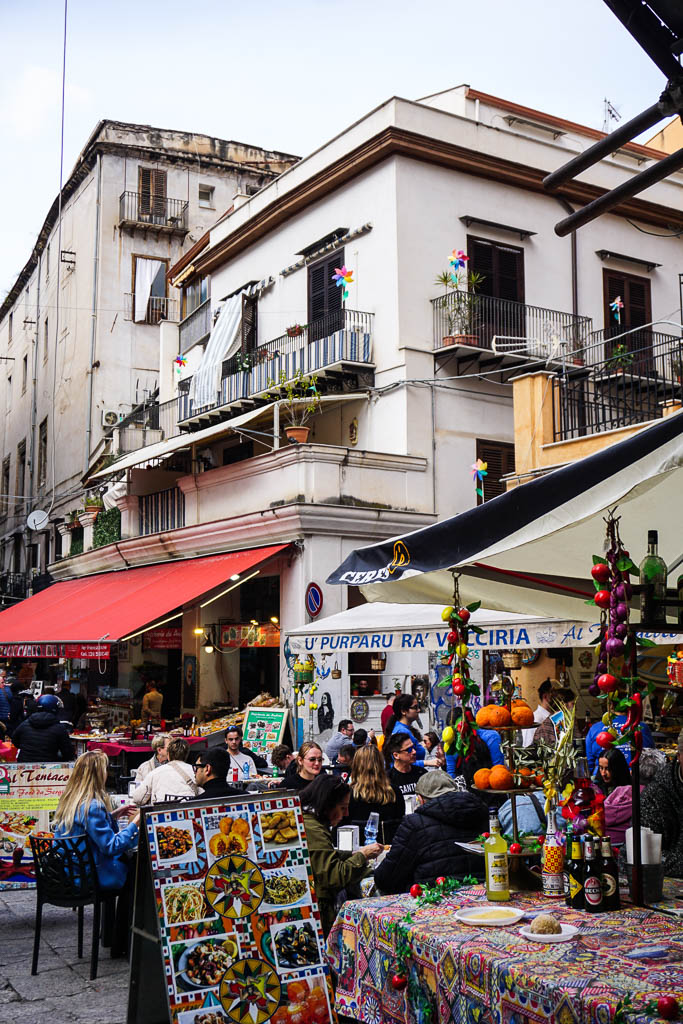
At one point, I stepped upon what looked like a party – was I crashing into something I wasn’t allowed to be in? There were tables with cooked food and drinks ready to be drank. Groups of people sitting in long, portable tables. Loud music and people dancing, as in properly dancing in pairs! I had not seen that since the time I lived in Portugal and went to my villages parties. I assumed it was some neighborhood celebration, but then realised I was actually in the location of the Vucciria Market that simply transforms into a party from late afternoon. Imagine, how wonderful is that? This is what I call community. This is what so many of our modern cities are lacking. And Palermo does it, so humbly, so naturally.
Love, Nic
P.S: The links below are affiliate links. This means if you click through and decide to make a purchas eI may gaina. small commission. This is not sponsored and it’s based on my personal experience.
Where I stayed in Palermo: il Palchetto B&B di Charme e Design. Great location, stunning rooms. Book here.


One thought on “Palermo: the beautiful and unapologetic onion”