

Almost by accident, I ended up in a place of religious pilgrimage, in the sacred Mount Nebo. This place has a special feature in the Old Testament. It is said this is where Moses died, just after having seen the Promised Land. I should be ashamed for not knowing this story better, as someone who was raised as a Catholic, attending Sunday school after being baptised. The thing about religions is that often it is bestowed upon us without a say – and in reality, I’ve always been quite faithless. It is hard for me to believe in a God or in Gods, whatever forms these may take. Still, it saddens me a little that after so many hours spent in Sunday school, my memory seemed to have retained zero information – whether because it was simply too boring or, in reality, a little traumatising, with strict rules and conservative teachers, I was there in body but not in spirit. This is ironic bearing in mind that the destiny of my soul should have been the utmost reason for me to be present both in body and spirit.
But I digress. I have been saying in the past few years that reading the Bible could actually be an interesting exercise. As a full-grown adult, I now see there was so much I could have learned about this book that indeed seems to be a fantastic literature masterpiece. Specifically the Old Testament, when the story of Moses, our protagonist here, takes place. I suppose I was just never interested in stories where we are expected to idolise a God, an entity, that seems to be sort of vengeful when its subjects don’t quite do whatever he wants them to do. A God that demands suffering and sacrifice. Yet, I could have looked at it as a work of fiction, as I look upon any other religion.

In the 4th century, a small monastery was built by Egyptian Monks on Mount Nebo in memory of Moses. It was later turned into a Basilica and perhaps the main attraction these days is the fantastically well-preserved Byzantine Mosaics. The Church is now called The Memorial Church of Moses – and it is particularly striking the mosaic that covers the floor on the left side when entering the church, depicting agricultural and pastoral scenes. On the top row, we have a view of the wild world, with animals roaming free. On the second row, how humans eventually domesticated those animals, developing agriculture and pasture, as can be seen in the last two rows on the mosaic.

Outside of the church, there is also a beautiful sculpture by Italian artist Giovanni Fantoni, erected in 2005. It represents the Brazen Serpent from which Moses protected the Israelites. You see, one of my favourite things about religion is precisely how it has inspired so many great artworks.
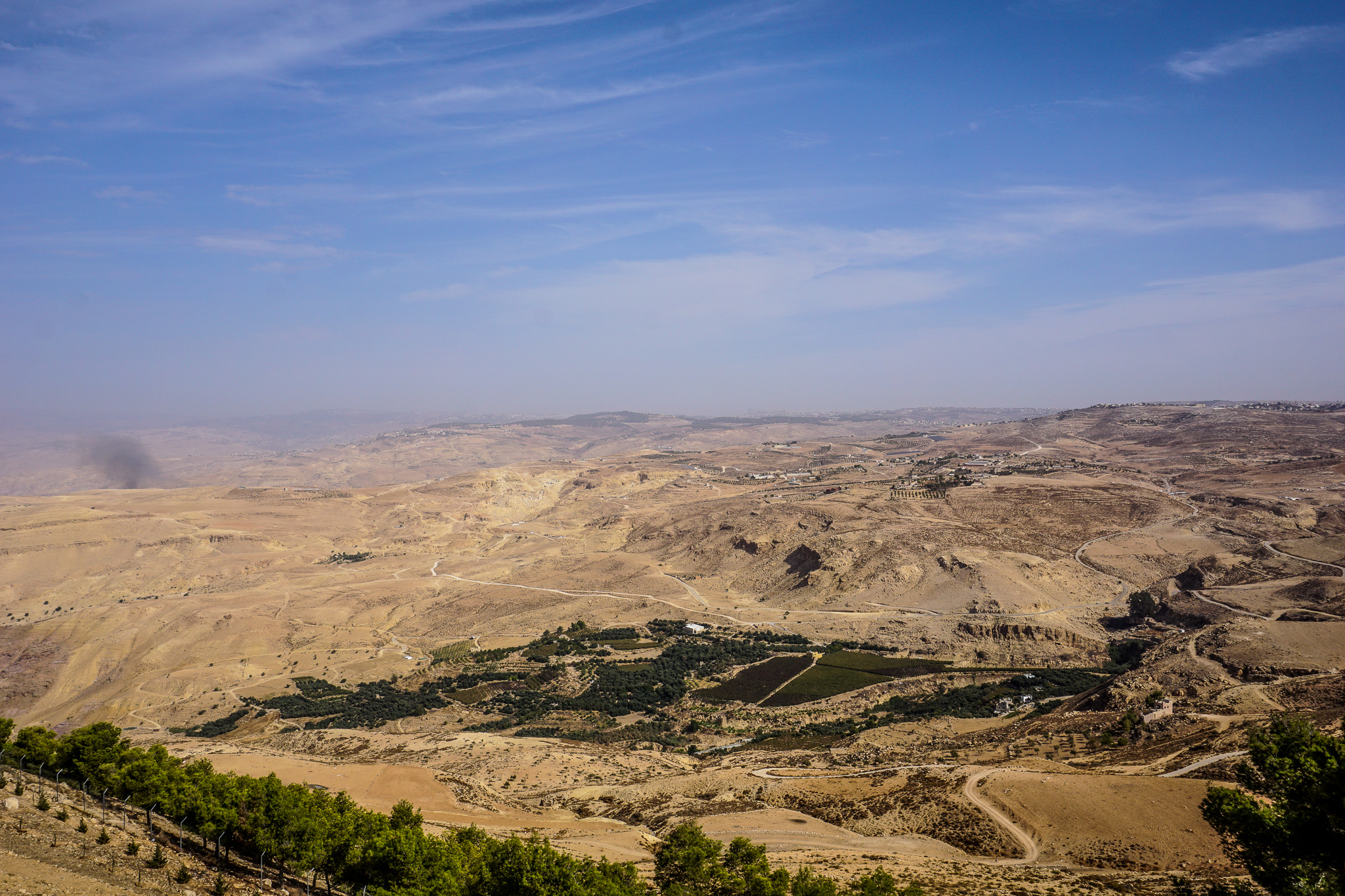
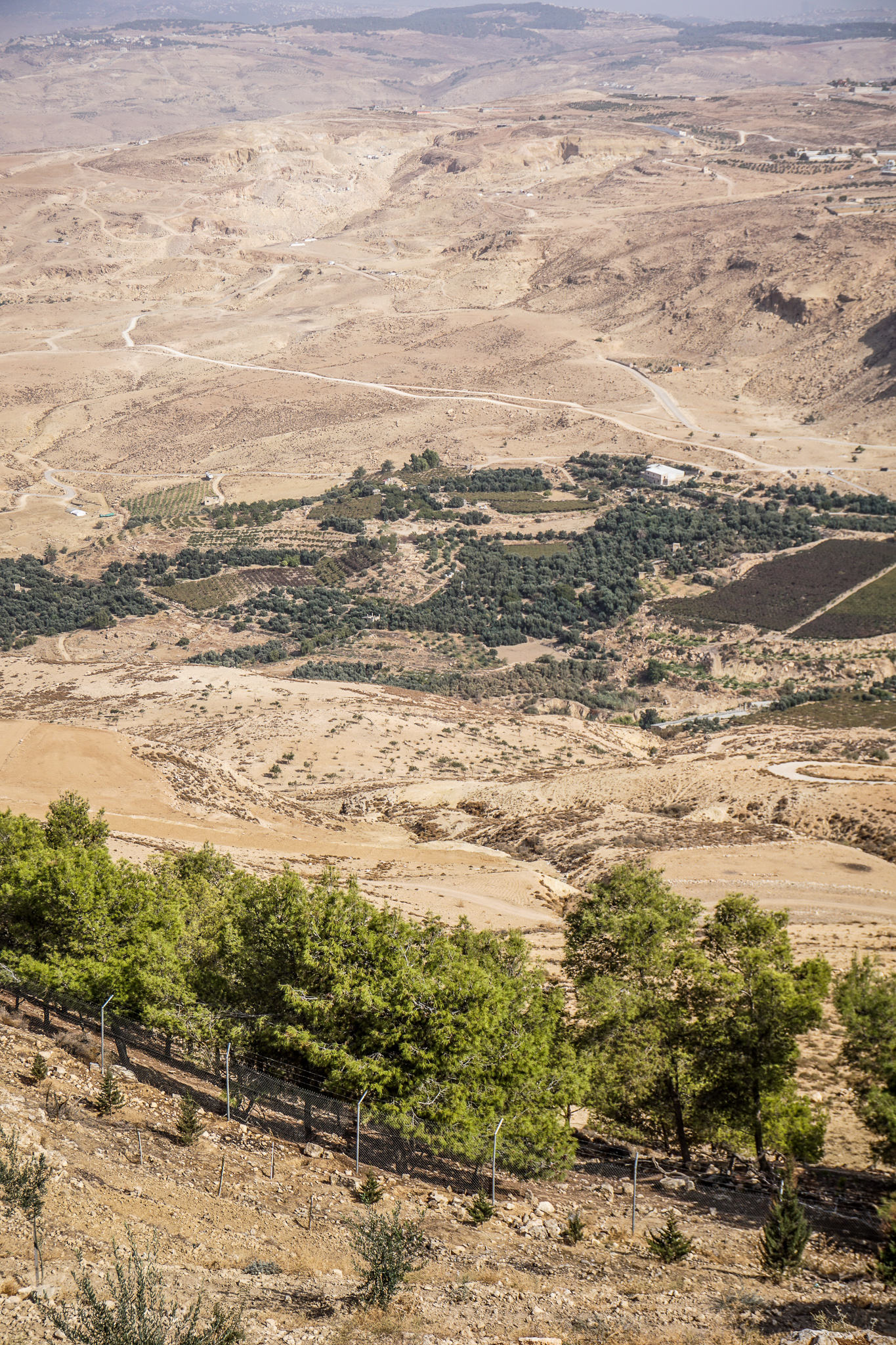
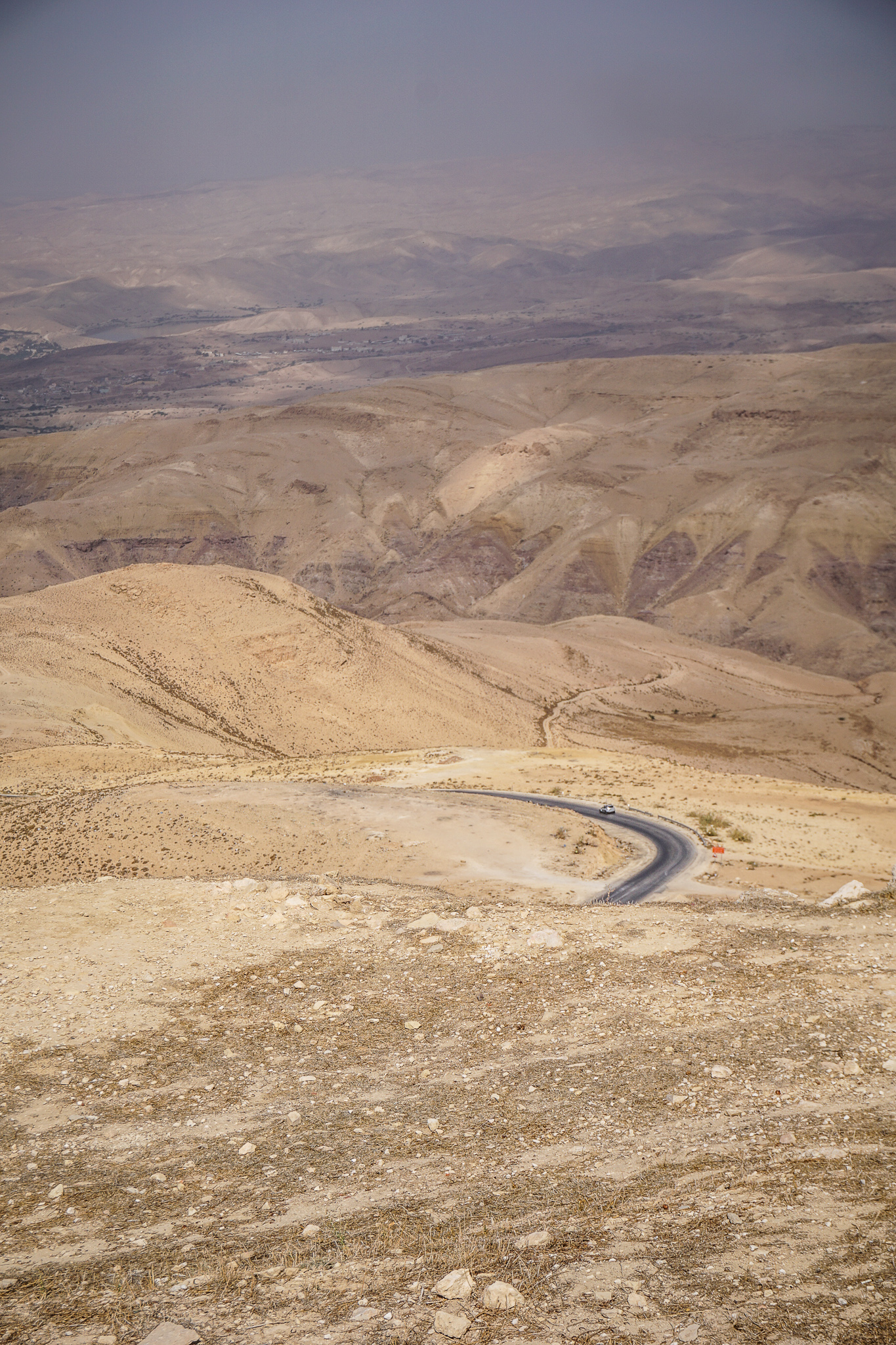
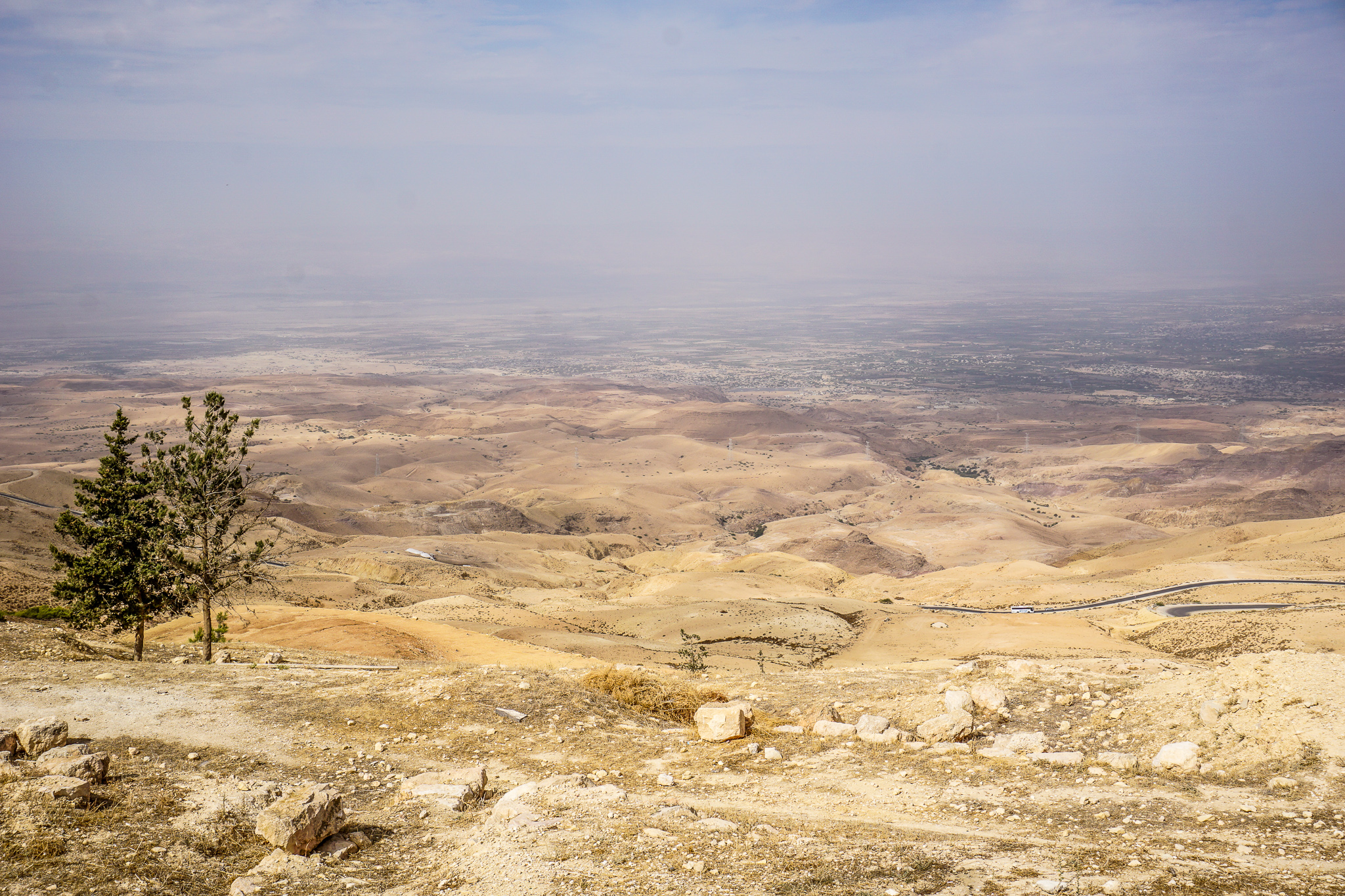
Besides the meaning of Mt Nebo, what I appreciated the most were the views. The same views Moses has laid his eyes on just before his death (allegedly). When we visited, it was foggy, and we couldn’t see as far as we could have on a clearer day. Still, I found the sight stunning. Deserted, lifeless. I wondered if when Moses did see it it looked as infertile as it looked to me. I would have imagined a holy land to be fertile, and luxuriously green. Yet there was a beauty to this, to those arid, dry grounds, upon which layers of thin dust seemed to float, but some forms of life, mostly vegetation, still managed to survive.
Love, Nic

