
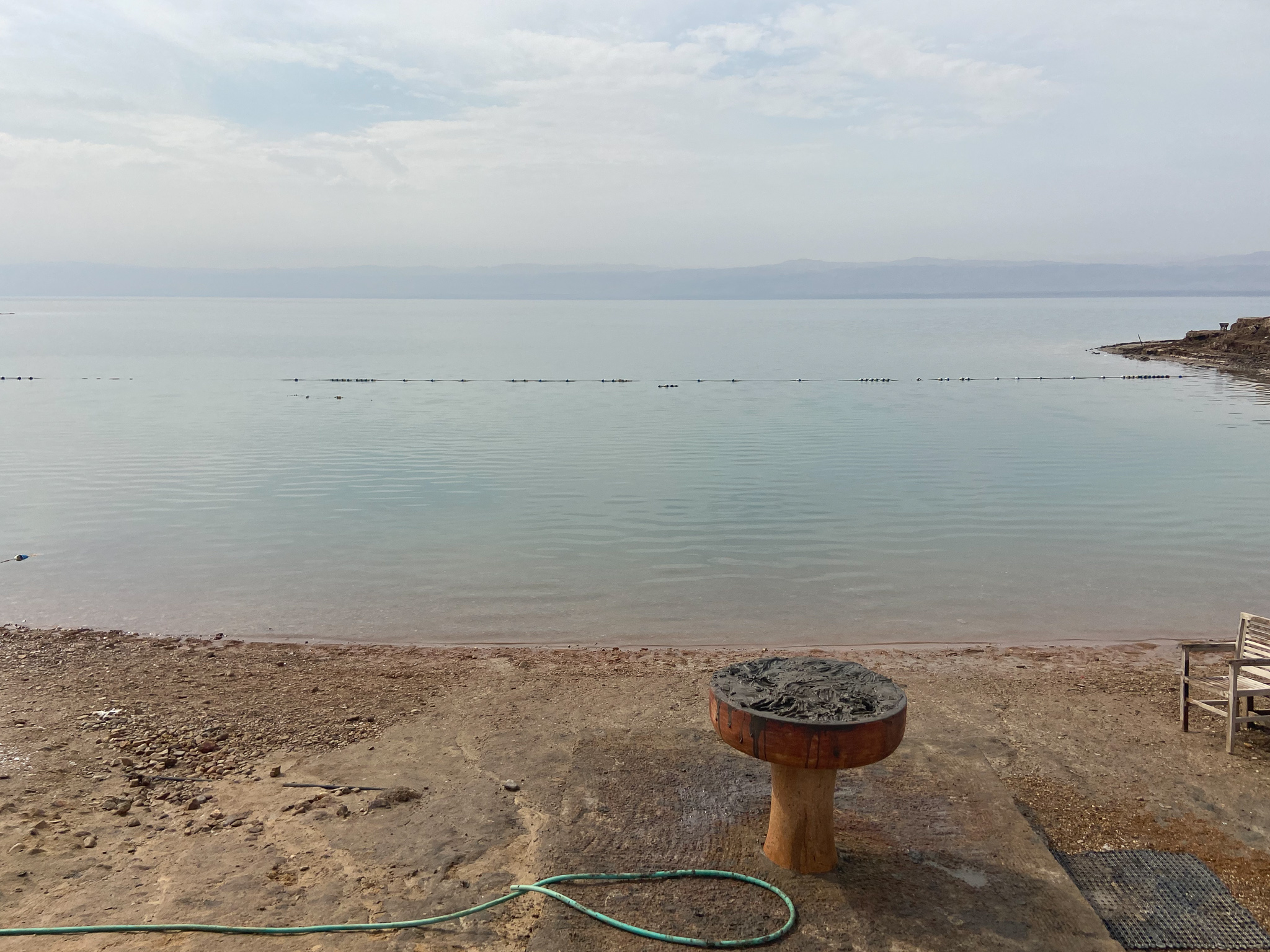
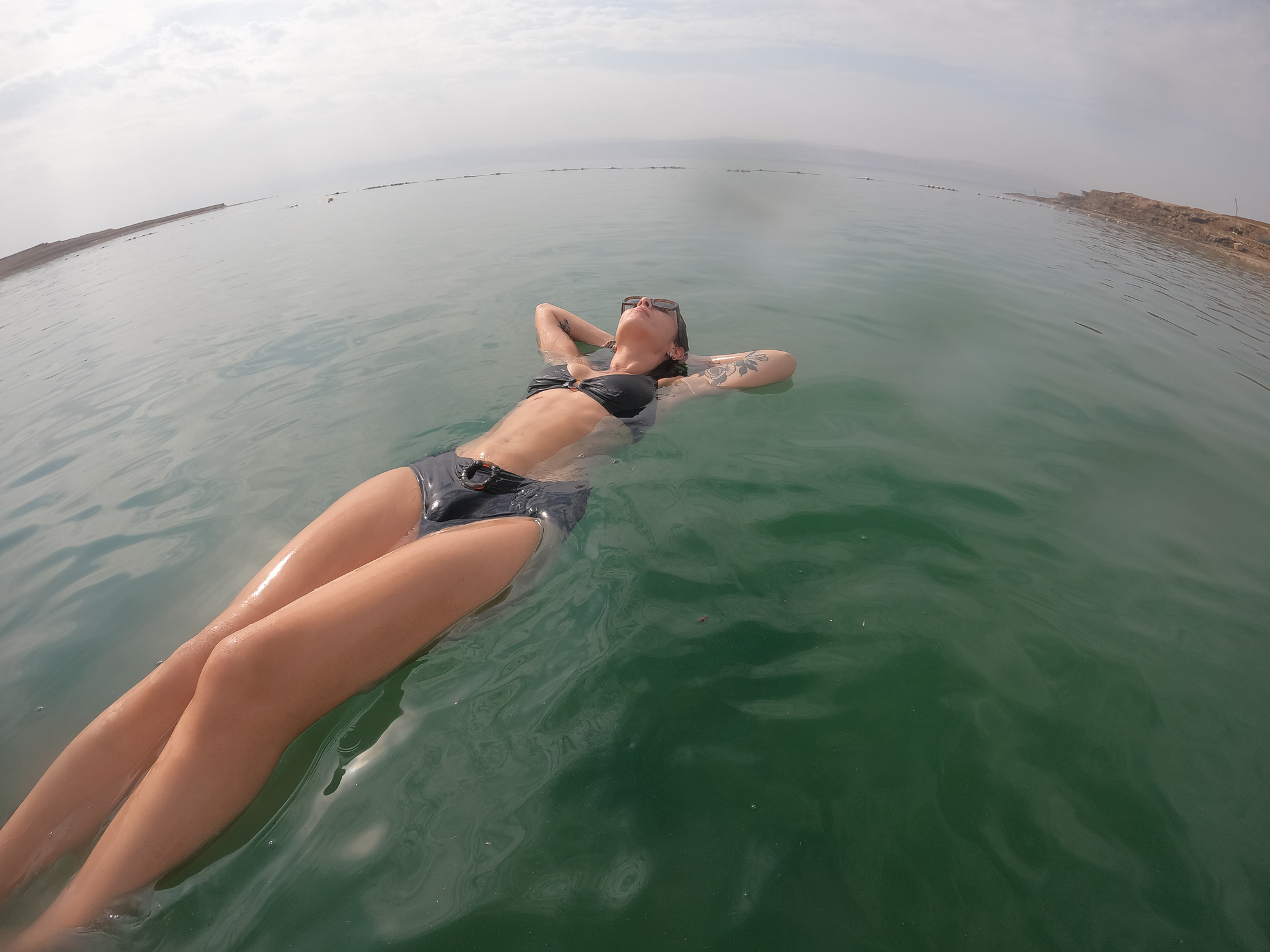
My trip to Jordan allowed me to tick off quite a few things from my bucket list and one of them was definitely experiencing what it’s like to be on the Dead Sea. I couldn’t really imagine how it felt. I knew the salt concentration in its waters was so high that you easily float. Before visiting, I hadn’t grasped that you can’t actually swim. I even struggled to put my feet down once I was lying on my back on the water. Yet, most importantly, I did not know that whilst nowadays we hear about rising waters, with oceans threatening to reduce the amount of ground surface we have to live in, the Dead Sea is disappearing. Important to note that its name is misleading – the Dead Sea isn’t actually a Sea – it is a lake. One that is slowly becoming a puddle.
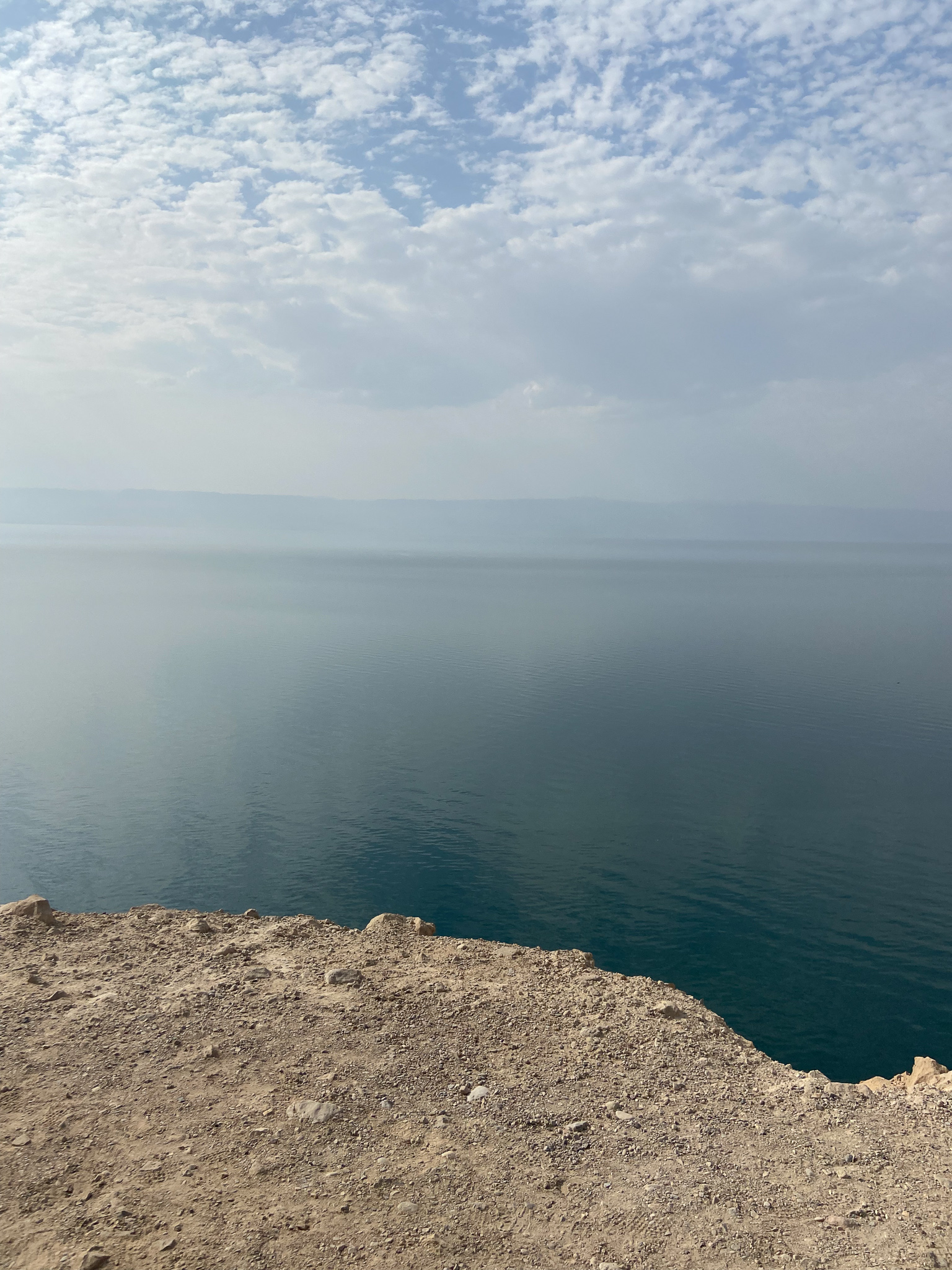
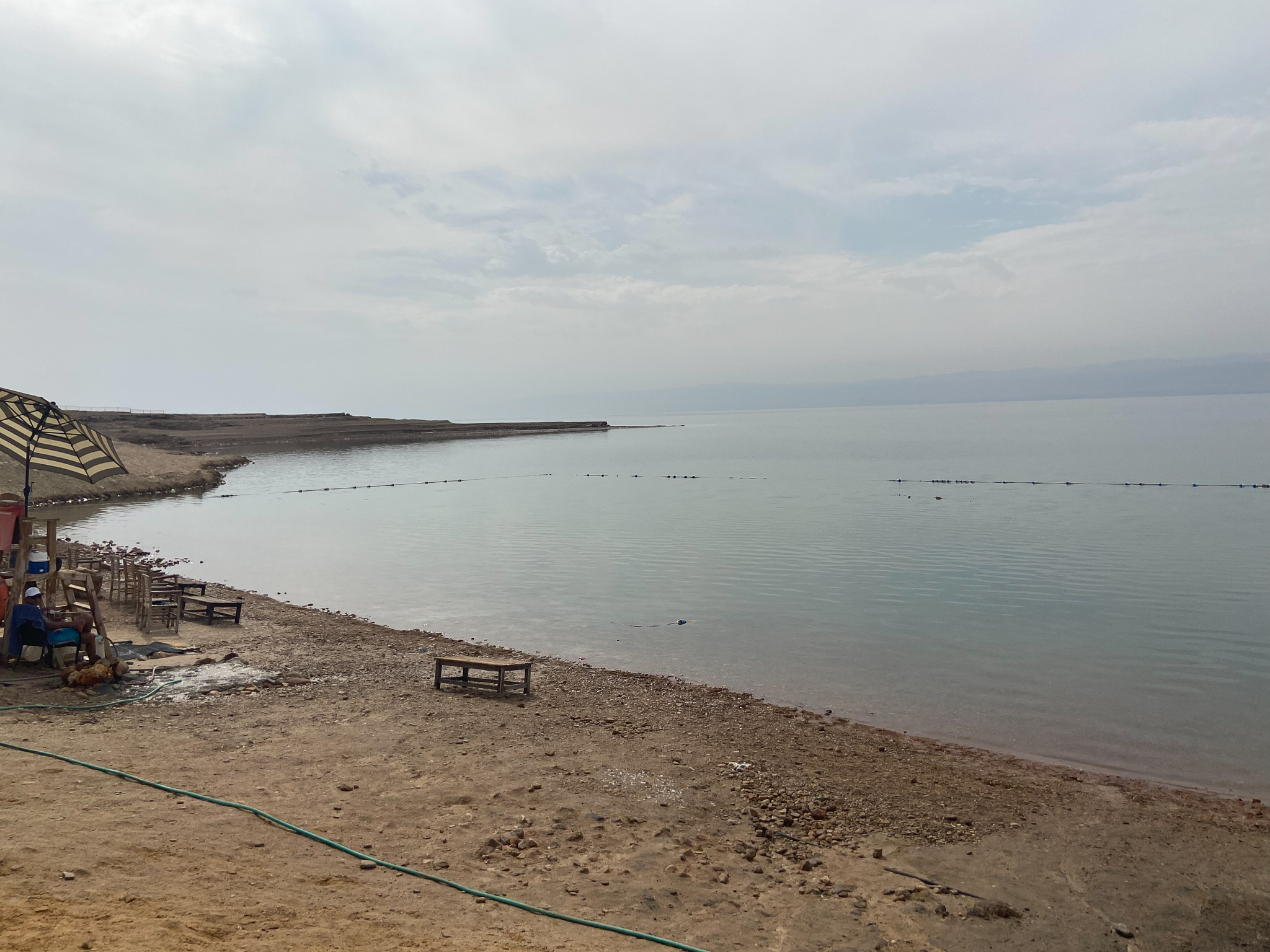
Located between Israel and Jordan, the Dead Sea is the lowest point on earth. In the mid-20th century it was estimated that the surface level was about 400 meters below sea level. However, in the 1960s, the Jordan River flow started to be diverted, and much of the lake’s water was used for commercial purposes. In 2010s, it was estimated that the level was now about 430 meters below sea level, and it’s estimated that the waters are receding by about 1 meter annually! That is a lot… and to make it even clearer how much of a difference this one meter does, multiple plaques along the day down to the Dead Sea marked where its margin used to be since the year 2000…
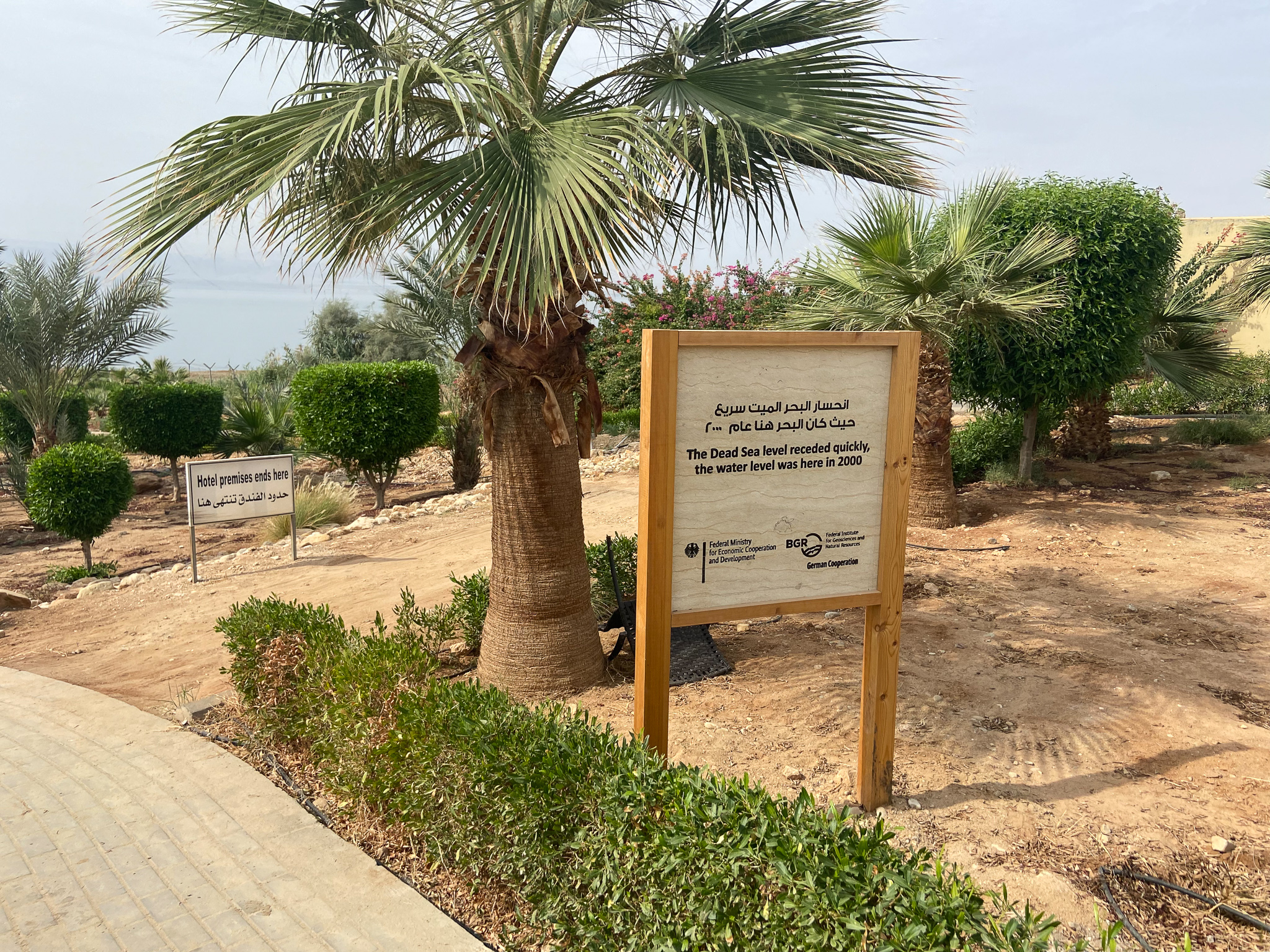
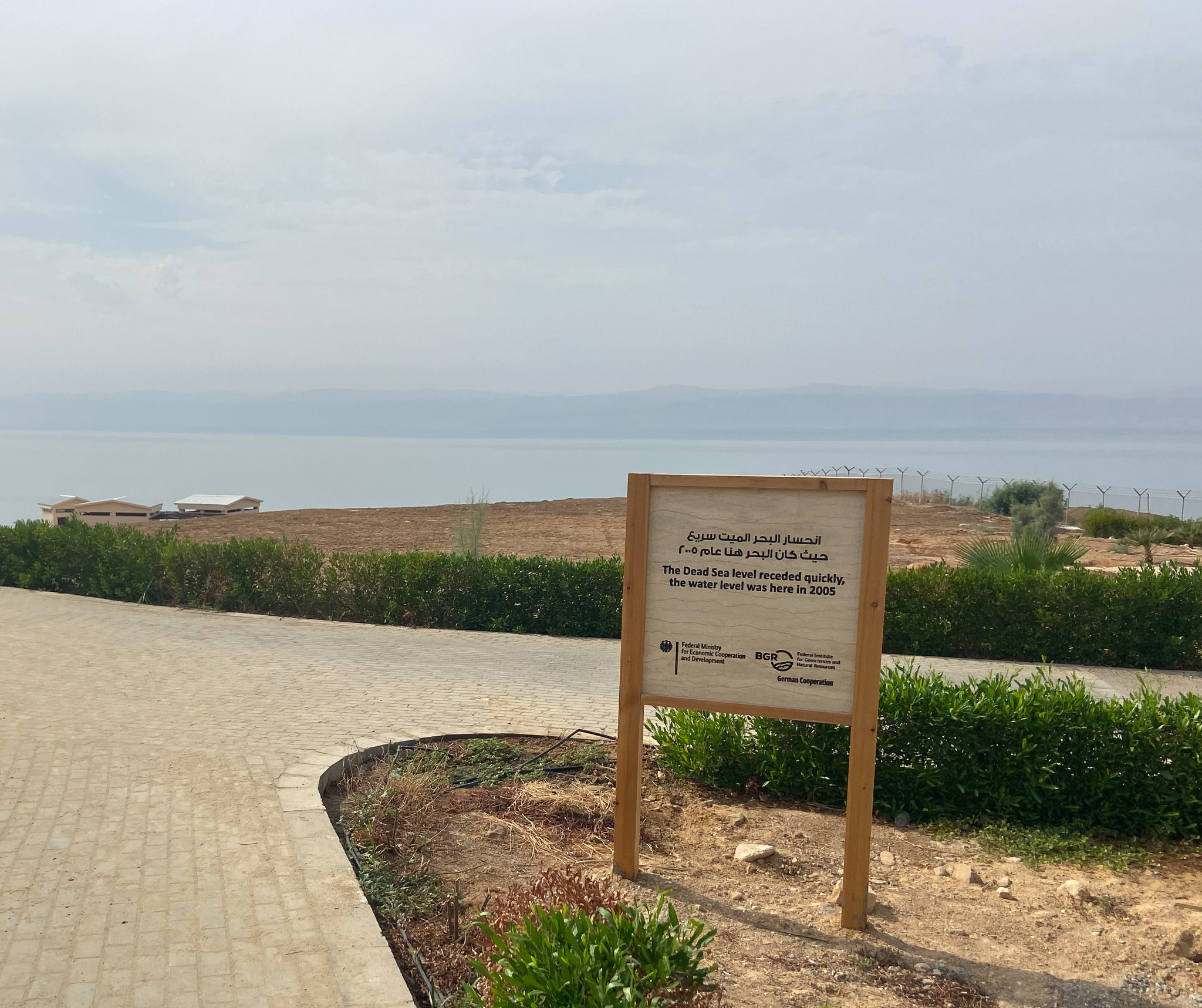
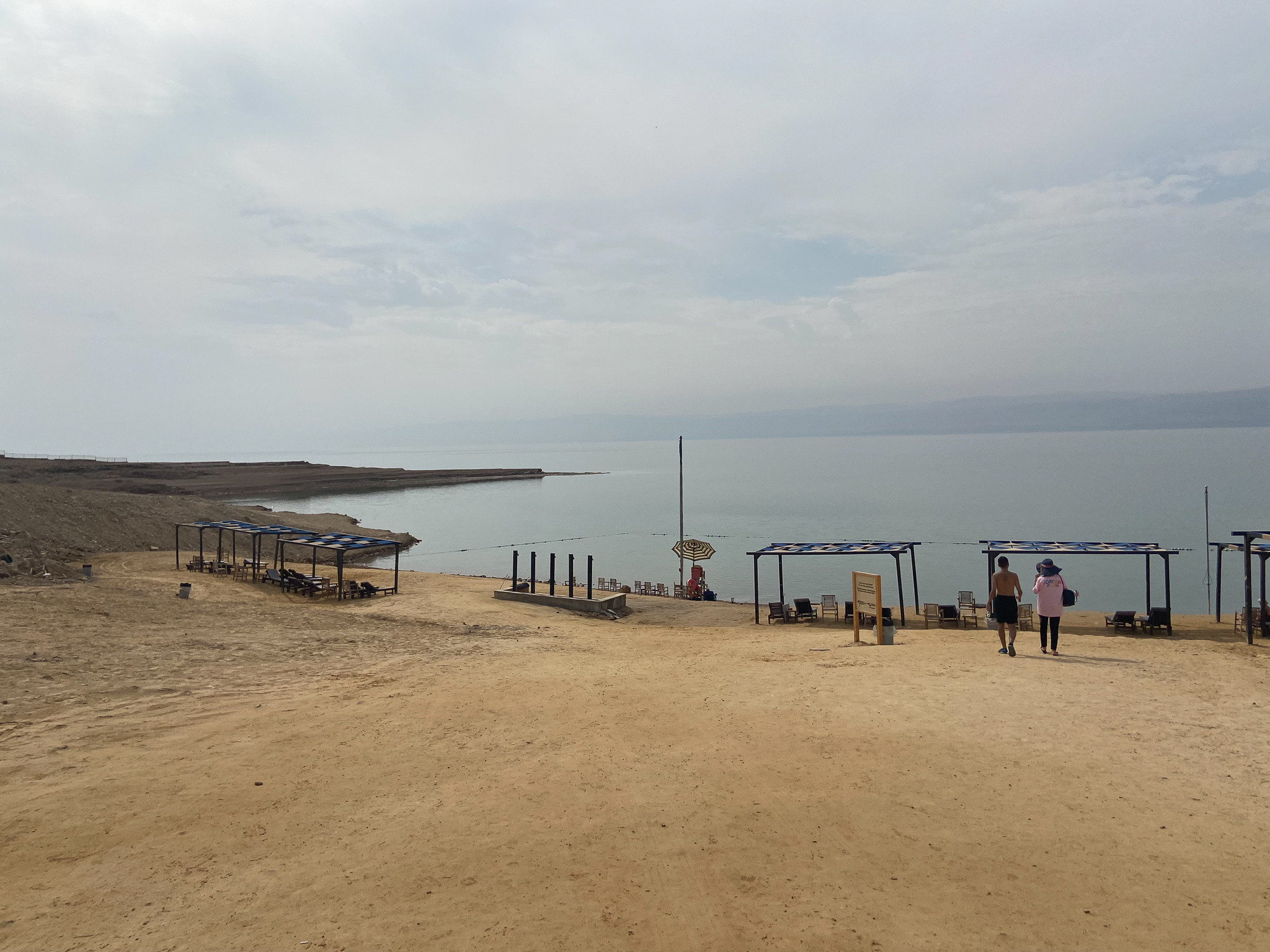
In short, with the reduction of river flows into the Dead Sea this has become even deader – the saline concentration is higher. This ensures that you float rather than sink as you would in any normal mineral concentration water, with the only exception of bacteria, no other life forms survive in the water. Strangely though, the waters of the Dead Sea are seen as therapeutic, mostly due to the unique combination of minerals and salts. This is the main reason why it’s been an attraction for many centuries – the minerals of the water may reduce inflammation, and improve skin elasticity. I was hoping I’d be 10 years younger after bathing in the Dead Sea, but I believe I needed some extra time… the Dead Sea was a stop on our way to Petra, not a place where we stayed for a relaxing vacation.
Despite all of these benefits, it is important to remember that this is the Dead Sea – it can be deadly for human beings too. In fact, there are many signs forbidding diving in the waters. The density can make it hard for you to bring your head back up. The high salinity may irritate your eyes and your skin as well – a small drop of water in my eye burned like hell. It was incredibly painful, and my eye was red for quite some time.
I wish I had had more time in the Dead Sea – an overnight stay would have been ideal for relaxing a little and enjoying floating for a little longer. Still, I did really have a good time experiencing this kind of floating, struggling to sink my legs for the purposes of walking out of the water… I did not get ten years younger, but I definitely had the feeling of a child trying something new for the first time. Something that as adults we don’t get to experience that often!
Love, Nic
 The Winged Bone
I didn’t know it was disappearing! I don’t suffer from fomo but I do suffer from ‘see it before it disappears’. Did you also lather in the mud? Although maybe that would be annoying to wash off after.
LikeLike
Yup, I cover my arms and chest in mud, but more as a joek as we didn’t really have enough time to let it on. It’s actually quite easy to take it off in the Dead Sea, and even if you can’t there are showers with good enough pressure to help 🙂 I didn’t know either it was disappearing, it is sad to think that future generations will only hear about it in history and geology.geography books 😦
LikeLiked by 1 person