
Leaving Tokyo was difficult. I couldn’t believe my time there was already over, and I barely scratched the surface. But I was looking forward to my next destination – even more, I was excited for the journey. I was going to Hiroshima on the famous Shinkansen, known as bullet trains, covering over 800 km in just under 4 hours! How impressive is this? Not in Japan. In Japan, this is just another day in the hood.
The shinkansen is in fact what makes travelling in Japan so easy. I couldn’t stop myself from remembering the train ride I took in Thailand from Bangkok to Chiang Mai – the distance between the two cities is just over 600 Km, and it took me 12 hours to cover it. I do not intend to compare these realities – just to say how contrasting these are, providing such incredible and yet different experiences.
A part of the shinkansen experience is getting a bento box or, more specifically, an ekiben, meaning “station bento”. Japan is full of unwritten rules, and there is one that I particularly appreciate – do not eat/drink whilst walking, or on trains. When I moved to the UK, the idea of drinking coffee on the go, or trying to munch a sandwich whilst running to the next bus stop was completely alien to me. In Portugal, we sit down to drink our coffee and we sit at a table for our meals, and these are often social moments. In Japan, food matters, and eating is an activity on its own, that should be appreciated. But perhaps in Japan, it’s more to avoid the risk of imposing on others – I do hate smelly food on trains and buses and really wished we had a similar rule in the UK.
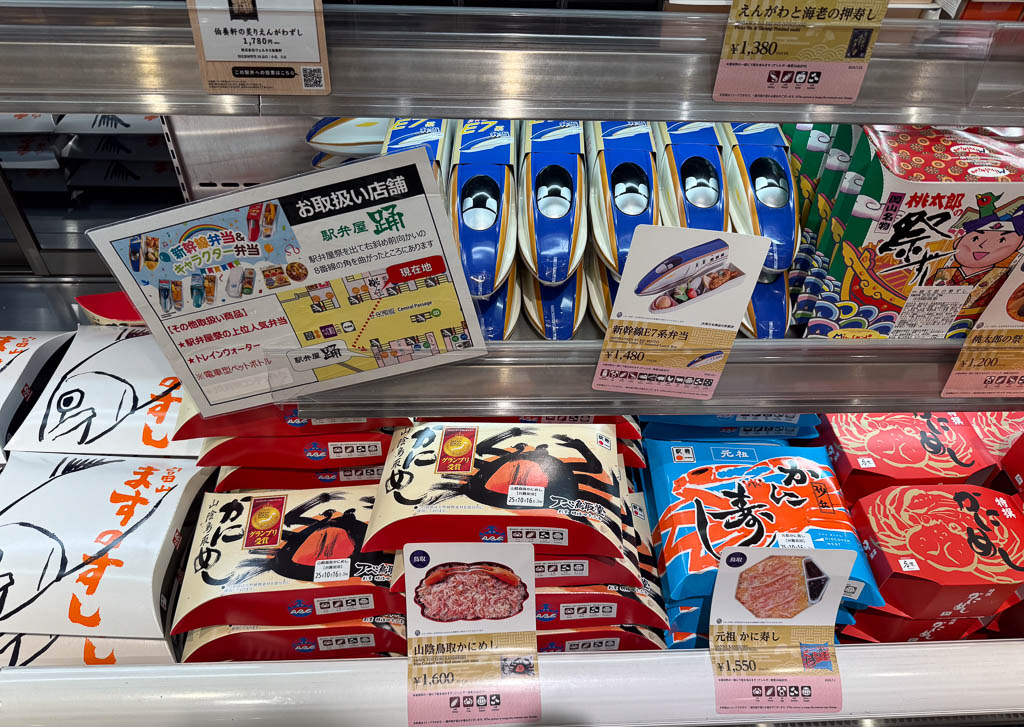
The exception to this “do not eat in public transport rule” is the Shinkansen, as this is a journey that takes time – enought time to savour a meal. The ekiben were designed precisely to be smell free – efficiency at its best. At the stations you have shops dedicated to them and I was overwhelmed by the choice. What’s funny is that I didn’t even need food – I had my breakfast and was going to get to Hiroshima at lunch time and I can go 4 hours without eating. But I had heard so much about the ekiben that I absolutely needed to try it. I chose a traditional bento box with salmon and rice, and prayed it would be good enough. And what I loved even more about it was the little leaflet that comes with it explaining the origins of that particular bento box.
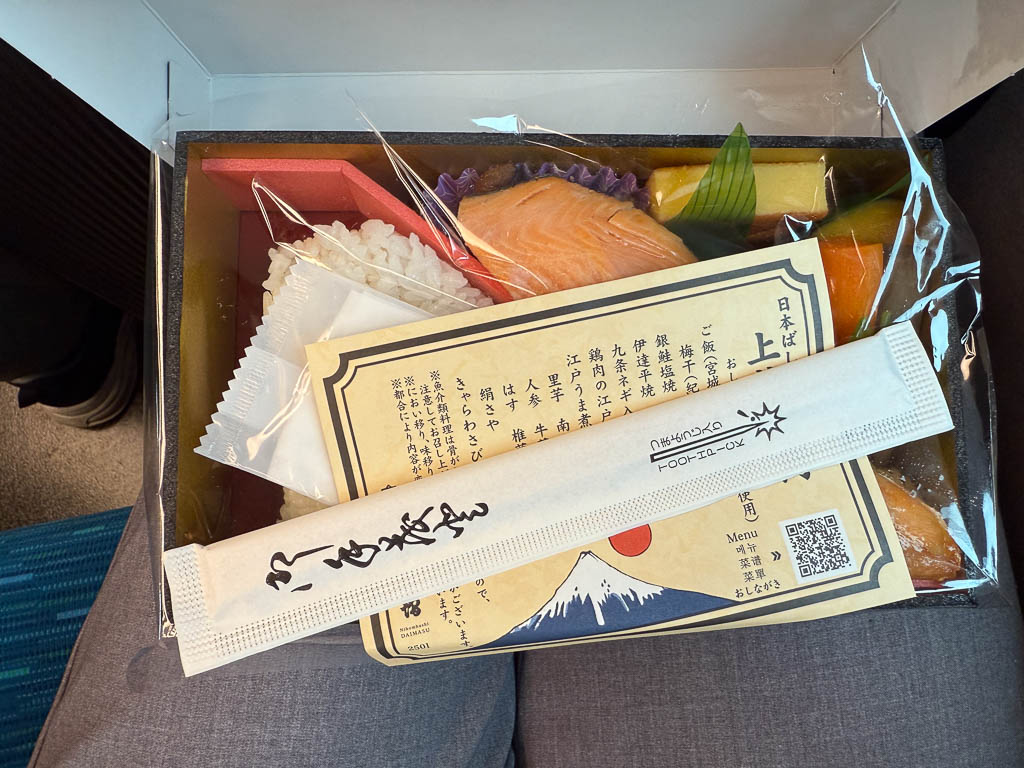
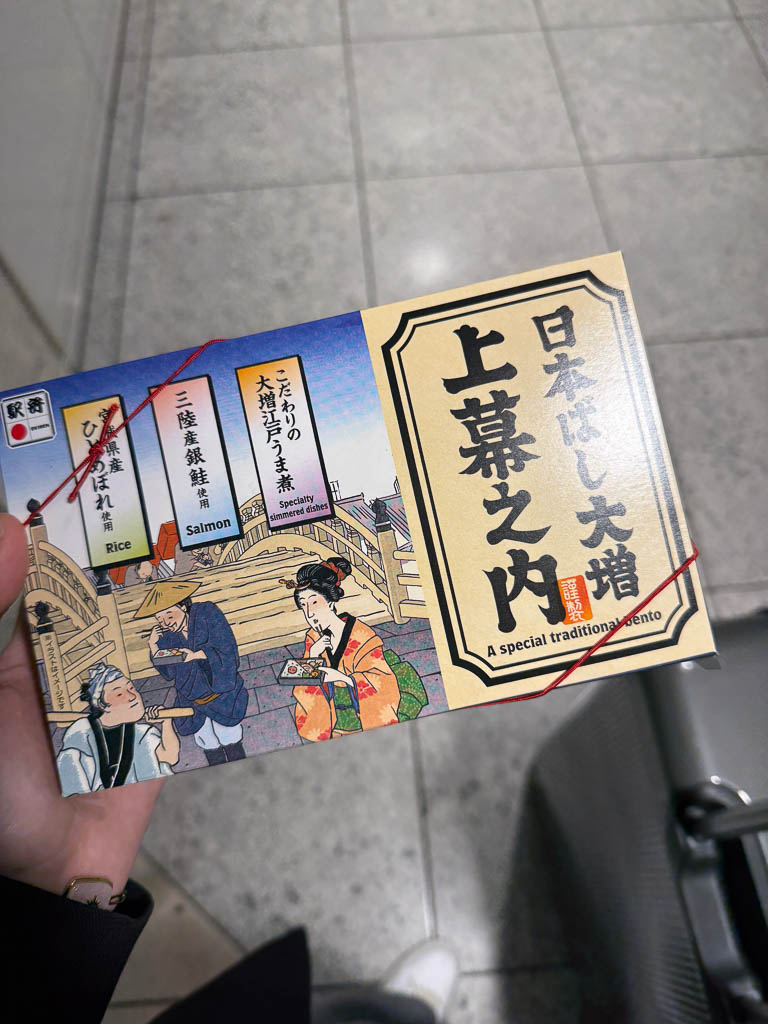
The ekiben started with the history of railway in Japan. In the late 19th century rail travel was new and long, and there was the need for food that could survive hours – and perhaps that was why I found the salmon a little dry, but it was still good protein, so not complaining. Even for the presentation it’s absolutely worth it.
A quick tip though, for shinkansen: I booked my tickets in advance (you can get a cheaper rate as well by doing so) without reserving space for luggage. The reason I did this was because the official guidance stated we’d only have to do it for any luggage above specific dimensions. Well, my suitcase was below such dimensions, but there was no way I could put it on the rack at the top, so it was very uncomfortable to have to use the space between my legs (which are long by the way) and the front seat. For my trip from Hiroshima to Kyoto, I changed my ticket to include the luggage space, and the trip was a lot more comfortable – so if you are carrying a suitcase that you check in on the plane, please consider reserving the luggage space. You cannot use this space if you haven’t bought a ticket including it.
If the weather had been clearer, there could have been a chance for me to see Mt Fuji from the train… sadly I wasn’t that lucky. The rain kept coming from the day before, and when I arrived in Hiroshima, the skies were not much forgiving. I had booked two nights at the Hotel Vista Hiroshima which I highly recommend – affordable, excellent location, super clean, fantastic facilities and an incredible diverse breakfast with local delicacies included. Since I had eaten the bento box, I wasn’t yet hungry for lunch, so I started to explore the city after dropping off my luggage.
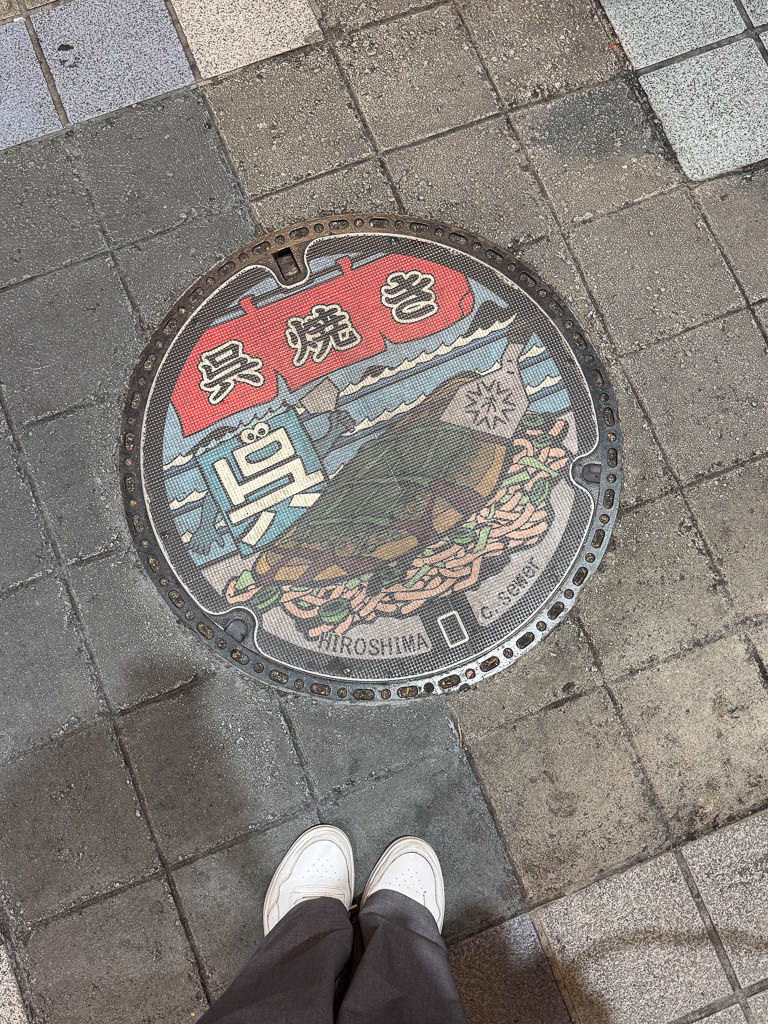
I started with a visit to Hiroshima Castle. It was originally constructed in the 1590s but mostly dismantled in the Meiji era and what remained was then destroyed by the atomic bomb. What we can visit today was rebuild in 1958 as a replica of the original, and it’s now serving as a museum of pre-WWII Hiroshima’s history. Personally, I didn’t find the galleries very interesting. Plus, it was dark and very hot inside, and I ended up going through it all very quickly.
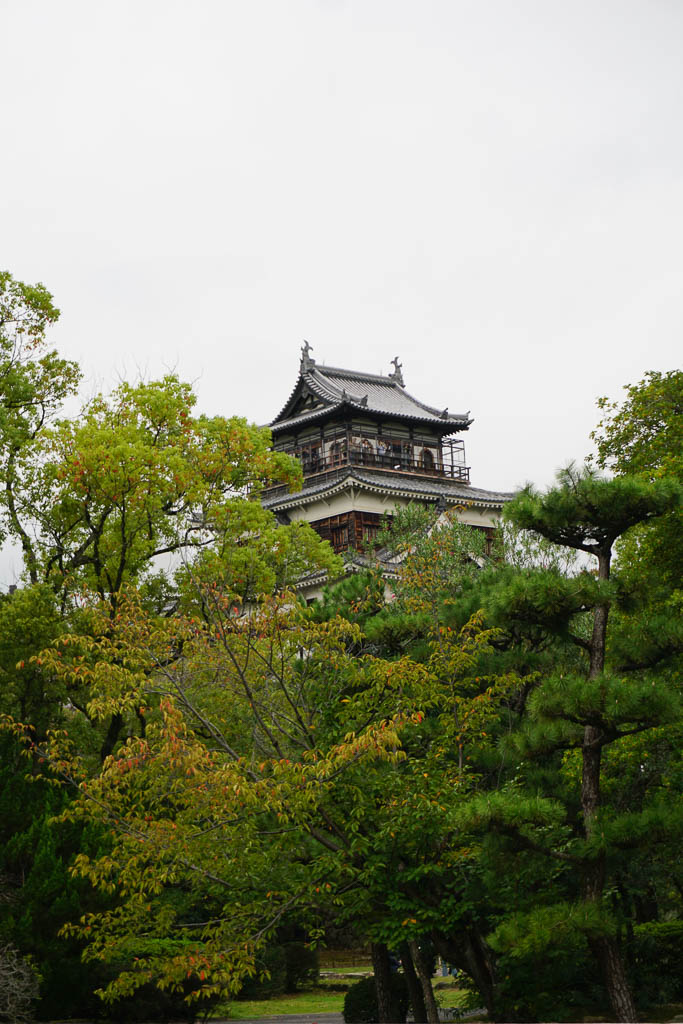
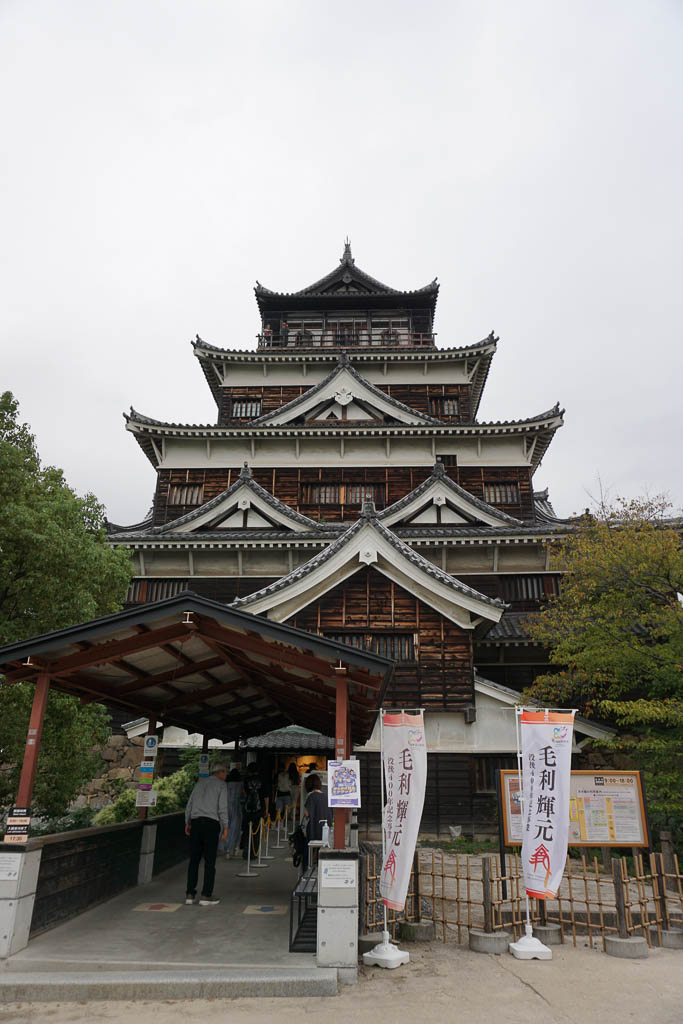
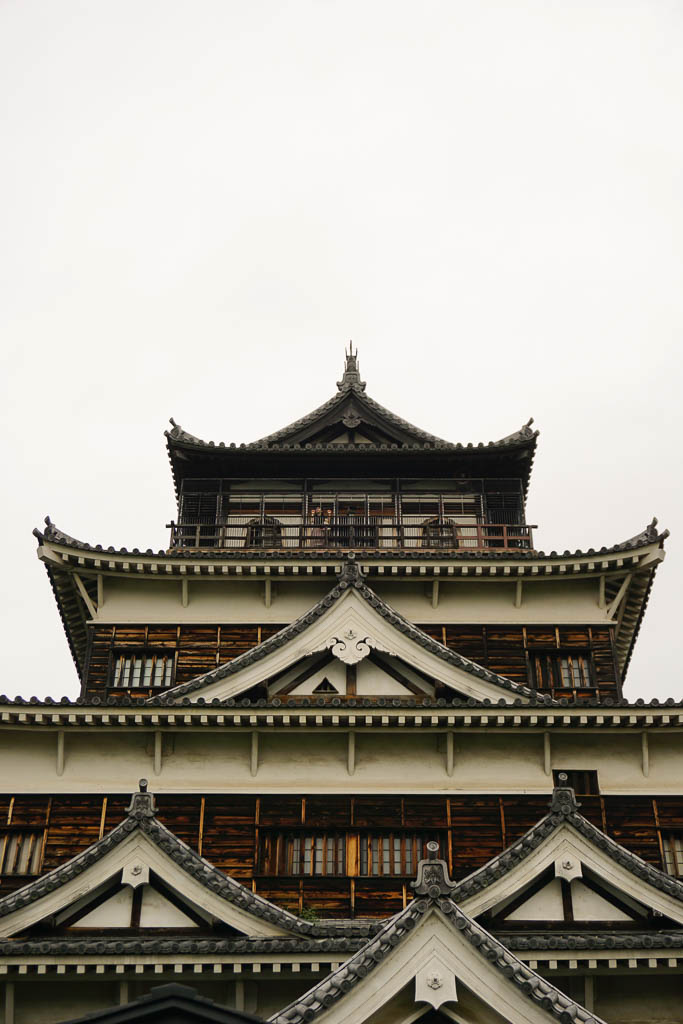
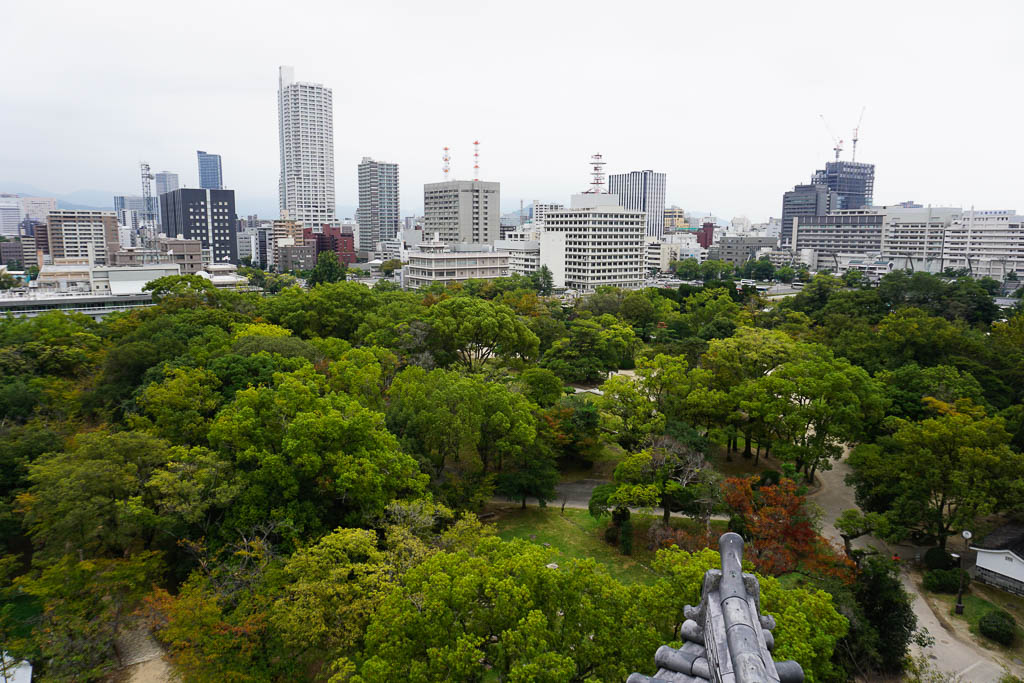
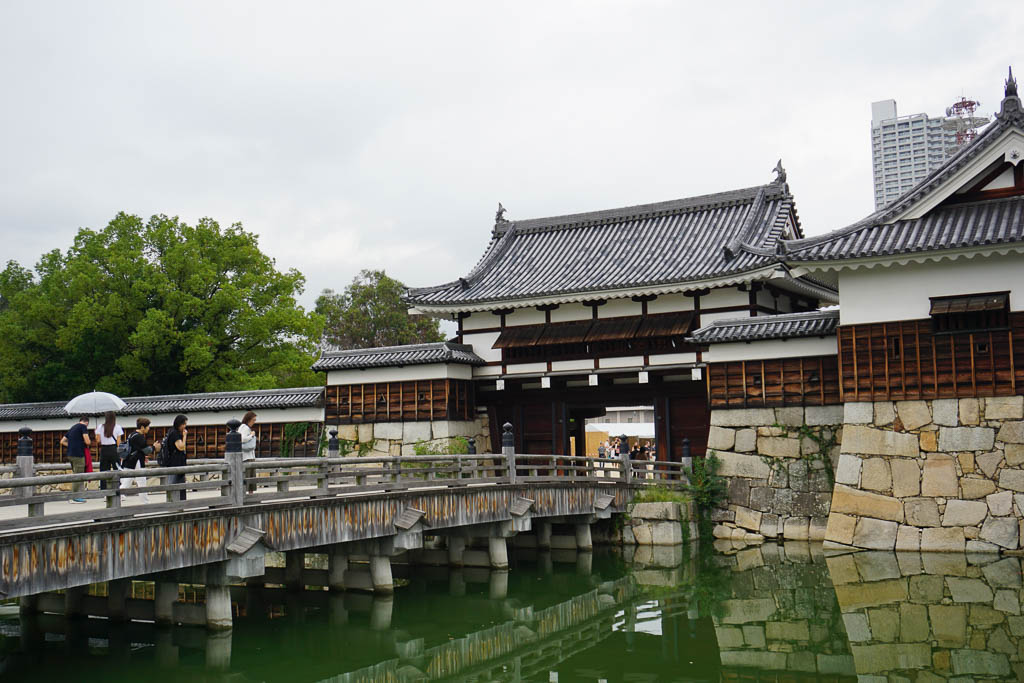
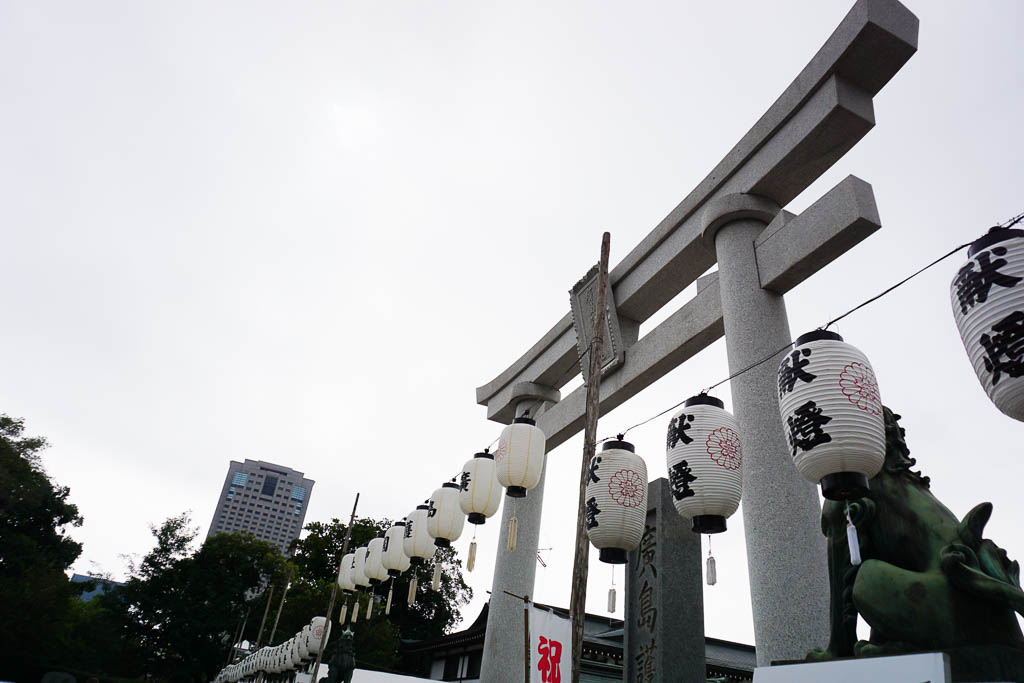
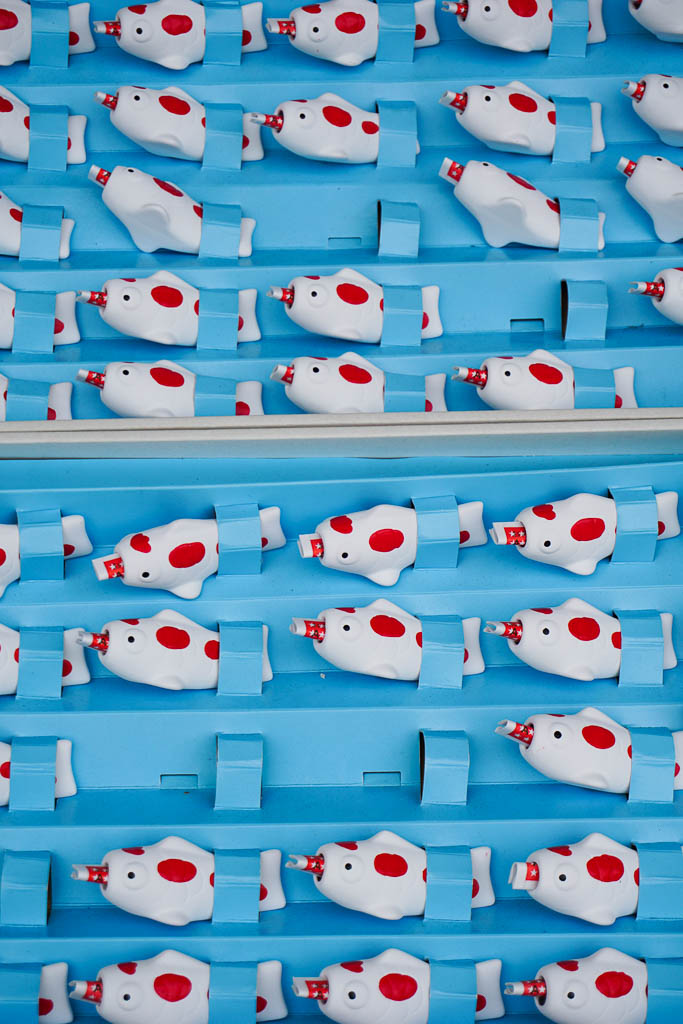
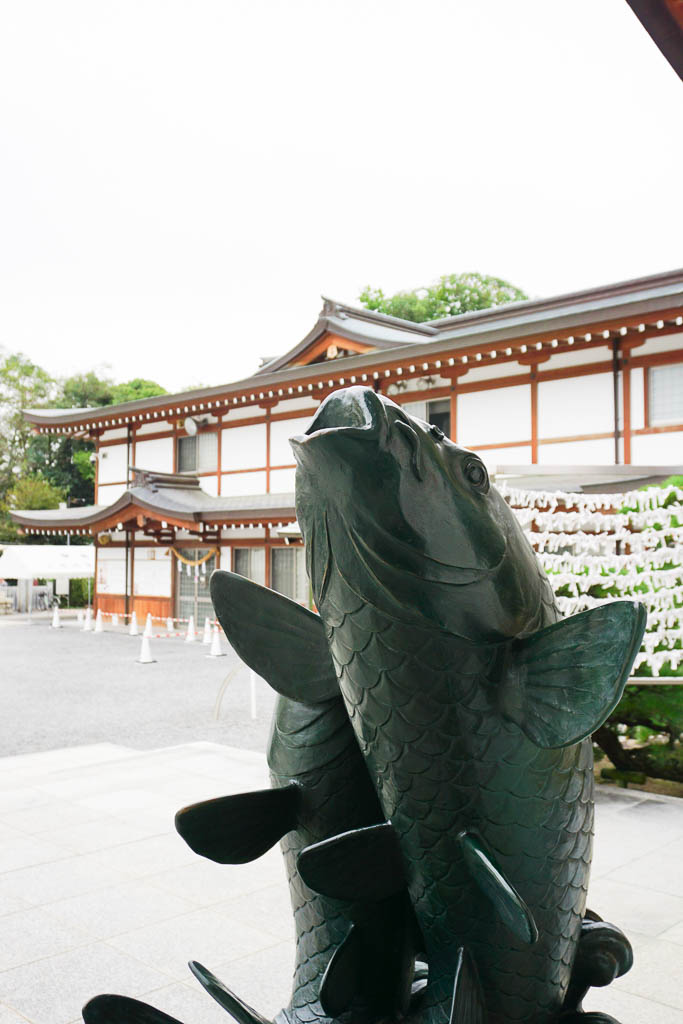
In the grounds of the castle, you can also visit the Gokuko Shrine, which is well known for the lucky Carp. The moat around the castle used to be filled with carps, and these became symbolic to the points that Hiroshima’s Baseball team is also called The Carp, and the players actually visit the shrine to pay for a good season.
I started the visit light, to get my energy back after a sleepy journey, but in truth this day was going to be somber, and not just because of the overcast skies. Hiroshima immediately brings images of a gigantic mushroom made of smoke and fire, an image that has been imprinted in my mind since I first saw it at school in history books. The catastrophic atomic bomb. How it made a city vanish in a matter of seconds, responsible for killing approximately 140,000 people, half instantly. How it only lasted seconds, and yet its deadly consequences continued to affect humans, with radiation sickness and cancer claiming lives long after the bombing.
But Hiroshima doesn’t dwell on the disaster – it has insisted on moving forward in the best possible way. Preserving the memory so history doesn’t repeat, openly striving to create awareness against nuclear weapons and, most striking of all, filling the city with colour, that of the paper cranes.
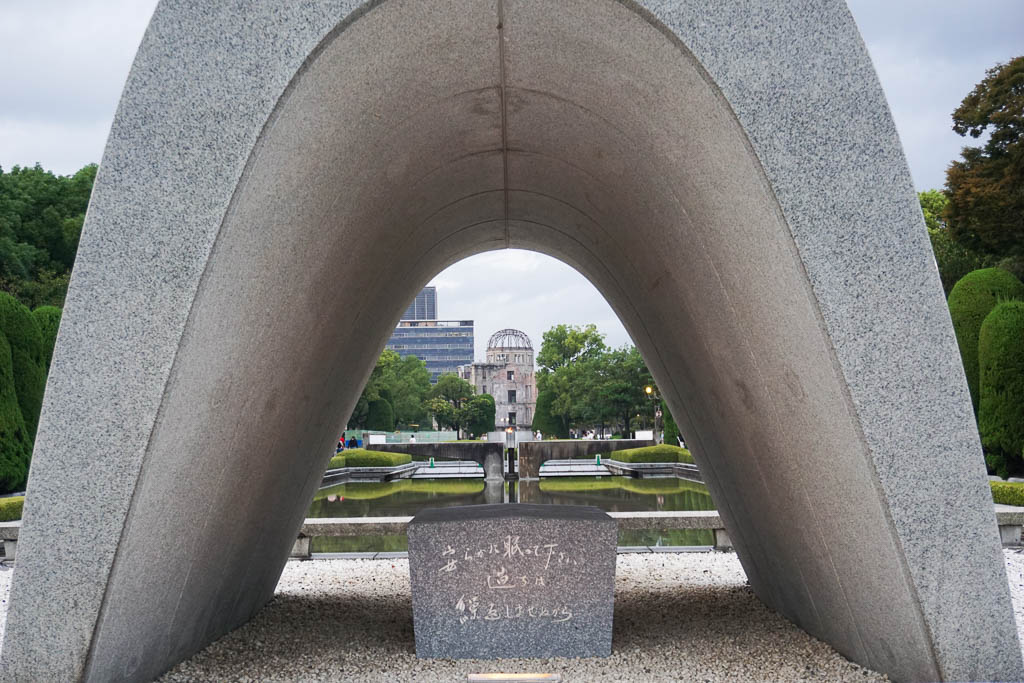
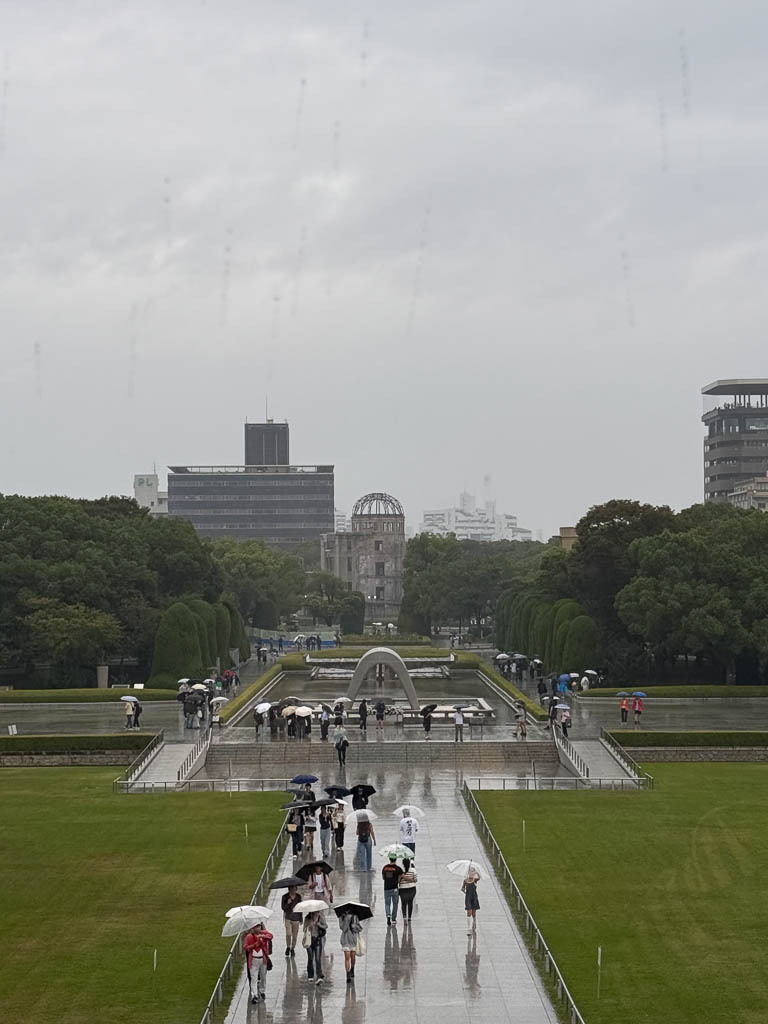
The Atomic Bomb Dome has become a symbol of the city and a reminder of the terrible consequences of the atomic bomb. This is the focal point of the Hiroshima Peace Park, the skeletal remains of the former Hiroshima Prefectural Industrial Promotion Hall – which to me, whilst just a burned skeleton, stood proud as a survivor, a living witness of the first atomic bomb. The fact that any of the buildings survived is astonishing – the bomb exploded just 600 meters above and 160 meters southeast of the building. Sadly, everyone inside was killed instantly.
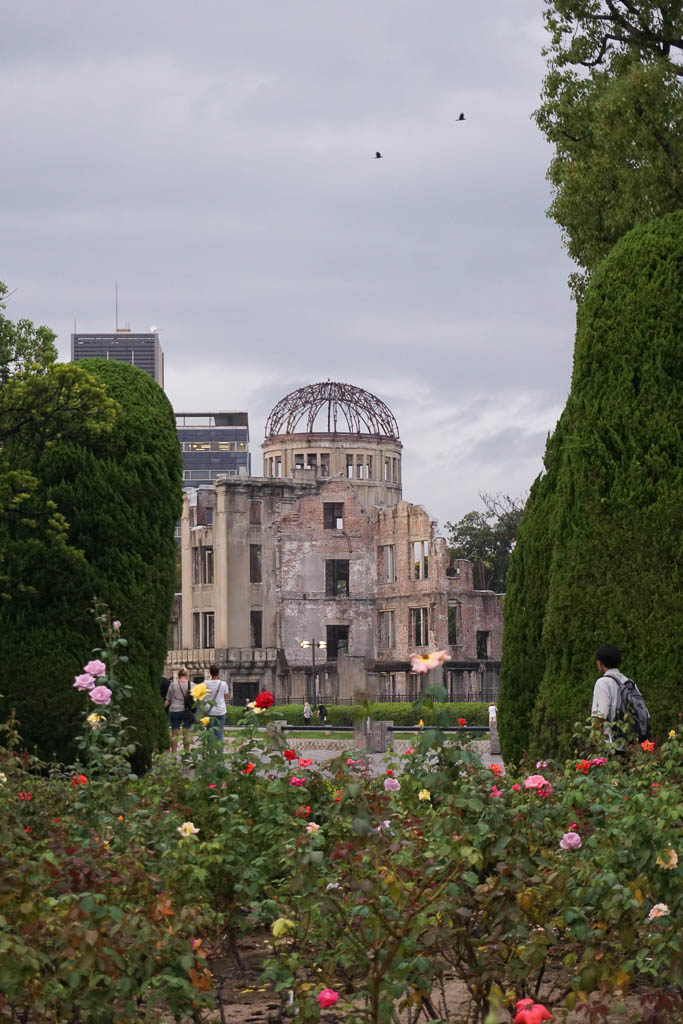
There was a lot of debate on whether this should have been demolished – again, popular opinion didn’t wish for a reminder, they wished to move on,understandable But the City Council made the decision in 1966 to preserve it, and it’s been now designated a UNESCO World Heritage Site.
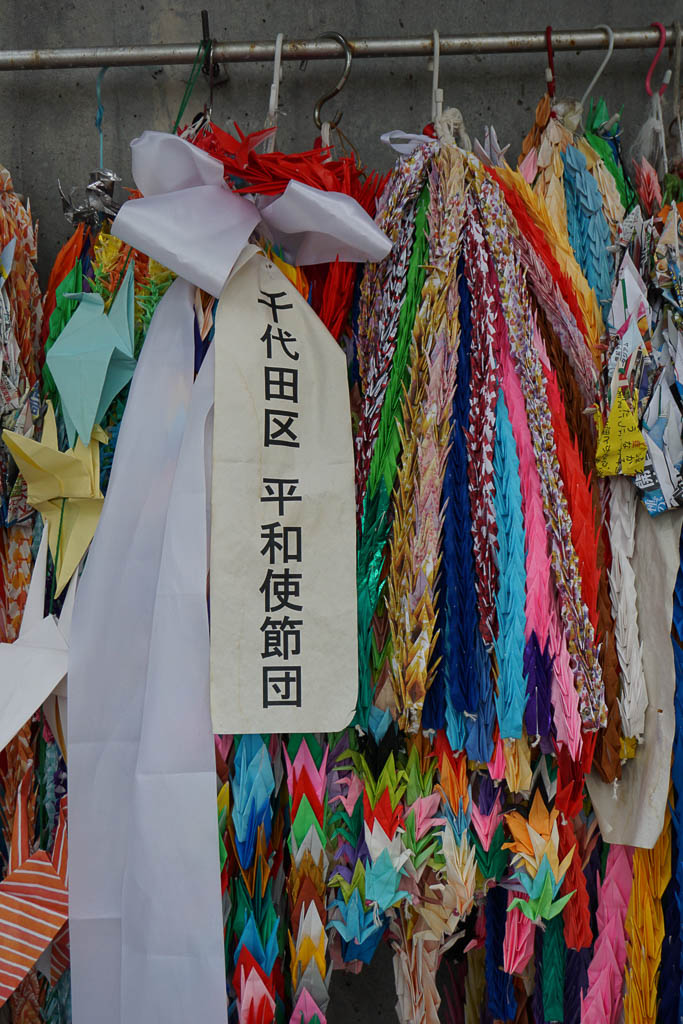
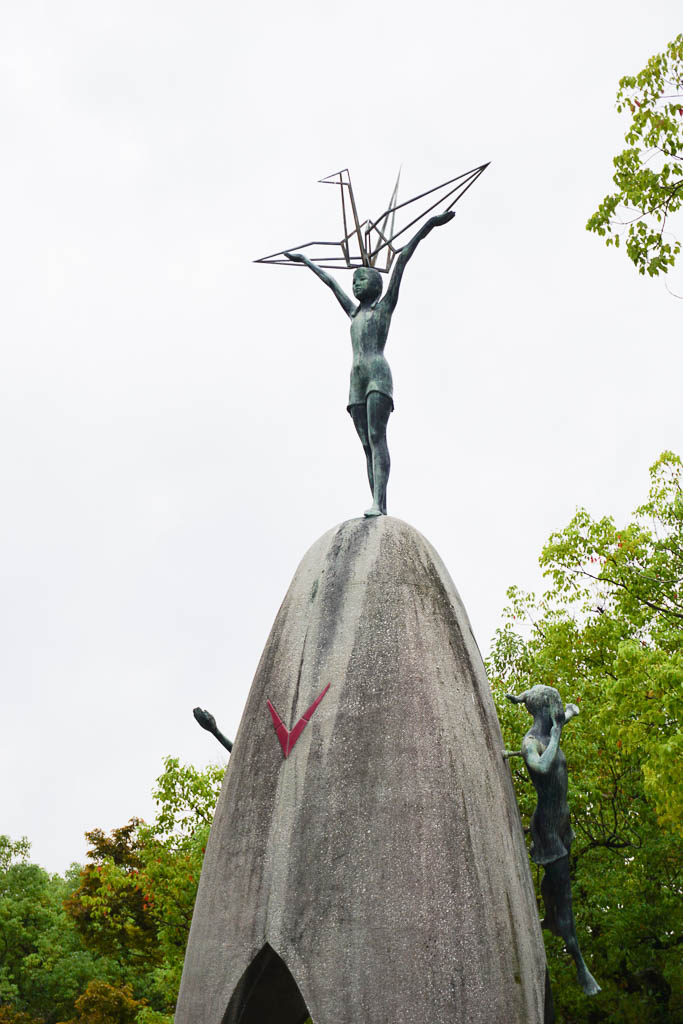
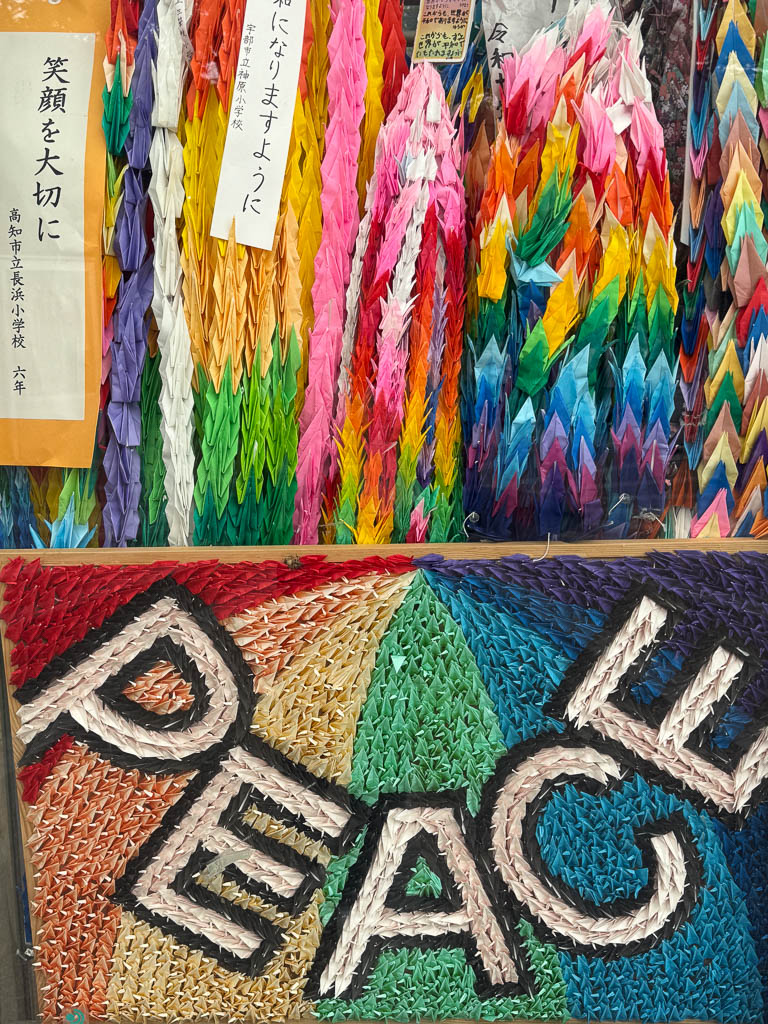
The Peace Memorial also includes the Children’s Peace monument, surrounded by colourful paper cranes. The paper cranes have become a symbol of peace in Hiroshima because of Sadako Sasaki. She was only two years old when the bombing happened, and whilst she survived and seemed unharmed, she developed leukemia nine years later, linked to the effects of the radition exposure. Her father told her the Japanese legend that folding 1,000 cranes would grant her the wish for recovery. Sadly, she died in 1955 when she was twelve, having folded over 1,000 paper cranes. Moved by her courage, resilience and hopeful spirit, her classmates started a campaign to build a monument to her and the children lost to the bomb – and this monument stands today in Hiroshima Peace Memorial, and people all over the world send cranes there today.
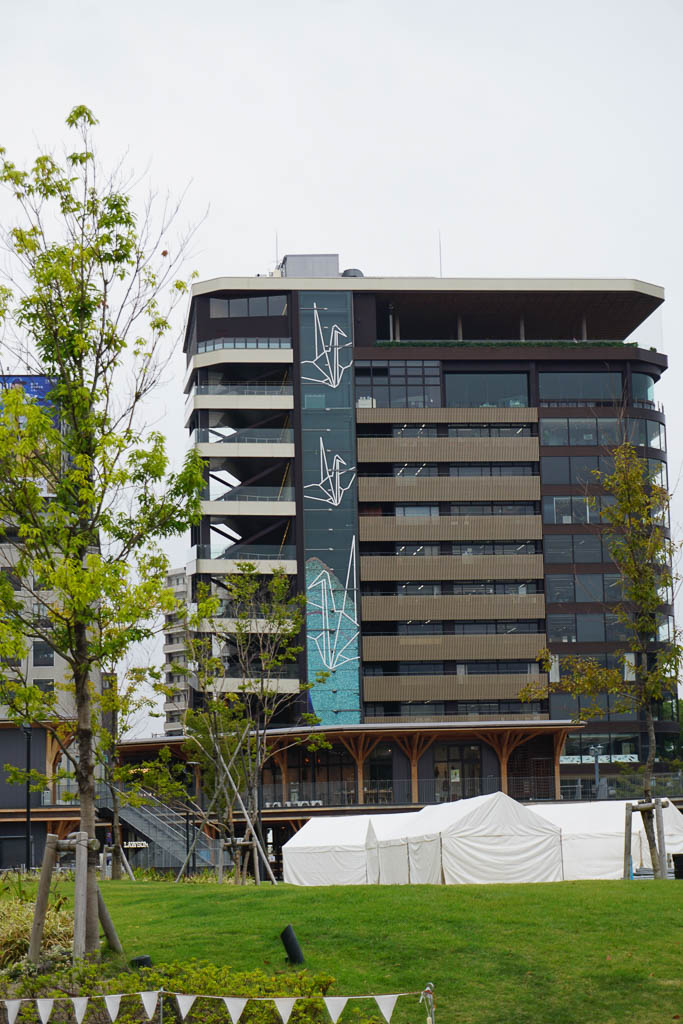
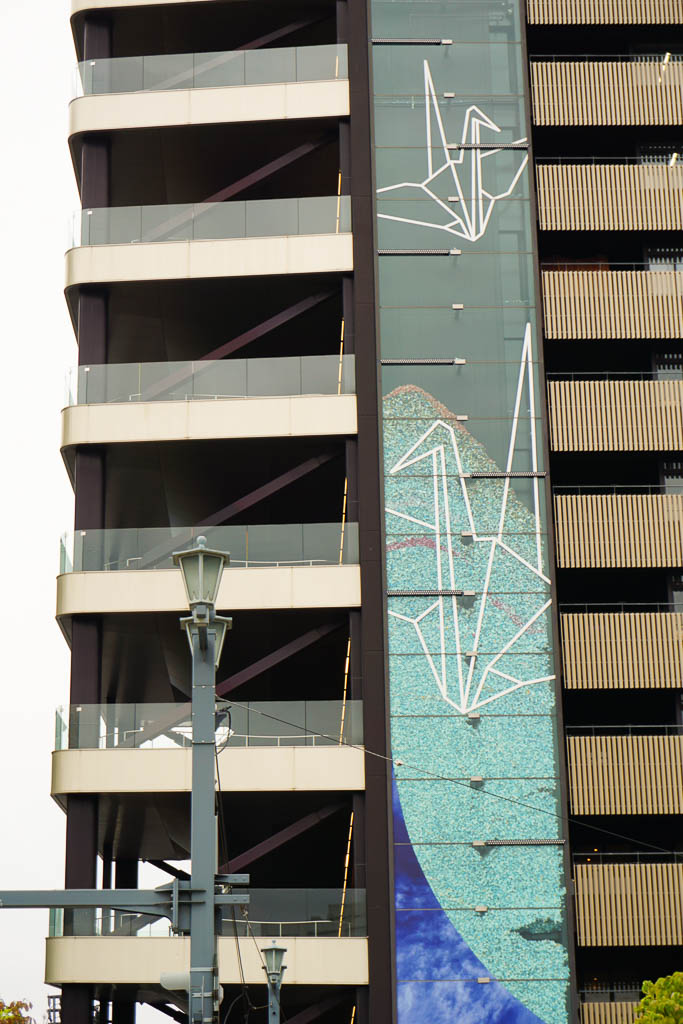
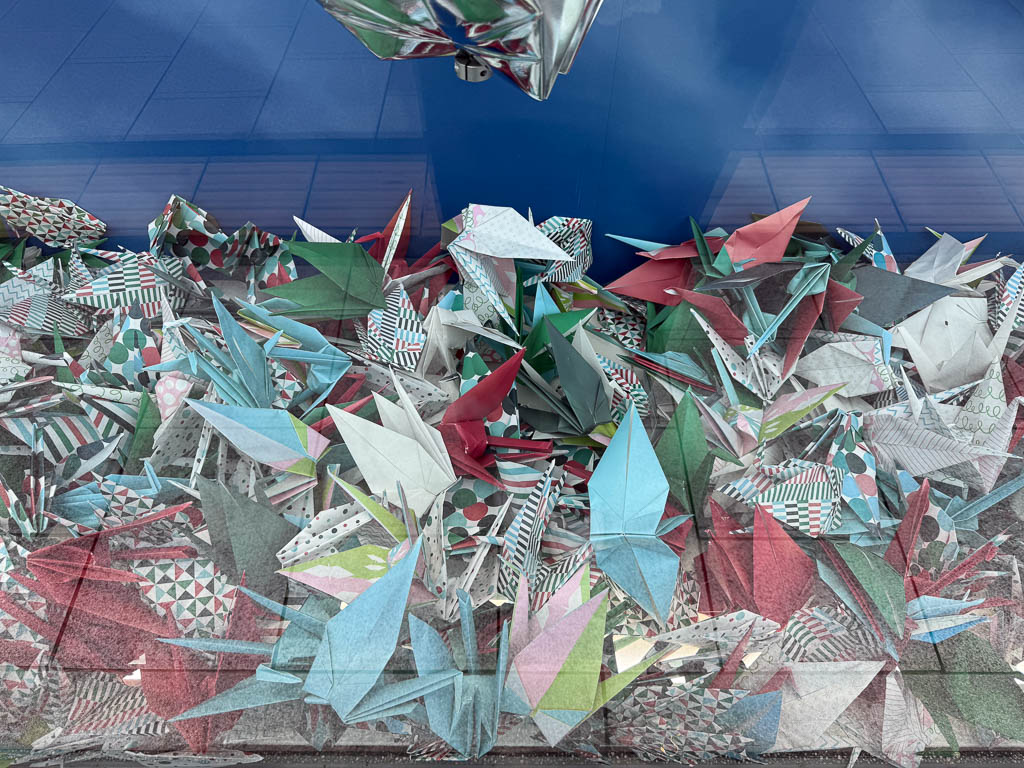
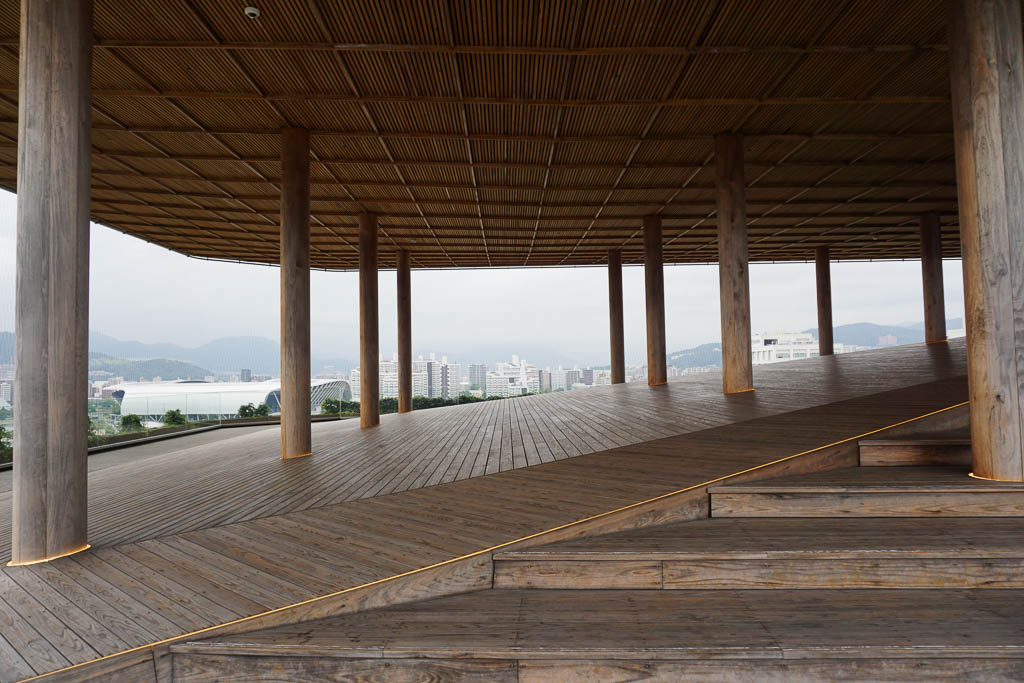
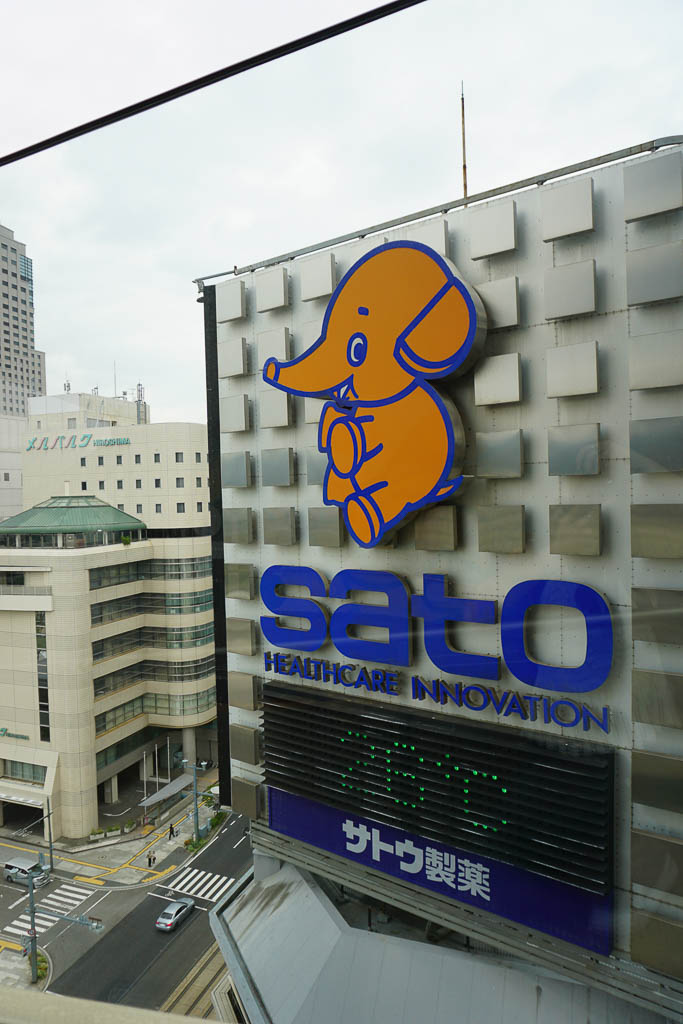
Standing nearby the Atomic Bomb Dome is one of the only tall buildings around – the Orizuro Tower. It is a tower, but a humble one, not imposing, not attempting to overshadow anything that is part of the Peace Memorial Park. And from the outside, you’ll notice something unique about the building – from top to bottom it features a repository of paper cranes that is slowly being filled by visitors. And I’m proud to say I was one of those visitors.

I was never good at the art of folding, and I think that part of the reason is my natural impatience. Folding a paper crane looked to me like an impossible challenge, but what it allowed me to do was to slow down after some hectic days of travelling. The space was quiet, with only a few other visitors focused on the simple act of folding paper, looking at video instructions or calling one of the staff for help. I gave a deep breath, and stood there, patiently, folding and folding the paper. It made me feel grounded, and when I only needed help literally in the end, I felt a sense of achievement, and then some sort of mission accomplished when I let my crane fall in the repository to join the over 1M already in there.
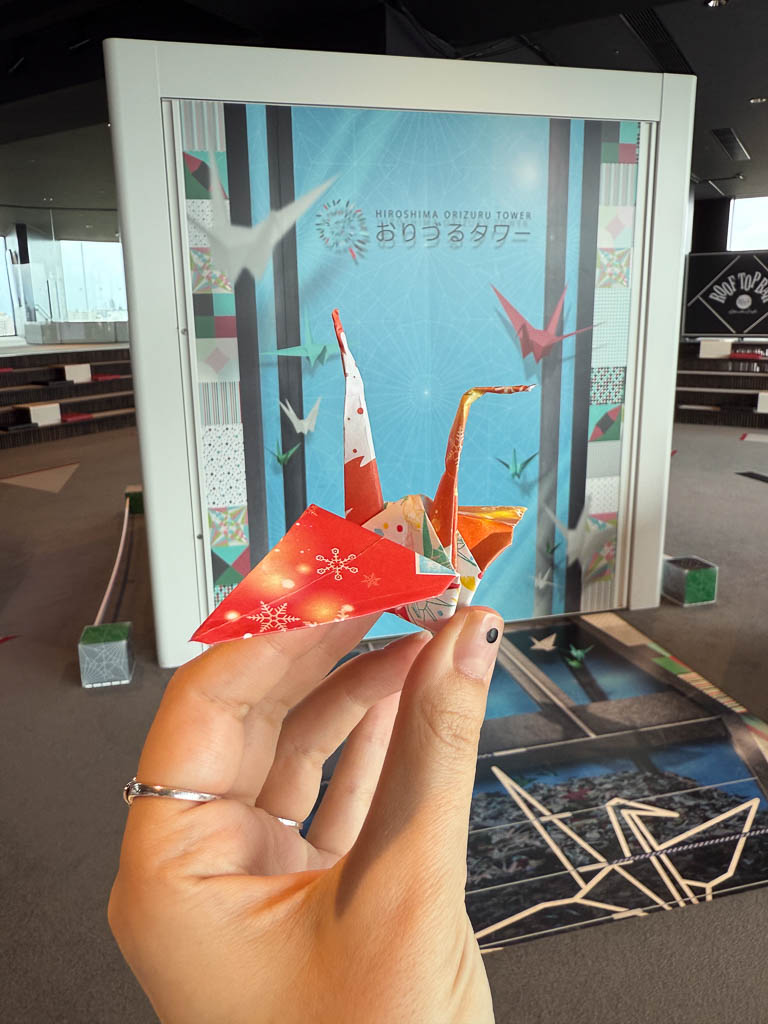
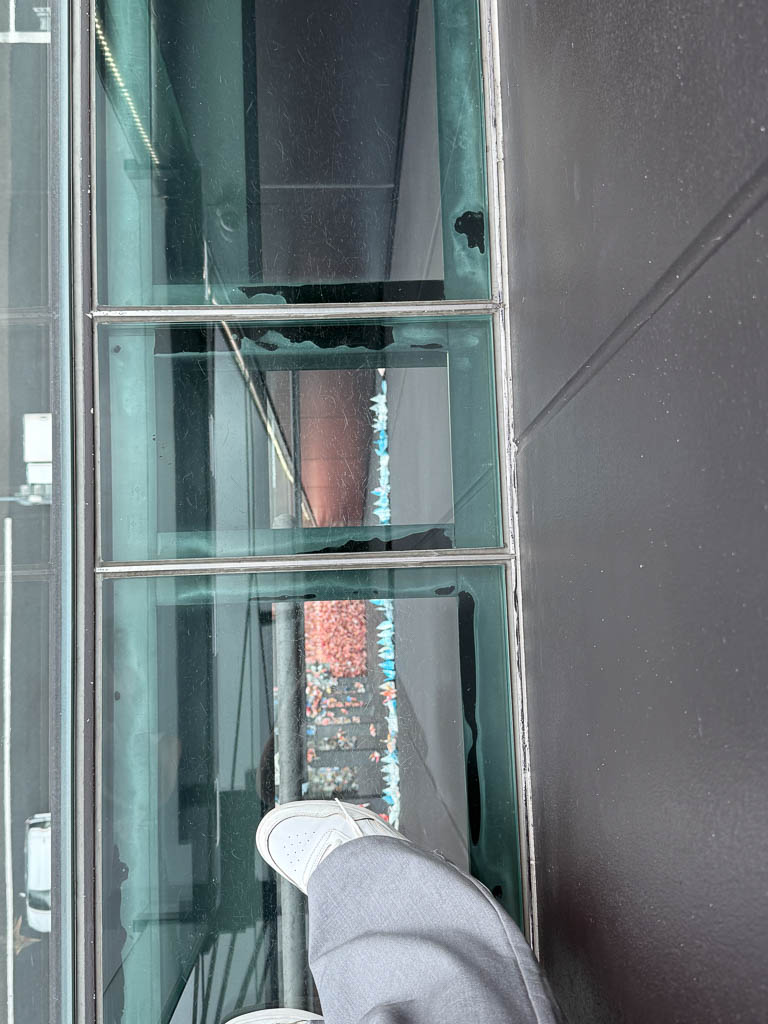
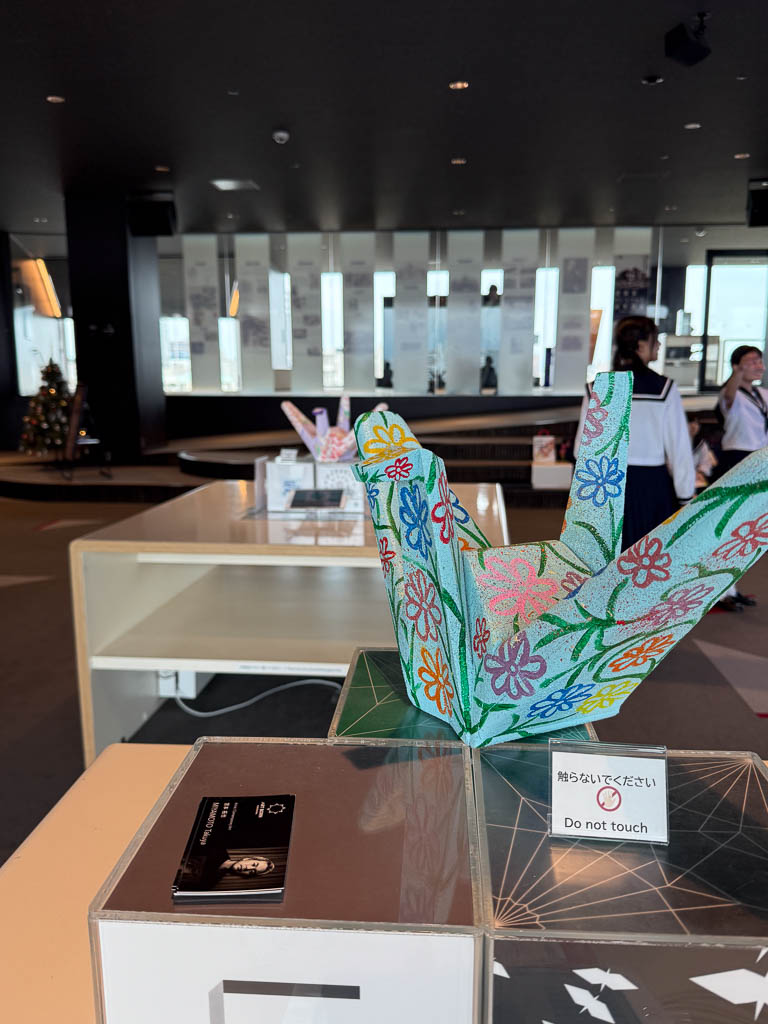
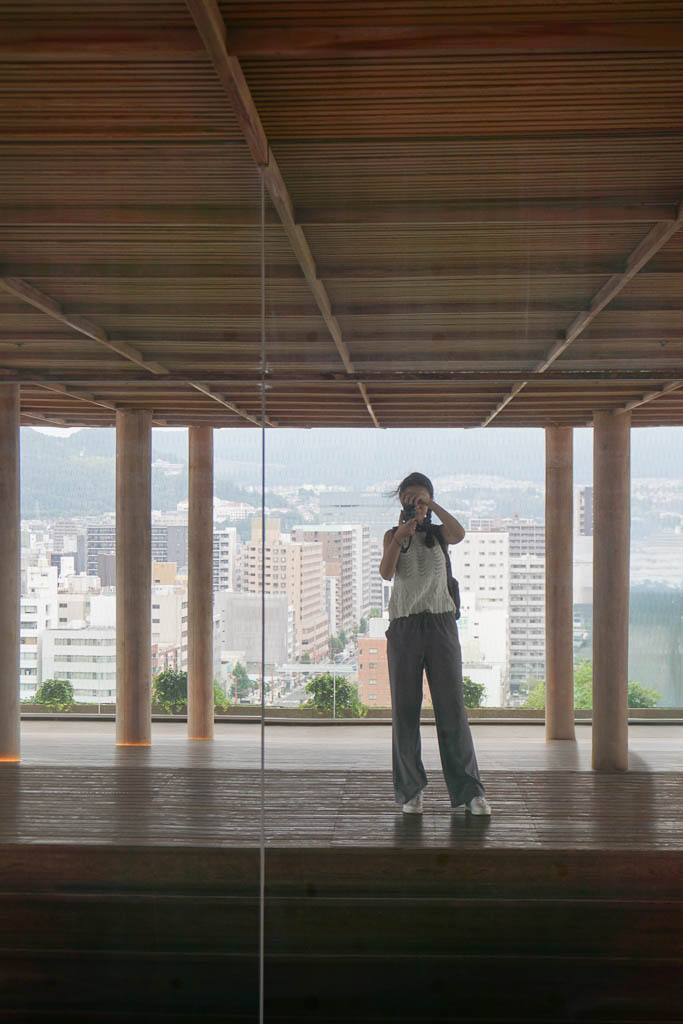
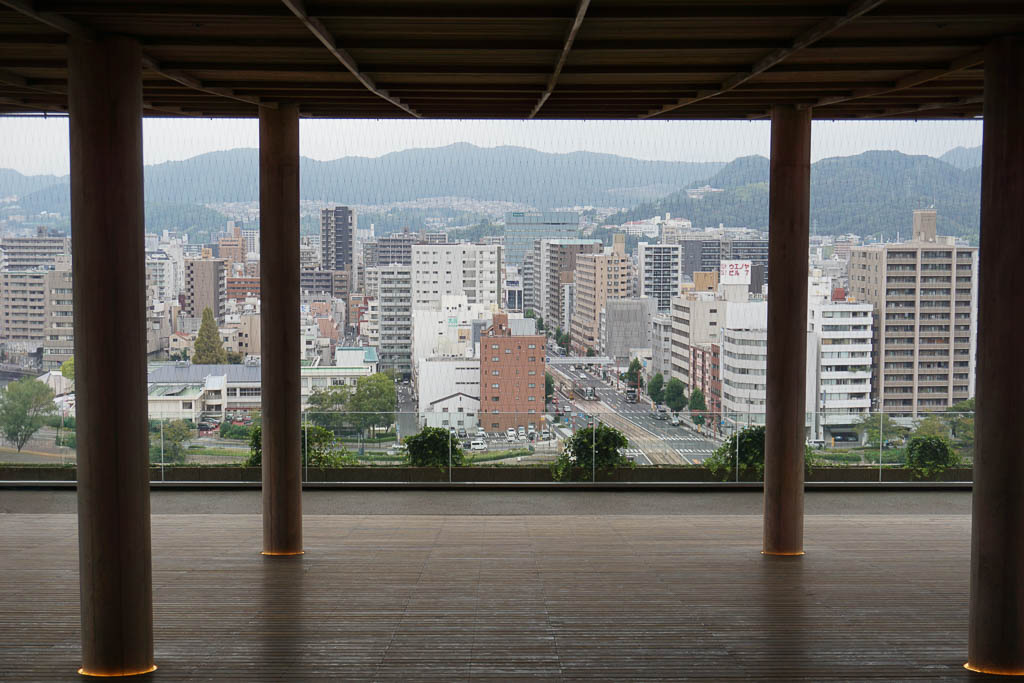
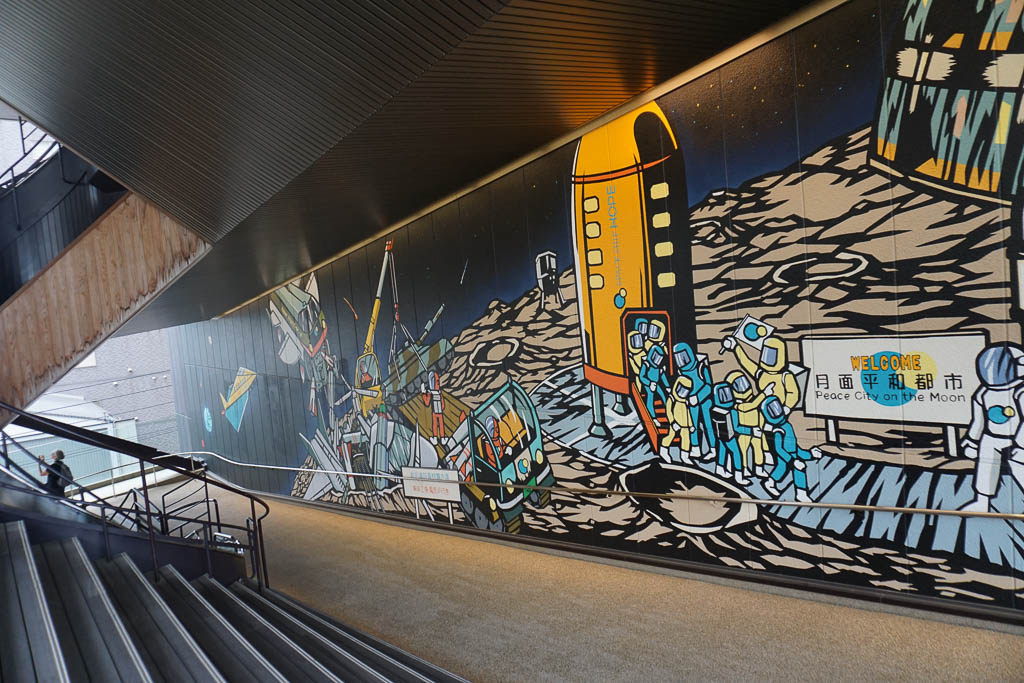
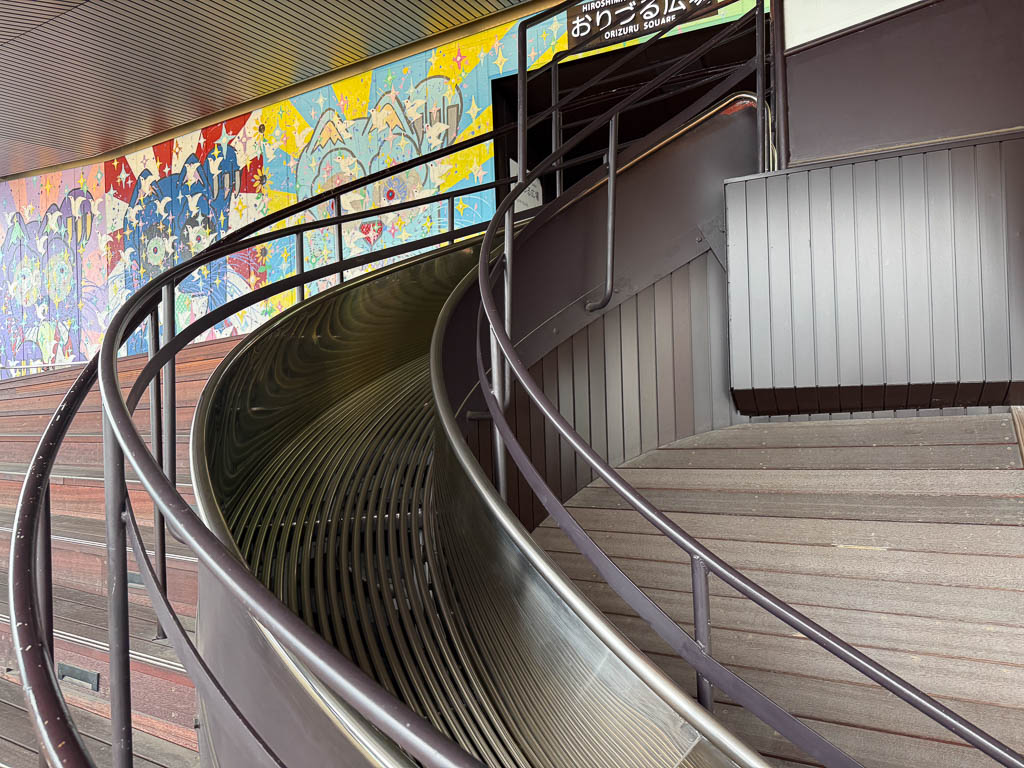
From the top, you also have a wonderful view to the city, and coming down some well designed spiral stairs, you’ll be able to admire some wonderful artwork by local artists. By the way, instead of using the stairs, you can literally slide down as well – yes, there is a slide! Whilst I really enjoyed this experience, I do have to say it’s a paid one and I do think it’s a little too expensive at 2,200 – about £11/15USD – and you have to pay an extra 100 yen for the paper crane. I do not regret it though, so if you have some time, and some extra cash, go ahead 🙂
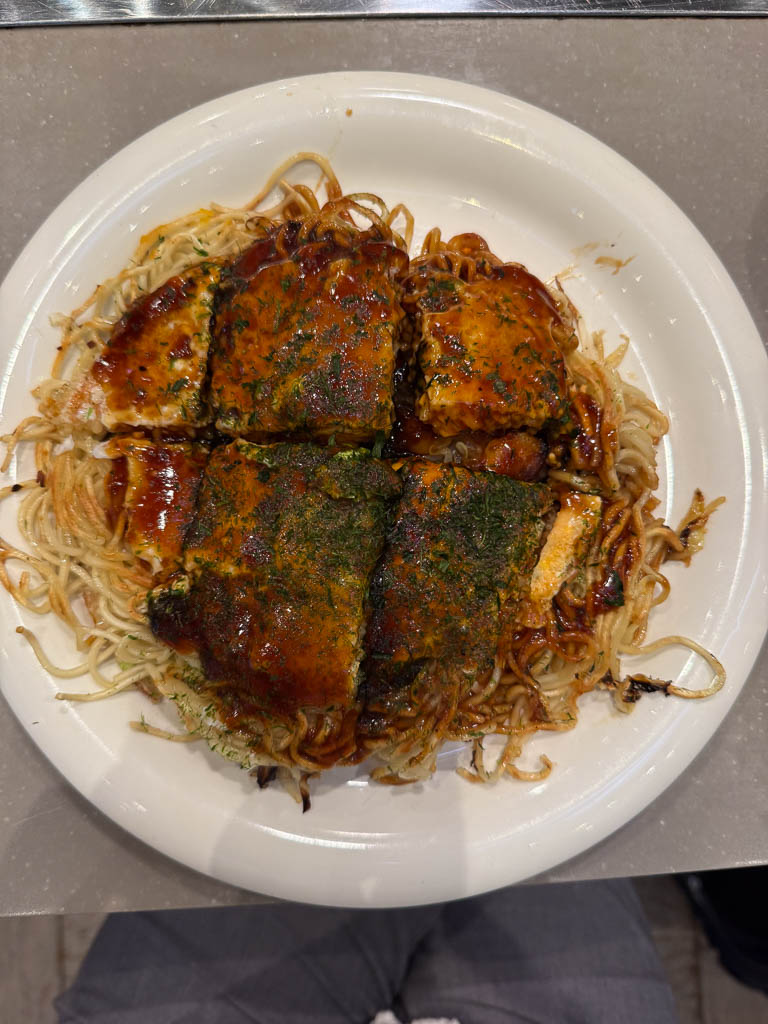
I was hungry after this, and next to the tower there is a Okonomiyaki restaurant. In Japanese I really benefited being solo when it came to restaurantes. There are a lot of individual seating, and because these get free quicker, I was able to basically “skip” the queue. While I had been hungry, I was soo too full to even finish. The Okonomiyaki (Hiroshima’s version) is a savoury pancake made with batter, Yakisoba noodlesm cabbage, and many other toppings you can choose from. If I remember correctly, mine had shrimp, and I requested they didn’t add pork, as I don’t really like the taste – this was always a challenge for me in Japan, where so many dishes are made with pork. Thank goodness for sushi.
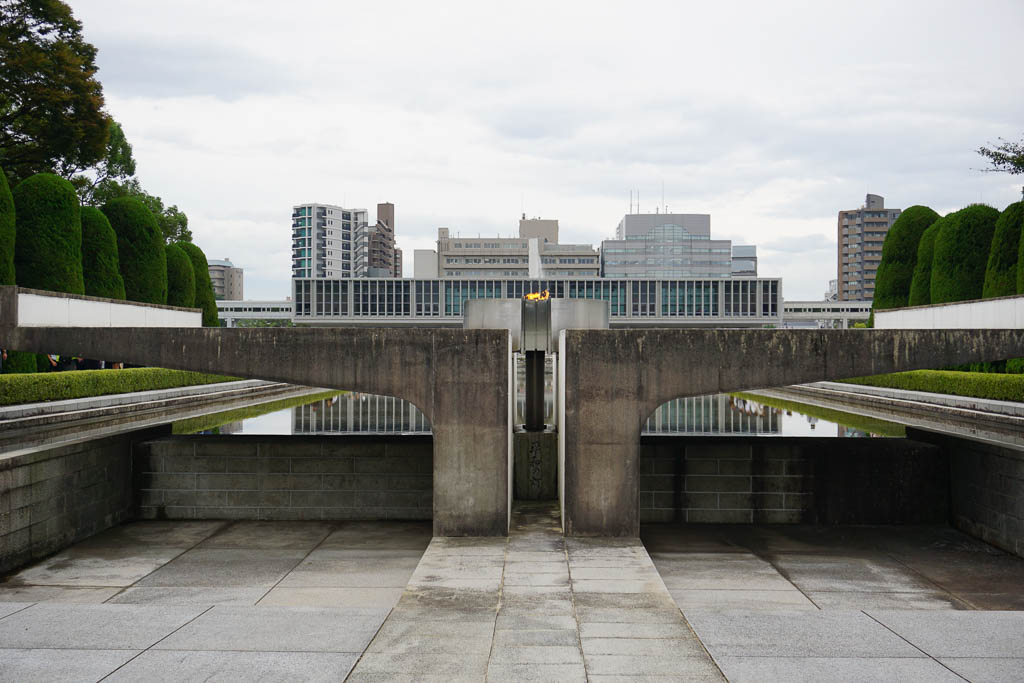
Just across from the Children’s Peace Monument, is the Peace Memorial Museum – and in between, you’ll see the Peace Flame. This was lit in 1964, and it’s meant to keep burning until all nuclear weapons are abolished. Sadly, I believe we are very far from such a reality.
My visit to the Peace Memorial Museum was far from peaceful, and in fact quite chaotic! One of the most common things that interfered with my visits to different landmarks in Japan were the school groups. You would struggle to believe Japan has one of the lowest birth rates with the amount of kids you end up encountering whilst touring the land of the Rising Sun. I would even recommend visiting the museum on a weekend if you can. Regardless of the chaos of small children crowding the galleries, this museum had a strong impact on me.
All over the other during my travels I end up coming across history that sends waves of shock through my core, makes me feel disgusted by my own species, and somehow a feeling of crestfalleness on how the human race simply does not learn. Places like the War remmants Museum in Ho Chi Minh City, Vietnam, The Tuol Sleng Gencide Museum in Phnom Penh, Cambodia, finding out how the US is still killing civilians in Laos and one of the most recent visits to the concentration camps of Auschwitz in Poland.
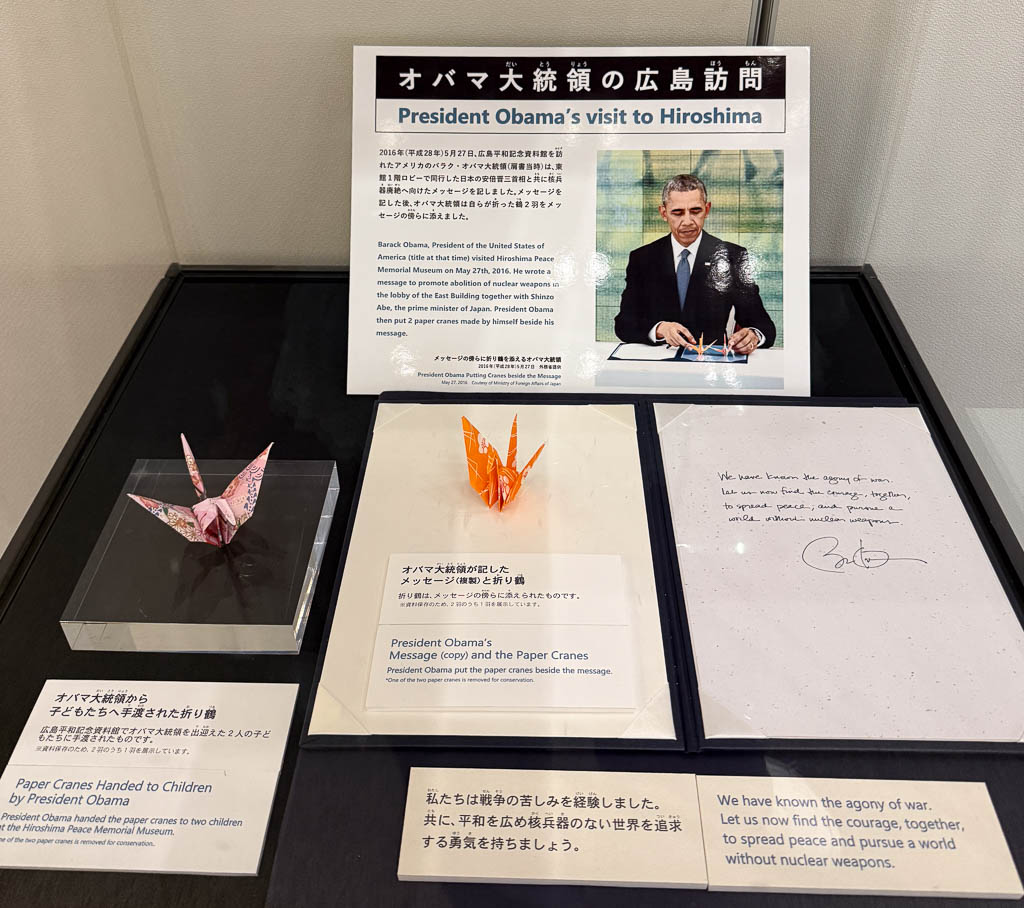
The thing about the atomic bomb is how clean it is. No one was actually physically present to kill anyone. A single bomb dropped from the skies and in a matter of seconds a whole city decimated, thousands of lives quite literally evaporating. Clean. That is the world that comes to mind.
Hiroshima is now a city standing against nuclear weapons. A city that will be in the history books forever as where the first atomic bomb was detonated, and yet a city standing proudly for peace. That’s how I’ll remember it.
Love, Nic
P.S. The below are affiliate links. This means I may earn a small commission if you decide to purchase or book anything through these links. None of it is sponsored. All my recommendations are based on my lived experience.
Where I stayed in Hiroshima: Hotel Vista Hiroshima https://booking.tpo.lv/VPLWa0Bu
Truely Sim Card: Get 10% Off with code wingedbone10
 The Winged Bone
You balanced Hiroshima’s history with so much humanity and hope, quiet moments, paper cranes, and all. Beautifully written and really stays with you.
LikeLike