
Just next to my accommodation there was a little alley with some really good works of art. The most famous is the bust of Medusa. I found this one stunning – the tale of Medusa is one that has always fascinated me, mostly for making me doubt the wisdom of the goddess Athena, for making me dislike men even more and for portraying so well how it is the woman who always gets punished even when she is the victim.
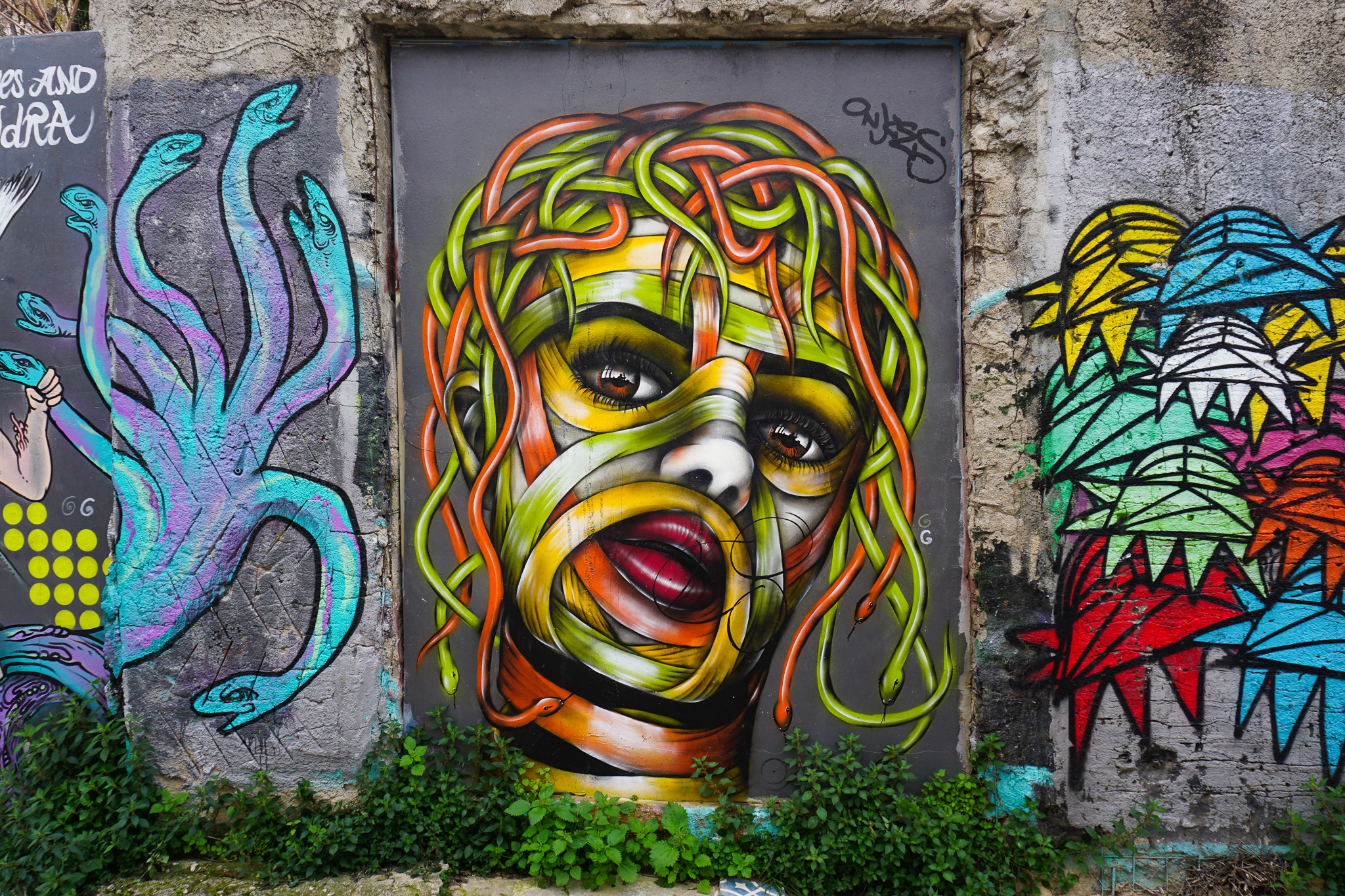
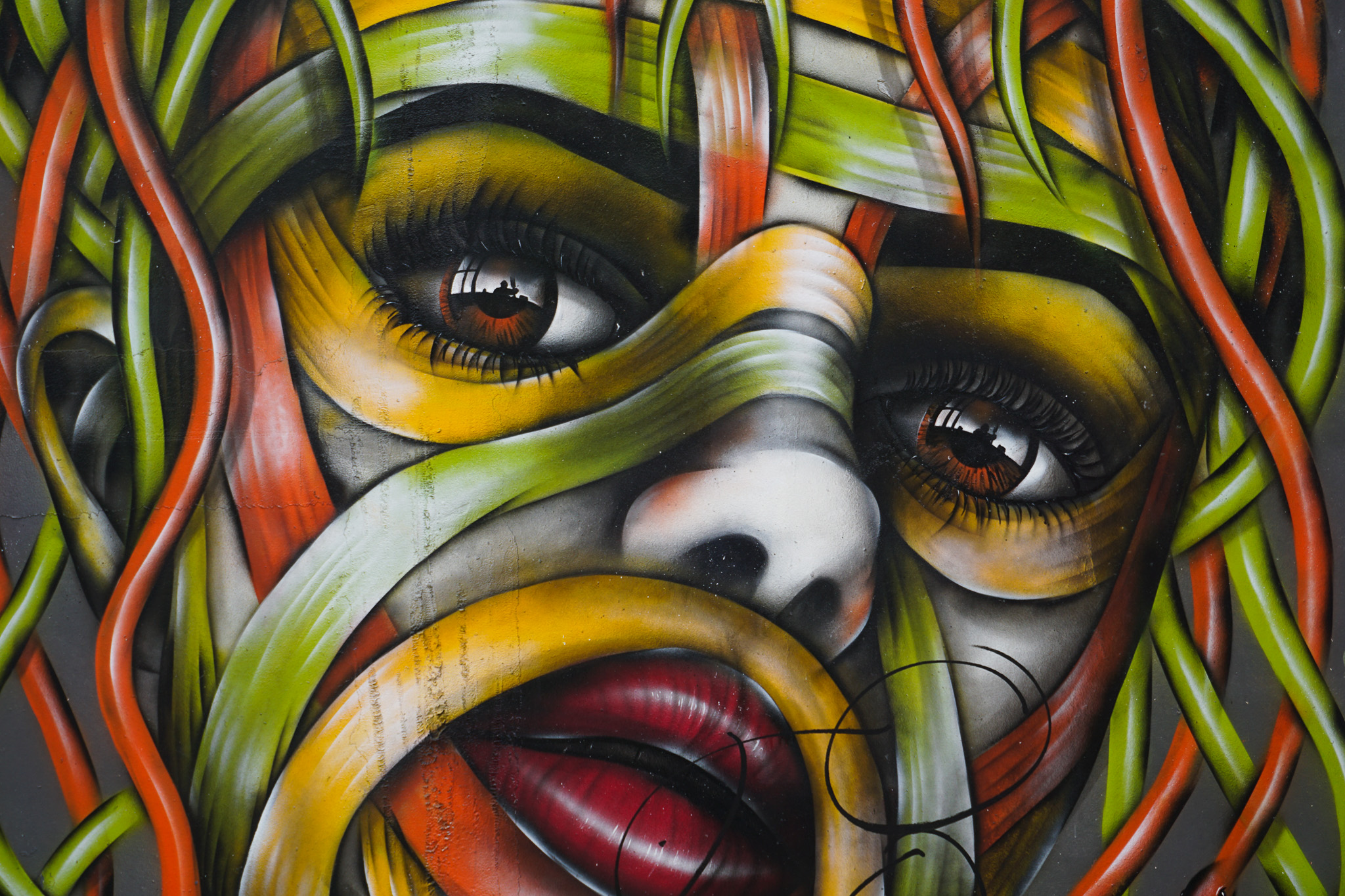
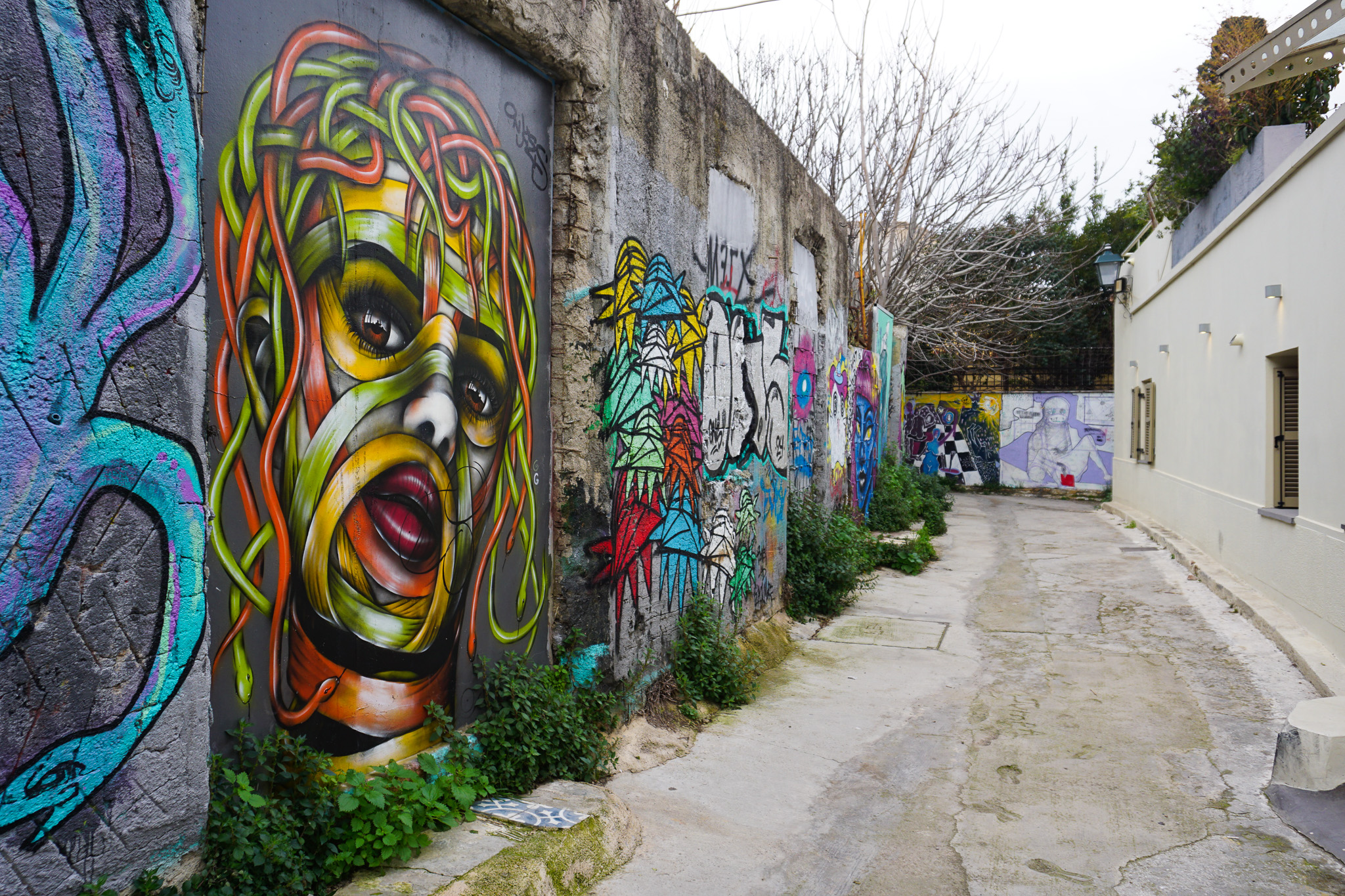
Medusa is often the villain of every story, but some modern interpretations have placed her as the victim – she was a priestess of Athena, and one day whilst she was caring for one of the many temples honouring the goddess, Poseidon appeared and raped her. Athena, outraged for such an act in one of her temples, couldn’t punish Poseidon – his cousin and a fellow God, so instead she turned Medusa’s hair into snakes and her stare would turn anyone into stone. Some say Athena did it in fact to protect Medusa from further violence… Others say it was a petty punishment, which doesn’t really align with the personality of the Goddess of Reason. I prefer the feminist take – maybe because I am biased – but also because it makes a lot more sense. In this work of art, you can see the shadow of Poseidon reflected in Medusa’s eyes.
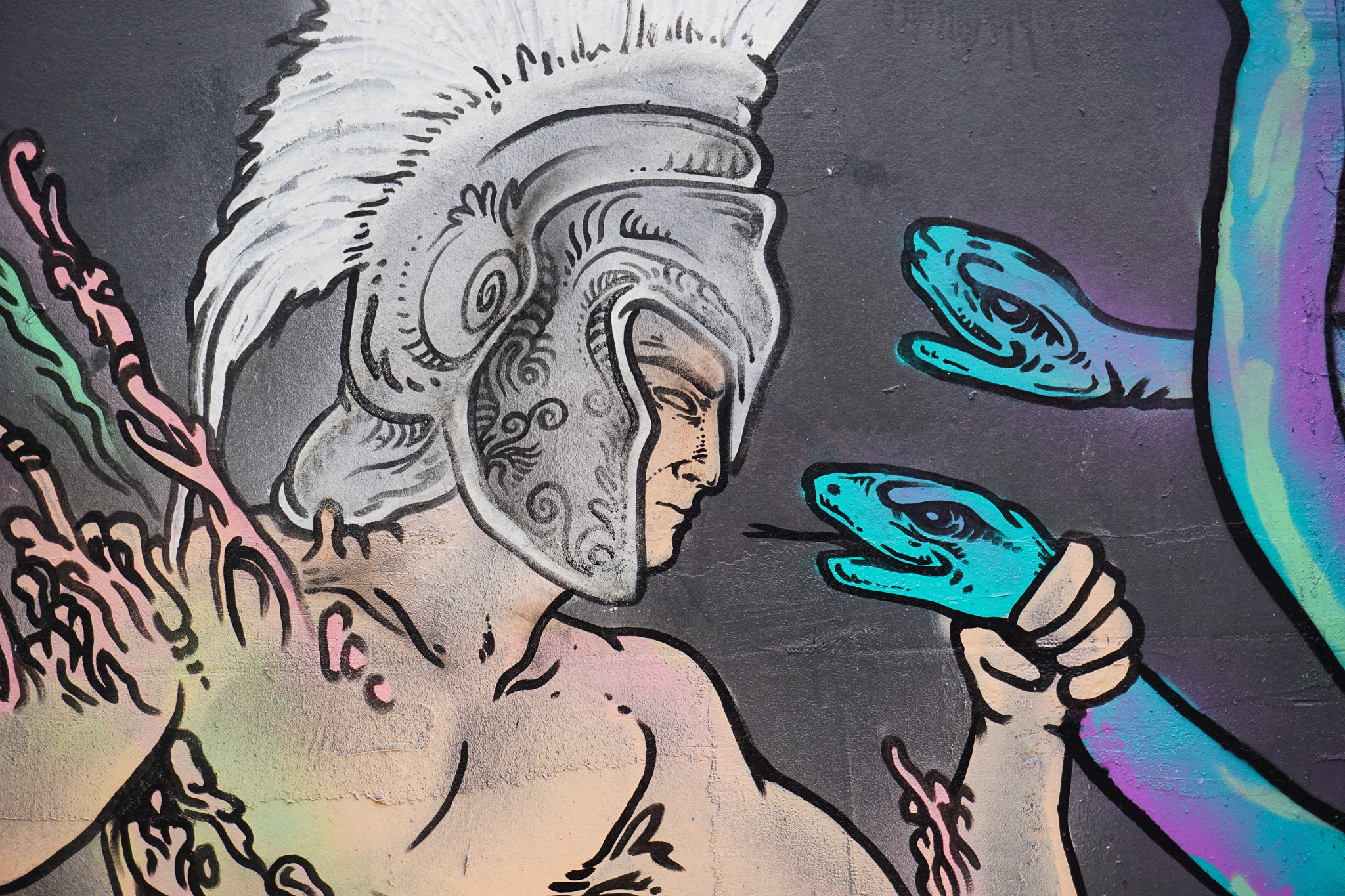
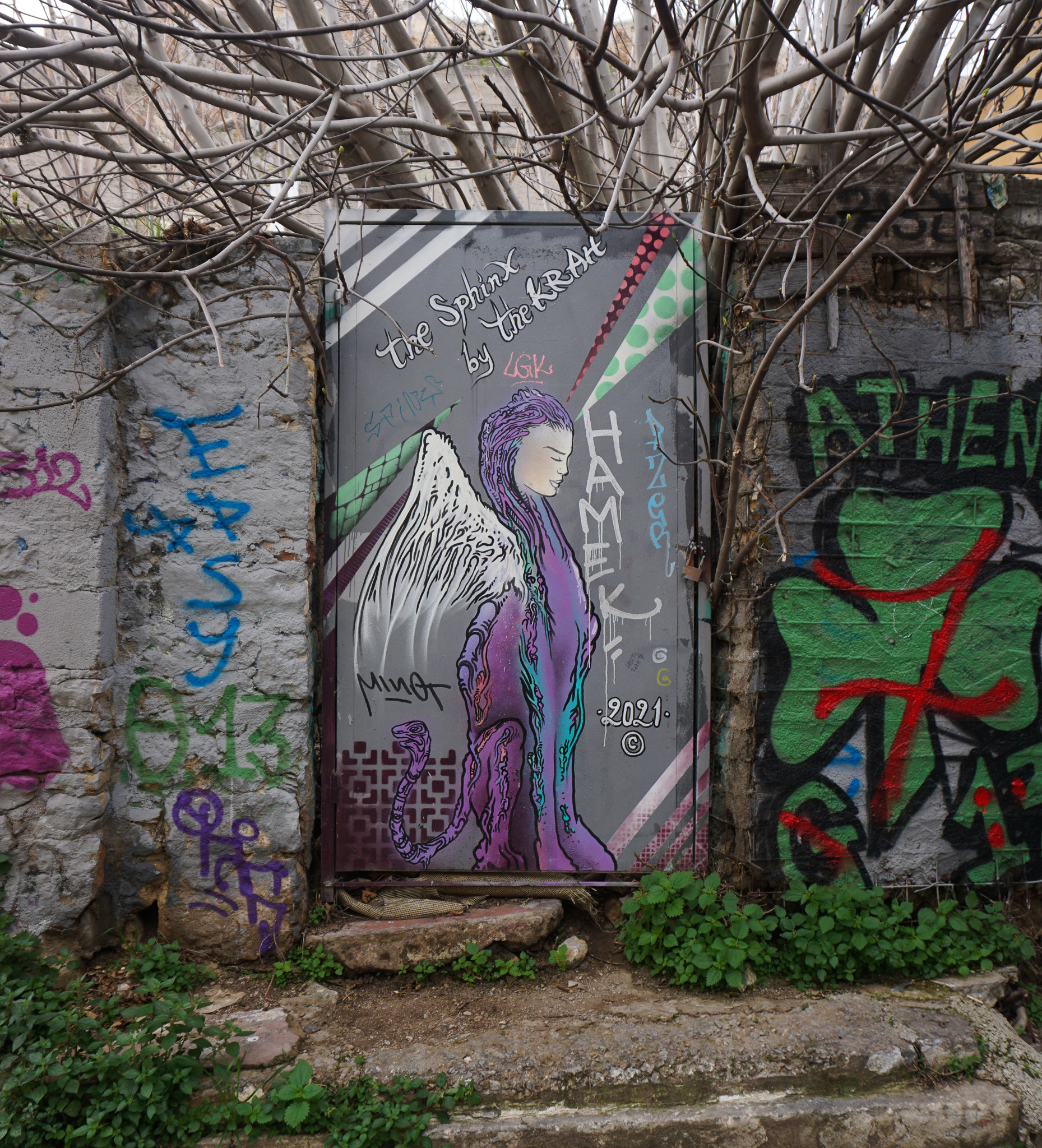
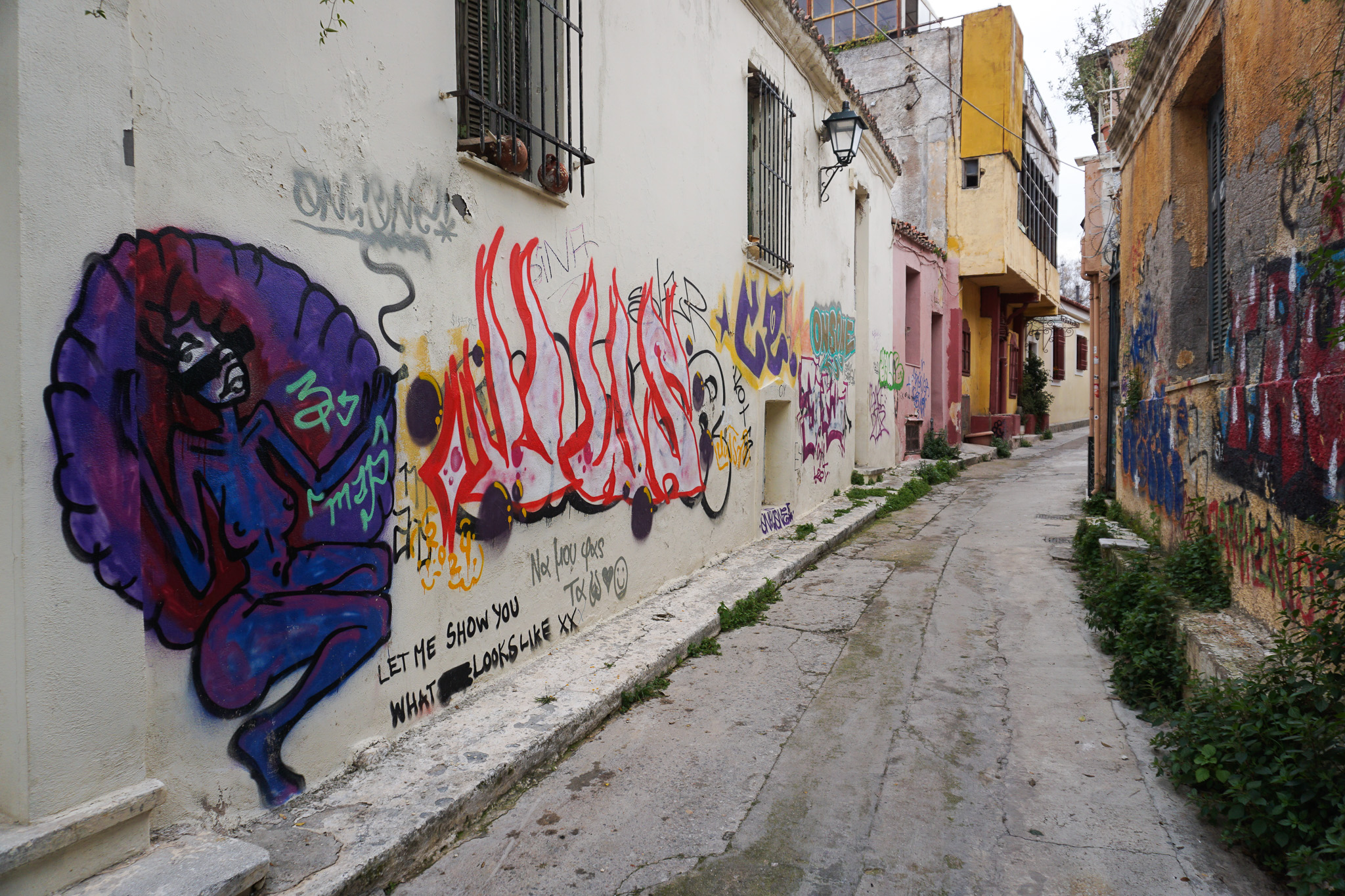

As mentioned briefly in my post about Plaka, there is a grittiness in the streets of Athens that reminds you this is a lived place, not a manicured scene for tourists to enjoy. Sadly, a lot of the stunning pieces of street art had been vandalised with graffiti – tags and symbols, some of them with sexual innuendo. It was everywhere in Plaka, but also quite notable in the neighbourhood of Psyri.

Psyri is a hectic, bohemian and vibrant neighbourhood in Athens – and I definitely recommend spending some time exploring its streets, full with traditional shops whose local delicacies caught my eye.

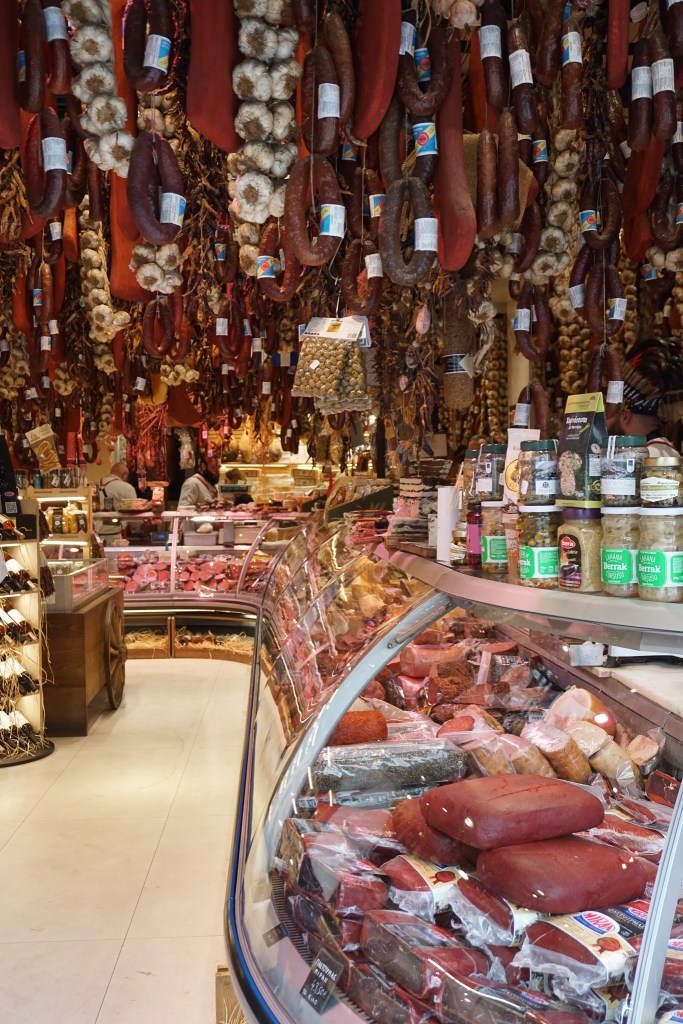
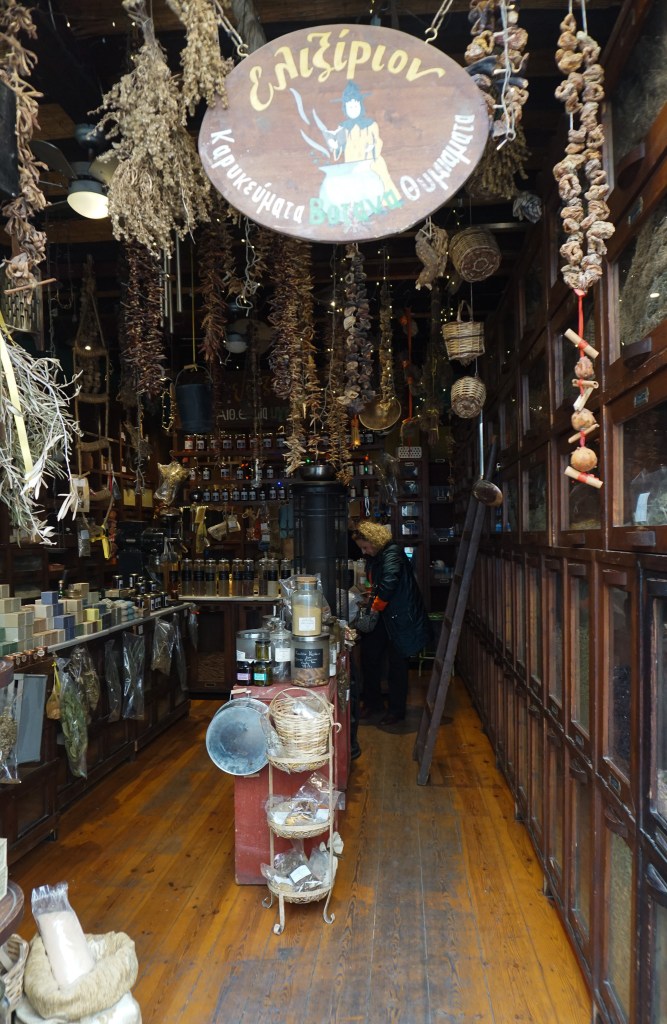


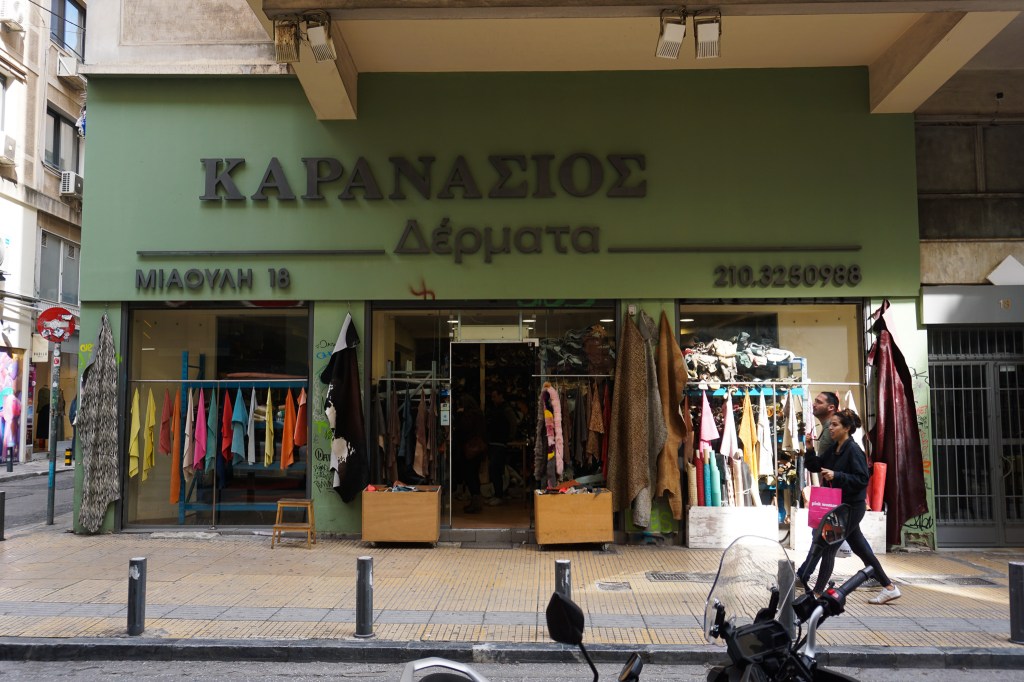
First I went there hunting for street art, but I left knowing I had perhaps touched on the open wound of Greek society – a discontented youth. In many ways, this reminded me of Lisbon – where graffiti is also a common sight. And you know what the Portugal youth has in common with the Greek youth? Precisely the same – a generation that has been let down, with an uncertain future, a corrupt government, low wages, precarious employment. Graffiti is often an expression of revolt – and I had a feeling that the defacing of what might have been commissioned street art is a cry against gentrification – which raises the prices of property, making it even more unliveable for the medium and lower socio-economic classes of the country.
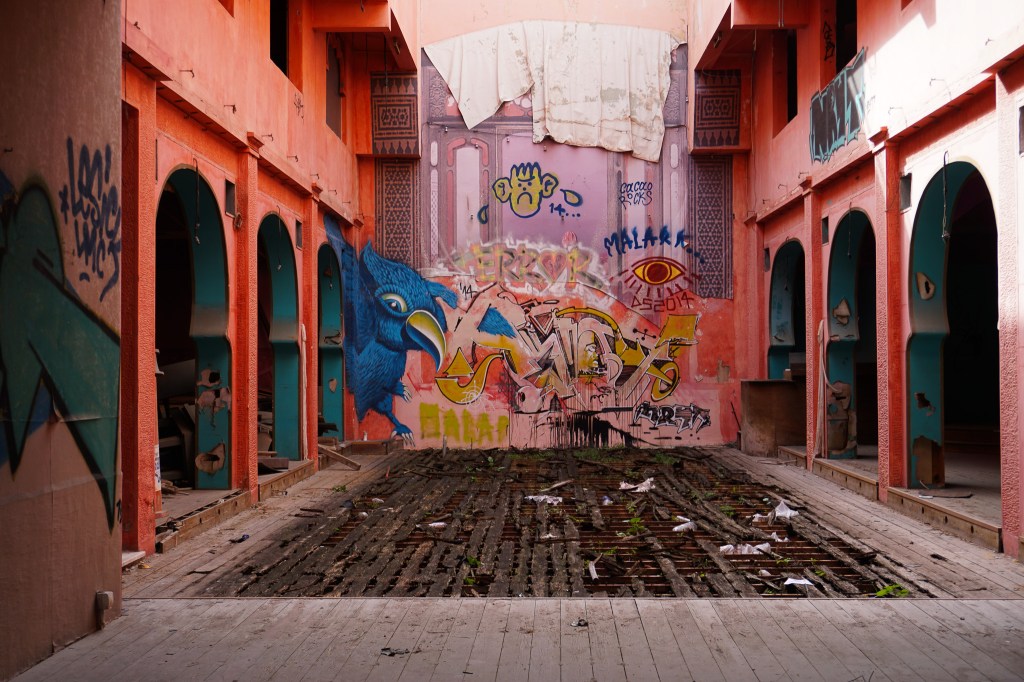
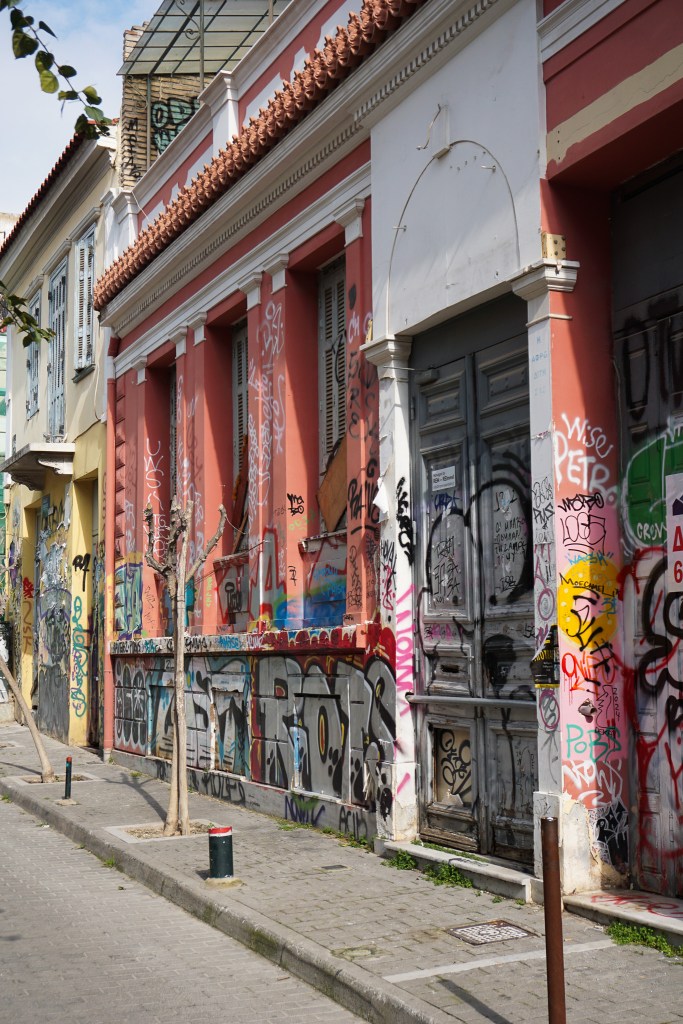
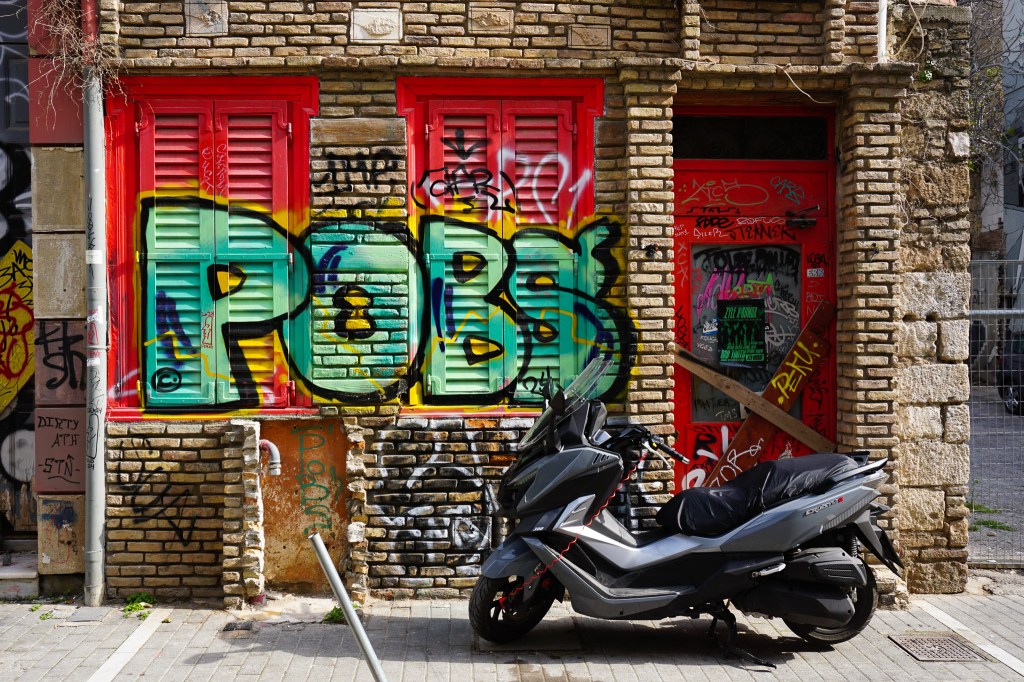

I do not stand for the defacing of public spaces – it won’t hurt or bother those who are in power, and it often affects the common citizen, waking up to see their door has been graffitied, a shop owner that has to spend money to clean their windows. And even if the work of an artist feels wrong, it doesn’t give you the right to destroy it. Again, this doesn’t bother anyone in power, who laughs it off or are simply happily unaware of it. And sometimes, you see the graffiti is pointless – an egocentric exercise to leave one’s mark, for instance, to tag territory in case of gangs. Plus, the occasional penises are quite frankly disgusting.

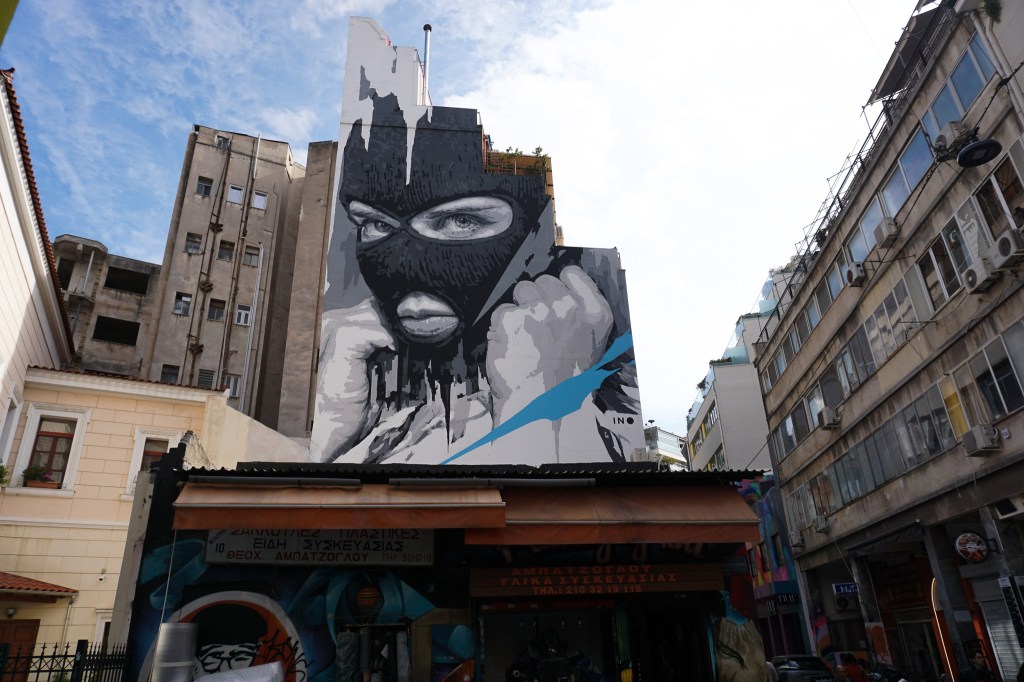


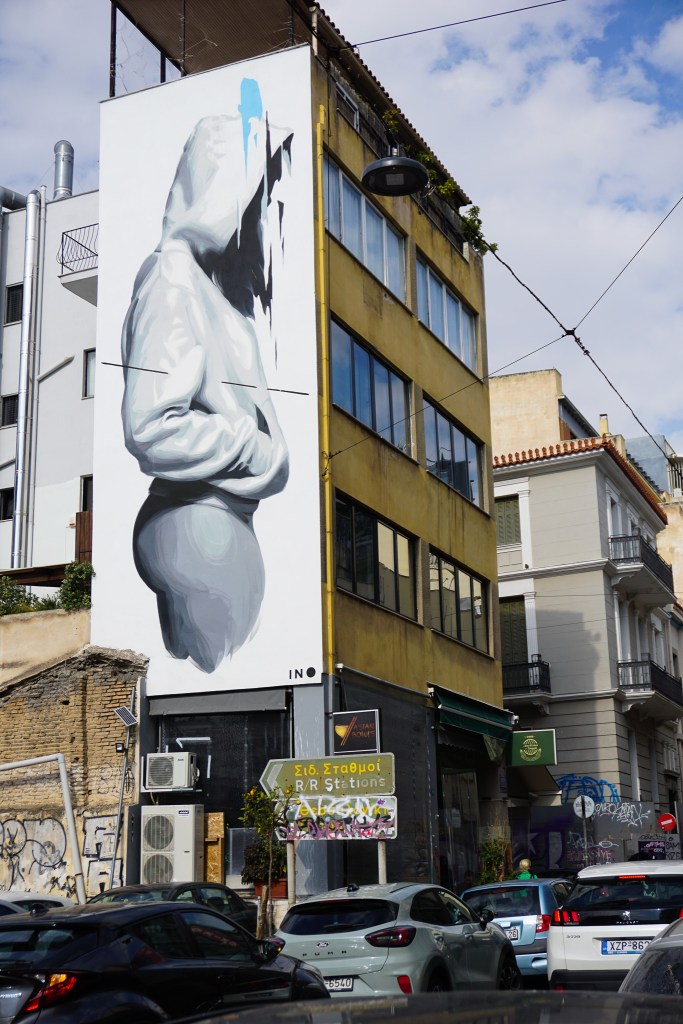


But all of this was part of what made me relate so well with Athens and its inhabitants. I can understand them, I can feel their pain and their struggles. And I admire them – because despite all of it, they are loud and joyful, and Psyri is a testament to that. Filled with restaurants, bars and cafes, absolutely busy with people chatting, drinking, eating or simply existing. This energy was contagious and I felt myself vibrating to this music.


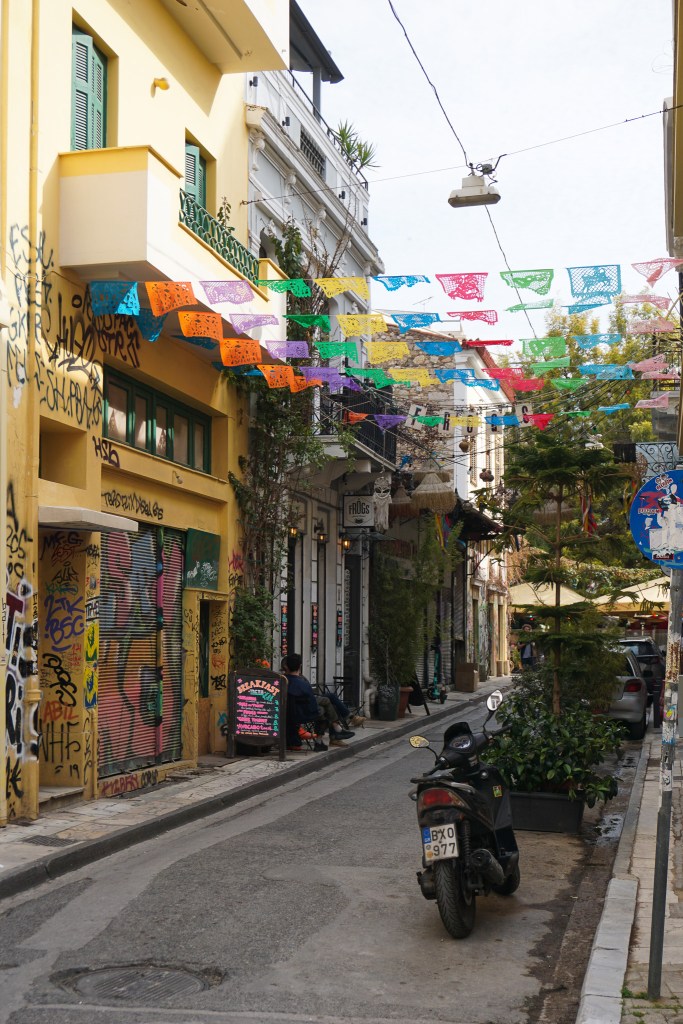
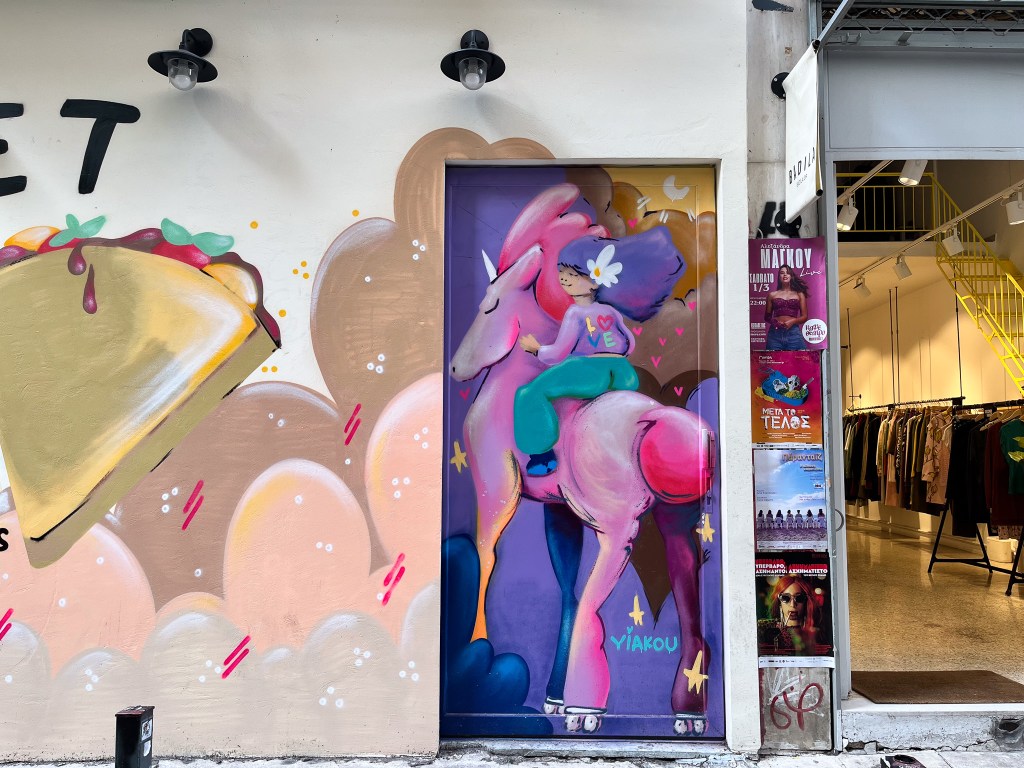
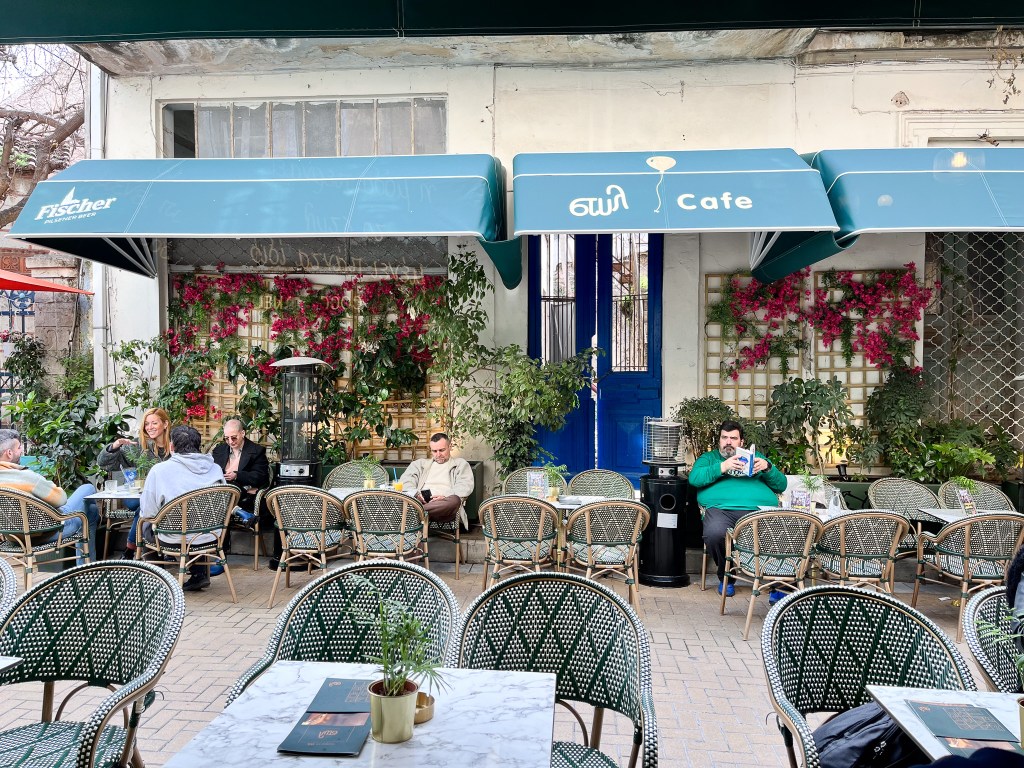
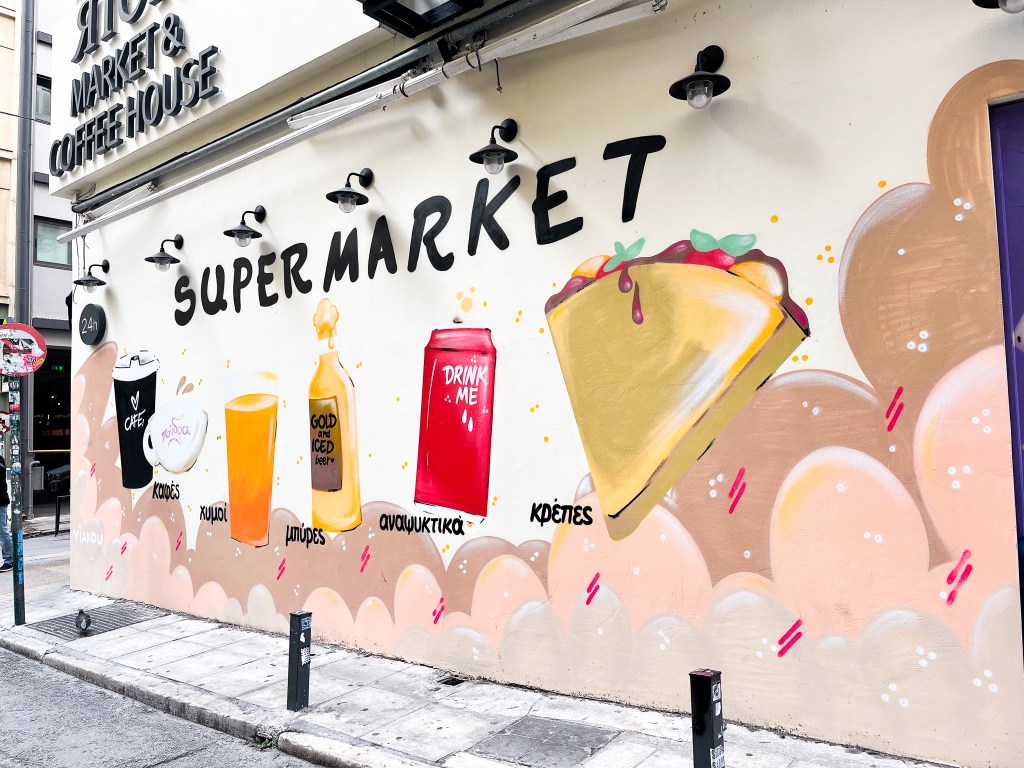
I loved how Athens doesn’t intend to hide its struggles – there is a rawness to it that makes it feel real, authentic, unfiltered. I was in awe – even after the massive national strike of the 28th of February, when the city had been shut down and the chants of revolt and anger echoed through the streets of Athens, the streets were now transporting the sounds of joy – laughter, animated conversation, the rich smell of food from busy eateries. As if this in itself was a statement “yes, we are angry, we are discontent, but we’re here, and we’re still going to live fully”. There is a resilience to this that I found incredibly inspiring.
Athens is not only an ancient, well lived city; it is a place that refuses to be defeated by the challenges that come forwards, that insists on living loudly every day, in the present, not letting the hope for a better future delay the living of the present.
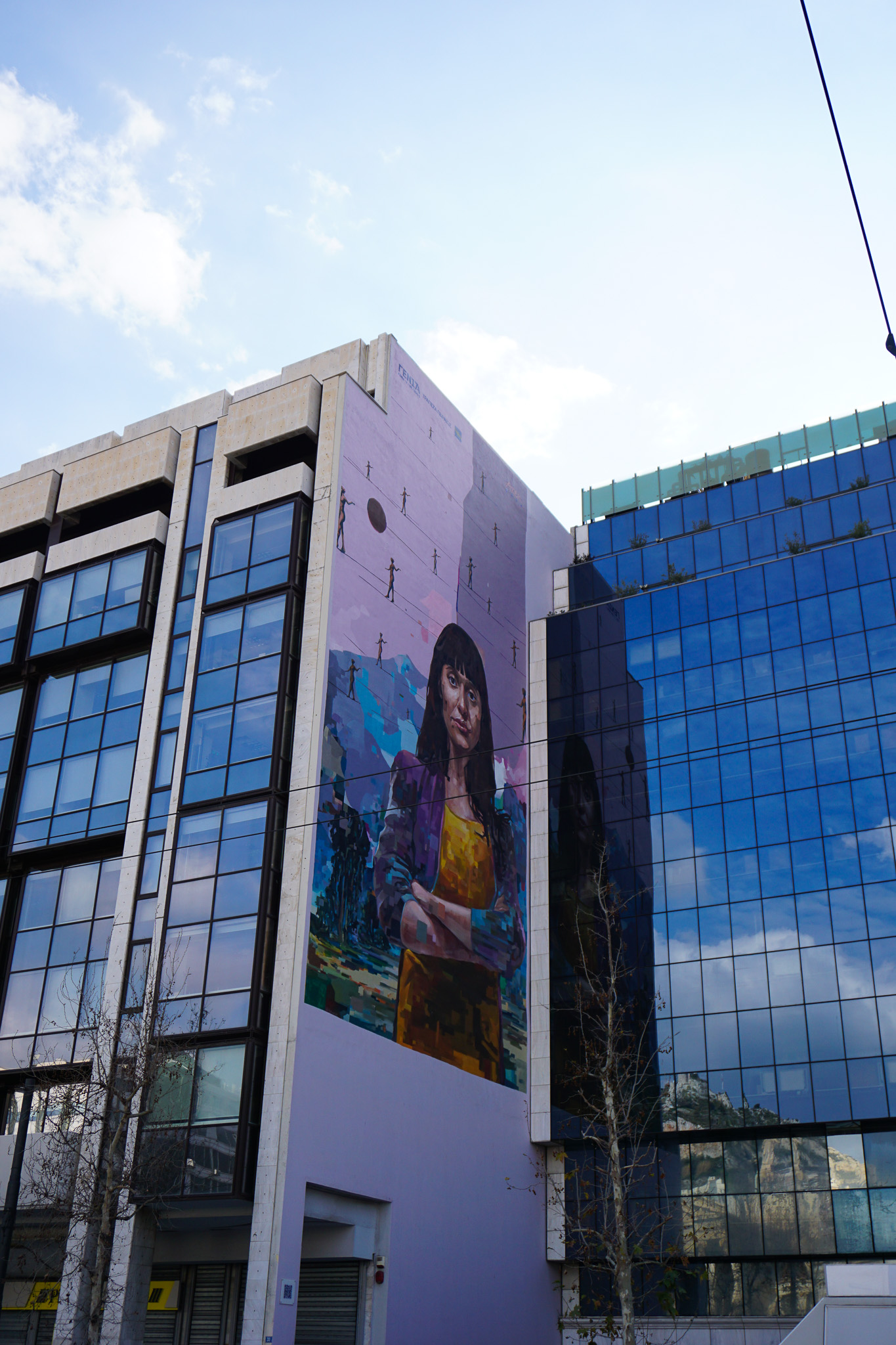
At this point I realised I could have stayed a whole week in Athens. I wanted to immerse myself in this city, in its rawness. But with limited time, I left this vibrant neighbourhood and headed to Mount Lycabettus.
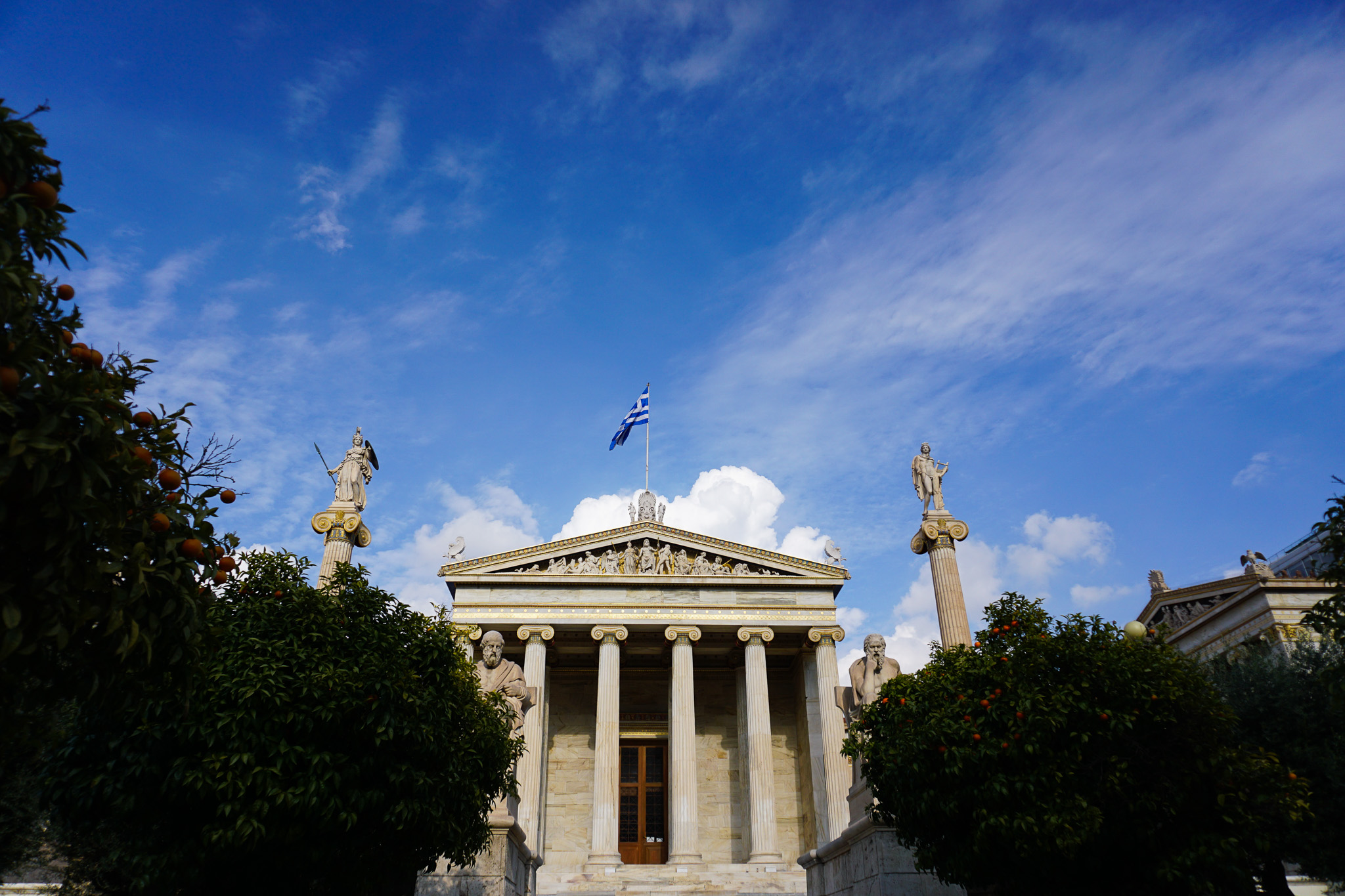
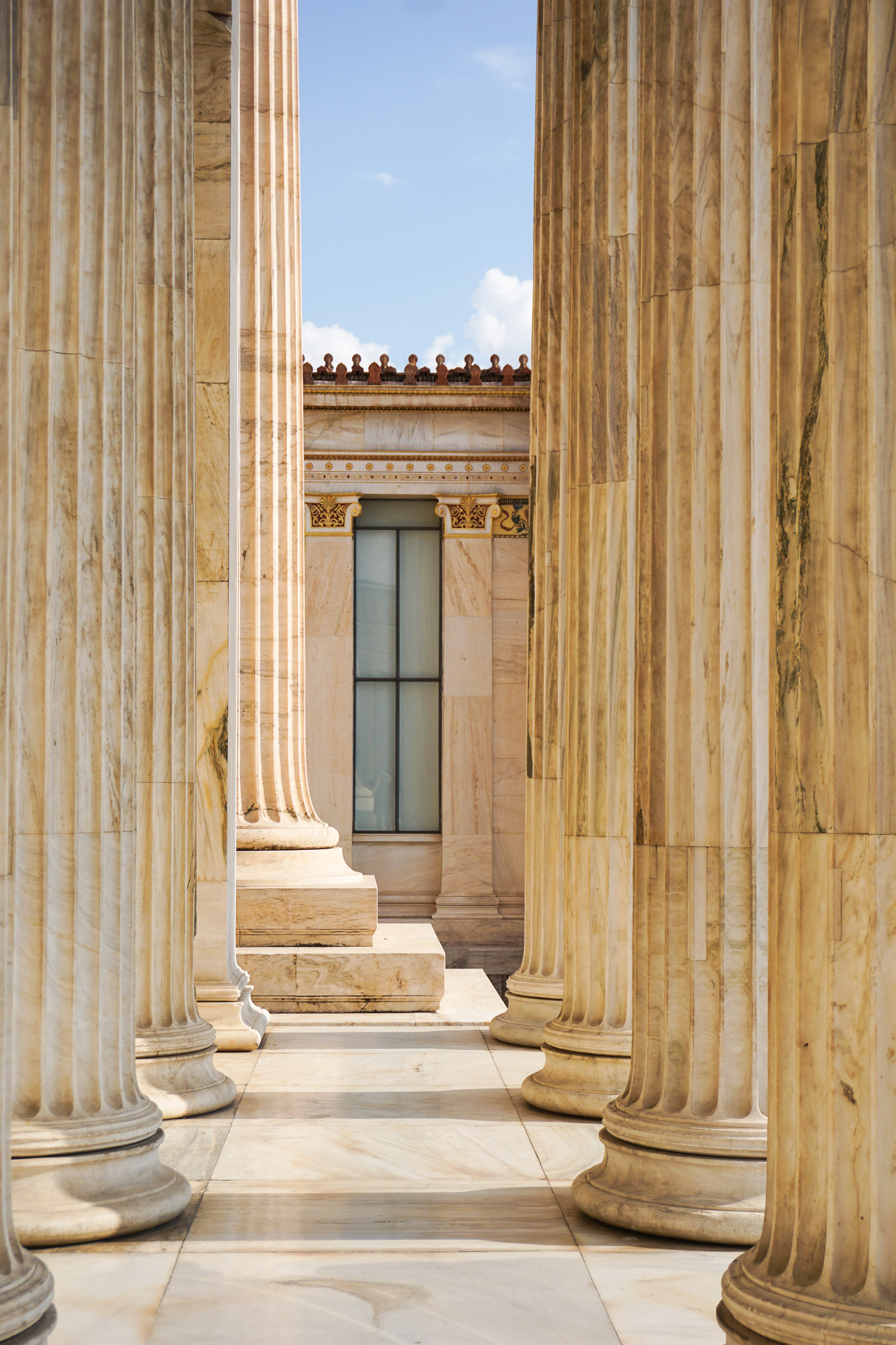
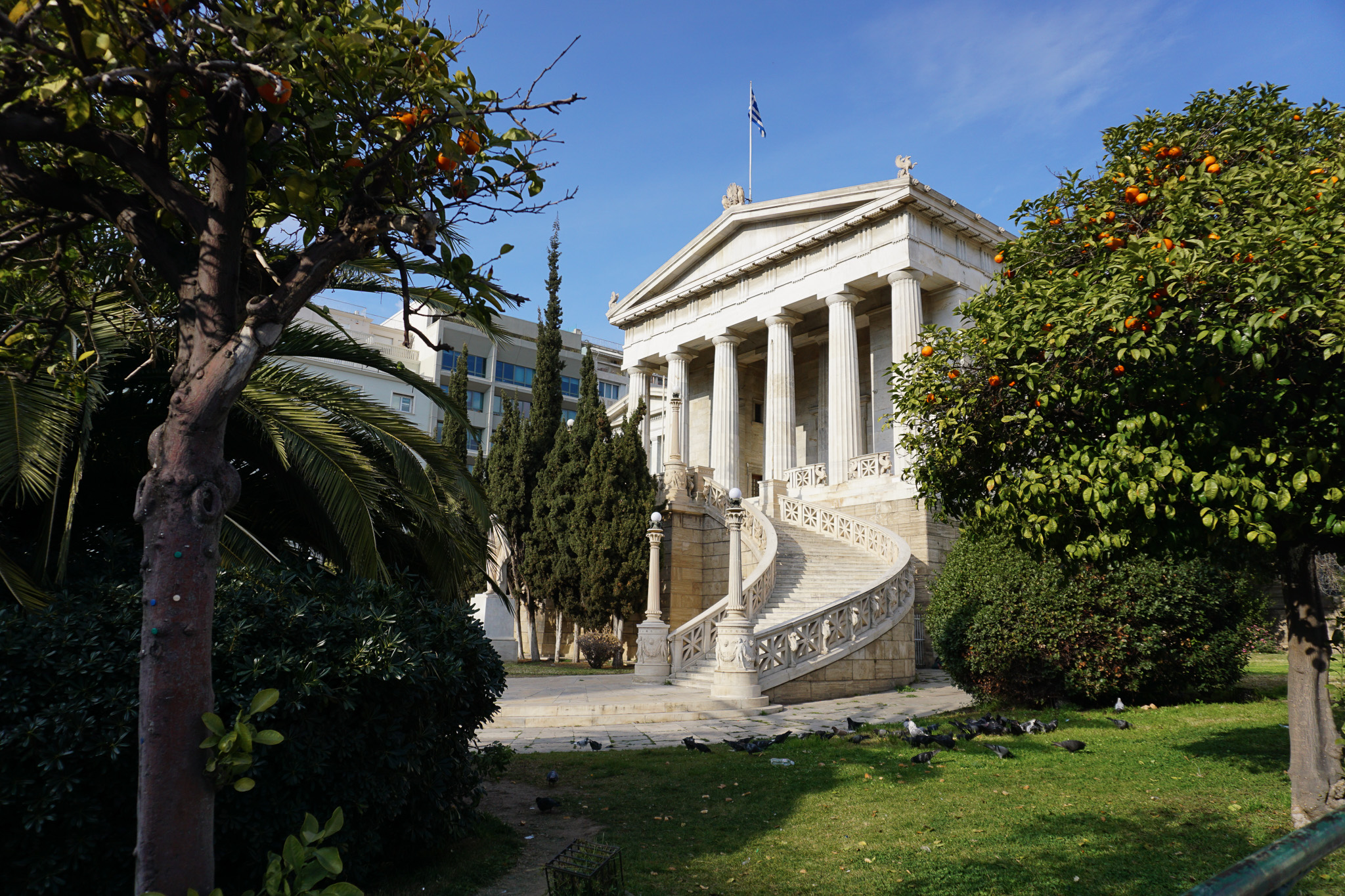
On my way there, I also stopped at the Academy of Athens – this had been a recommendation from my walking tour guide. The building is stunning – it’s a neoclassical icon in the city, of an elegance and grandeur that made my jaw drop. The building seems guarded by Athena and Apollo. Just next door, another beautiful building in the same style houses the National Library. It’s an homage to Greece’s ancient roots and wisdom.




You can use a funicular to go up to the top of Mount Lycabettus, but I’m the kind of person that always says as long as I have good legs to walk, I will walk. Plus the hike in itself is a great experience, and I didn’t find it too harsh – of course if you visit in the summer, it will be quite unbearable – remember the temperatures in Athens during summer can go over 40 degrees Celsius. I was there in early March, and the temperatures were perfect, especially at the end of the day, when a cool breeze was blowing.

Mount Lycabettus is about 300 meters high, being one of the tallest points in Athens. It’s located opposite to the Acropolis, and from its summit, you get a 360 view of the city, the sea and, it is said that on clear days, you can also see the islands. The name Lycabettus comes from the Greek word “Lykos” which means wolf, and “betos” meaning hill – this is related to the myth that wolves once roamed the hill.

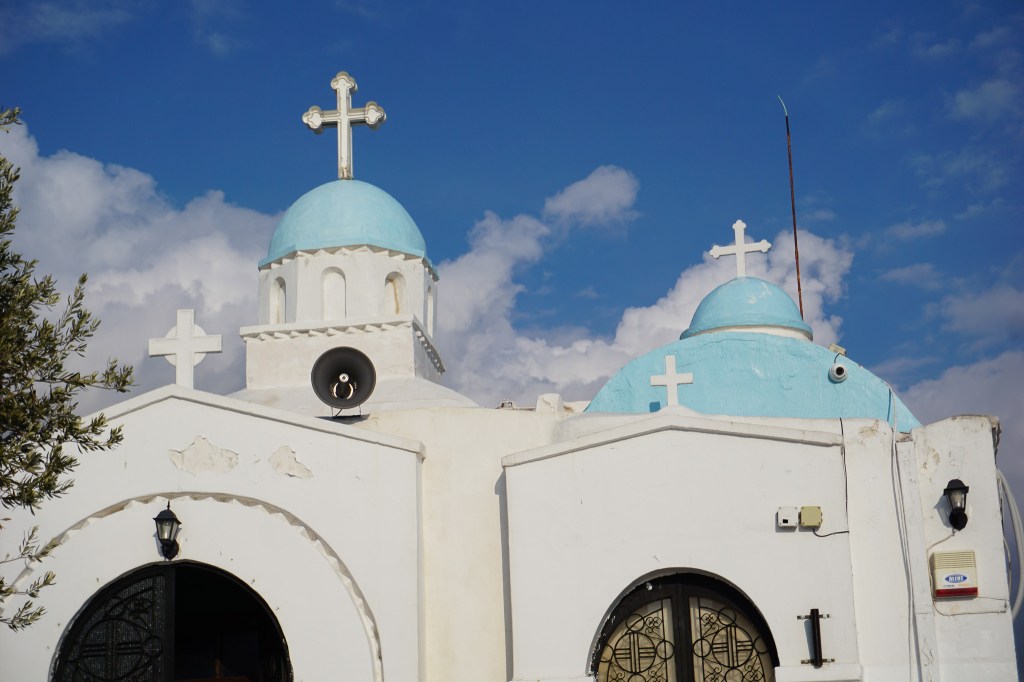
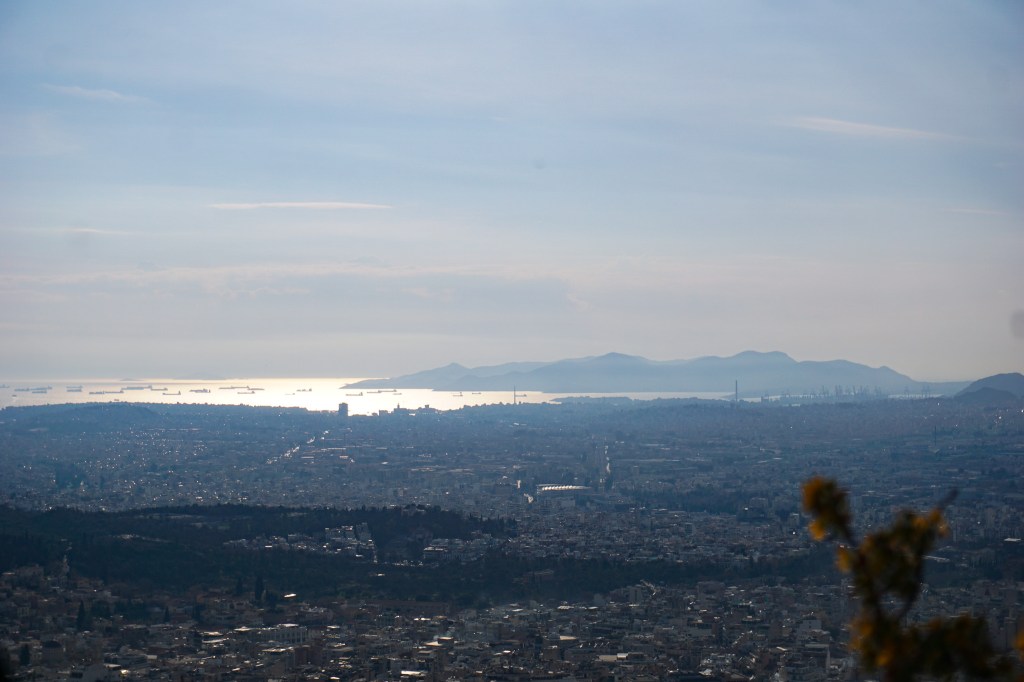
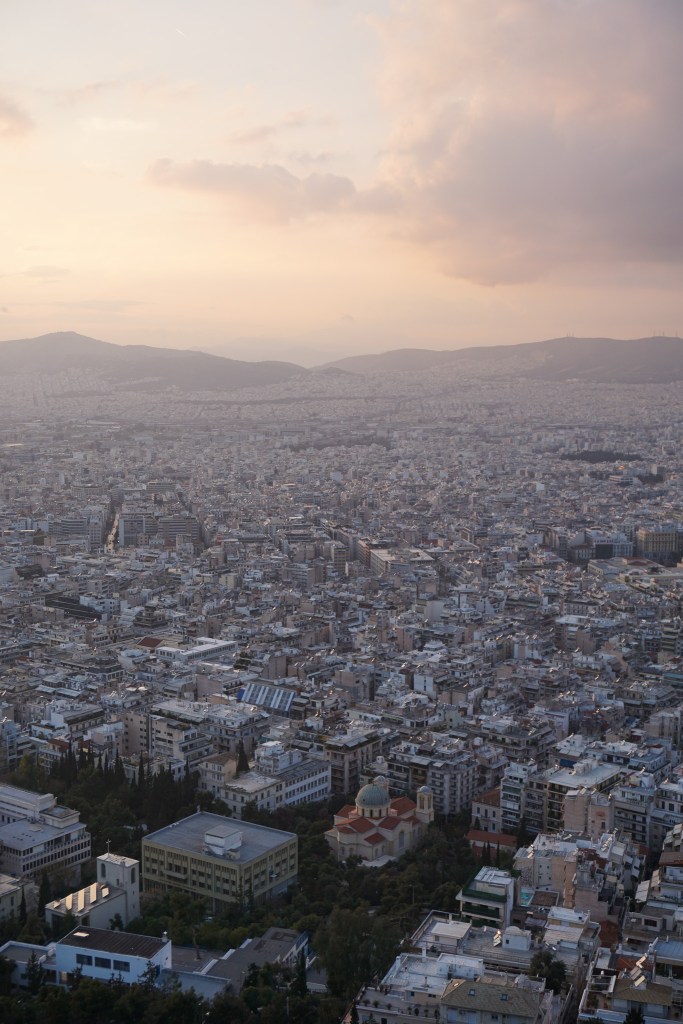
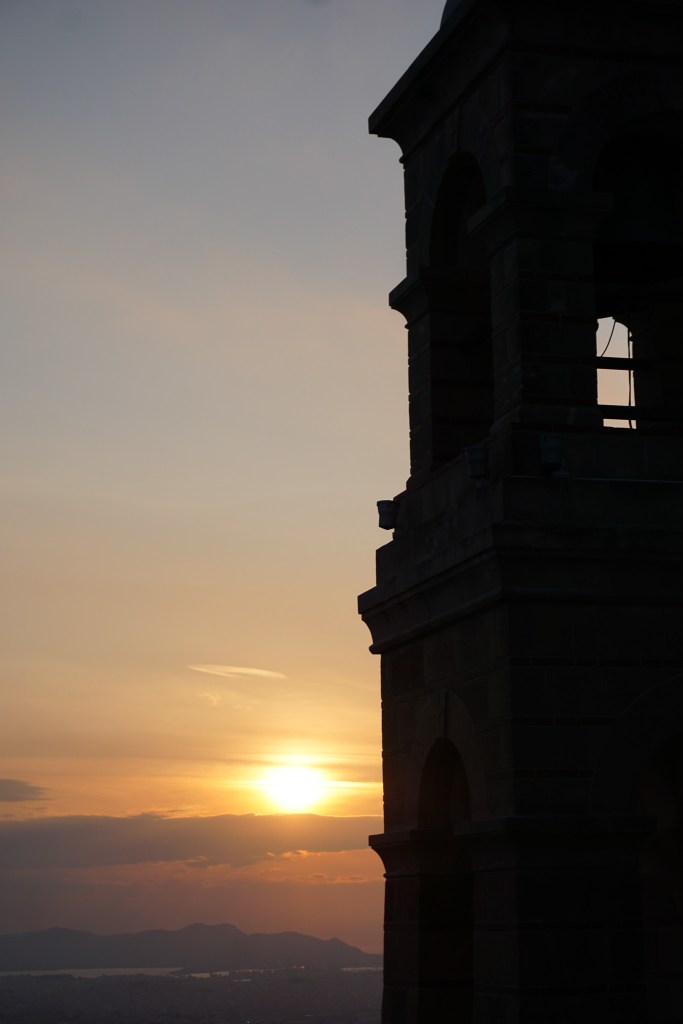
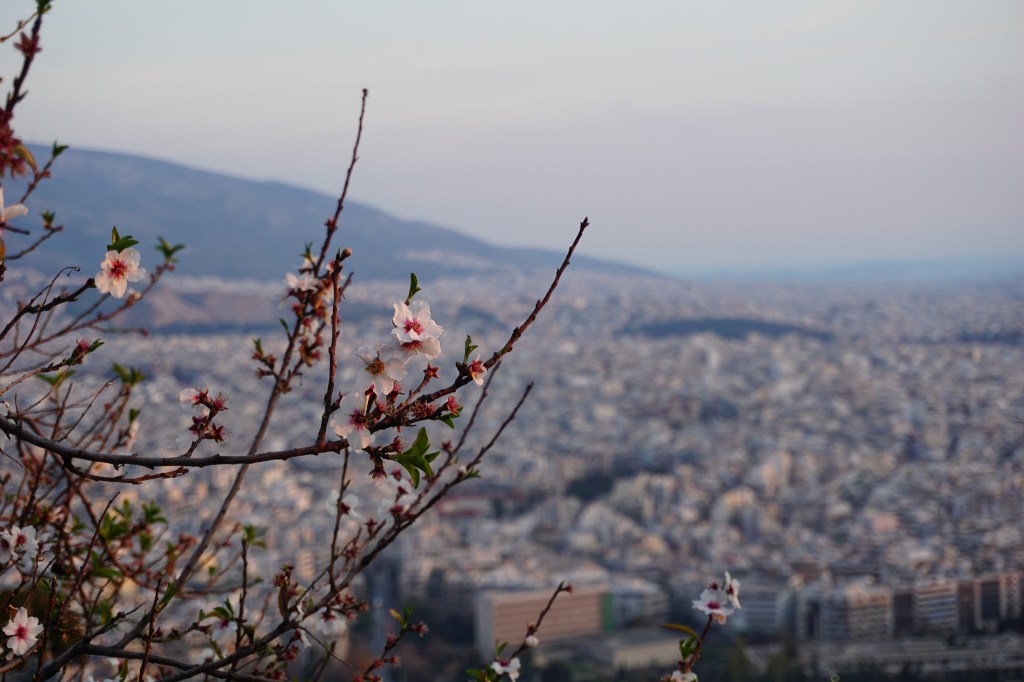
The sunset is a magical moment to experience from its summit – the colours of the city become somehow toned down, engulfed in gold leaf. There is a chapel at the top – Chapel of St. George – a tiny space for reflection and prayer.
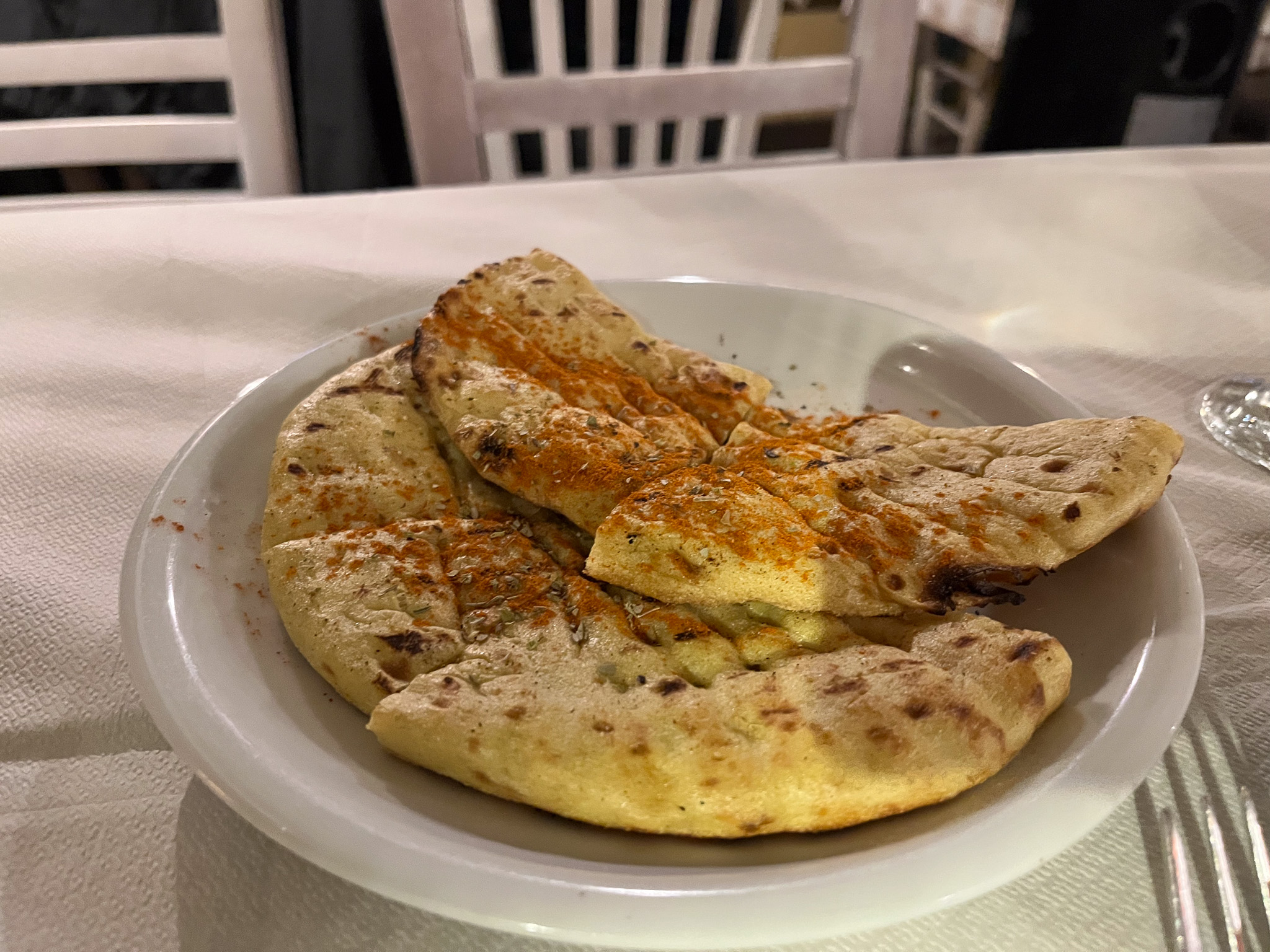
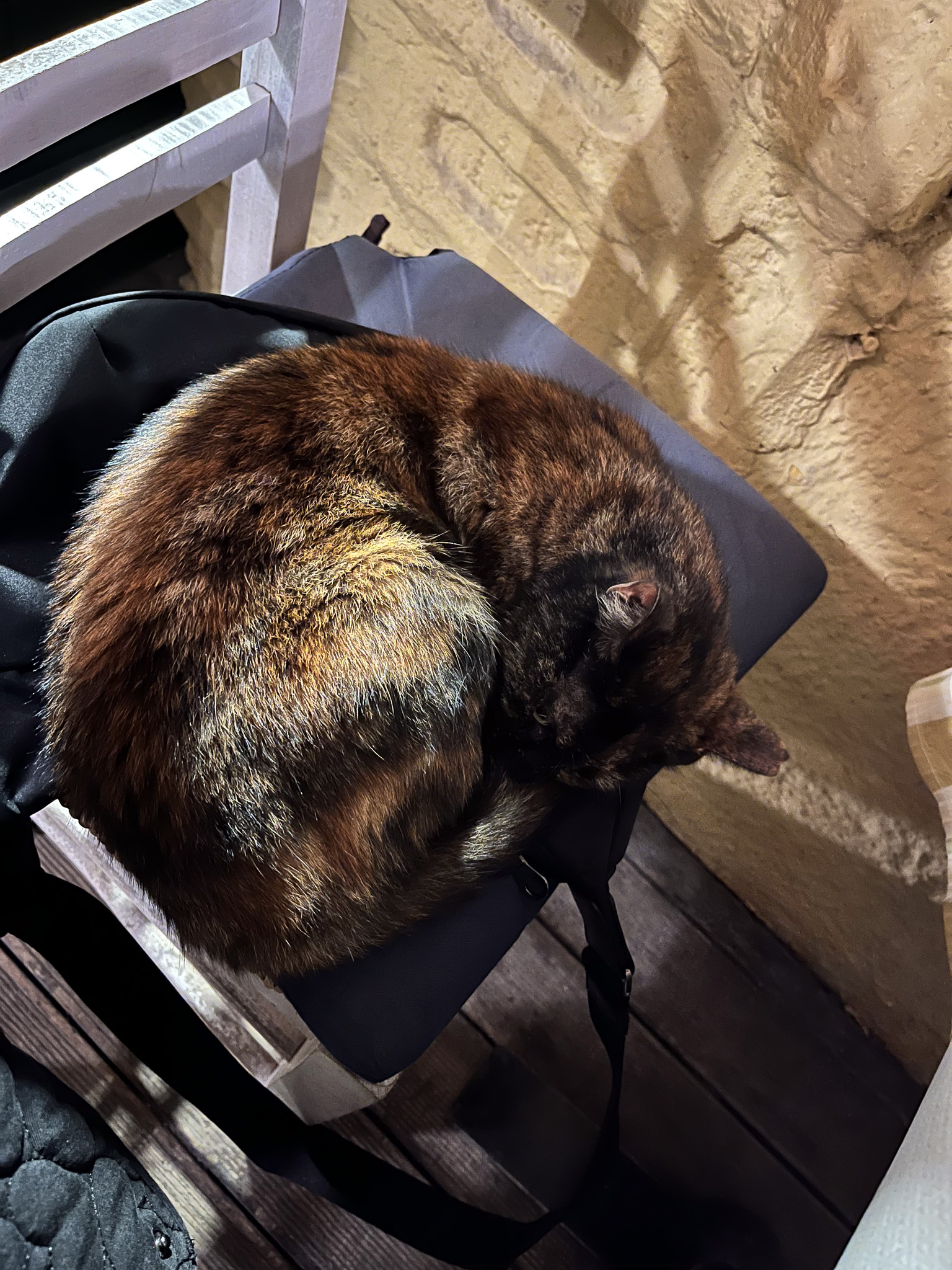
To end the day in the best possible way, I had a delicious dinner at the restaurant “Cave of Acropolis”, that I highly recommend. The staff was lovely, you have a view to the acropolis and there was traditional live music as well. I had Gemista, a traditional dish of stuffed roasted vegetables – just delicious. A cat also decided to keep me company, choosing the top pf my handbag to sleep on!

Love,
Nic
 The Winged Bone
Hi Nic,
What an intriguing post! I love the modern take on Medusa as a victim rather than a villain – it really changes the perspective. The street art in Athens, despite the vandalism, shows the city’s raw energy and resilience. Psyri sounds like a lively, vibrant place, full of life despite its challenges. And the view from Lycabettus at sunset must be breathtaking! Thanks for sharing these experiences!
LikeLiked by 1 person
thank you so much for reading and commenting 🙂
LikeLiked by 1 person