
Visiting the Galapagos was a bucket list item from the days of middle school, when the Theory of Evolution and the name of Charles Darwin was first introduced to me. The islands and their inhabitants inspired the Origin of Species, and the basis for a very harsh truth – “it is not the strongest of the species that survives, nor the most intelligent that survives. It is the one that is the most adaptable to change”
As the existentialist that I am, I cannot stop myself from reflecting on the obvious – this truth goes beyond biology, beyond DNA. In life, the only constant is change, the only certainty is uncertainty. And those who don’t keep up, are left behind – professionally, academically, and even on a personal level, a certain standard of performance and achievement seems to be necessary. It’s a race without a finish line, where the rules keep changing and you never seem to be doing anything right.
I wrote a bit about what I was going through at the time of this trip in my post about Quito. I had found a job a lot faster than ever imagined and was going to move back to London. This whole thing was taking over all of my waking thoughts. My future employer required background checks to be made, and my job was on the line if these did not comply. Deep down I knew it was going to be fine – I never lied about anything and had nothing to hide. It was the second time an employer had done this… but this time I was about to be in a different time zone, in a very remote place.
Somehow though, the Galapagos helped me to put all of that anxiety in a little drawer. Nature does this to you. It reminds you none of those problems actually matter. Looking at the sea lions dozing all day, not a care in the world, brought me the inner peace I needed so much. Swimming in the cold waters of the Pacific, knowing that sharks lurked, was a revelation. Staring at the deserted, inhospitable-looking landscape of some of these volcanic islands, there since the beginning of times, was a humbling experience.
But most of all, I could not stop thinking: I made it here. I’m going to be okay.

I decided to do the Galapagos with a cruise. It took me a long time to decide whether I should do this, or choose instead a tour by land. After much research and careful consideration, I decided to do a cruise. There are many places that you can only get to by boat, and because you can navigate at night, you can go longer distances. You can also choose between many itineraries. So it definitely took me a while to make this decision – besides, it is an expensive trip. The most expensive I’ve ever done. I booked my cruise through Galapatours, and chose the 5-day cruise, through “Central, South and East Galapagos”. The boat was small with a capacity for approximately 20 guests. You have all meals prepared and served there, and they are all included in the price. Two guides, certified biologists, are also with you on the boat, keeping you informed about everything. As a solo traveller, I could choose a room for myself, and pay double the price, or I could choose to share with another female traveller, which I did. I ended up sharing with a German lady, who was there with her husband and grown child – but to save on costs, she also chose the option to share a room with another female traveller.
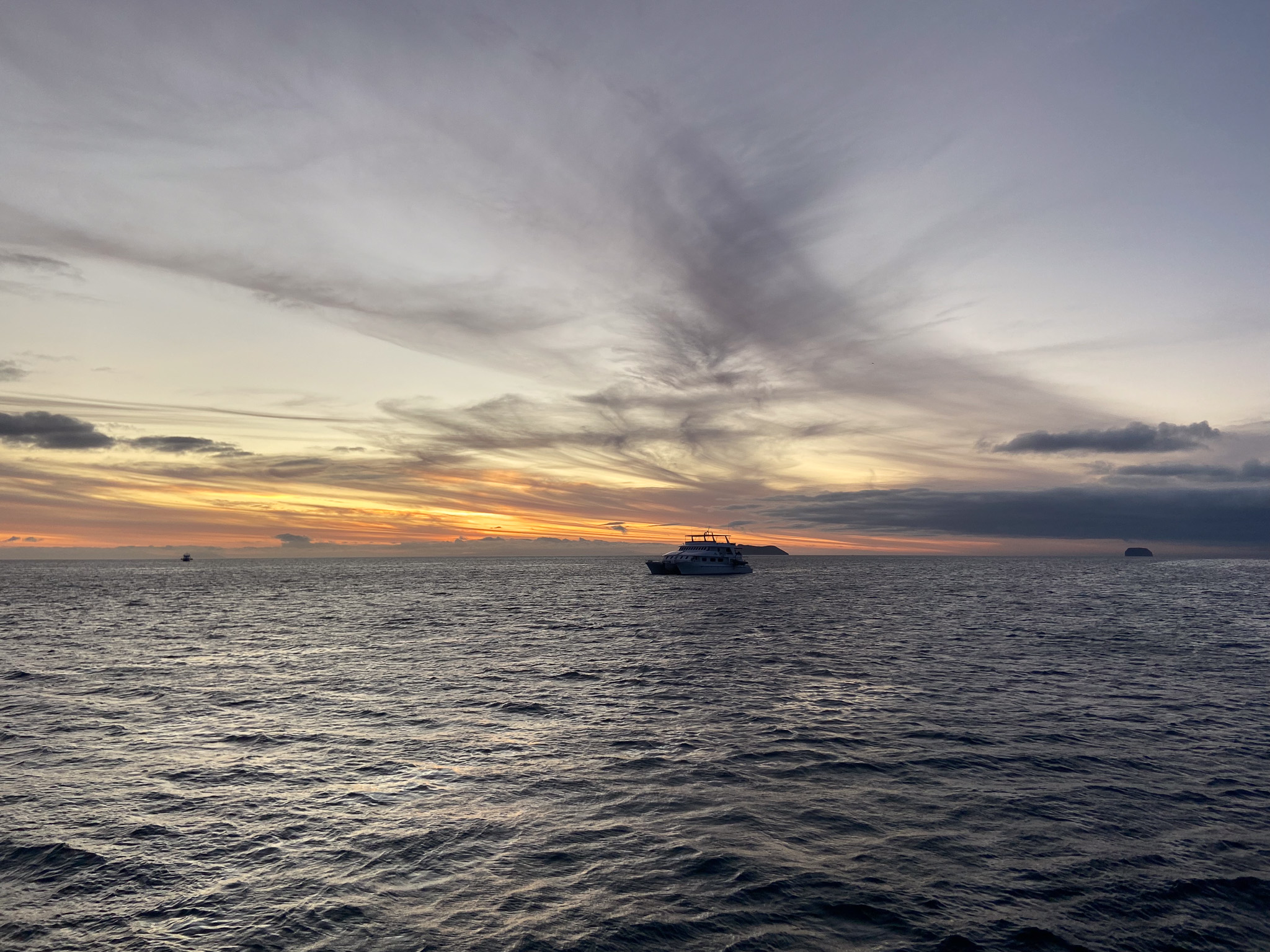
Overall the boat had everything we needed, and the space was always very clean. The food was great, but I do have to say, I got a bit sick on the last day. And I wasn’t the only one – there was something on our last dinner or lunch on the boat that was probably either not properly cooked or had expired. This indisposition lasted for a few days, and I am not going to lie, it made my travels back to Europe pretty uncomfortable. I am glad it happened on the last day though!
Overall, the experience was fantastic. I also have to say everything was done very sustainably. There is true care for the nature and most islands you can only access with certified guides, who ensure you walk on the defined paths. This is incredibly important to ensure you don’t step on any small animals, or even eggs that might have been laid on the ground by the local fauna. You are also not allowed to take any food to most islands – only water! To avoid the use of plastic, they also gave us some pretty cool bottles. I already had my own, but that was a great way to educate the guests about reducing the use of plastic.
But before I get into what I did on the Galapagos, I have to provide so much necessary context.
These volcanic islands are located in the Pacific Ocean, about 965 KM West of Ecuador. The archipelago consists of 13 major islands, 6 smaller ones and over 100 islets/rocks. What makes them so special is their unique biodiversity and their central role in Charles Darwin’s theory of evolution by natural selection. A lot of the species in the Galapagos cannot be found anywhere else in the world – most of them have no natural predators on the island, which has allowed them live in peace for centuries. To the point that they aren’t even afraid of humans! I was shocked with how close I could get to them. If anything, they seemed entertained by our approach… which in itself was magical.
Day 1 – Arriving at the boat and Santa Cruz Highlands
As you can imagine, on day one, we only had half a day to actually see and do anything. I arrived at Baltra airport early in the morning, where I easily found one of the guides and was joined by my group. There were two solo travellers – myself and another guy, three families with kids, and two couples. From there, a bus took us to the port, where we would be getting into a dinghy that would take us to the cruise boat. Despite small in size, it was not small enough to get us to the islands, so a dinghy was always needed.
Once on the cruise boat, we were given a safety brief, and an introduction to our itinerary and how things would usually go. We were given our room numbers, and also snorkelling equipment. We then had lunch and finally, in the afternoon, we went to Santa Cruz Highlands – to meet with the Galapagos Giant Tortoises.
Santa Cruz is in itself a fascinating island, as you can travel through every habitat type that exists in the archipelago – we started our bus journey from the coast to the highlands, climbing through the agriculture area – where I could see through the window cows and Giant Tortoises in the same fields, which was an odd pairing. My ears started to crack as we were driven up and the landscape turned a lush green – the last time I’d see that in the Galapagos, as most islands are quite arid, with low vegetation.
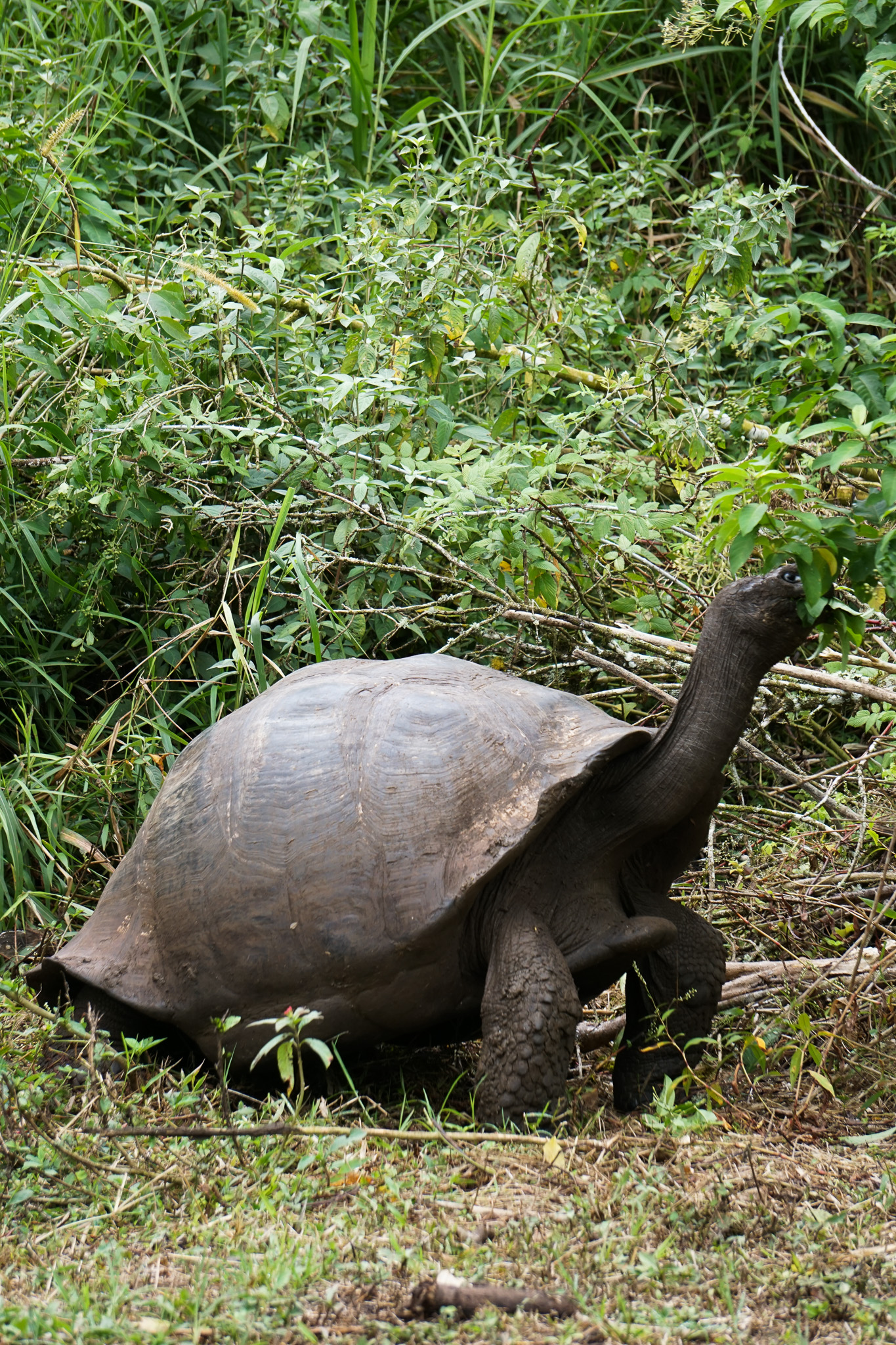
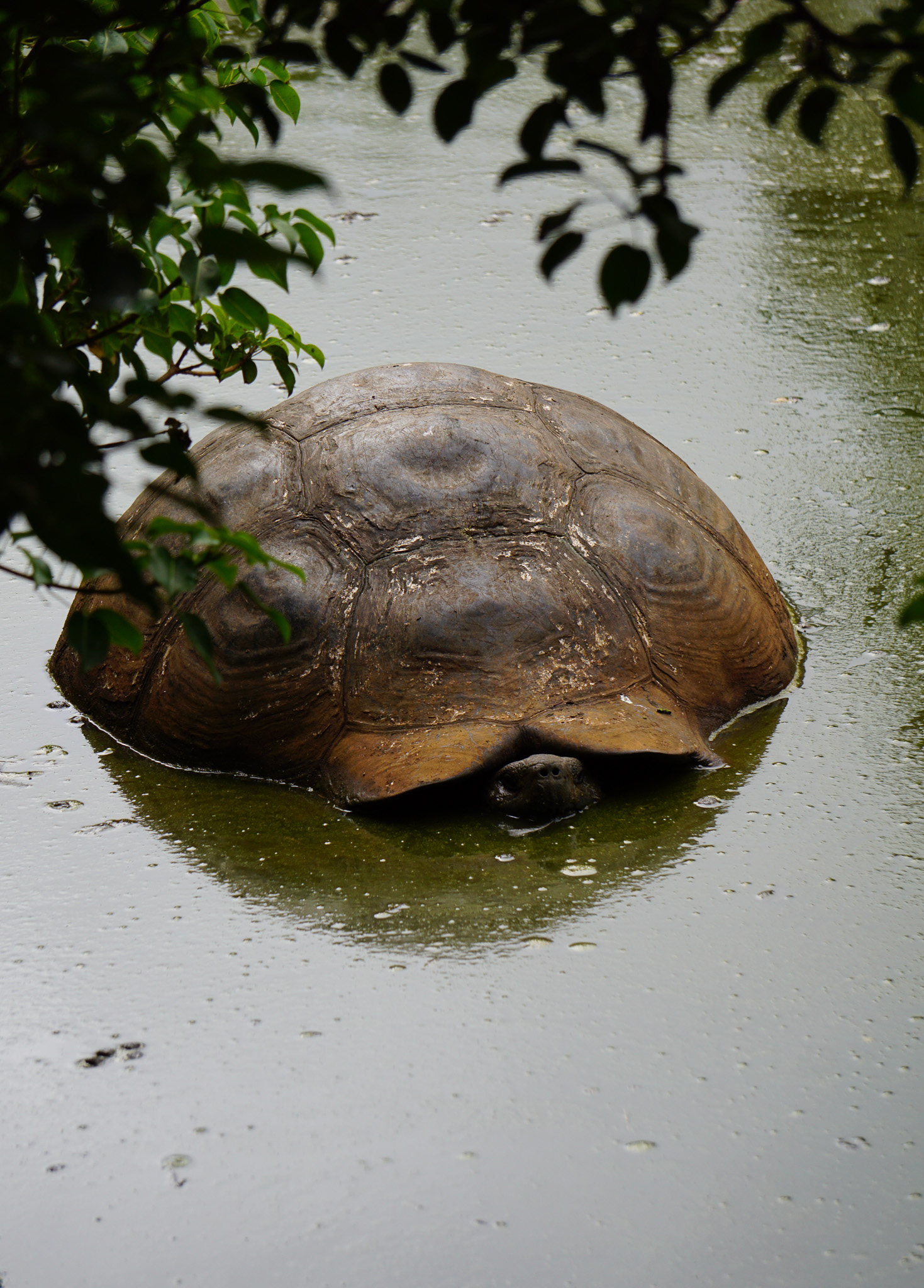
I could not believe my eyes. These majestic animals seemed like living dinosaurs to me. With their long necks, reaching to grab some green leaves, munching them with all the time in the world, savouring its greenery juicy flavour, making trees even look appealing snacks to me. How I loved to observe them. And to think that these gorgeous creatures are endangered. There are currently about 30,000 living in the islands and they have one of the longest lifespans of any wild animal, with the average tortoise reaching 100 years old!
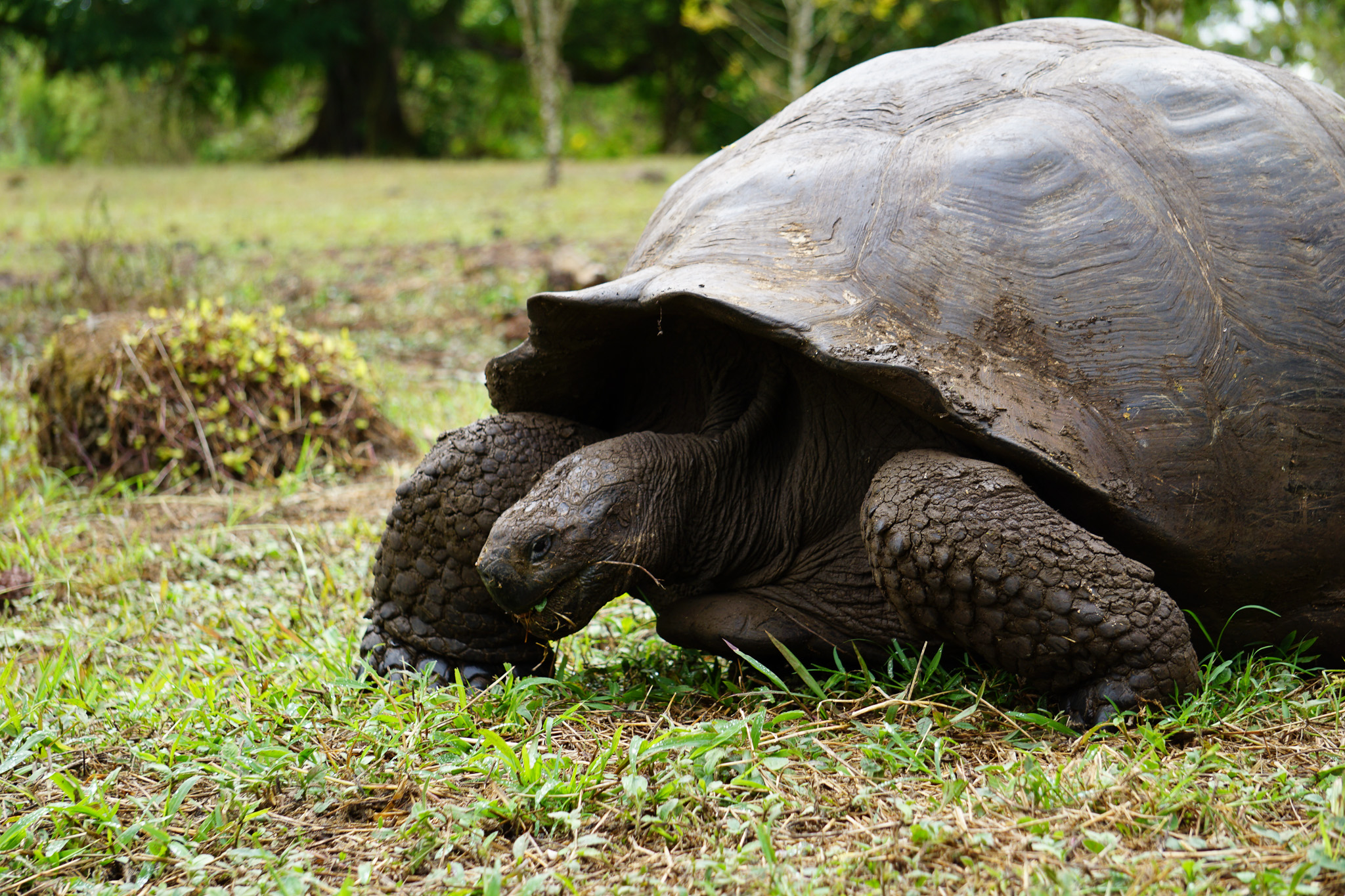
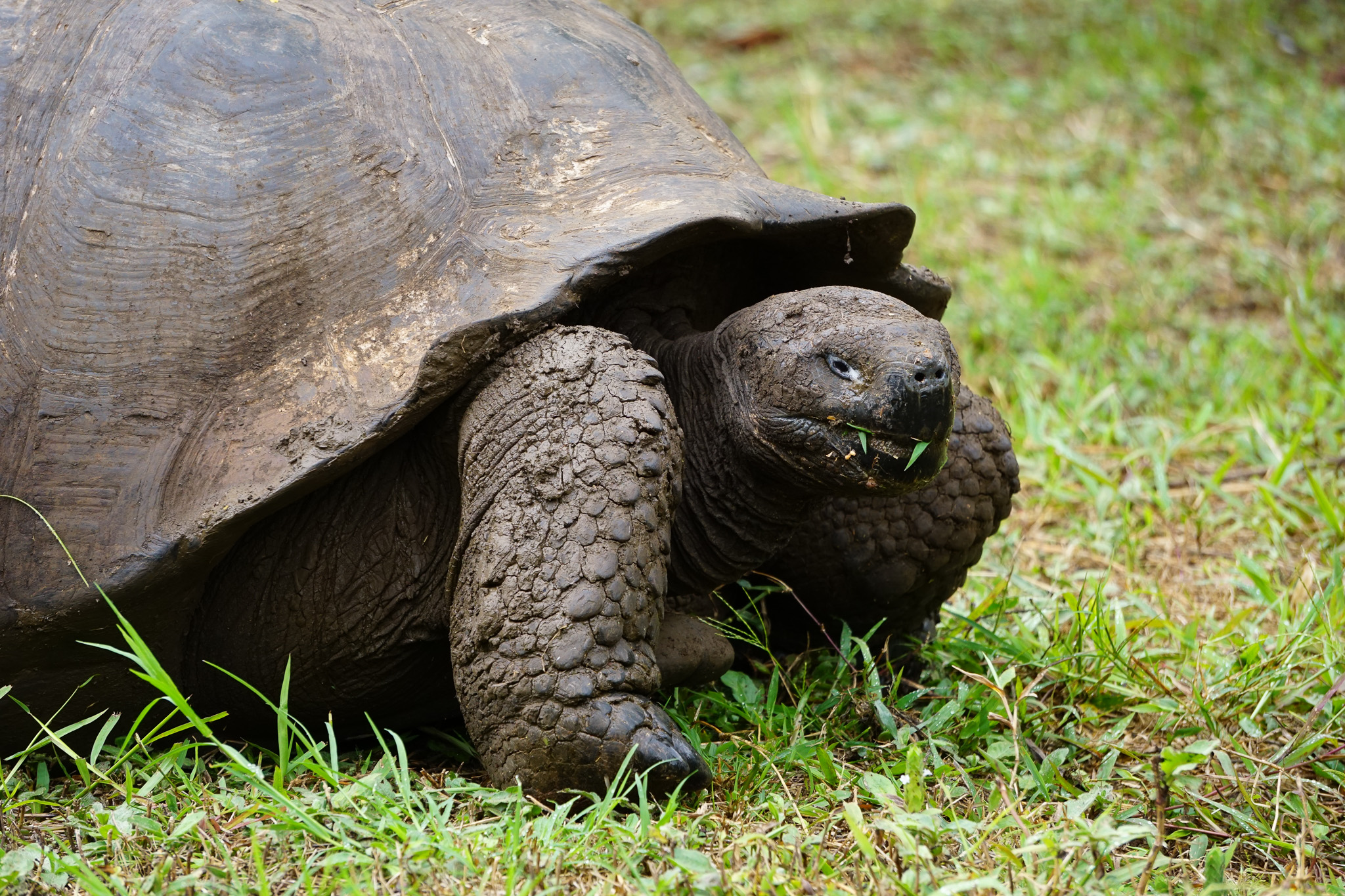
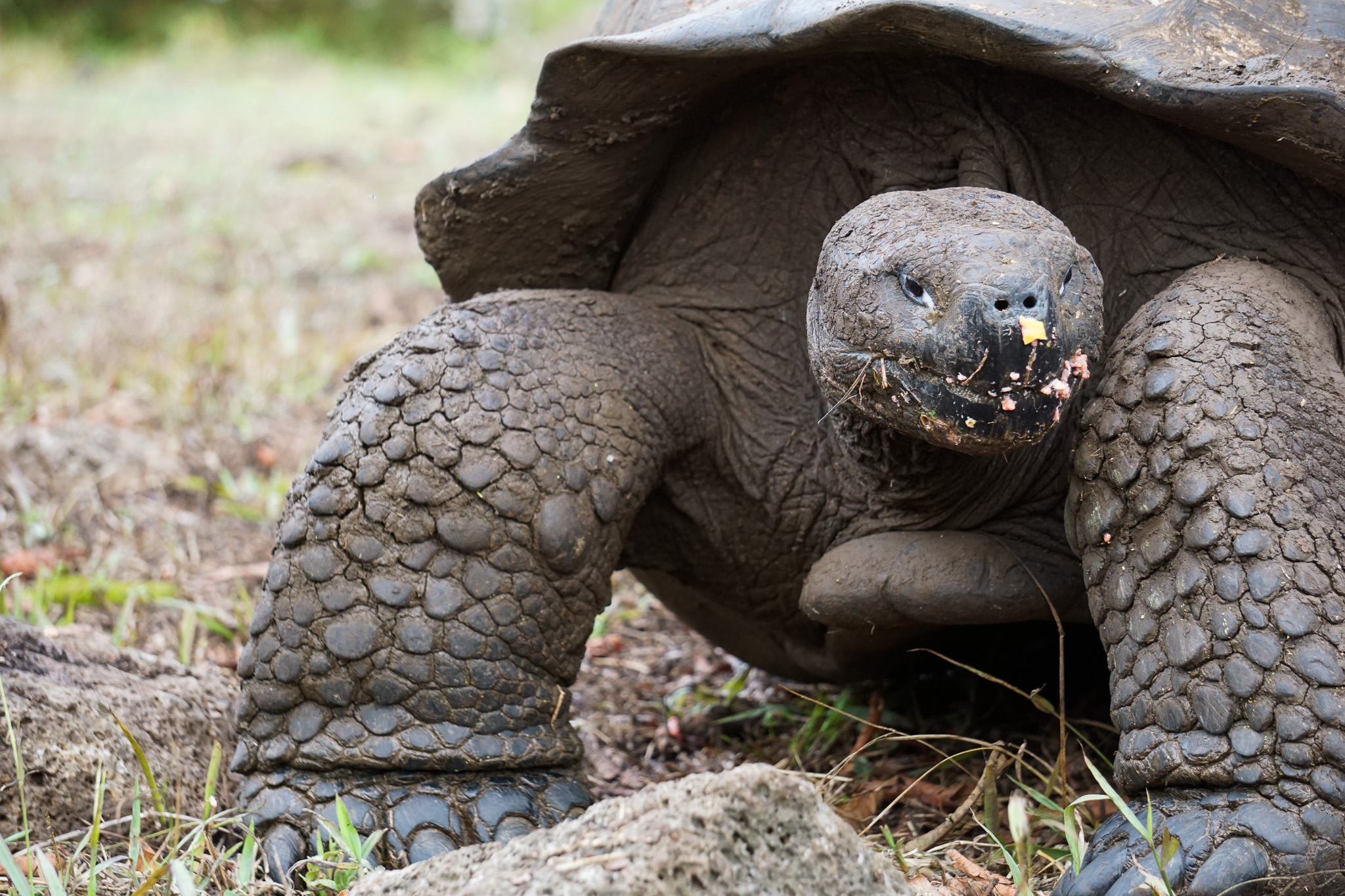
At least, I left with some reassurance that a lot of conservation efforts are being made to restore their populations… but wait? How are they endangered if there aren’t any natural predators on the island? Well. One eventually got there. Humans. From the 17th to the 19th centuries, whalers and pirates hunted tortoises extensively, taking them aboard ships as a source of fresh meat, because these animals can survive without food or water for months… so, so cruel. This reduced the population massively, but so did the introduction of foreign species such as goats (which are still plaguing the islands today), rats, pigs and dogs. The goats compete with the tortoises for food, and the rats and pigs eat the eggs.


But how did these creatures get here, and evolved to the size they have today? The most acceptable theory is that these are descendants of either one pregnant female or a single breeding pair who ended up in the ocean, taken to the islands by the very strong currents of the Pacific Ocean. As I mentioned, they can survive months without food or water, and they are buoyant, so their survival in such a long, harsh journey in the dreary waters of the Pacific is quite possible. They ended up evolving to the massive sizes we see today precisely because there were no predators on the island. A male tortoise can weigh over 200Kg!

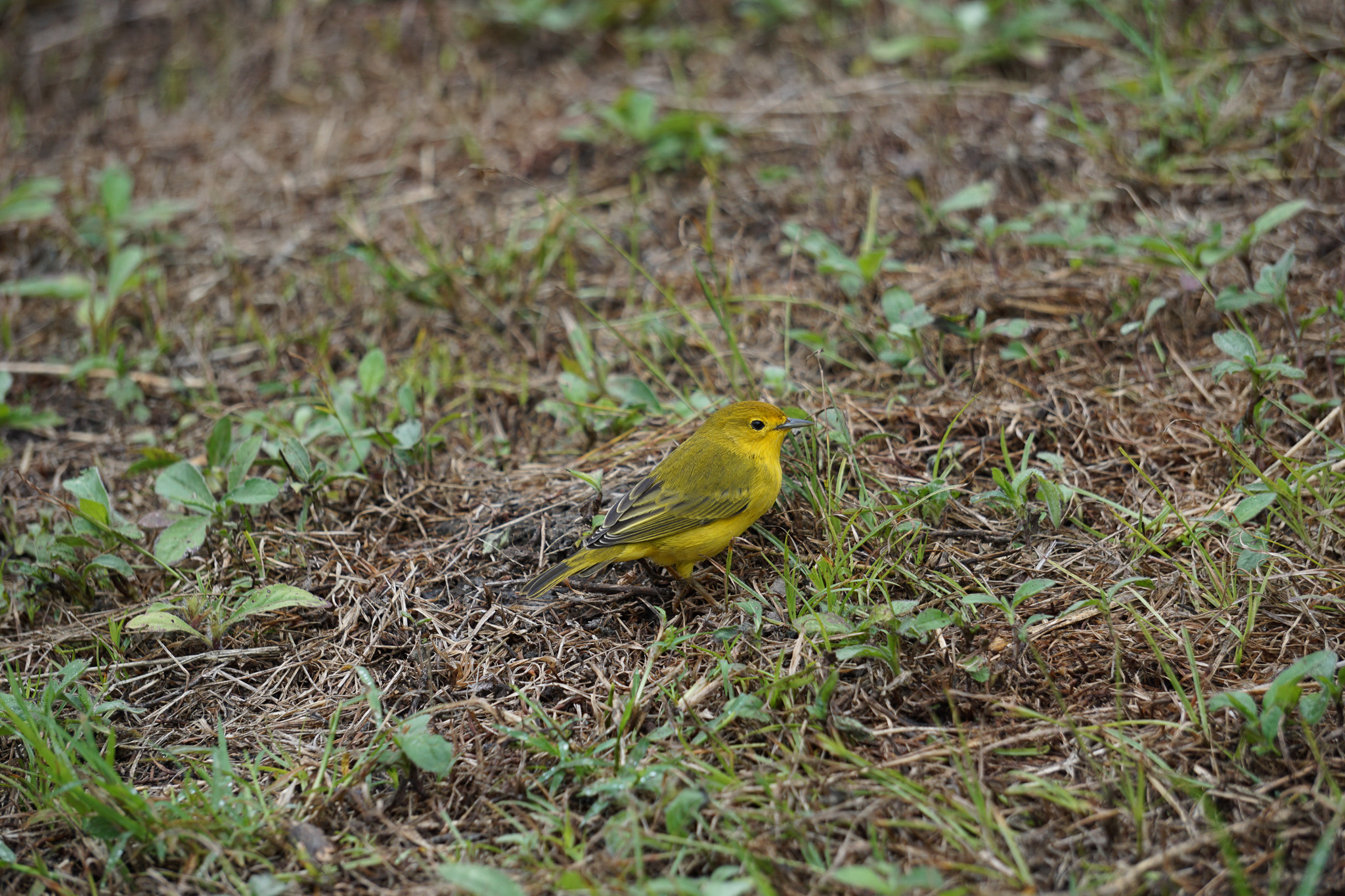
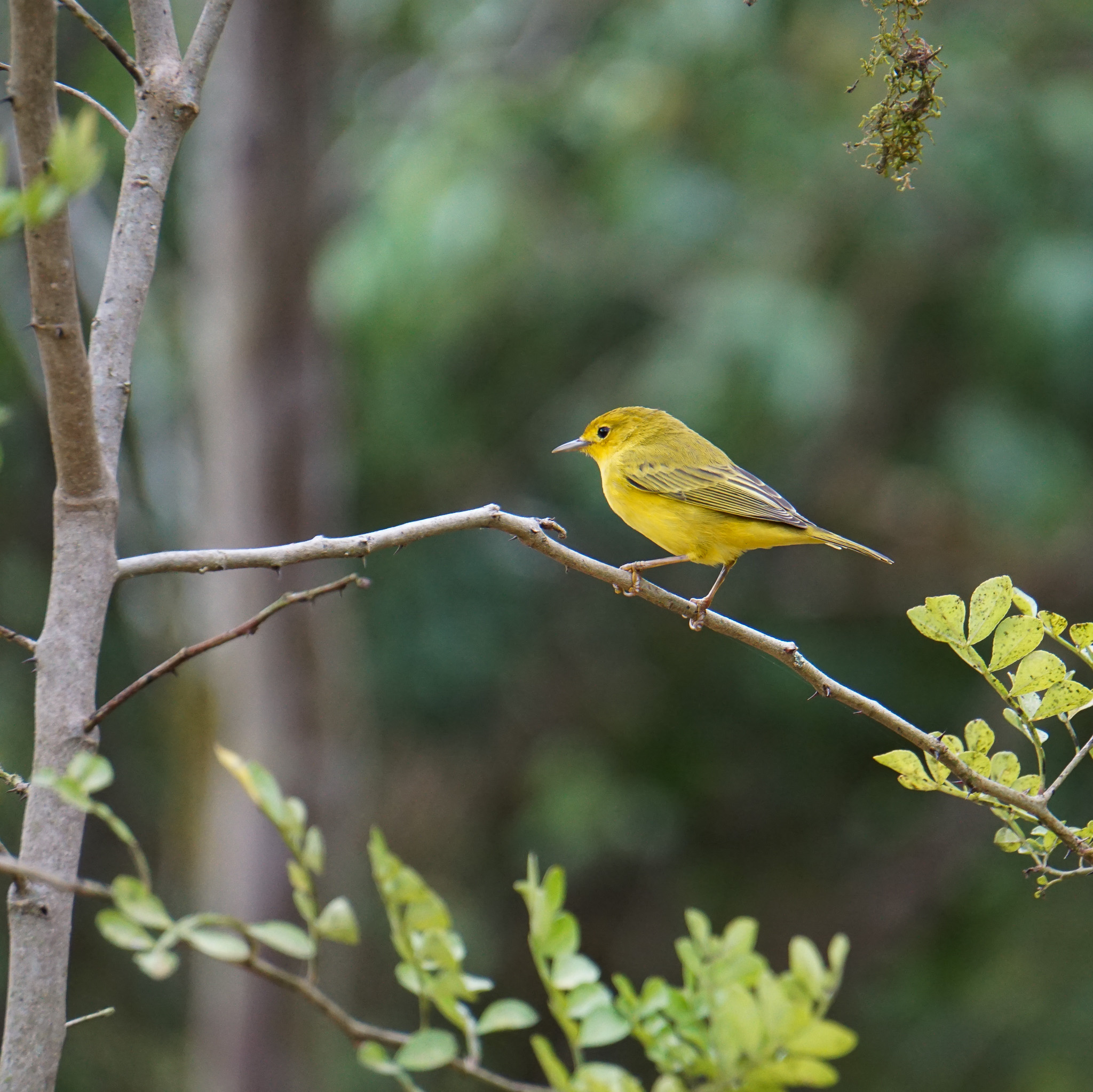
In the Galapagos though, you always have to pay attention to your surroundings, as you never know when another beautiful creature might be around. I was able to this yellow warbler pecking around, a striking yellow ray of sunshine, in relatively overcast weather.
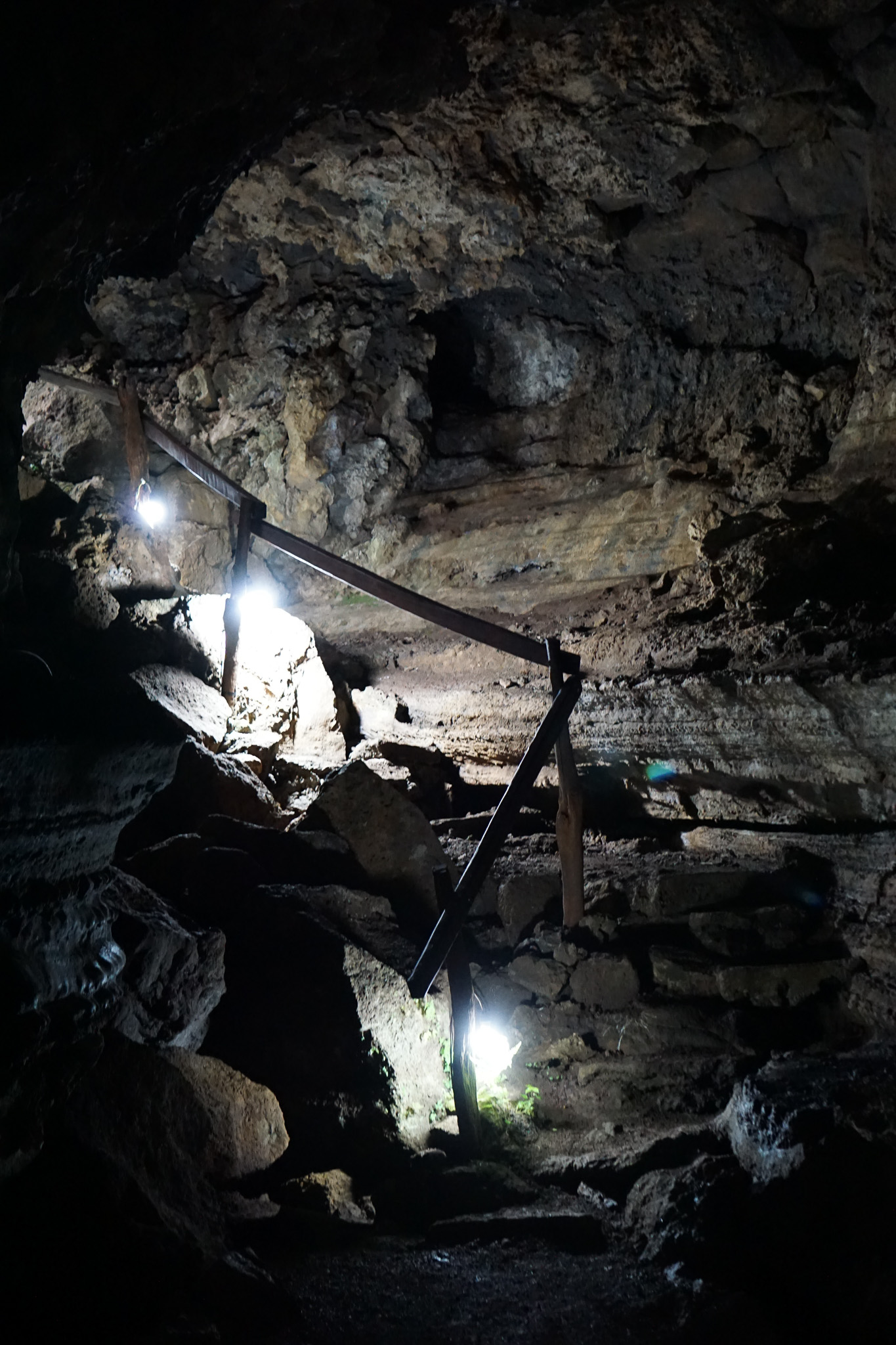
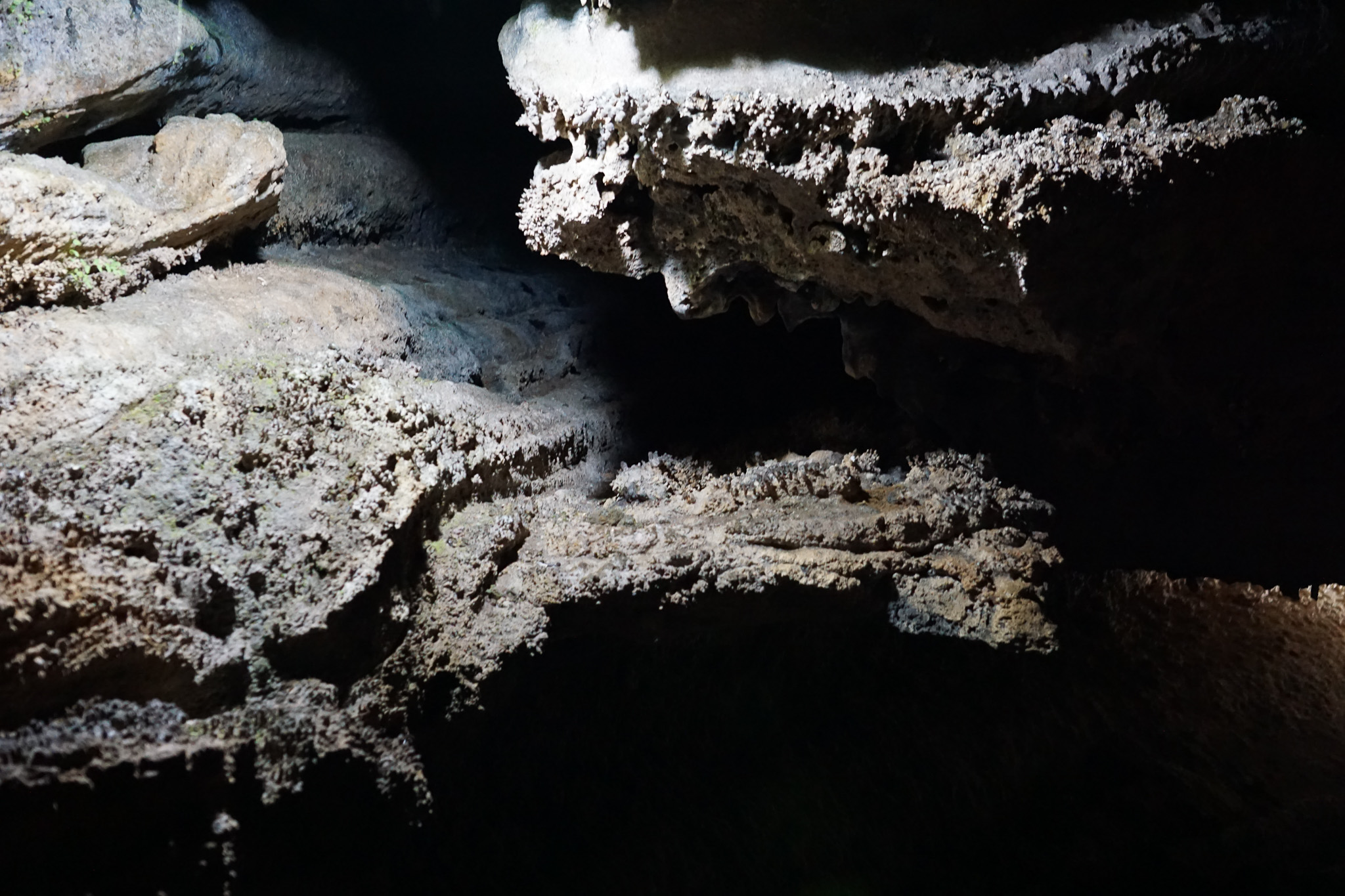
We were also taken to explore some lava tubes. These are natural tunnels that were formed thousands of years ago during volcanic eruptions. They were created when the surface of a lava flow cools and hardens, while the molten lava underneath continues to follow—when the eruption stops and the lava drains out, a hollow tunnel remains. The one in Santa Cruz is the largest in the archipelago, stretching for over 2 kilometres.
And that was my first day in the archipelago. I was so excited to the next few days! This is how my anxiety about the future absolutely went way. Being in contact with animals always helps me – as I had had the same feeling in Laos, when visiting the Elephant Conservation Centre.
Next up – day 2!
Love, Nic


What a great start of your trip! I just wonder how were the waters, and if anyone for seasick?
LikeLiked by 1 person
The waters were not too bad, but because the cruise ship was a small one, you do feel the movement especially at night, when you are trying to sleep. Sometimes I felt a bit dizzy, but in those cases I just lied down for a bit. I did take with me some tablets for sea sickness, and I highly recommend it. Thanks for your comment and questions!
LikeLiked by 1 person
What an incredible place to visit. I can’t imagine what it must have been like to see the tortoises up close.
LikeLiked by 1 person
It’s definitely an unforgettable experience 🙂 Thanks for your comment!
LikeLiked by 1 person