
The Batu Caves are likely one, if not the most, famous attraction of Malaysia and of course something I was not going to miss.
Located about 13 km north of Kuala Lumpur, you can easily visit this landmark in half a day. I took the train – likely the easiest and most affordable way – which takes about 30 minutes and leaves you right at the Batu Caves station. From there, just a short walk.
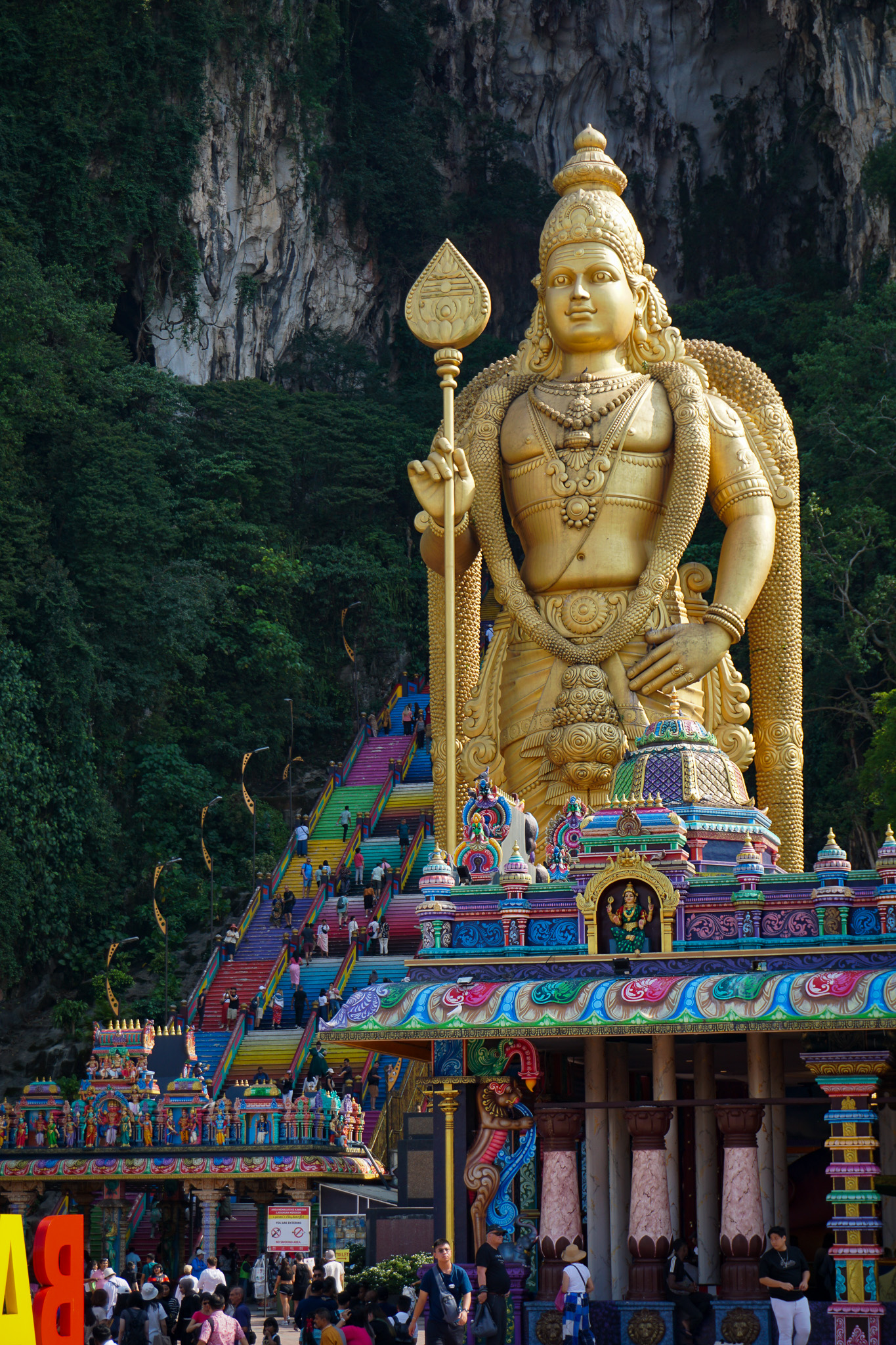
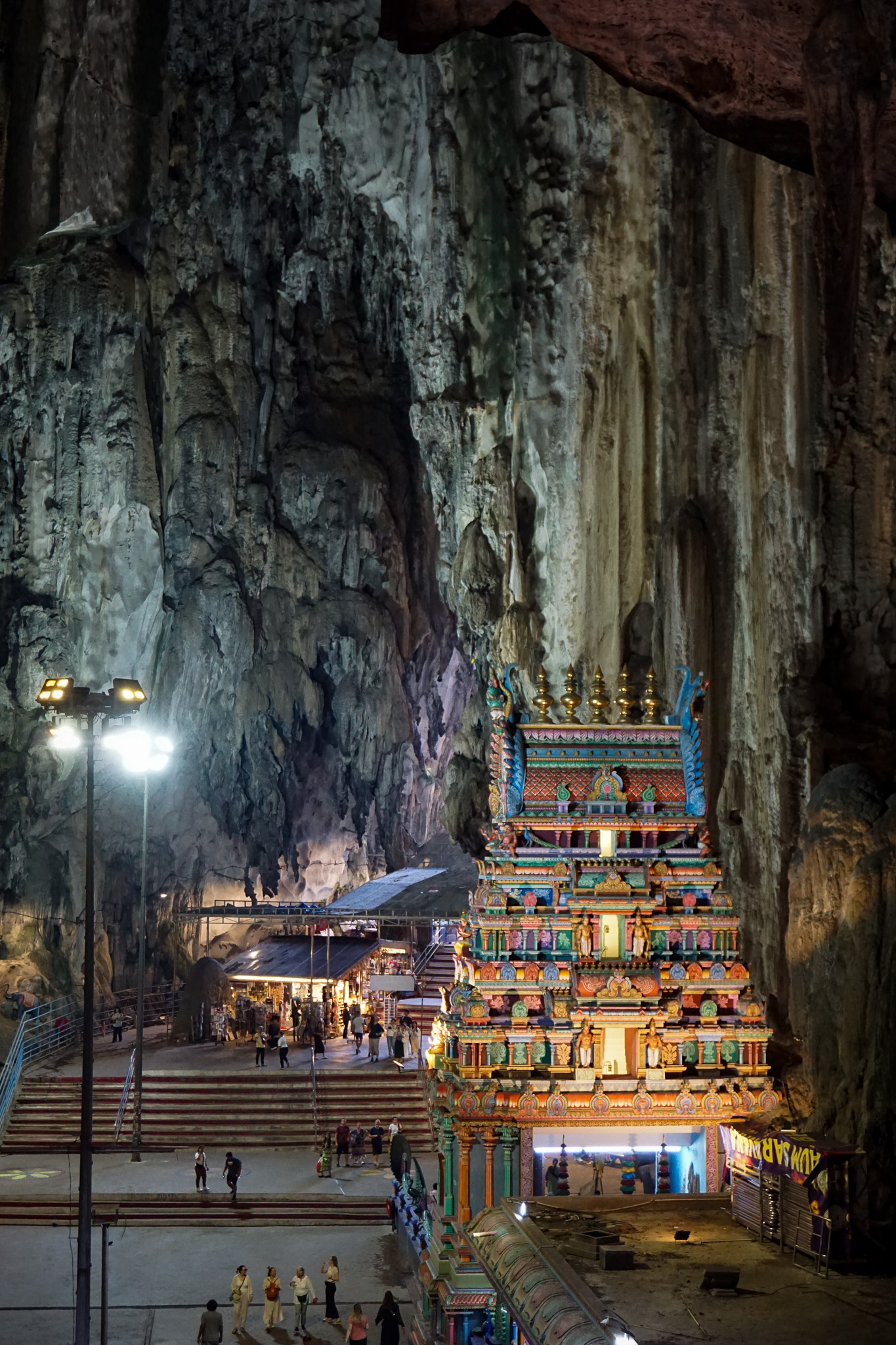
The Batu Caves are not only one of the most famous and relevant Hindu temples in Malaysia but also a natural wonder. Housed within a 400-million-year-old limestone hill, this is the kind of place that makes you feel small and irrelevant in the great scheme of things. The main cave – named Temple Cave or Cathedral Cave – features high ceilings and is home to various shrines dedicated to Lord Murugan, the deity of war and victory in Hinduism.
It is Him who greets you at the entrance – the towering 42.7-meter-high golden statue that is the symbol of the caves.
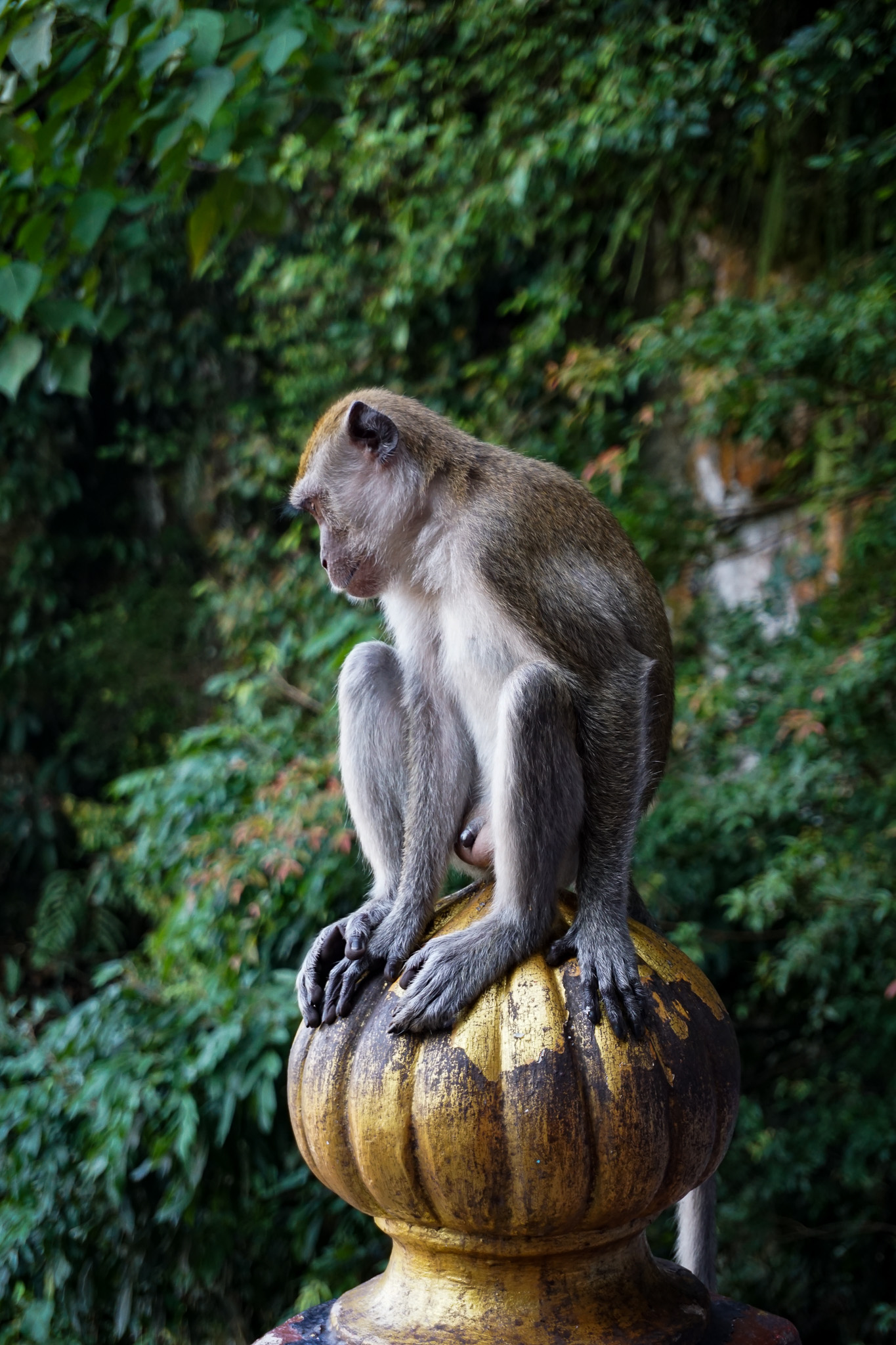
My advice is to visit early to avoid the worst of the heat. To get to the main cave you have to climb 272 colourful steps and you will be distracted by monkeys who basically rule the place. Sadly, people kept giving them food and plastic bottles, so they will be expecting you’ll gift them with something… and if not, they may become aggressive or try to steal from you, so be careful. I tried to pace myself whilst climbing the stairs, but I was absolutely drenched in sweat. It is even more humid in the caves, and I was quickly feeling way too uncomfortable. Once you get inside the caves, the humidity goes up a few levels.
To me what was disappointing was not seeing any sort of information about the caves themselves for tourists like myself. Of course, this is a place of prayer, and thousands flock there every year to practice their religion, Hinduism. Still, bearing in mind other thousands like myself – mostly ignorant about the religion, interested to learn as well about the natural wonder the caves are – it would be good to have some sort of informational points.

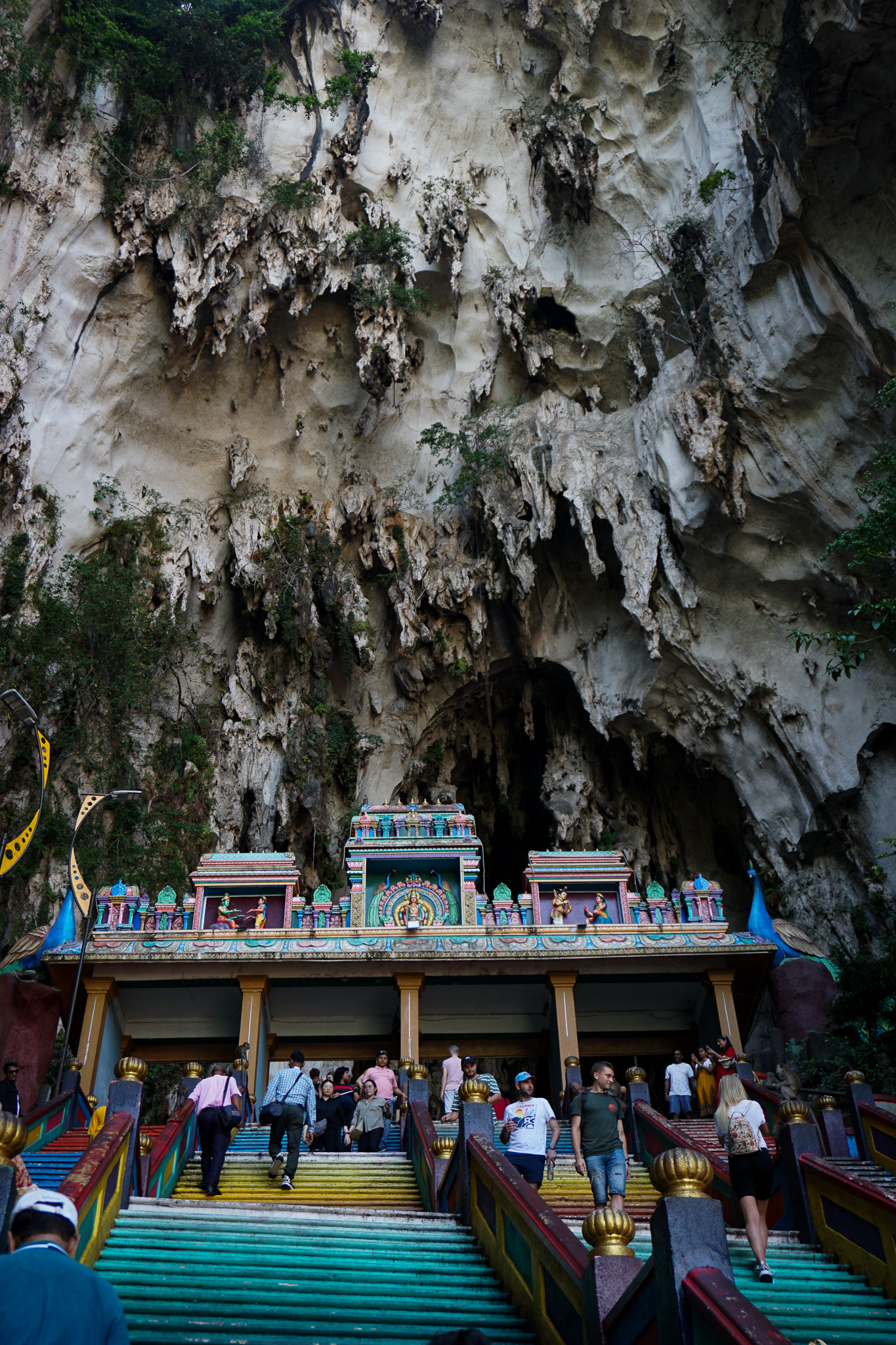
So I had to resort to the Internet to answer one of my burning questions – why are so many shrines in Hinduism and Buddhism built in caves? One of my suspicions turned out to be true – the connection to nature is significant. Caves are seen as sacred places – and of course, it makes total sense. I can only imagine how the first people who found these caves reacted. A jaw-dropping moment, experiencing that beautiful and spiritual feeling that I myself experienced, but with the added bonus of having it all to themselves, without the crowds, without the symbols, without the noise.
Caves are seen as natural sanctuaries. They are deep, and hidden, suggesting an inward journey, making it ideal to practice meditation, prayer and worship.

And of course, there are some practical matters as well. Caves provide natural protection against other ruthless elements of nature. In the olden days, access to building materials (and any technology to assist with the construction of anything really) was extremely limited. Caves provide shelter to those who are praying and meditating, and also to the sacred statues, altars and religious artworks.

Way before western explorers “found” the caves in the 1850s, these were already known to the local indigenous Temuan people, who already considered them sacred. The site began to be used for Hindu worship in 1981, when an Indian Tamil trader – K. Thamboosamy Pillai – saw its potential as a religious site. In 1892, the first Thaipusam festival was celebrated at Batu caves. This festival commemorates Lord Murugan’s triumph over evil and takes place annually between January and February.

Malaysia is indeed a tapestry of religions and cultures. In Georgetown and Kuala Lumpur, you see them all together – the Chinatowns, the Little Indias. You see Buddhist temples, Hindu shrines, mosques. And so the next destination that would lead me outside of Kuala Lumpur was precisely to visit the Putra Mosque.
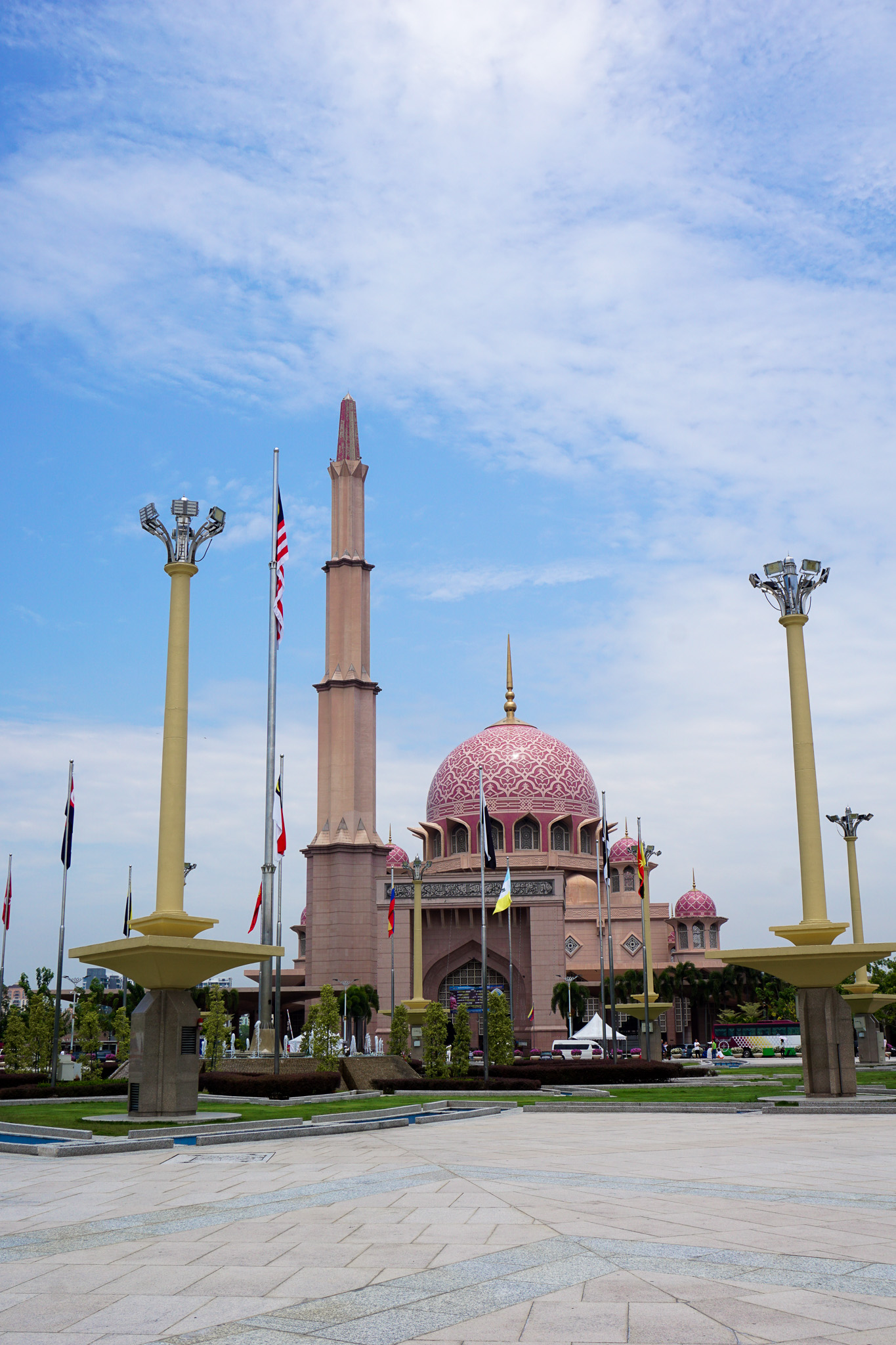
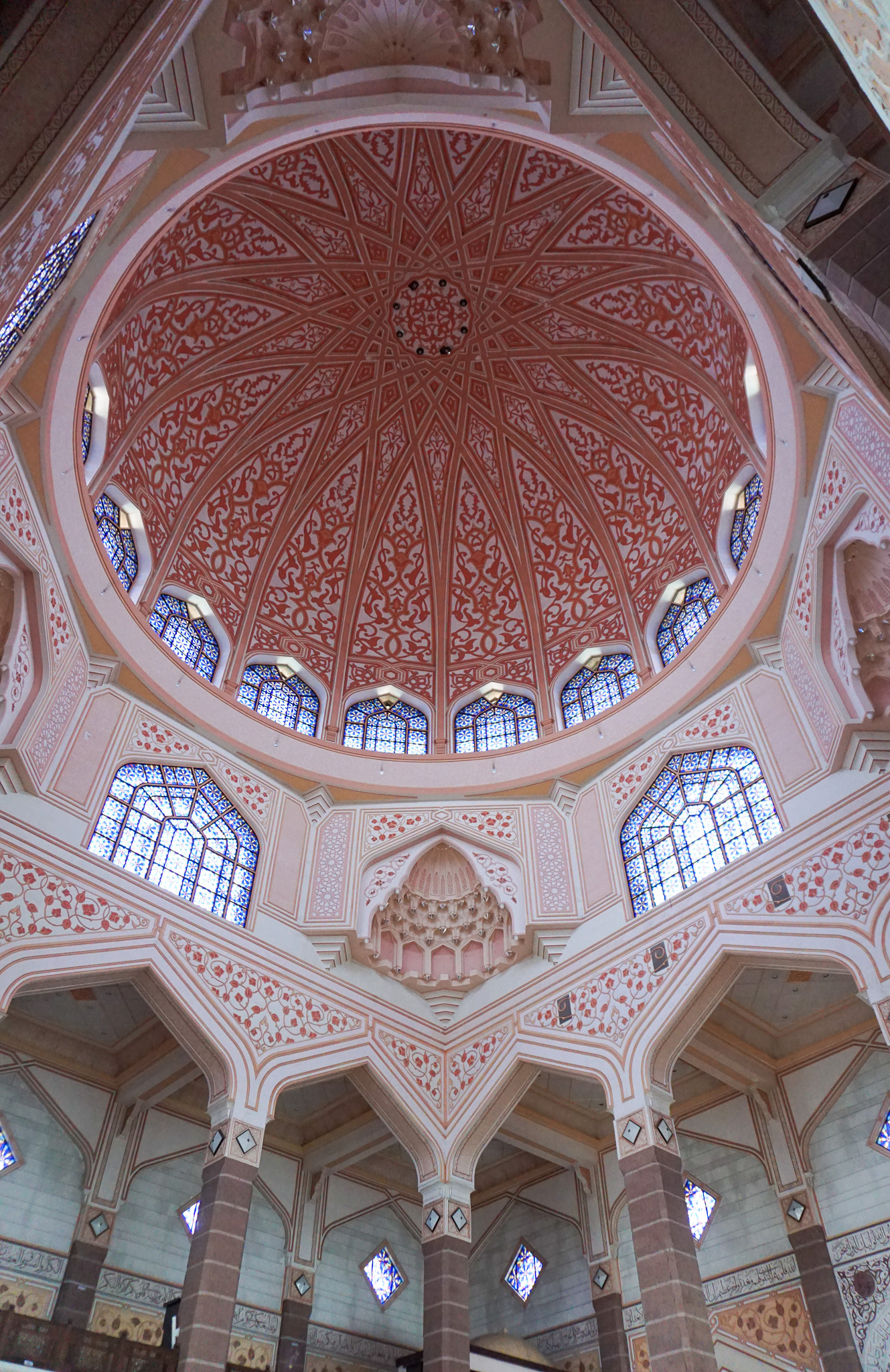
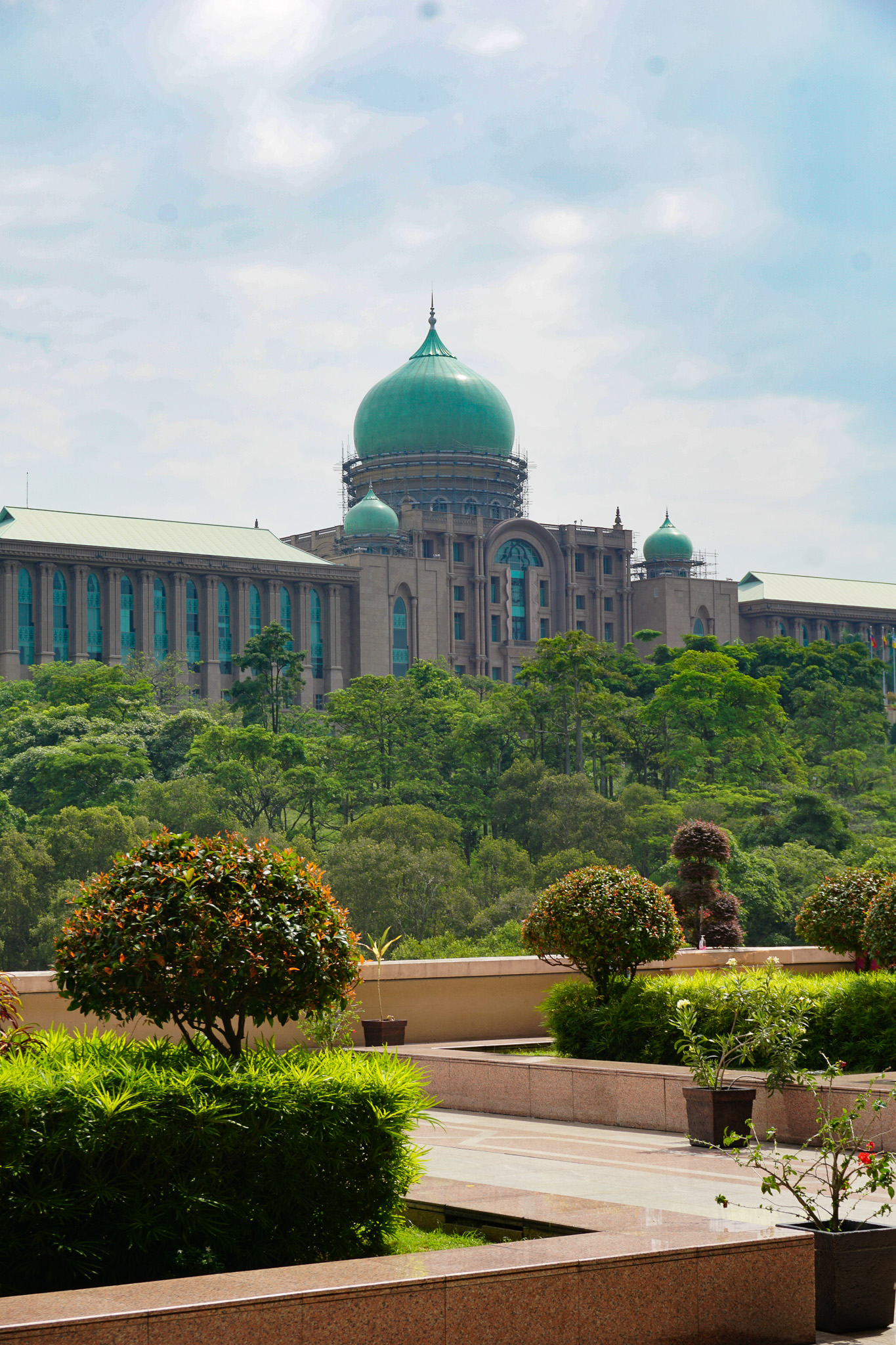
This stunning mosque is located in Putrajaya, Malaysia’s administrative capital, about 25 km south of Kuala Lumpur. I was able to take the bus, a journey of about an hour. The mosque is quite impressive and distinctive – in my head, it will always be the Pink Mosque. Its façade is made of pink granite, it has a beautiful pink dome and the minaret is one of the tallest in the region. The place is massive – it can accommodate up to 15,000 worshippers at a time.
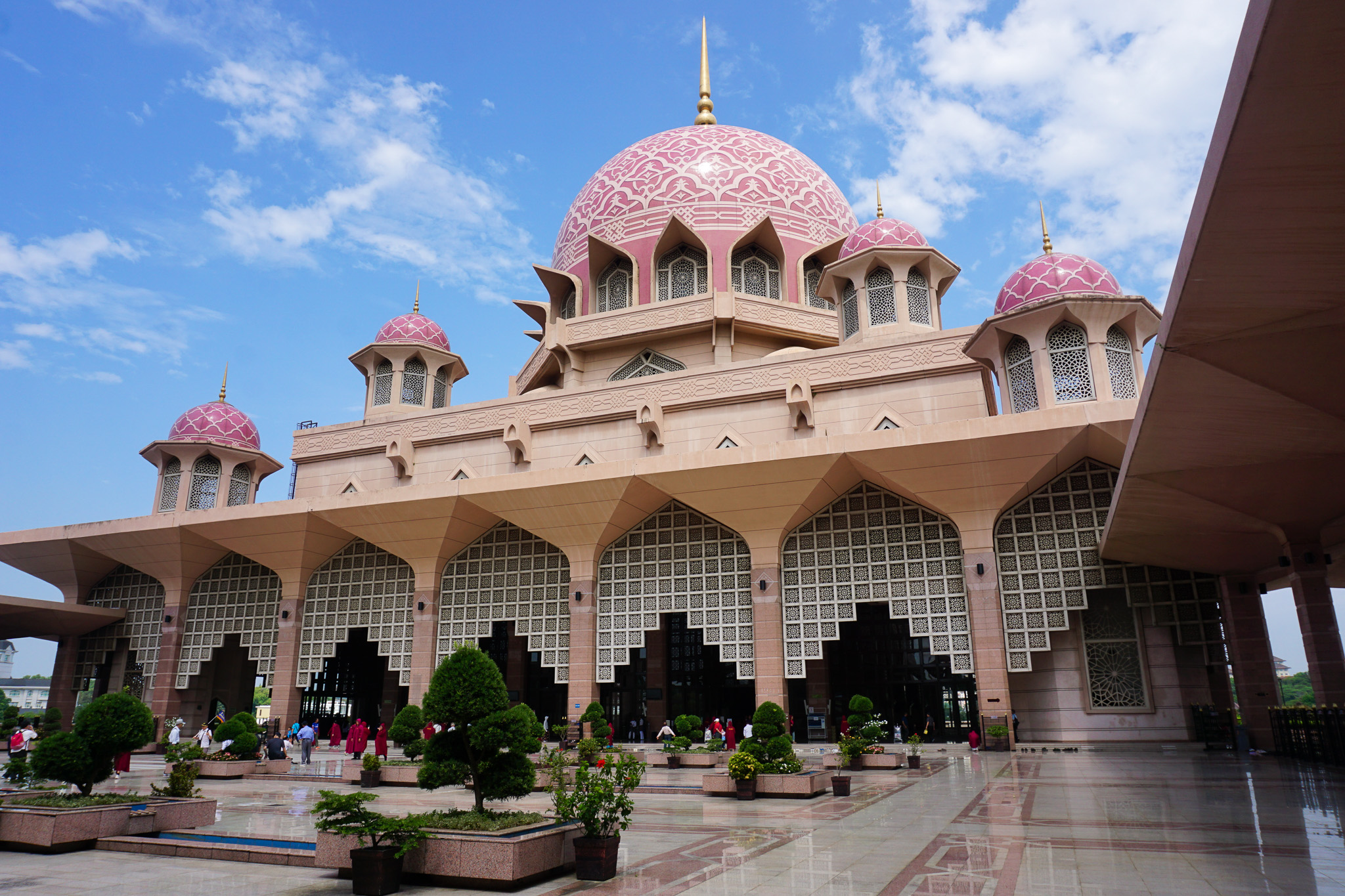
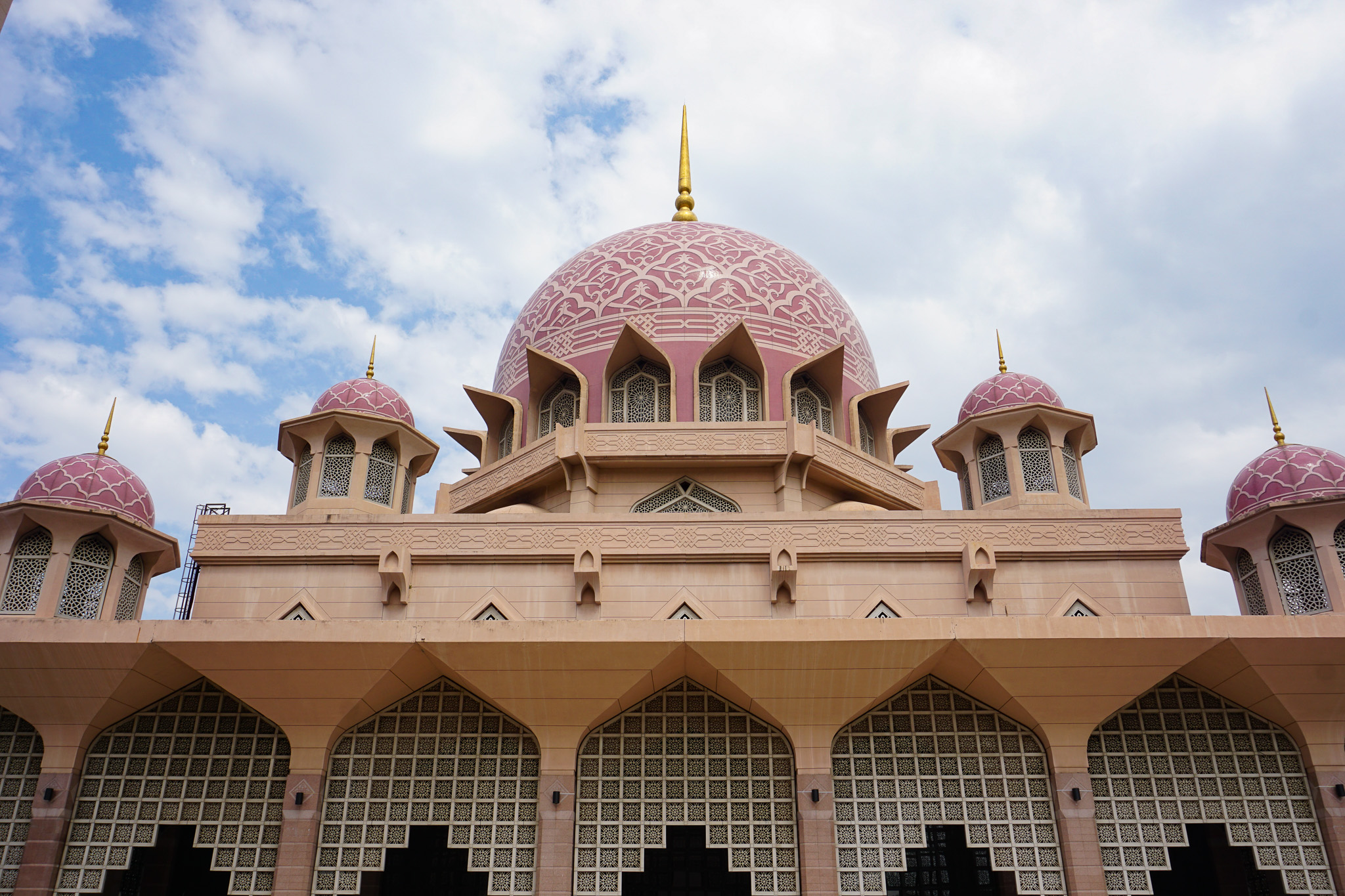
The mosque is located by the Putrajaya Lake giving it an additional charm that must be amazing at sunrise and sunset. Unfortunately, I was there when the sun was high and unforgivable. I recall I was not feeling that well – and Putrajaya itself being an administrative capital has an artificial look to it that I could not shake off. I felt I was surrounded by wealth, but a quick Google search clarified that mostly civil servants live there in government-provided housing – still luxurious, but this is not where the truly wealthy live.
You will be given a robe to visit the mosque – as with any mosque in Malaysia. This definitely makes me uncomfortable but I do have to be tolerant of other religions when I am choosing to visit their places of worship.
Love, Nic


I love your photos, Nic! The caves look like an interesting and unique natural and religious site – I especially love the rainbow staircase. Thanks for sharing, and have a good day 🙂 Aiva xx
LikeLiked by 1 person
Thanks Aiva, that’s very kind of you! Have a lovely week x
LikeLike