
After my bad experience in Phnom Penh, I arrived in Siem Reap feeling mentally exhausted. I had decided to stay at an Ibis, a chain hotel, hoping that’d give me some resemblance to the cleaning standards from back home, hoping I could have a good night’s sleep, and praying for a window.
The moment I stepped into the hotel I was greeted by a smiling receptionist. “Is it just you?” he asked, to which I responded yes, just me. “I see you booked a twin room”. “Oh I know what happened”, I said, “it was the only room that shown available when I made the reservation”. He nodded and then said he could get me into a double room, with a view to the river, without any extra cost. I couldn’t believe I was getting any kind of customer service for the first time on my trip. A smiling face behind the counter. It was also the first time since on this trip that I had breakfast included. All of this coupled with the fact I was planning to spend two days exploring the complex of Angkor Wat made me feel instantly a lot better and more positive in regards to my trip. Angkor was another one of those places I had seen in books as a child, internally making a note to visit it one day, never really believing that would ever be true.
I sought out an early dinner in my first night in Siem Reap, and retired early to my room. I had signed up for the sunrise tour, seeing the sun rising behind Angkor Wat. So it was going to be an early start, but I was excited.
Angkor Waaatt?
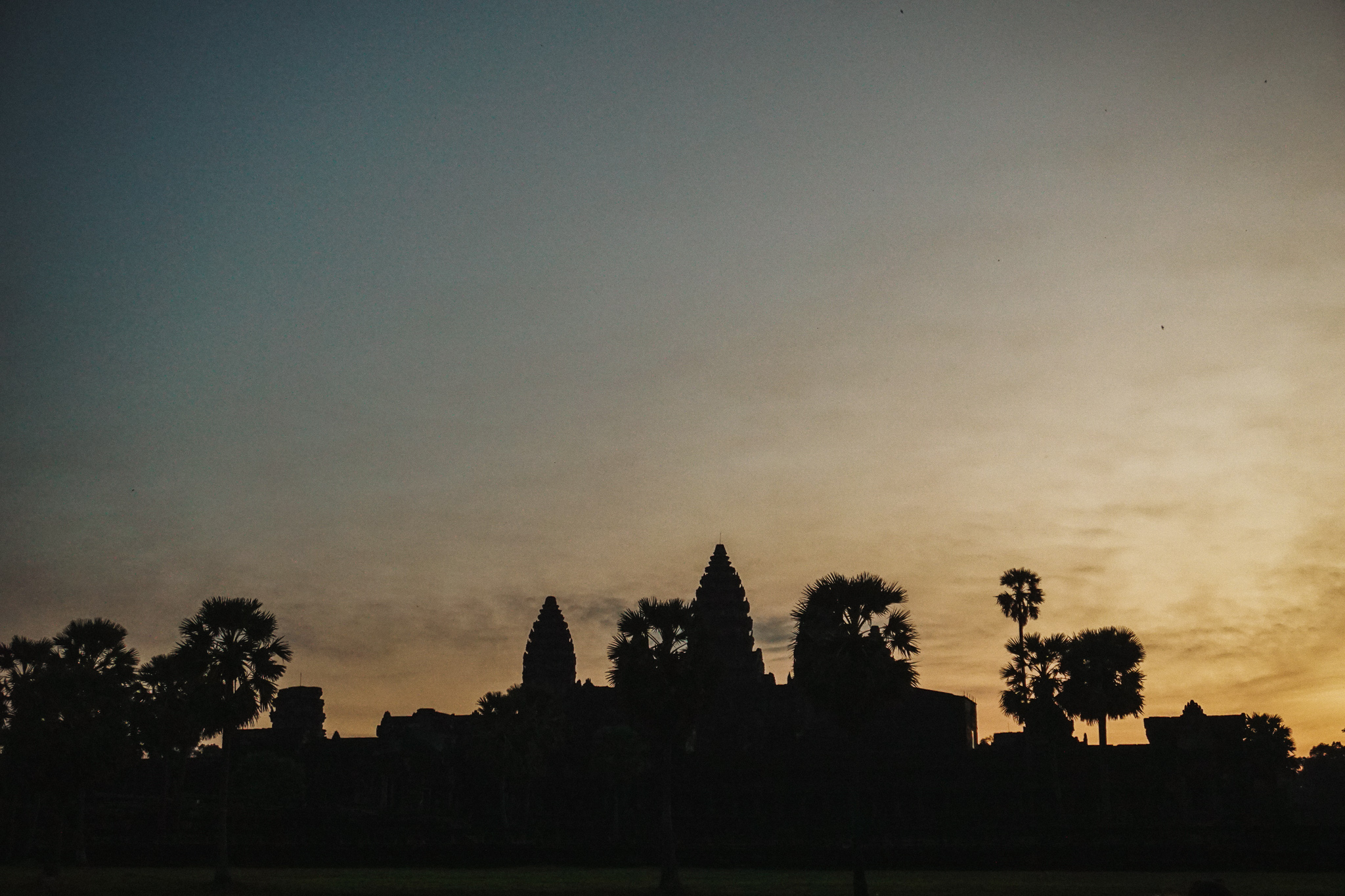
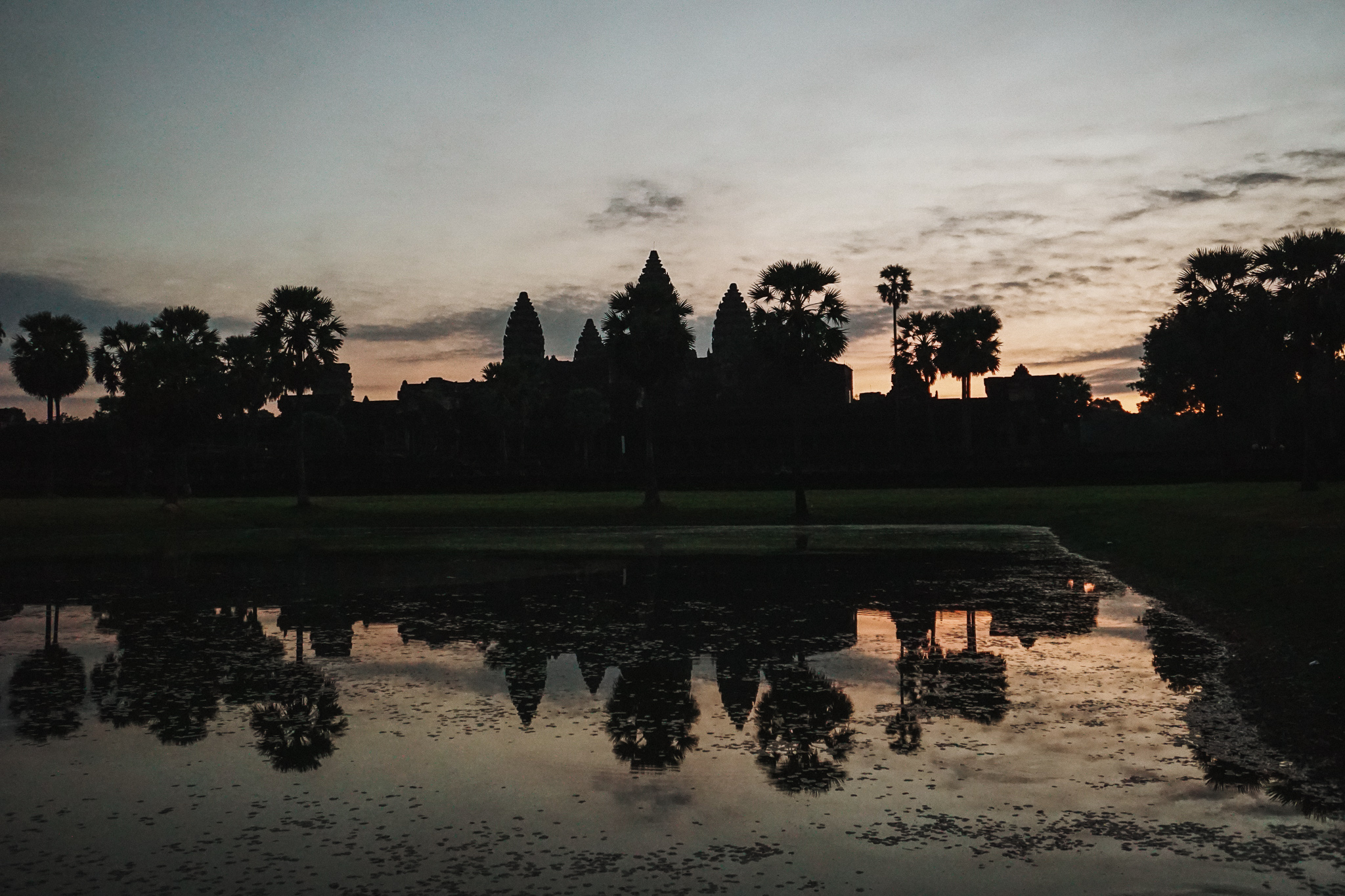
“Angkor Waaaat?”, Mr. T our guide greeted us. A good way to start the day before sunrise, with some comedy. He had a funny face, this guide, the kind that seems to be made out of mouldable mass. He was incredibly expressive, and even when he was adopting his most serious countenance, his eyes always seemed to preserve the glint of a childhood trickster. Thankfully I had had some coffee in my hotel room, and my mood was slightly better than usually is in the before-coffee part of my morning. Even though I had a nice bed and room for once, I hadn’t slept much with the nervousness of having to wake up so early. But it was all going to be worth it.
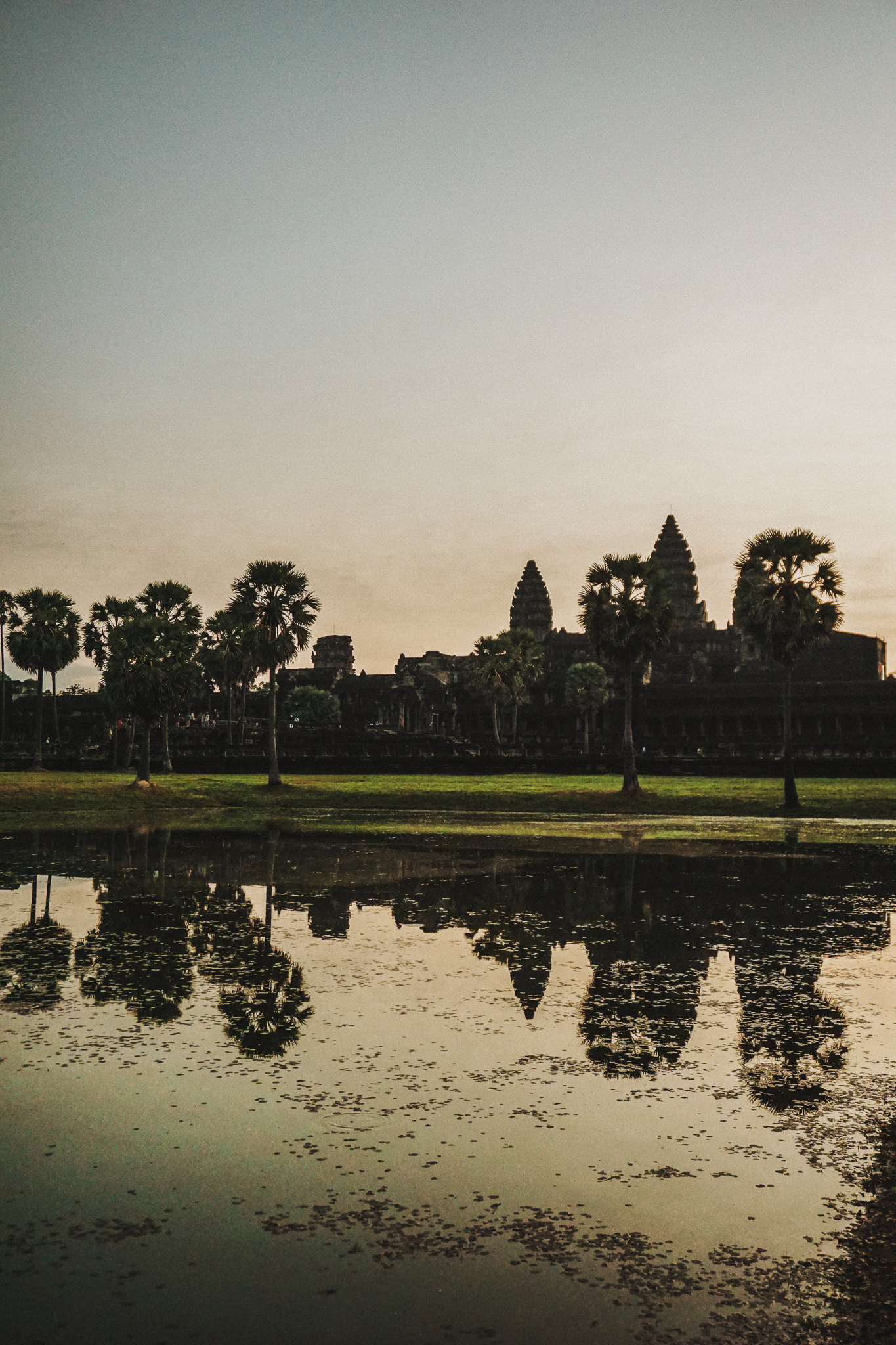
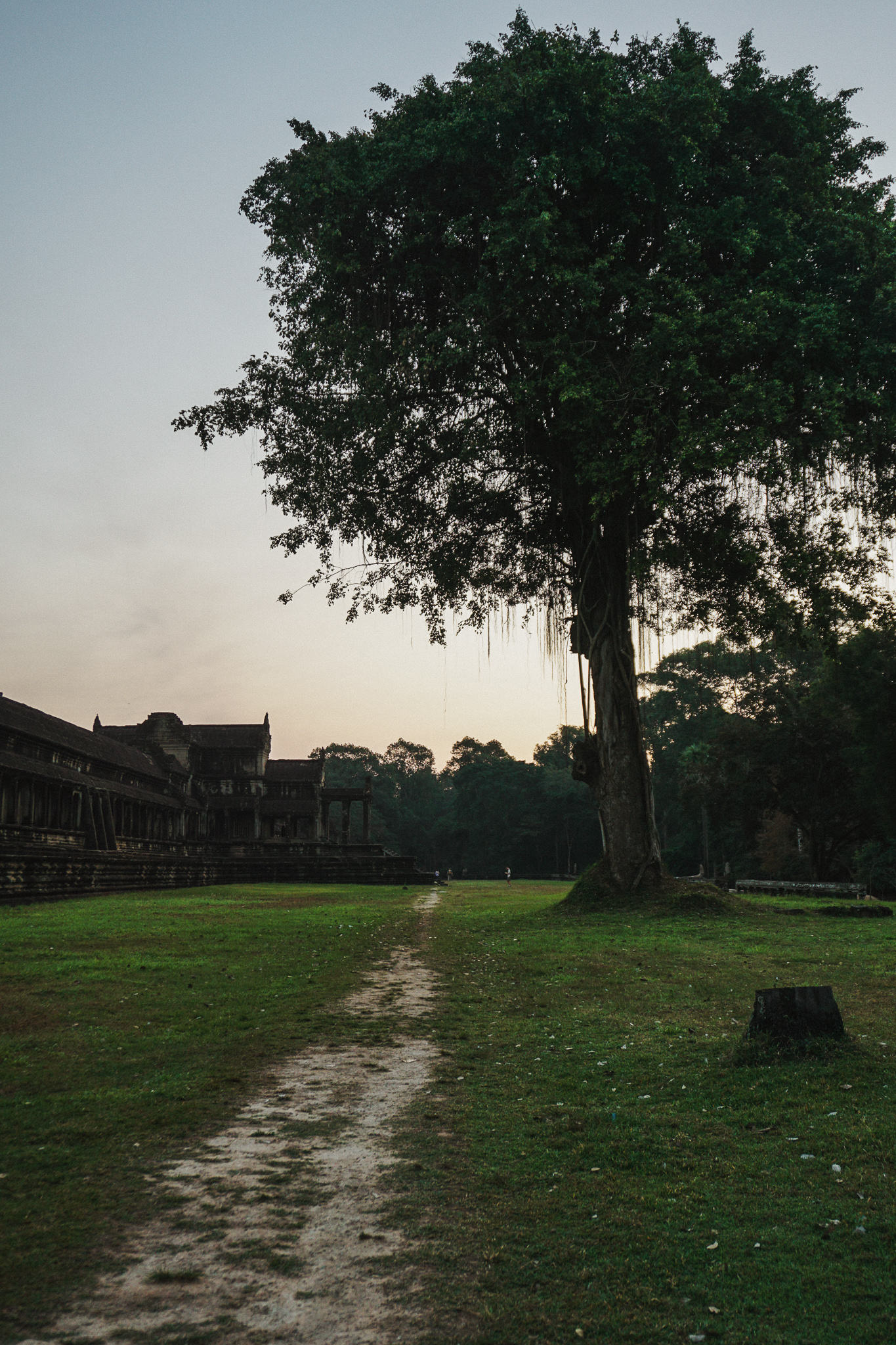
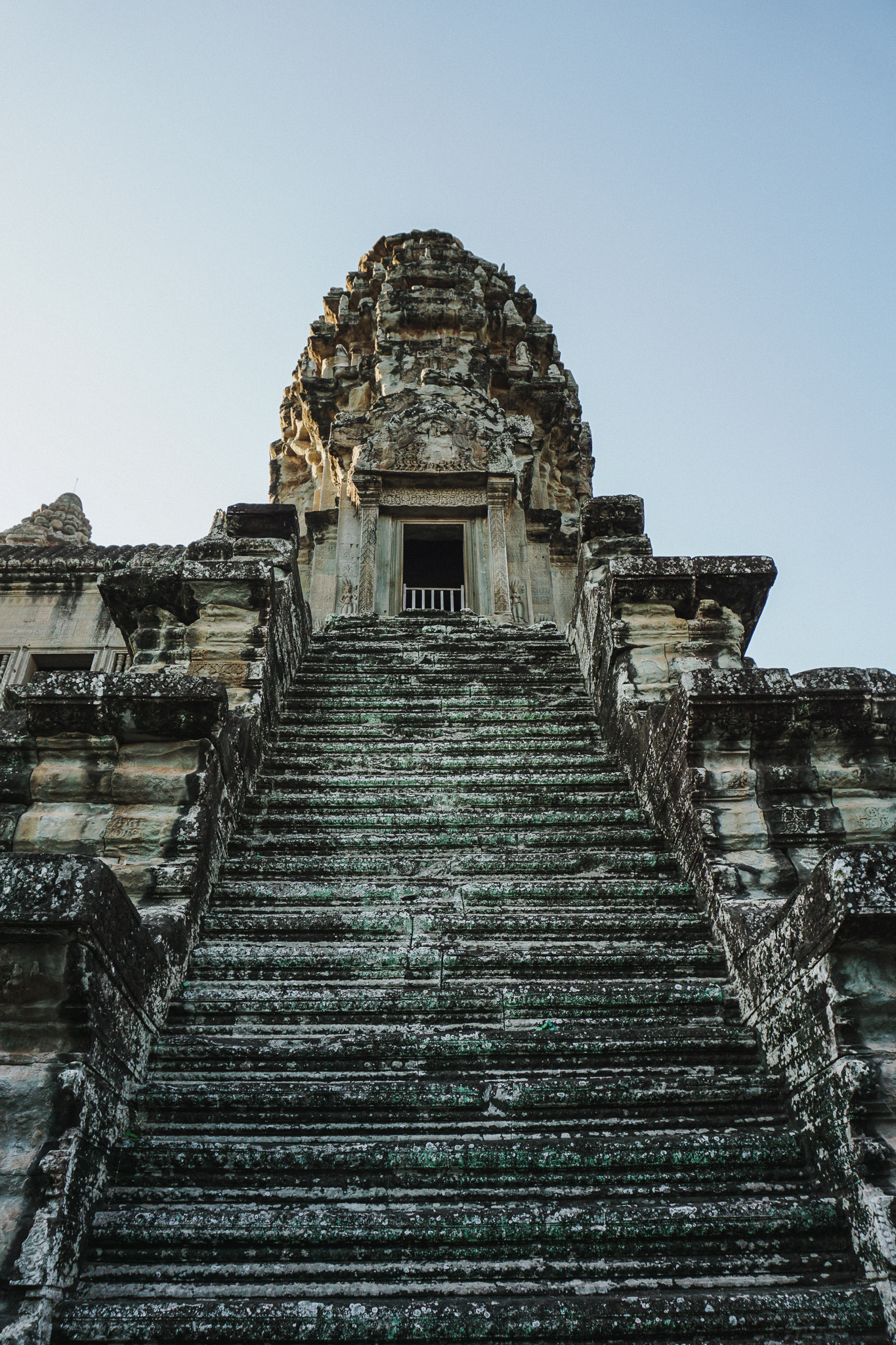
Because visiting Angkor Wat cannot be a disappointment. It is one of those things that you may see a million pictures of, and documentaries about… with some amazing footage from many angles. But nothing compares to seeing it in person. What a colossal human wonder. And clearly, I had been extremely lucky with the guide. He was not only incredibly knowledgeable, he was also an amazing entertainer and storyteller. And the plus? A great photographer. He knew the spots for the best photos and the most favourable angles, as well as all the smartphone tricks to get the best shots. I’m not going to lie… as a solo traveller I always appreciate a guide that is keen to take some shots. But I didn’t expect the quality I got! In fact, one of the photos he took of me became my profile photo on my IG account. That’s how good he was.
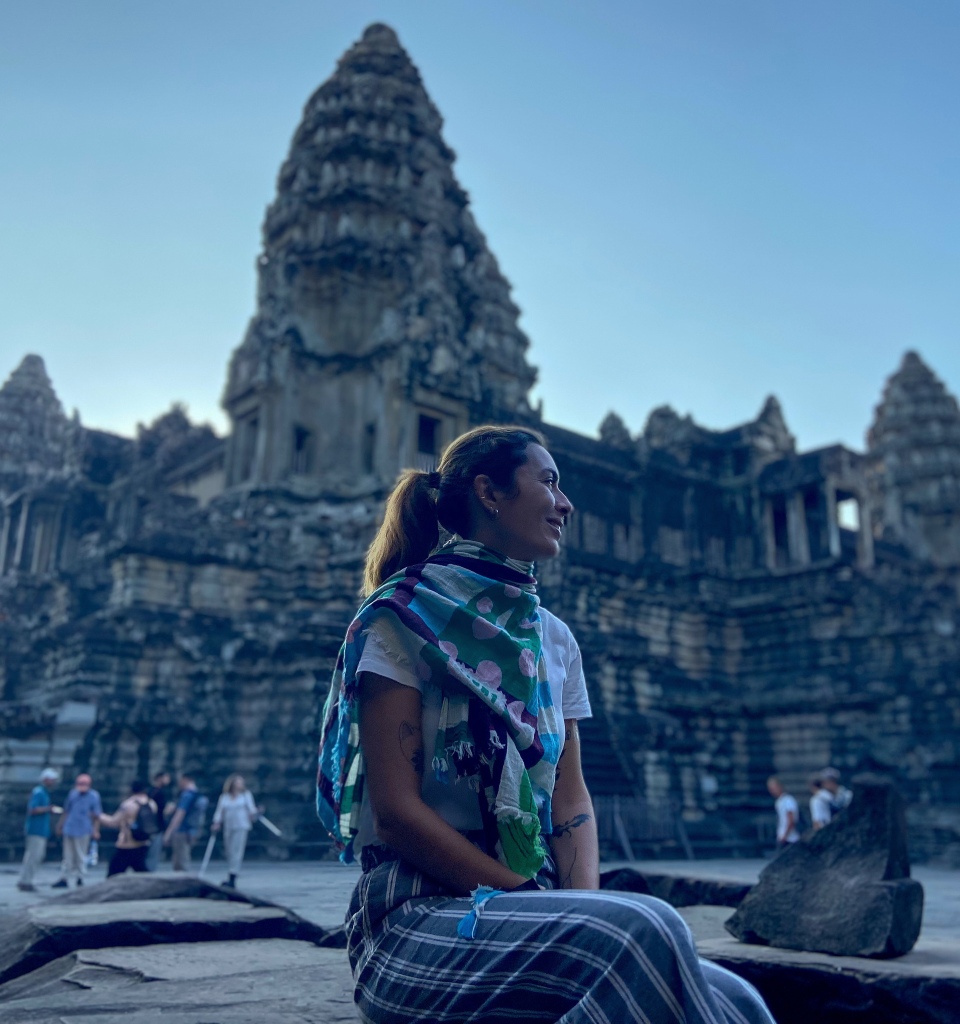
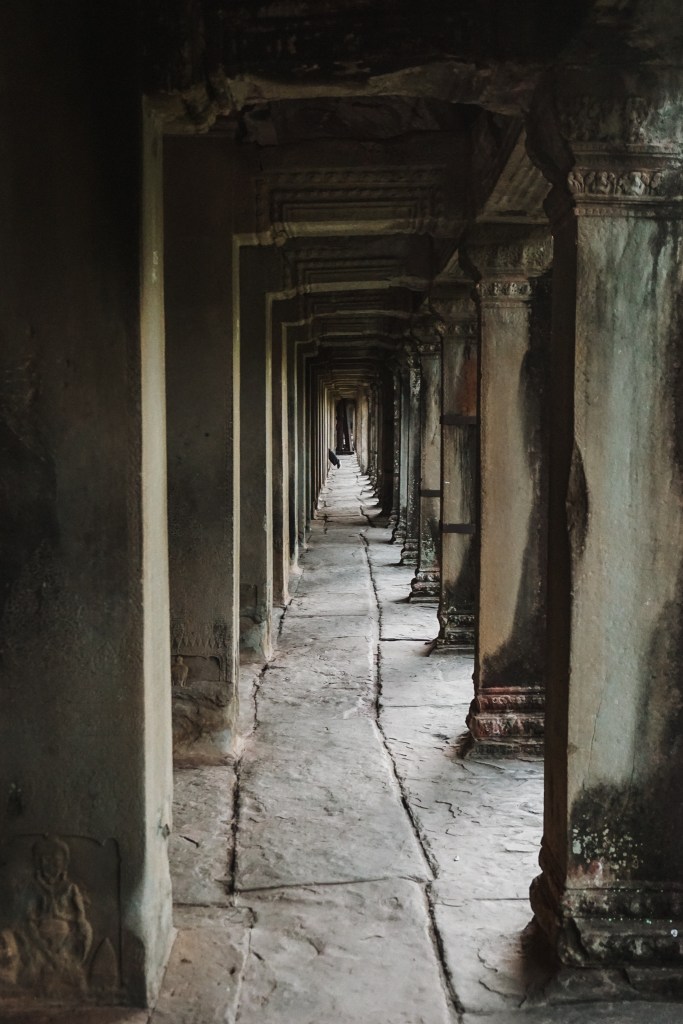
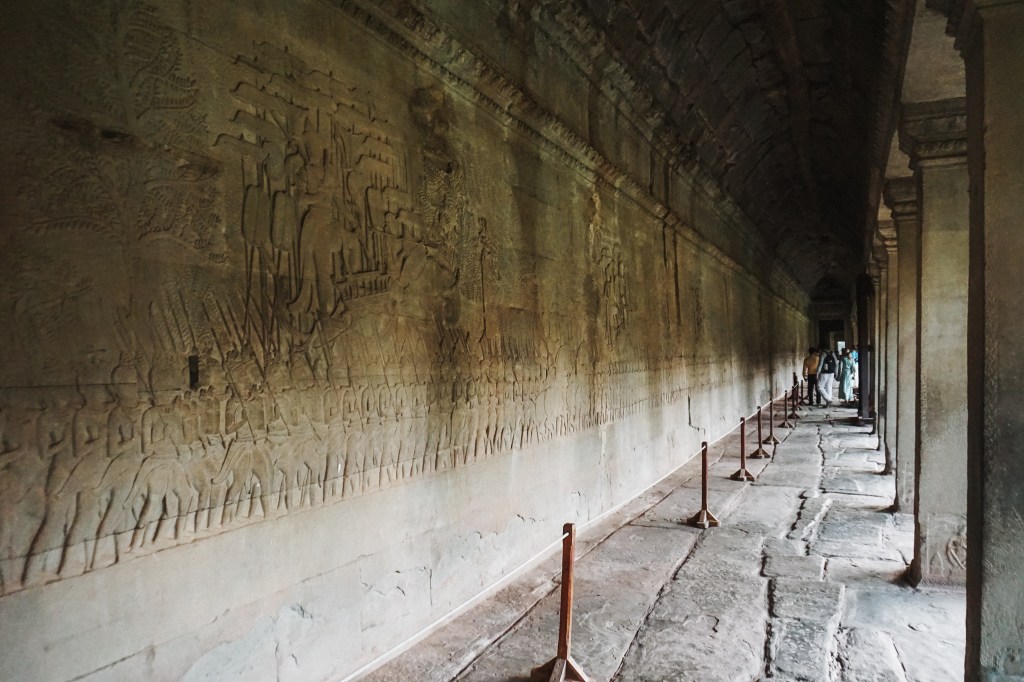


Mr. T was also very open about his own background.
“I was a temple boy before. So I was waking up very early to start work at 4am. To prepare everything for the monks, who were lazy and slept late”, he told us. I encountered a lot of cases such as these, in Cambodia, Laos and even Thailand. Being a temple boy is a way to get free education for a lot of young children in these countries, when parents struggle to afford one. It is apparent that most temple boys eventually change their minds about being a monk. It was the case with Mr. T, who eventually realised what he really wanted was to get married. Which he did. And that is another of his funny stories.

He (Mr T) met his wife by accident. “Not a car accident”, he quickly added. Apparently, the accident happened when this stranger called his number by mistake. “Daddy?” this female voice called, when he picked up his phone. “I’m not your Daddy…. Yet”, he said. At this point, I was really struggling to keep my laugh down. That line, no matter how tacky and cringe it may sound, was what initiated a relationship, even though they didn’t see each other for a whole year. She was from Phonm Penh, but one day she came over to Siem Reap for a wedding. And that’s when they met in person.
Mr. T had a scar on his face, and this had made it difficult for him to meet prospective partners, as it is seen in Cambodia as a sign of bad luck. It’s associated with bad life – people assume you are getting on with the wrong people, perhaps you’re a criminal. At this point I desperately wanted to ask how did he get that scar, which seemed to have its roots in a huge cut that just missed his right eye. He did not volunteer that information, and knowing that could be a sensitive point, I abstained. Afterall he was already telling us so much about his personal life, even if it was made up and dramatized for entertaining purposes.
He went on to use the story of how he met his wife to tell us a bit more about the wedding tradition in Cambodia. Marriages are no longer arranged (mostly, only about 5% in the country nowadays are) but it’s all still quite elaborate and conservative. “It’s not like in your countries, where you can live together, before getting married, right? That’s good… here it’s not like that” he ranted a little. The parents of the groom have to speak with the parents of the bride. To decide a date, they have to consult which one is more auspicious. And once that date is decided, the groom has to make sure he has enough money in his bank account to pay not only for the whole wedding but also for the dowry, which apparently tends to be about US$ 8,000. The wedding is also a quite expensive affair, as its celebration traditionally lasts for three days and it takes a village – quite literally! If you have 300 guests, that’s considered a small wedding…


The best joke came soon after… he stated he didn’t wear a wedding ring because he was MBA (Married but Available). Funny enough, at this point, I was even questioning if he was even married at all!
A reflection on colonialism
I suppose the most interesting detail was the positive way he portrayed the French Colonialists. Before them, there were no schools in Cambodia, he said, and no rediscover of Angkor Wat, with consequent studies and true efforts at conservation.
It’s important to state that Angkor Wat wasn’t not only “rediscovered” but more accurately, rediscovered by the West. The temples were never truly abandoned, as they remained in use, known to locals who continued to be aware of their presence and often used their spaces for Buddhist practices, at least until the 1800s. It was the French explorer Henri Mouhot who upon visiting it in the 1840s, made it known to the West, sparking interest from scholars and curious alike. Henri and other Western explorers were responsible for bringing Angkor Wat to global attention.
The reality is that when the French left, things went downhill. I’m all in favour of independence and sovereignty, but… I mentioned what happened in my previous post on Phnom Pehn. A fucking genocide. Plus the Khmer Rouge wasn’t interested in conservation, as you can imagine. And with religion being prohibited, the temples were seriously abandoned back then.


I know this is a delicate and controversial topic – we don’t live in a black and white reality. I don’t want to defend colonialists. Invading countries, massacring indigenous populations, piling and stealing, and exploiting the locals and natural resources for profit… there is so much badness and cruelty in all of it, all fuelled by the ambition to always have more, more money, more power. But even since my visit to Egypt I’d been reflecting about how much independence from foreign forces brought any good to the country. I know that new countries always take a while to settle, to form new governments, to adapt to new regimes. But often we are left with impoverished people, struggling to get by, governed by authoritative and corrupted governments, which don’t seem to care about rebuilding a country that serves all citizens equally and invests not only in its infrastructures, education and health but also in conserving its unique and priceless cultural heritage.
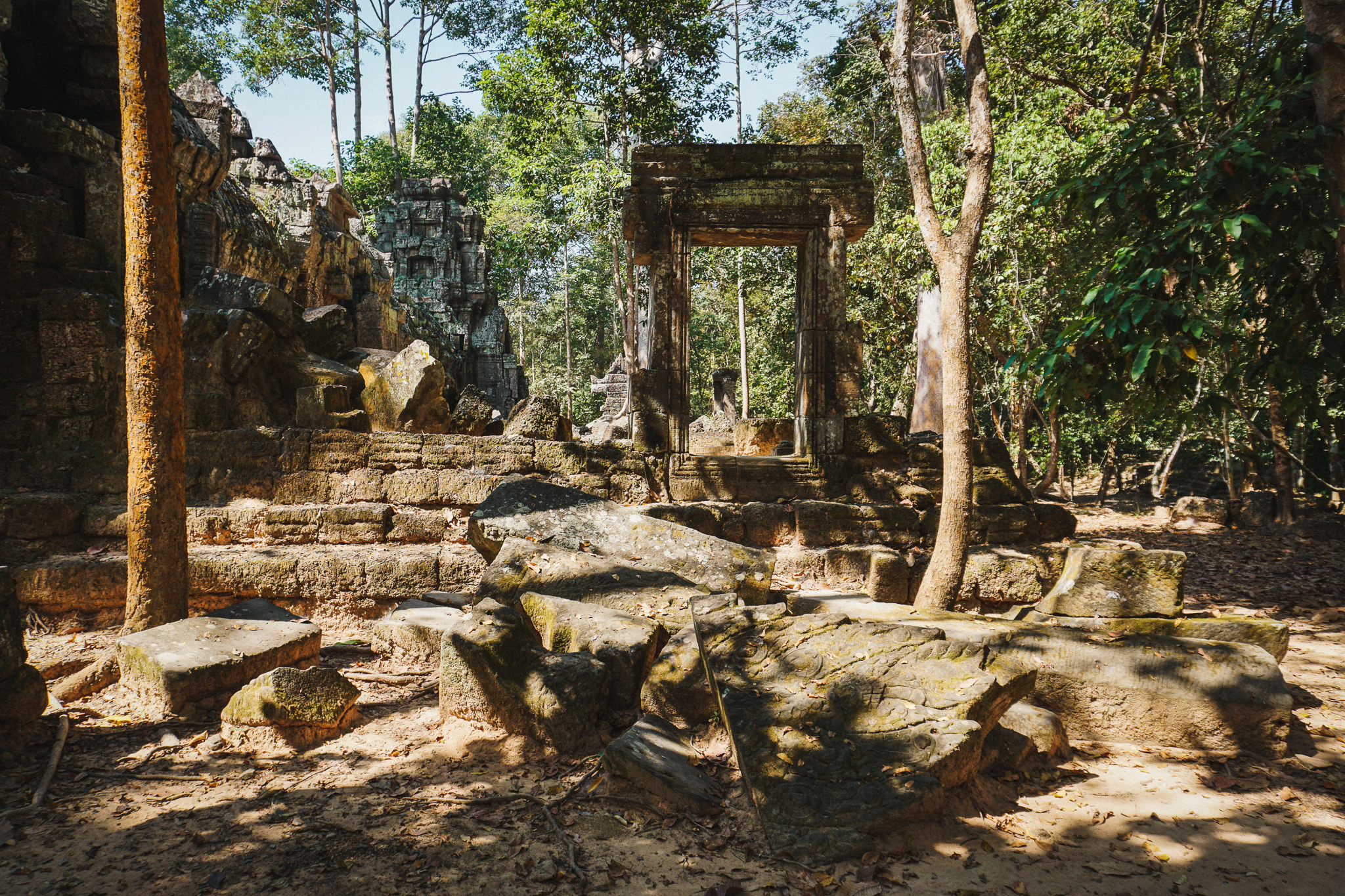
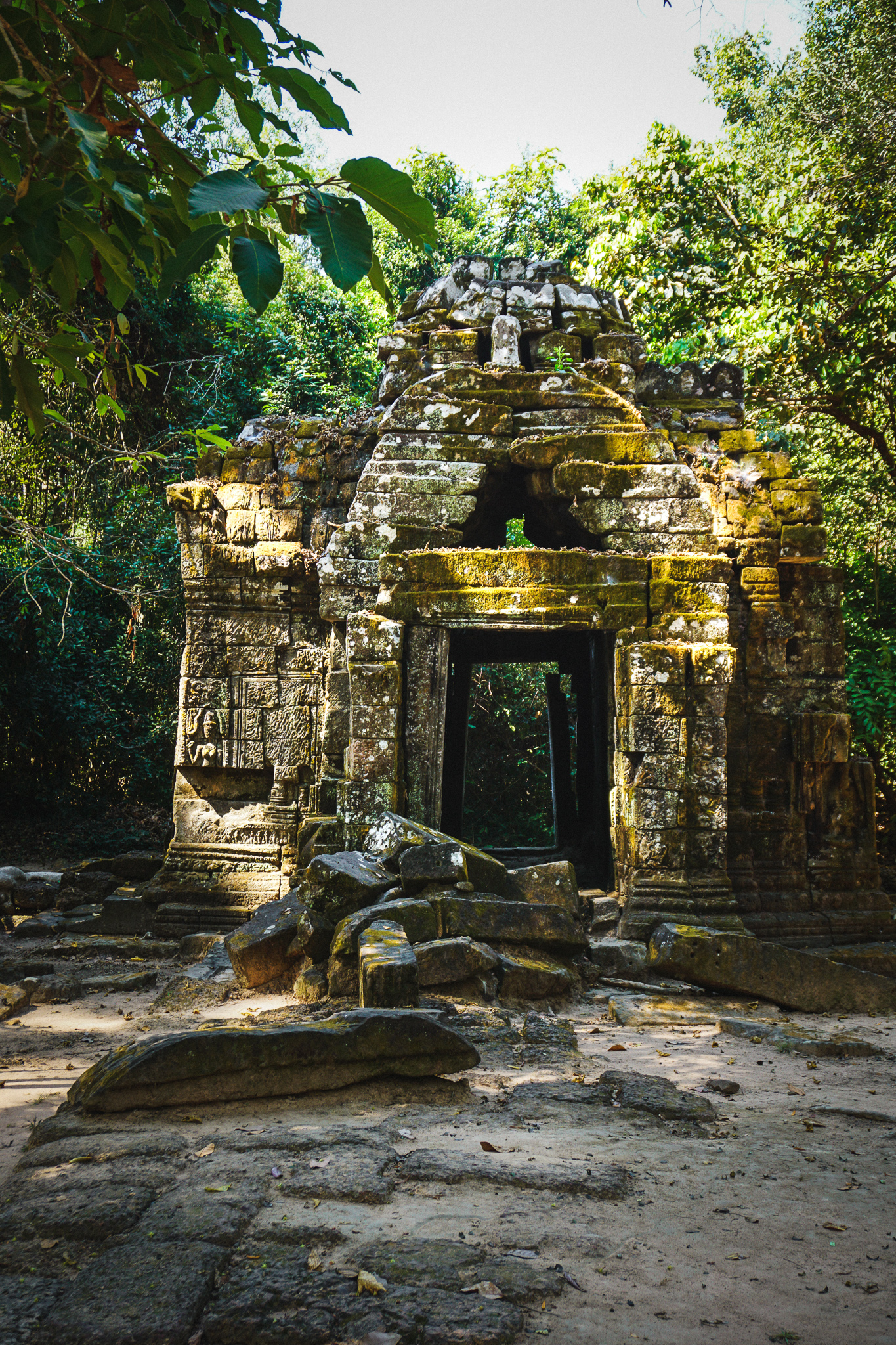

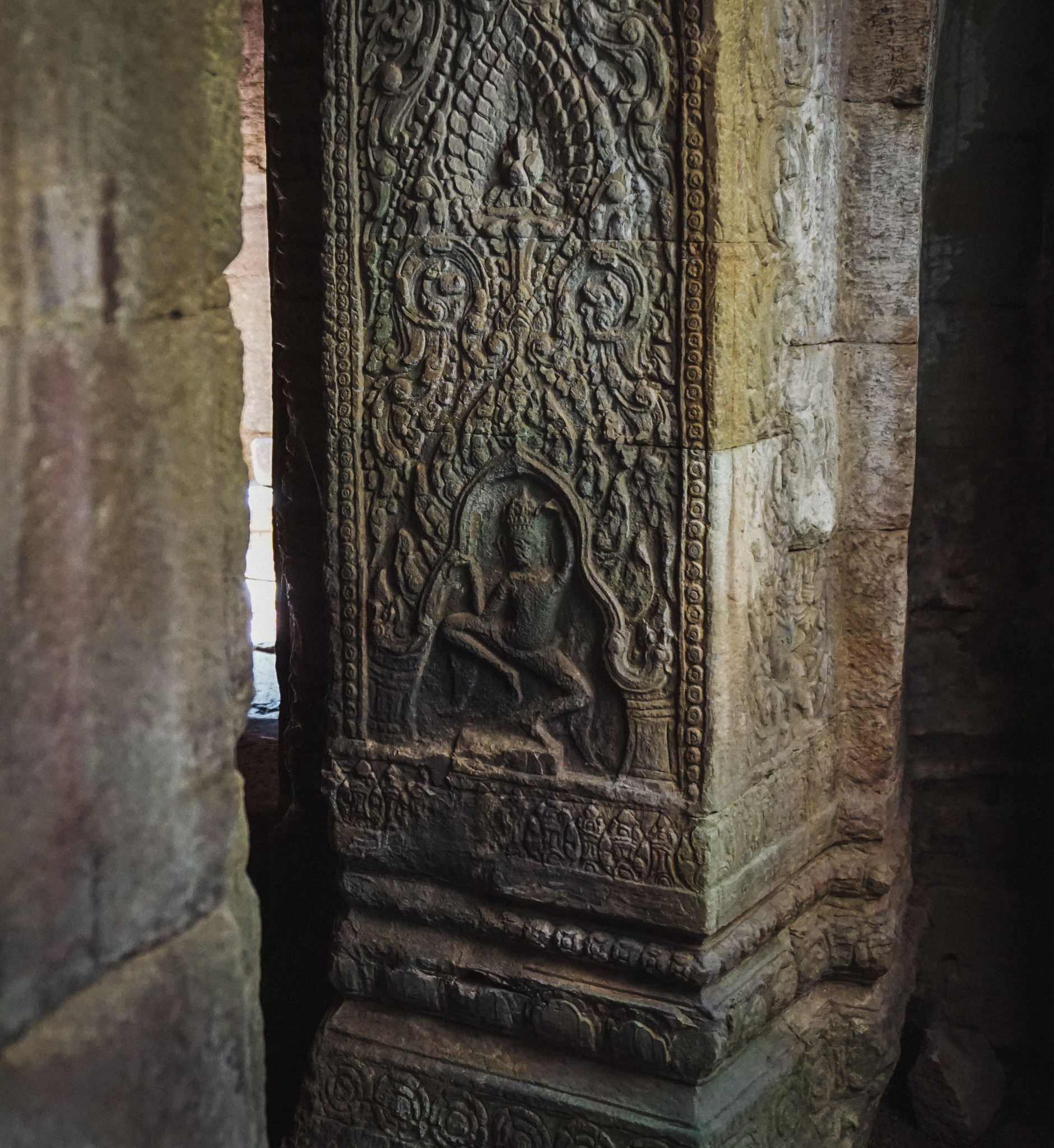
Angkor Wat is a very good example. You pay a premium price to visit it, but that money doesn’t seem to be reinvested in its conservation. I found that most of that work is being done by foreign organizations. You can buy a one-day ticket (US$ 37), three days pass ($US62) or a 7 days pass ($72). I got the 3-days pass as I knew I wanted to spend at least two days in the Angkor Complex. I bought the ticket online – something you can do (and I recommend you do) here. You don’t have to print it – showing it on your phone is enough. I took a screenshot of mine to ensure I could always show it even if I didn’t have any signal, and didn’t have any problems.

In person, you can only pay by cash. I also recommend you visit Angkor on a tour (bear in mind tours don’t usually include the tickets, you have to buy it beforehand), so you can have a better understanding of what exactly you are looking at. I booked my tours through GetYourGuide – because despite all the money you pay, you don’t get a guide, a map, and barely any informational signage on the actual sites. These were small group tours and I enjoyed both.
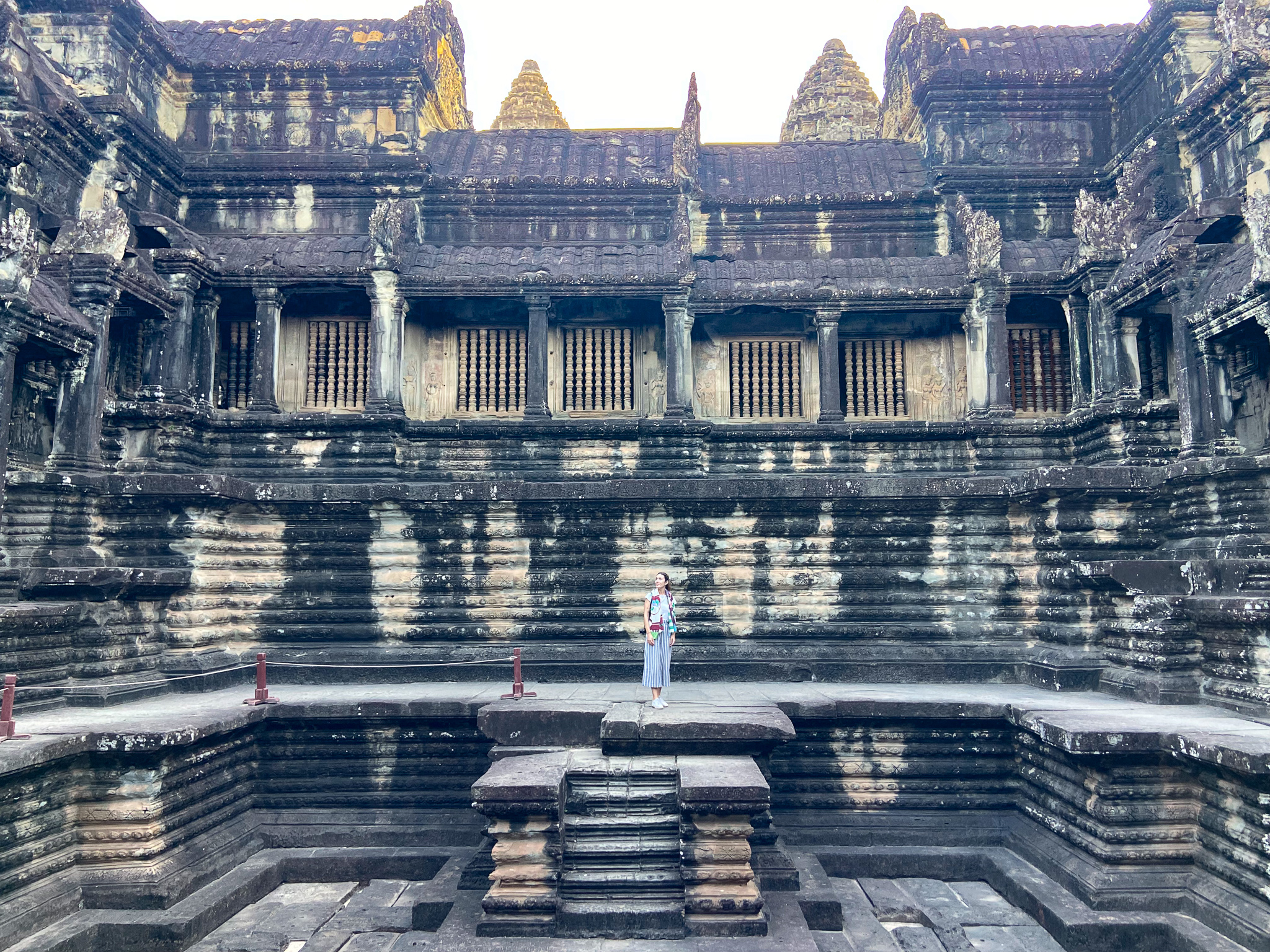
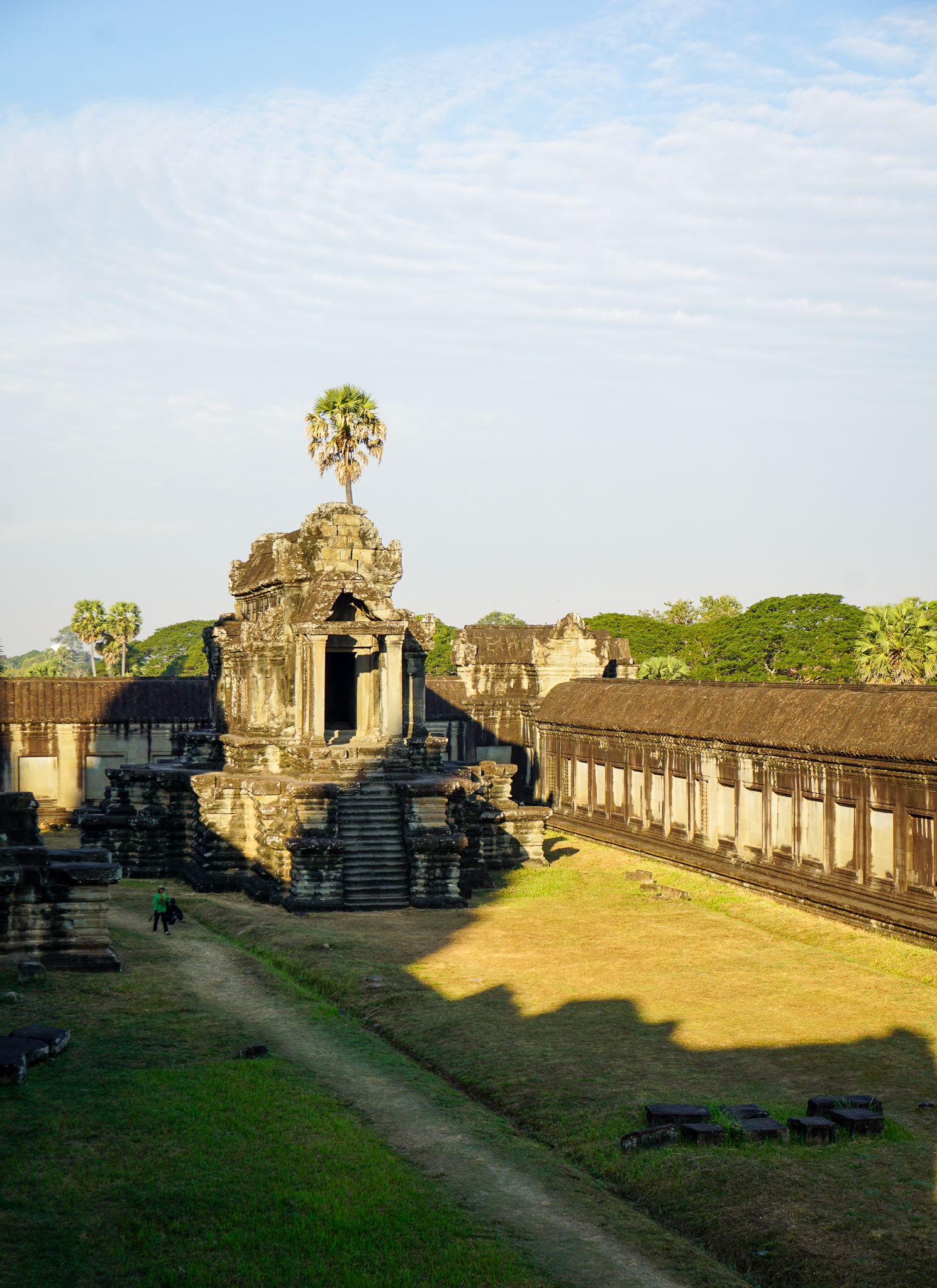
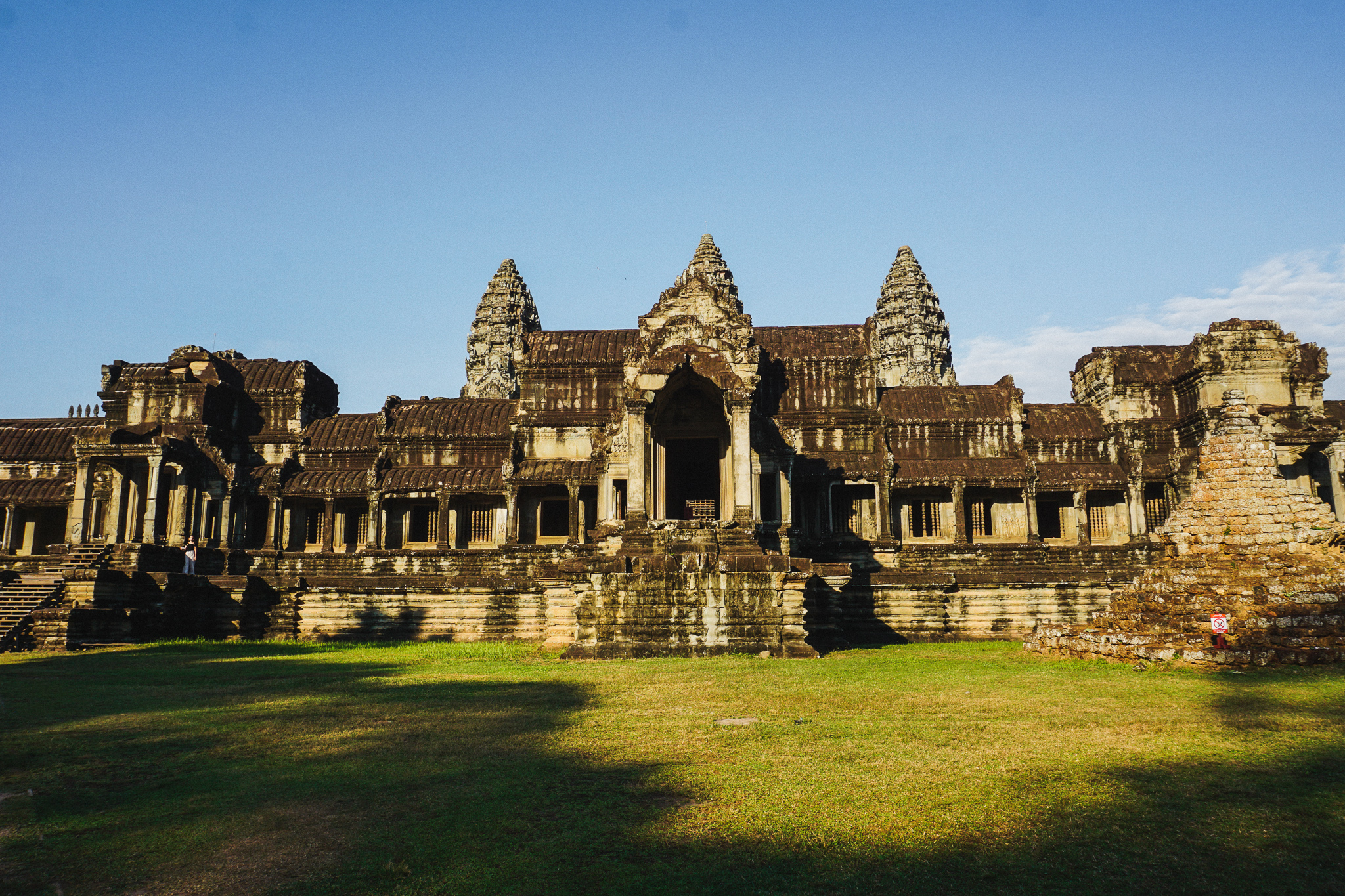
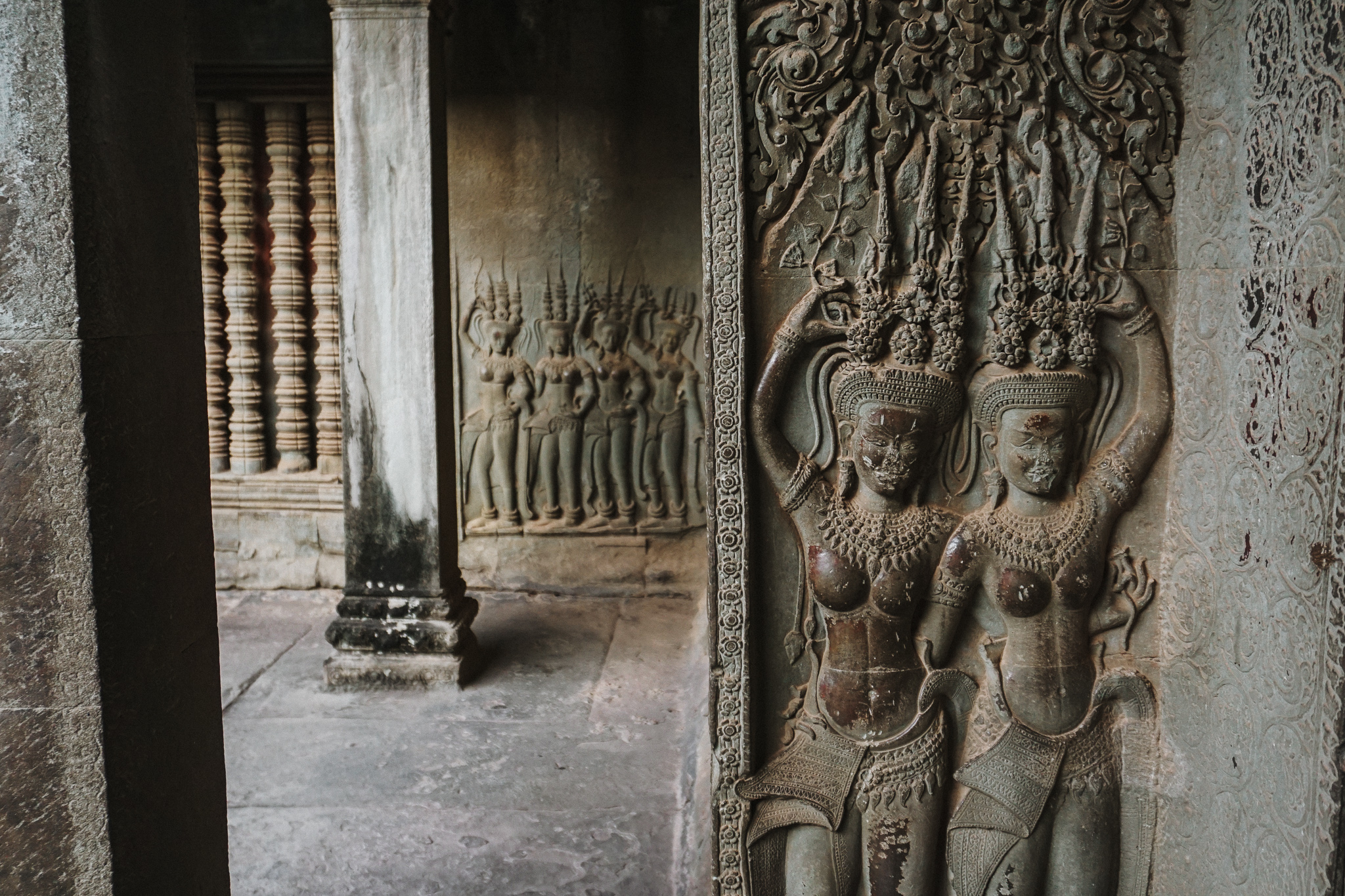
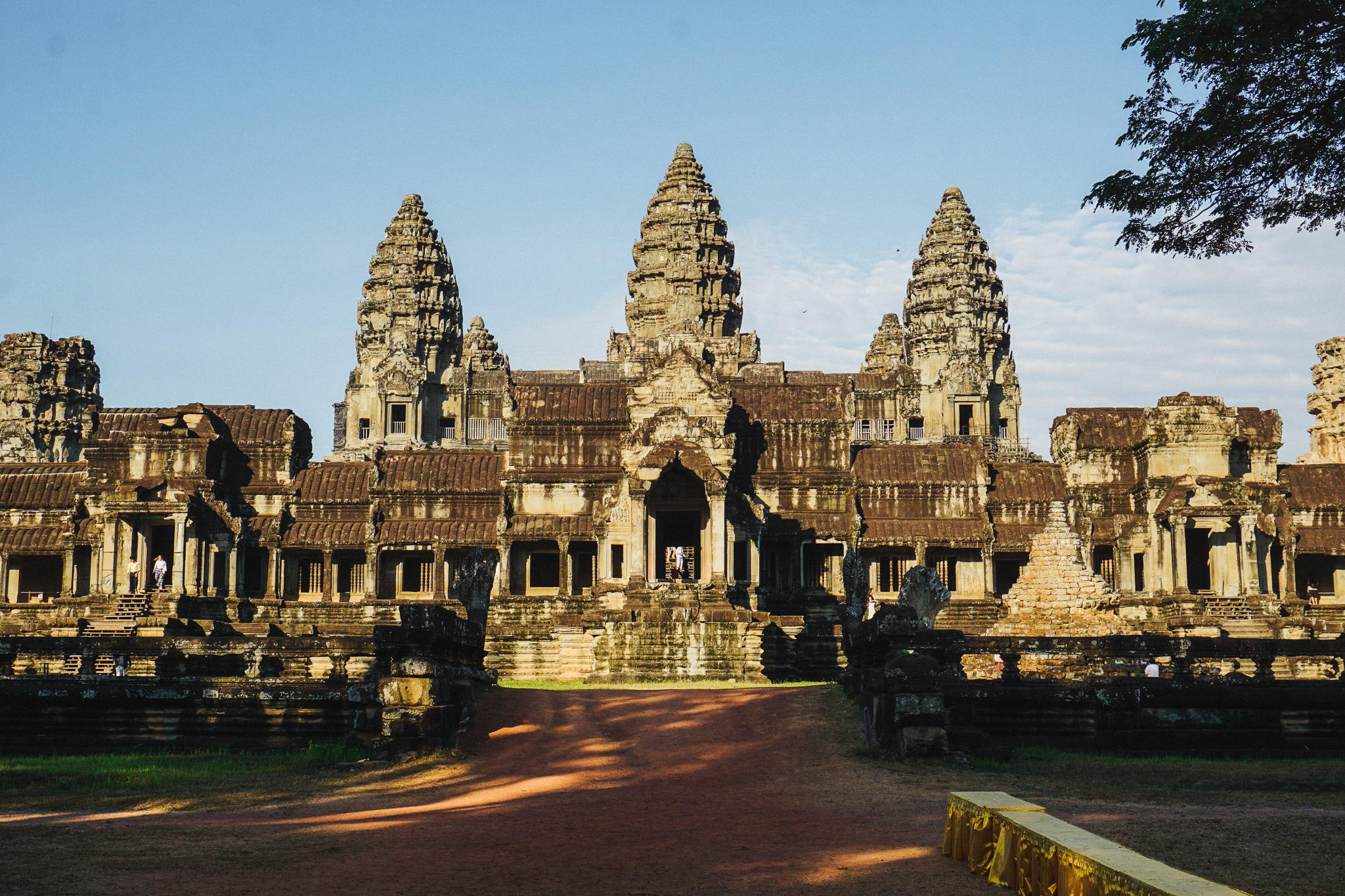
Despite the high price of visiting the Angkor Complex, it is so definitely worth it, and to be honest I wouldn’t mind going back. It is absolutely mind-blowing, and there is a lot more to explore than the main complex. I can only imagine what they must have looked like in their prime, when those corridors were bustling with life and colour. When there was still water in those fountains and moats.
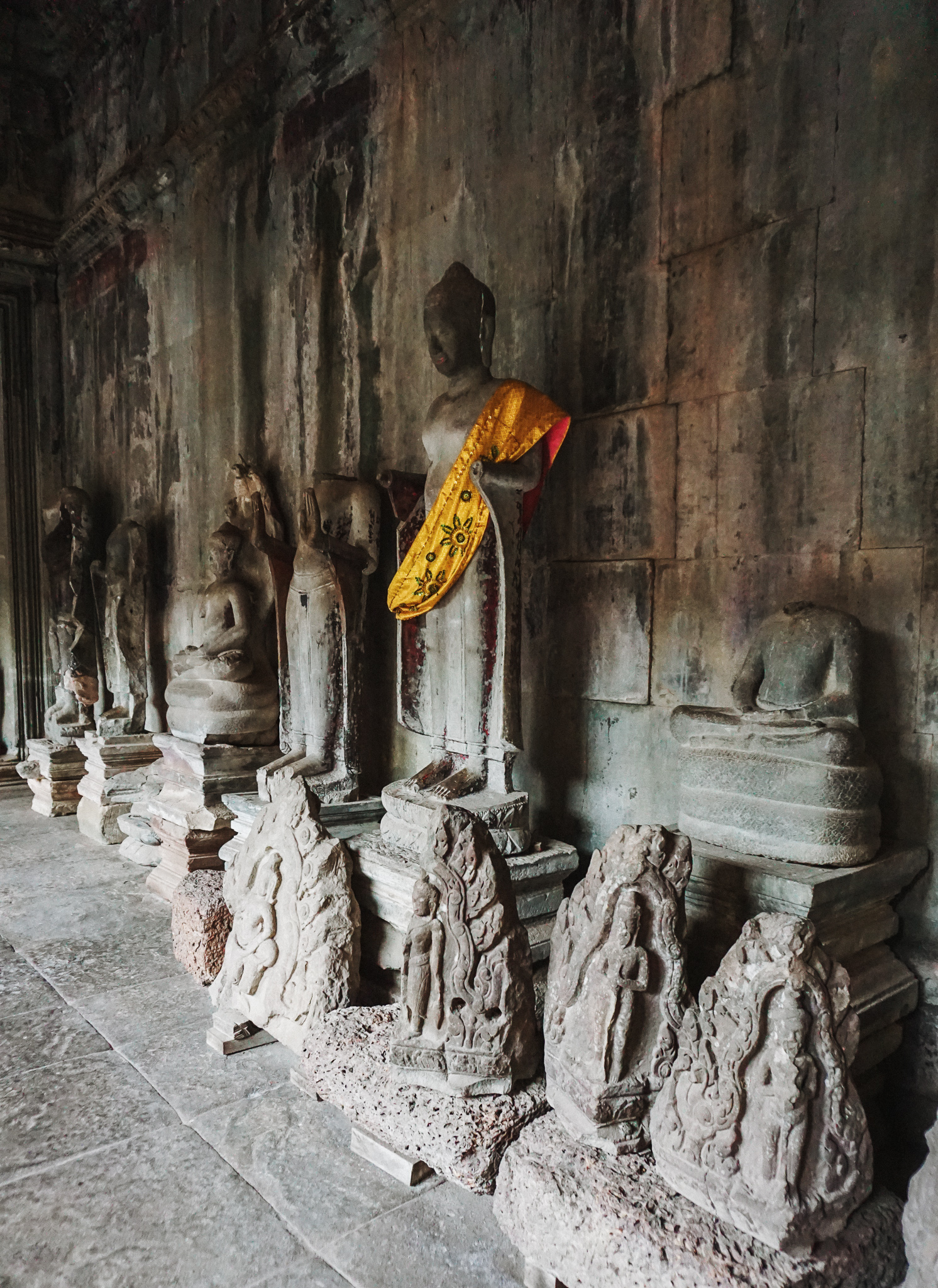
It is also very interesting to observe the cultural and religious changes. After all the complex was built around 1110-1150. It was originally a Hindu Temple, dedicated to the god Vishnu. It took over 30 years to be completed, serving as state temple and eventually as the tomb to the King. However, by the end of the 12th century, the Khmer Empire had shifted to Buddhism – so Angkor Wat became a Buddhist Temple. It became a UNESCO Heritage site in 1992, and it holds a Guinness Record. It is the largest religious structure in the whole world, spreading across 400 Km Sq.
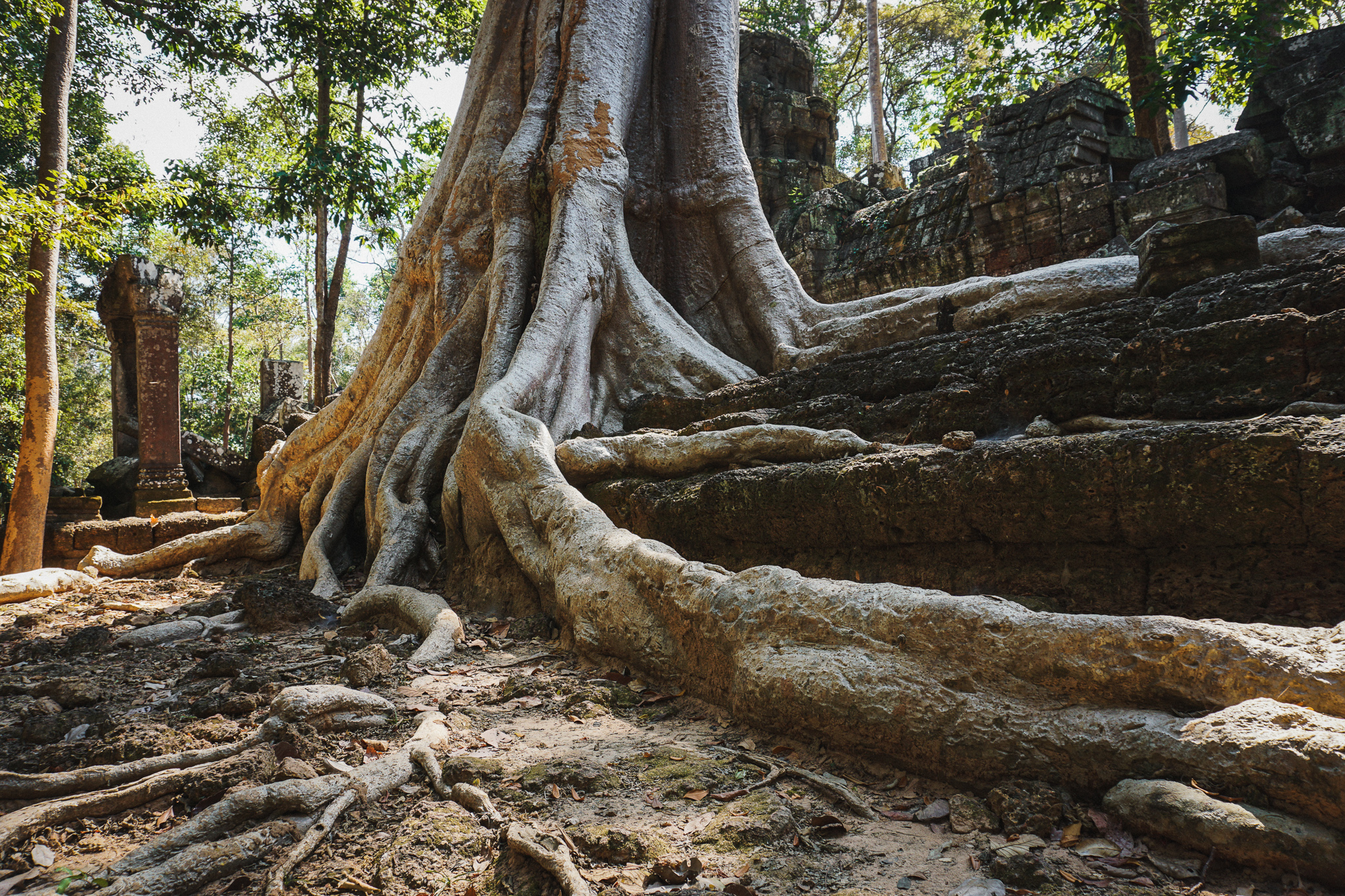
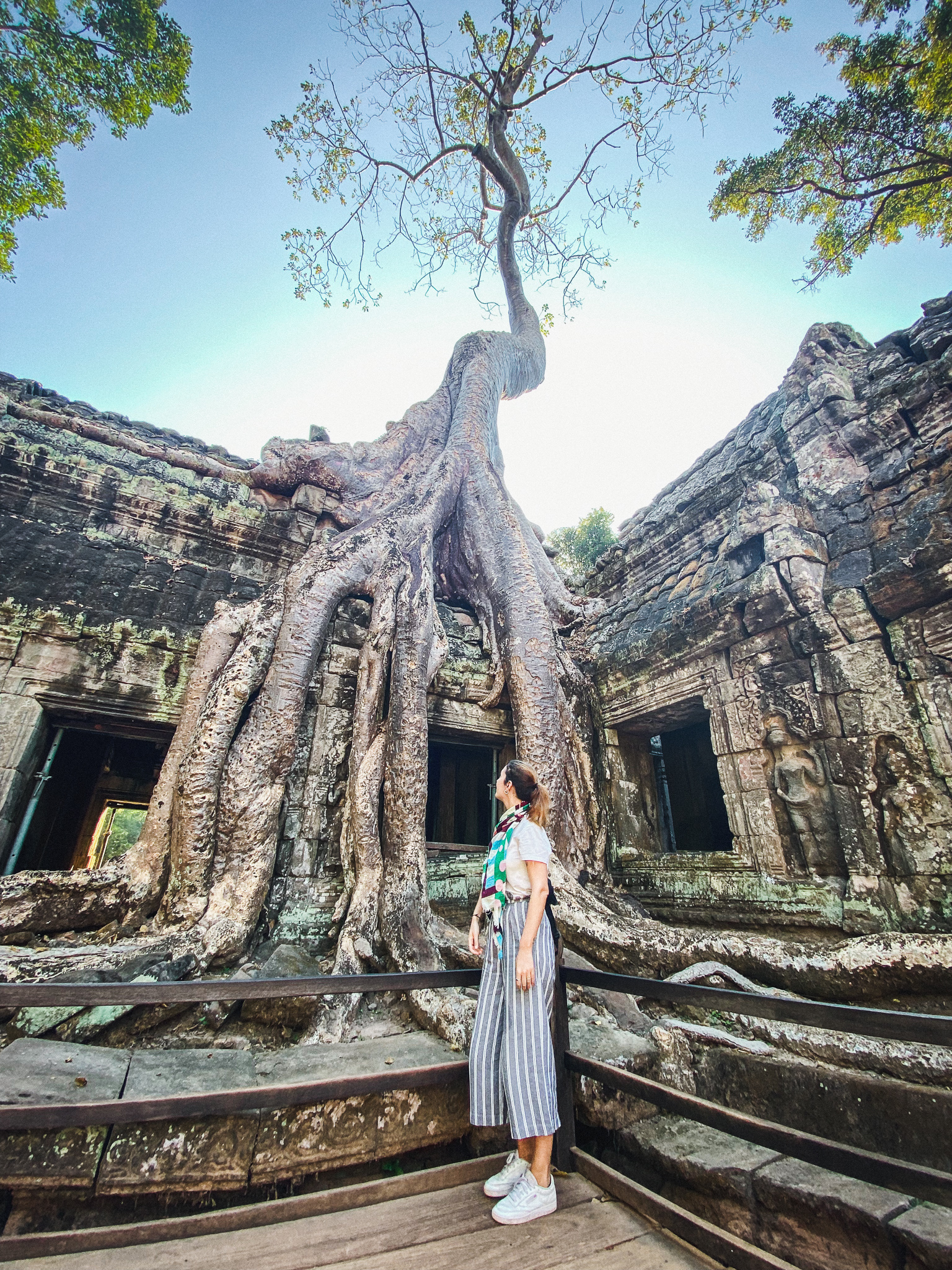
Nature’s Triumph
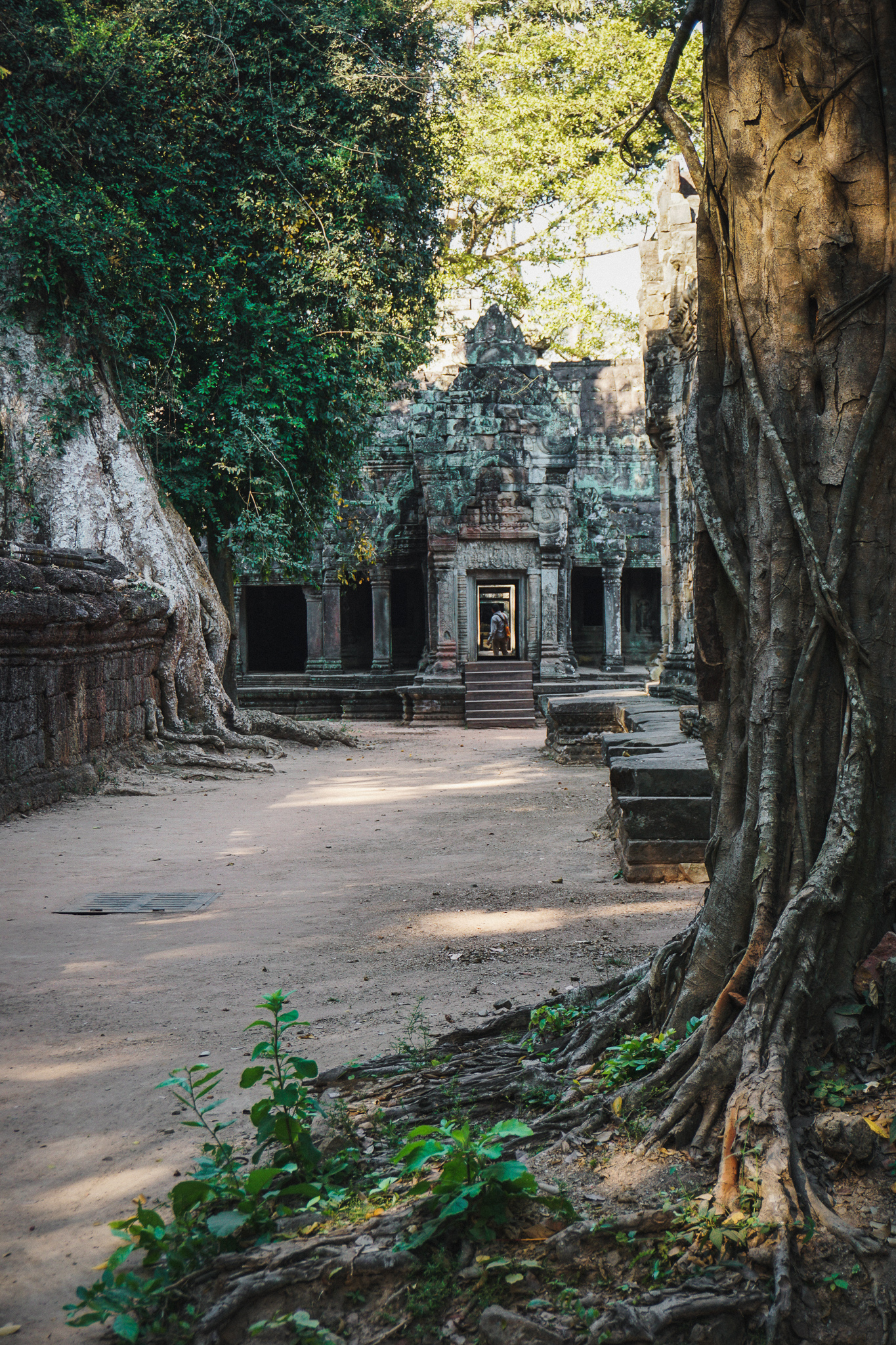
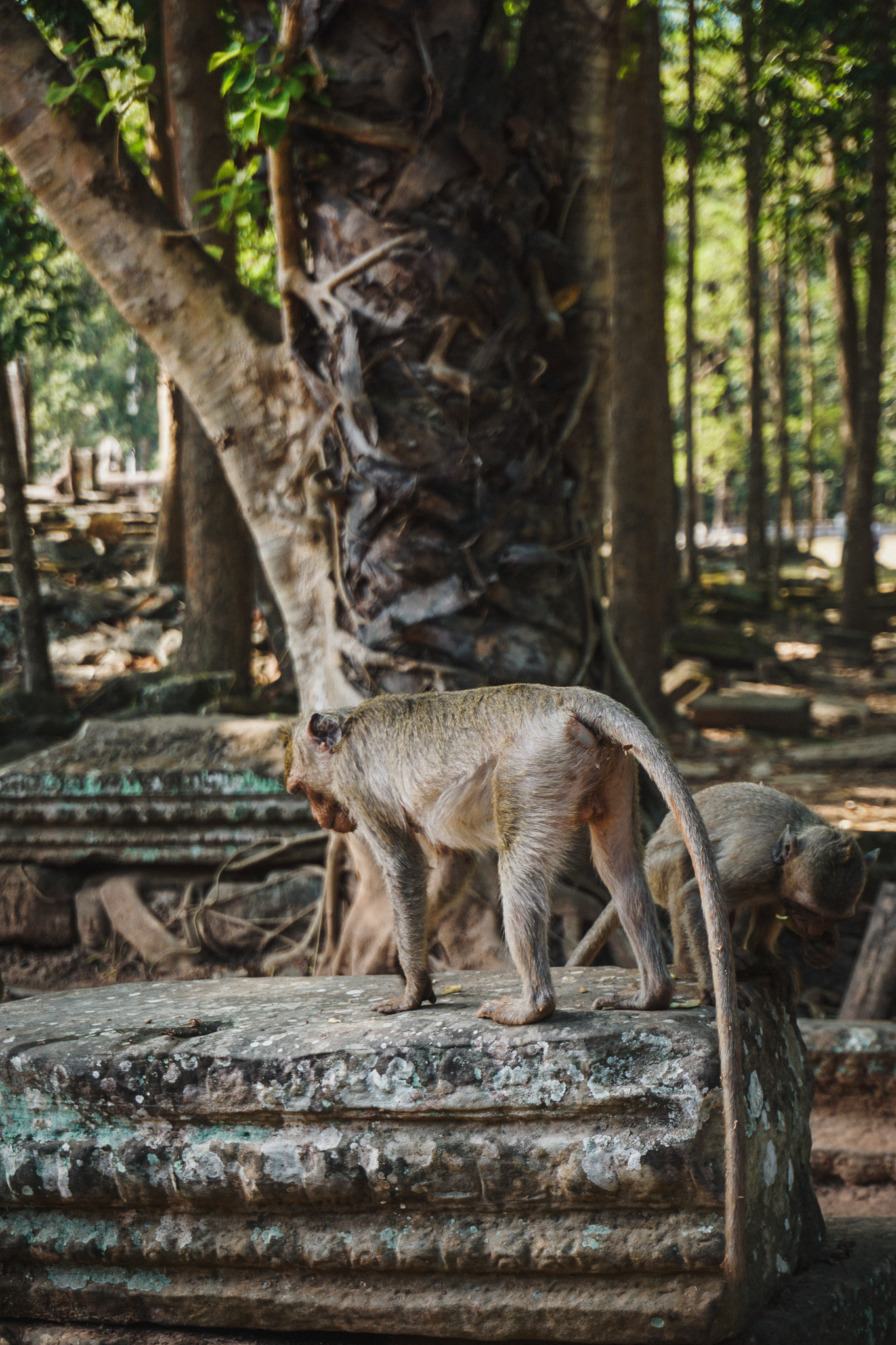
What makes Angkor Wat even more special is the lush, absolutely all-consuming jungle that has started to take over, and reclaim its space, in a way that makes the ruins look even more mysterious. This was made very famous by Lara Croft movies, filmed here. Particularly in Ta Prhom – seeds left in moss, trees growing and developing with a strength that could only be nurtured by the tropical weather in Cambodia. It is a fantastic show of human vs nature, and in this case Nature seems to be winning. In some parts, they started to cut the trees, only to find out those roots were precisely what were keeping the temples together… and getting rid of them is only causing more ruin and destruction. That’s how a take back is made, my friends. This is a strong stance from Nature, and a perfect “in your face!”.
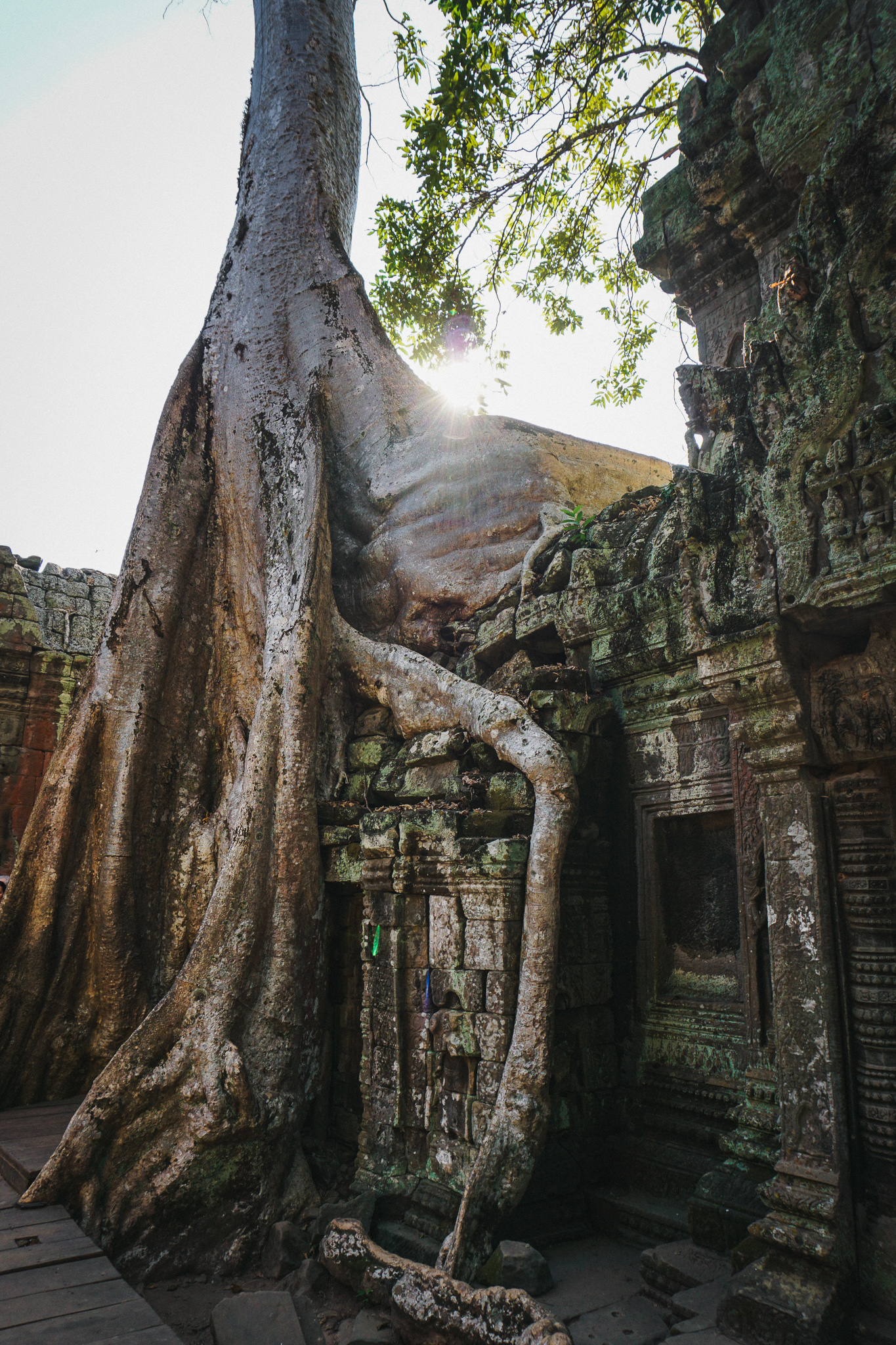
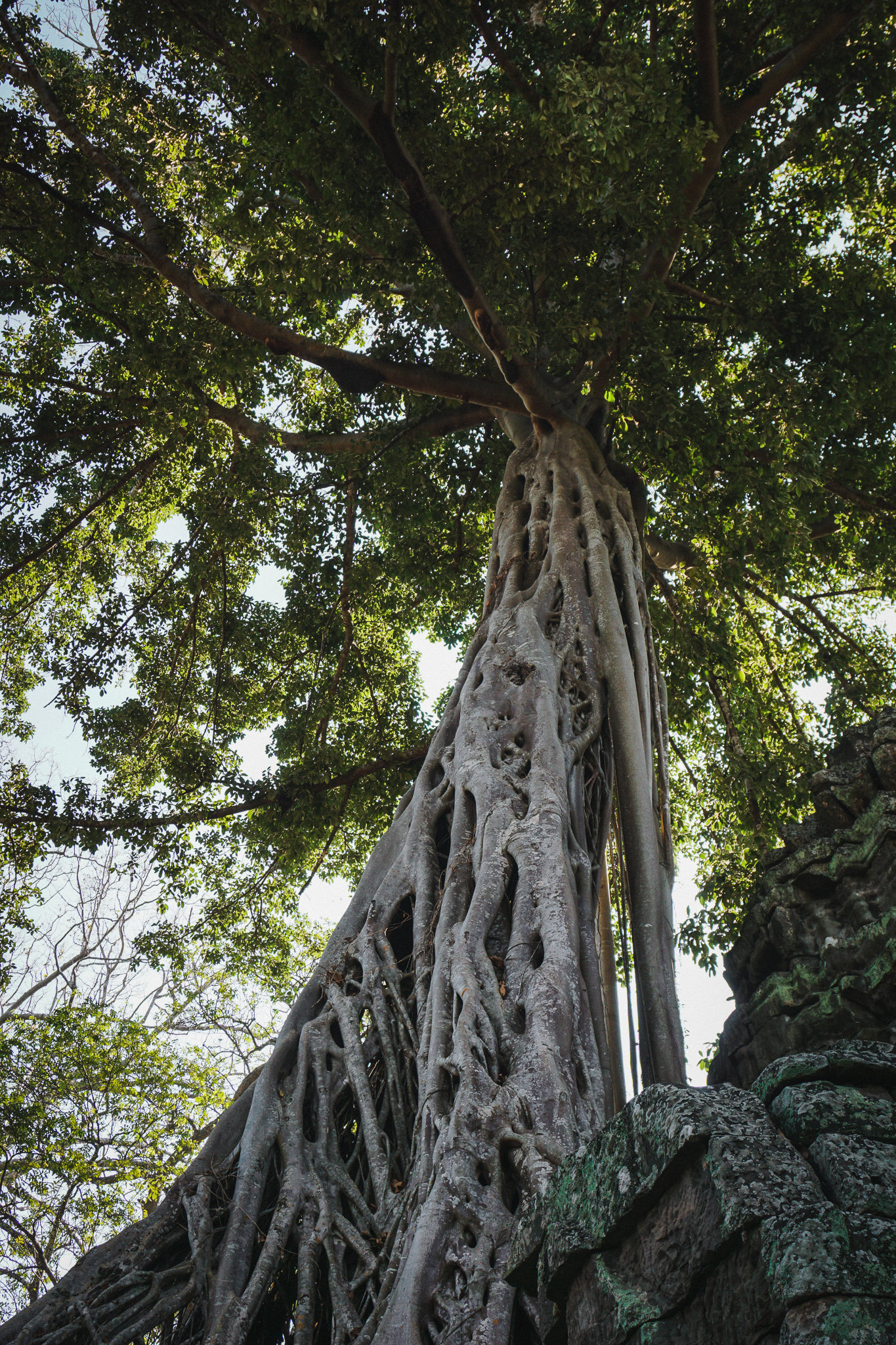
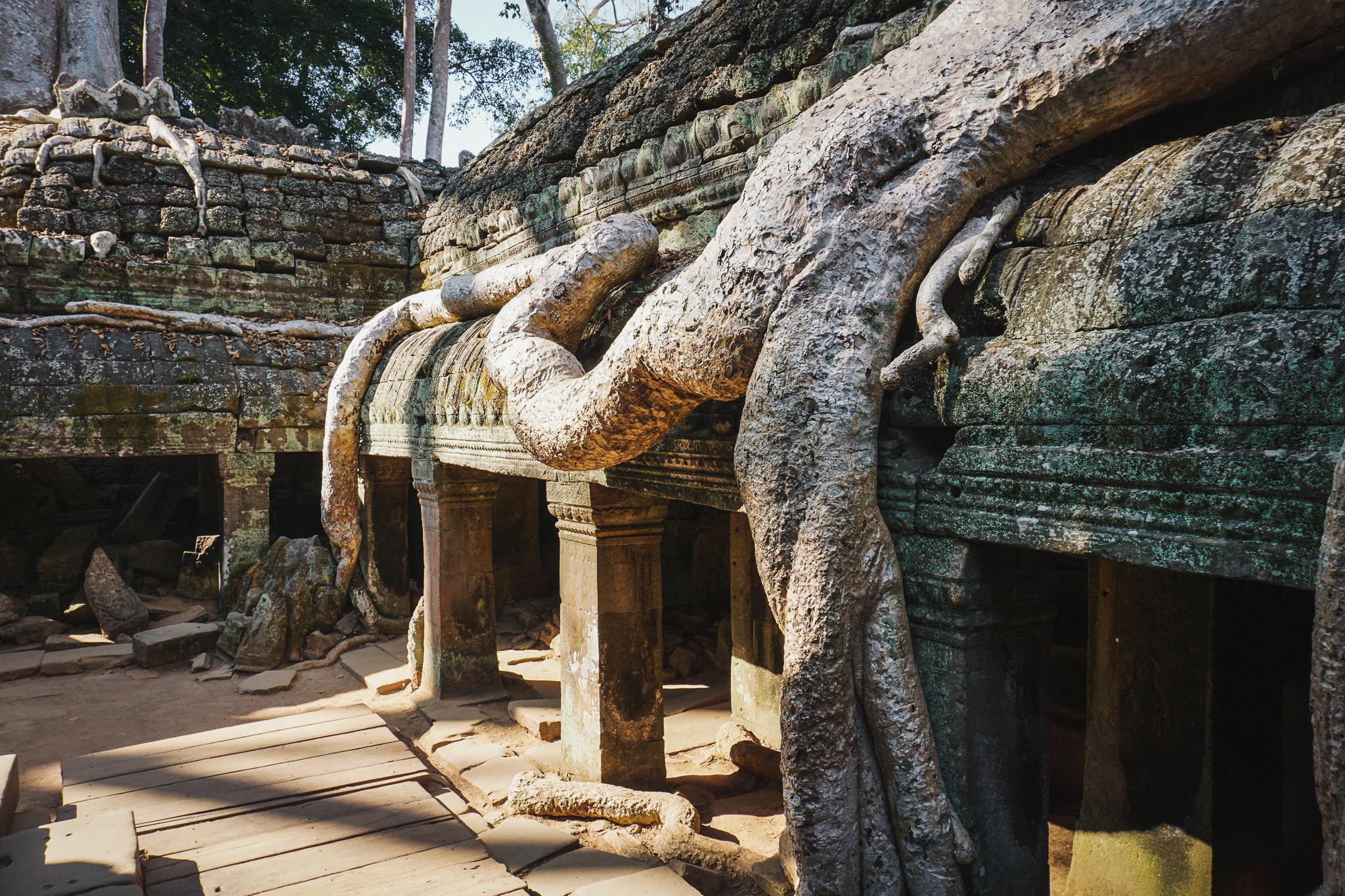
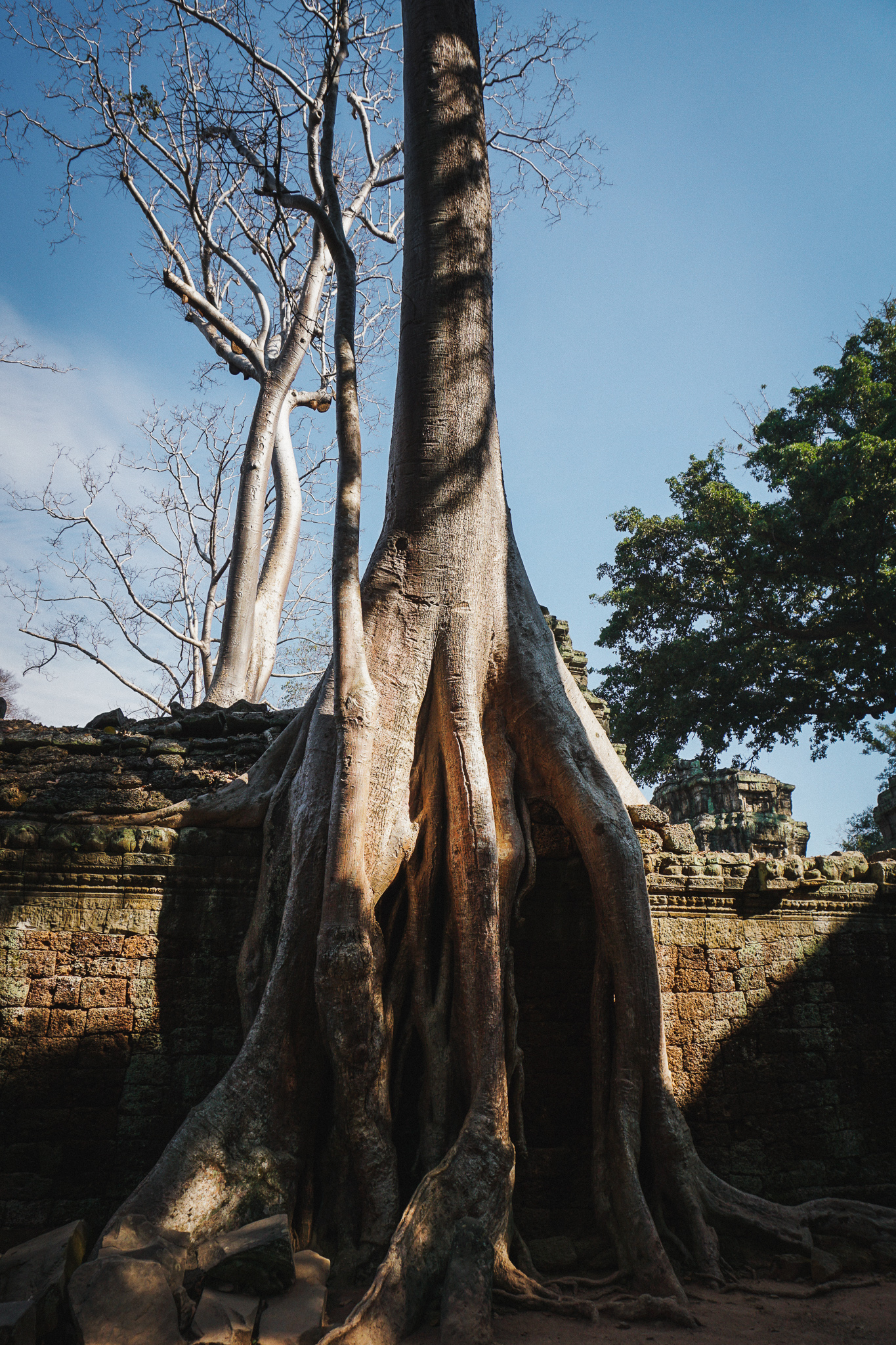
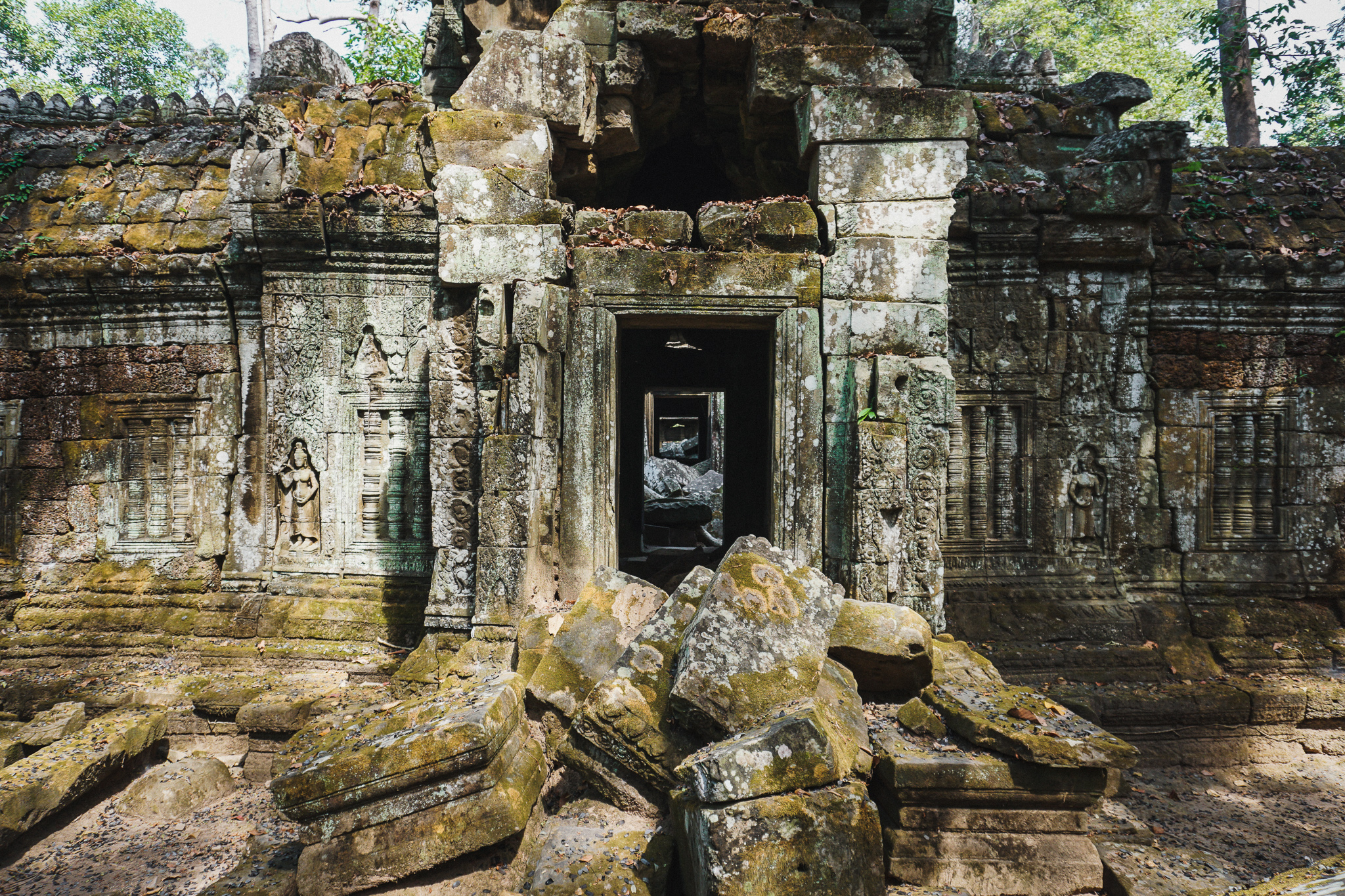
All in all, my first day visiting Angkor Wat was just incredible. Mr. T did end the tour with a very heartfelt request for positive reviews, to see if he could get touring jobs the next day. He told us how Cambodia has not recovered from Covid times just yet. Angkor Wat used to get 9,000 daily visitors, and those numbers seem to be down to 5,000. There are hundreds of licensed guides, so isn’t enough work for everyone. Specifically, the numbers of Chinese tourists are down – whether that’s because od the pandemic or other diplomatic challenges, no one will tell.
My visit continued the following day, with a different guide, and different stories… a different post!
Love, Nic
 The Winged Bone
I love all your pictures! Mr T seems like a funny man (MBA- I was giggling as I was reading). I have a similar picture to the one of you standing in the middle of the complex except I was seated down on a bottom ledge. The place is huge!
I also see the double edged sword of colonists but have seen also the good side from my family history of there being an opening of opportunities too.
I didn’t know that none of the admission money even goes into the conservation of the complex. I’m a little surprised but at the same time, also not.
I would also love to go back and just wonder around the place.
LikeLiked by 2 people
Thank you so much for reading! I don’t think it’s “official” that the money from the tickets doesn’t go for conservation, but I think it’s pretty clear when you do visit it.
It’s an incredible place, I will not say no if I have another chance to go in the future!
LikeLike