
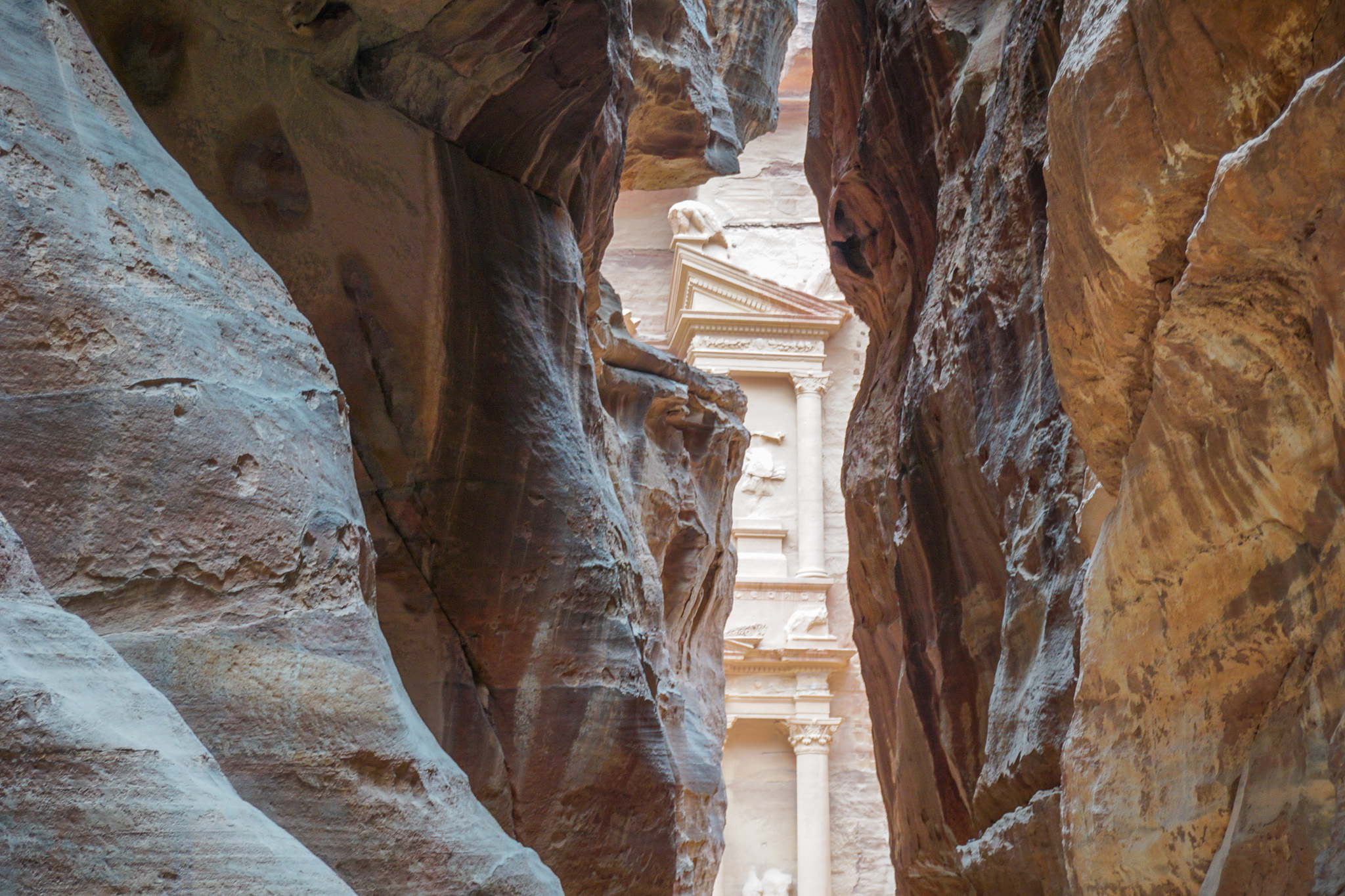
Clouds are blessings. I don’t know if it were my years in London, but I came to enjoy a cloudy day. When I woke up to clouds in Wadi Musa, the town where you will likely be staying when visiting Petra, I remember thinking exactly that. It was the end of October, but in Jordan, we had gone through high temperatures, with the rays of the sun hurting my eyes and my skin. With Petra being located in what is considered a half-desert (despite its arid nature, some vegetation still grows, with patches of green here and there), I could only imagine how difficult it would have been to visit without the clouds shielding us from the harshness of the sun.
Petra, named after the Greek word for Stone, is known as well as Lost or Forgotten City. Forgotten and then lost in the memory of civilizations that have come after. This ancient city is such a massive mystery that even now only 15% of it has been uncovered. Its greatness and significance are such that these 15% were enough to make it a UNESCO-protected site. This means that 85% of it is still to be discovered, underground, and unexcavated. But there is only so much we can do to protect a city of the elements of Nature – earthquakes, floods and natural erosion caused by rains and winds are probably what is making Petra slowly dissolve into the rocks it was originally carved from.

I can’t tell you about Petra without talking about its founders, the Nabateans. A nomadic Arab tribe decided to settle in this area around 6 BCE – like because its topography allowed for the easy storage of fresh water. As an exploration of Petra will show you, they were an incredibly skilled settlement, and masters of trade and engineering. At its peak, Petra was the kingdom that controlled the trade routes between Arabia, Egypt, Syria and the Mediterranean. We are talking real wealth at the time. They developed an ingenious water system, something that was essential to survive in the desert. This not only served to bring and maintain this essential source of life into the city but also created a draining system to stop the streets from flooding when heavy rains hit. Flash floods do happen occasionally in Petra, with tourists having to be evacuated in recent years


It was just a question of time before the power and influence of Petra attracted the attention of other Empires. First, the Greeks attacked the city, unsuccessfully – they were not as knowledgeable as the Nabateans were of the mountains. And then the Romans succeeded in conquering Petra in 106 CE. It was then that the city was named Arabia Petraea, and the theatre, a colonnade street and a triumphal arch were added. We know how Romans love their theatres and their colonnades… and well, we love it too!
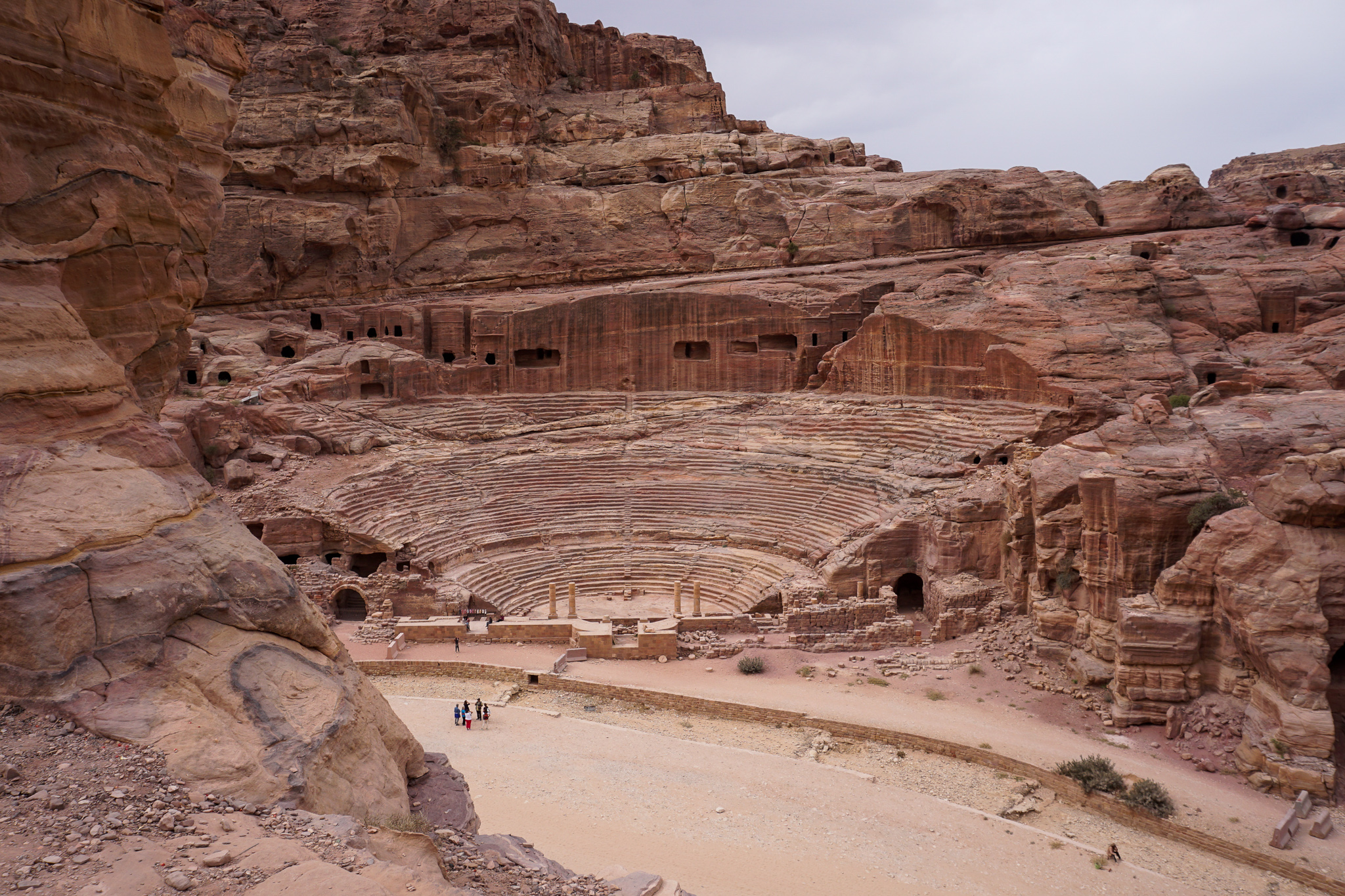
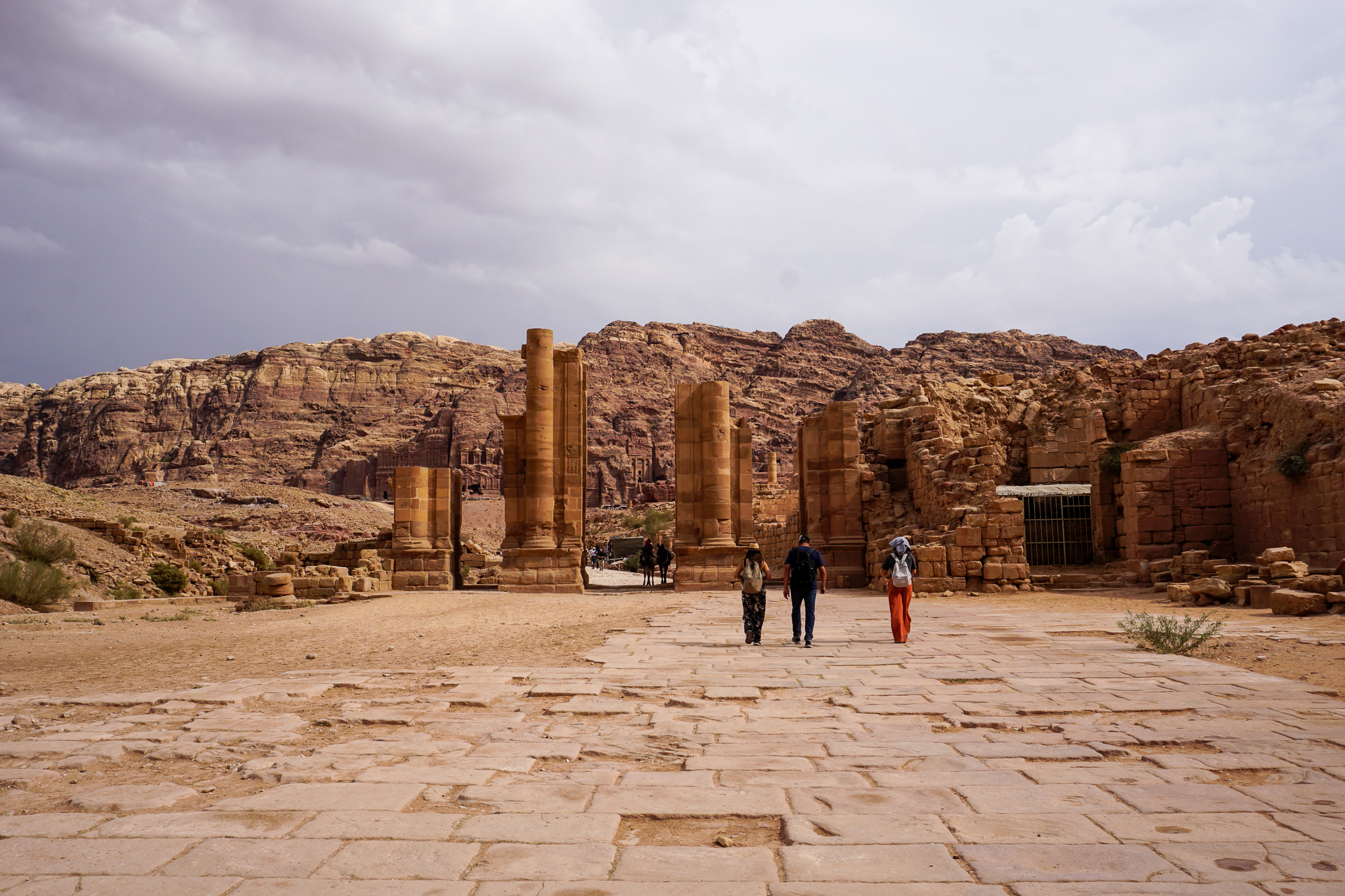
The city continued to develop and flourish under Roman rule, but Nature had its say in the matter. A few strong earthquakes in the 4th and 5th centuries damaged the structures badly. In the meantime, the trade routes that had been giving Petra its power started to become irrelevant with the new sea routes emerging. With its decline, its inhabitants started to abandon it. The Byzantines briefly occupied the city in the 6th century, but they also gave up the land after another earthquake.
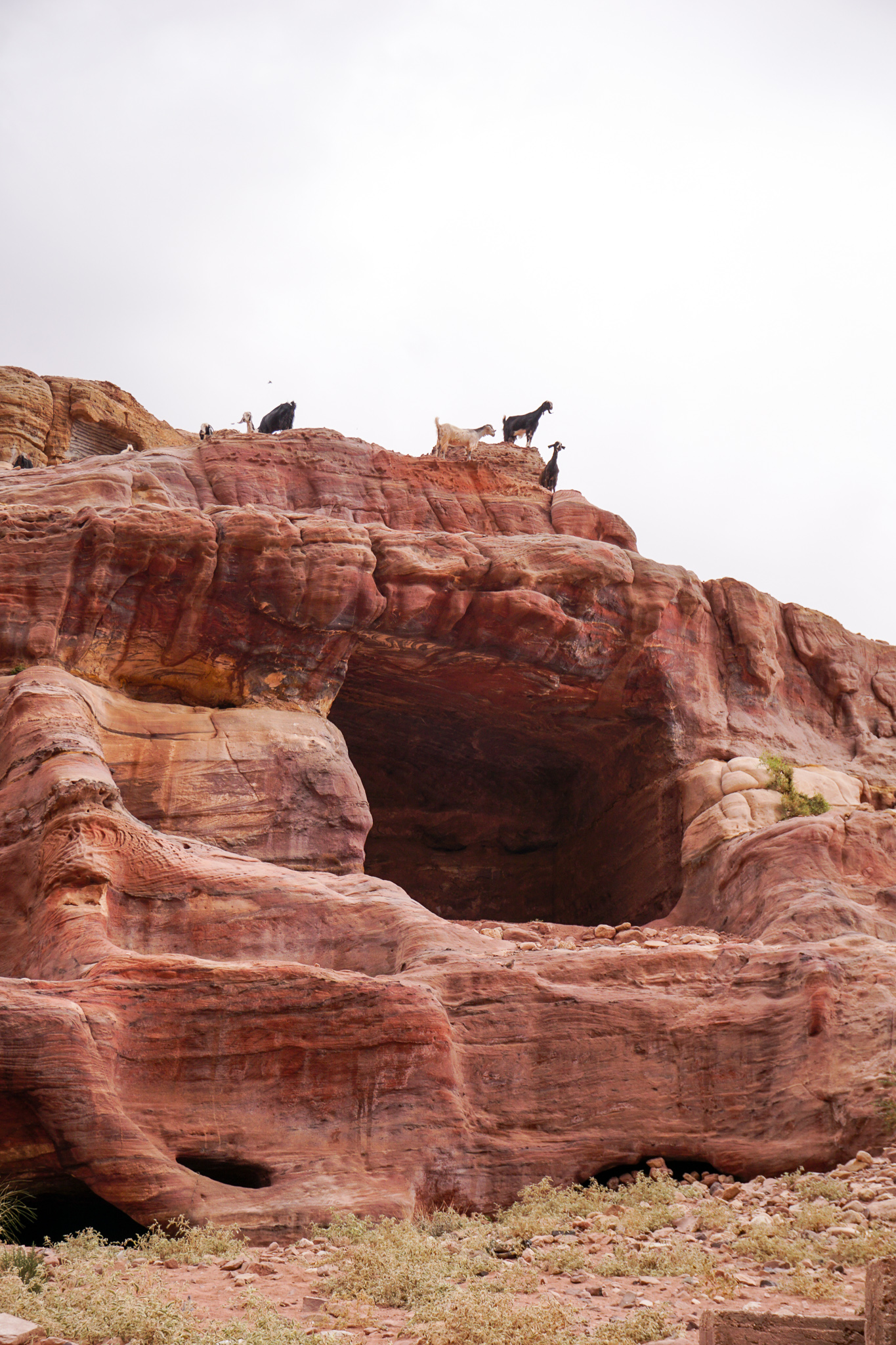


For many centuries, the city remained forgotten, with only the local Bedouins using it for shelter and a source of water. It was only in 1812 that the ancient city was rediscovered by Johann Ludwig, a Swiss explorer. And it was not as easy as simply arriving as he was – he had to disguise himself as an Arab pilgrim, to convince a local guide to take him to the site. I cannot even imagine how he felt when he witnessed it, because I know how I felt when I saw it – despite the many many times I had seen photos of it. He was probably lost for words. But those quickly returned to him, as he set off to write a detailed account of what he had witnessed. If it wasn’t for him, Petra could still be lost to us, or forgotten. It was only a matter of time until other European travellers and scholars became interested in exploring the city – and now Petra is one, if not the most, popular tourist attraction in Jordan and in the world.
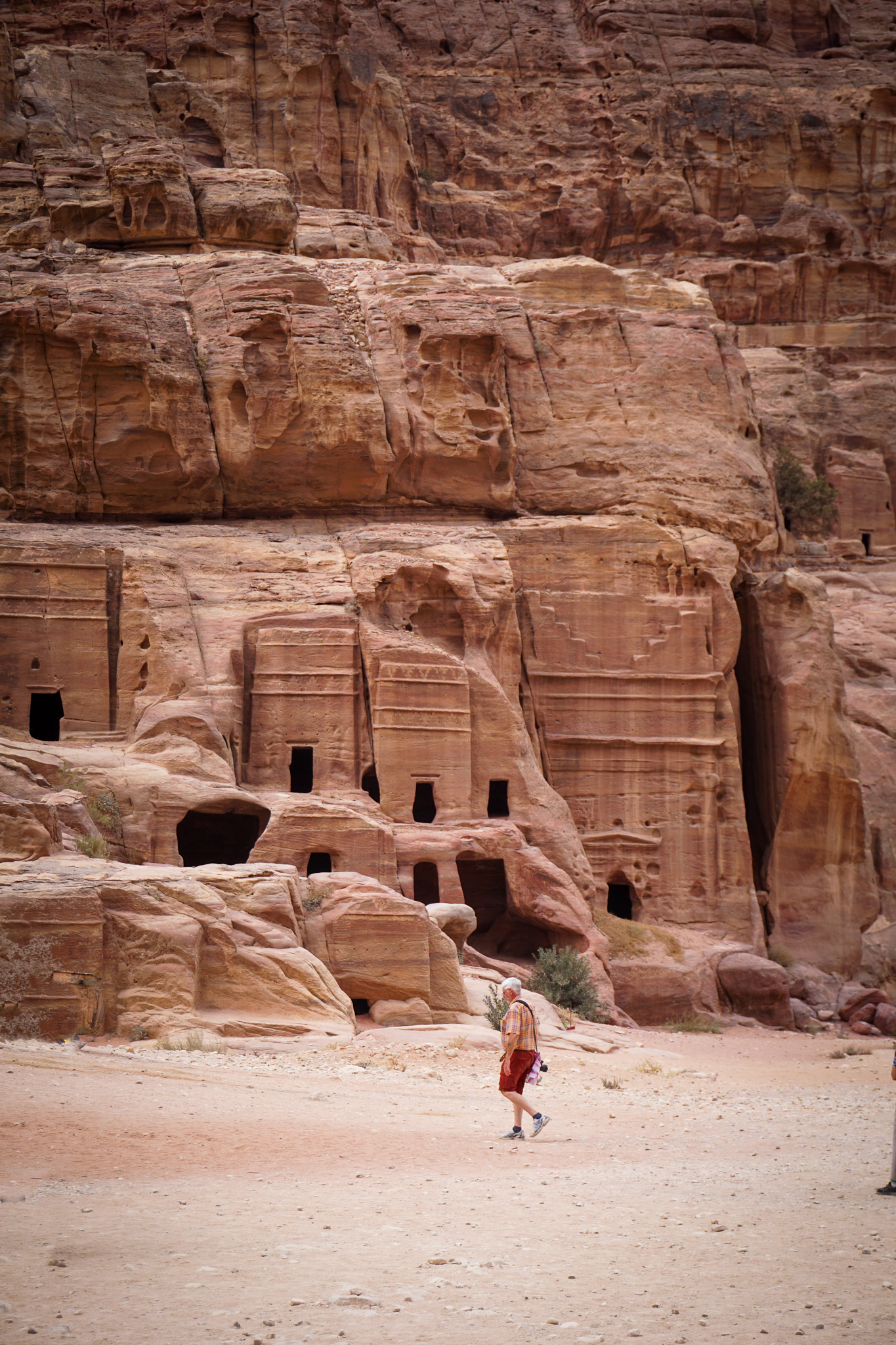
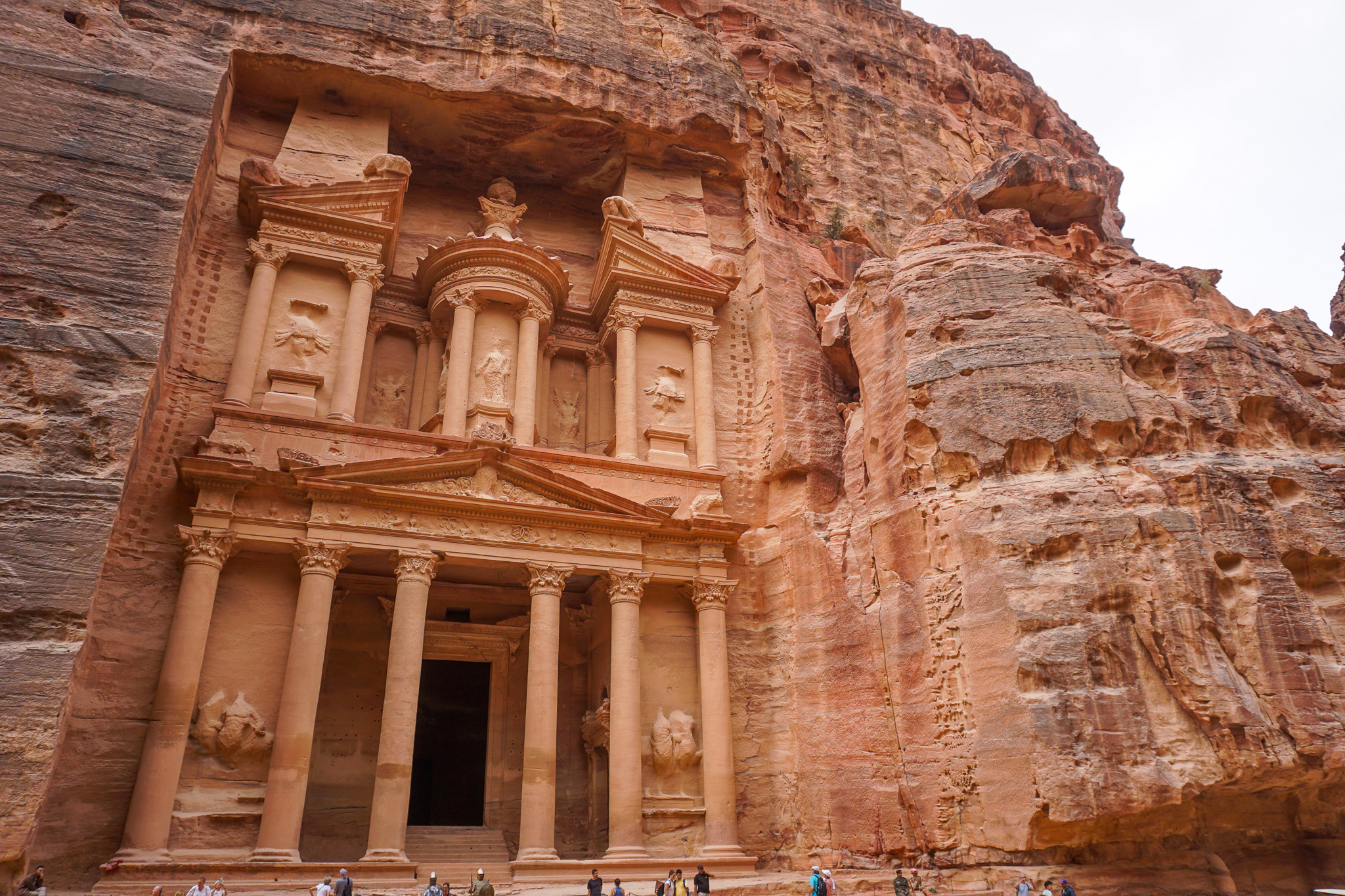
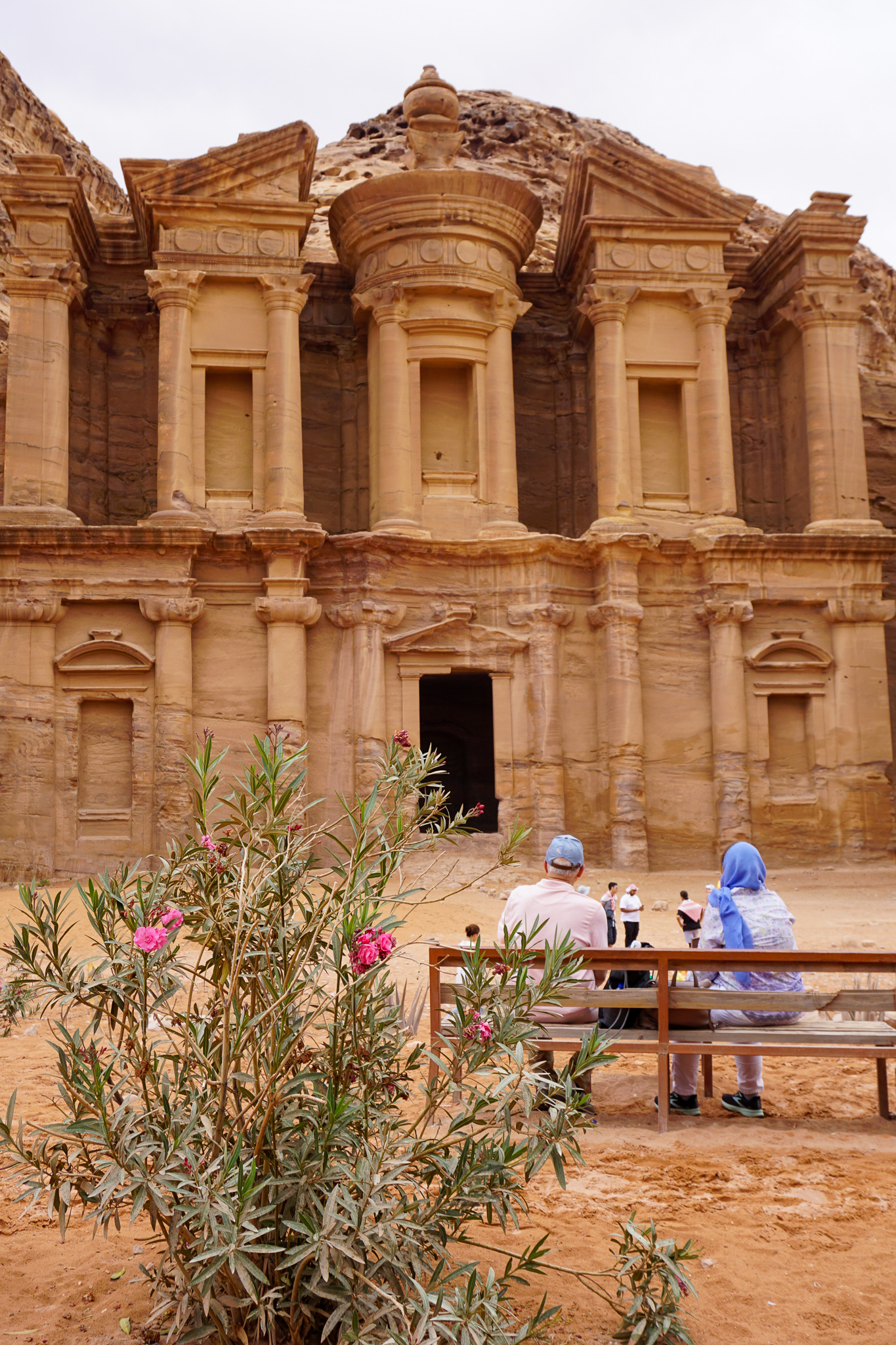
What comes over any visitor to Petra is the undeniable beauty of the buildings carved in the red sandstone cliffs. The images we see often of Petra are those of the Treasury and the Monastery. But two things are important to note about Petra – the first one being that it is so much more than these two famous landmarks – as I mentioned above, only 15% of the ancient city has been uncovered, and you can easily spend an entire day there without having explored everything. Secondly, despite these names, these two buildings were not a treasury and, much less, a monastery – these were in fact tombs. Much like the Egyptians and other ancient civilizations, the Nabateans were concerned about building a place where their bodies would rest for eternity. You can’t go inside either of these nowadays, but the reality is that there is nothing to see indoors, these being free from any adornments – despite their outside beauty, their intent was purely funereal.


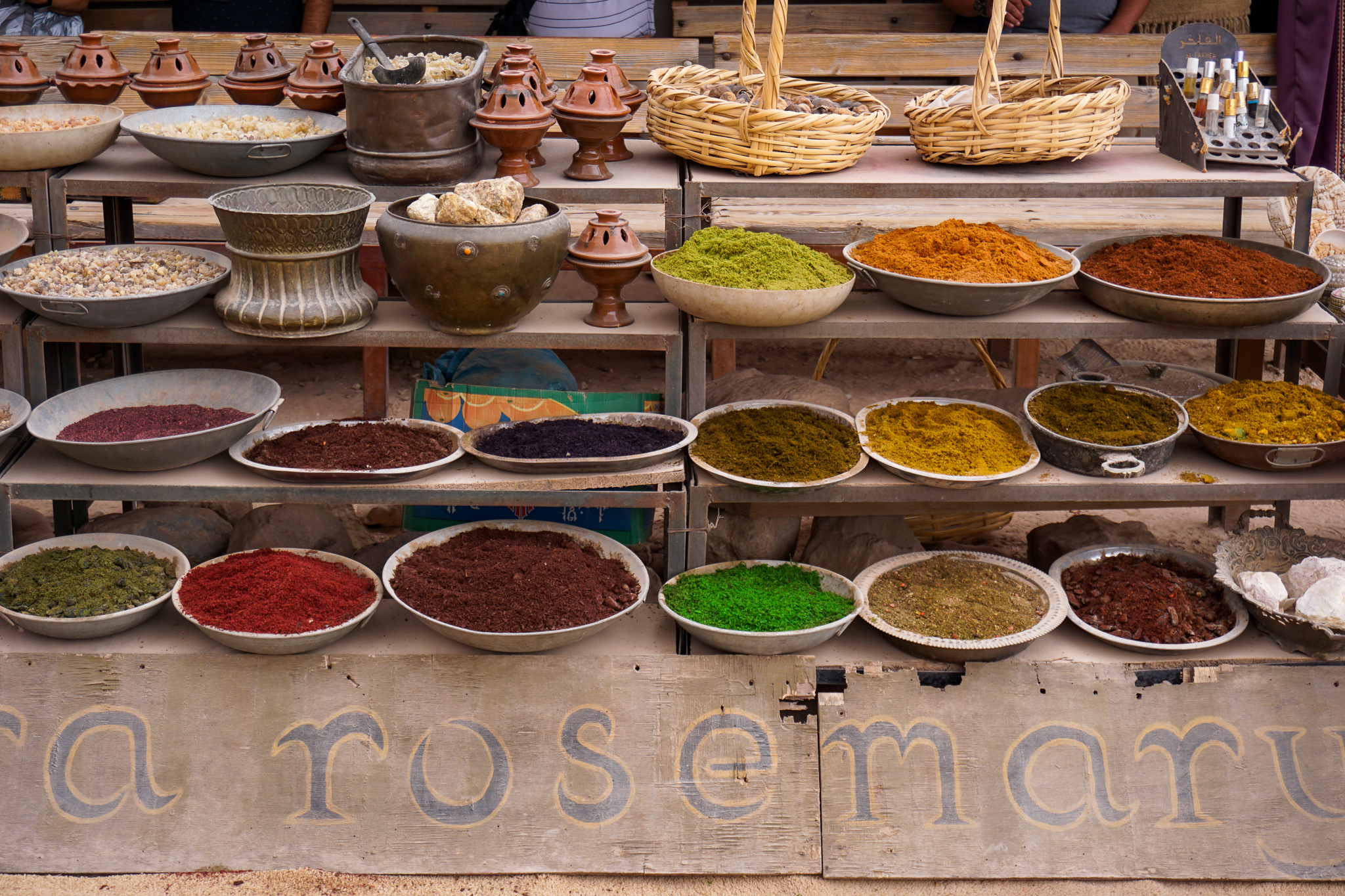
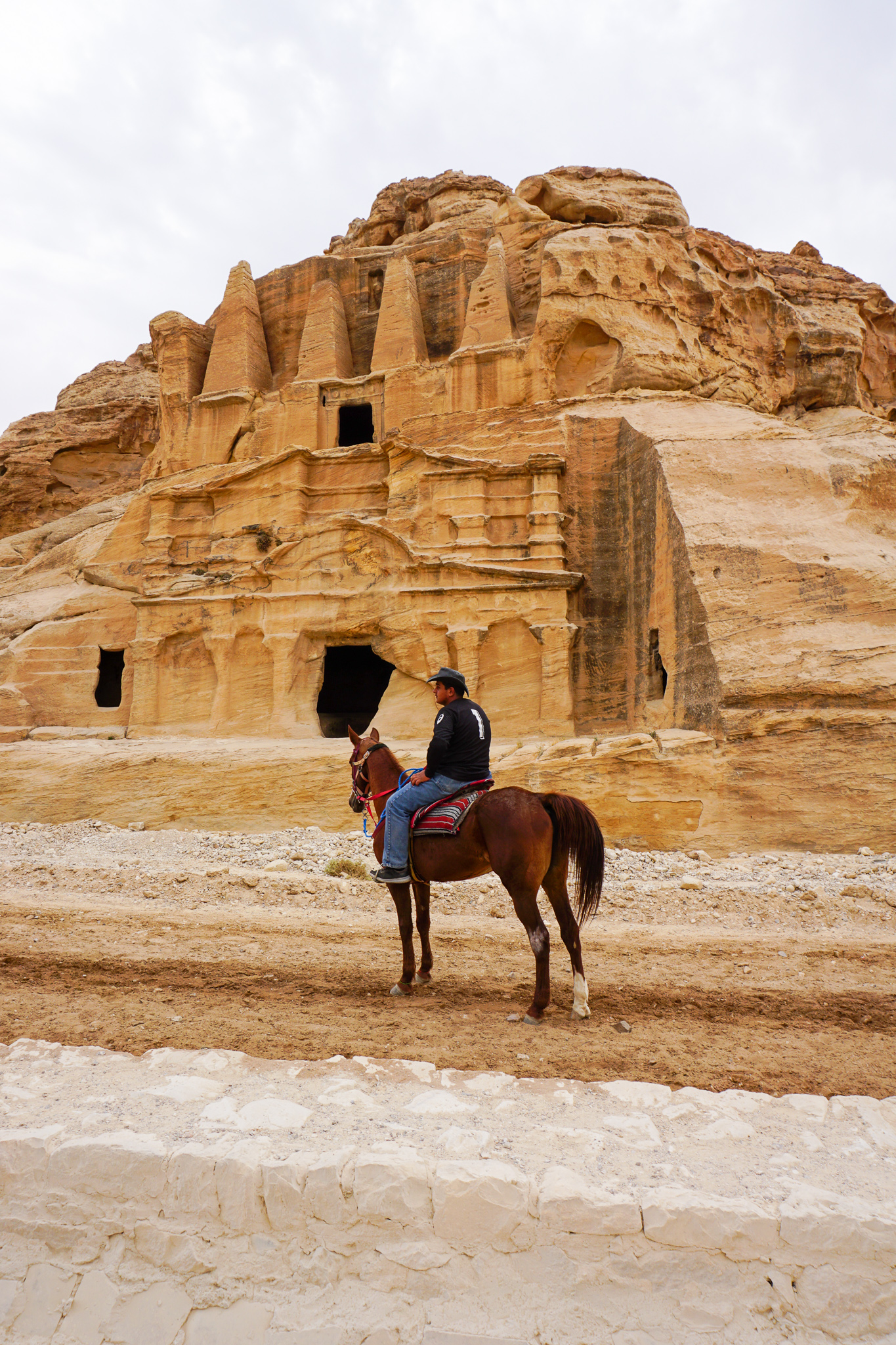
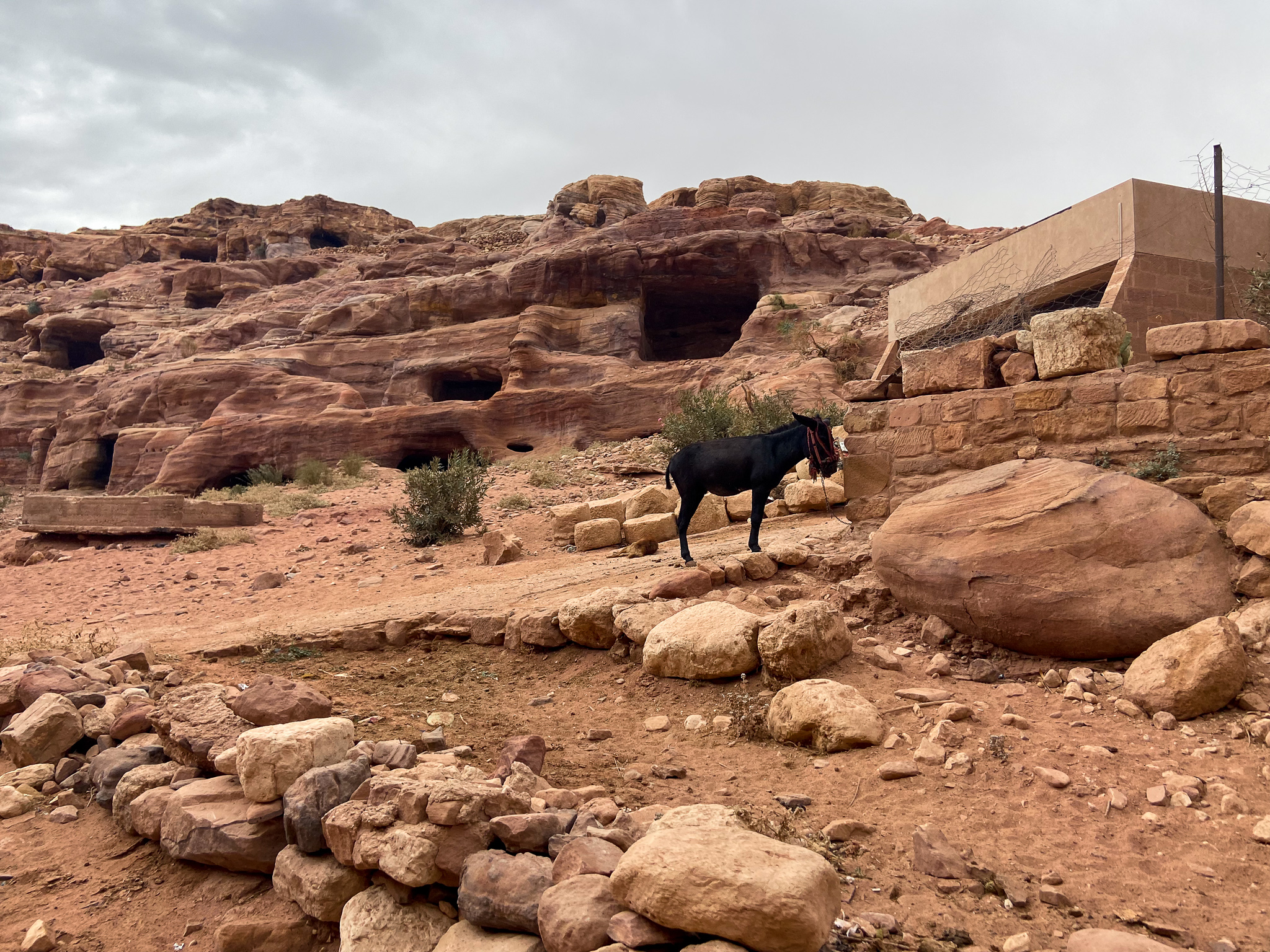
Petra is indeed beautiful, and its mystery only adds to its mysticism. Who isn’t attracted by secrets, by darkness…if those stones could talk, and better even if they could show us what it was like, all those centuries ago. What was Petra like at its peak? I suppose one can only imagine, and I don’t think a lot more secrets will be unveiled that easily. Whilst our guide stated new things are being discovered every day, we do know that 85% is still to be discovered… how many years it will take, especially when the town itself is now so dependent on tourism? Even the Bedouins became tourist-dependent, monopolising the commerce of souvenirs and all sorts of animal rides – you can take a horse from the very entrance to the site to the Treasury (about 2 km). Then you can get a camel to take you from the Treasury to the main centre of Petra nowadays. And if you want to take one of the steepest routes to see the Monastery, instead of climbing up 700 steps, you can go on a donkey. The number of steps up to the Monastery is actually arguable – donkey riders kept inflating the number to make the donkey ride more appealing. But as someone who stands for animal rights and protection policies, I would never take such an offer. At least not for now, whilst my legs can still take me places.


I want to stress here how much more there is to Petra besides the Treasury and the Monastery. There are multiple itineraries you can take, and depending on your interests, physical fitness, and weather conditions, you can choose which ones suit you. We also only had a one-day pass, but in reality, you can buy a 3 day pass, and pay extra for 4 days. Whilst this sounds enticing, particularly to explore all of the itineraries that are part of the 15% that is today uncovered, it is also important to know that there is only one way in and out of Petra – this means that you’ll always have to walk the 2 Km distance to get in, and 2 Km to get out, plus every single KM you end up doing inside.
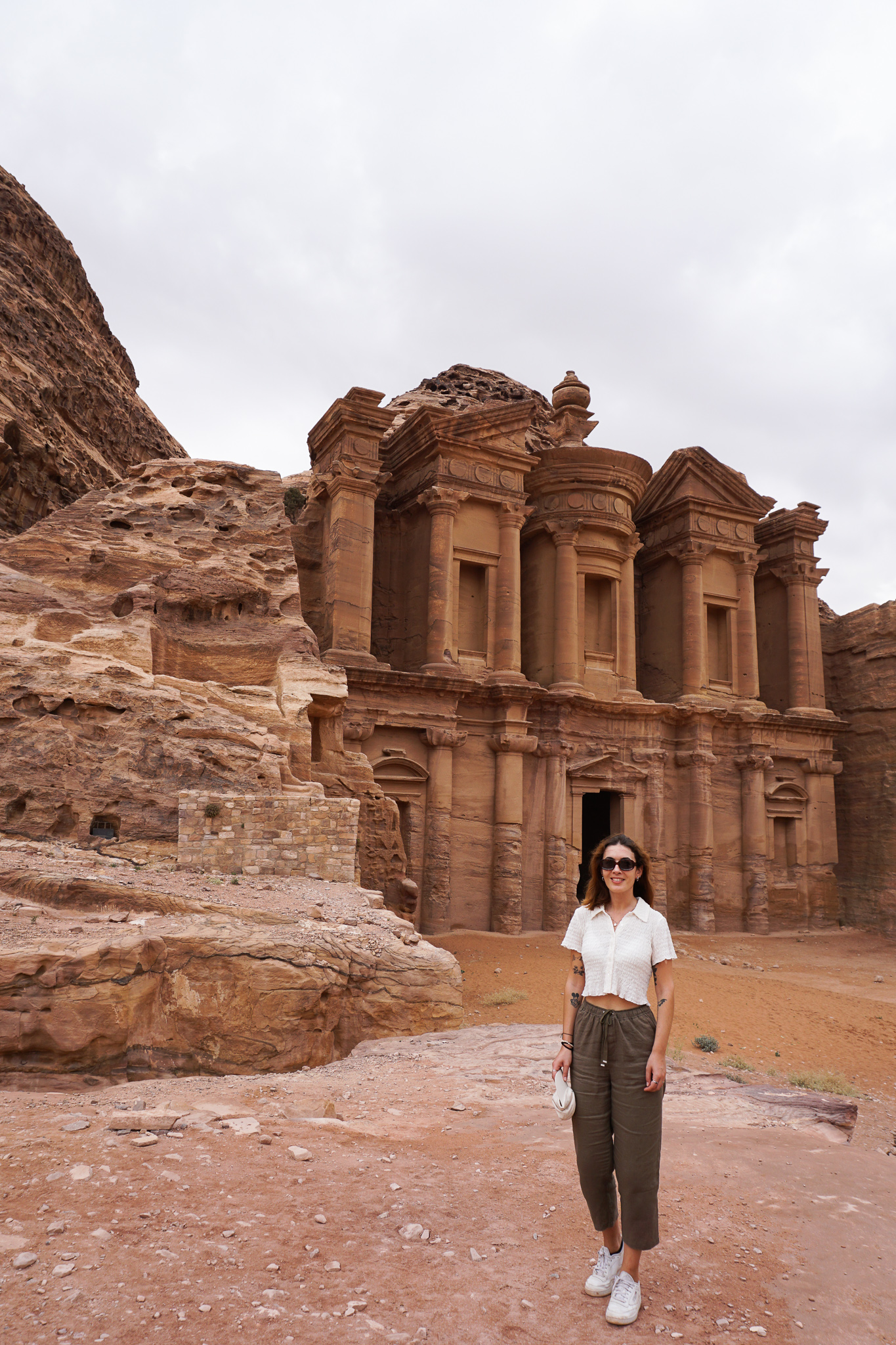
After doing the classic itinerary, the one that takes you through the Treasury and finished by the collonades, we decided we were going up to the Monastery. This is about 1000 meters high, up those 700 (or 900) uneven steps. But whilst reaching the Monastery is incredibly rewarding – you see the physical effort was all worthwhile – the journey itself is splendid. The many views I was granted from different points gave me a glimpse of how gorgeous that arid and rocky landscape actually is. It was also funny to be greeted by the multiple Bedouin men and women selling souvenirs on the way up, often stating the number of minutes we had left until the top, almost encouraging us to keep going. to be quite honest, the climb wasn’t as hard as I imagined. Not only because I was distracted by all the truly breathtaking views, but also because once again those clouds that had greeted us in the morning shed some rain upon us – nothing too bad, just enough to keep us refreshed and, most importantly to make the colours of that red sand even more vivid, and therefore, more mesmerising.
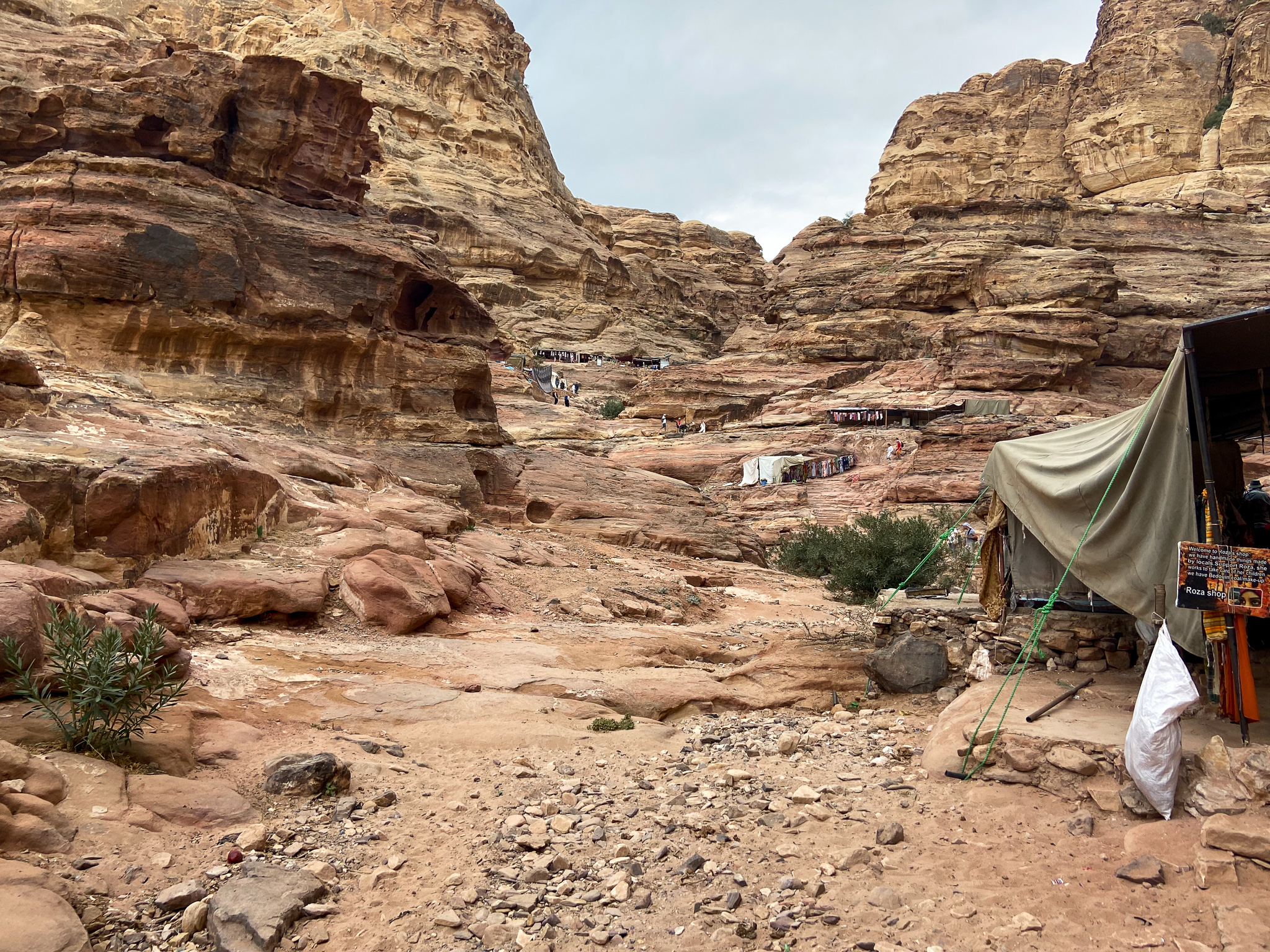

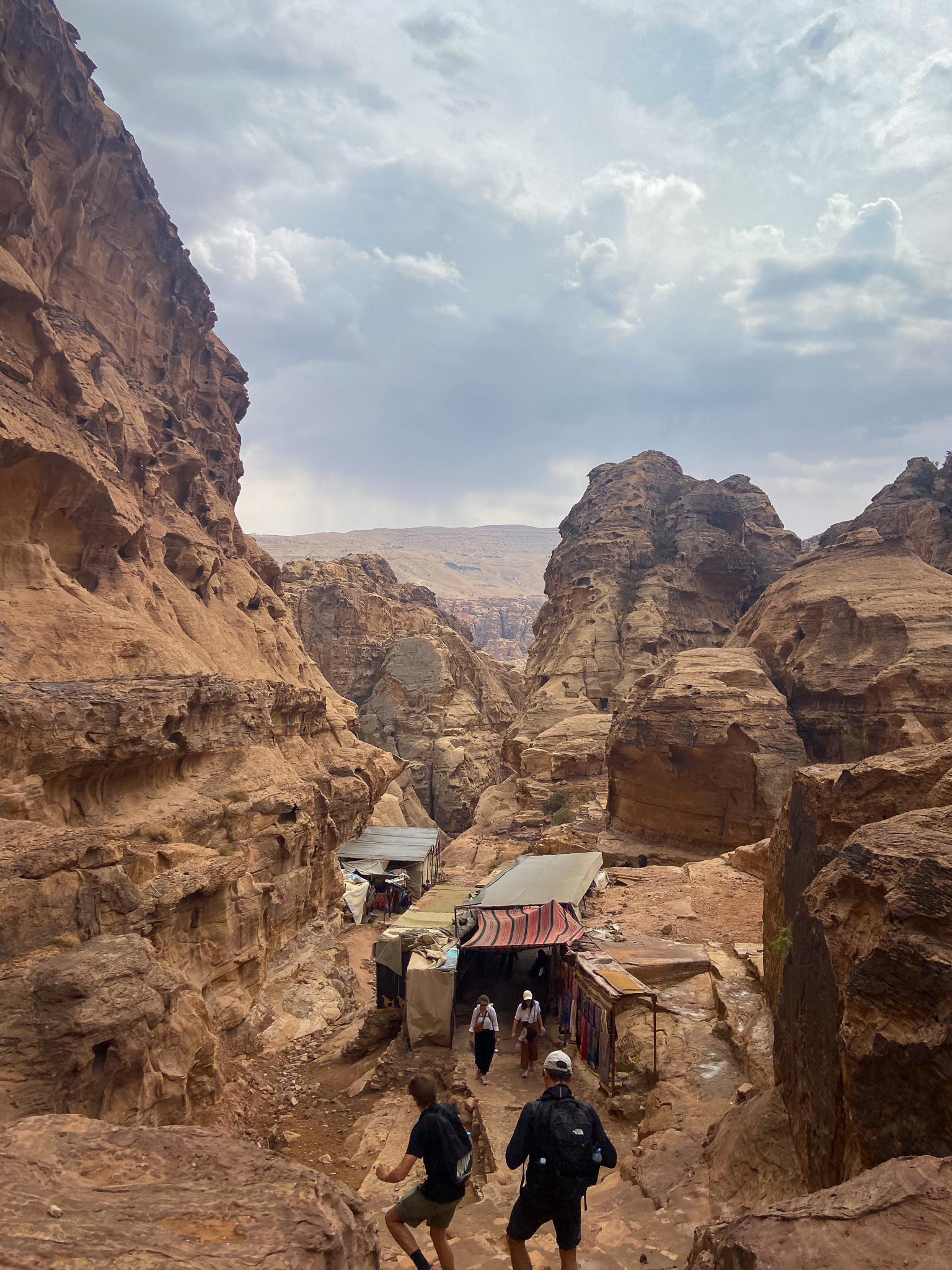
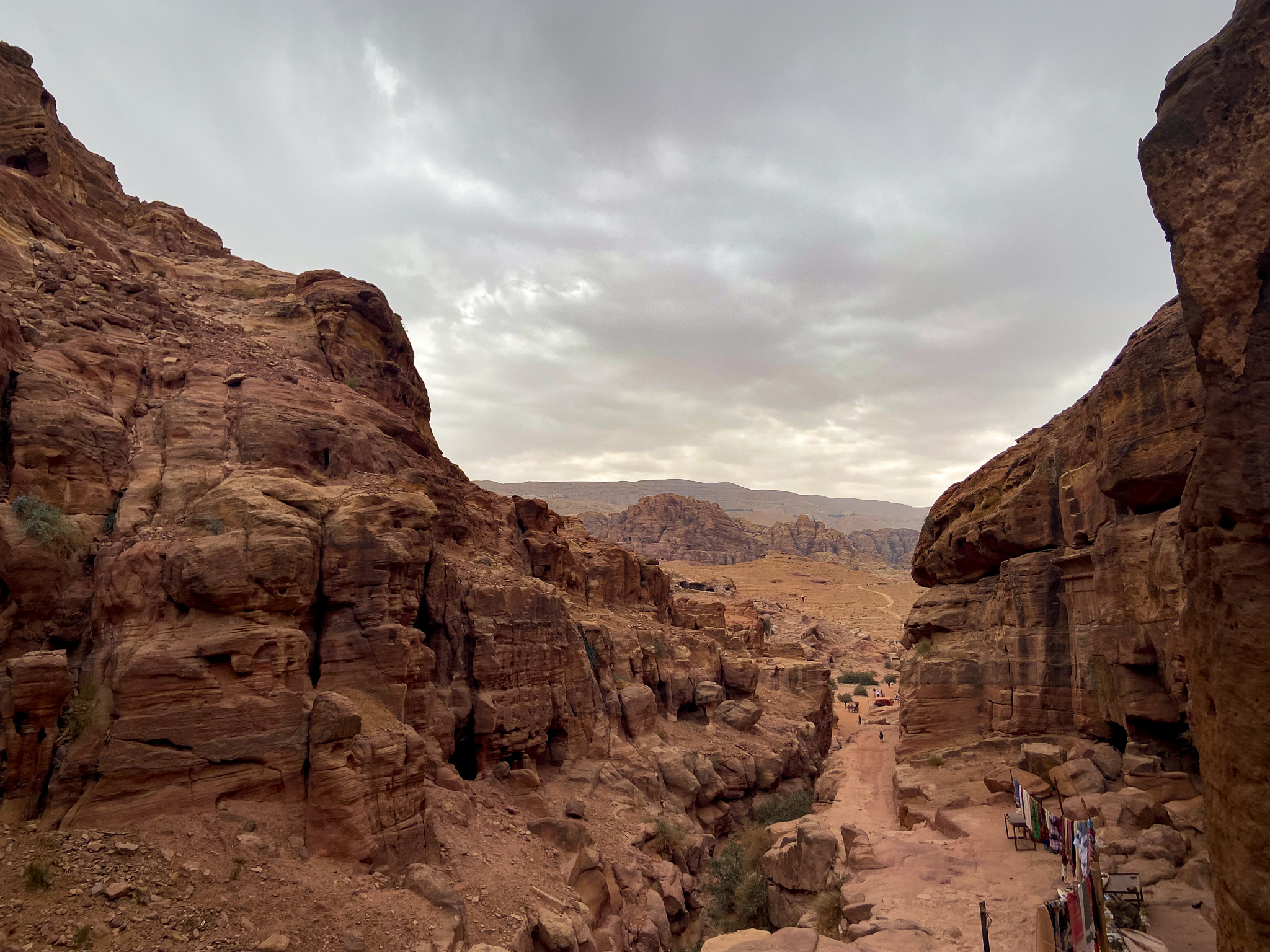
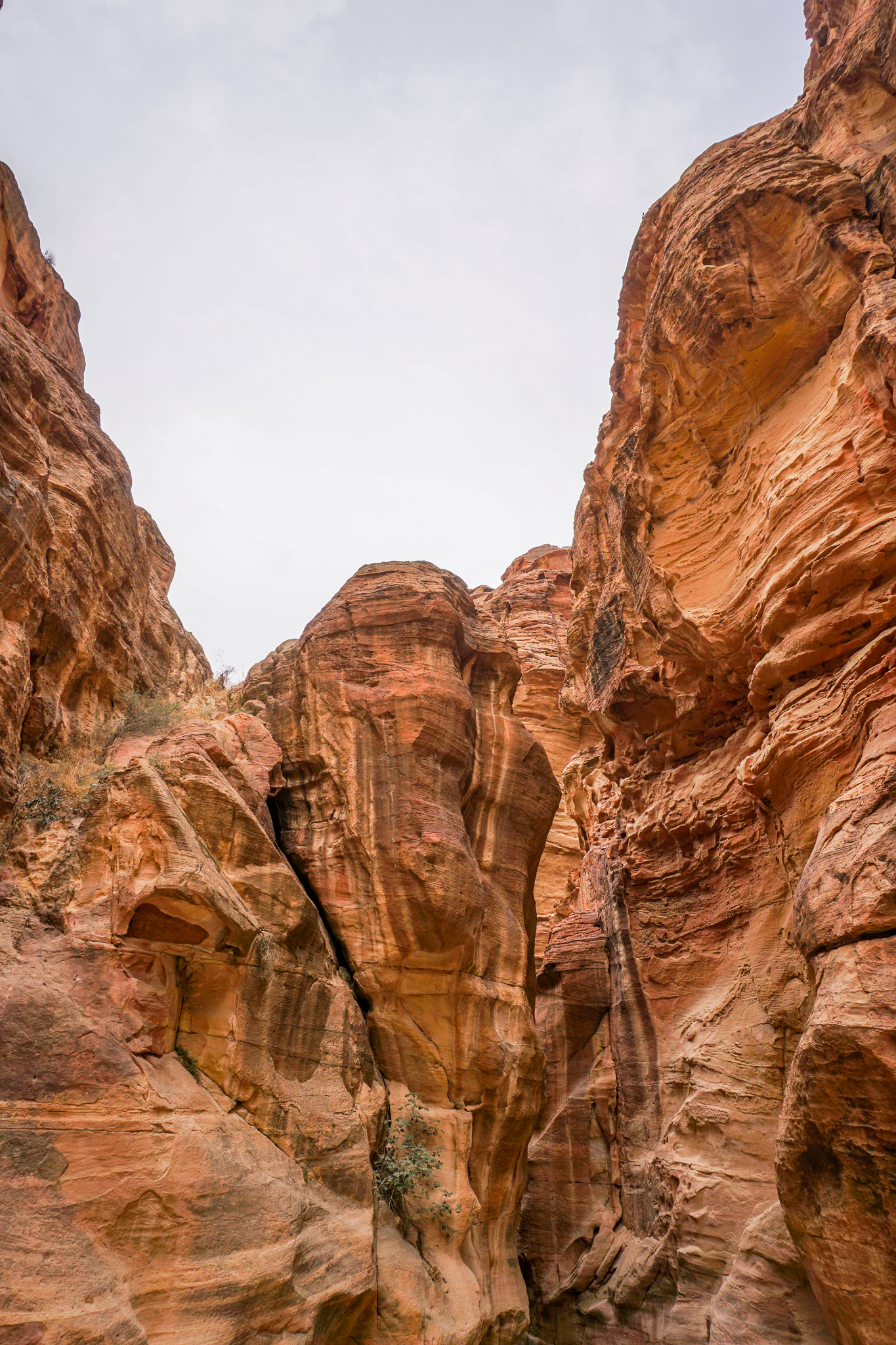
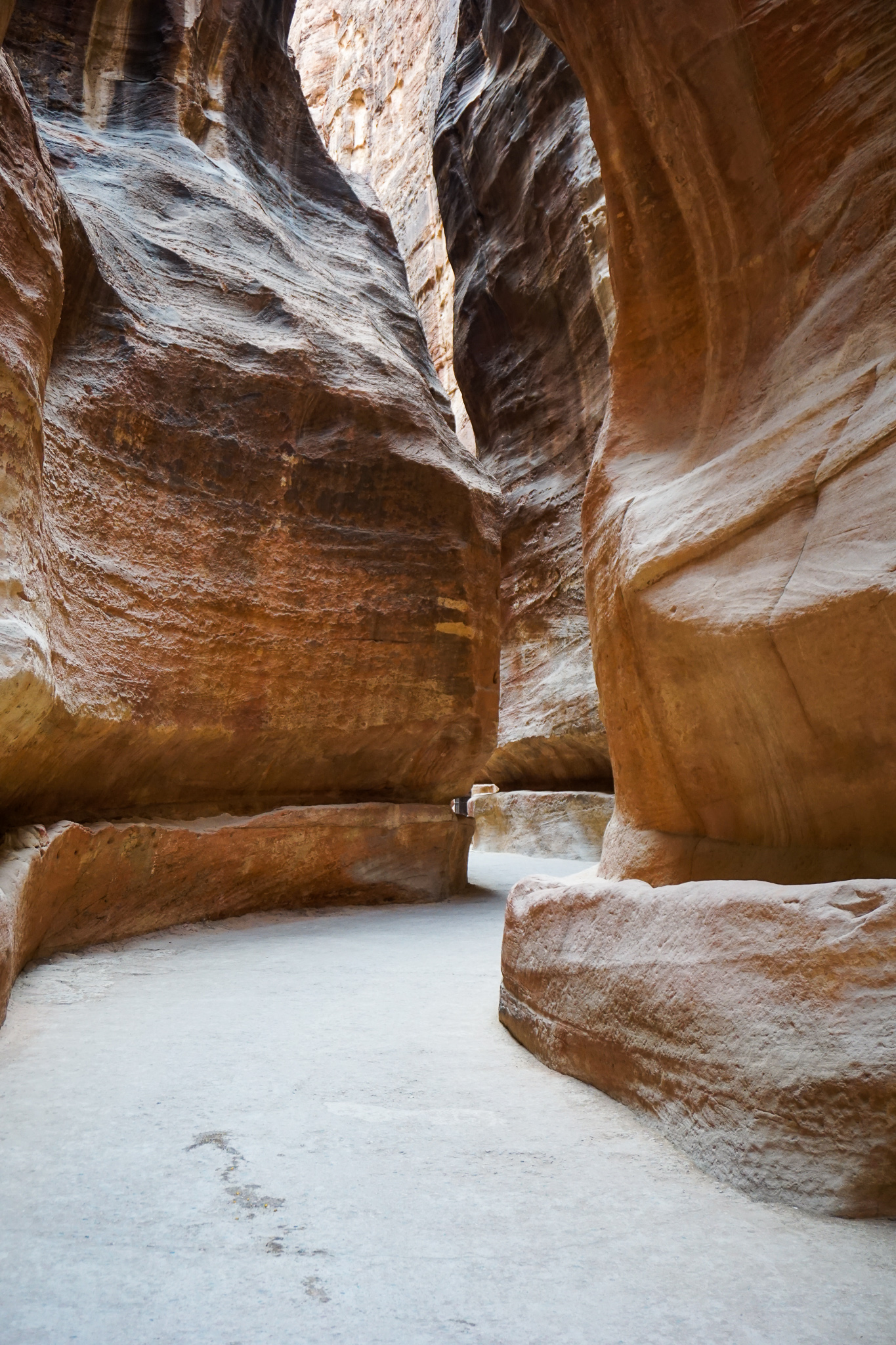
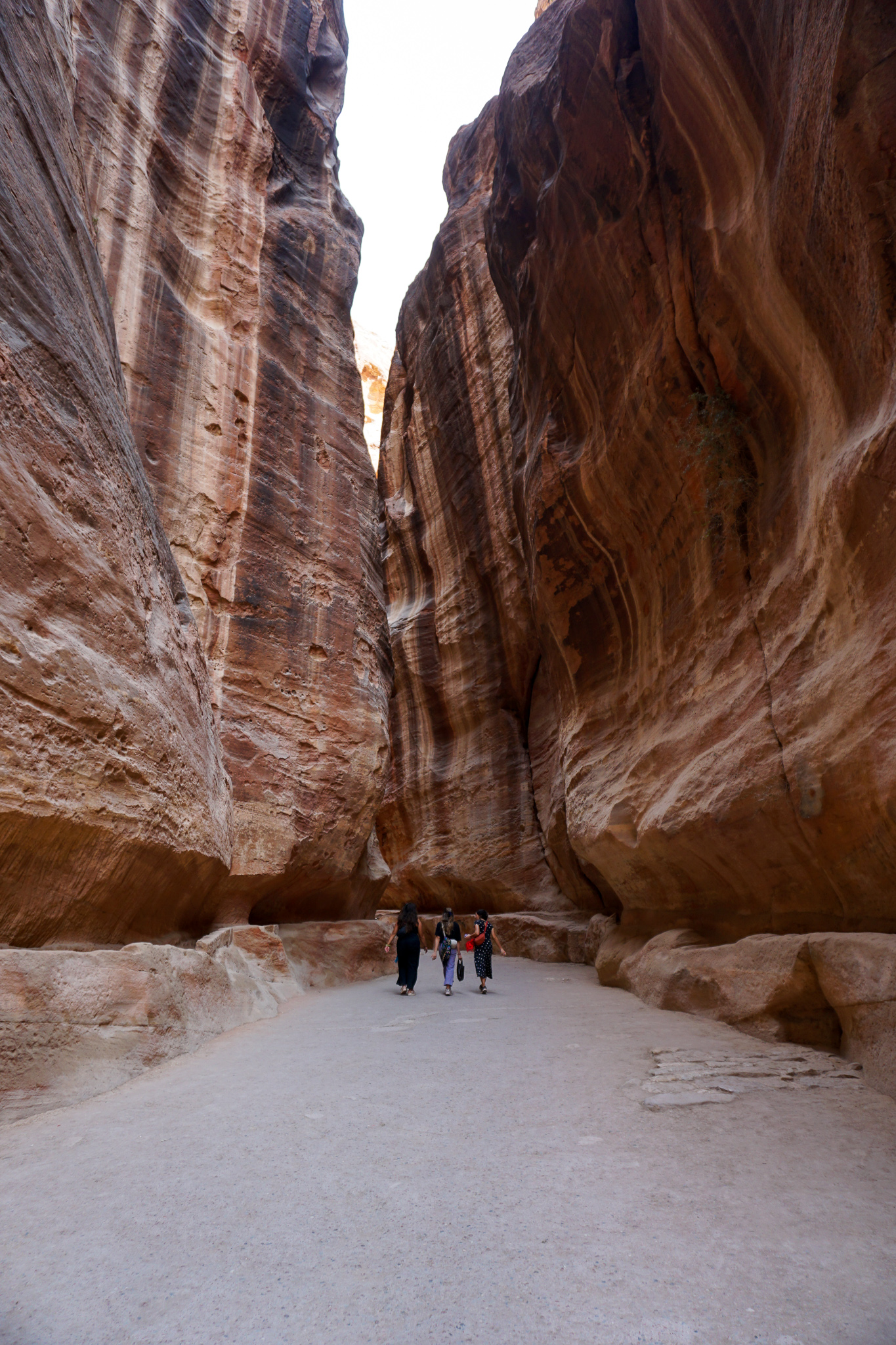
And those 2 KM of walking between Petra’s entrance and the Treasury? Personally, this is in itself a highlight, one of the most beautiful parts of my visit to Petra. You walk in between colossal rock cliffs, moulded by winds, by water and perhaps by humans, through thousands and thousands of years. I’ve never been to the Grand Canyon in the US, but a lot of these shapes reminded me of pictures I had seen of it.
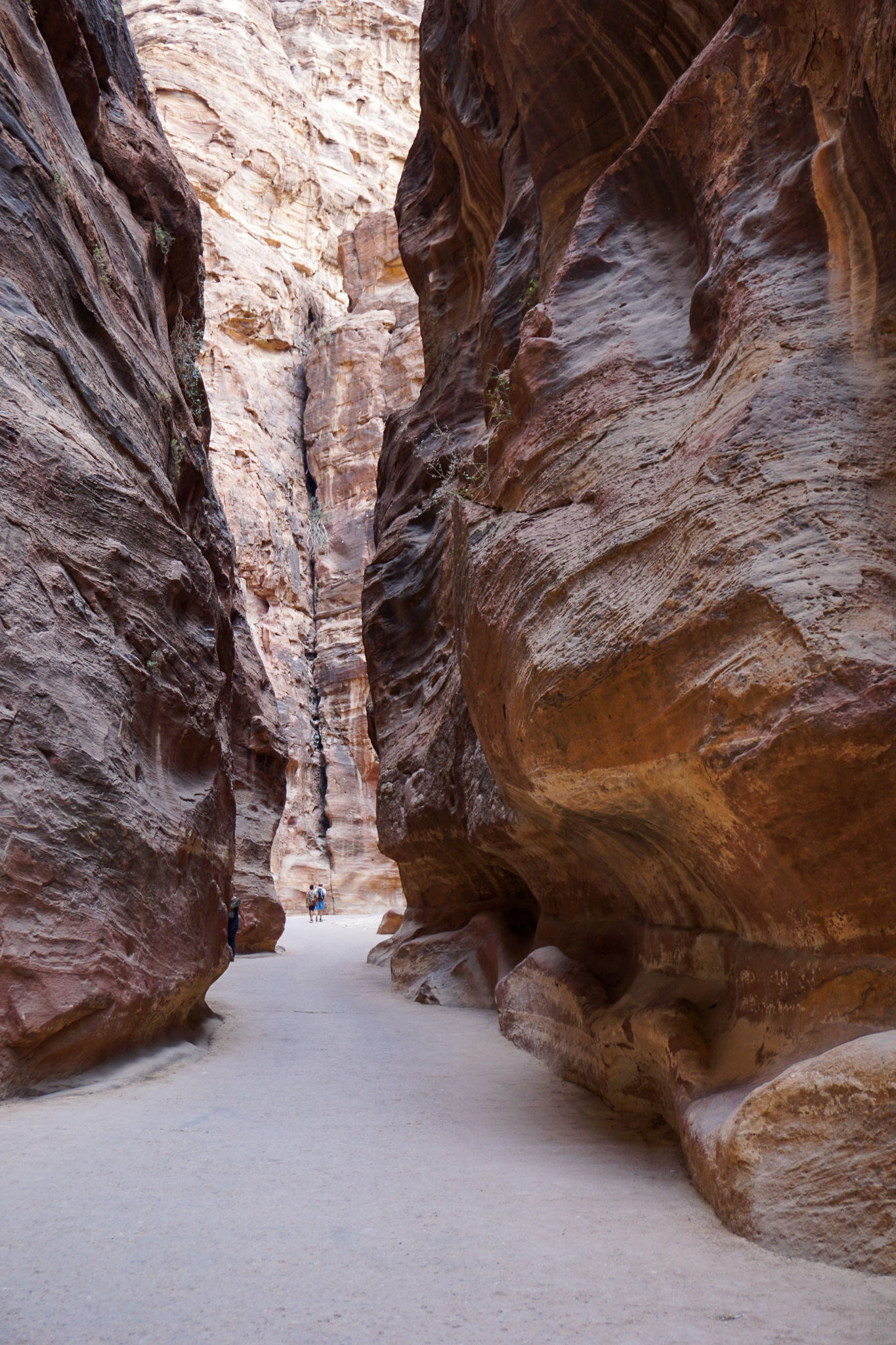
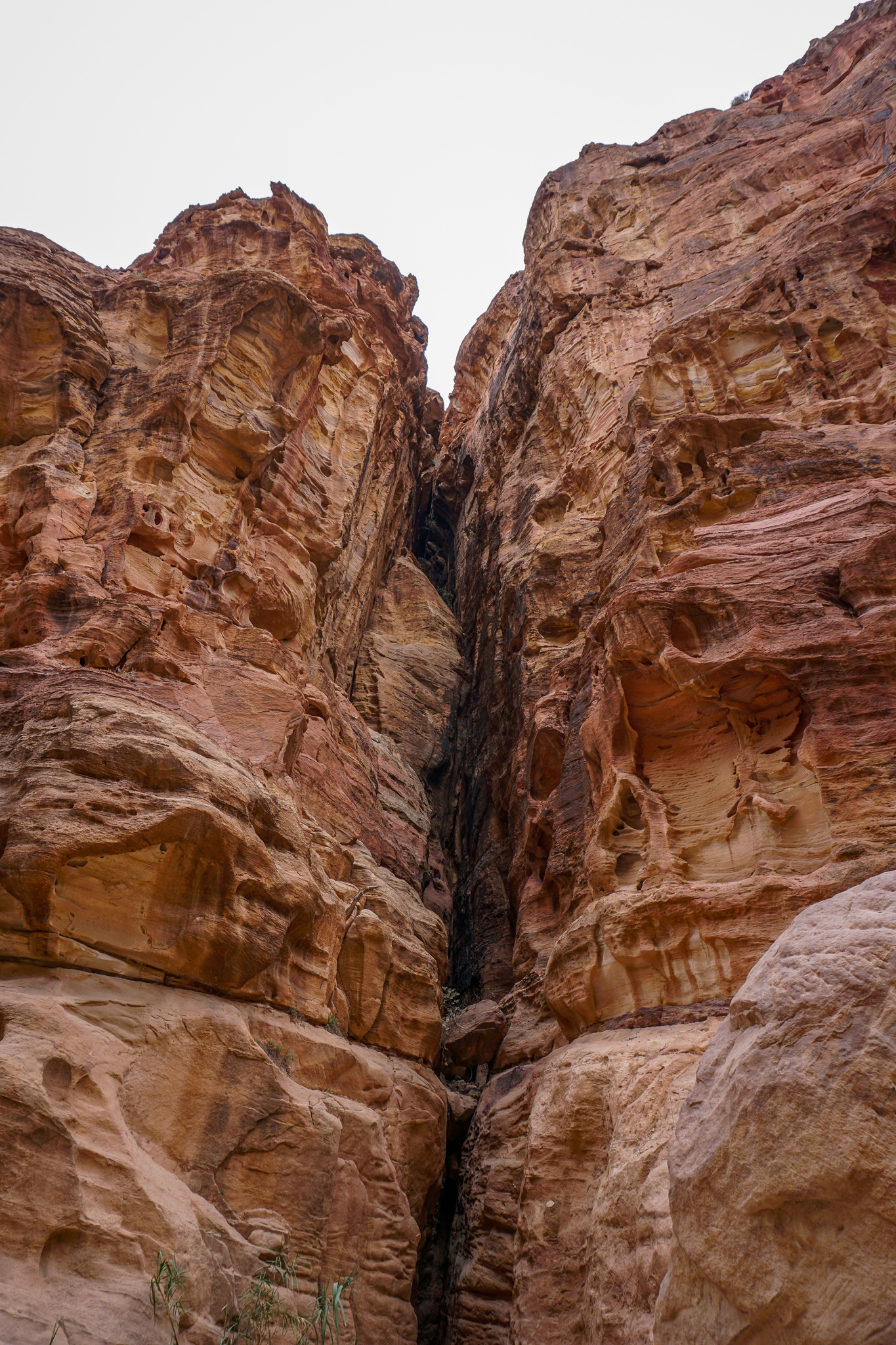

There is so much we don’t know about Petra, and no one knows yet. There is still so much to uncover, quite literally so many stones to be turned. What is sad is to see that these wonders of the world will continue to deteriorate – it’s impossible to escape the erosion of Nature – after all all of this was carved in sandstone, and it is remarkable that has survived for over two thousand years!
I don’t know if I will ever go back to Petra, but I do know it’s unlikely. There is just so much to see in the world, and I feel so privileged to have been able to visit the city that is considered one of the Wonders of the World. I will always keep this place in a special spot in my memory, for as long as I can keep it. During this trip, I got to see so much that pertains to what can be considered the beginning of civilizations, and it will always blow me away the resilience and capacity of human beings to build the most spectacular things that lasted hundreds, thousands of years and continue to enchant us and prick our imagination today.
I have to say that the photos, as usual, don’t represent the real spectacle that Petra really is. But I hope I could convey it, and perhaps prick your imagination and curiosity as well 🙂
Love, Nic
 The Winged Bone
Beautiful pictures. I don’t know much about Petra but it’s on the list so to read that they’ve only uncovered 15% makes it all the more mysterious.
LikeLiked by 2 people
Thank you! There is so much to this place, and I reckon we don’t know a lot 🙂
LikeLike