
Was it crazy to do Nara and Uji on the same day? I don’t think so. Would I have liked to make it slower? Yes. But I had limited time… and I know I can start a day very early.
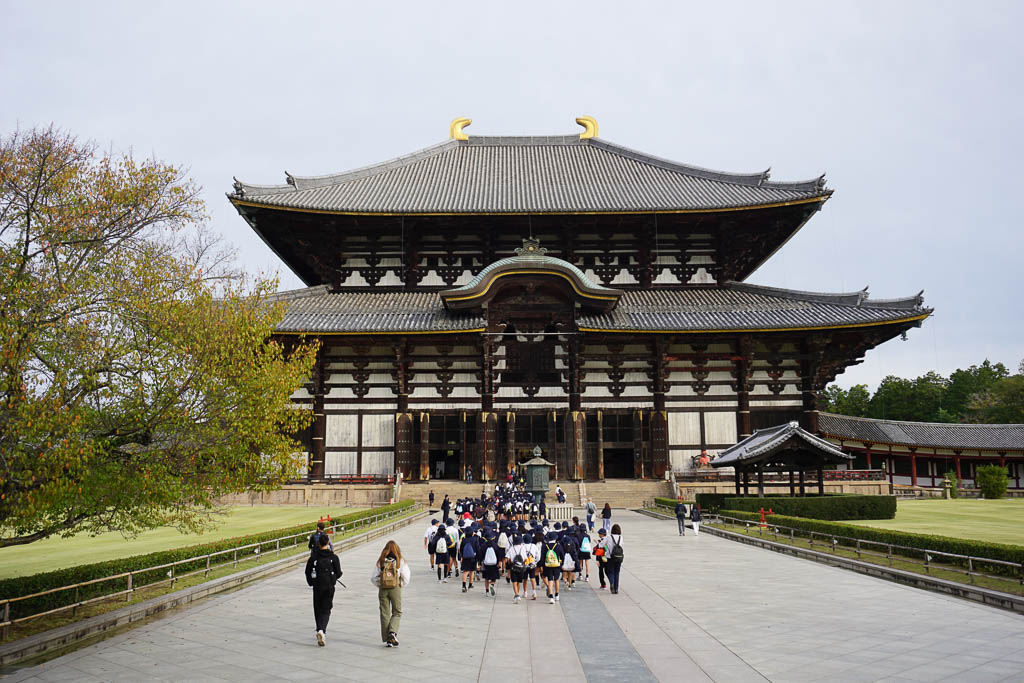
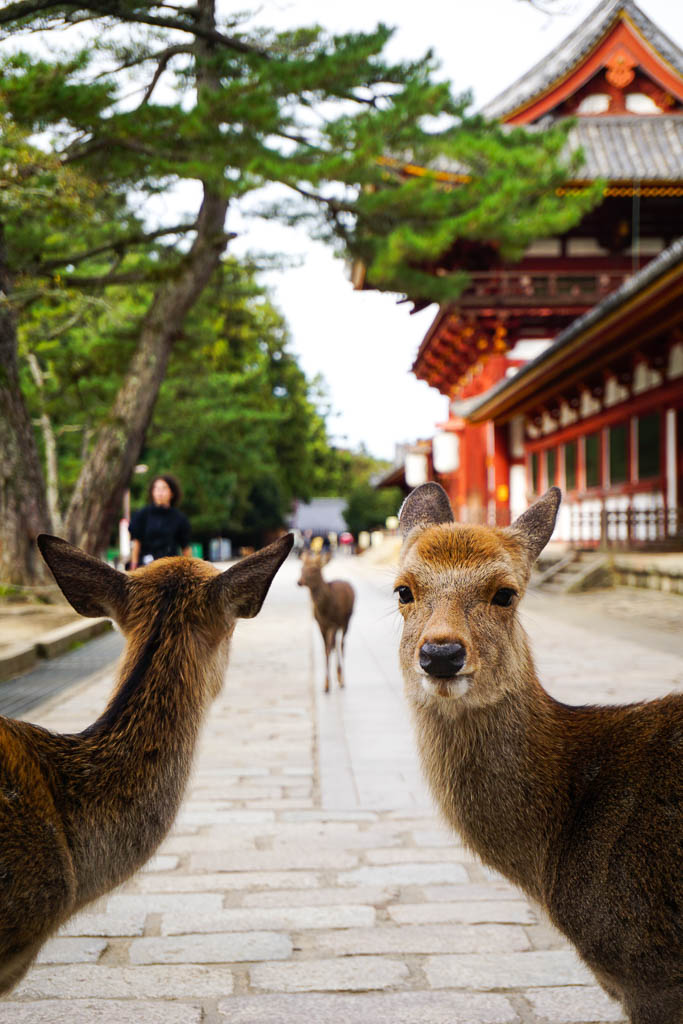
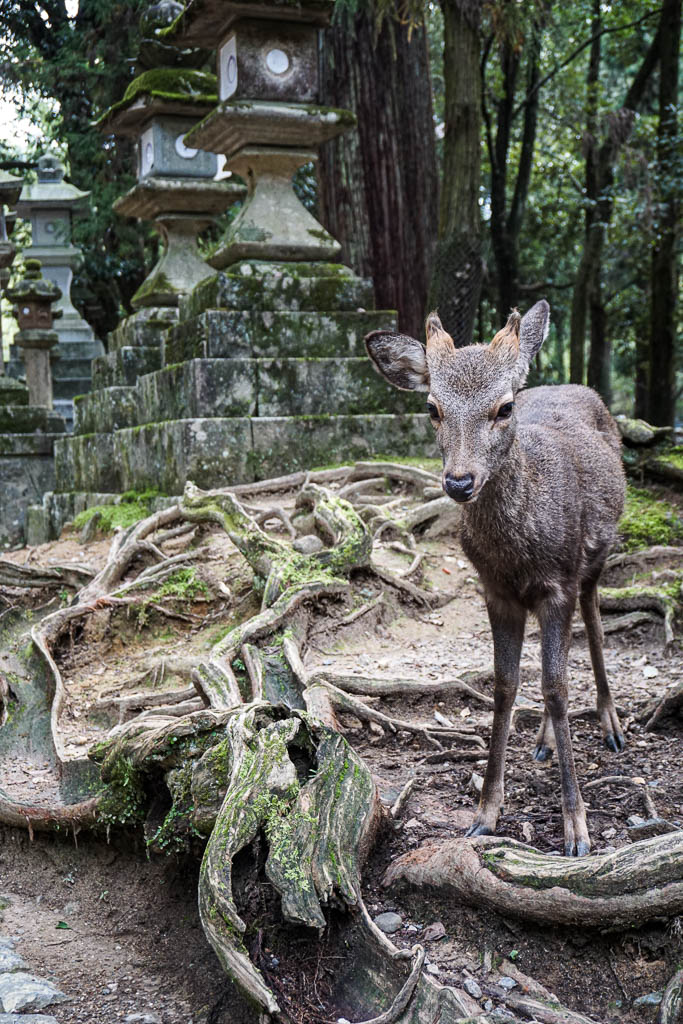
And that’s precisely what happened. I was in Nara at 7:30am. Which was brilliant cause there was no one around! The downside? The deer haven’t seen many humans yet and will be eagerly waiting for the crackers they are used to getting from people… and well, whilst Nara’s deer are globally known for being polite, I have to refute that illusion. They are demanding little and adorable creatures, and they will use their heads not just to bow, but to head butt you.
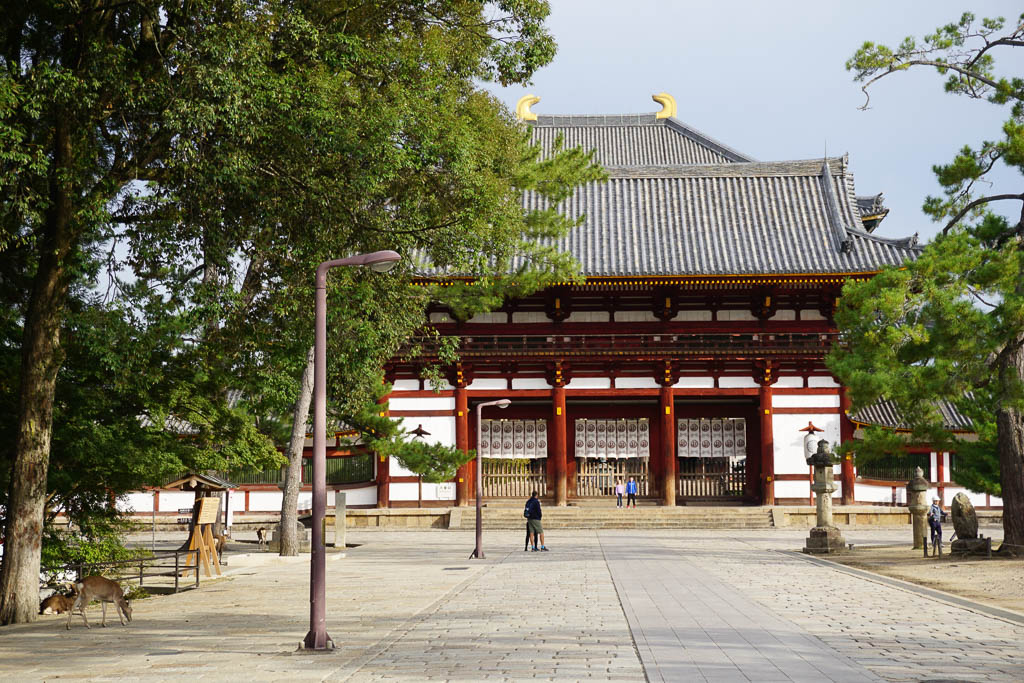
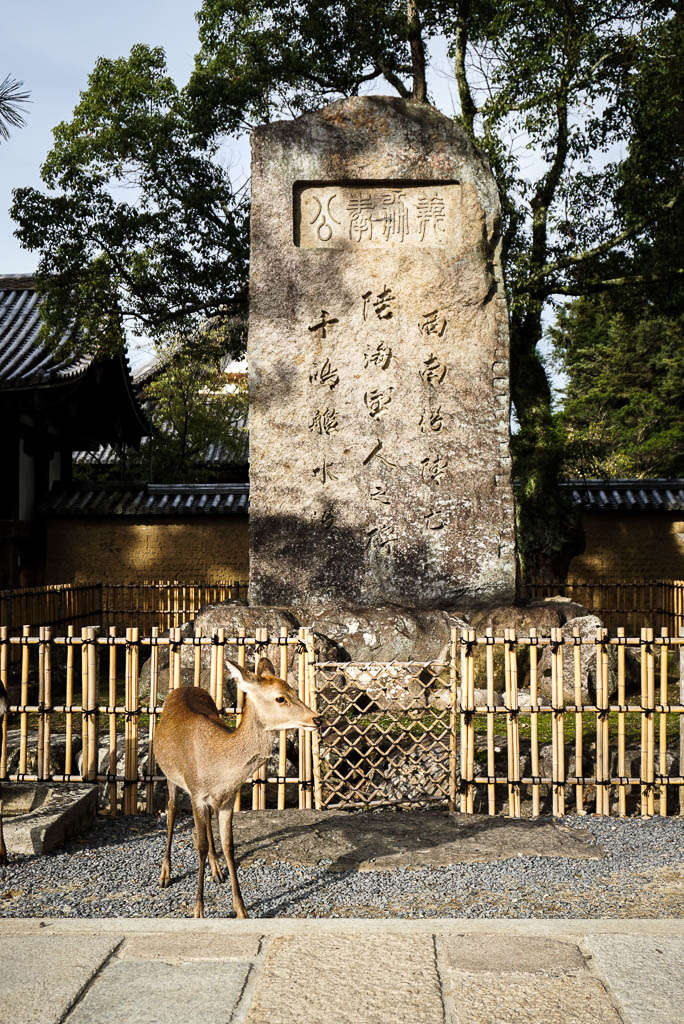
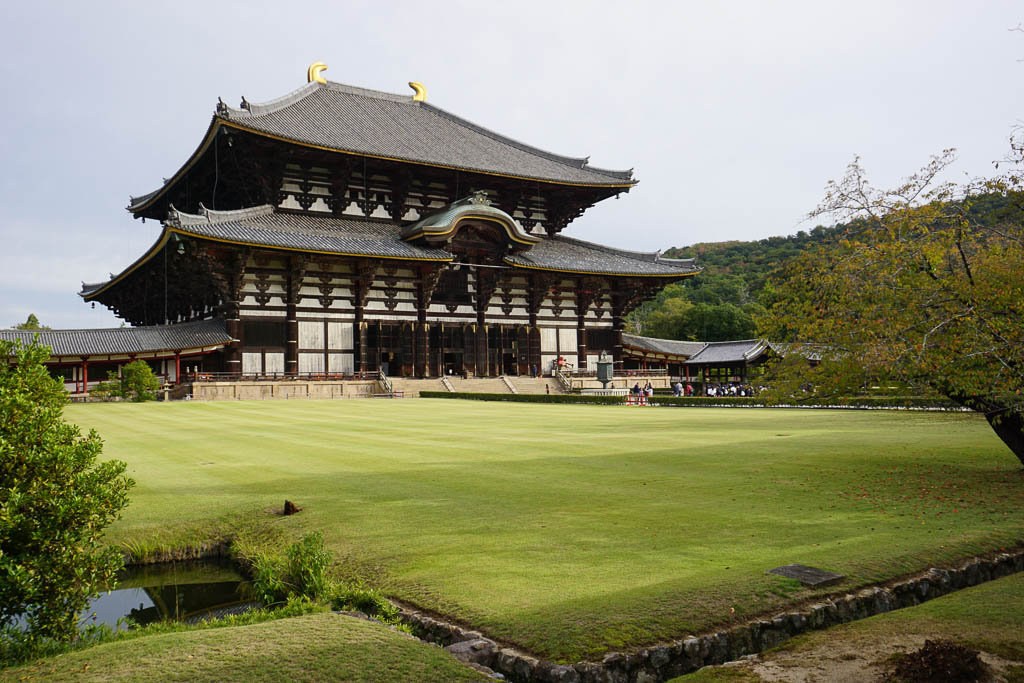
But I’m getting ahead of myself. I walked off the station determined to get to Toda-ji, the stunning Buddhist temple that is considered one of the most important in Japan. It’s home to the great Buddha, and it was built in the 8th century when Nara was Japan’s first permanent capital. The big Buddha statue was built to unify the country under Buddhism during a period of instability. The place is majestic in its dimension – an enormous complex. It emanates authority. And whilst incredible, I must say I have much more enjoyed the Kasuga Taisha shrine in the depths of Nara Park.
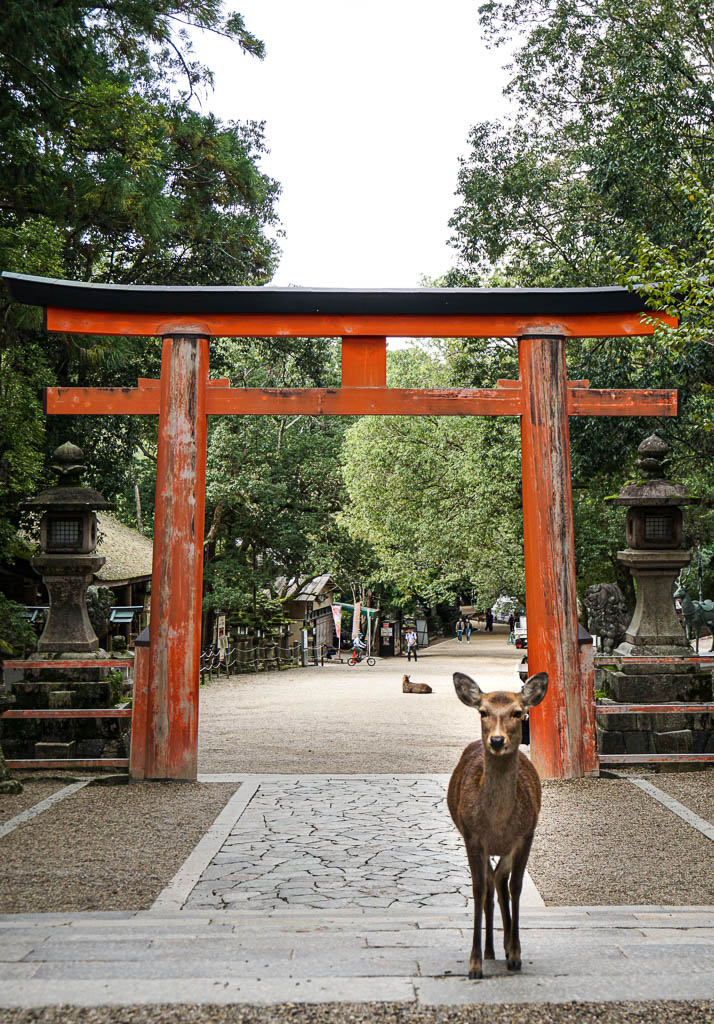
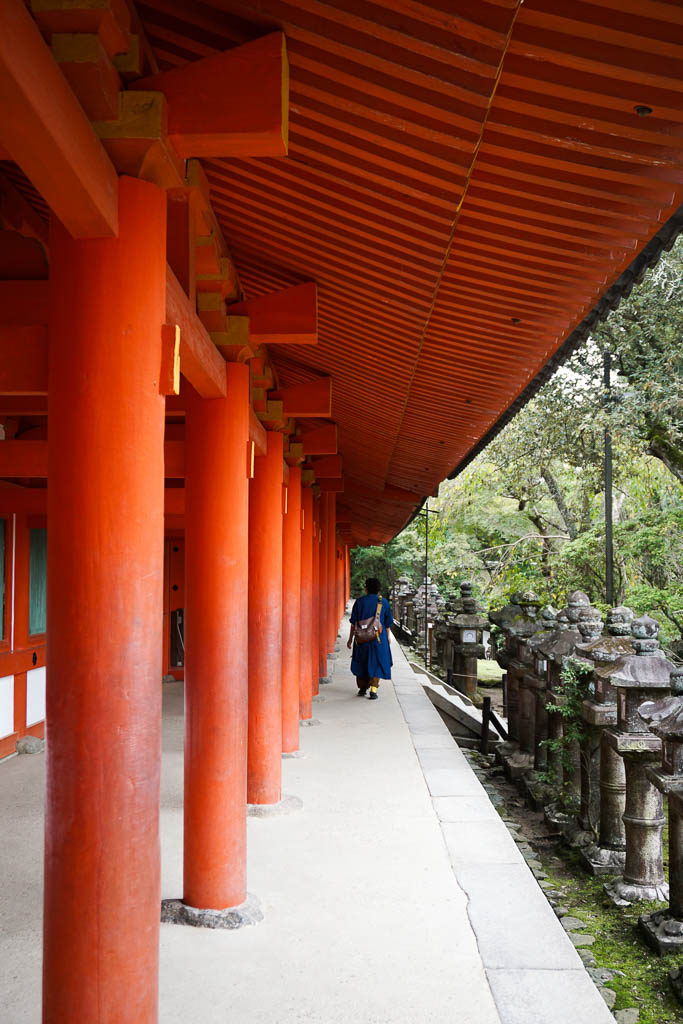
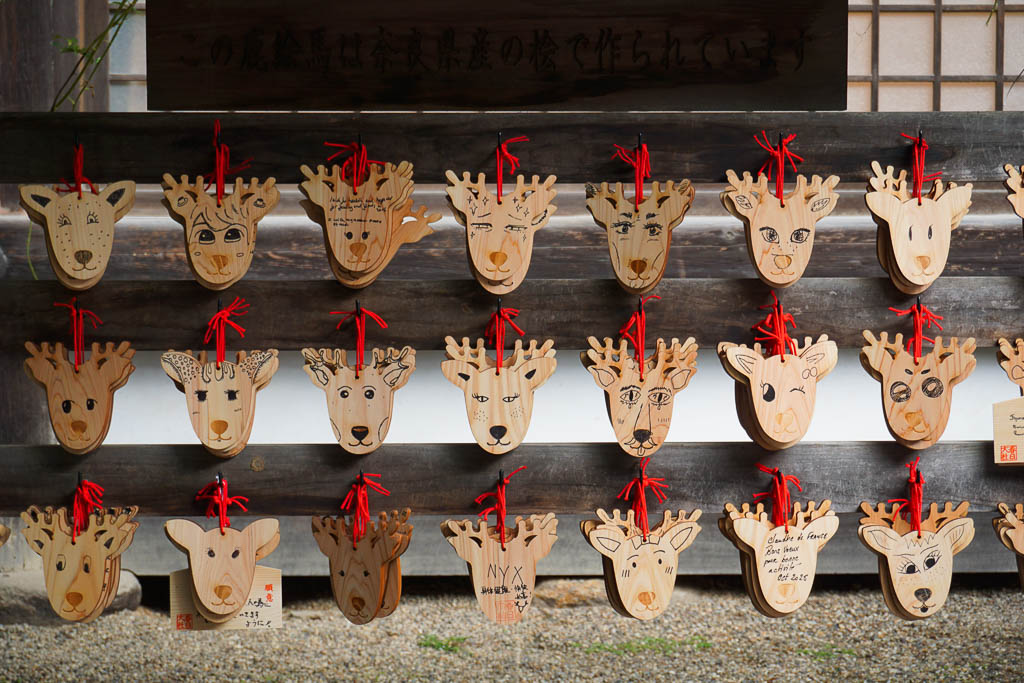
Contrary to Toda-ji, this is a shrine dedicated to Japan’s indigenous religion, Shintoism. It was built by the powerful Fujiwara clan. Shinto revolves around Kami, spirits or presences that inhabit natural forces, places, and ancestors. Kasuga Taisha enshrines four main kami connected to the Fujiwara lineage – according to legend one of those deities arrived in Nara riding a white deer. This is how deer were elevated from earthly woodland creatures to divine messagers – for centuries, harming deer in Nara was punishable by death.
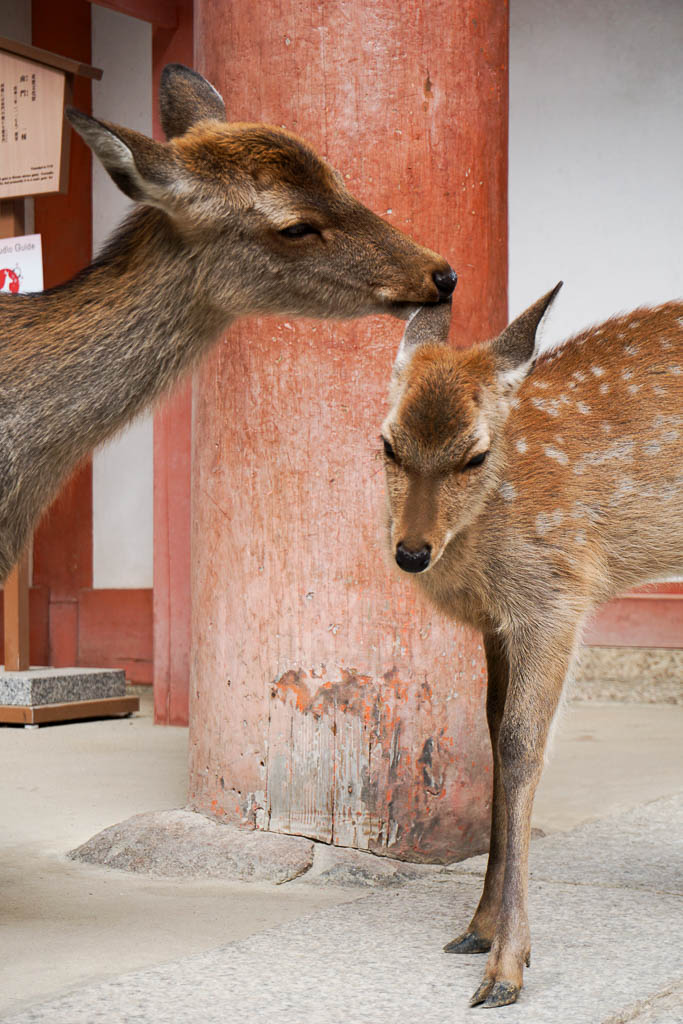
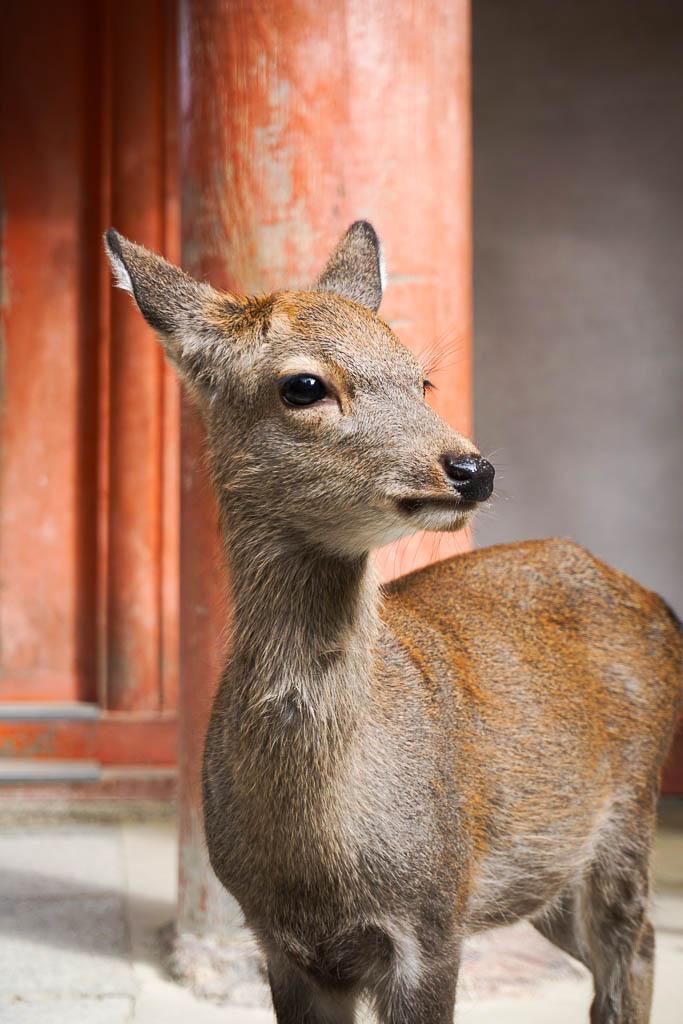
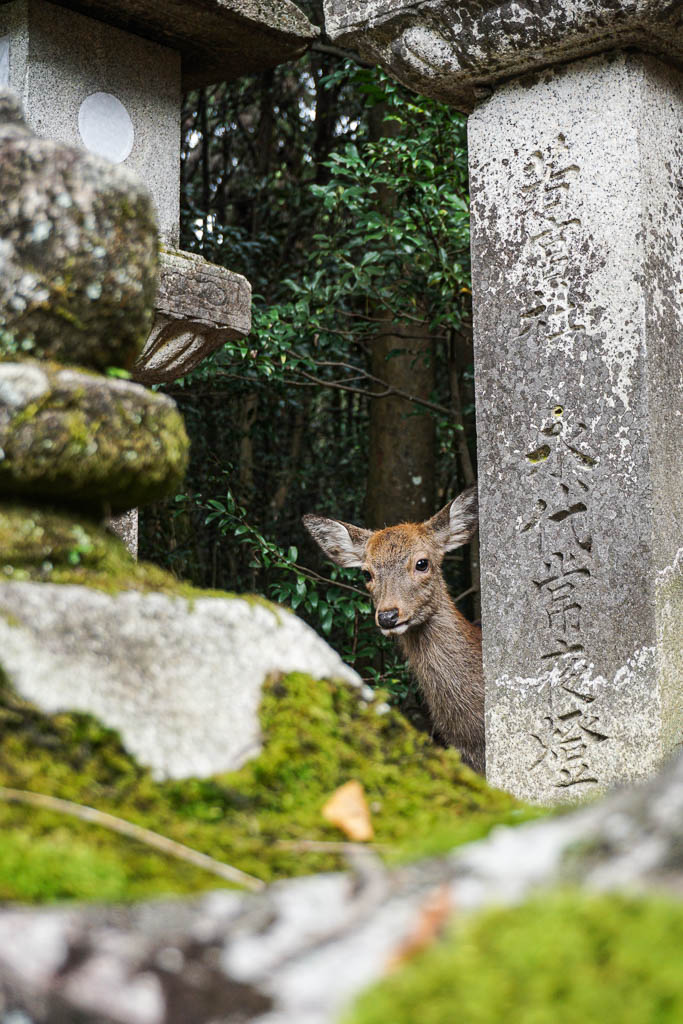
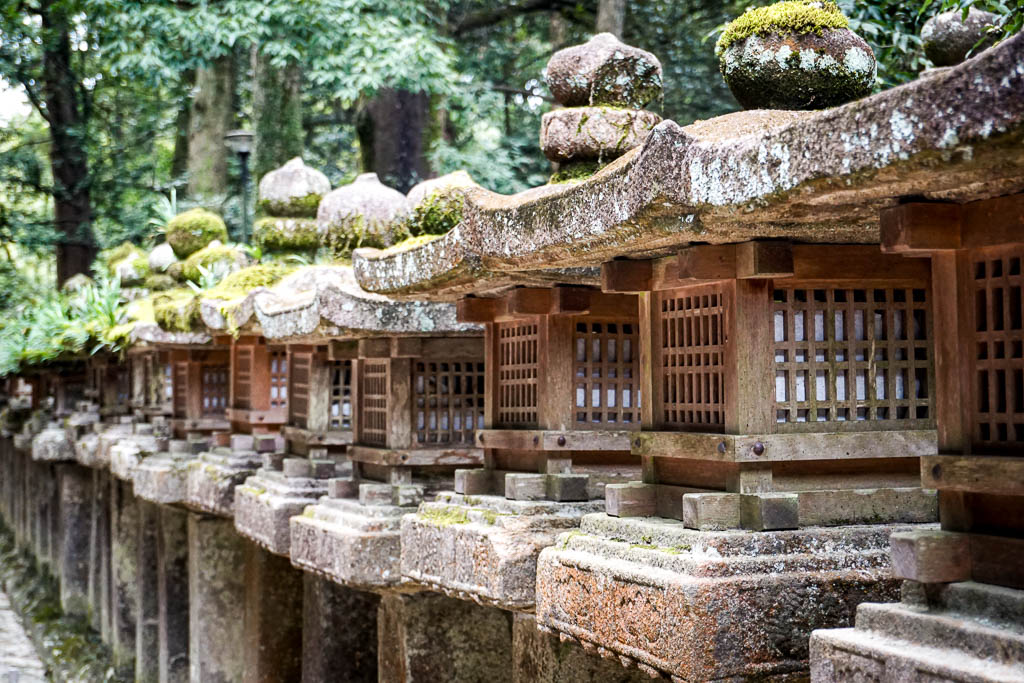
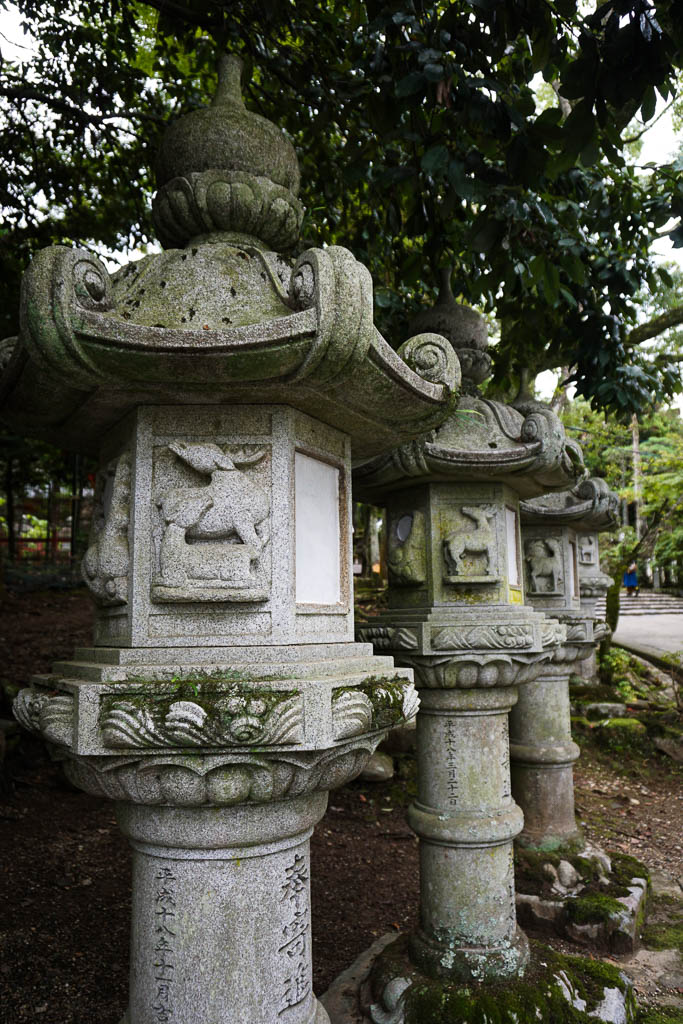
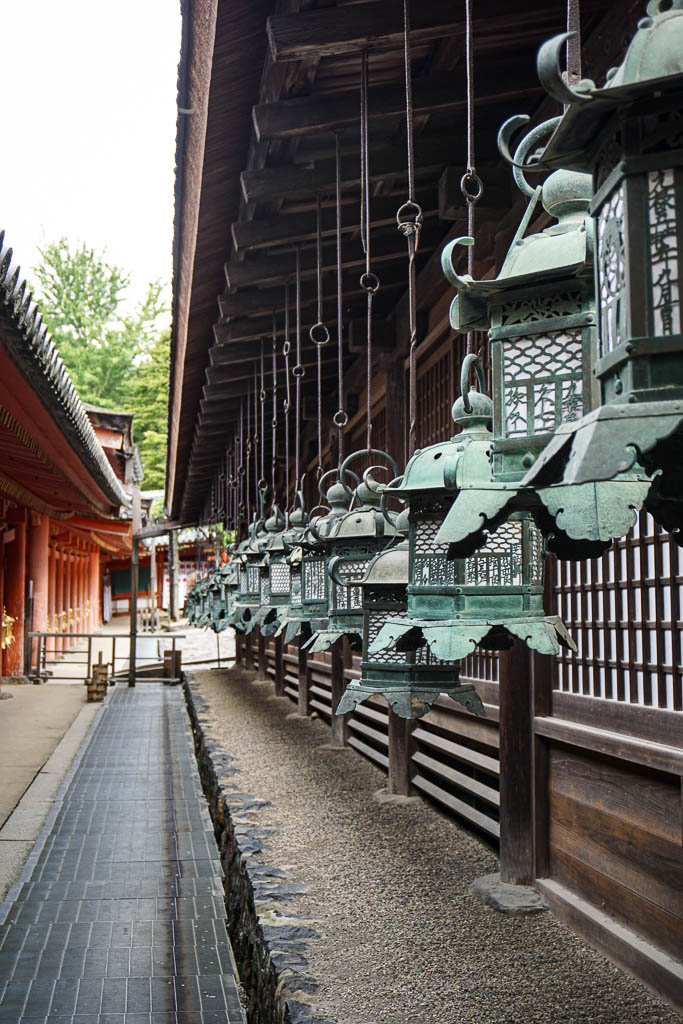
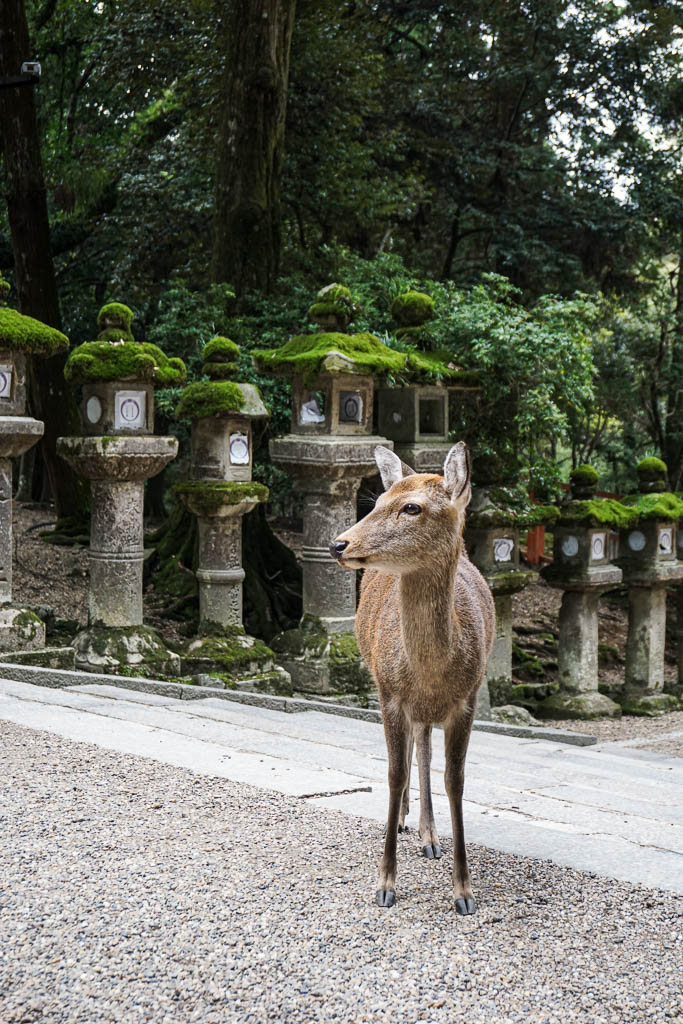
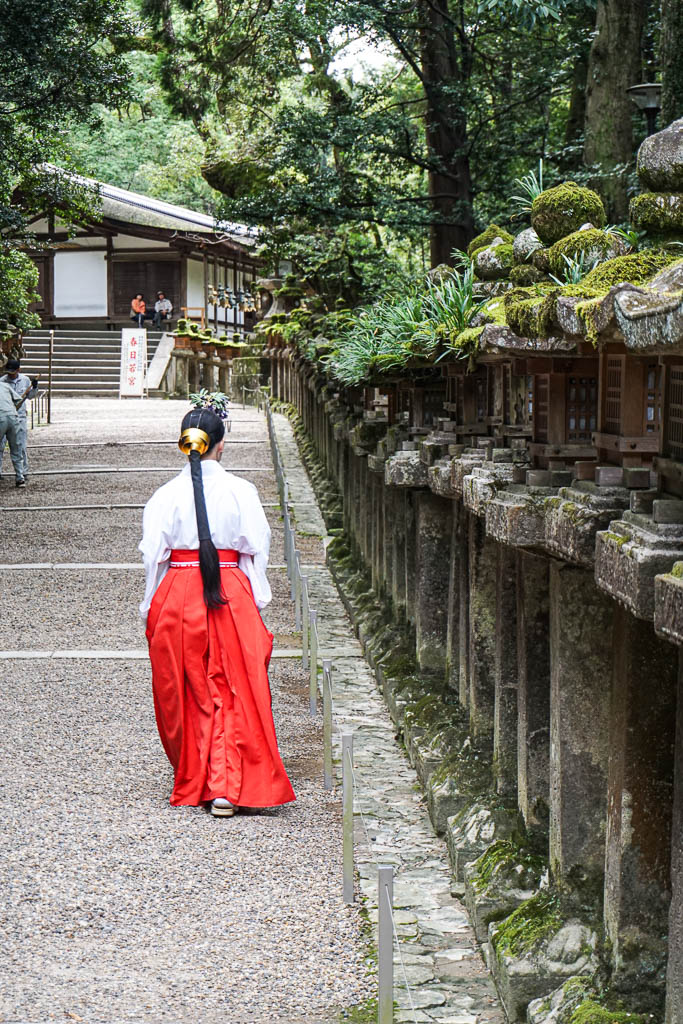
There are thousands of lanterns – stone lanterns, bronze lanterns. They’ve been donated for centuries by worshippers. The effect is simply stunning – not just indoors with the dozens of bronze lanterns perfectly lined up, but also the stone ones with engraved deer, covered in moss. Deer walk around peacefully – that’s their home, their space. It was one of the most mystical, otherworldly places I visited in Japan. Could I feel the kami, or is it just the effect of Nature? A shinto shrine is always embraced by its natural surroundings… and that is part of why these places always make me feel so tranquil.
You are not allowed to feed the deer in the park. Feeding is reserved for those deer at the base of the park, by Toda-ji.
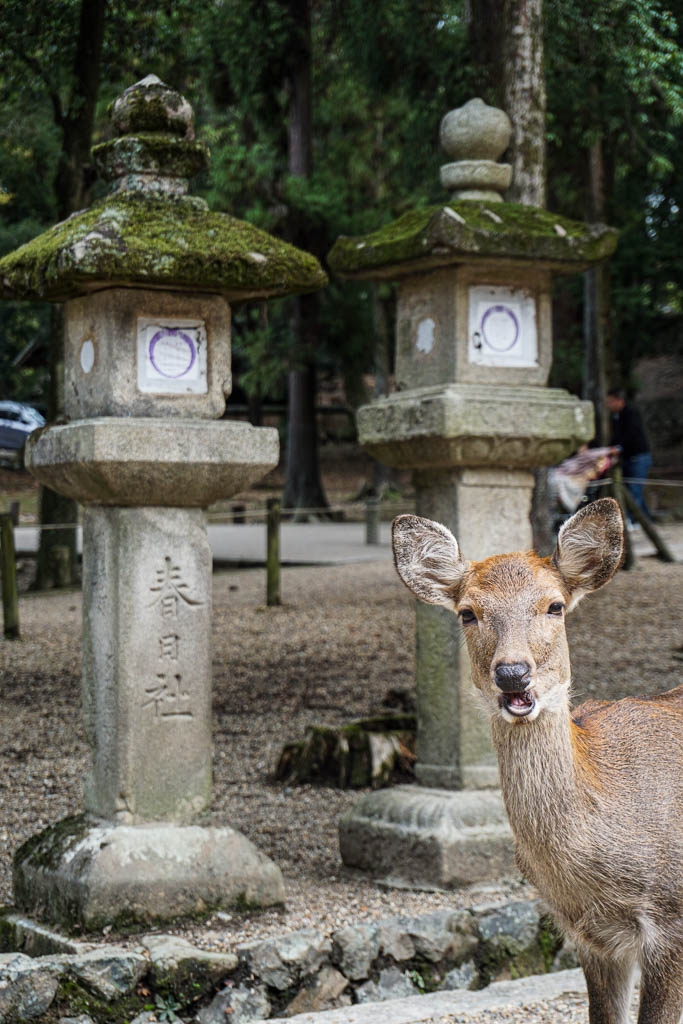
I’m usually careful with anything that involves animals – and I was a little reticent about feeding them crackers. Are these actually good for them? Are we altering their behaviour in ways that can endanger them? They bow because they know they are rewarded with the food they so much adore… but if you’re out of crackers and they’re still hungry get your ass out of there.
The crackers are made specially for them – only wheat flour and rice bran. There is no sugar nor flavourings, so it’s technically healthy. Plus, a portion of the proceedings goes towards the Nara Deer Preservation Foundation, which funds veterinary care, monitoring and management. I still feel awkward about it – during COVID for instance, the deer were seen dispersing into the city in search of food, instead of the forest. To me, that is a little concerning. But this closeness between deer and human in Nara dates back centuries. Not something that’s been created for tourism, which made me feel I was partaking in a custom, rather than feeding an exploitative tourism machine.
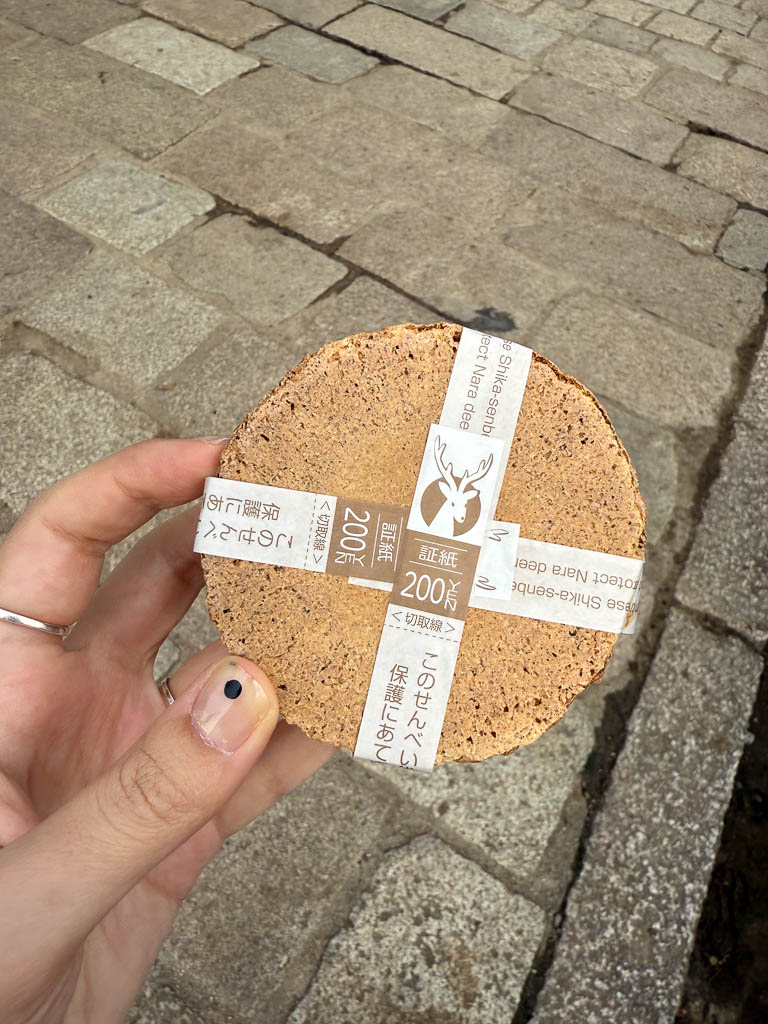
Either way, I got just a little pack of crackers after visiting Toda-ji. But when I got back from the park, the crowds had definitely arrived. It was near lunchtime by then, and I could tell the deer had had enough crackers, with tourists attempting to feed them and getting no engagement… and a part of me was happy about this. At least the deer aren’t binge eating until they explode.
The last visit was to Kofuku-ji, the family temple of the Fujiwara clan that is also connected to the founding of Kasuga Taisha – instead this temple is Buddhist. This just shows how Buddhism and Shintoism have been closely intertwined in Japan, something that I respect so much. Supporting both religions was important for the powerful clan to secure influence and reinforce their authority – they were basically covering all the spiritual bases.
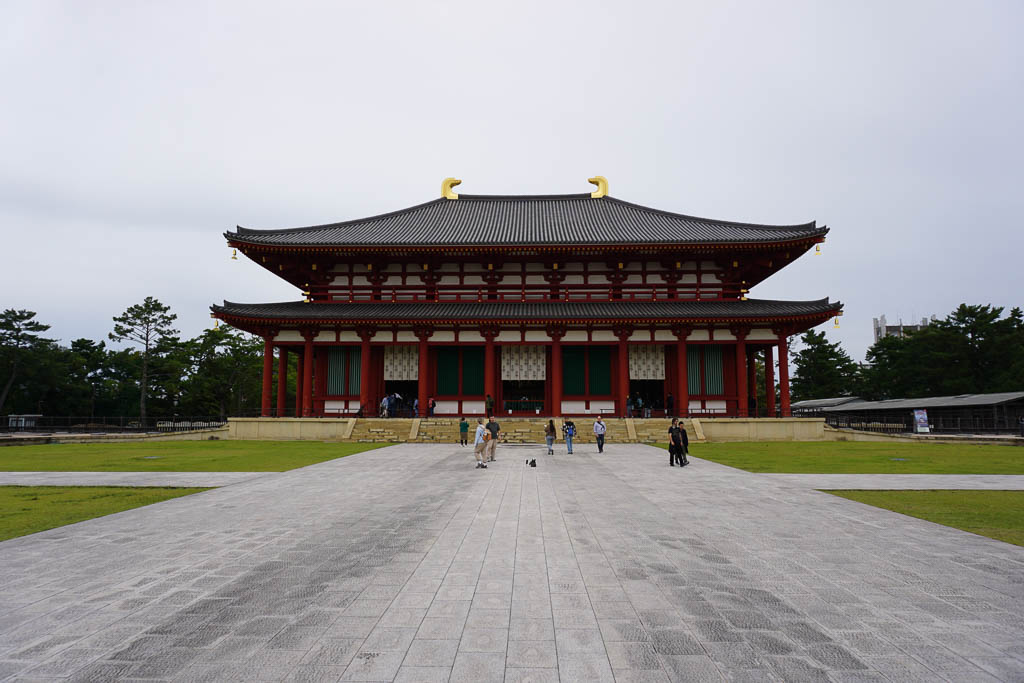
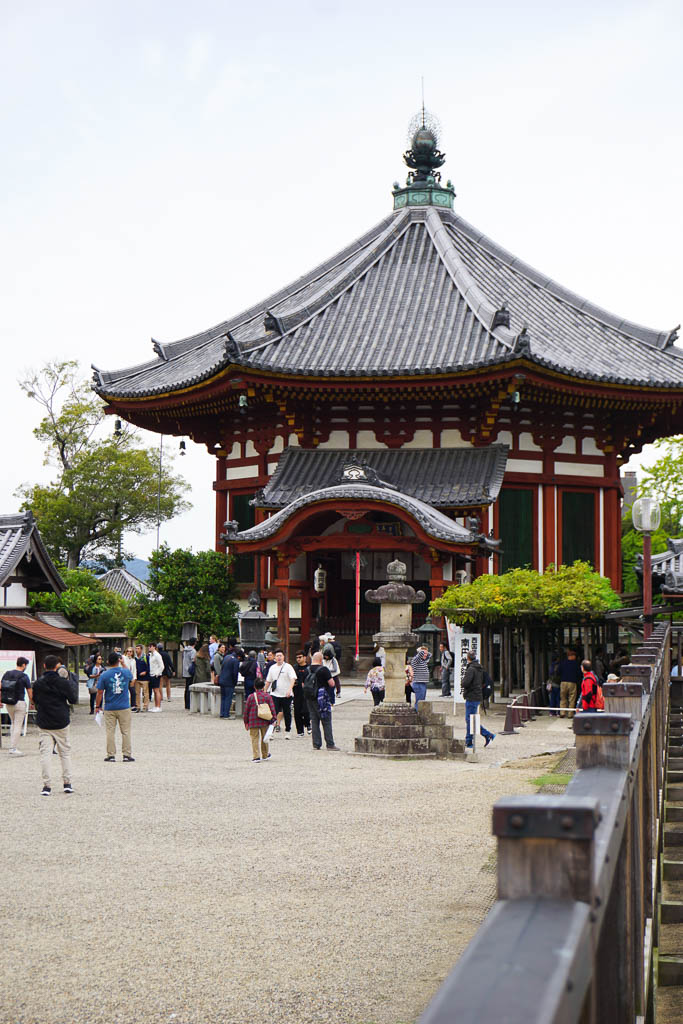
The Pagoda was sadly under renovations, so it was covered in tarp and I couldn’t really see it. But the complex is still a wonder to visit.
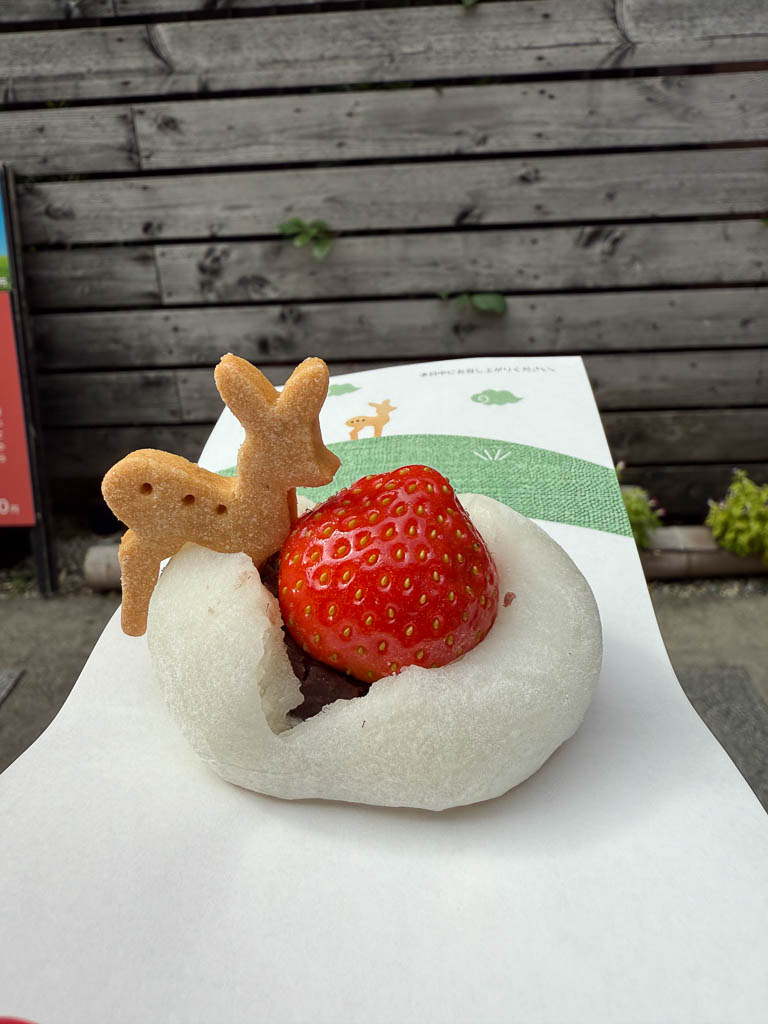
After all of this, I had lunch in Nara and for dessert one of my favourite things – daifuko.
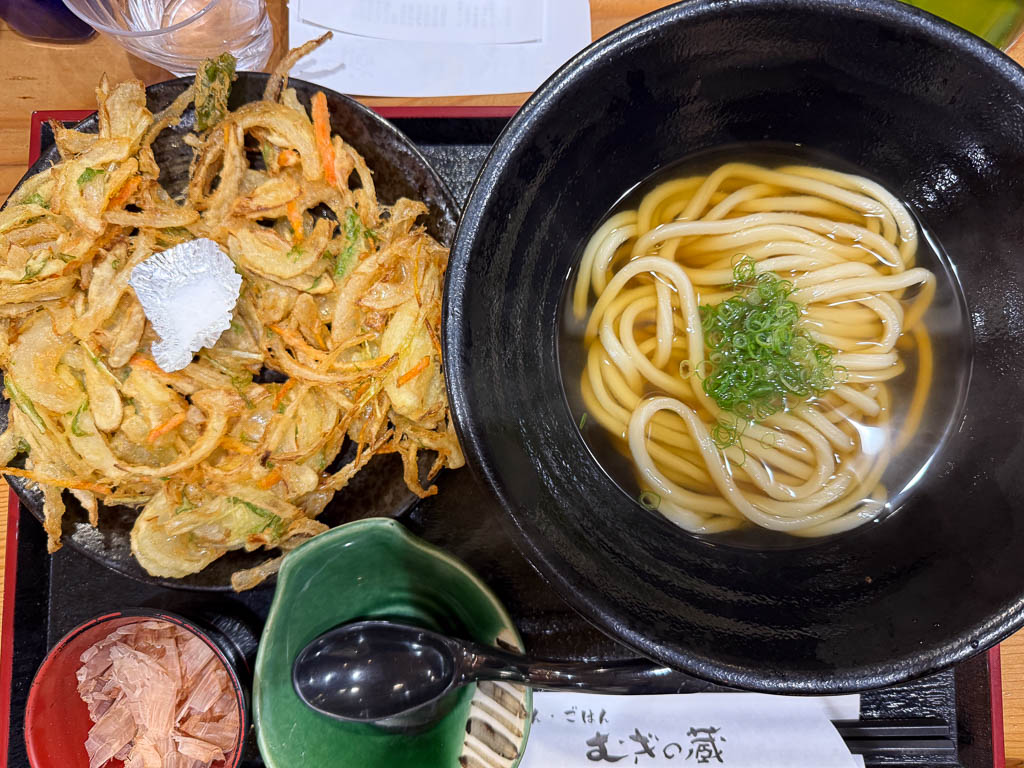
From Nara to Uji is just a quick train journey of about 40 minutes. I considered if I should keep Uji in my itinerary – Nara was a priority for me, and since by 1pm I had visited Nara, and Uji is on the way back to Kyoto, I thought – why not? It was going to be a short visit, but I would have enough time to visit some tea shops and the famous Byodo-in temple.
Uji is the home of matcha which has become very trendy in social media feeds in the past couple of years and also of high grade sencha, loose leaf green tea and also my favourite. The region has been cultivating tea since the 13th century. The mild temperatures, the humidity from the Uji river and well drained soil create ideal growing conditions – the mist from the river is specially important to protect the delicate tea leaves from frost and excessive sunlight.
But what really separates Uji tea from anywhere else is the technique. In the 16th century, tea growers around Uji refined methods for chafing tea plants before harvest. This sharing increases chlorophyll and amino acids which makes the tea sweeter. This is precisely where Kyoto sourced its ceremonial grade tea.
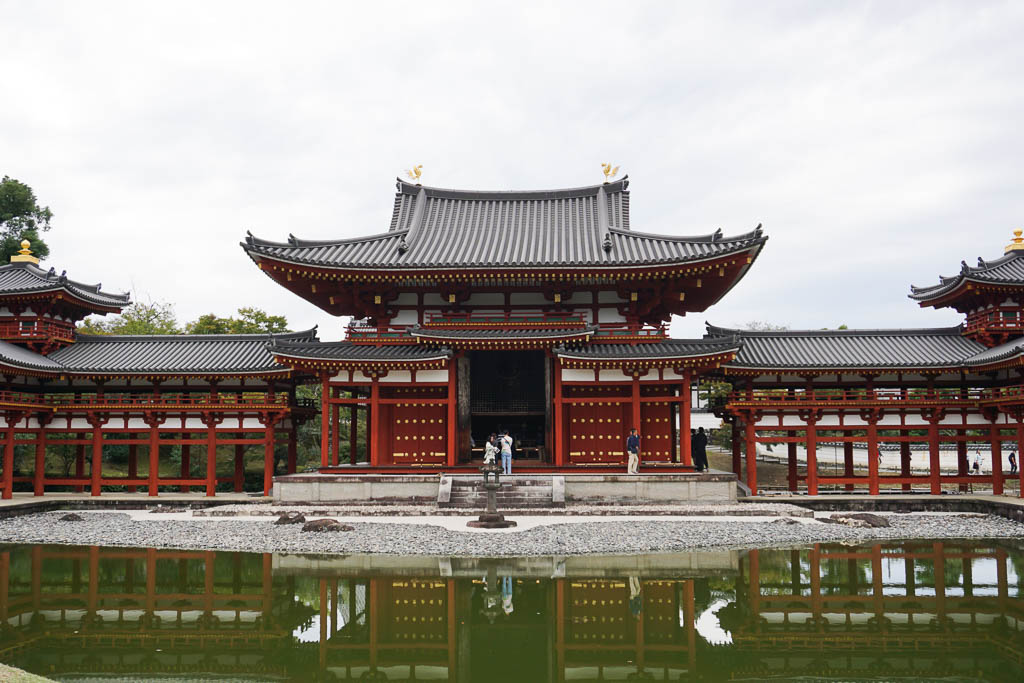
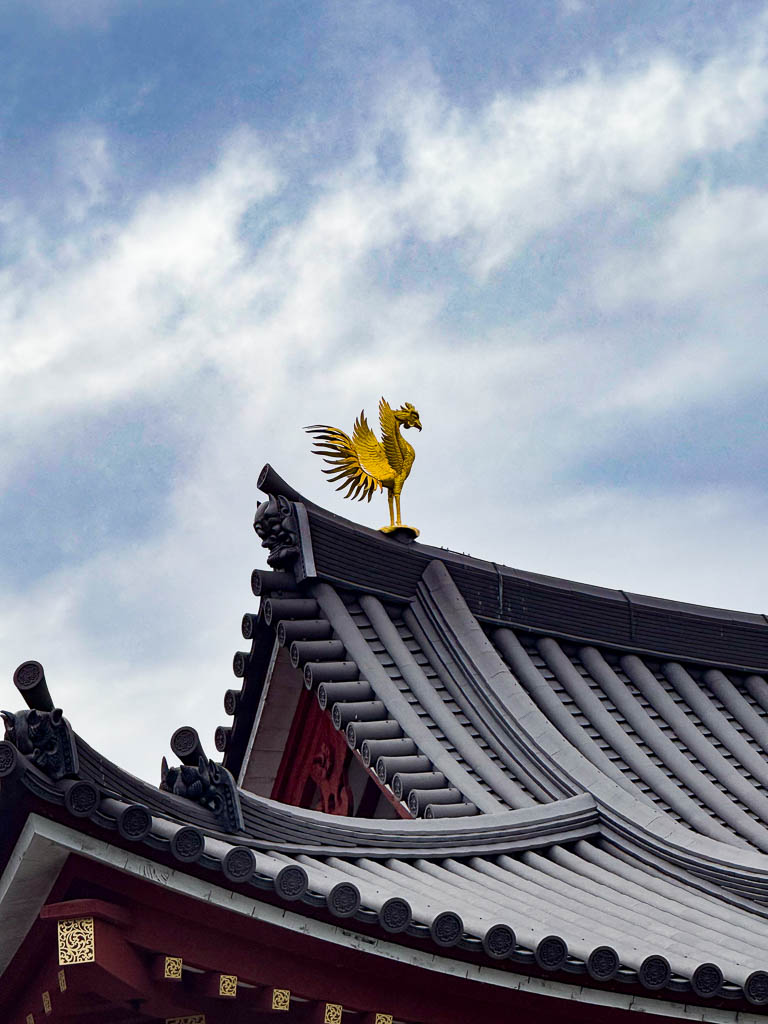
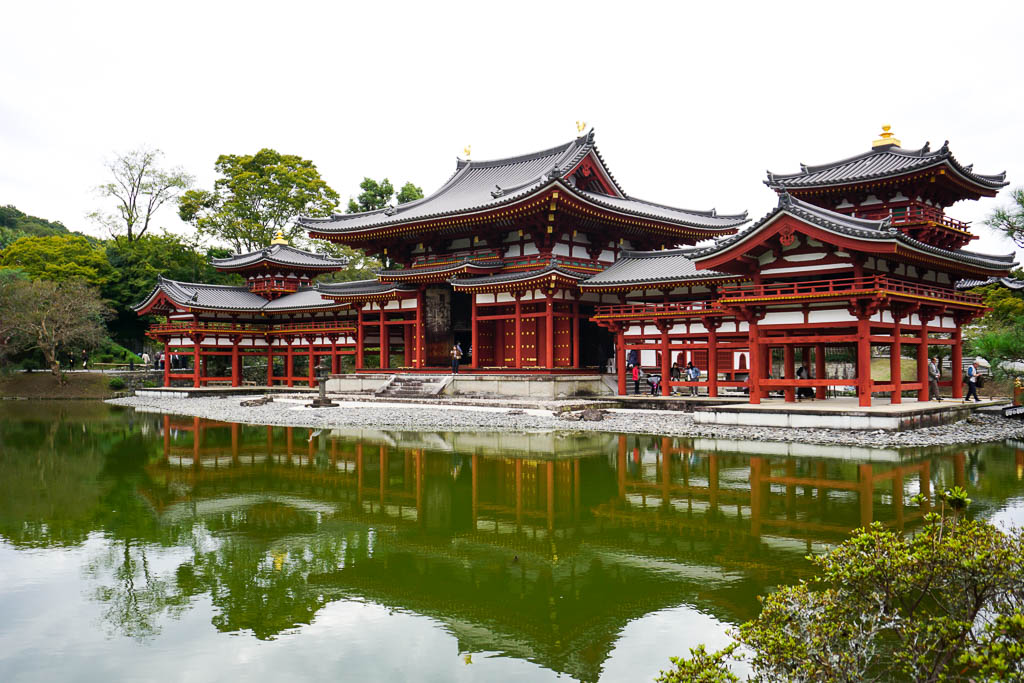
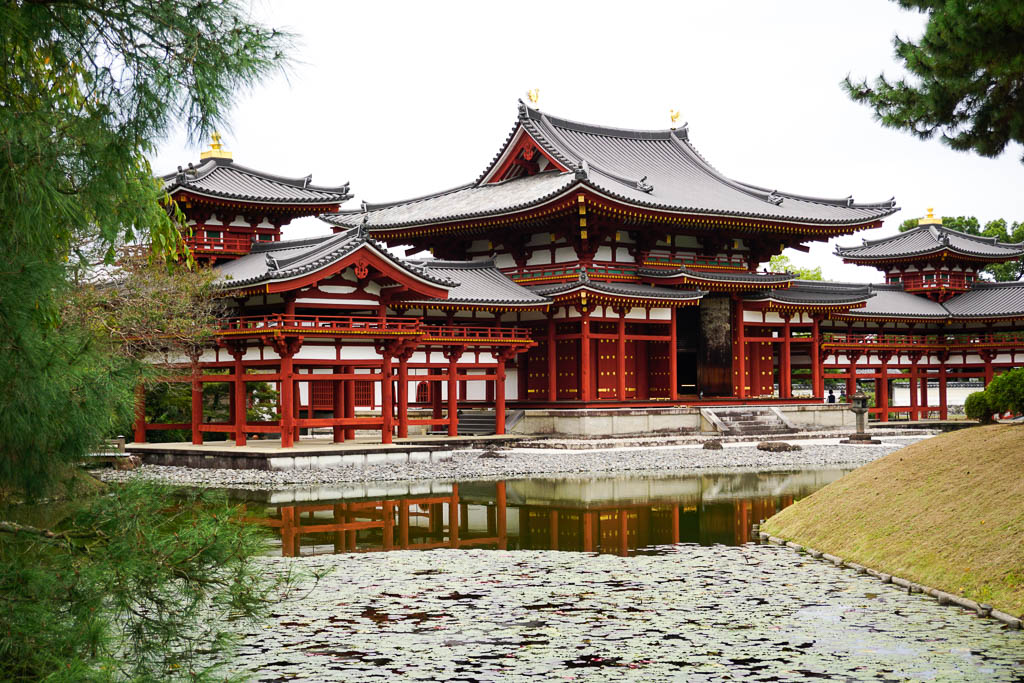
It’s not just about tea. In Uji is where you can visit a very special temple, Byodo-in – special because it features in the Japanese 10 yen coin. This place used to be a villa and it definitely got the vibes of it. And guess what? The villa belonged to the Fujiwara clan. It was built in 998 CE by Fujiwara no Michinaga and it was in 1052 that his son converted it into a Buddhist temple. That’s when the Phoenix Hall was built, and one can’t admire it without feeling you’re looking at perfection – the symmetry of the complex, perfectly mirrored into the waters of the surrounding lake, giving the illusion that it floats, almost levitating.
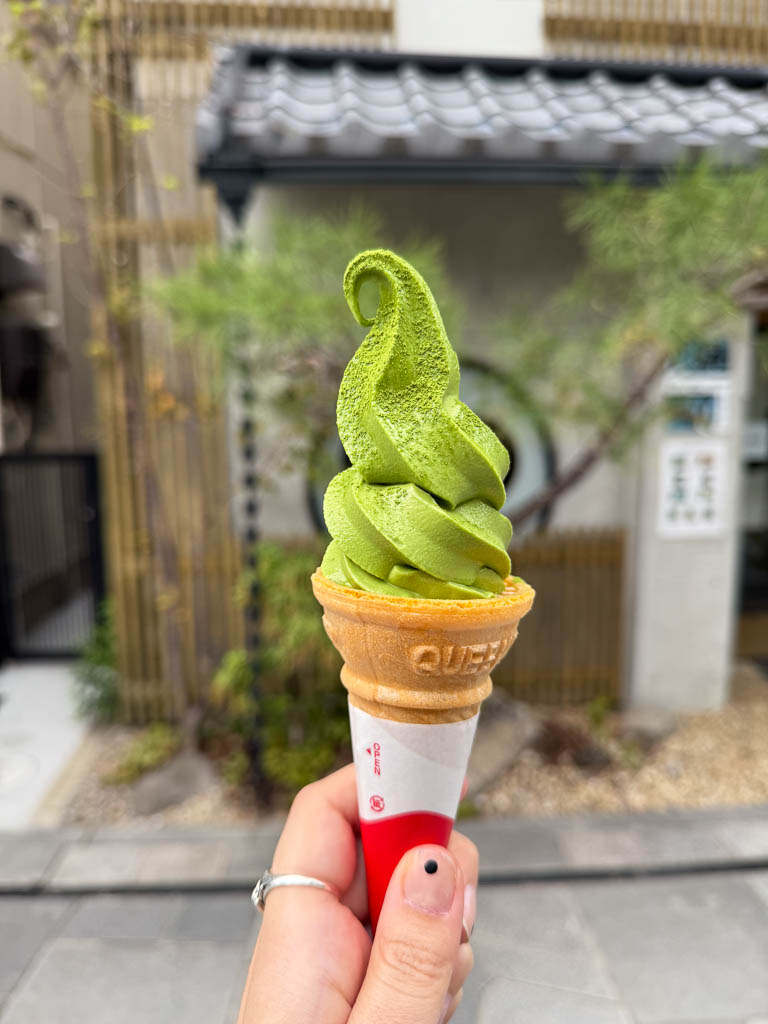
After this visit, I explored Uji beyond its main commercial street – and also got a matcha softie which was delicious by the way. I was quite pleased I could go beyond the temple and still had the time for it, for the area surrounding the river is incredibly peaceful and it gives you a glimpse of a simpler Japan.
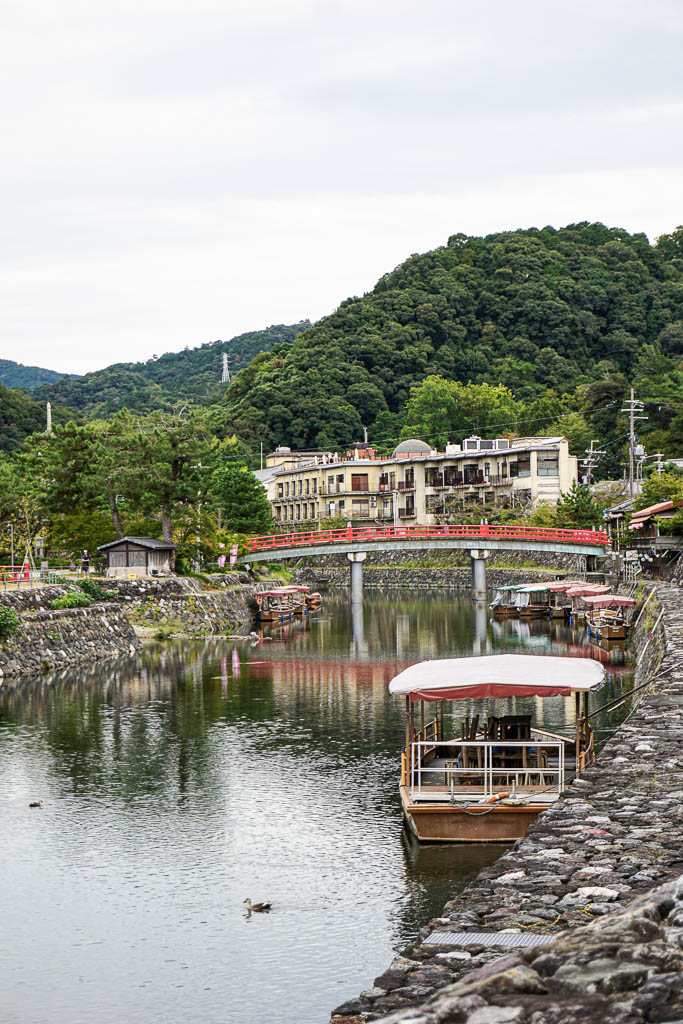
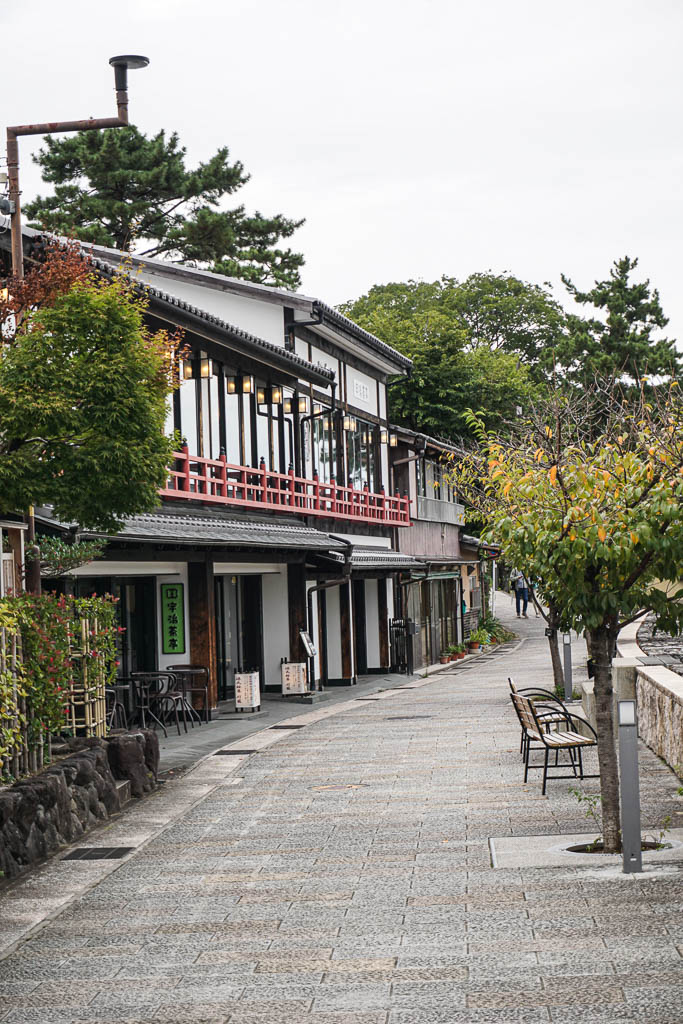
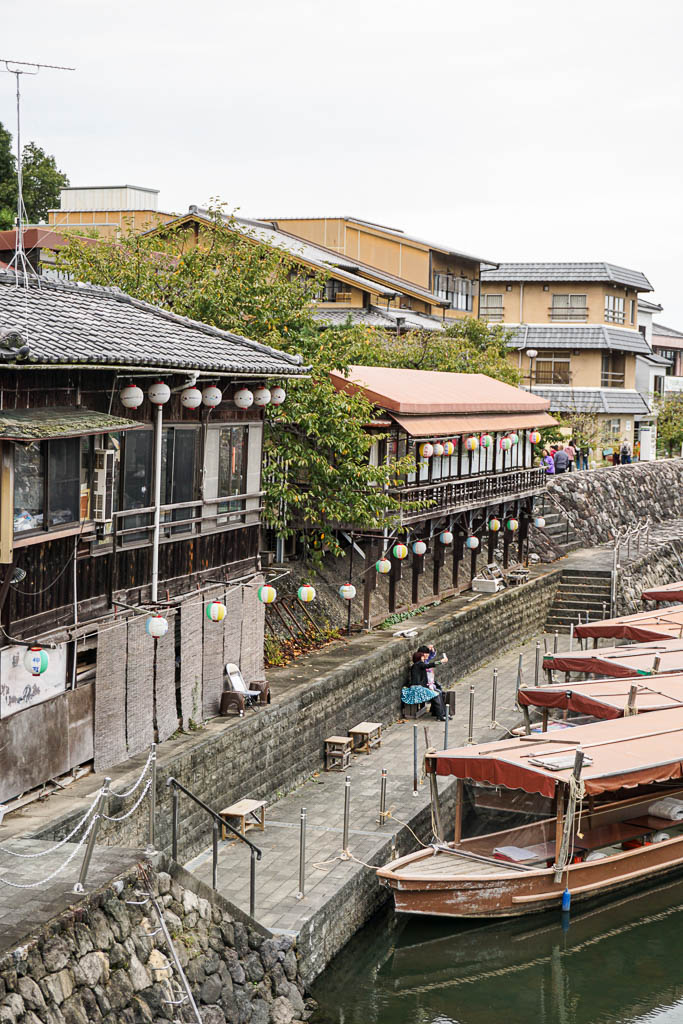
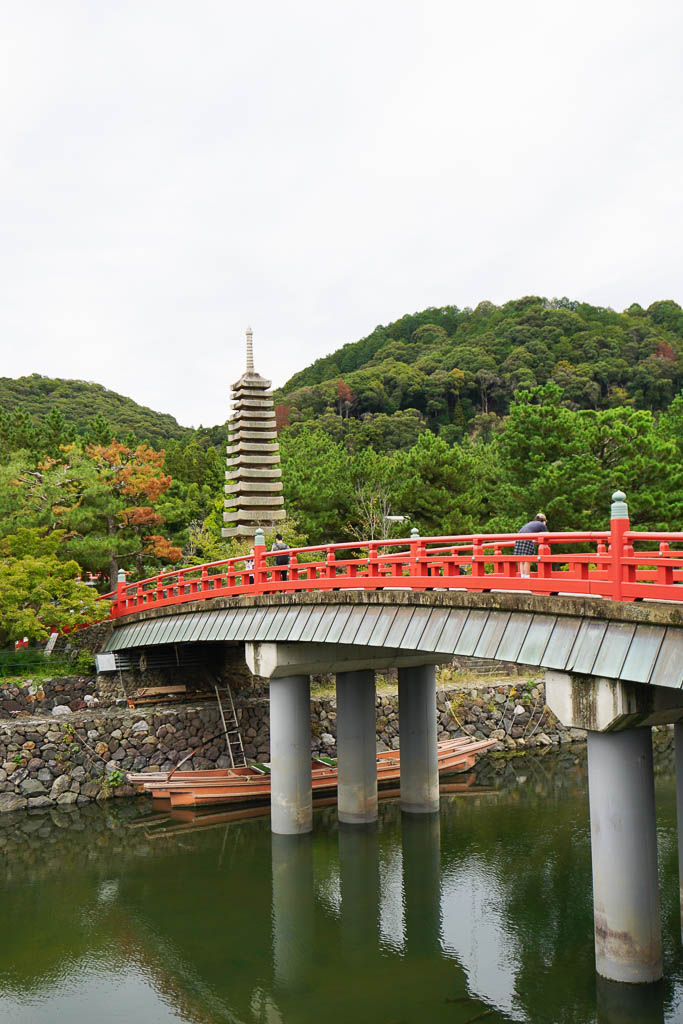
I crossed to the other side and stumbled upon another shrine, a little by accident. It’s small, but I was engrossed by the local legend and the motif of the rabbit that seemed to mark it. Rabbit – Usagi – Moon – leading me to Sailor Moon. Yes, my brain works this way. Of course this shrine has nothing to do with manga – but that was enough to catch my attention. Local legend says that the shrine’s deity once got lost while travelling and a rabbit appeared to guide him, turning back to make sure he was following, which is why the symbol is the Mikaeri Usagi – the looking back rabbit. I actually got the goshuin in my book for this temple, where you can see the looking back rabbit.
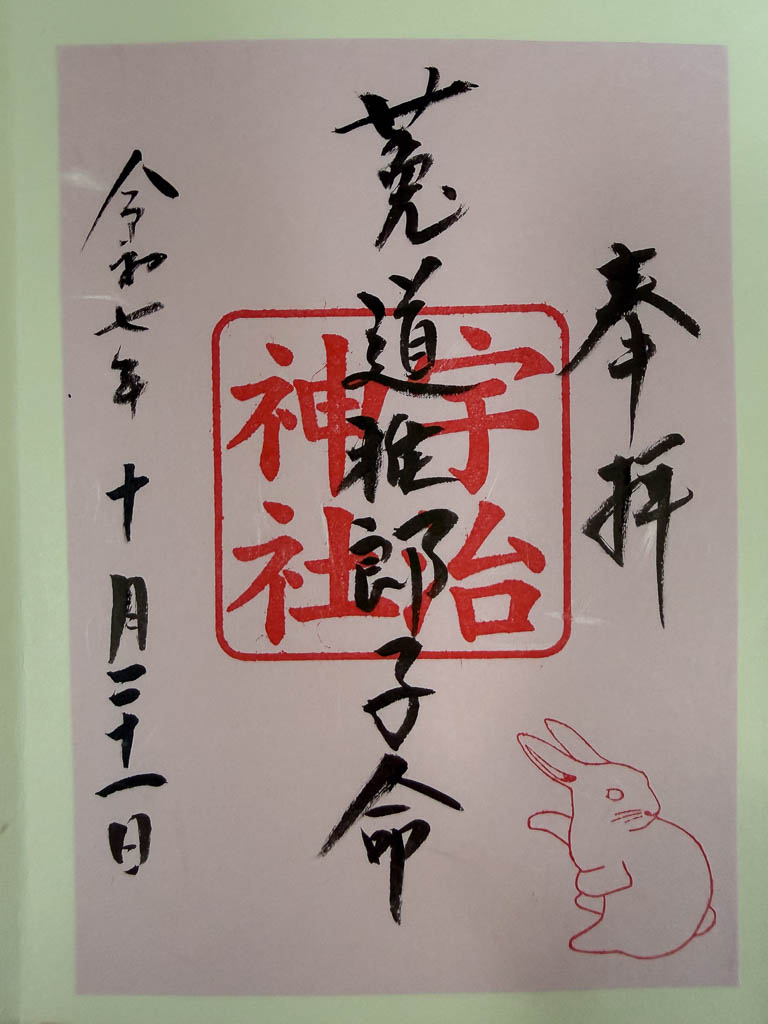
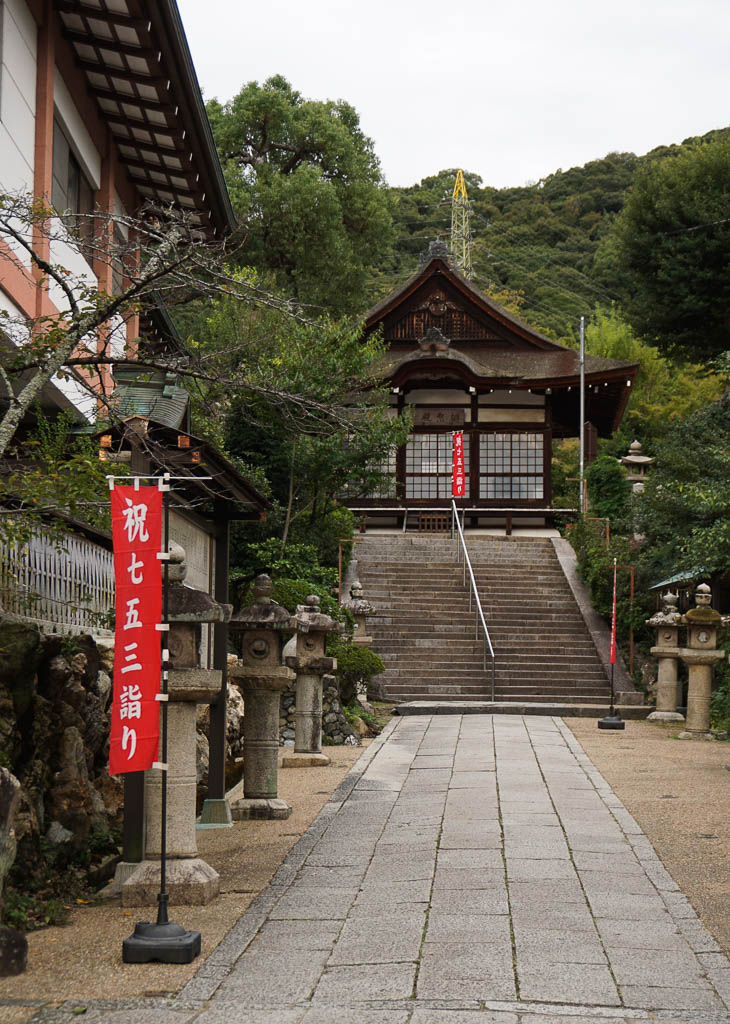
The shrine is commonly known as Uji Shrine so in fact it’s easy to locate in maps if you’re looking for it. I was the only tourist there, but it is small, so I understand that tourists might not make their way there on purpose. But I was so happy to have come across it – not because of the endearing rabbit, but also because I then found out this is one of the oldest shrines in the whole of Japan. It dates back over a thousand years.

I went back to Tokyo after buying some tea… and when I got there for some reason I still had the energy to go to Fushima Inari. But I’ll leave that story for my next post!
Love, Nic
P.S. The below are affiliate links. This means I may earn a small commission if you decide to purchase or book anything through these links. None of it is sponsored. All my recommendations are based on my lived experience.
Where I stayed in Kyoto: Tune Stay https://booking.tpo.lv/6724knY6
Truely Sim Card: Get 10% Off with code wingedbone10
 The Winged Bone
2 thoughts on “Nara and Uji in one day from Kyoto. P.S. The deer aren’t that polite”