
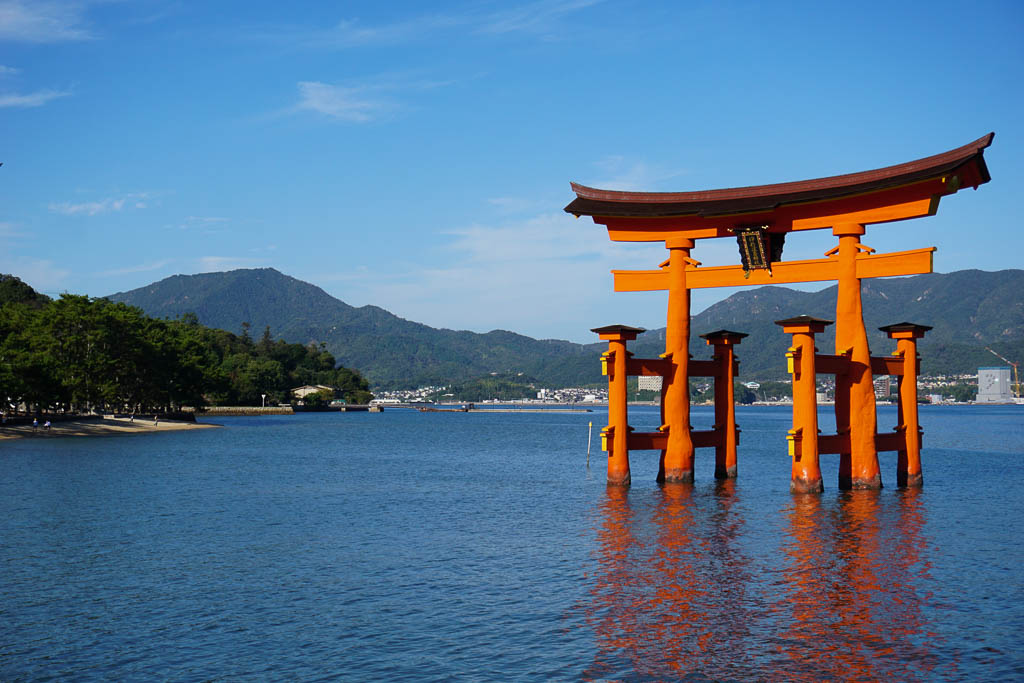
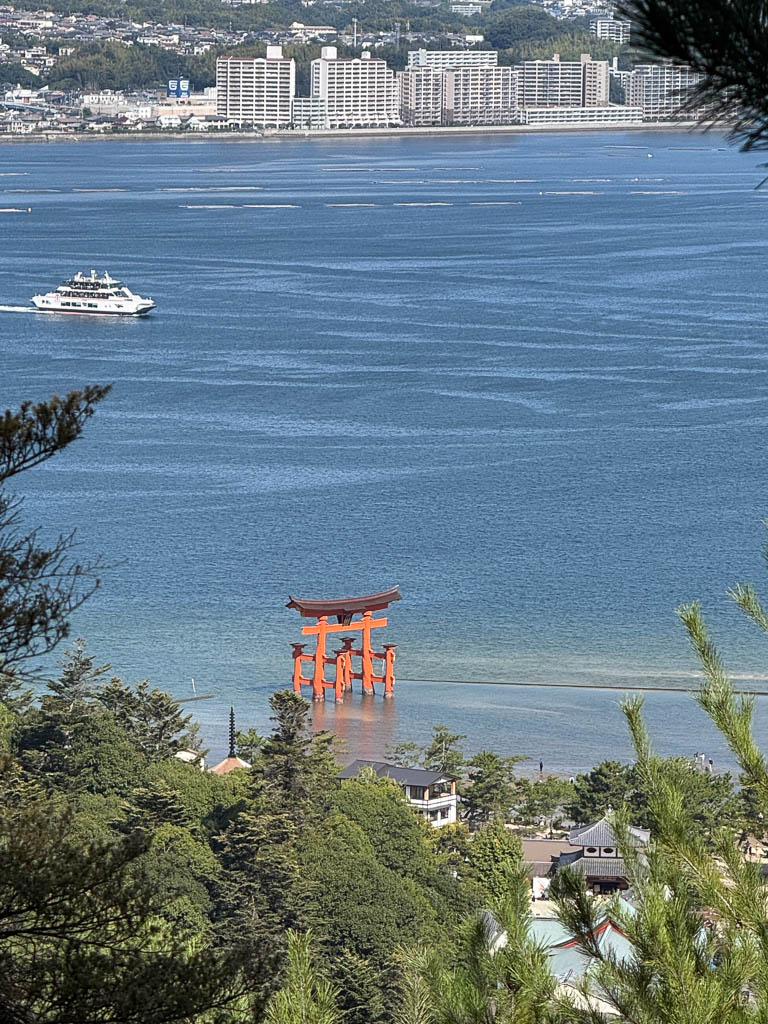
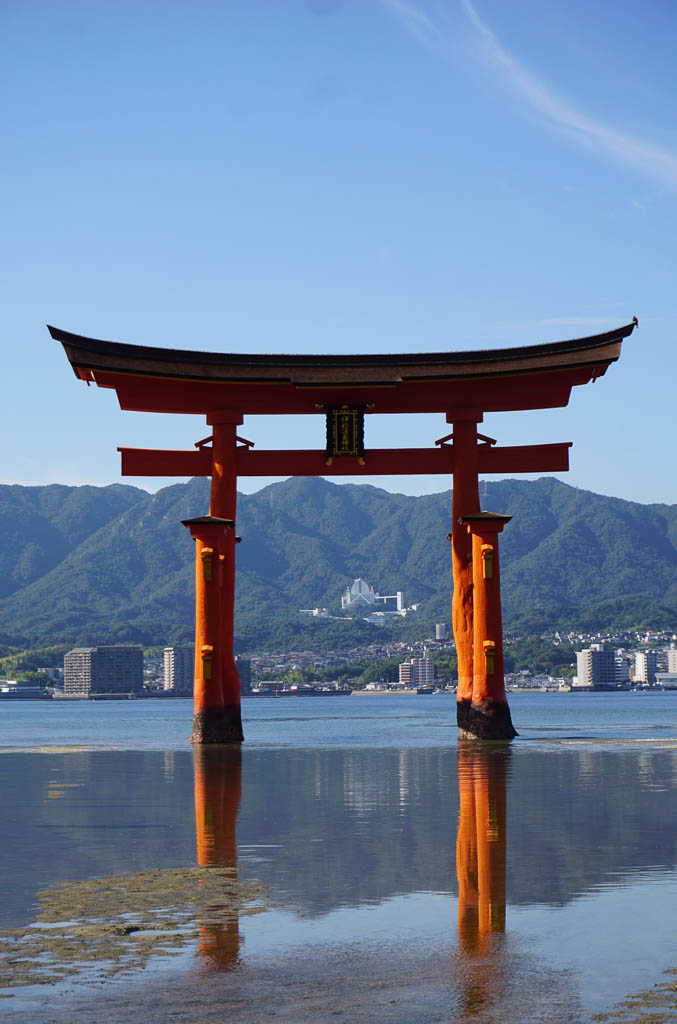
On my second day in Hiroshima, I woke up early to a day that promised what I hadn’t seen much of since landing in Japan – sunshine. And I couldn’t have asked for better timing – this was the day I was going to Miyajima, to see with my own eyes the majestic floating Torii gate, beautifully contrasting with the blue of the ocean.
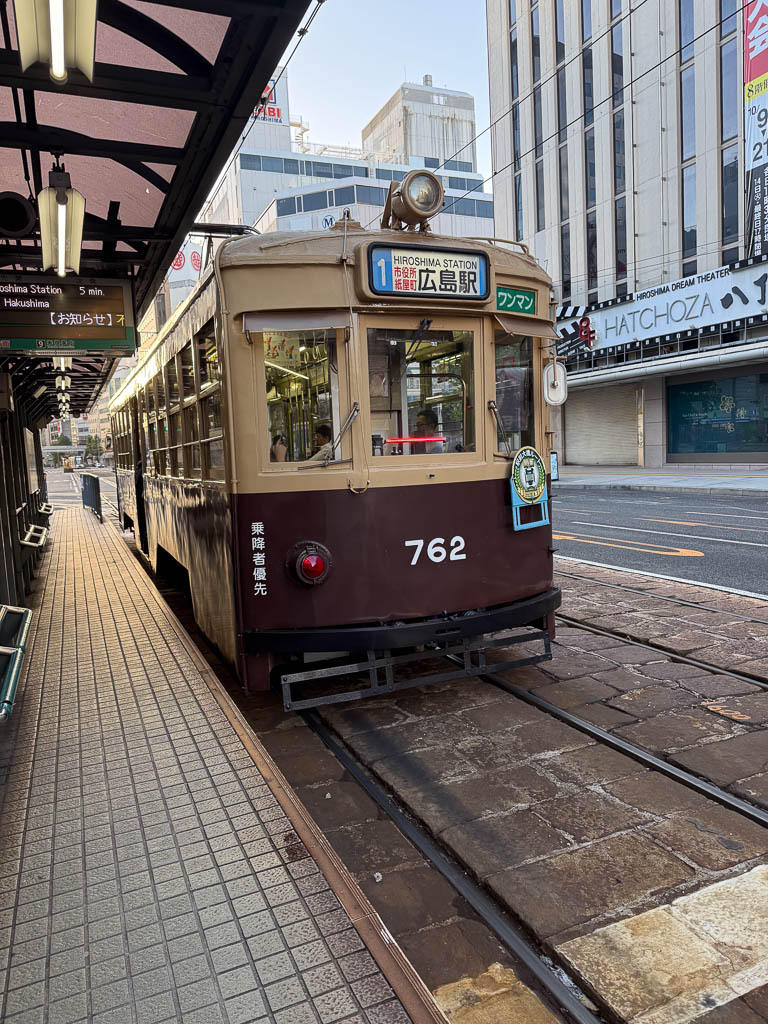
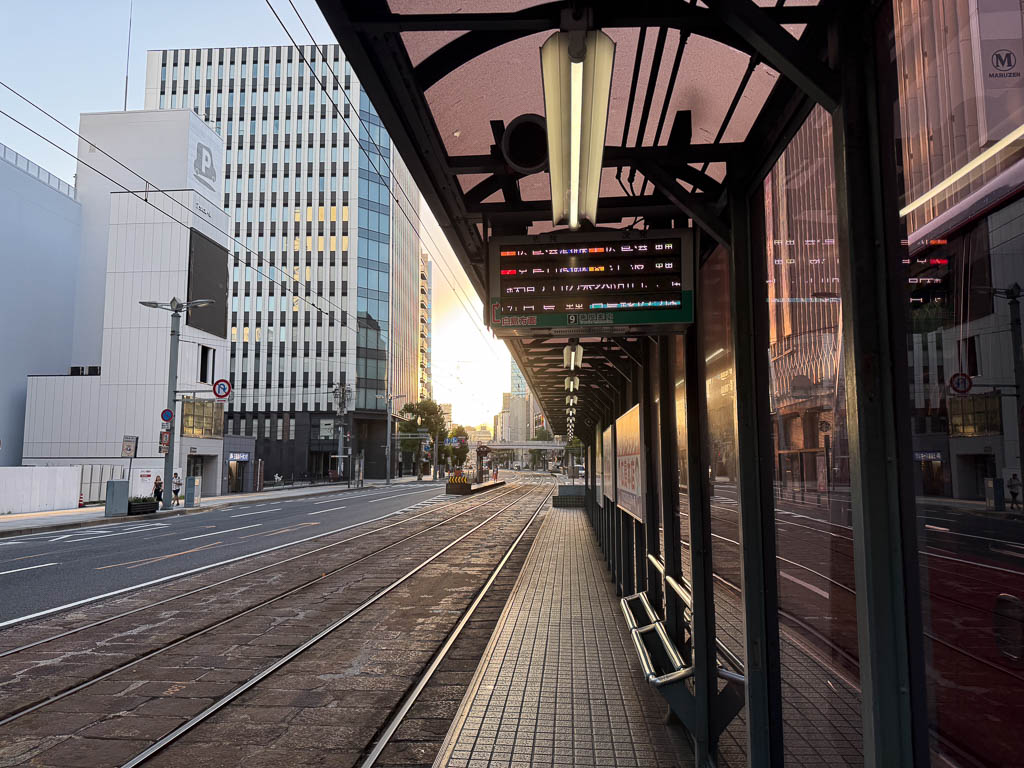
Miyajima is located off Hiroshima bay, and it’s easy to get to from the city – I got a tram from central, and then hopped on a ferry, taking about one hour. Intending to avoid the worst of the crowds, I was early, getting on the second ferry of the day.
Tip: stay on the right side of the boat, so the Torii gate becomes the first thing you see before even hitting your feet on the grounds of the island – this is your welcome to a sacred place. So sacred that i for centuries people weren’t allowed to be born or to die there as blood and death were considered to be ritual pollution in Shintoism.
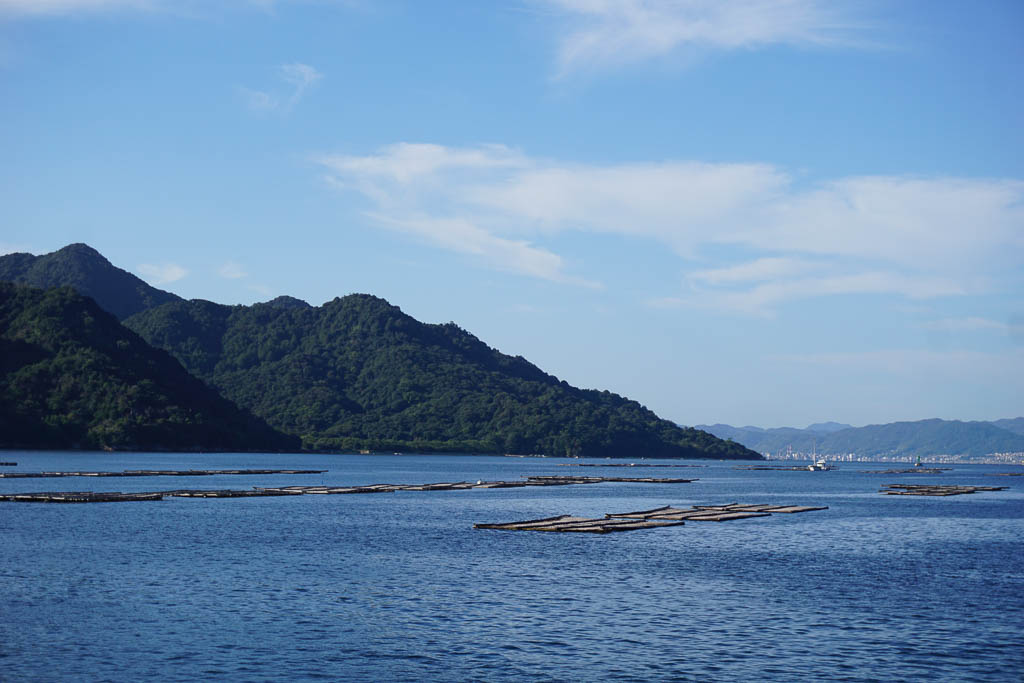
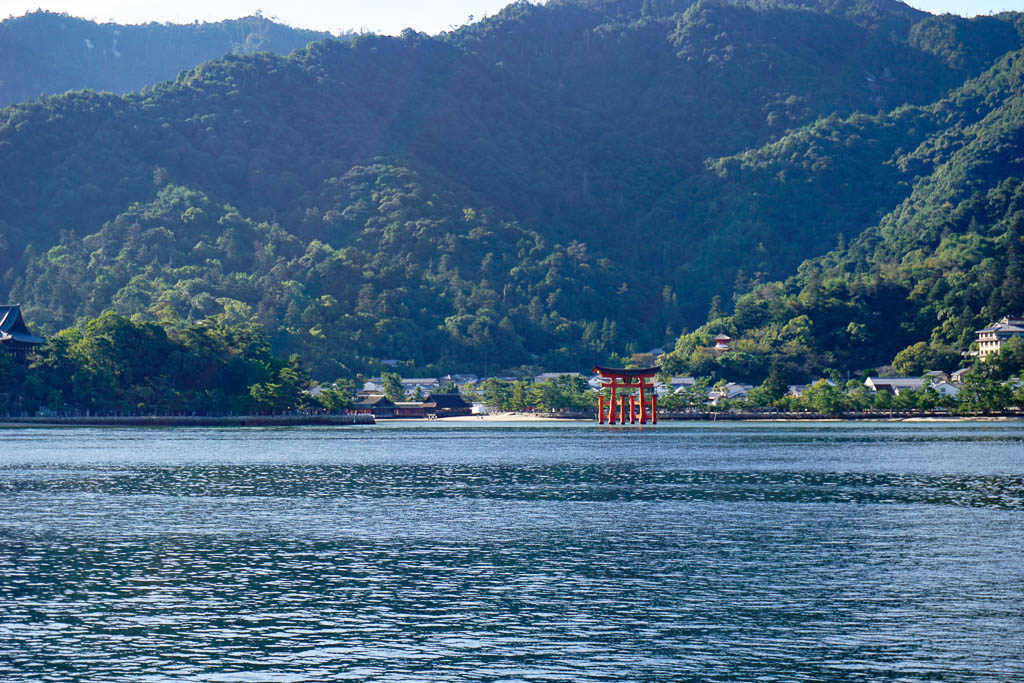
Miyajima isn’t the real name of the island. Just a quick look in Google Maps and you won’t find this name over this piece of land – it’s called Itsukushima. Miyajima means shrine island and of course that stuck.
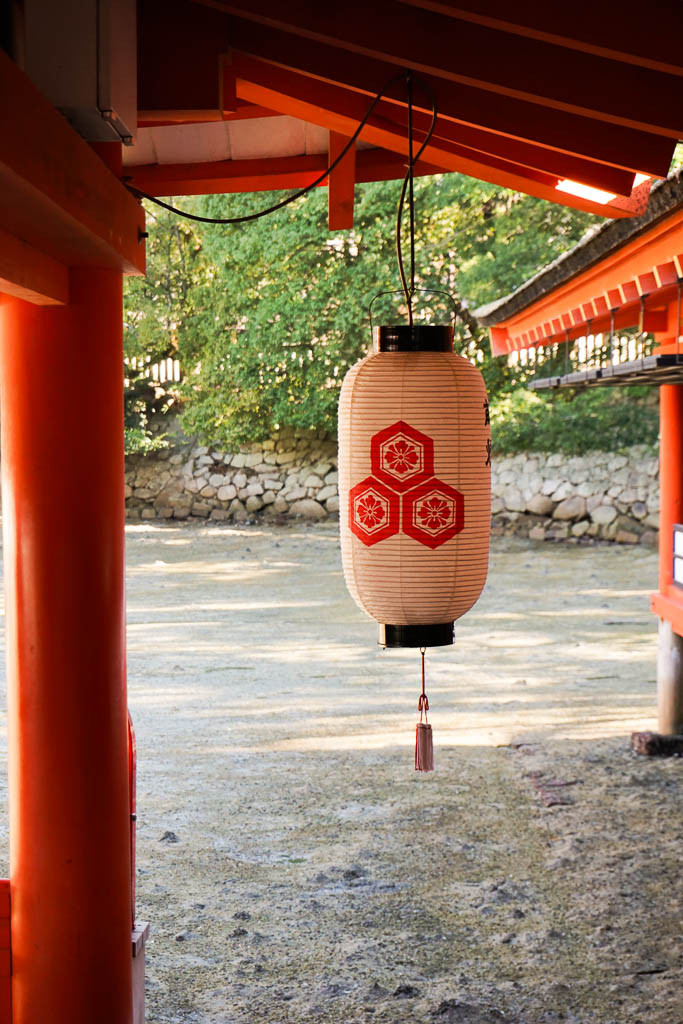
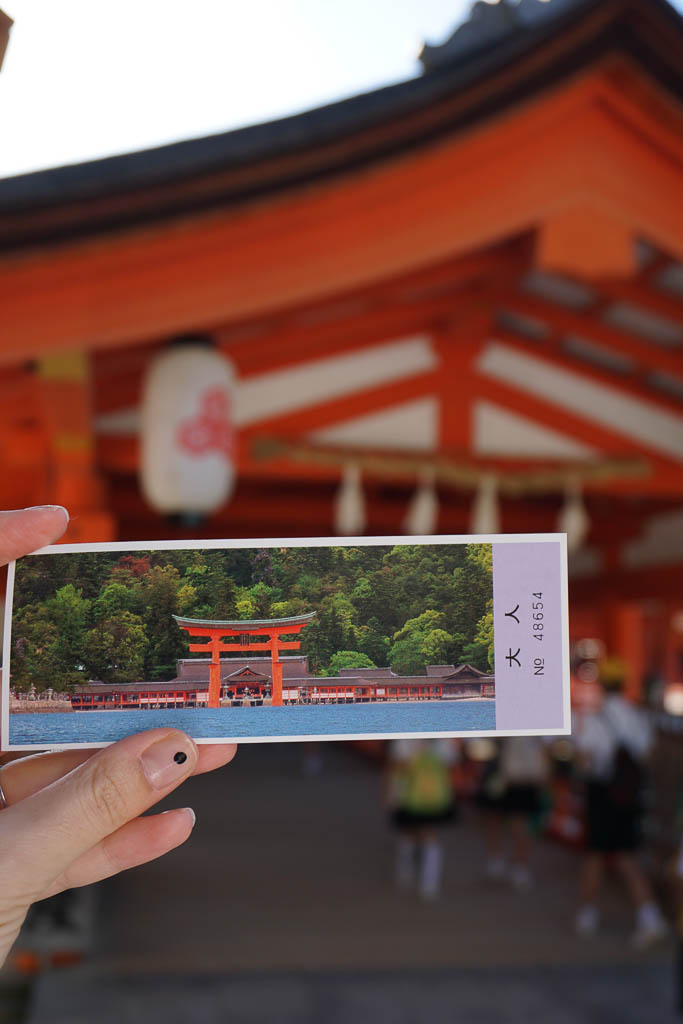
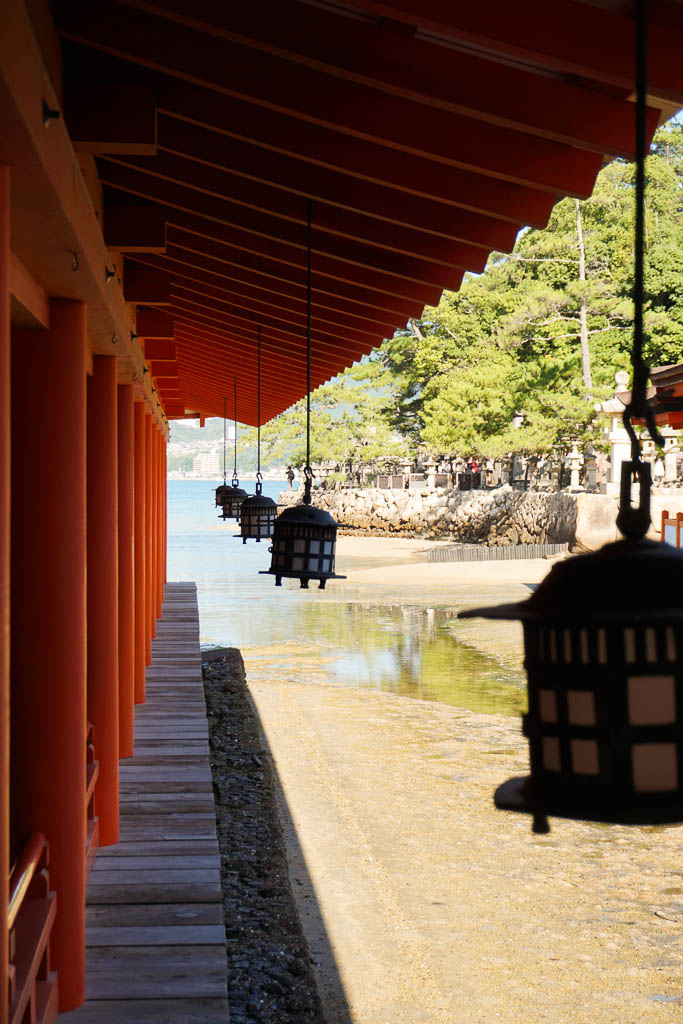
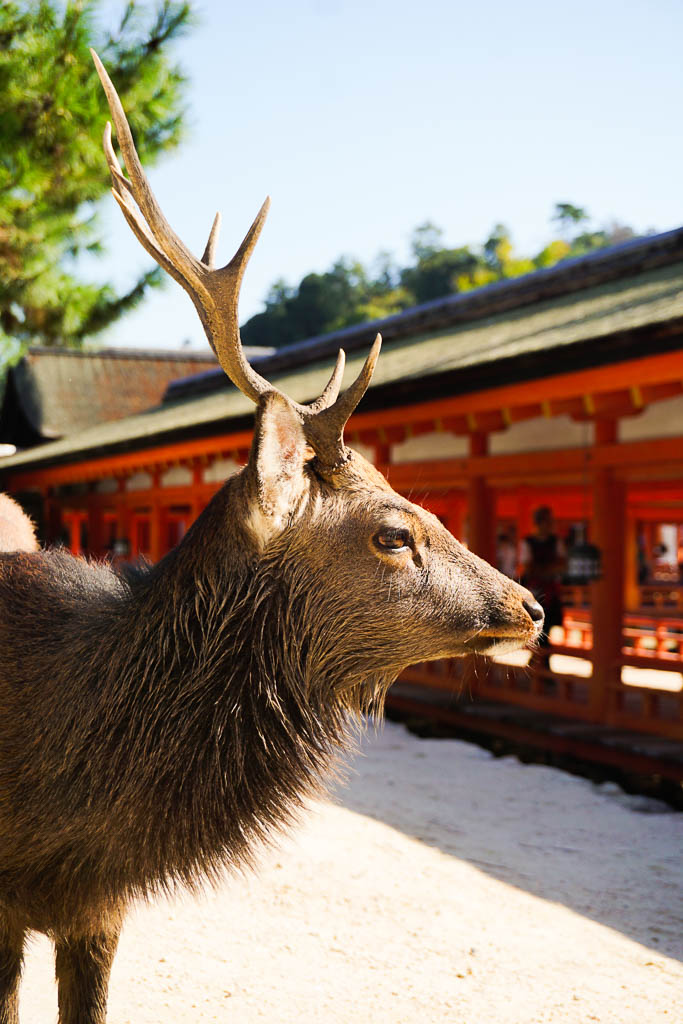
The shrine was founded in 593 CE, meaning about 1400 years ago, and in my head this seems impossibly ancient, as these things always do. Imagine back then… someone admiring this piece of land from the shore, on a clear day. Built a boat, perhaps a canoe. Reached the island, after much physical effort, but patiently. And then rewarded with its beauty. The luxurious vegetation covering the mountains, the submission of the ocean to its shores, the greenery. Likely going up Mount Misen, reaching its peak and thinking… magic. This is exactly what one feels in Myajima.
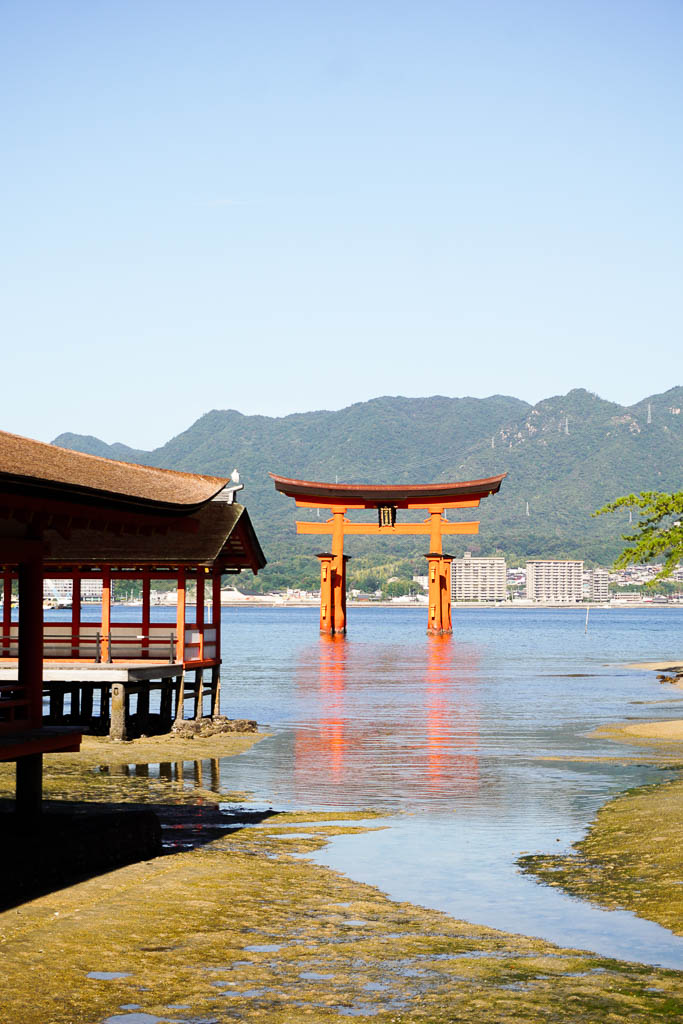
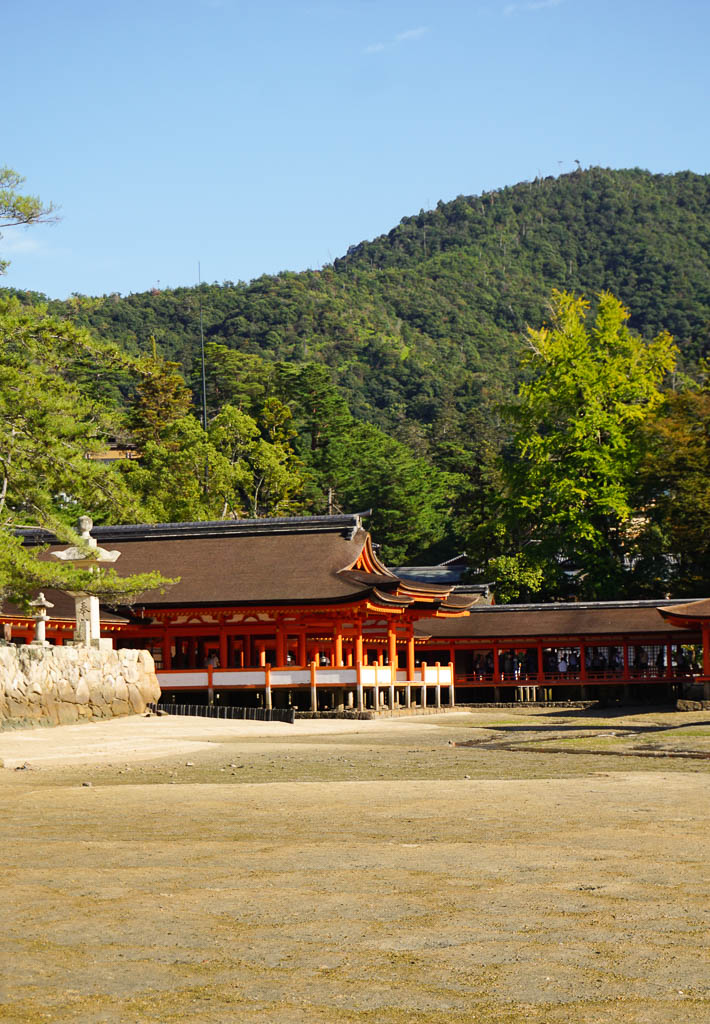
The Itsukujima Shrine was definitely one of my favourites in my whole trip to Japan, perhaps because it’s so different. It blends seamlessly with the shore, with its long corridors built in stilts, attempting not to perturb the natural order of things, not to get in the way, instead a passive vessel, to hold the sacredness just for us mere humans to note its there.
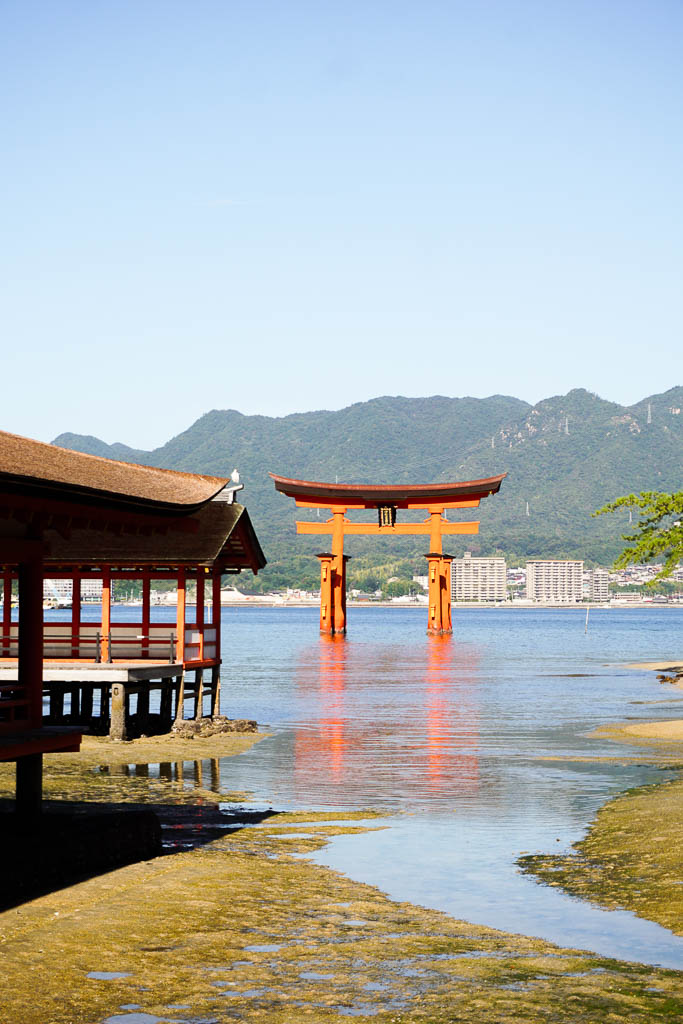
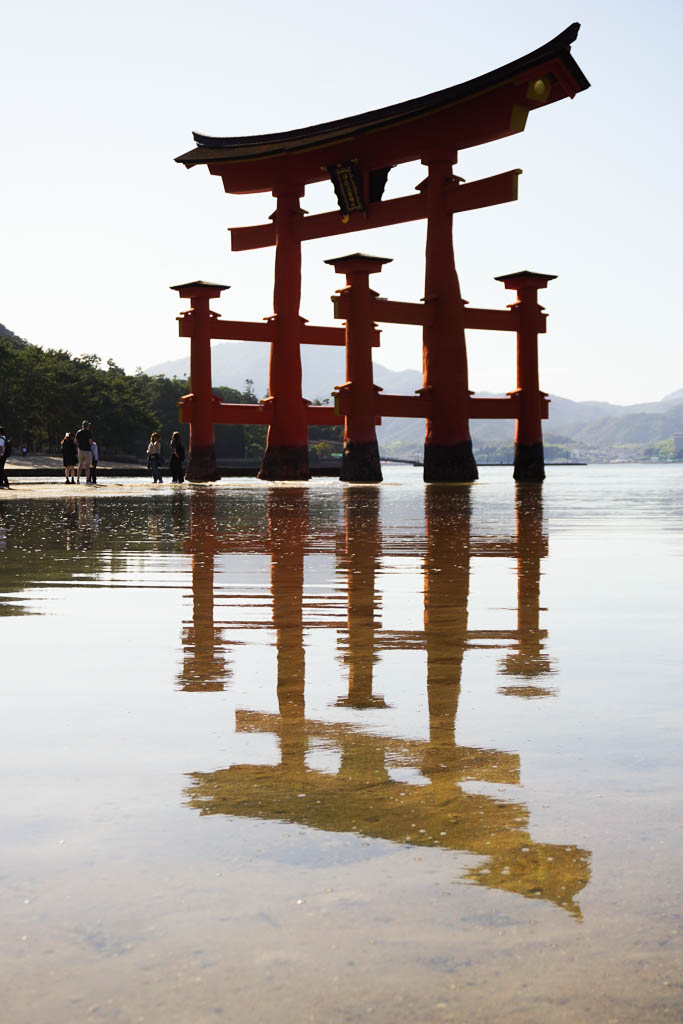
The absolutely majestic Torii gate that became the symbol of Myajima dates from 1875, but it’s been rebuilt many times. Made of camphor wood, it’s about 16.6 meters tall, and weighs about 60 tons. The most fascinating thing is that gravity is mostly doing its work here – you would think the pillars would be buried quite deep in the ground, but that’s not really true – it’s being held in place largely by their own weight.
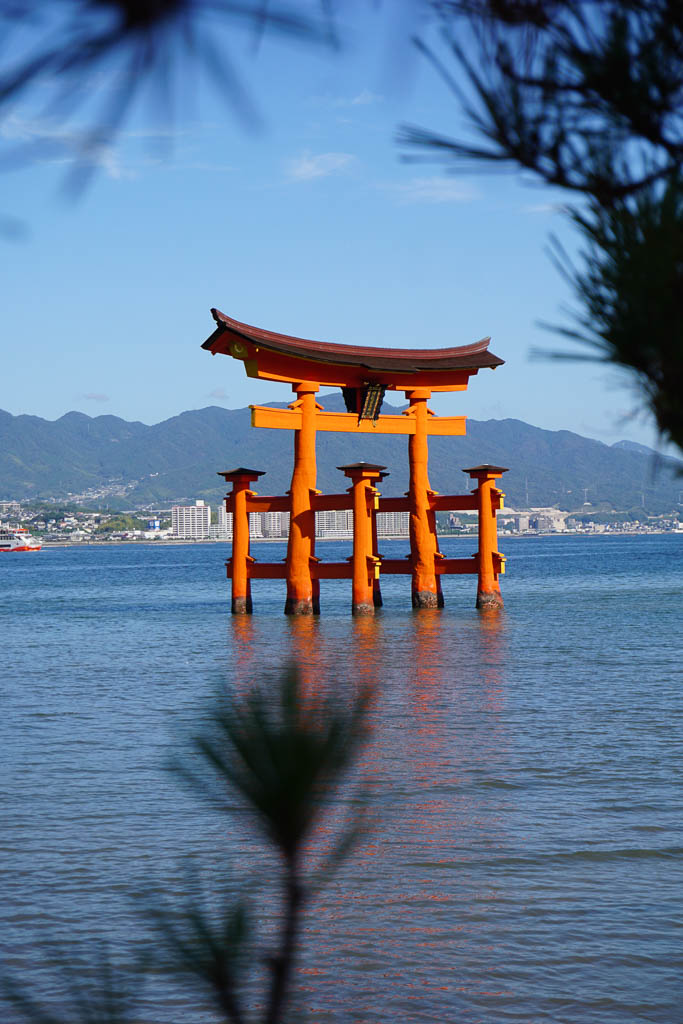
Spending a day here allows you to see it in low and high tide. When I arrived the high tide gave the floating look it’s famous for. And then in the afternoon, I was able to step closer to the gate, and really feel the weight of it – imposing over us small humans, a giant gate to a sacred place.
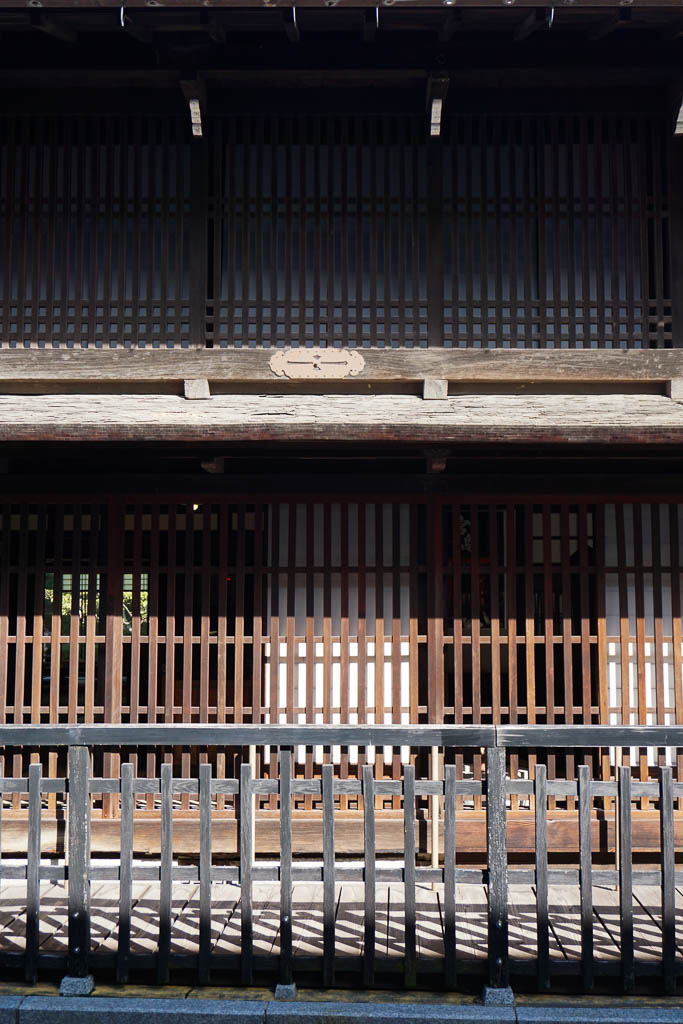
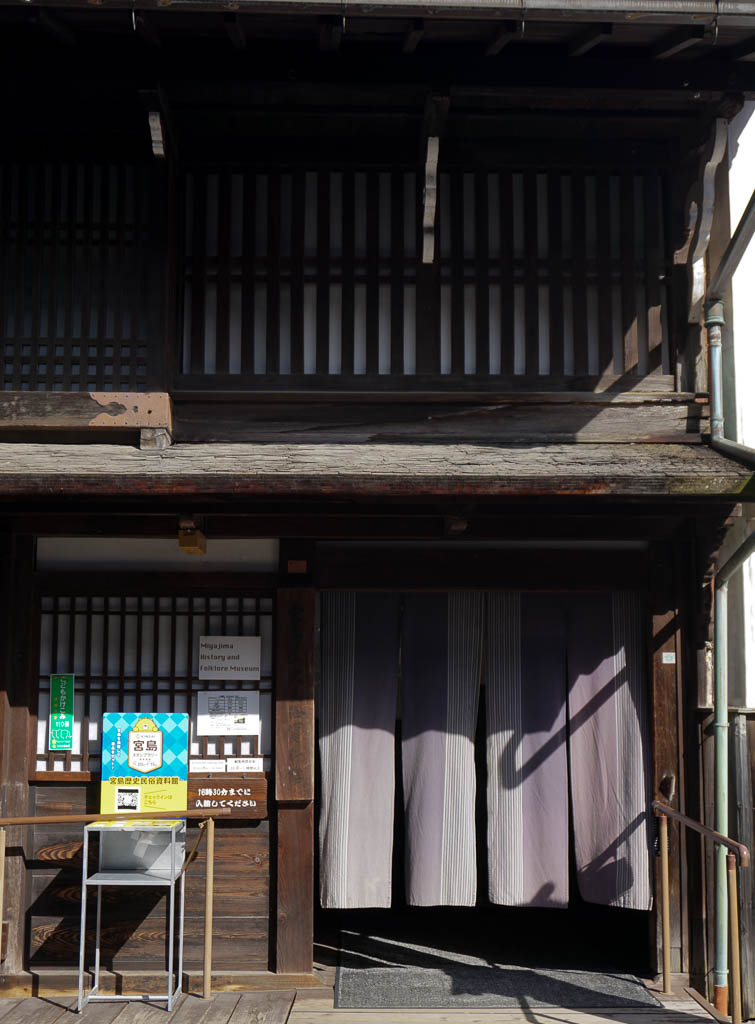
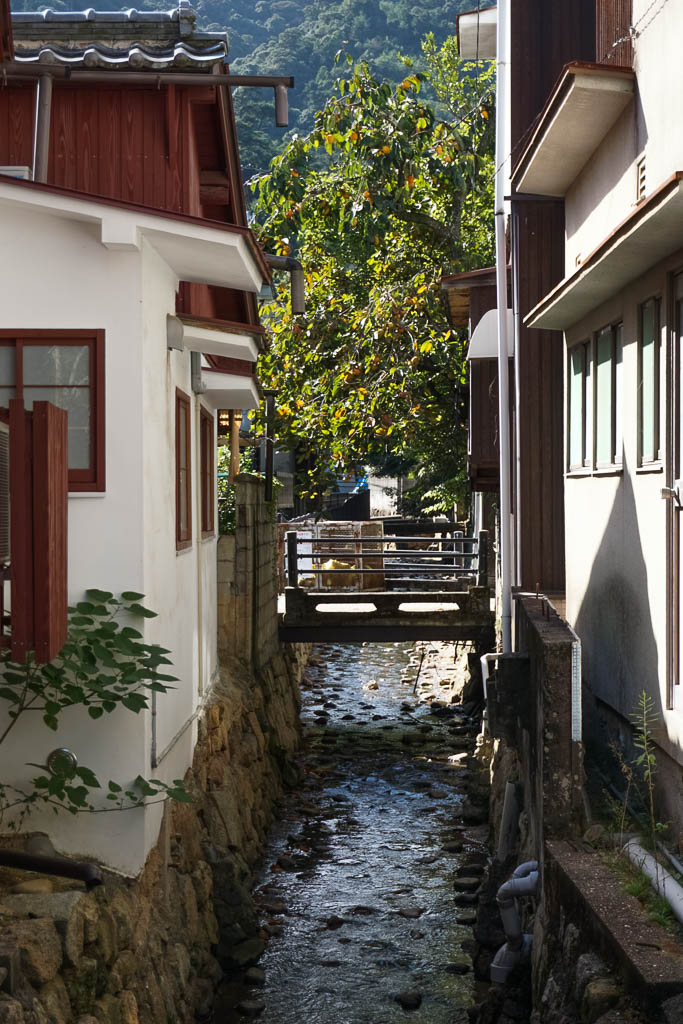
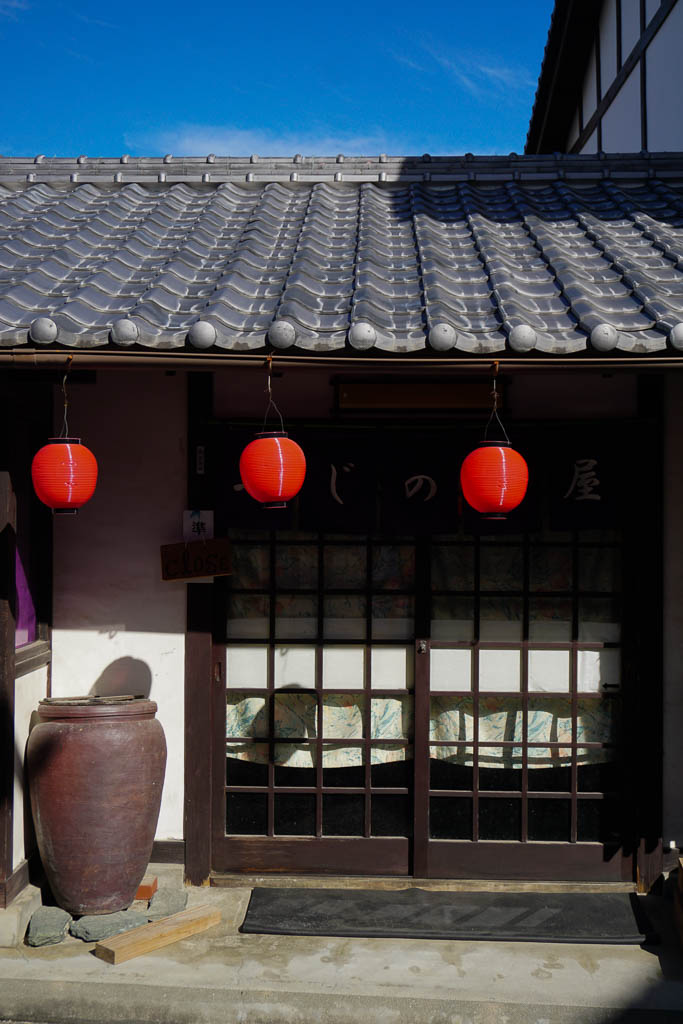
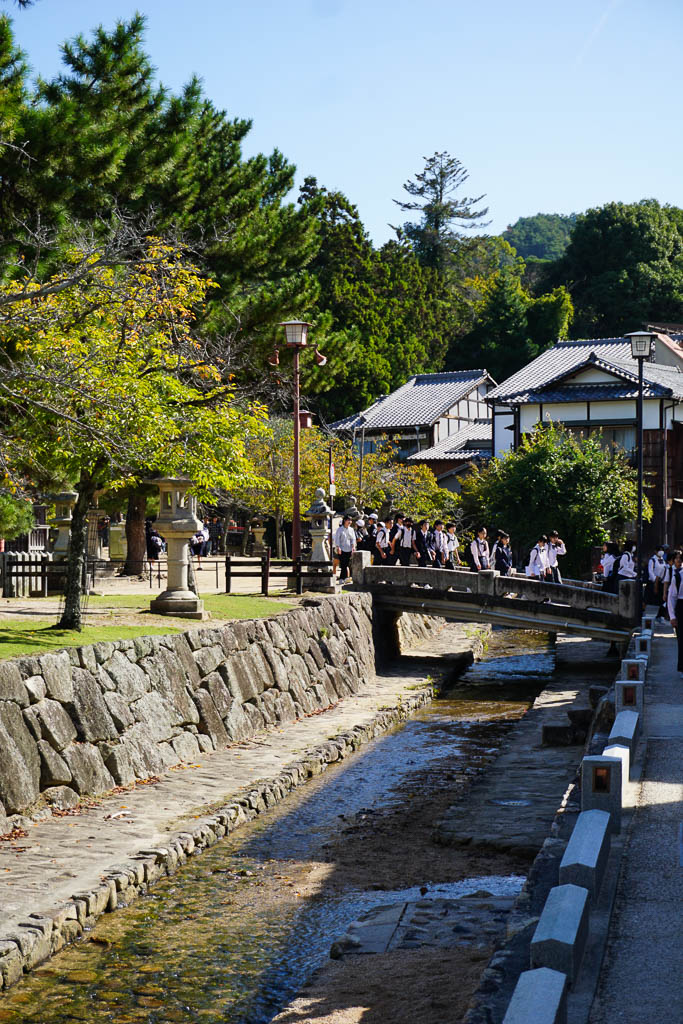
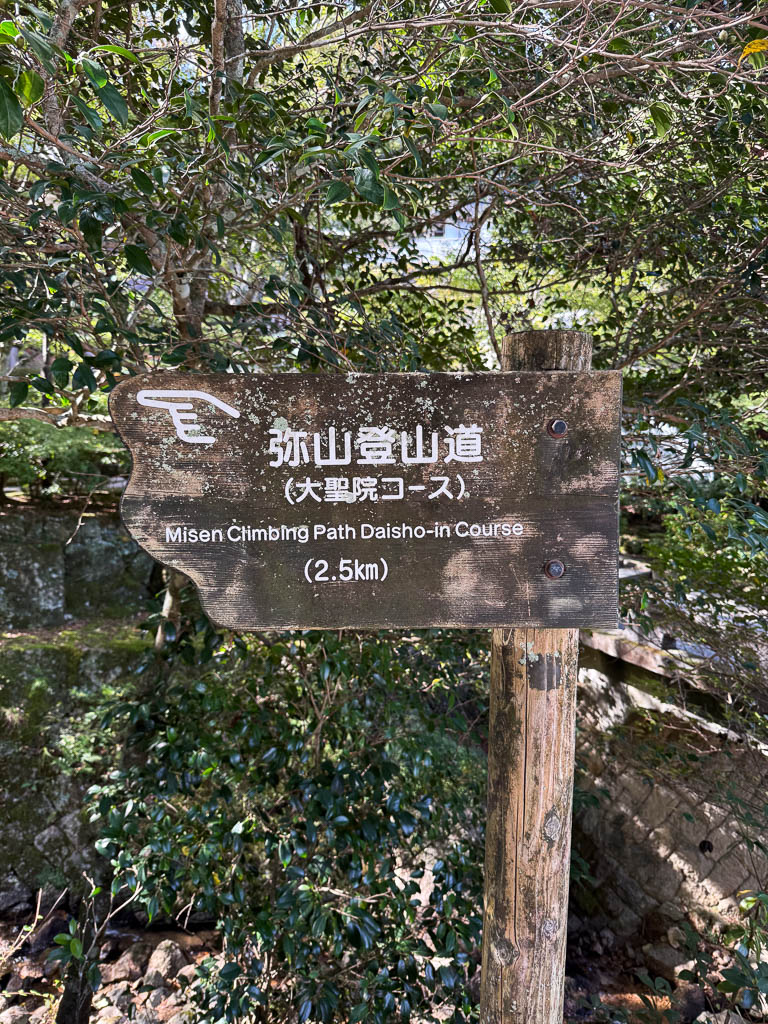
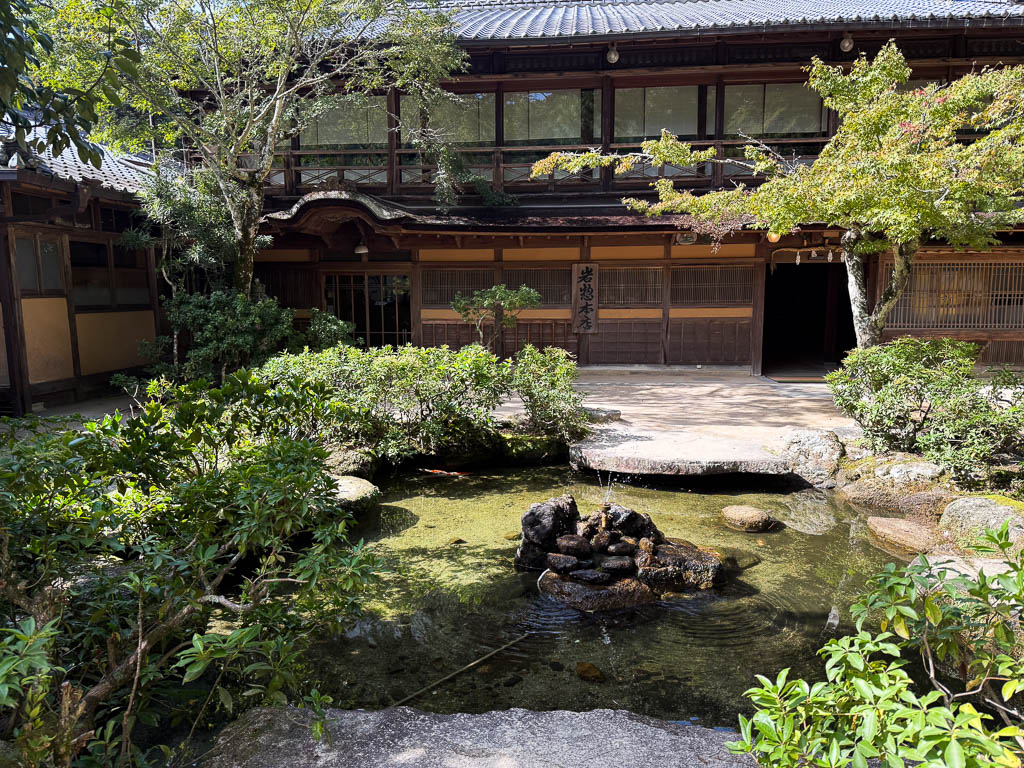
Miyajima’s streets were another highlight, preserving the old Japanese style, with buildings covered in wooden panels. But I was worrying about doing something that was going to be hard – climbing Mount Misen, considered sacred of course, rising about 530 meters above sea level. It was a hot day – the maximum temperature reached 28 degrees Celsius – and so I wanted to do it earlier before it got unbearably hot.
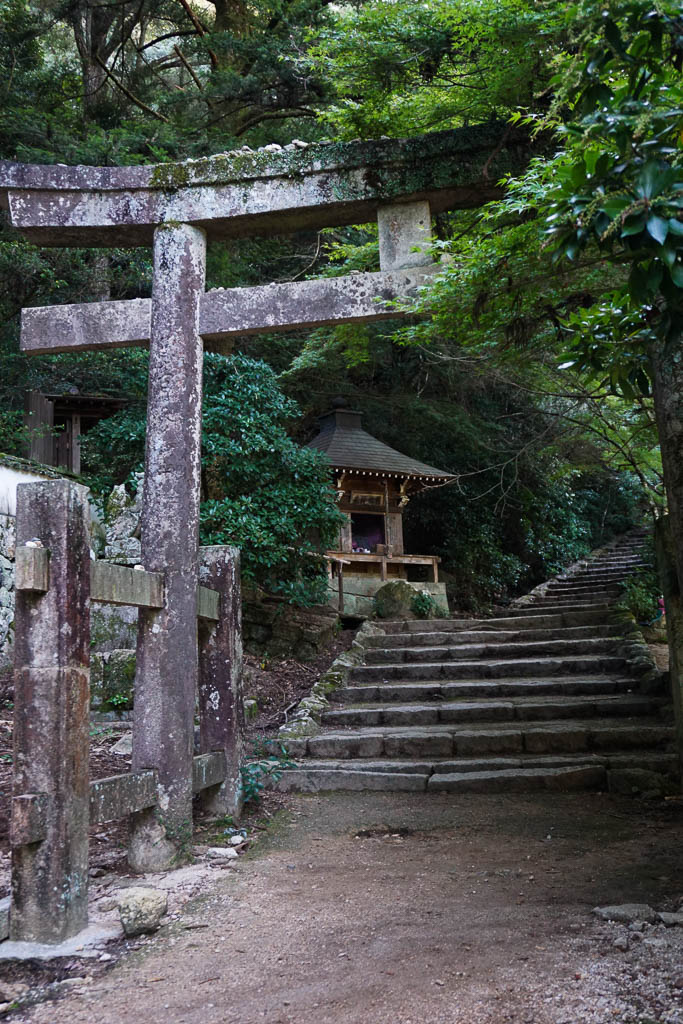
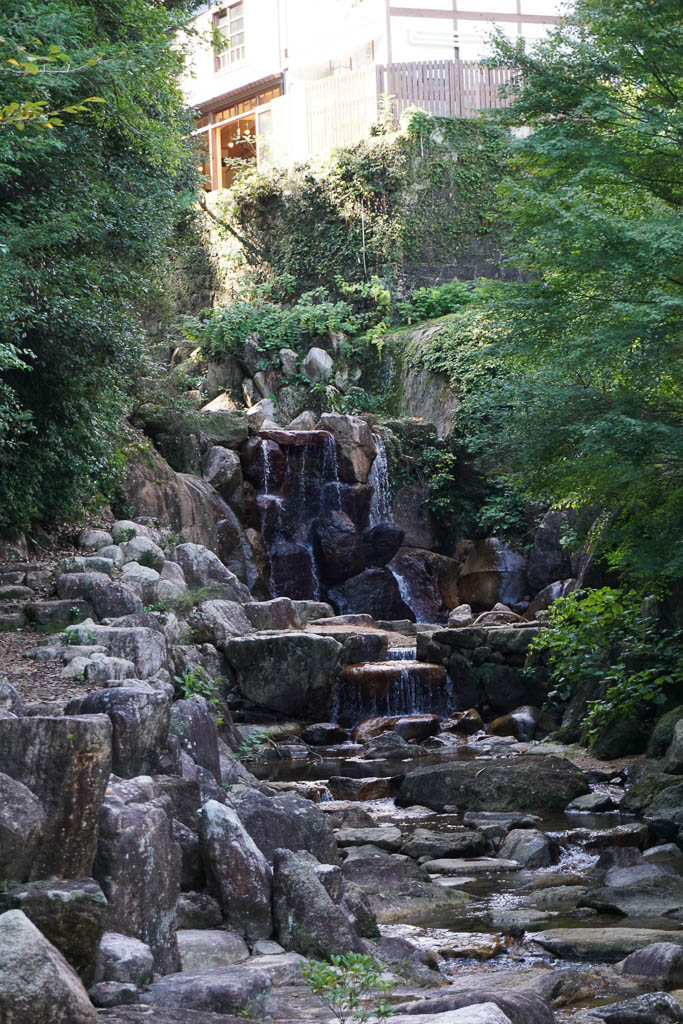
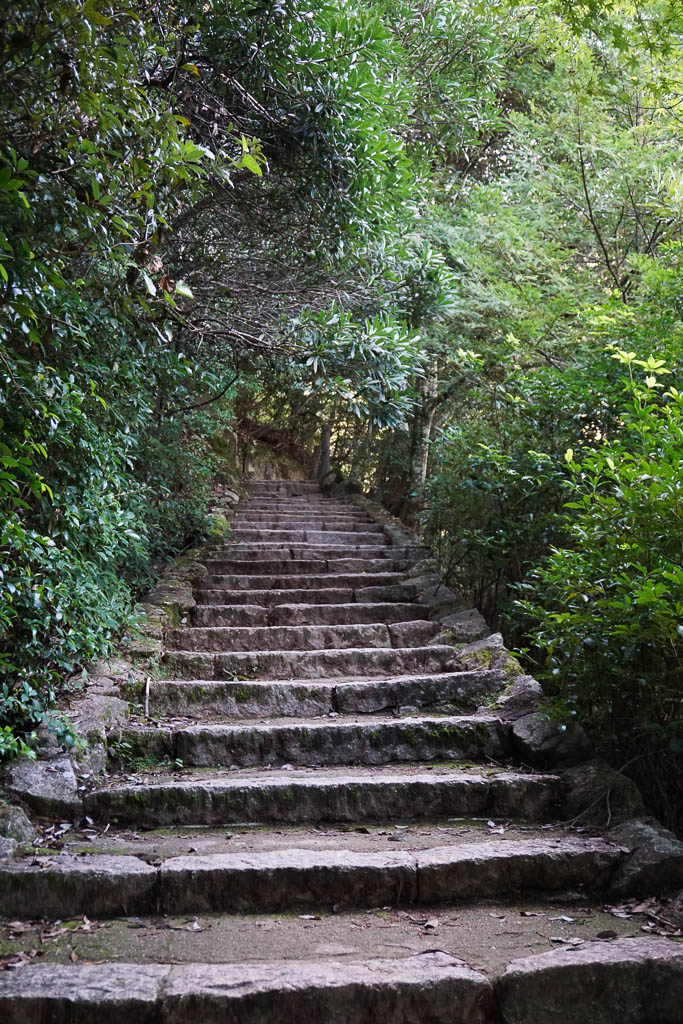
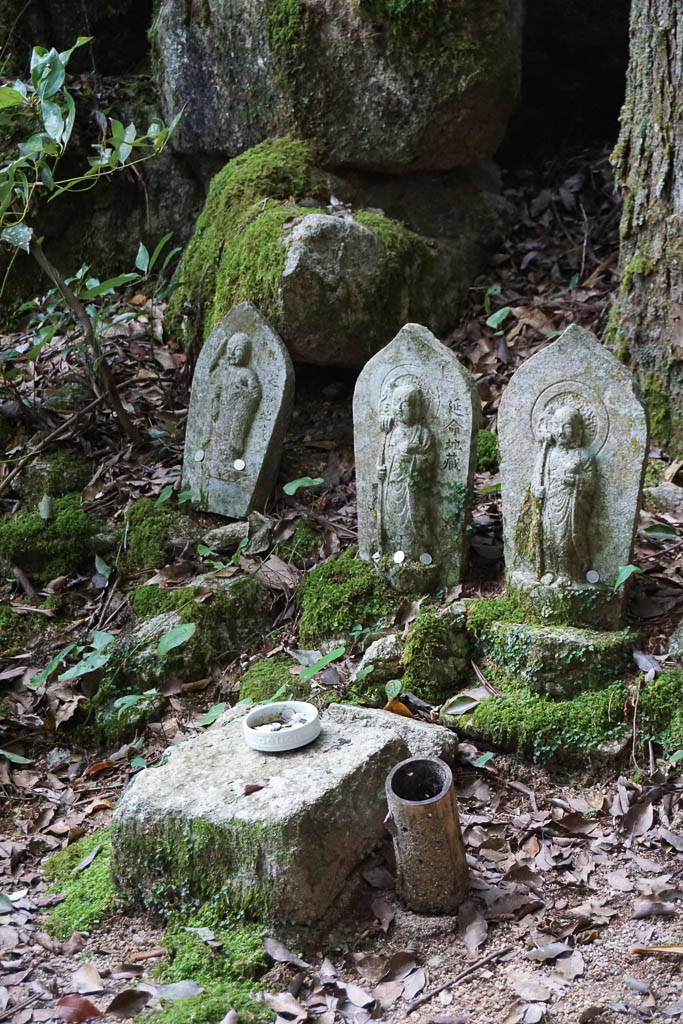
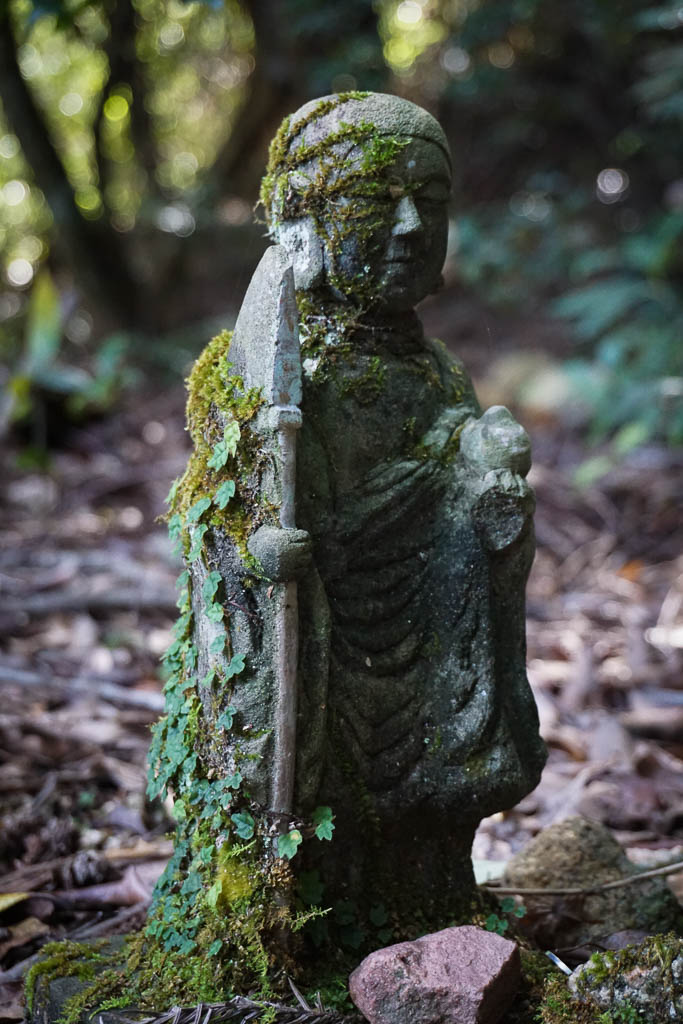
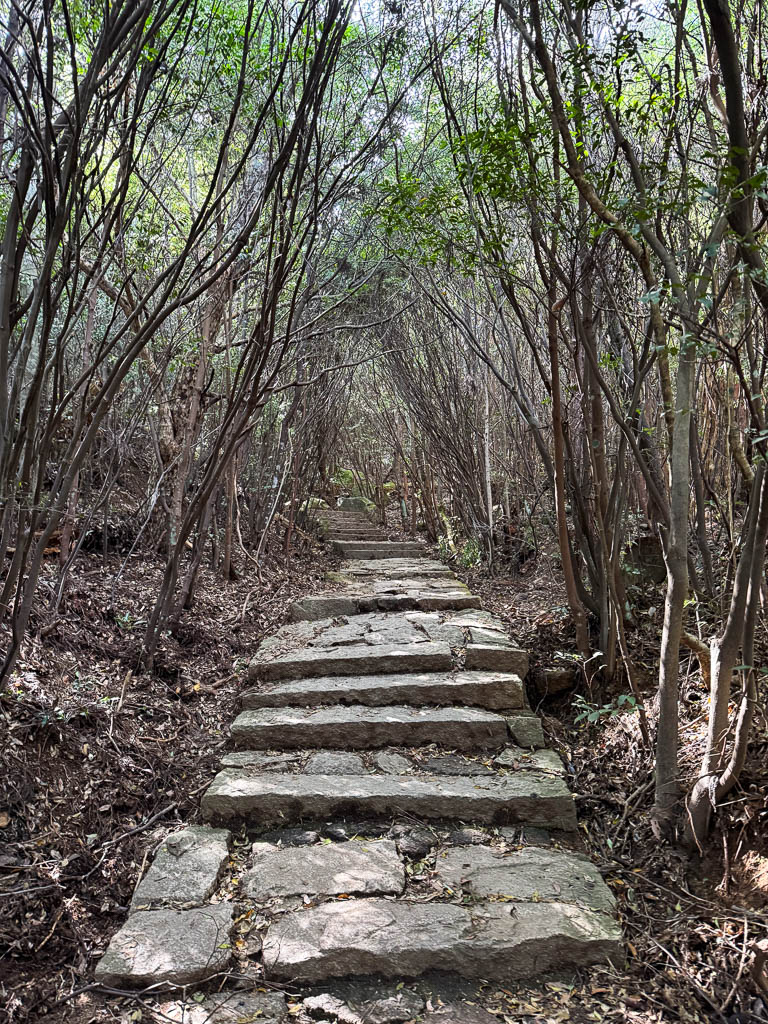
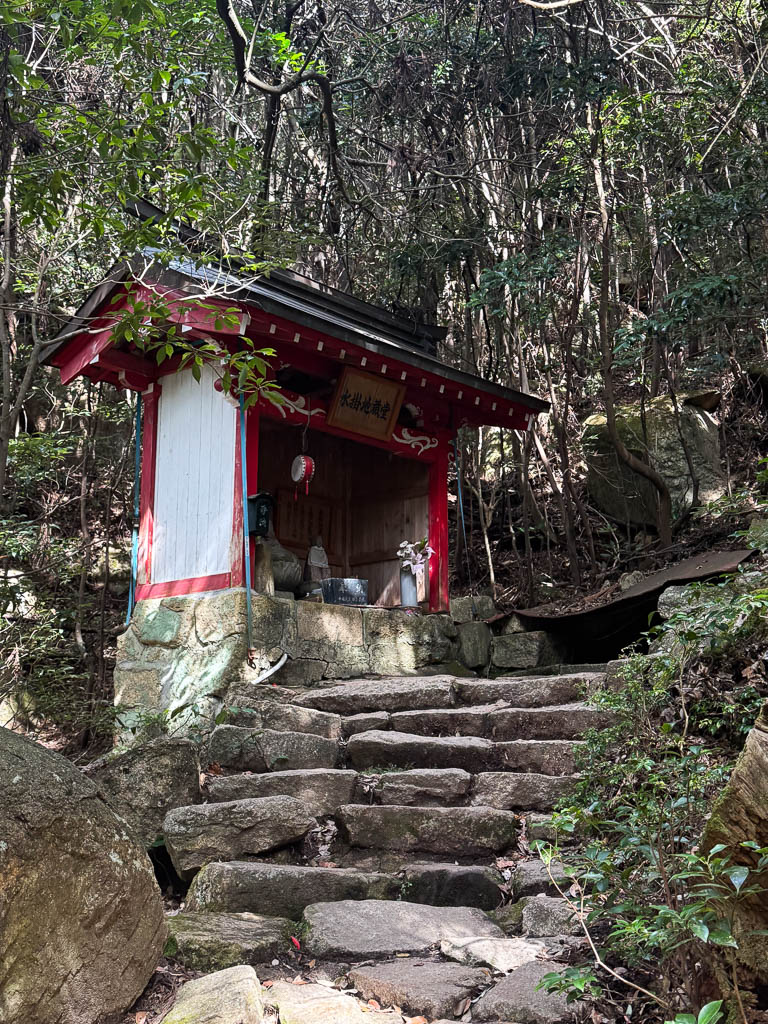
It takes about one hour and half to climb, and there are stone steps for most of the way. I stopped a few times to recover my breath and look at the views. As you hike, you’re hugged by nature. Greenery created a shelter from the sun, providing shadow throughout most of the climb. And here and there, I’d find small little shrines and Budha statues.
Miyajima is a prime example of the elegant blend of Shintoism and Buddhism that is so unique to Japan – a massive Torii gate welcomed me to the island, and yet the little Buddhas kept me company in the mountain. It hit me that what I was doing wasn’t just a climb for a view – it was deeper than that, even if initially I hadn’t realised so. It was a pilgrimage. A spiritual practice of mindfulness. These made me slow down, and take in the sounds of the forest, appreciating the different layers of green, feeling the breeze and smell the freshness of the ocean that was surrounding me and yet, at times, I could not see.
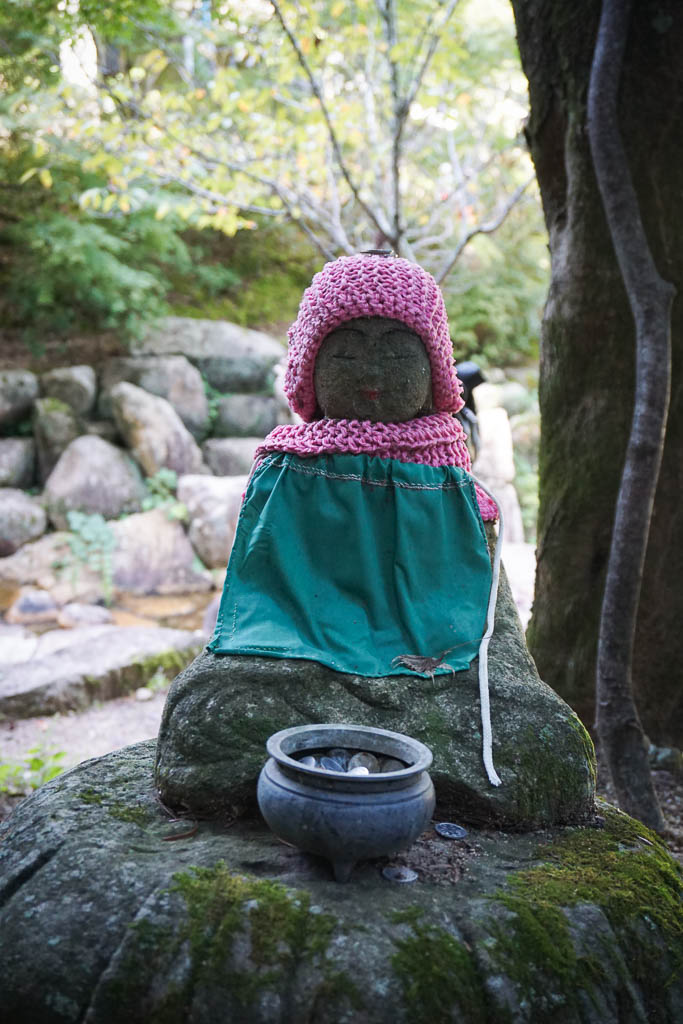
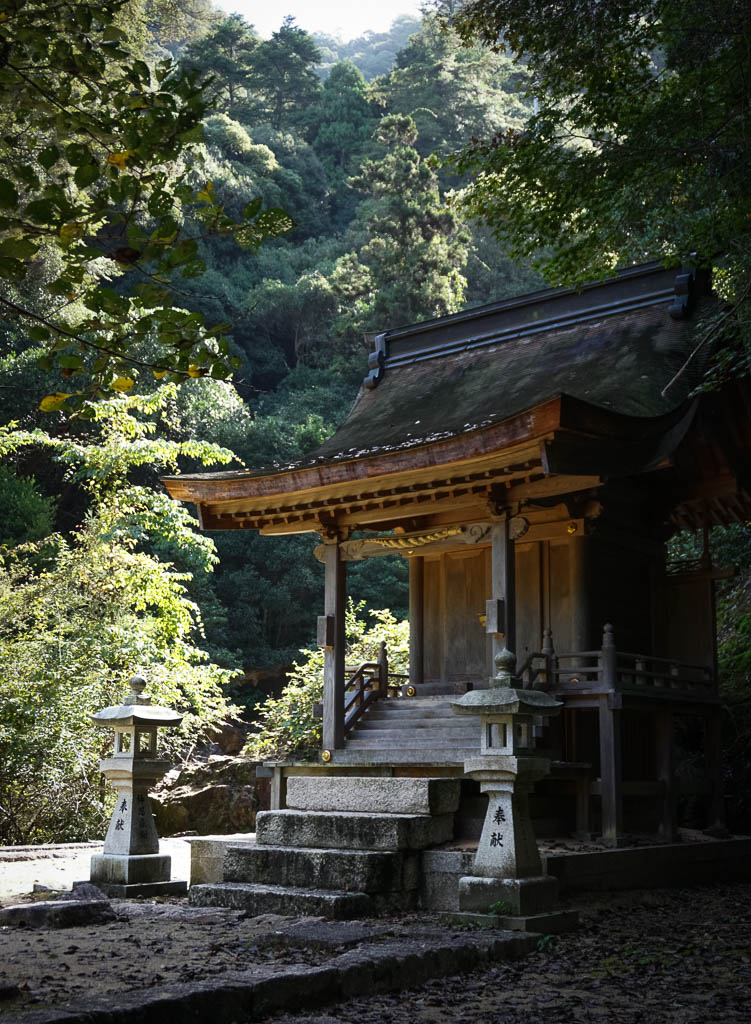
And then, from time to time, I would hear the melody of tiny bells, and it was only when I got to the top that I noticed some people were carrying these. Intrigued, I investigated later, when back at the hotel.
In many ways, it’s related to the stunning blend of Shinto and Buddhism into one living practice that is named shinbutso-shugo, “kami and Buddhas sharing a house”, like flatmates. Mount Misen is strongly tied to this and bells are a part of both traditions. In Buddhism, bells are used to wake the mind, cutting through mental noise. “Pay attention”, it says. In Shinto, bells are used to attract the attention of the kami. You ring a bell before praying at a shrine. And some people carry small bells as talismans.
But perhaps the most practical, and also heartwarming explanation on why hikers would carry a bell, it’s so they make a clear noise that won’t startle animals. It’s mostly related to bears.
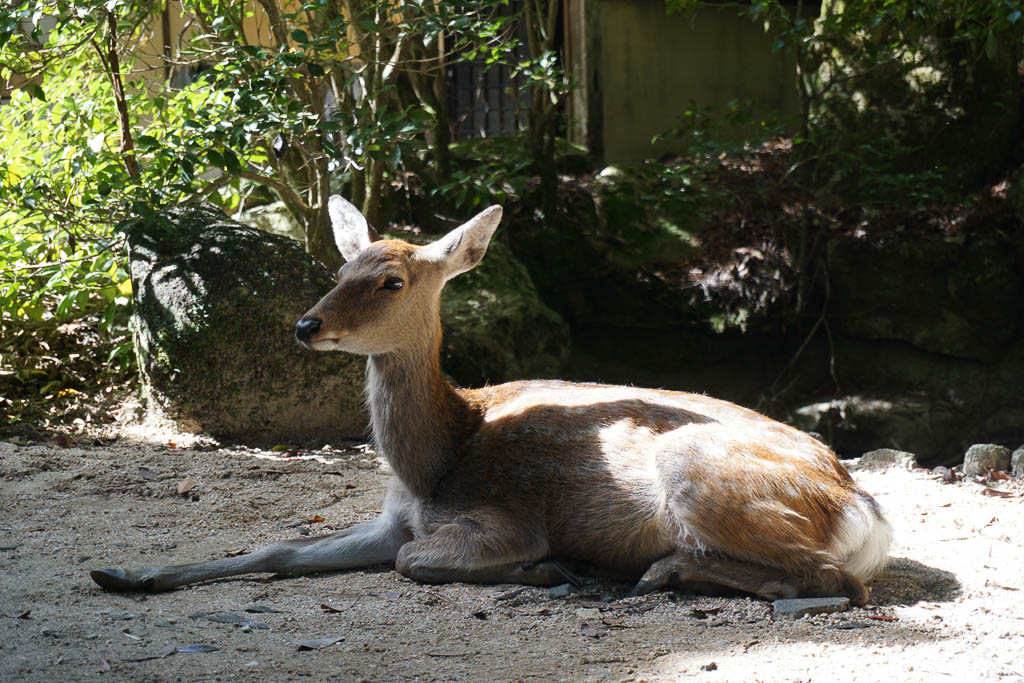
When I finally hit the summit, I was rewarded with a wonderful 360 degrees view of Miyajima and its surroundings. There is a wooden platform where you can take off your shoes and sit, lay down. I had taken with me some snacks, and took the change to rest my shaky legs and replenish my energies. Definitely take water and snacks with you, as there is nothing there selling it. There is a small bathroom and that’s it. So be prepared.
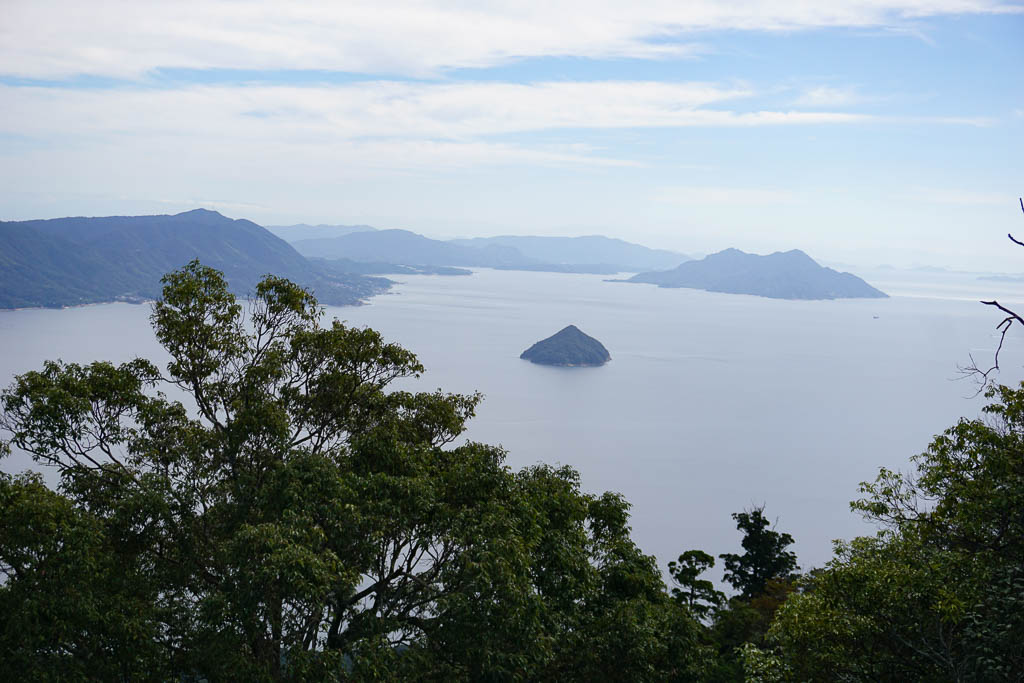
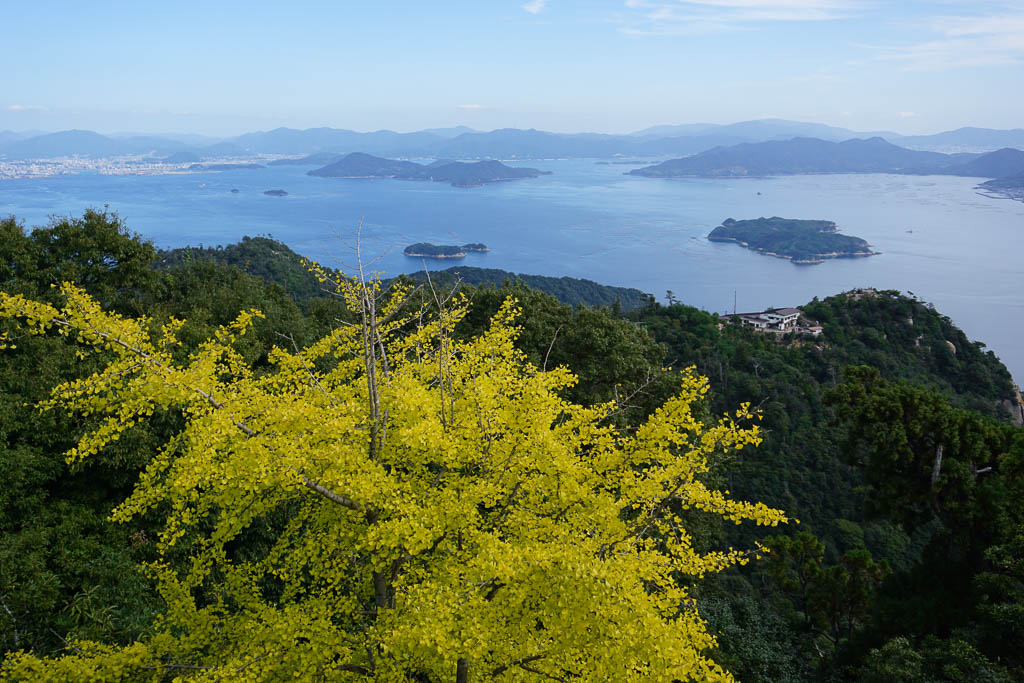
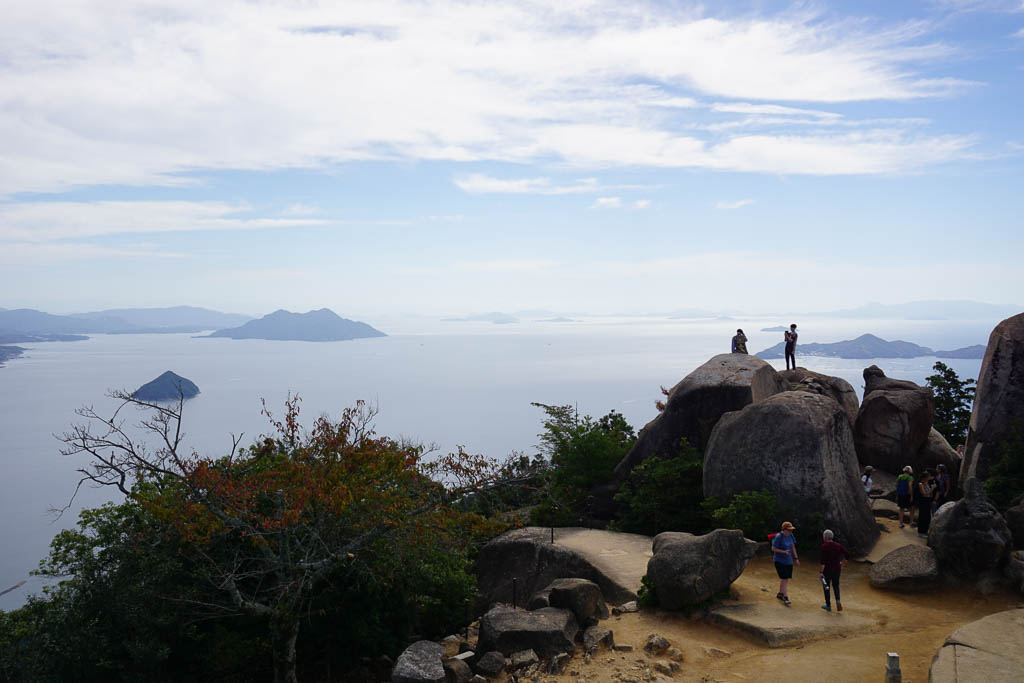
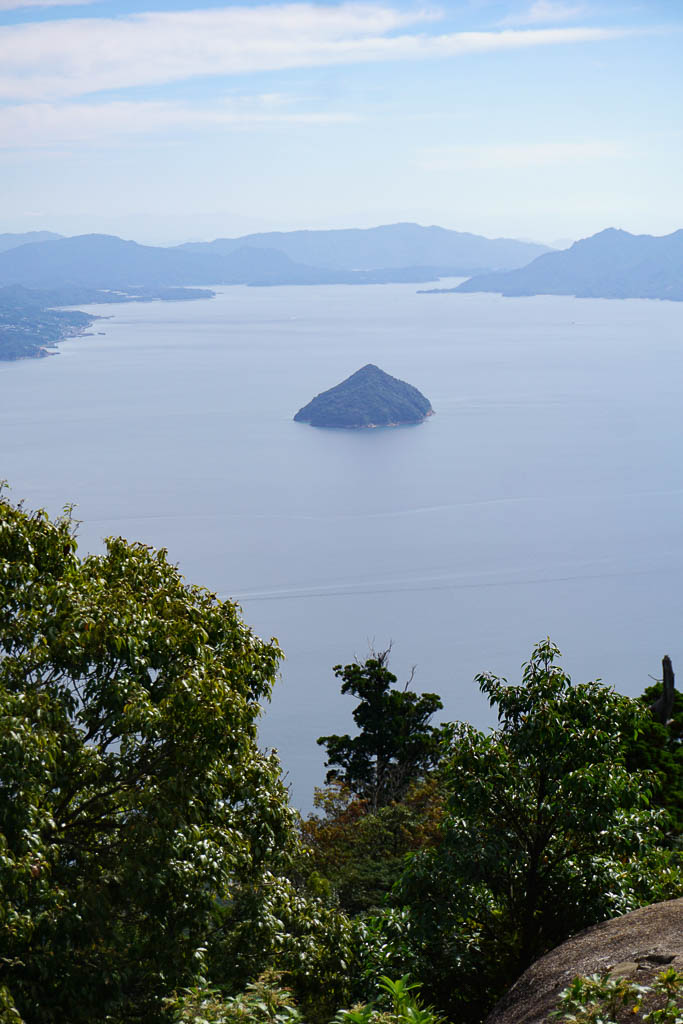
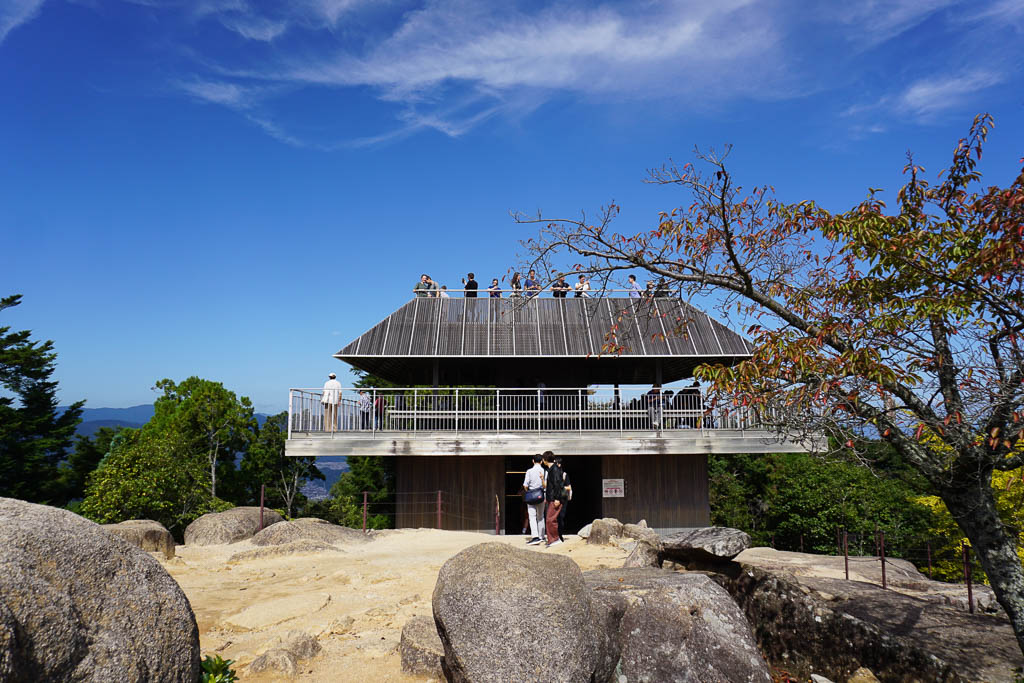
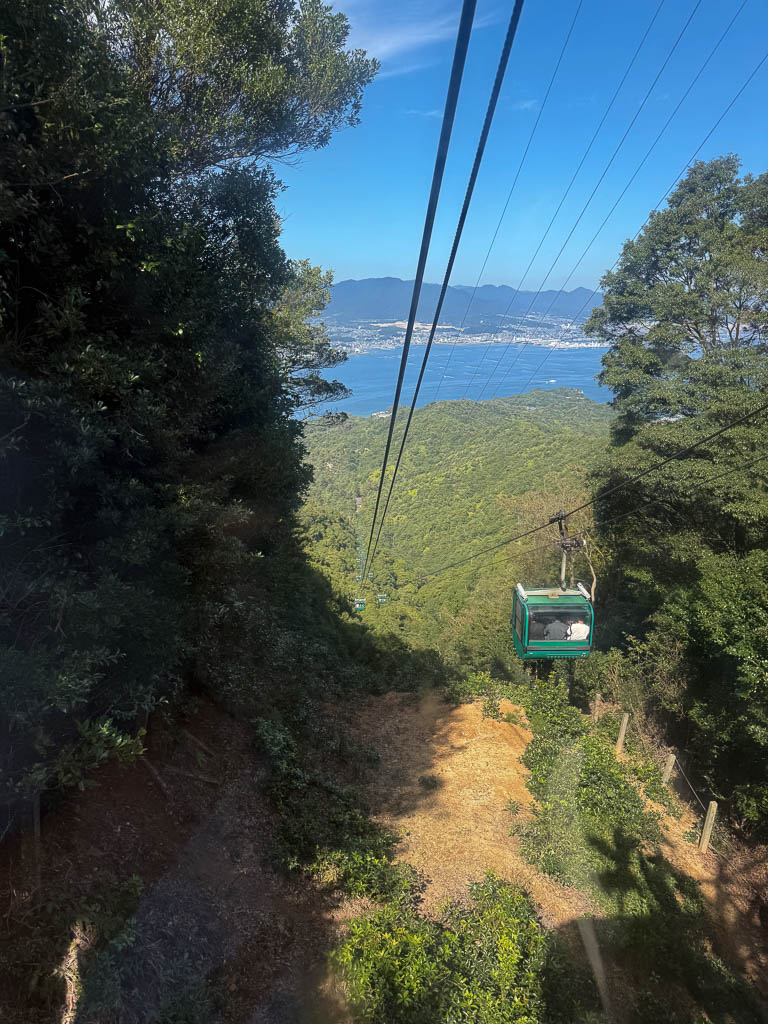
If a hike would be too much for you, there is also a cable car – the Miyajima Ropeway – that takes you near the summit. There is a viewing deck in there, but to get to the actual summit you still have to walk about 30 minutes. I used the Ropeway to go down – it’s also a great experience, the views are fantastic. However, if you are planning to use the cable car to go up, be there early. When I disembarked back at the base, there was a huge line of tourists waiting for the next cable car. They had over 1 hour waiting times…
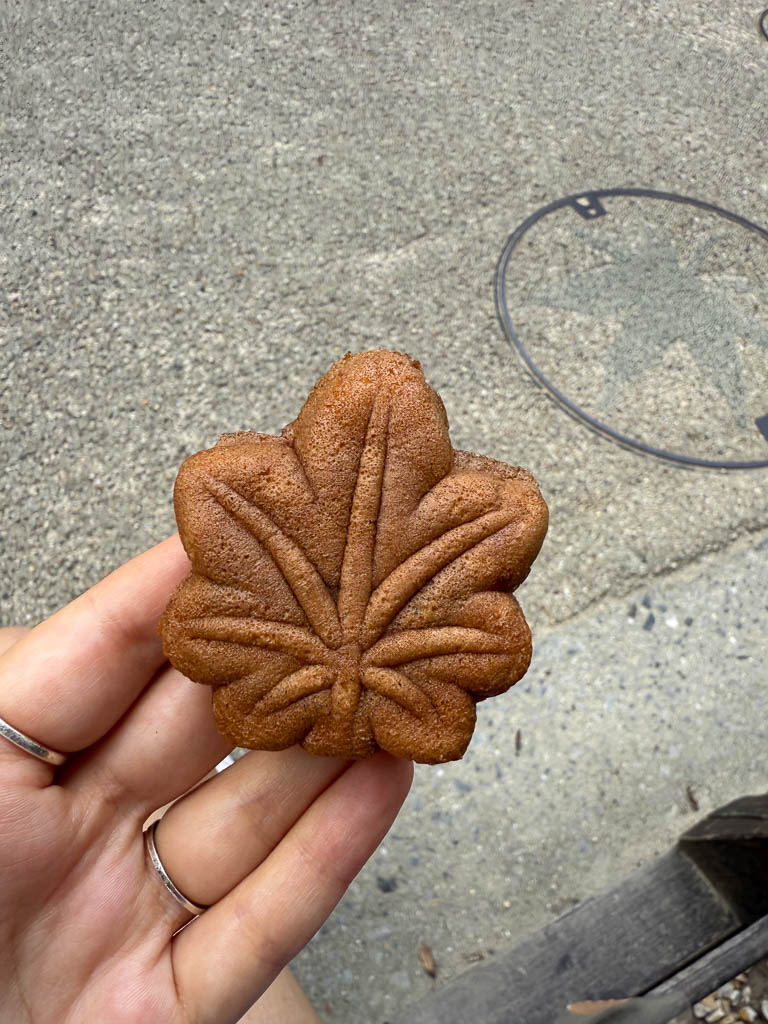
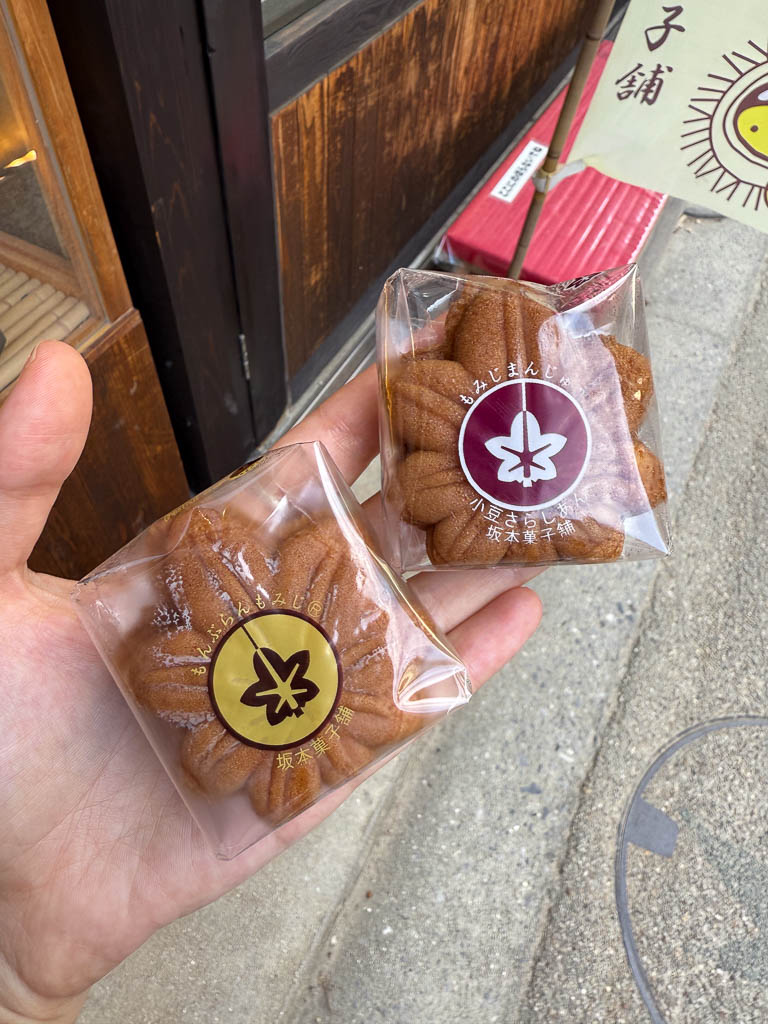
After this it was time for proper food. There are two things Miyajima is famous for – Maple Leaf Cakes (Momiji Manjo) and Oysters.
I got a couple of Momijo Manjo at Sakamoto-Kashiho, a shop I found in one of the secondary streets. They were literally just off the oven, and I got one with custard and another with red bean. Warm, it simply melted in my mouth, and I made a note to come back later for more (spoiler alert I didn’t!).
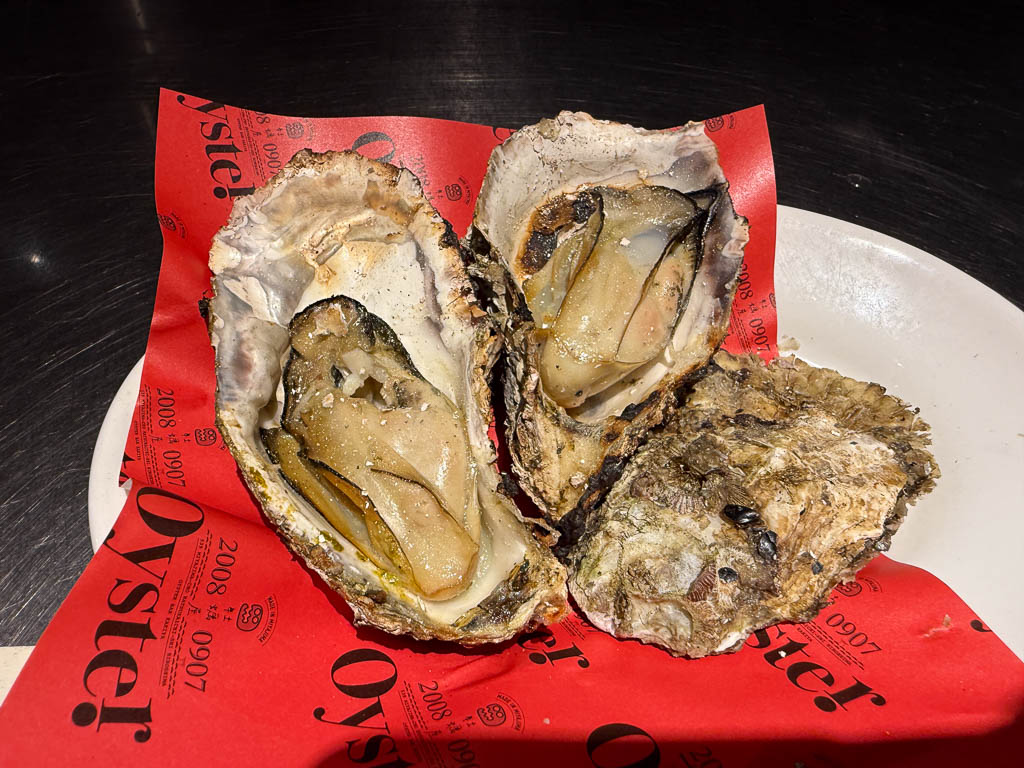
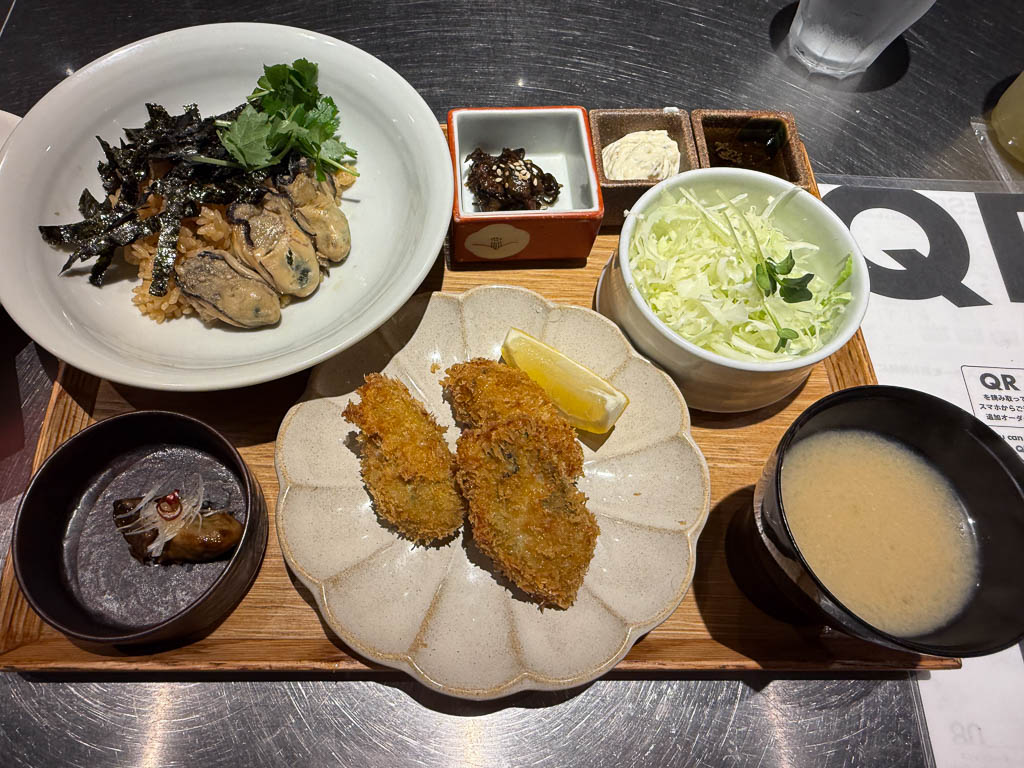
Then, I made my way to the Miyajima Omotesandō Shopping Street, and oh boy… this was busy! Since I had arrived at the island relatively early and then did the climb to Mount Misen, occasionally passing just one or two people, I hadn’t realised that in those hours of the morning, a lot more visitors had arrived, and that included school groups as well. You can find everything in this street, multiple eateries, souvenir shops, and also the visitor centre that has a nice space if you want to simply relax, and sit down for a while. But I was keen to get oysters, and ended up getting a taster of oysters cooked in many different ways at a restaurant called Kakiya – it was just getting busy so I was quite lucky to have had a seat immediately. It was dreamy, and honestly so cheap for a oyster plate! The grilled ones were my favourites, but I liked them all – the fried ones were quite interesting too. I couldn’t believe how big those were!
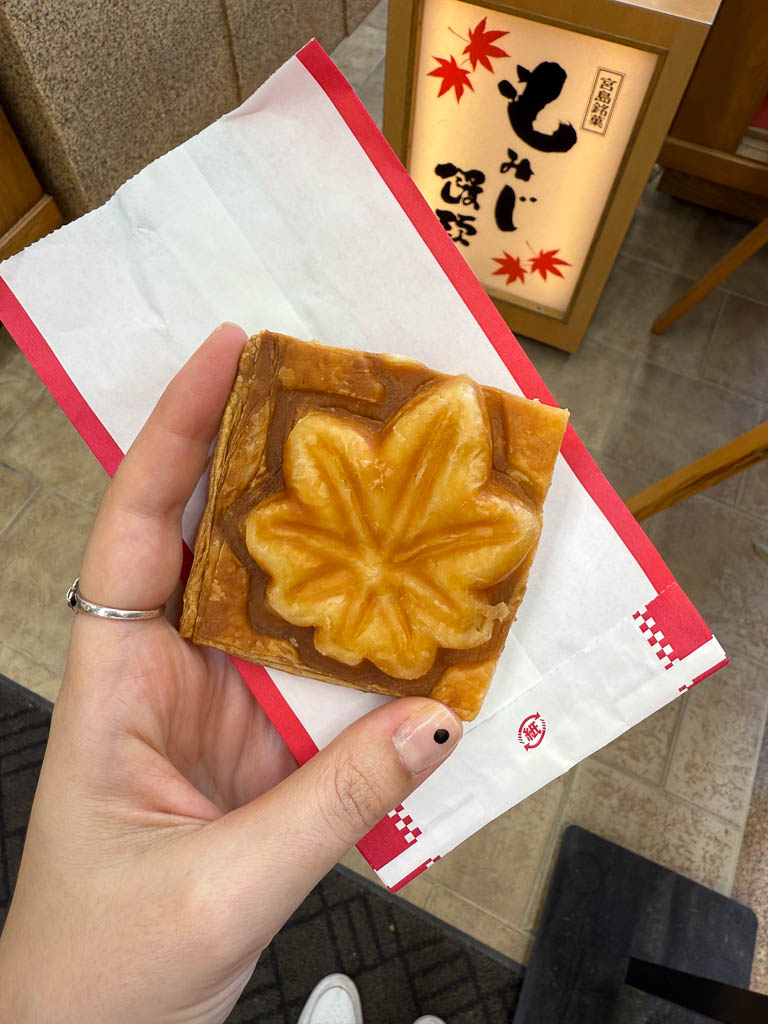
I then came across the croissant version of the maple leaf cake… and I’m a total sucker for a good, flaky, crispy baked goods, and so this was the perfect dessert. Once again, also delicious, even if it’s there for tourists sake. If you can, try them all!
Before leaving the island, I made my way to the Torii Gate once again, this time around to see it close, as the tide had regressed, leaving exposed sandy land one can walk on. This was also a view for the ages.
Miyajima was a highlight of my two weeks in Japan. Hard to say what was my favourite thing in this trip, but this place was definitely in the top 5. So if you planning a trip to Hiroshima and wondering if it’s worth it… I’d say it definitely is!
Love, Nic
P.S. The below are affiliate links. This means I may earn a small commission if you decide to purchase or book anything through these links. None of it is sponsored. All my recommendations are based on my lived experience.
Where I stayed in Hiroshima: Hotel Vista Hiroshima https://booking.tpo.lv/VPLWa0Bu
Truely Sim Card: Get 10% Off with code wingedbone10
 The Winged Bone
Miyajima sounds incredibly serene, especially seeing the Torii at both high and low tide. The Mount Misen hike, spiritual reflections really stood out, and now I’m craving oysters and momiji manju.
LikeLiked by 1 person