
Nervously, I gave my passport to the immigration officer, knowing I would only be having it back on the boat. Whilst this is common procedure when traversing the border to Malaysia by ferry, I was still nervous about it. Losing my passport whilst travelling is an experience I never want to go through.
I was about to say goodbye to Thailand in Koh Lipe, leaving both with the expectation that I would go back to that country and yet fearful about the destruction mass tourism was causing to local communities and ecosystems.
The ferry ride from Lipe to Langkawi was smooth and my passport returned to my hands in no time. I would say though the organisation of the whole thing wasn’t the best – it was like being in school, with the teacher distributing the test results, calling people by name, except here they had no idea how I looked and sometimes not even how to pronounce my name. I felt weirdly exposed, everyone in there would know my name and where I’m from – not that it matters at all, but who can explain the irrationalities of my thought process? Certainly, not me.

The passport was back in my possession but the next challenge was the disembarking. Backpacks and suitcases had been all piled together and this messy pile was also blocking the way to the exit ( which obviously isn’t safe at all, but safety is taken very lightly in this part of the world!). Because of this, I assumed the crew would remove our luggage to be collected outside of the boat, but no… It was first come first served, which is hard when you might be the first but your luggage is at the base of the pile and you have to remove dozens of heavy bags to get to it… of course, this is a recipe for trouble. Everyone wanted to leave as quick as possible, trying to find their possessions in that mess…I had no hurry, and therefore let the conflict unfold in front of me. Everyone thinks their time is more important than others. So I waited, retrieved my backpack peacefully and exited the boat, relieved to finally be back on solid land.
The challenges with water supply
I called an Uber to pick me up and take me to my accommodation and was positively surprised to see the driver was a Muslim woman. I was aware that I was now in a Muslim country, and seeing that women were taking jobs traditionally associated with male roles made me feel positive about my stay there. But this positivism was about to end when my phone started ringing and I picked up. It was the host from the place I had booked.
“We’re having issues with water supply in the island, we had no water for some time, and now it’s coming brown from the tap… “. I was immediately alerted. What did he mean by water supply issues? Was I coming out of a place that was clearly under pressure due to tourism, to another one that was even worse? “Hum… okay, but when will it be sorted?”, I asked. I had booked a few days in Langkawi, and needed to do some laundry as well. I wasn’t about to do it in a place struggling with lack of water, plus I was worried about the implications of taking a shower with such water. He said (which I knew was a lie from the get go) in about 2 hours.
Of course, I was right. I never had clear water in that place. And I spoke with other tourists who said they had no issues in their hotels. And yes – hotels. You see, I try to leave my money with the locals, and often avoid chain hotels as they are often, if not always, owned by foreigners or those “locals” who are already wealthy enough. But I did sometimes regret this decision. And I’m sorry… having clear water is something we expect to have in any accommodation, and Langkawi isn’t the cheapest either. Being local accommodation doesn’t always equal cheaper, and this one had been quite pricey, as it also had a kitchen that I planned to use (and I didn’t because of said water issues, and because there was an ant invasion when I opened a pack of cereals there…).
At the same time, I was feeling once again very guilty. I googled the problem, and because of the low rainfall levels in the past months, the island was struggling with its fresh water supply, causing cuts and issues with the pipes as well. This made my whole stay very uncomfortable, but this was just a small part of the problem. I really ended up disliking Langkawi. I can pinpoint why exactly, but perhaps a combination of a few things. I simply didn’t “vibe” with it.

Langkawi is a big island, covering an area of about 478 square km, with stunning beaches, dense rainforests, mangroves and limestone hills. I stayed in Pantai Cenang Beach area, as my research suggested this was one of the most developed places, with a beautiful beach and lots of shops and restaurants around. I would then take tours or call Ubers to explore the other attractions on the island.
The first thing I noticed when I got to Langkawi was the oppressing heat. The weather was mostly cloudy during the time I was there, creating a suffocating greenhouse effect that was making it really hard for me to simply move. There was the constant threat of rain that never came, and a part of me was wishing that it did rain, to help with the water supplies.
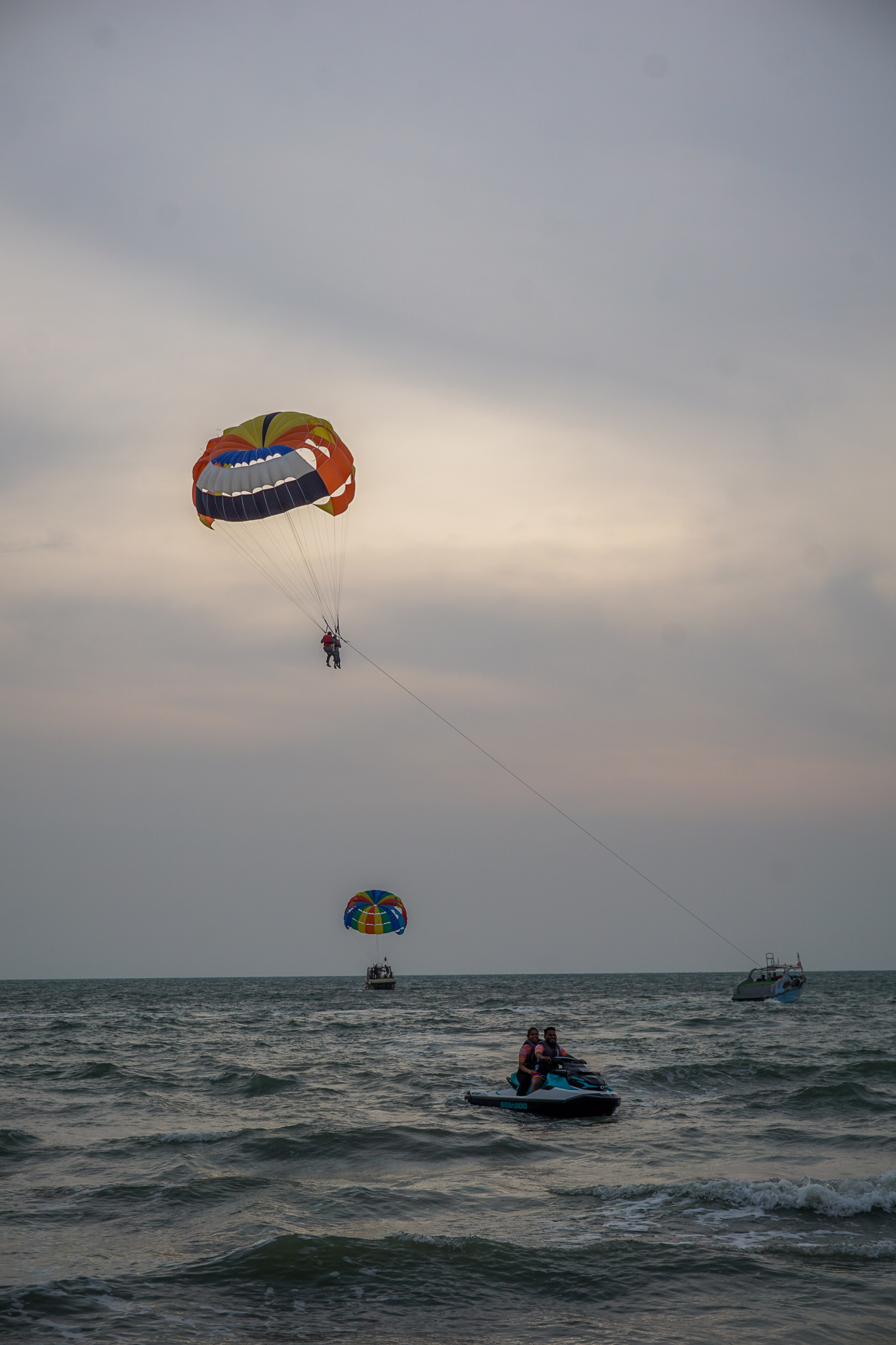
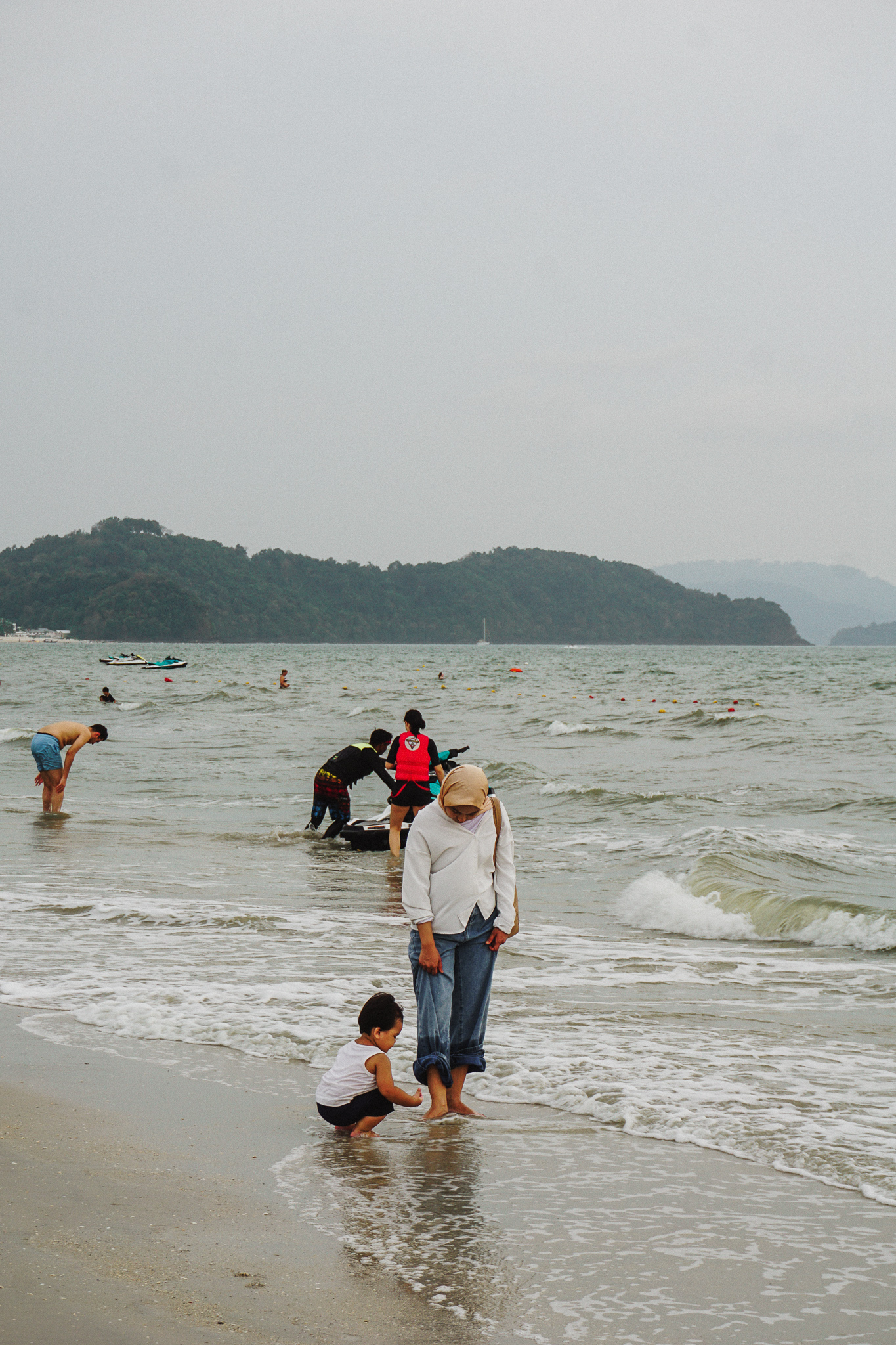
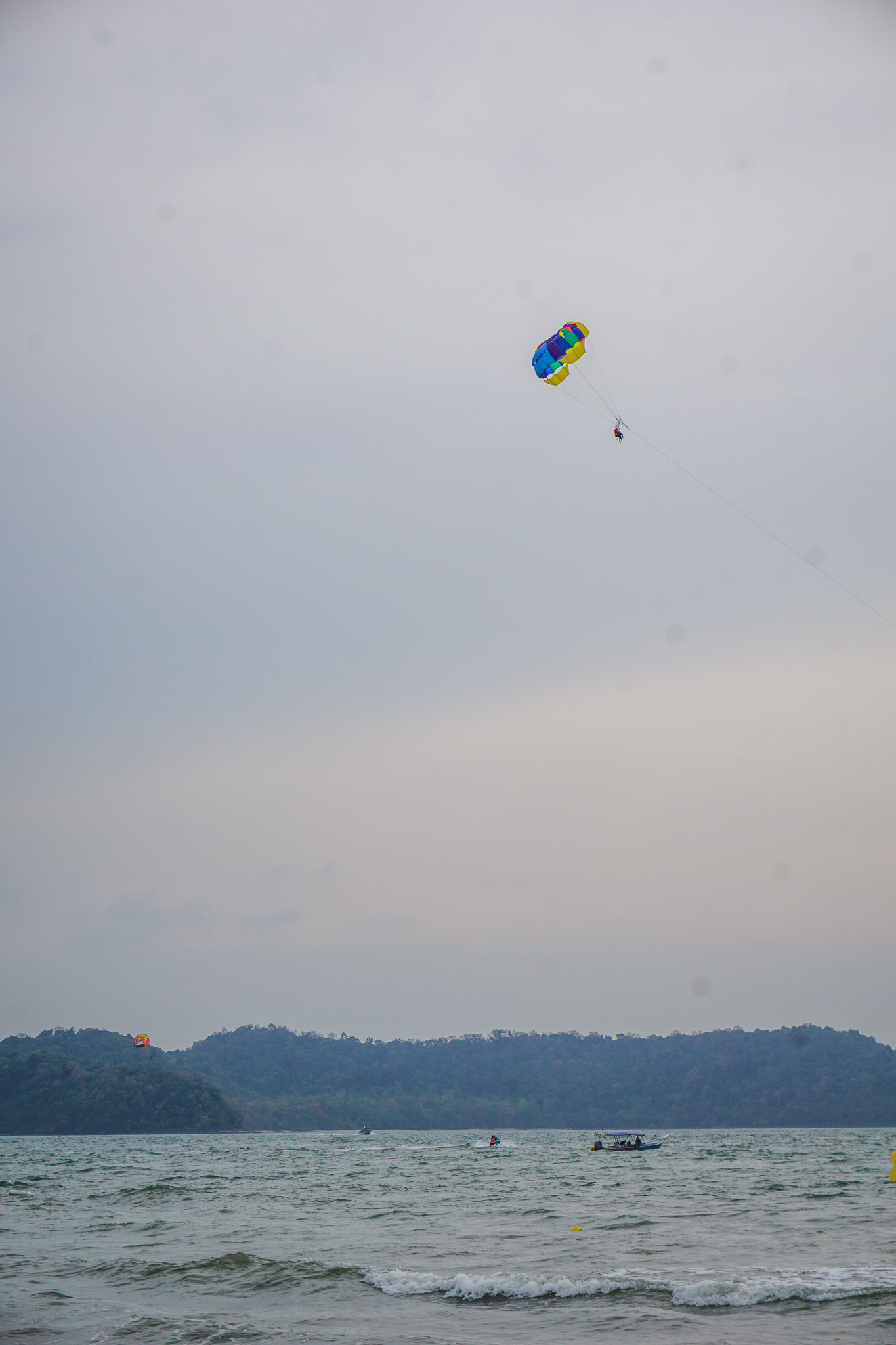
Pantai Cenang also ended up not being the bustling beachfront town I expected. Things were opening very late, to the point I struggled to find a café open before 11am, and often had to go to Starbucks (where I never go to even back home) to get my daily caffeine intake. Granted that I had completely forgotten I was in a Muslim country when the Ramadan was about to start, but still – a touristy place such as Langkawi should be catering to their non-Muslim foreigner visitors as well.
The other thing that for me was extremely disorienting was the feeling that I was at an airport, due to the sheer amount of duty-free shops. This is because Langkawi is a duty-free island, and it seems (weirdly) it makes it a destination for those looking for good deals on specific products, such as alcohol, chocolates and other typical things you get at airports (and I still find expensive).
Perhaps because I had just come from Thailand, the beach was incredibly underwhelming. There was a myriad of water sports that I enjoyed watching for a while, but other than that – and perhaps the cloudy weather wasn’t helping – I did not exactly enjoy staying in the suffocating heat. Even though I tried!
I was still determined to try to enjoy myself at least a little in Langkawi, and so I went for the two main attractions. And well, I thought I was going to die in one of them.
The Langkawi Sky Bridge and Cable Car, not advisable for vertigo-sufferers
Which of course, I am. So don’t ask me what went through my head (or didn’t go through my head) to have decided to come to this attraction.
The Langkawi Cable car is one of the steepest cable car rides in the world, and it will take you to the summit of Mount Mat Cincan – the views are without a doubt absolutely stunning, but you will enjoy them more if you are not internally dying thinking that you are going to fall at any second. It’s just so bloody steep, with a max steepness of 42 degrees at the highest point. I was so glad I had a booth only to myself, where I was sweating profusely in my aloneness, for the length of 2.2Km, making this trip to the summit lasting about 15 minutes.
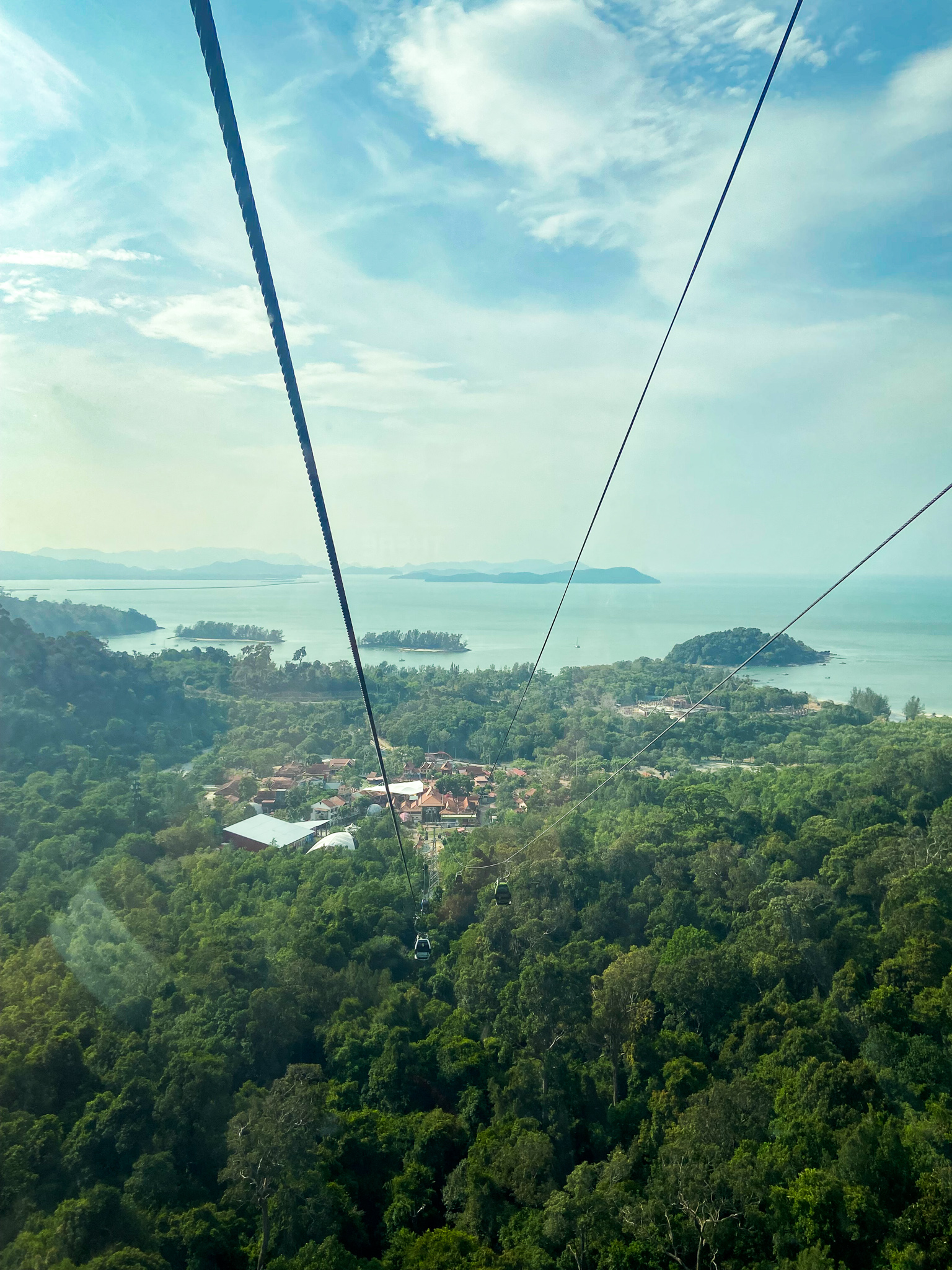


I had bought a combi ticket for the Cable Car and the Sky Bridge. For the Sky Bridge I did look up to see if it was one of those with glass floors, as I absolutely don’t do that. My vertigo is too strong, and no matter how I rationally try to argue with my body, telling myself that there is a solid ground under my feet, that is absolutely safe and hundreds of people do it, my still body disobeys, not believing me.
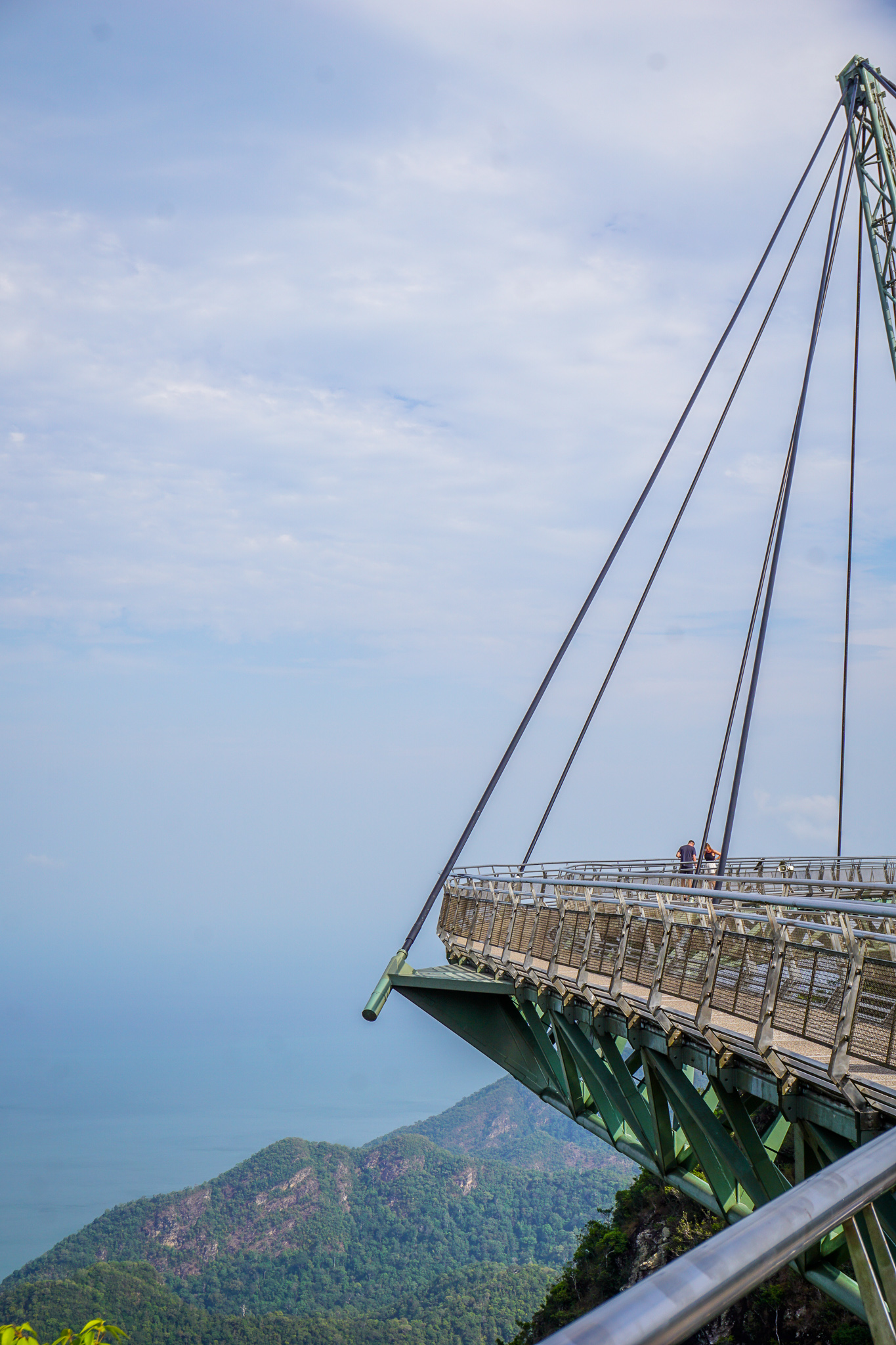

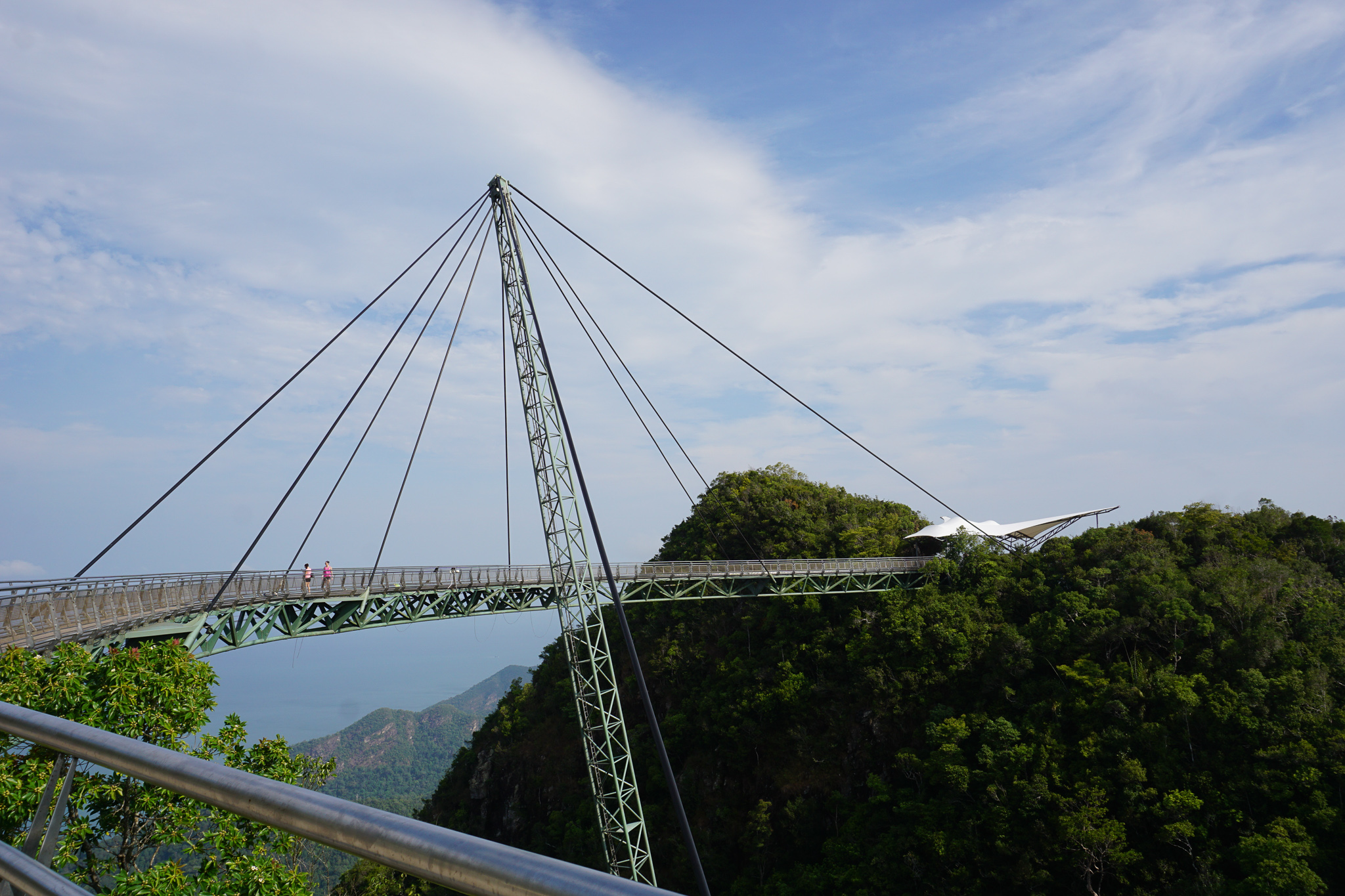
Whilst the Sky Bridge doesn’t have a glass floor, this pedestrian bridge is designed in a way that doesn’t work for vertigo sufferers – it has a curved design, suspended by a single pylon, giving it a floating appearance I do not want to be a part of when you are at an altitude of about 660 meters above sea level. I crossed that bridge shaking, now with cold and hot sweats, absolutely unable to appreciate the views the same way other visitors were, and to make things worse… it was windy. Not the strongest of winds, but windy enough for a chicken like me.

Honestly, I believe this attraction is amazing for those who do not suffer the maladies of vertigo and enjoy some adrenaline-inducing activities. Both the bridge and the cable car offer unparalleled views of the island and its surroundings, but I was sadly not able to truly appreciate it because my whole body was sending red flags to my brain, alerting to my fake life-threatening situation.
But this day, nothing was going well for me.
There is a park with lots of restaurants, cafes and shops at the base of the station where you take the cable car. It was pretty empty when I went – perhaps because it was early. When I got off the cable car, I was in desperate need of a coffee and so went to one of the stalls to buy one. The young woman had her eyes set on her phone and I could see she was playing a game. Her colleague sitting next to her but on the ice cream side was doing exactly the same. Whilst travelling in South East Asia, and especially in Malaysia, I noticed how the locals seem to be absolutely addicted and absorbed by their phones, to the point customer service would be absolutely eradicated, and this was a very good example. I said “Good morning, can I have a coffee please?” and she didn’t hear me. Her eyes did not leave her screen. I said again a bit louder “Good morning?” and nothing. She didn’t look up, her fingers moving fast, the music track of the game getting to my nerves. I looked to the side, to her colleague, who seemed to be suffering from the same deafness. I tried one more time “Good morning” and nothing once again. I found this infuriating. I just left, and went somewhere else to get coffee, but whilst this was the first time I was ignored in the name of a smartphone game, this would not be the first nor the last that I would be facing terrible customer service because of smartphones.
It was just about midday and I felt exhausted. The iced coffee I had bought was helping me, but all I wanted was to go back to my accommodation and relax for a bit. I called an Uber and I swear, my luck, I got the chattiest and most annoying driver of all time. For 30 minutes the drive lasted, he proceeded point at random things and saying the words in Malay, trying to teach me. But I was so tired, and having learned “hello” and “Thank you”, I knew my brain would not record anything else, and even if it did, it wouldn’t last. I was so glad when this was finally over. Langkawi really wasn’t working for me.
The Mangrove Forest and Eagle watching – a natural wonder
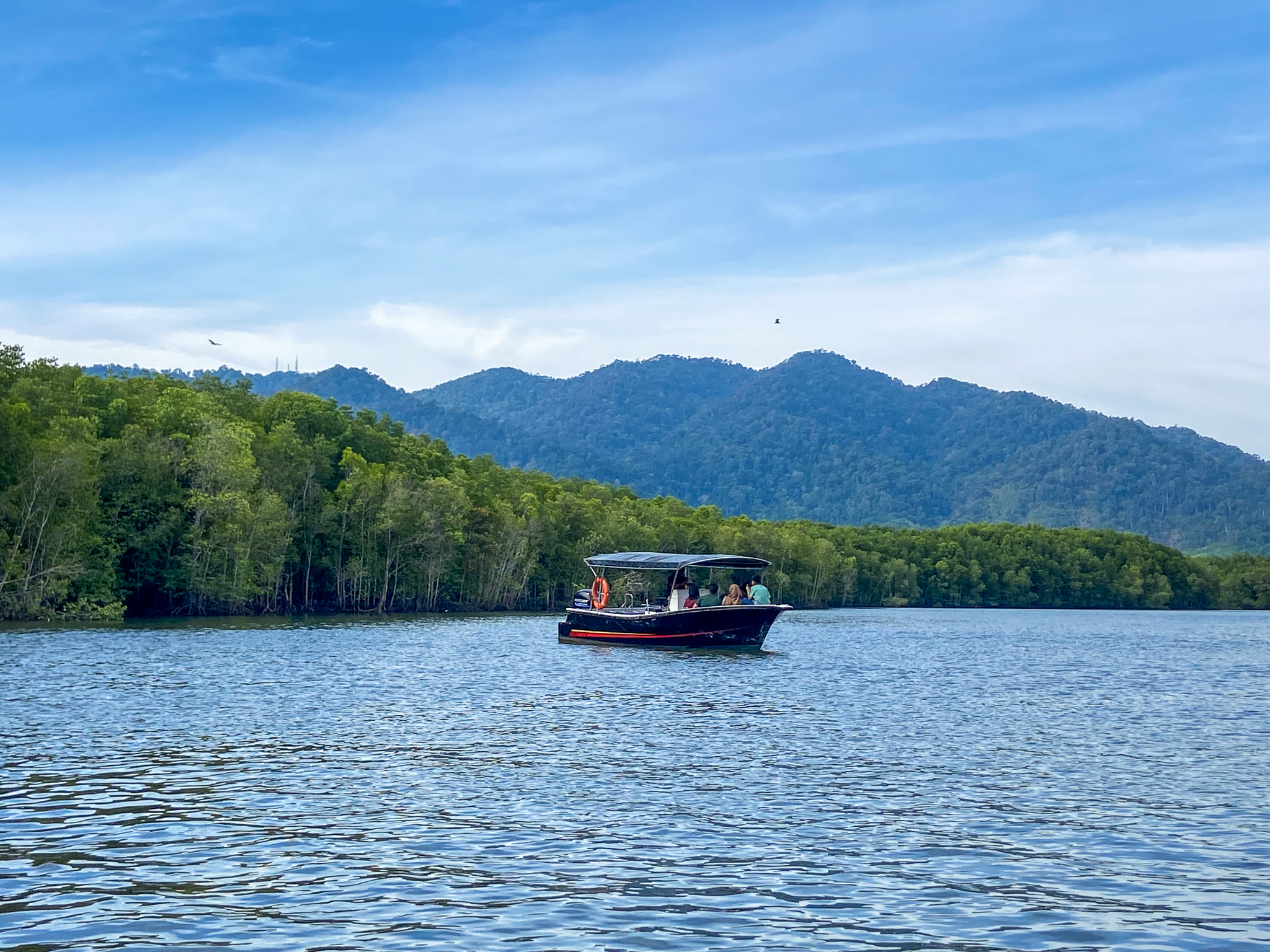
This Mangrove forest was the only thing I enjoyed in Langkawi. I took a tour which included lunch (the lunch was pretty poor though, so don’t expect anything special), eagle watching and the exploration of a bat cave (spoiler alert, no bats in sight) in the Kilim Karst Geoforest Park, which is a UNESCO listed site. The geological heritage is considered unique, dating back over 500 million years – a natural museum like no other.

The mangrove forests are an integral part of the island’s ecosystems and I find them fascinating. The Mangrove trees in Langkawi are salt-tolerant, thriving in places where fresh water meets the sea. These trees are essential to stabilise the coastline, preventing erosion and providing unique habitats for the local wildlife. And of course, the intertwined roots of the mangroves can be seen in low tide, creating a natural work of art – stunning to the eyes, but also practical, as these provide shelter to plenty of animals, including otters, which I had the chance to spot!
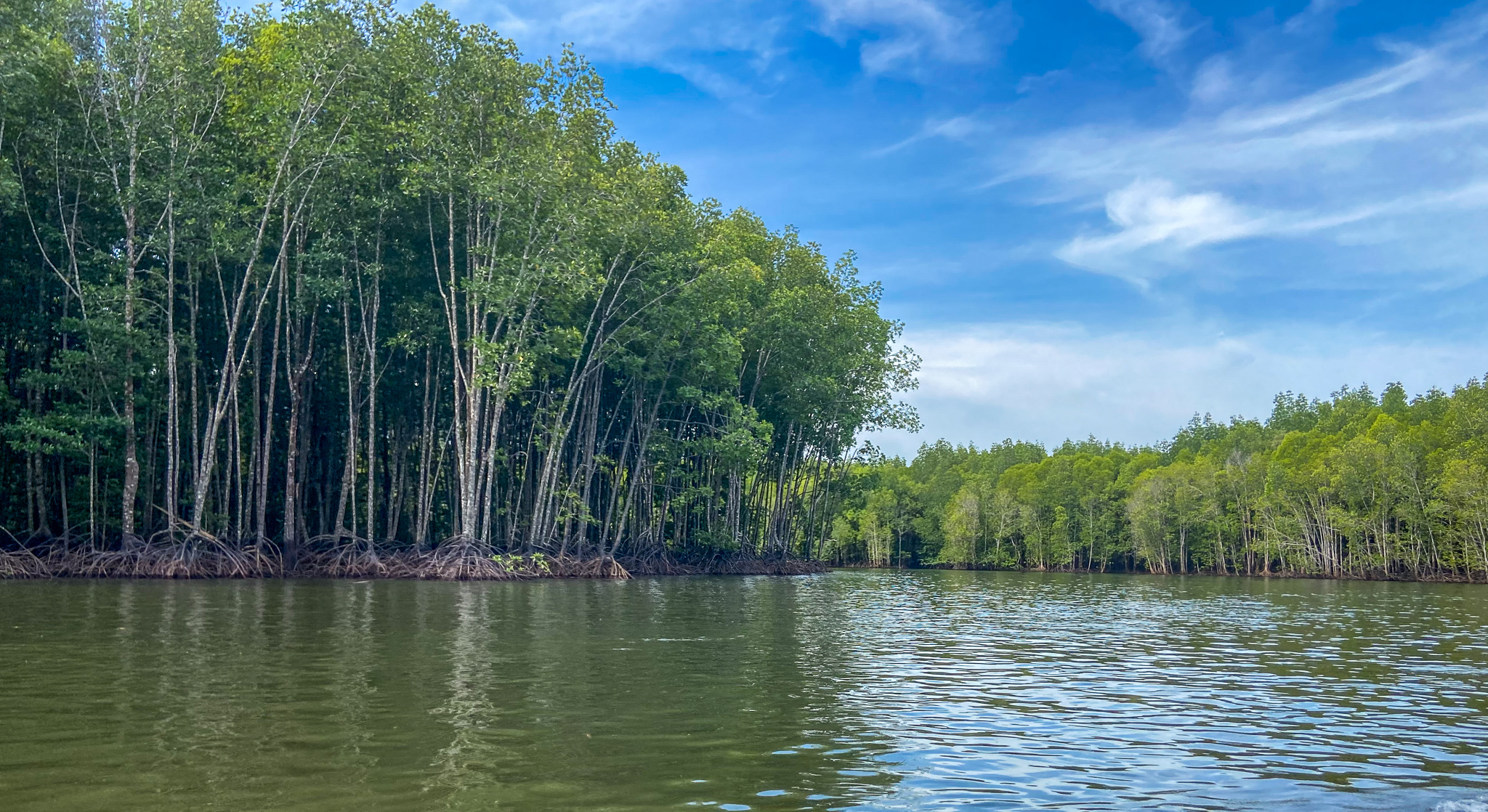
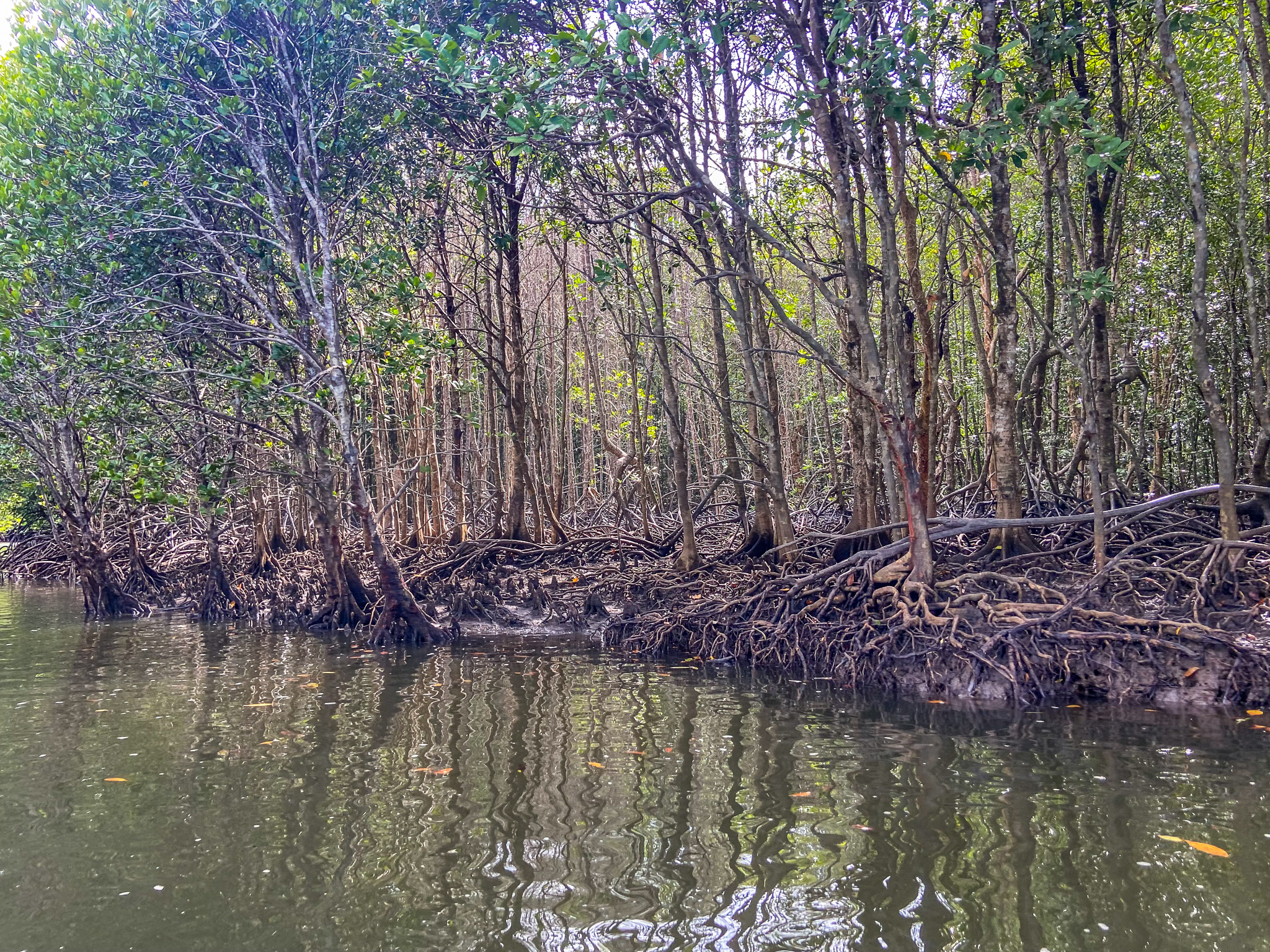


One of my favourite parts of the tour was the eagle observation. The boat stopped in a clearing, where we observed what I can only describe a dance of the eagles.
This was the last activity I did on the island, and was very keen to leave it the next day. My time in Langkawi seemed to be doomed from the start – poor conditions in my accommodation, the water supply issue, trying to have fewer showers and having to delay my laundry, not seeing any movement in the streets until after midday, the abundance of boring, artificial duty-free shops… it was all just very grey. It had not been the best introduction to Malaysia, but I was aware that things could only get better. Langkawi is a tourist destination more than anything – even though it has to improve its conditions to attract foreigner visitors of a kind that isn’t simply interested in duty-free shopping.
Love, Nic
 The Winged Bone
I am sorry to hear you had a rough start I love how with its stunning white sand beaches, lush green rainforest, and scenic mountains, Langkawi is a paradise for nature lovers, adventure seekers, and anybody looking for a peaceful escape from a hectic schedule. But as we travel with two small children, just the thought of not having clean water is a big red flag for me. Nevertheless, it’s a place I’d like to visit one day as the Langkawi Skybridge and the Mangrove Forest Tour have been on my travel wish list for a while. Thanks for sharing, and have a good day 🙂 Aiva xx
LikeLiked by 1 person
Hi Aiva – thank you for reading and commenting! There are definitely better places for families with children in Malaysia as well, Langkawi is just a bit too risky…!
LikeLike