
I woke up on my last morning in Chiang Mai feeling very sick. I had been trying to fight off a cold, but clearly, my insistence on sightseeing and inability to stay in my hotel room resting didn’t help. On my last day in Chiang Mai I even headed to the countryside to do a cycling tour – which was great, but very tiring, with the harsh sun and the hot temperatures.
Looking back at how few photos I took of Chiang Rai and its main attractions, I can truly appreciate how sick and tired I actually was. Makes sense – I had pushed myself quite a bit and I was suffering the consequences. I remember how hard it was for me to breathe, it hurt. How my back complained, as if I was carrying sacks of cement. And whilst I was hoping I’d slow down in Chiang Rai, I was painfully aware I was really not in the mood for sightseeing. Yet, I only had two nights there. And there was so much to see.
The main reason to go to Chiang Rai was to visit the Black House and the White Temple. Both are very famous both in Thailand and internationally, with the White Temple specifically serving as a backdrop for many Instagram photos. I later found out about the Blue Temple as well, which I predict will become as famous as the latter in the coming years.
You can take a day tour from Chiang Mai, but bearing in mind it’s a three-hour drive each way, I could only imagine this would be a very rushed visit to the three sites. You’d end up spending more time on the bus than in the actual attractions. I decided to spend a couple of nights in Chiang Rai instead. The bus station is located just in the centre of the town, and I booked a room in a family-owned residential, called Baan Jaru. The room was spotless, nicely decorated and it included a delicious breakfast. The host was also welcoming, giving me a map with recommendations on what to visit and where to go for a nice meal.
Chiang Rai itself is a very small town, with little to do. Most of these famous attractions are actually quite far from the centre. If you’re not driving yourself (I wasn’t), the best way is to just use Uber. It’s thankfully widely available and I never had to wait more than 10 minutes for a driver. Bear in mind that Uber in these parts is also very cheap. Of course taking the public bus could be even more affordable – but these are infrequent, and you’ll have to figure out where the bus stops are.
The Black House, a very ominous place indeed
Before getting to Chiang Rai, most people I met told me they disliked the Black House. The place had “bad vibes”, to put it colloquially. I didn’t know much about the place myself – but it seemed to be a bit morbid and therefore I was convinced I was going to like it as someone with a tendency for all things goth and dark-like. I must confess every time I heard or read about the dislike of the Black House, I would mentally pat myself on the back, reassuringly, as my tastes tend to be peculiar. So I wasn’t prepared to join the masses in this dislike.


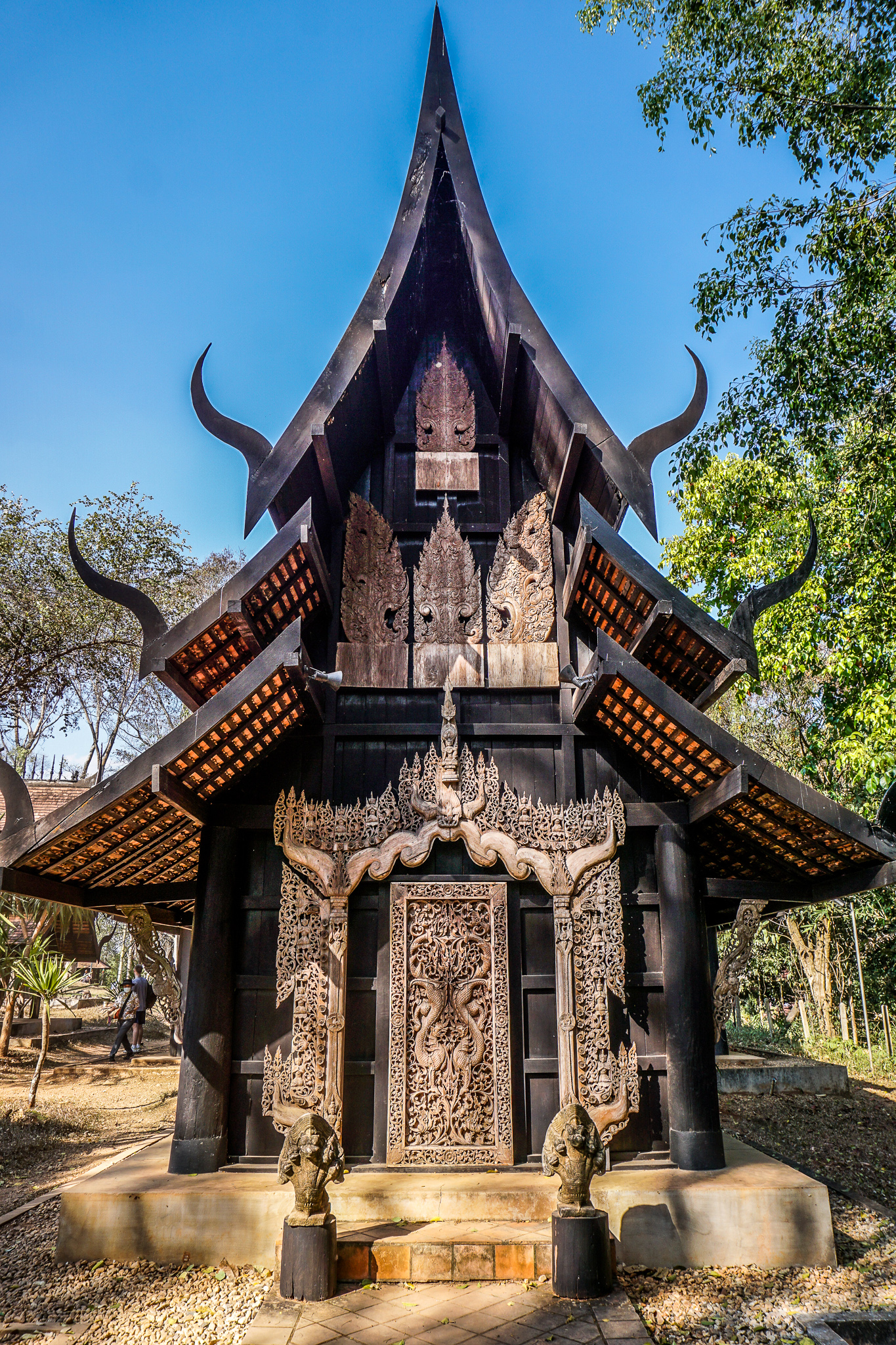
Some people tend to confuse the Black House – Baan Dam – with a temple. It is not. It’s an artistic installation of some sort, created by Thai artist Thawan Duchanee. It is made of multiple houses, a collection of over 40 structures. These incorporate architectural elements from Northern Thailand, but most are painted black or in dark tones. I found these little houses to be beautiful, charming even. But it was the interiors and, to be quite honest, the atmosphere of the place that really put me off. Whilst I am far from spiritual awakening, and consider myself quite sceptical, I cannot deny there was something there that was making me want to leave almost immediately. I had the strange feeling that I was surrounded by something unnatural, an oddity. Almost as if I had stepped into a fold of some sorts. Not in a good way. I felt shrouded in meanness. Almost by evil itself, if there is a form to it.
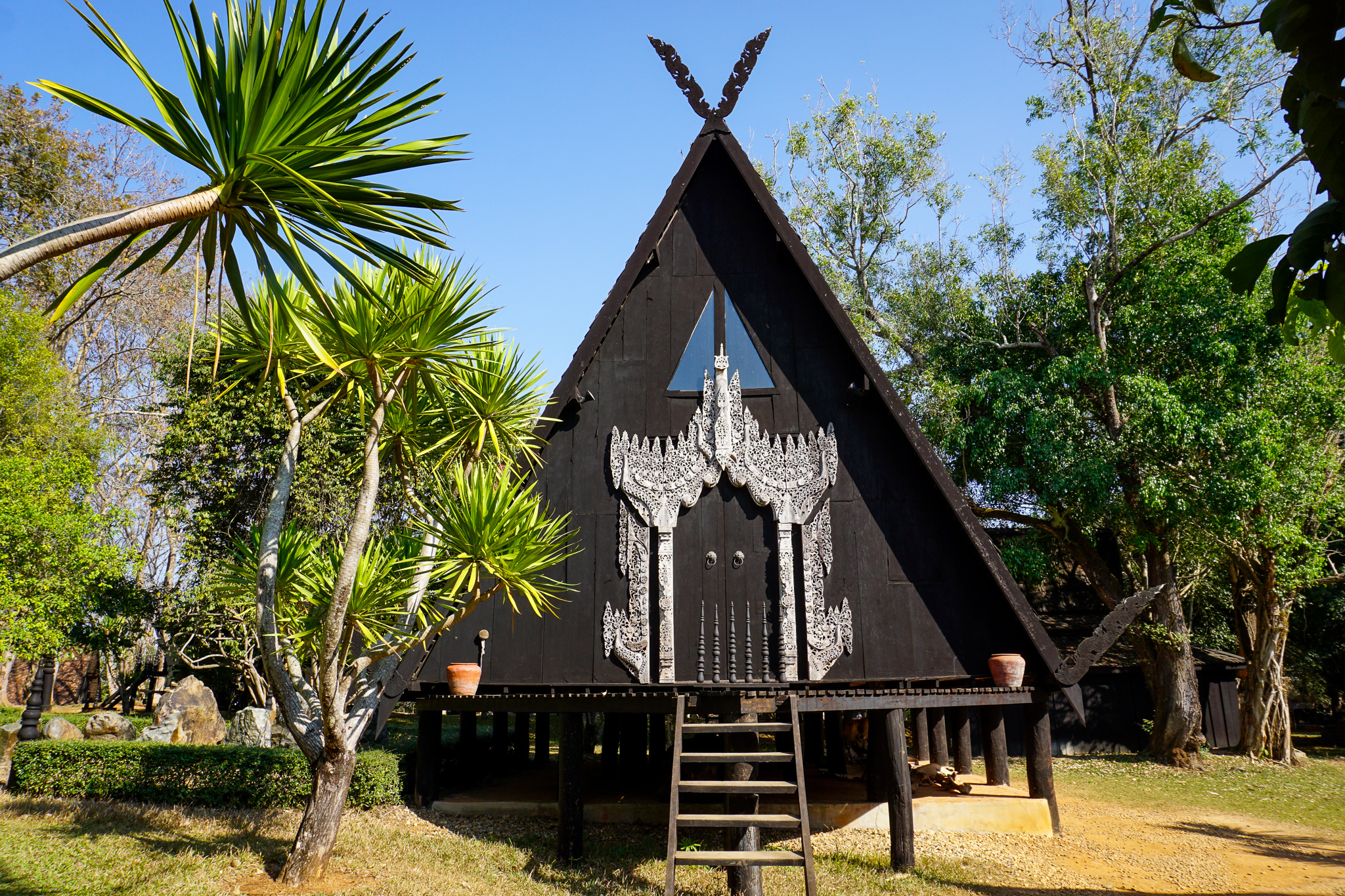
It was also very windy there. I was unsure if this was common in that place, but nowhere I had been in Chiang Rai was windy like it was in there. And it was hot wind as if I was being shaken by the winds of hell. I was feeling dizzy and the fiery pictures of hell inside the main pavilion didn’t help. Especially when I realised the skins of crocodiles so proudly exhibited were real. And what was really quite strange to me was that people were leaving in their coins, as if that was some sort of wishing well. And whilst this is an art gallery, some visitors were still praying to any Buddha-like representations…next to animal skulls, as if these had been a sacrifice of some sorts.
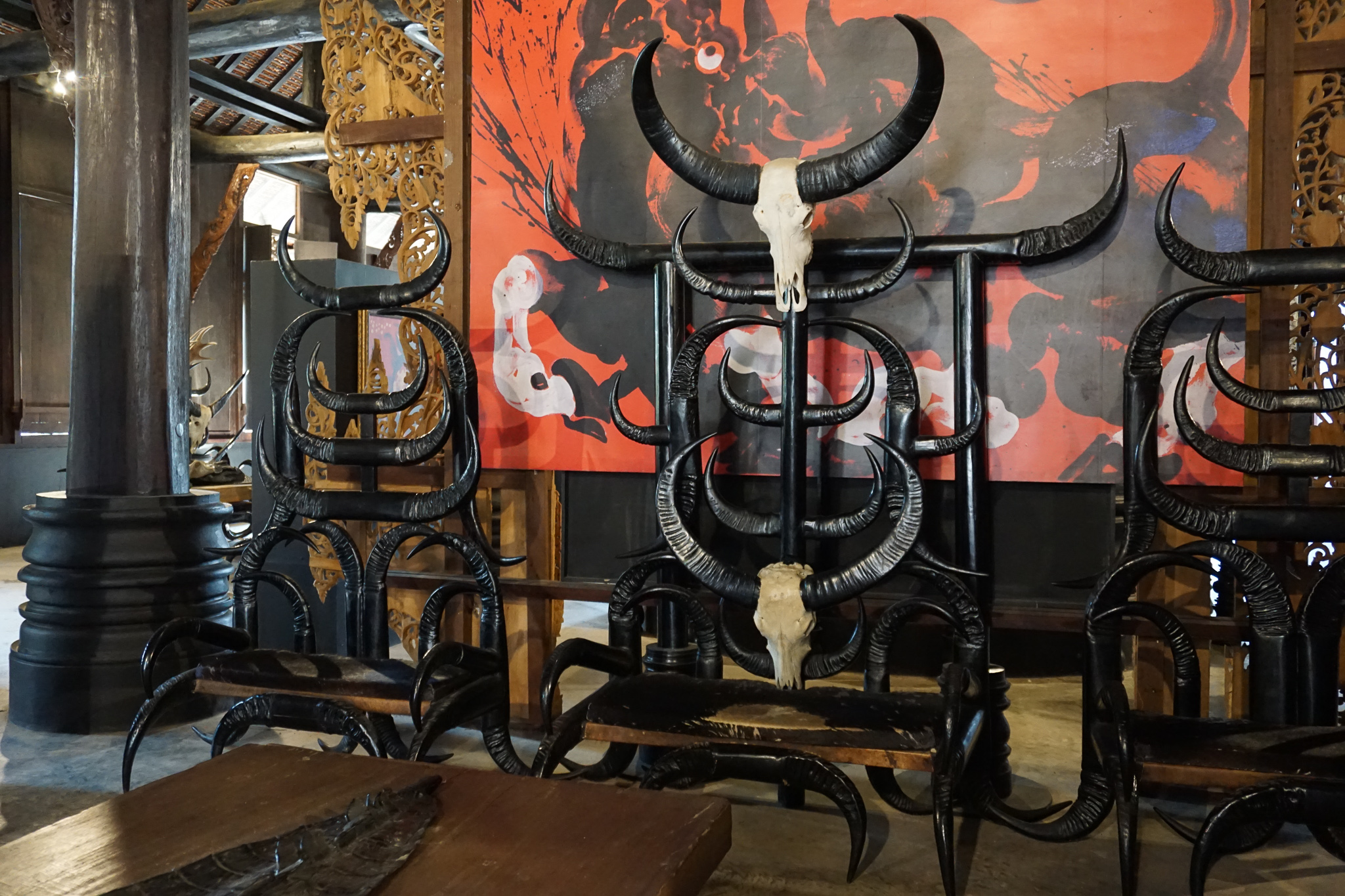

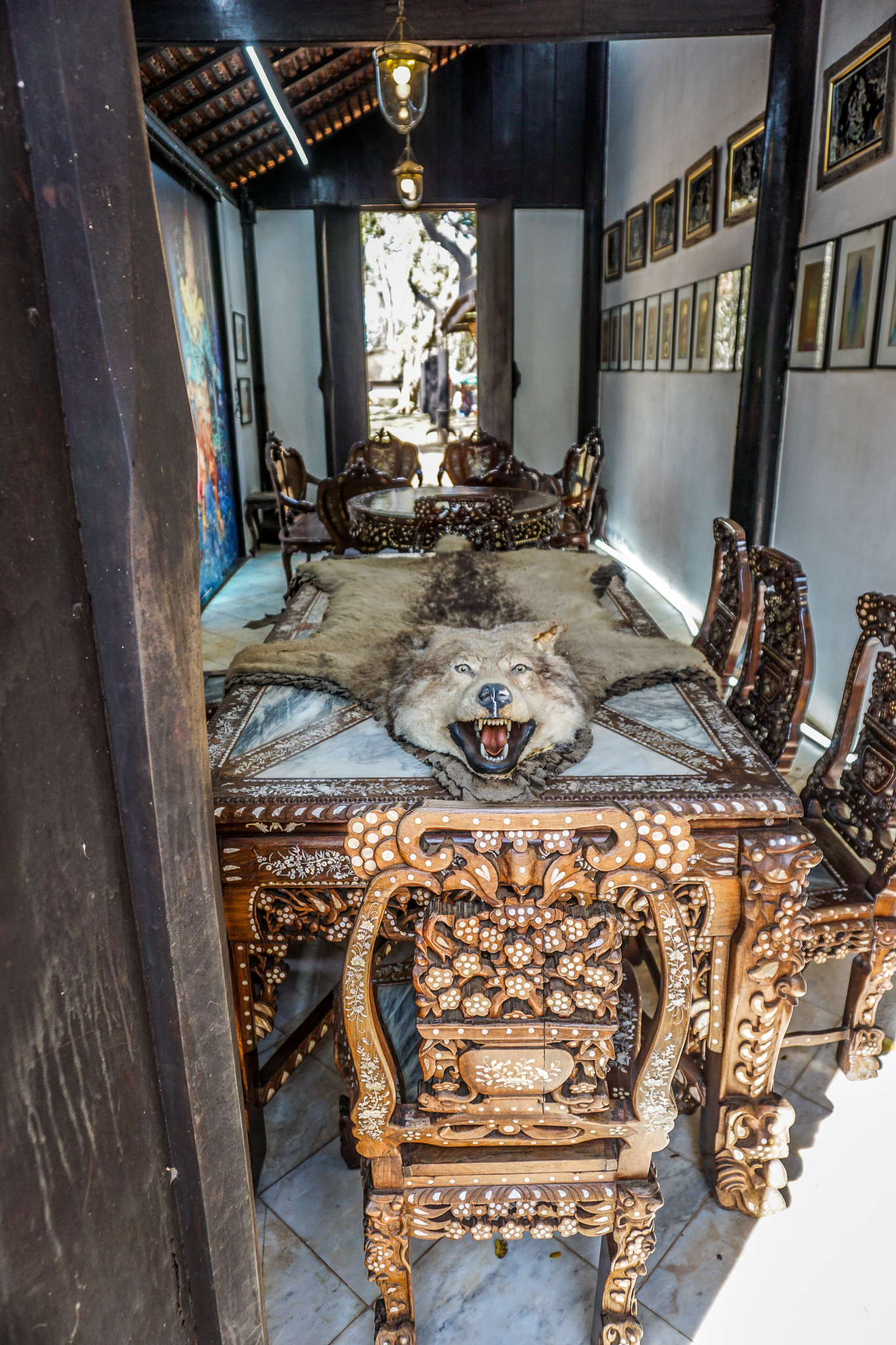
There was just so much death. Not figuratively. The number of animal skins and bovine skulls made it feel like I had arrived at the location where a gigantic Satanist ritual had taken place, and no one cleaned up. Also, I didn’t realise I was going to be surrounded by penises. There were dozens of erect phallic representations, often just sitting next to all of this death. I was trying hard to find a meaning to all of this… but I couldn’t. Many describe Duchanee’s work as provocative, but the only thing it was provoking in me was pure disgust. More – I was feeling deeply disturbed. The juxtaposition of all of that death with erect male genitalia… was this a joke of poor taste? Part of me thinks this represents some sort of complex, and I don’t want to believe it was rooted in a disturbing sexual fetish with death.
All I can say is that I am still wondering where those hot wind gushes were coming from. It felt like Satan himself was “blessing” that piece of land. Certainly, I would not go back there. I am glad I visited regardless, otherwise I would always be wondering. However, if you are someone very sensitive specifically to the themes I described above, I would think twice. Personally, there is nothing particularly intriguing or thought-provoking, and I was wondering if I had just paid a fee to visit a place that displays animal cruelty as art, with a horrid glorification of male genitalia.
The Blue Temple, some peace at least
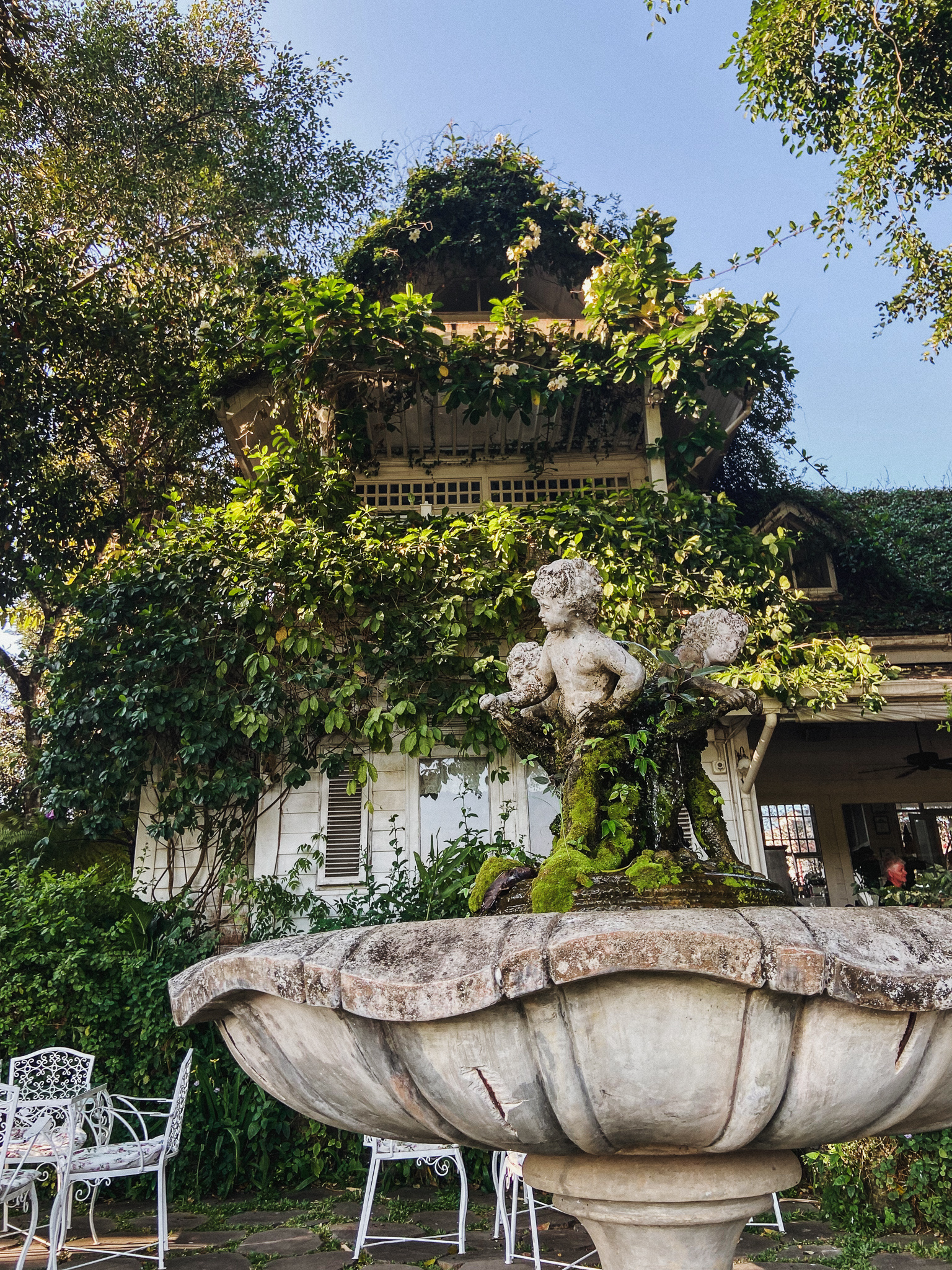
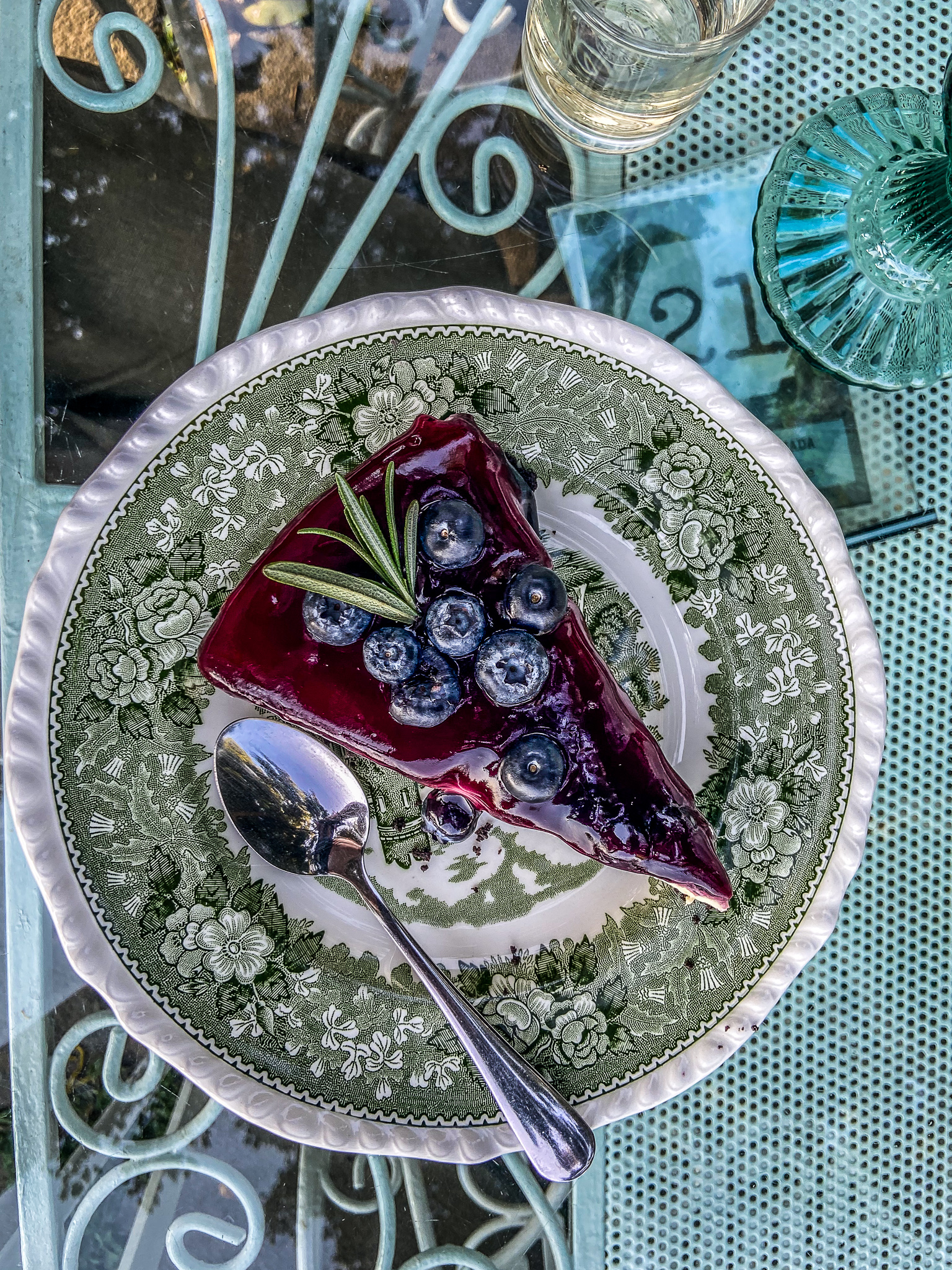
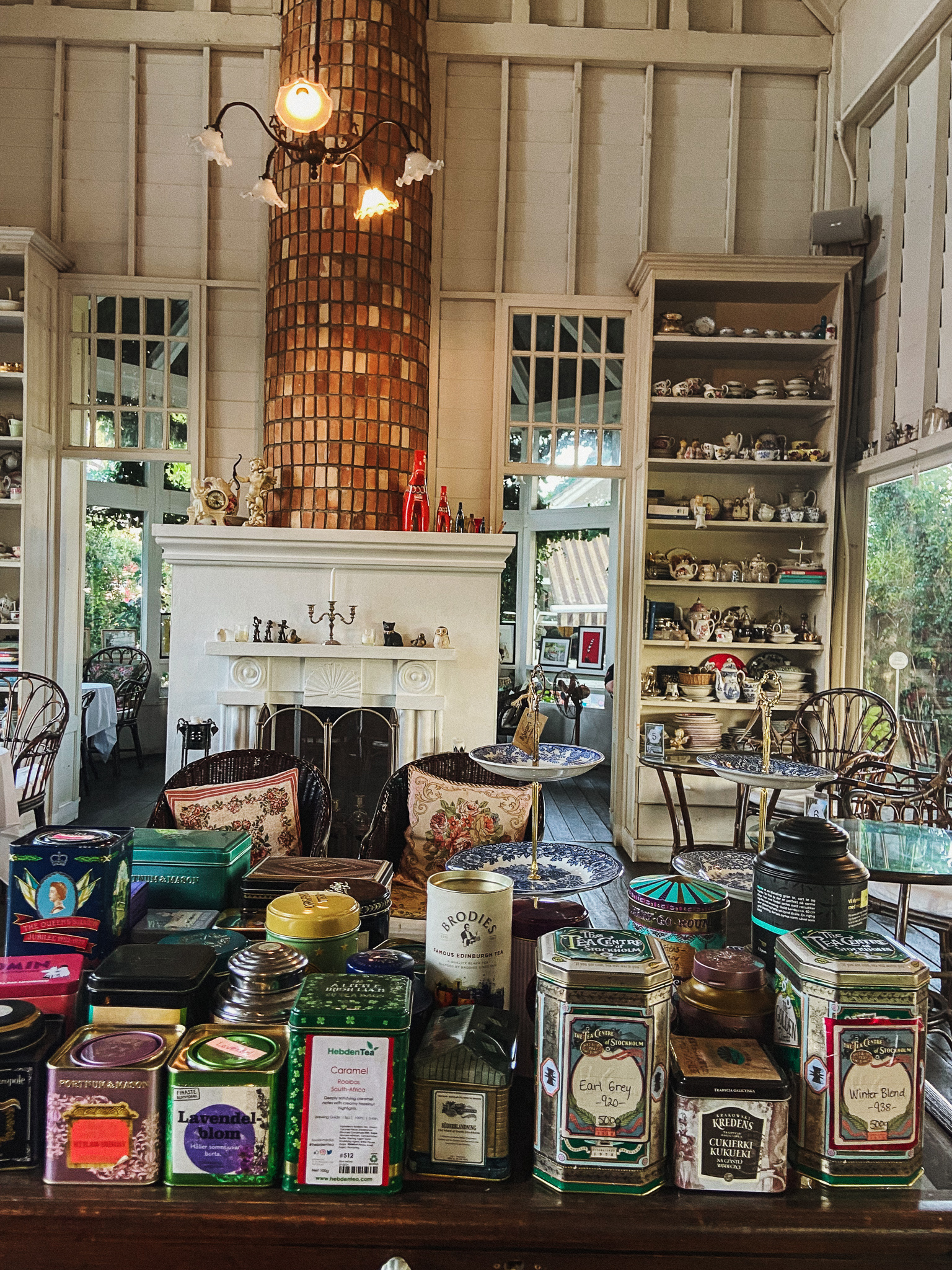
After visiting the Black House, I needed to sit down and relax for a bit. It was my plan to go to the Blue Temple, but my host recommended a nice place to go for a meal or to have coffee just a few meters away. My Uber driver dropped me off at the Blue Temple, and then I walked for about 5 minutes to a place called Chivit Thamma Da Coffee House. The place looks like it dropped there from Europe, and it certainly practices pricing on a much higher level than anywhere else in the area. It is worth it though if you are looking for a place to spend some time just relaxing, reading or even to study or work. I noticed it seemed quite a lot of business lunches were happening there as well. Makes sense – it’s a beautiful venue, with vintage, academia aesthetics, a lovely garden, where I sat to enjoy a delicious blueberry cheesecake (how western I know).
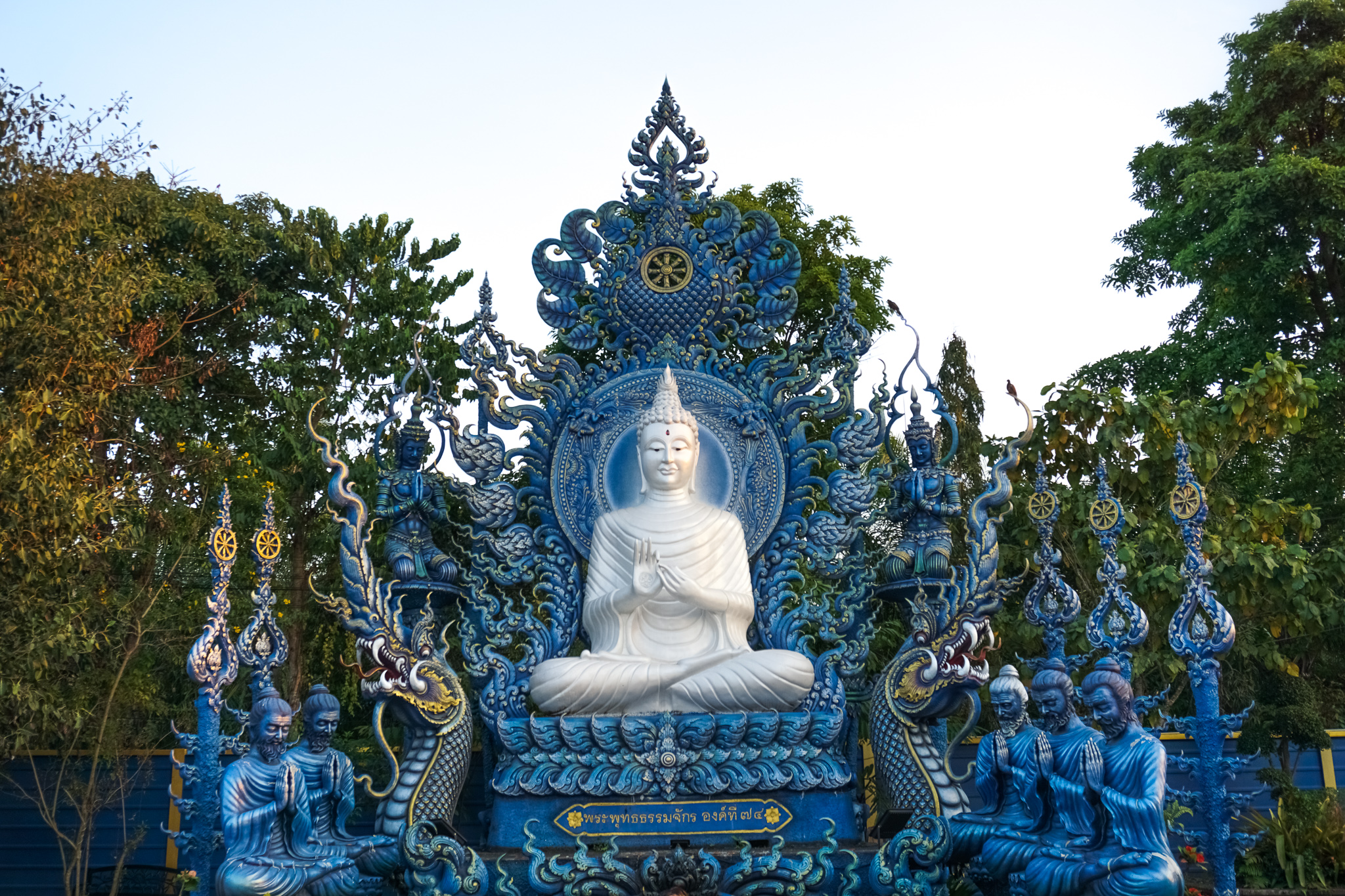
I then walked back to the Blue Temple. The entrance here is free and I was just absolutely stunned by it. It was at this moment that I started to wonder if there was something in the air in these parts of Thailand that had had a unique influence on its artists – or were they just all on some psychedelic-inducing drugs? And I don’t mean this to be in any way derogatory. It might not be my personal choice of aesthetic, but it is still a wonder and a fantastic experience for me to explore. The decorations in the Blue Temple reminded me of the tacky spray painted entertainment booths in my hometown’s annual fun fair (and yes I am aware I just mentioned I wasn’t going to be derogatory). Except that in this case I could find the beauty in it – the temple is covered in deep blue and indulgent gold giving off a sense of tranquillity that will be then challenged when you look at the intricate decorative details – horned beings, half human, half animal, muscular things, with sharp teeth…some of them seemingly out of a fantasy novel, others from a sci fi film. It is very confusing to find such images next to serene Buddha, and with the striking blue colour, it definitely made me feel that I was indeed tripping.
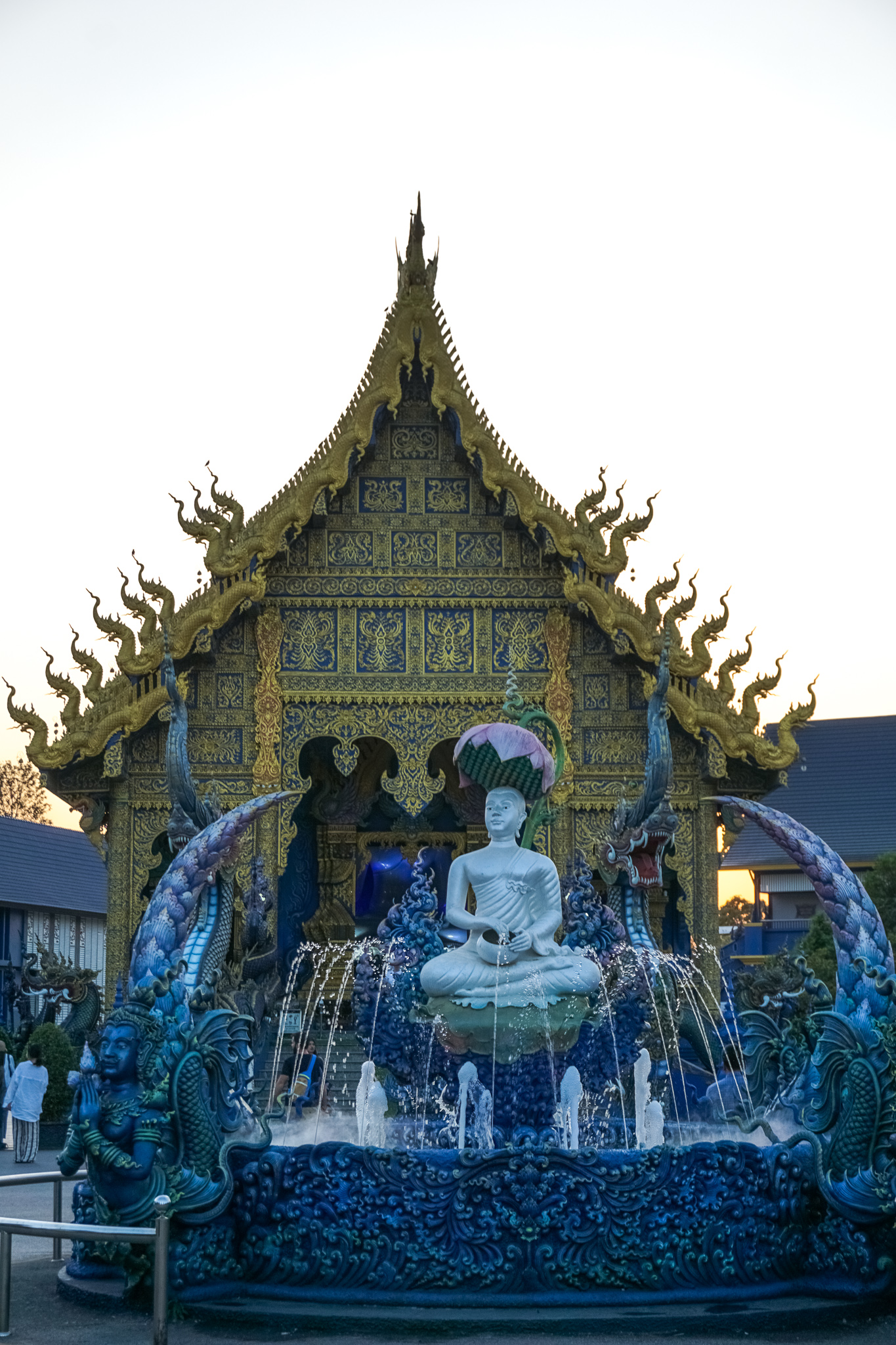
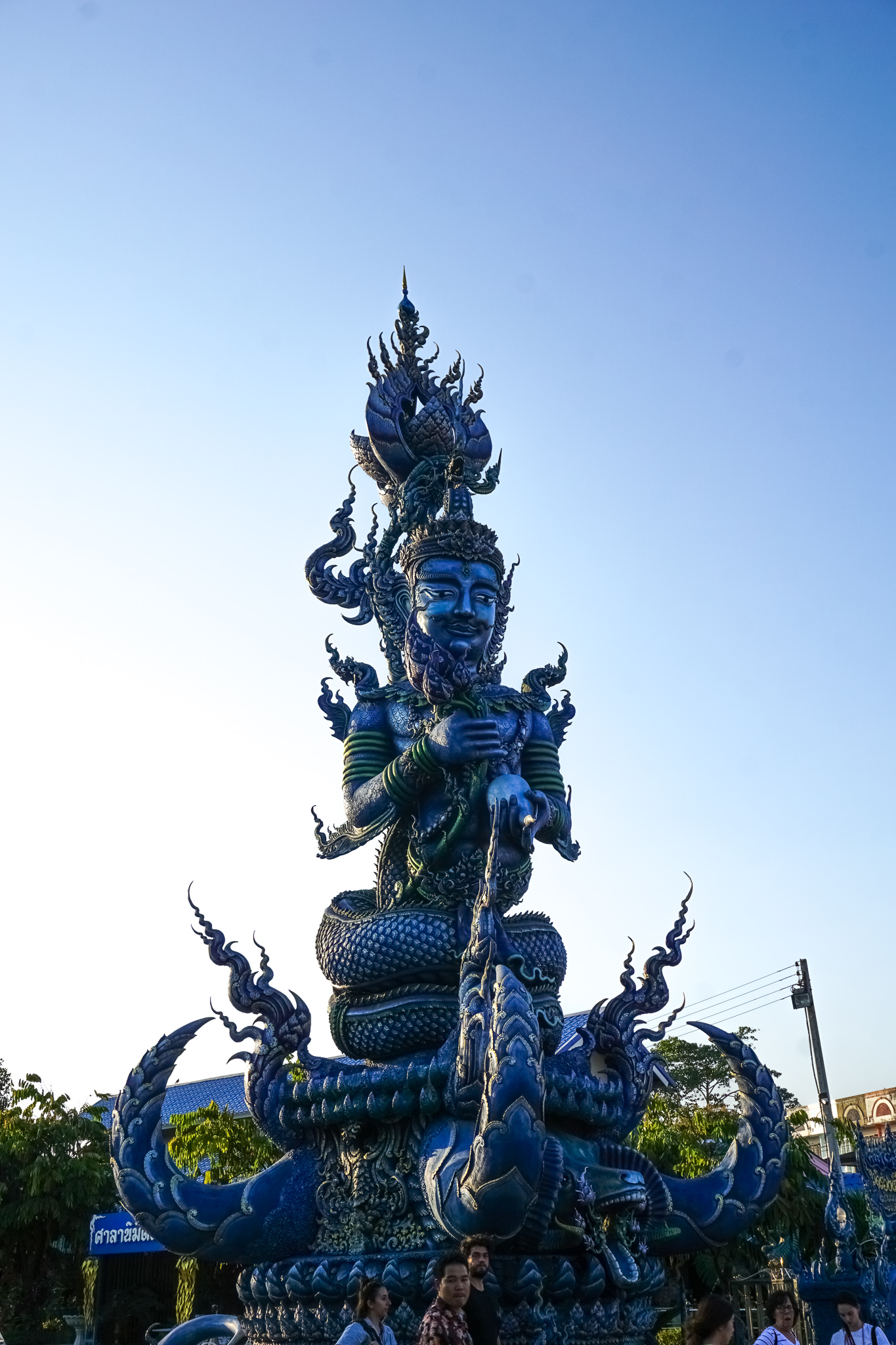
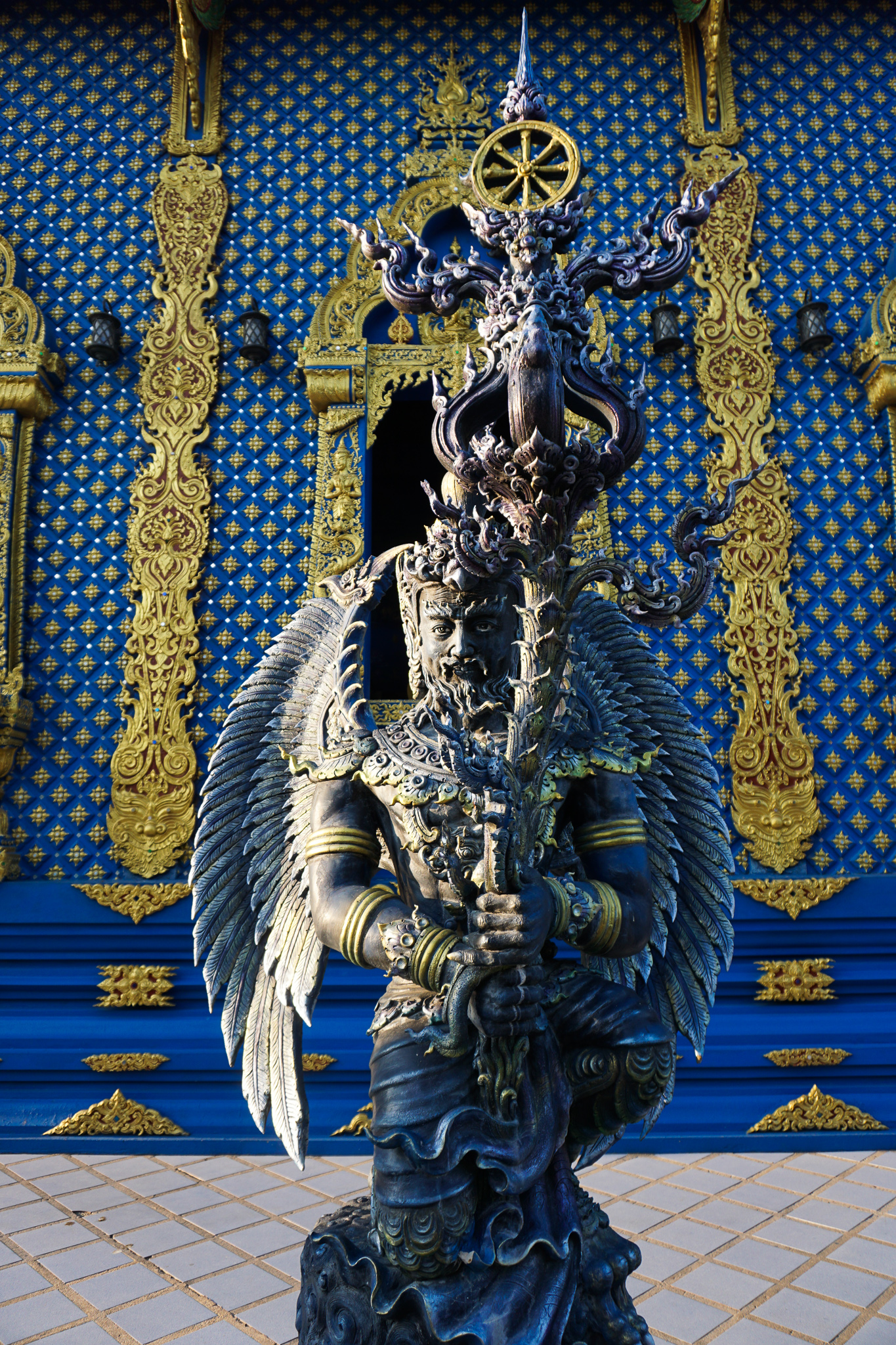
This temple is very recent – completed in 2016, the site of the Blue Temple was originally home to an abandoned 100-year-old temple. It was designed by artist Putha Kabkaew, a student of Chalermchai Kositpipat, the artist behind another famous (if not the most famous) attraction in Chiang Rai, the White Temple.

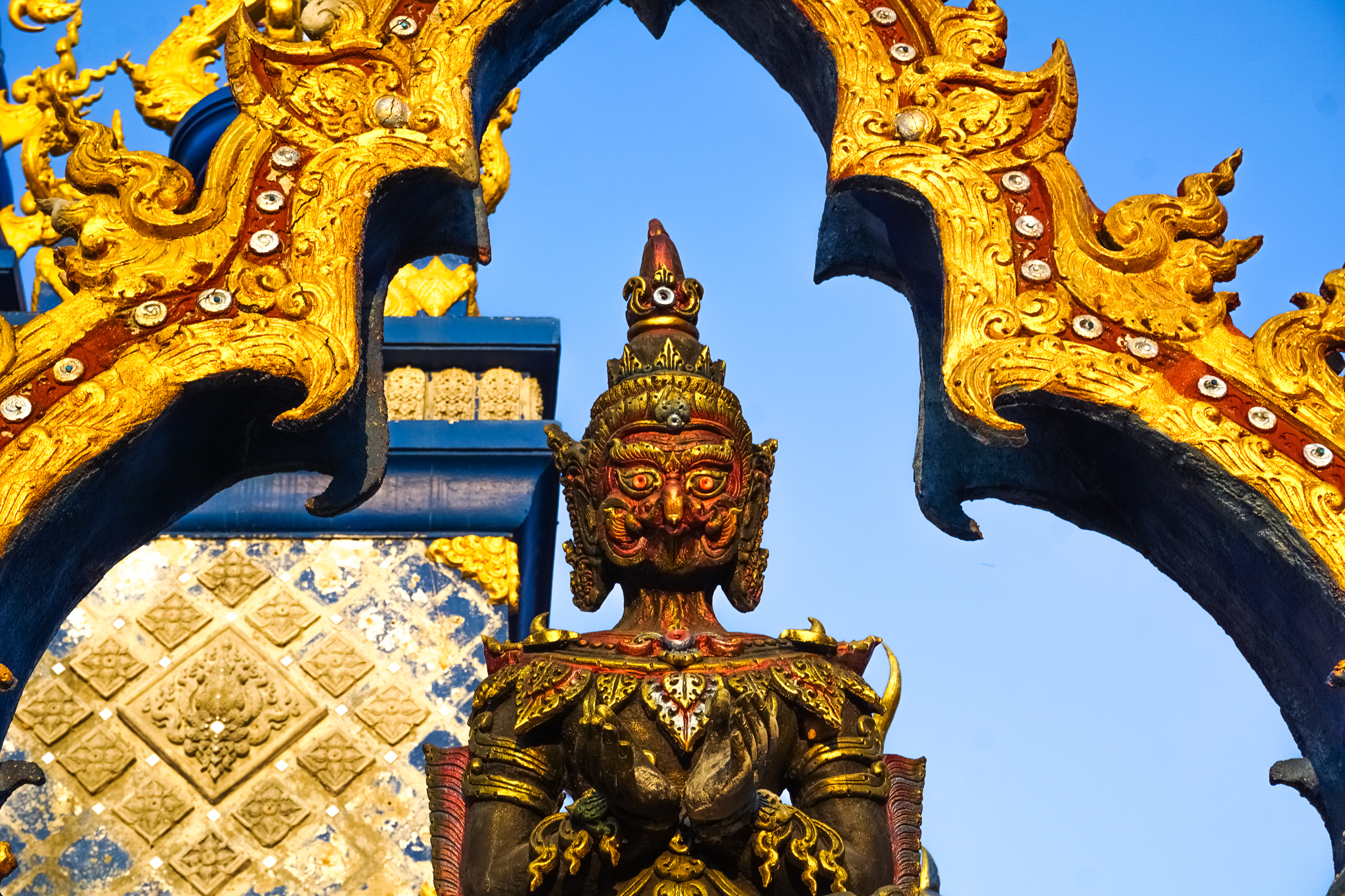

The Blue Temple ends up being on my personal favourites when visiting Thailand, which was something I wasn’t expecting. Not necessarily because I’m a fan of the style, but because I hadn’t seen anything quite so unique, with contrasting feeling of peace and confusion. If you stay till dark, you will see the temple illuminated, which is also a vision to behold. As I was still feeling quite ill, I didn’t have the strength to stay much longer, and called an Uber back to my hotel. But I was glad I was there during sunset, which borrowed a special light to the blue and the gold that made the experience even more rewarding.
The White Temple, a bit of a disappointment
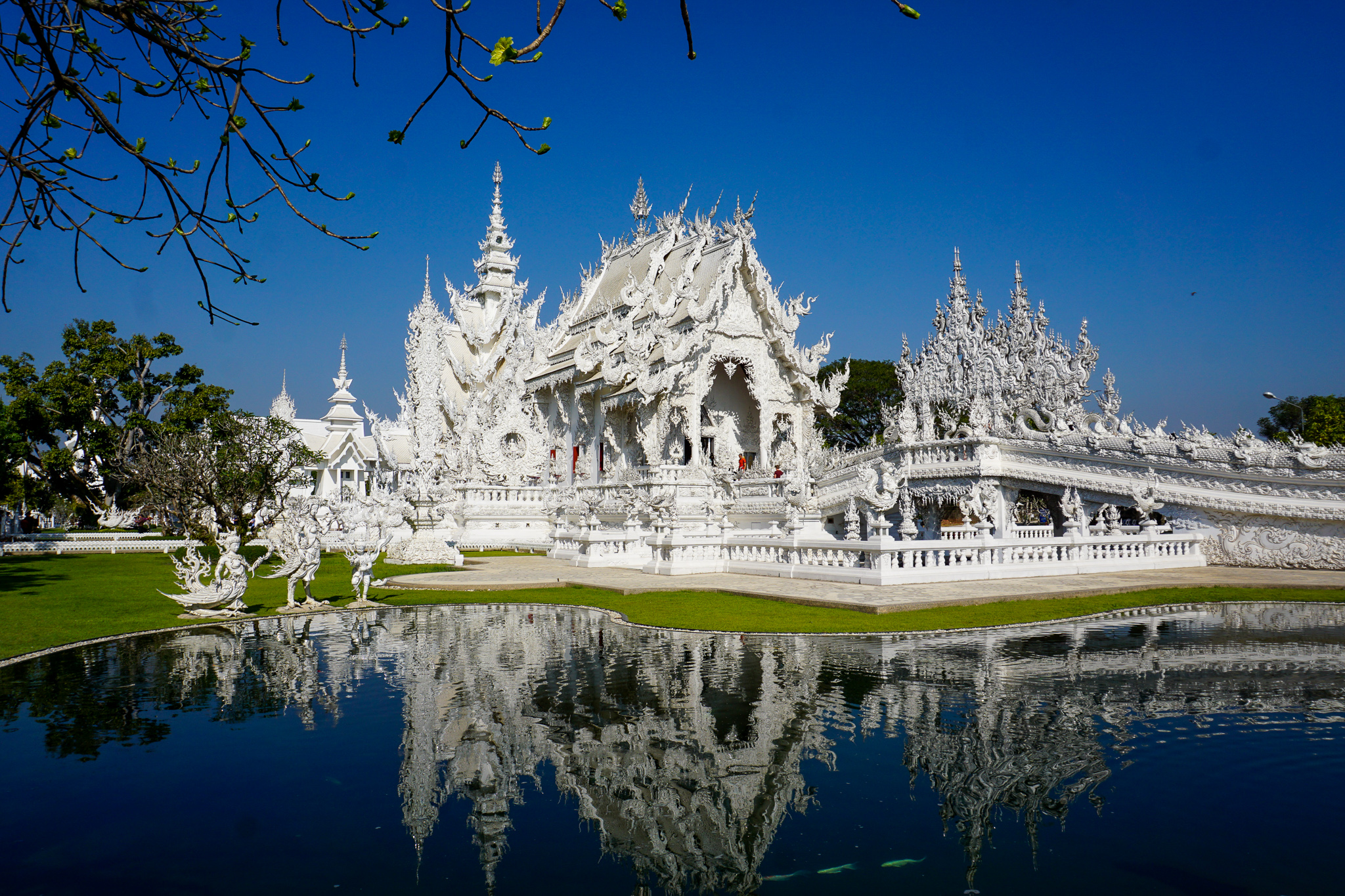
The next morning I was early to visit the White Temple, very much aware that this is the hot spot of Chiang Rai, and wanting to avoid the worst of the crowds – the groups from bus tours. I have to say that whilst this temple is indeed beautiful and intriguing, its incredible whiteness is pretty hard on the eyes when the skies are completely blue and the sun reflects on it, blinding my photo-sensitive eyeballs. Even with sunglasses, I was struggling, and perhaps the fact that I was (badly) recovering from a cold, I was feeling dizzy and had to sit down a few times.
The White Temple had been on my list of places to visit for many years. The images of a sea of hands coming from underground, reaching for something, in apparent despair… this was something I wanted to certainly visit. But let me be very honest here – once you get past the sea of hands, the temple is beautiful but in my opinion there isn’t much else to see. And you will pass the sea of hands very quickly – because in the few minutes you cross the bridge there is this outstandingly annoying loud recording of a male voice saying in all languages to move. You aren’t allowed to take a closer look at the sea of hands, which in my opinion is really the most interesting thing in the temple.


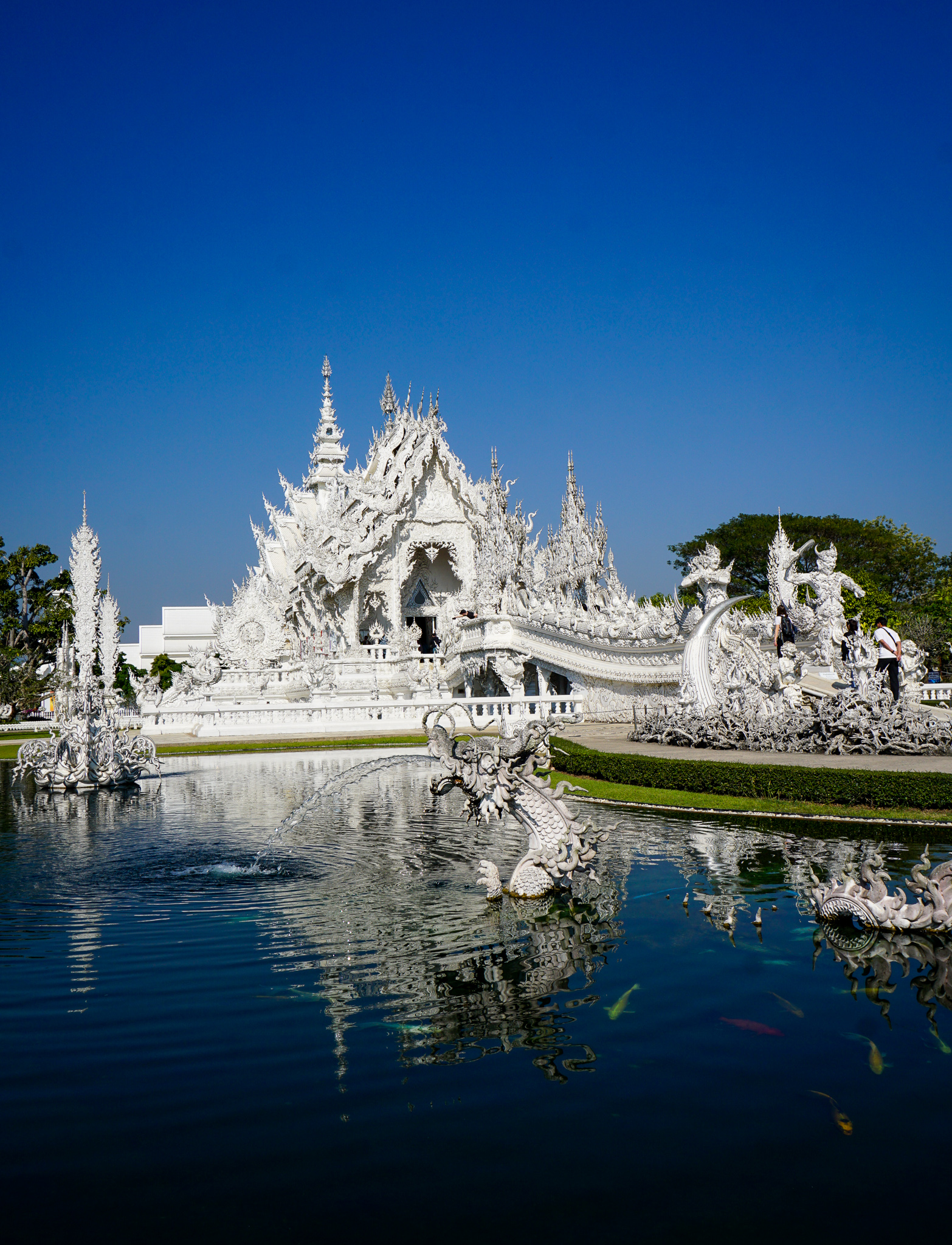
The temple was designed by famous Thai artist Chalermchai Kositpipat, and it’s construction started in 1997. From afar, the architecture looks similar to any other Thai temple, but of course its pristine white exterior makes it look heavenly, transcendent. So when the sun in strong, like it was the morning I visited, the vision is indeed otherworldly, and it’s natural shine is accentuated by small mirrors installed in the temple’s structure.

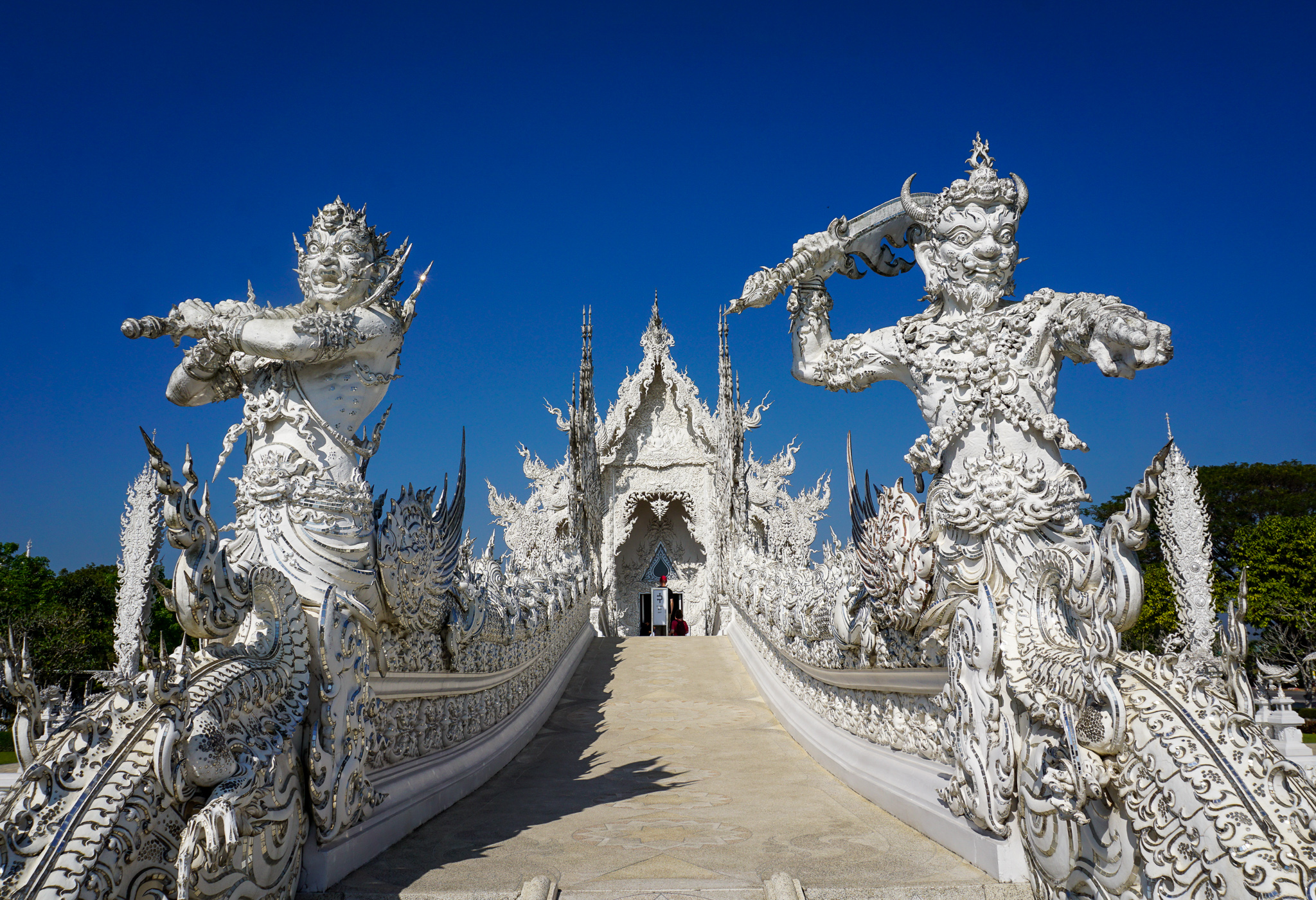
But before you reach the temple you have to cross that special bridge, above all that sea of hands. As someone raised in a catholic country, to me that is a vision of hell, of damned and tortured souls, pleading for mercy. But of course this is Buddhism – there is no hell in Buddhism. What this bridge symbolises is the path to enlightenment – according to Buddhism, you must let go of greed, desire – mostly of the material world – as those who won’t will be forever imprisoned and tormented by these sentiments – what in Catholicism we call sins.

Unfortunately, I couldn’t observe this part of the temple with the time I would have wanted. I believe the reason they basically order you to move and not to stand there is to avoid damaging the structure, especially when big crowds gather. But when looking at it, it’s easy to imagine that voice is trying to make you move away from that same temptation, of reaching out to those pleading hands and letting yourself be swollen by the same sins of those wretched souls.


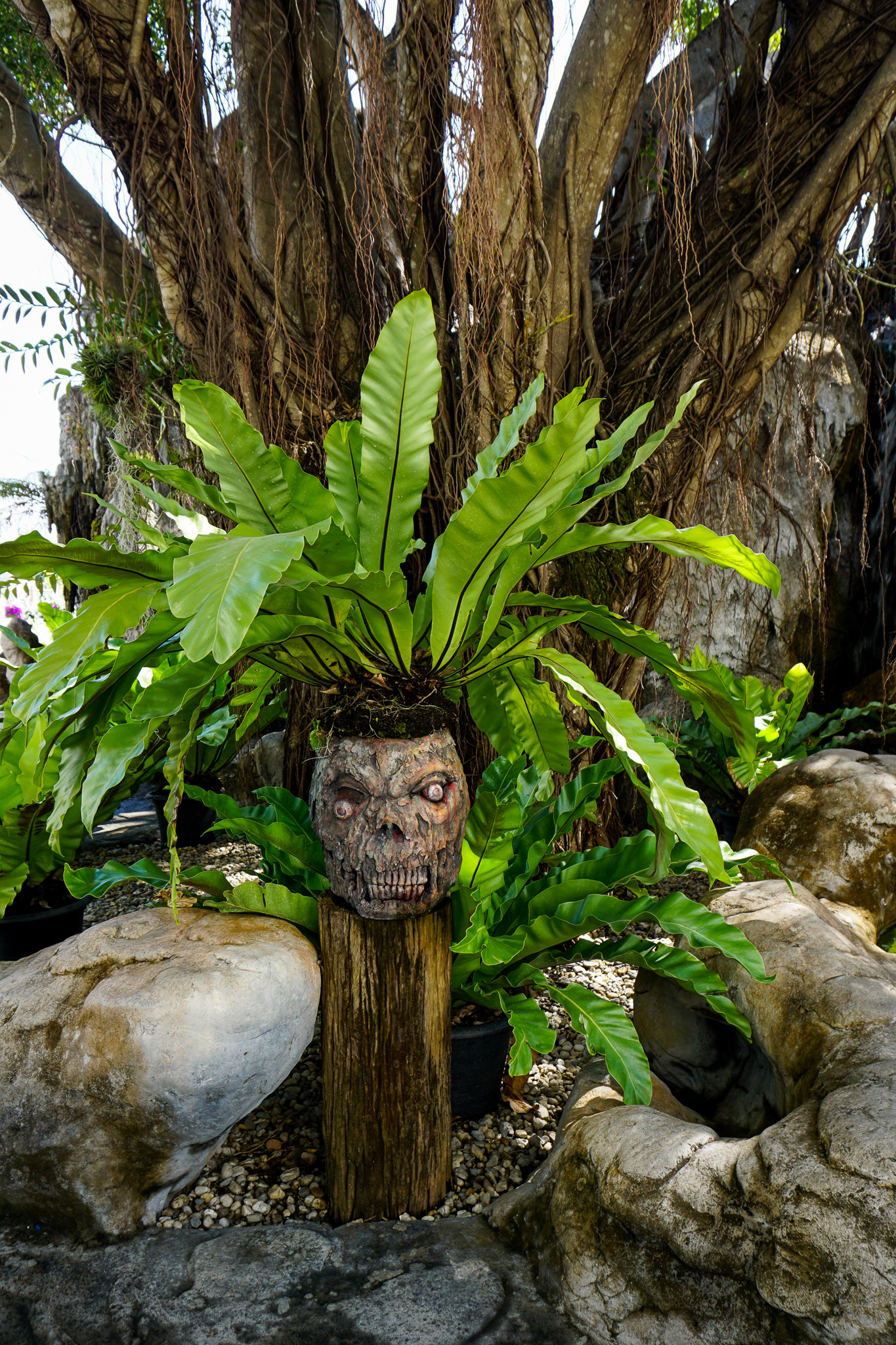
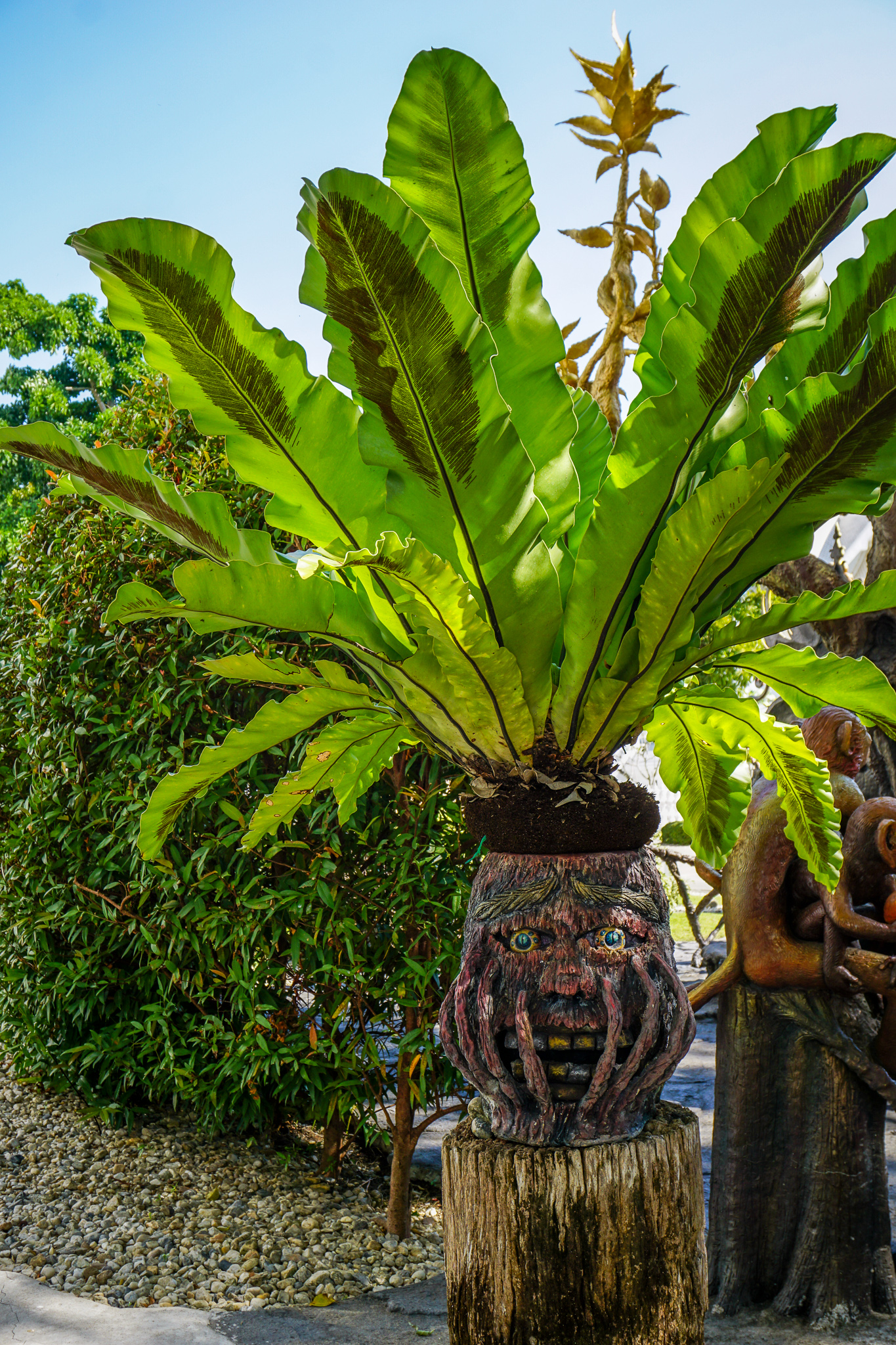
Despite its unorthodox nature, this is still a temple. Because it was always so hot, I always wore shorts in Thailand, and carried with me a scarf that I would tie around my waist, turning it in a long skirt. I never had any issues with it anywhere else in South East Asia – but before entering the White Temple, they actually put a pin on my scarf to ensure it wouldn’t open and show my tight. I tried really hard not to roll my eyes in annoyance at this. Especially at this kind of place… just before the main entrance, there are some sculptures of decomposing heads.
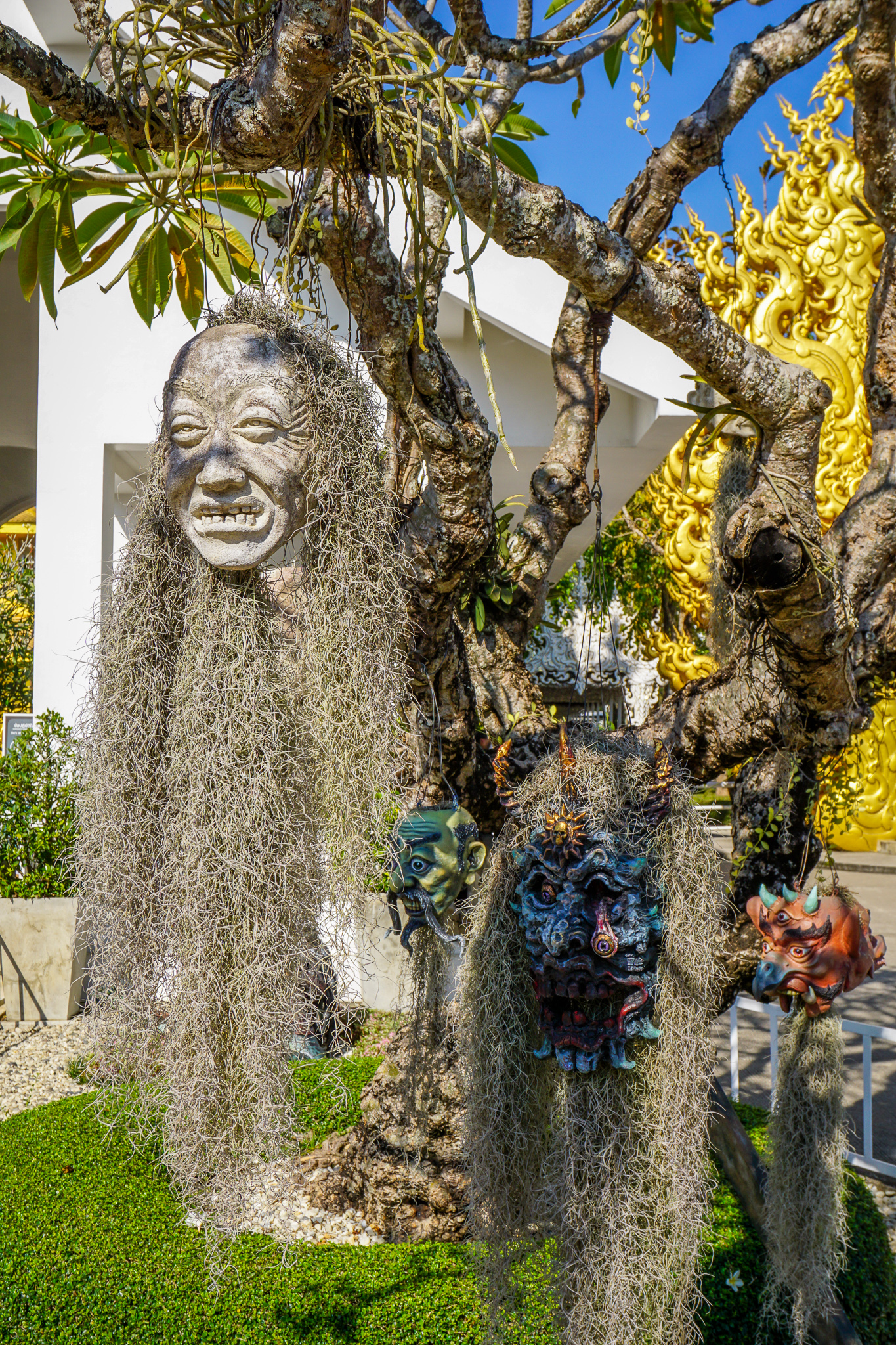

Plus, inside the complex, you’ll find heads of characters from Hollywood blockbusters, like the head of the Wolverine or Malefica. Hard to understand what is the connection in there – is that a criticism, is that satire, is that instead just a fascination with the West? The eccentricity of an artist is not often questioned.


As I was preparing to leave the temple, a group of school kids approached me asking me to take a selfie with them. This happened to me so many times throughout my trip. I don’t mind because these are just kids, but I always find it surprising because I’m not blond nor have blue eyes, which I know is seen as incredibly exotic in those parts of the world. I am just a white woman, but a tall one. And I suppose that attracts some eyes. I also wonder if these children simply want to practice their English and if this behaviour is even encouraged by their teachers. These children asked me where I was from. Most times when I said Portugal, people wouldn’t know what country this was. So I often just said Europe, but this time I added Portugal. To my surprise (and annoyance), one of the kids shouted very enthusiastically Cristiano Ronaldo.
I don’t follow football, even though that is the national sport of my country. So I cannot speak to Cristiano Ronaldo’s skills as a player. Using this logic, I probably shouldn’t speak about his character either – I never actually met him. However, the sort of behaviors he has had and perpetrated throughout his career really made me dislike him, and therefore it is a hard pill to swallow when his name is what I hear 90% of the times I say I am from Portugal. And somehow I had to finally give in and accept that often saying his name was the only way to explain to the locals where I was from. I cannot deny his influence and how it really helped spread the word about Portugal and well… its existence.
Either way, after this visit, I was happy to return, exhausted, to my hotel to rest. But of one thing I was certain. I was glad I had decided to stay overnight in Chiang Rai, a calmer town, for my very much exhausted soul.
Love,
Nic
This article is also featured on GPSmyCity. To download this article for offline reading or create a self-guided walking tour to visit the attractions highlighted in this article, go to Walking Tours and Articles in Chiang Rai
 The Winged Bone
One thought on “Exploring Chiang Rai’s Unorthodox Temples”