
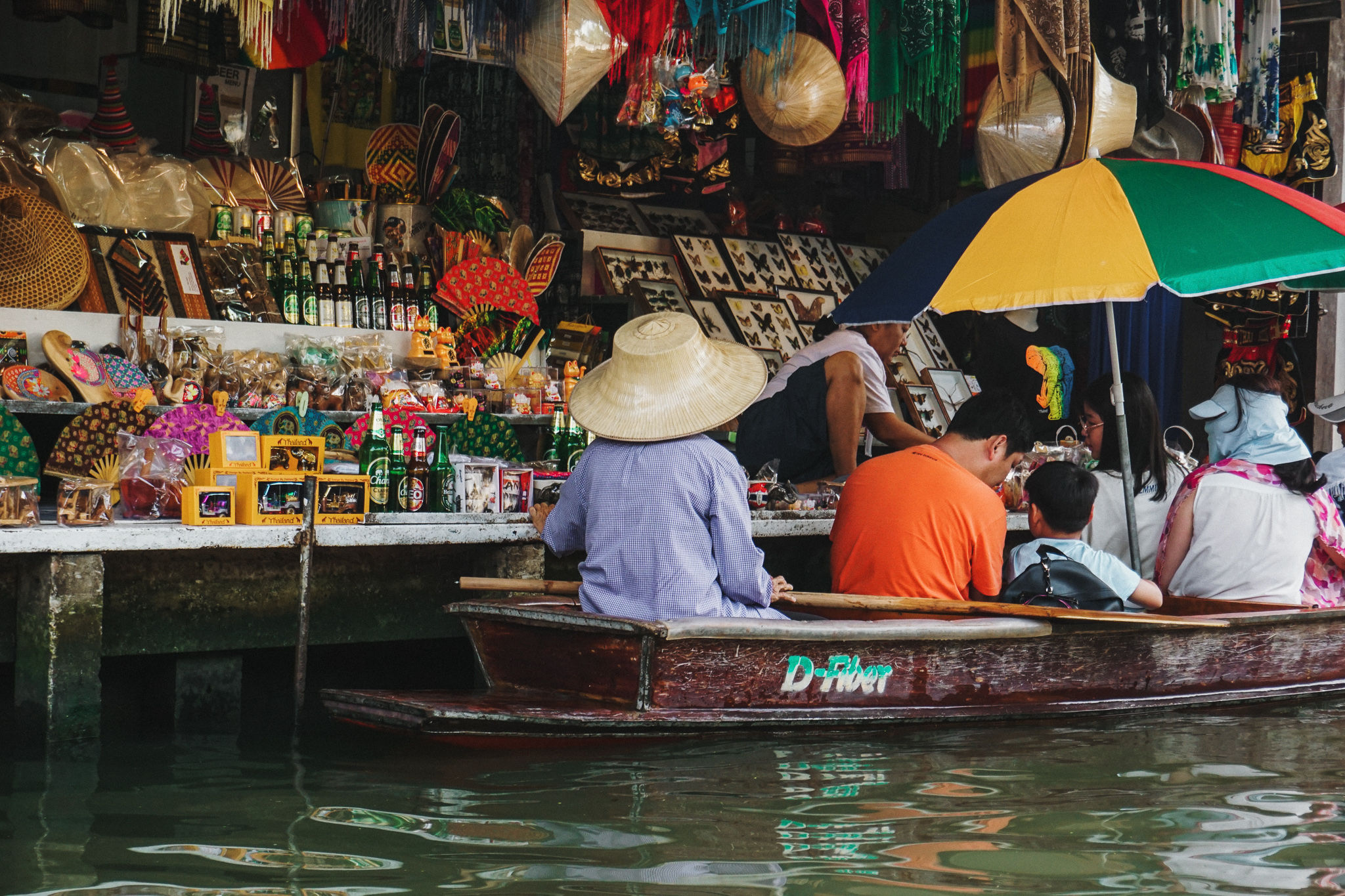
Unless you are incredibly forensic with your research, when travelling for four months you are bound to make some mistakes. I look back at this day (or half day to be more precise) as one of those mistakes. One that deep down I knew I was committing, and yet I still went ahead and did it. I don’t completely regret it for one reason. I ate some very delicious coconut pancakes. I also recovered from an almost panic attack over some delicious mango sticky rice.
My first mistake was deciding to take a tour to the famous floating market of Damnoen Saduak. The second was to do it on the morning after Lunar New Year. If this place has become a tourist trap, that is even more obvious when even less locals are around… which would be the case during Lunar New Year. Throughout the entire activity, I had a strange feeling on my stomach. The feeling that everything was too staged. Specifically the overly enthusiastic tour guide. Don’t take me wrong – she was nice. But sounded to me as if she was hunting for generous tips.
But there used to be a lot more to these places than what they are today.
Thailand is a country where waterways used to be the primary mode of transportation, and as a result these floating markets have been an integral part of Thai’s commerce for centuries. Specifically during the Ayutthaya Kingdom – from 1350 to 1767 – Thailand experienced an explosion in trade. The extensive network of canals and rivers made these markets one of the most, if not the most, efficient ways to distribute goods. More than “floating shopping malls” these were central to strengthen community bonds. Besides buying and selling goods, people would meet up and exchange news.
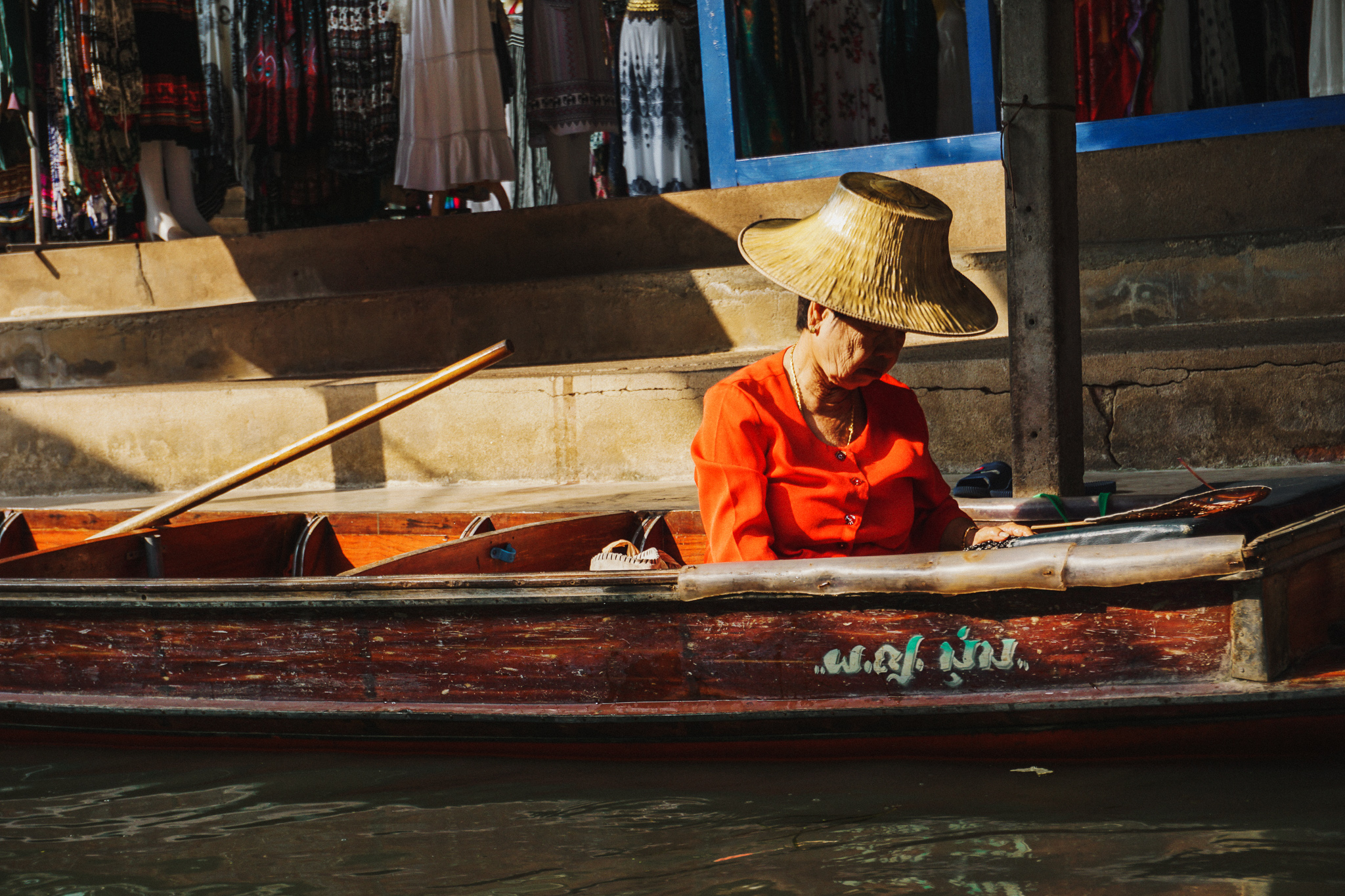
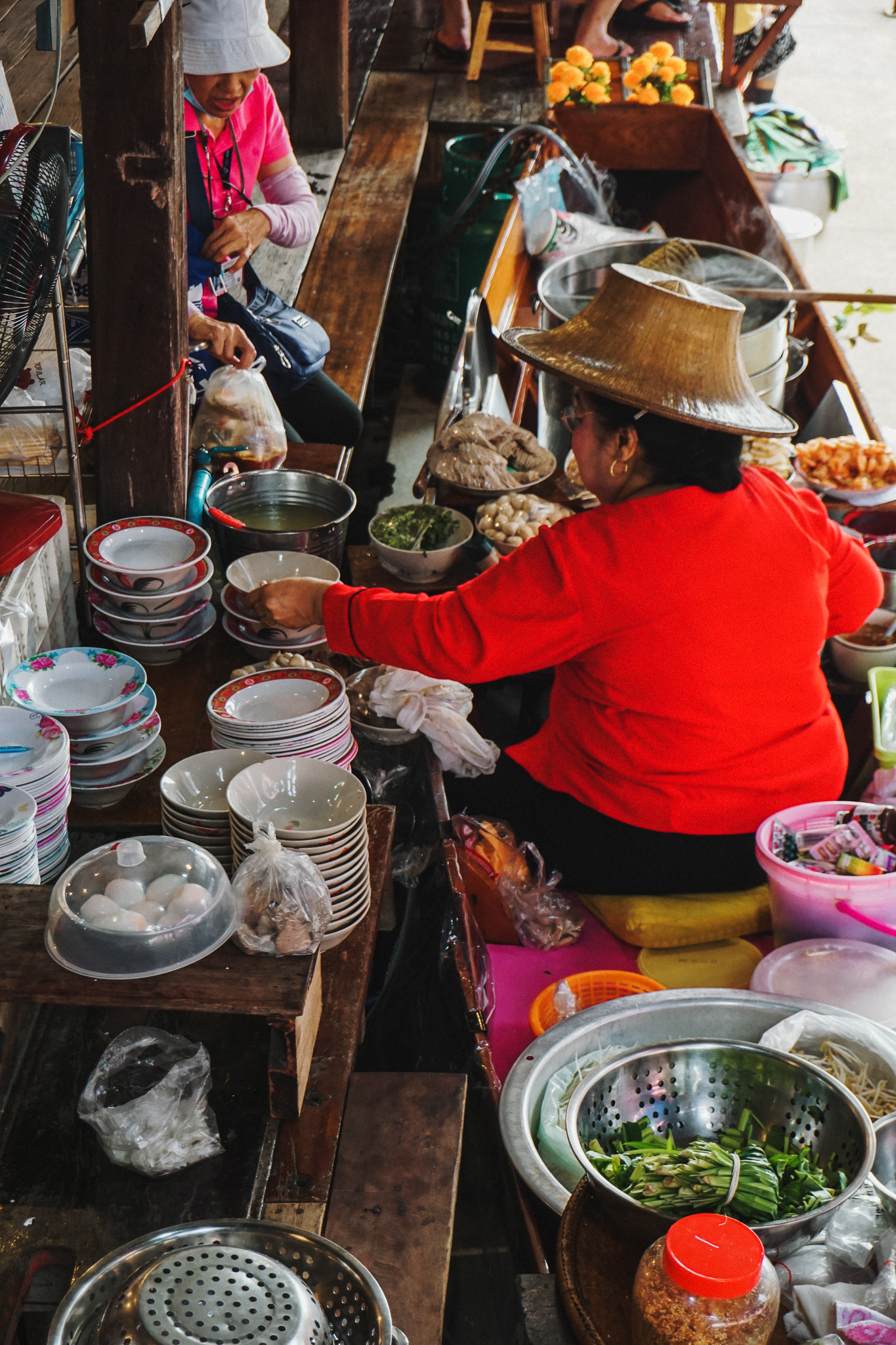

Eventually, with the modernization of the country in the 20th century, these markets started to see a decline. Waterways weren’t as integral as they once were – now there were roads and railways. Plenty of floating markets disappeared. Thankfully, in the past decades, there has been an interest in bringing these markets back to life, preserving them as an essential part of the Thai heritage. But the focus from the government has been in tourism, of course. Which is probably why it all seemed so staged to me.

When I was going through this experience – which was to be honest quiet depressing – I did use my imagination to visualize what it must have been like in its hay day, when locals actually needed these markets, when it was the only way you could get your groceries, and even get news from your friends, and relatives. It must have been a marvel to see. Long wooden canoes grasping against each other, exchanging goods over the waters of the canals, the sounds of chatter and laughter.
“Keep your hands inside the boat” we were told multiple times by the guides. In a normal day I suppose it is still busy, and therefore if we want to keep our fingers intact, we should definitely keep our wits about them. But that was not the case that day. Strangely, there weren’t many tourists… but also not a lot of locals. Most boats I was seeing had Klook’s – the tour operator I was using – as a banner. Again – bad idea going to this place on the morning of the Chinese New Year. But also… just a bad idea going.
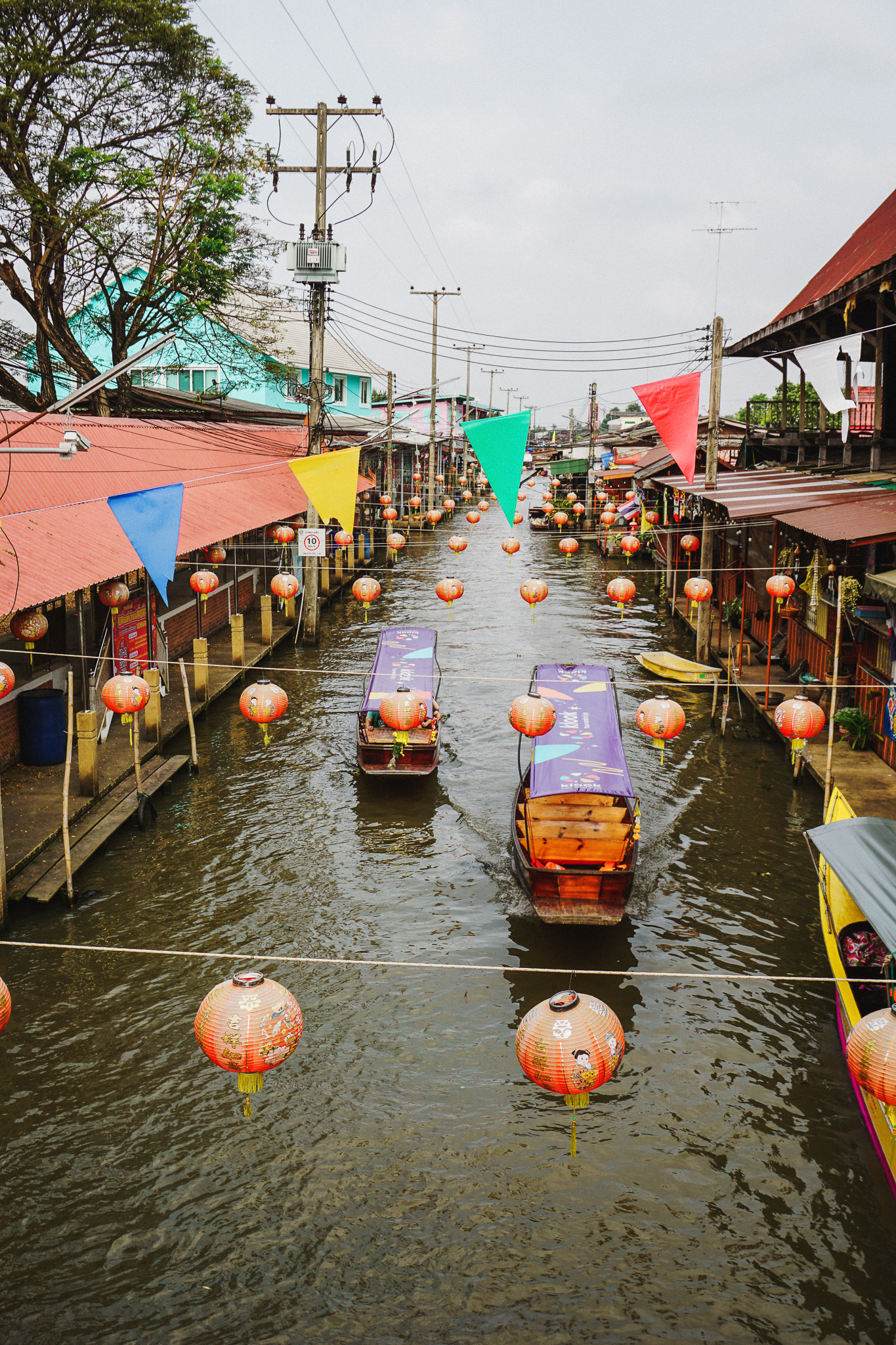
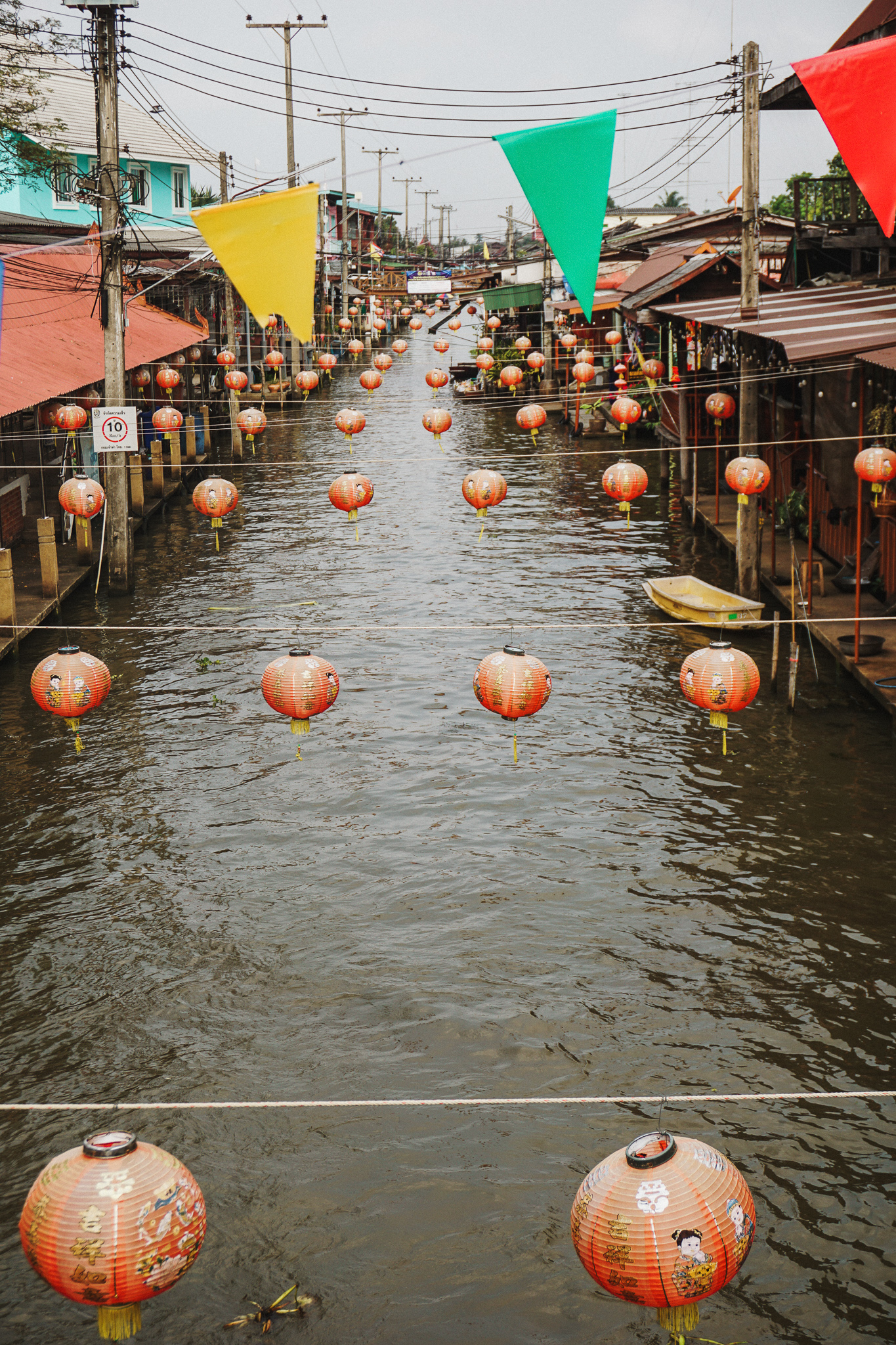
I don’t want to sound completely grim about this activity. After going on this tour, I did some deeper research, only to realise that I visited what is probably the worst one. Damnoen is known to be the most touristy of all. To the point that most stalls were selling souvenirs that you could actually buy anywhere else in Thailand. Nothing that would interest me at least, but also nothing that would interest a local.
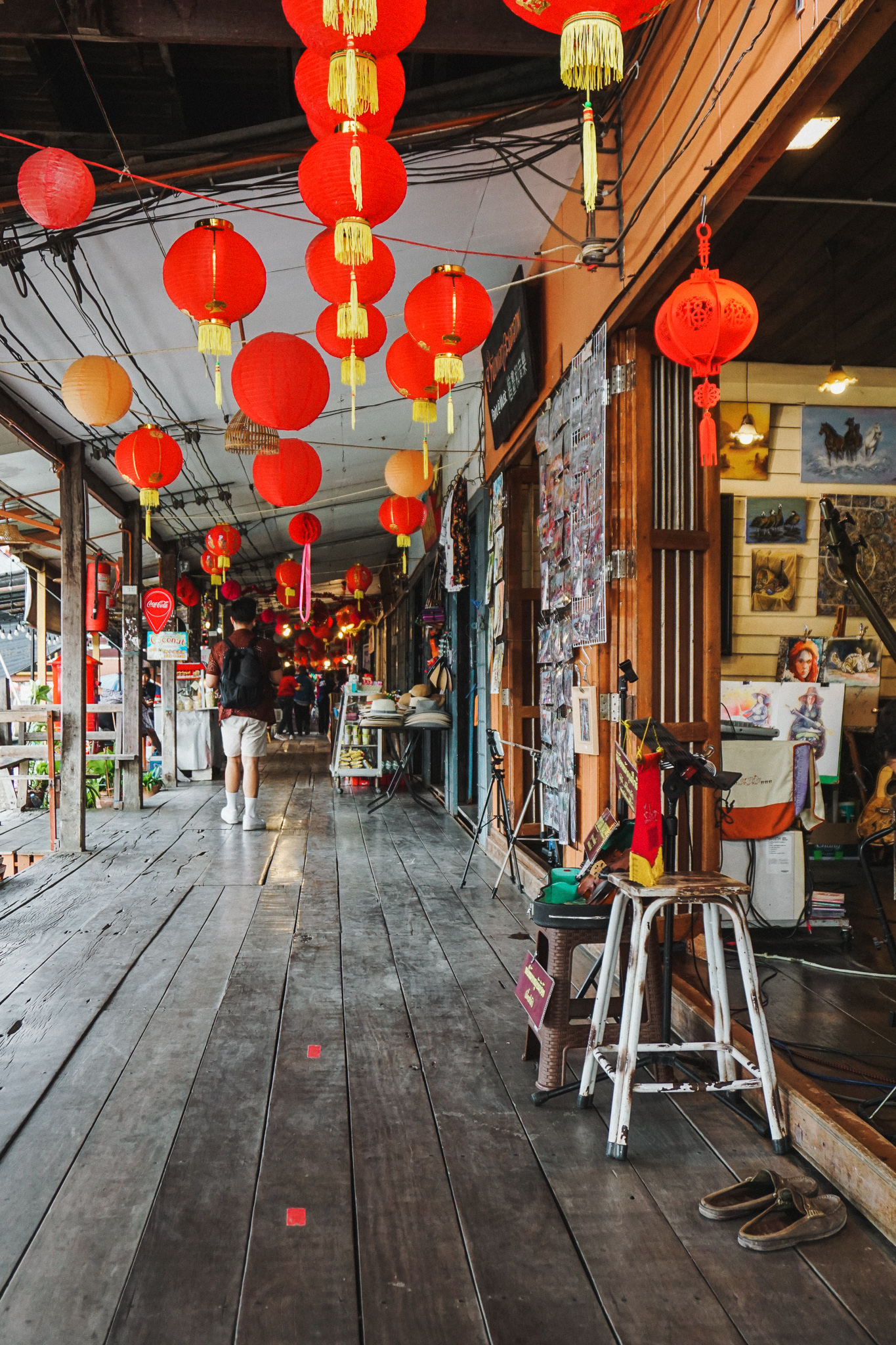
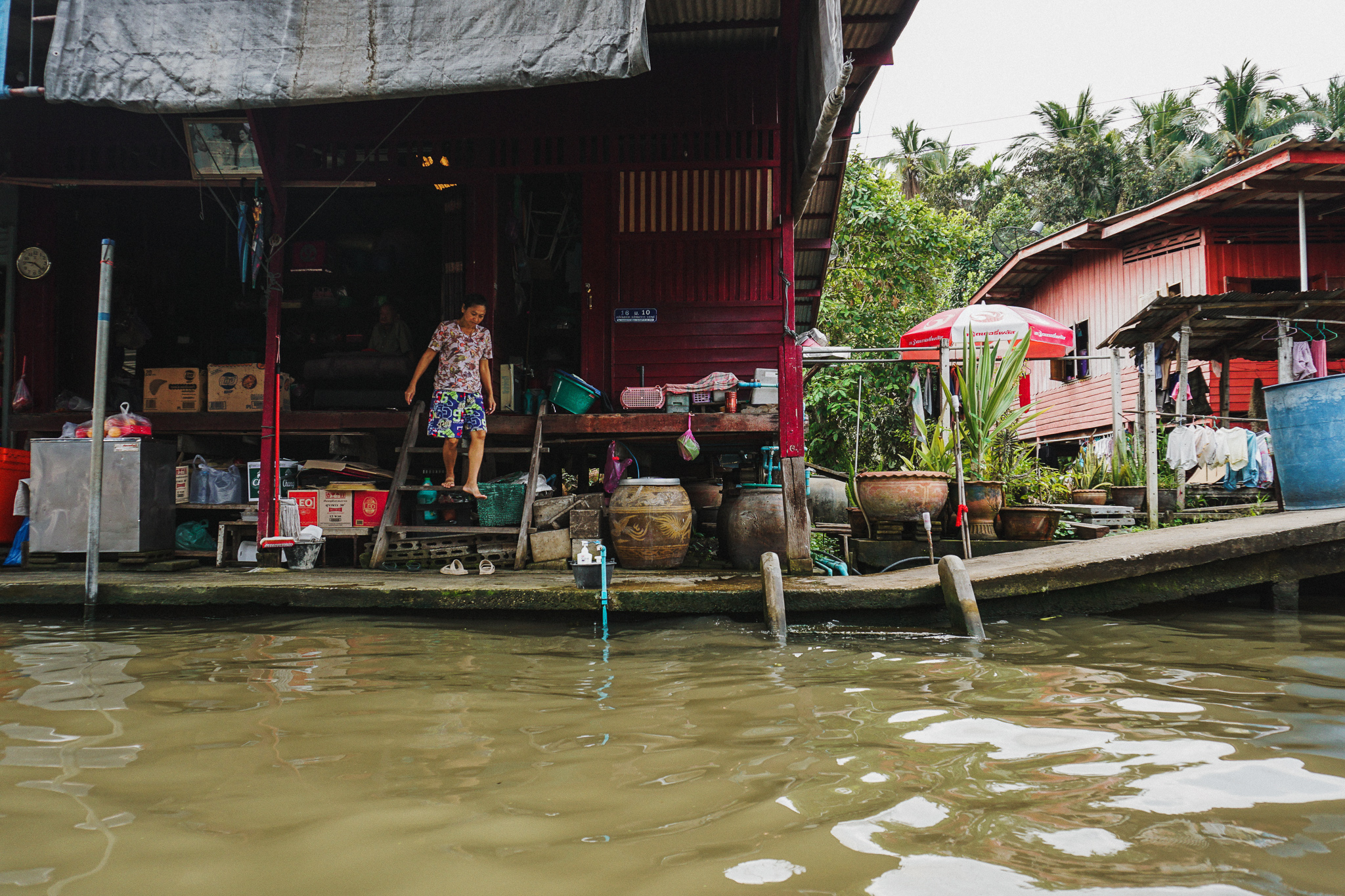
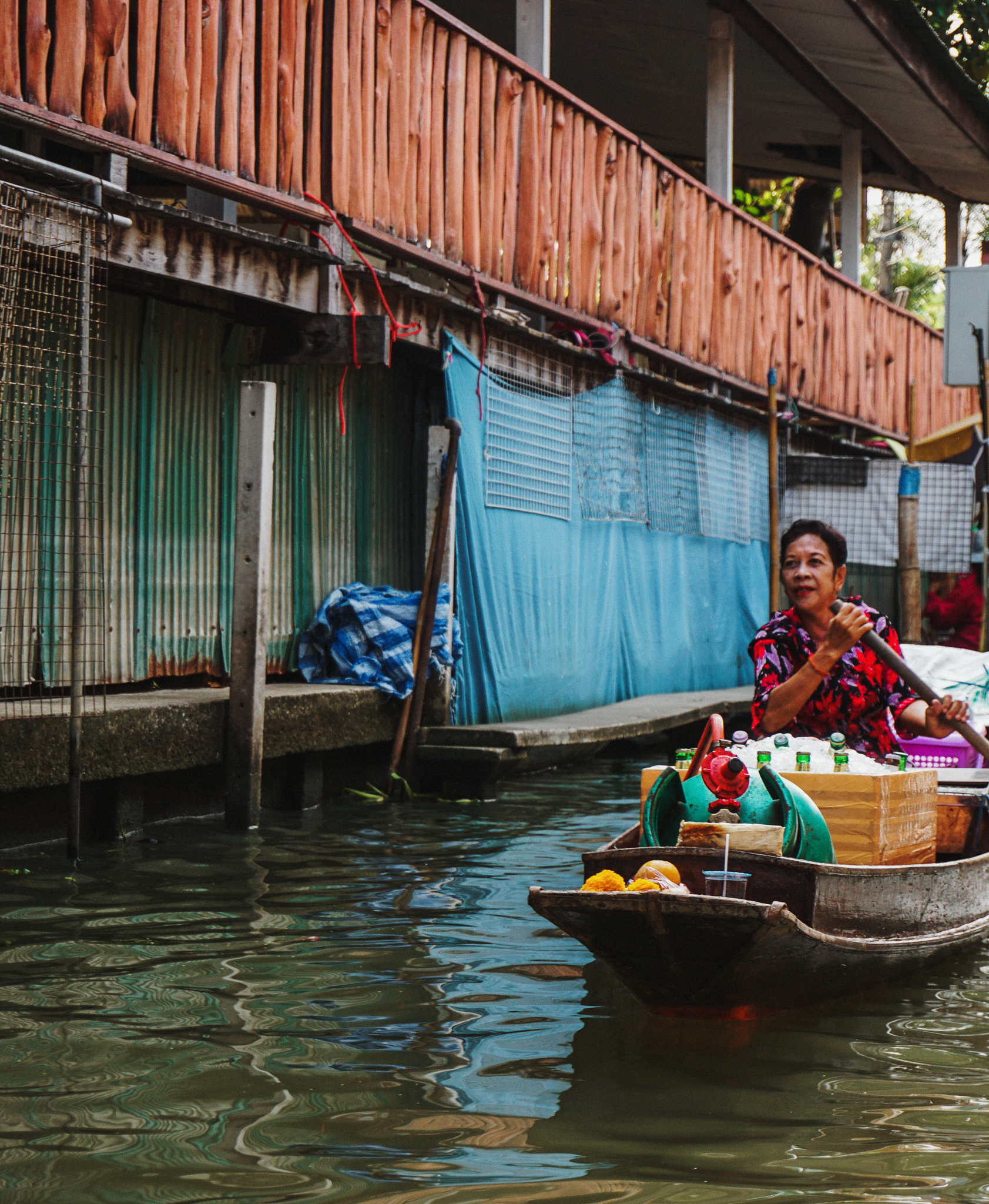
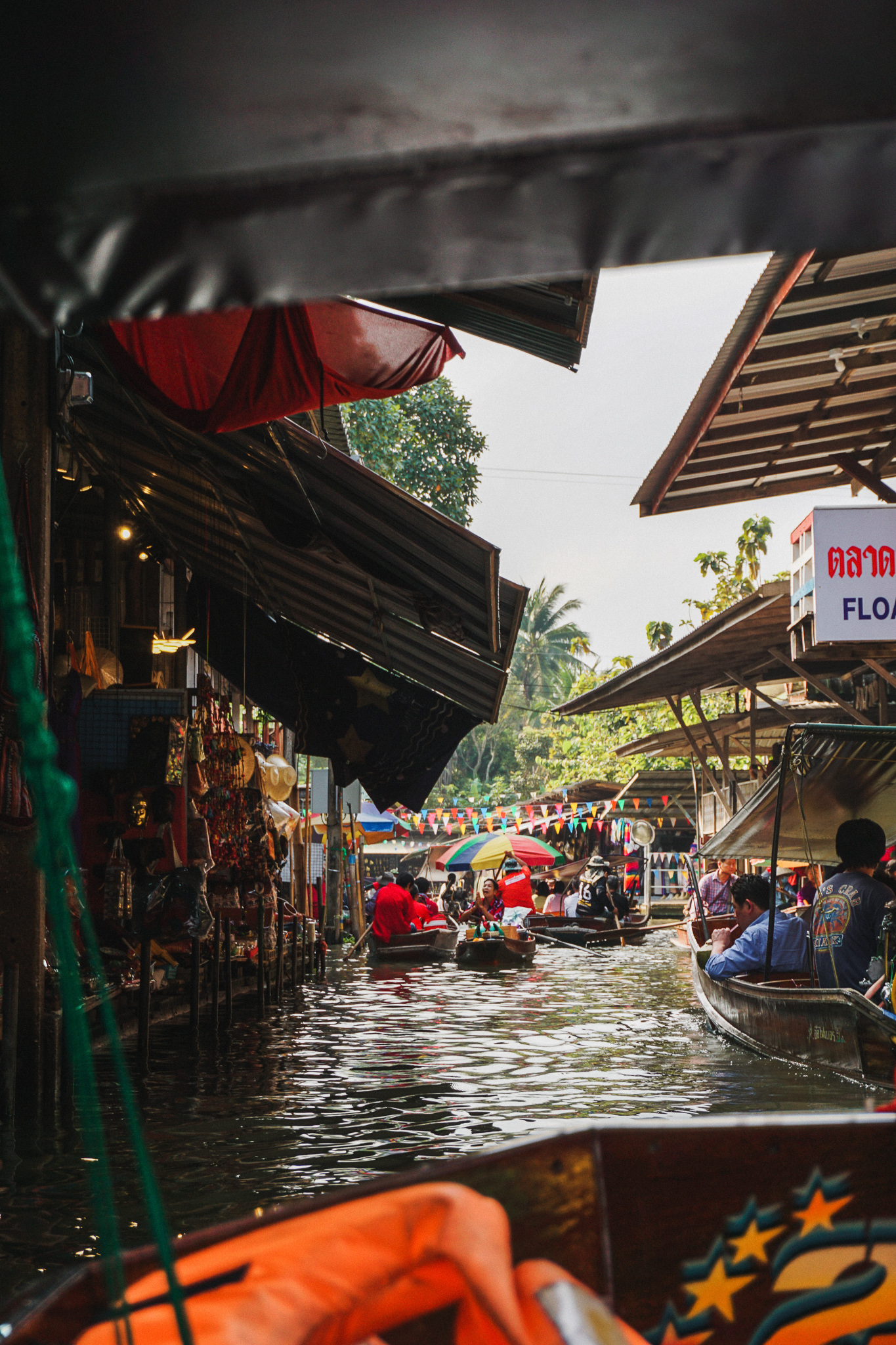
If I ever go back to Bangkok (which I hope I will one day), I will consider visiting another one. My research tells me that Ampahwa and Taling Chan are more authentic, with a better balance between tourism and local life. So perhaps this is something I’ll consider in the future.
Now… if I thought my visit to this floating market had been bad, the whole thing was about to get worse. The tour also included a visit to the famous Maeklong Railway Market. Why did I get myself in this situation? That’s really all I could think about.
Let me tell you about this one – which proceeds the floating market quite well. As I mentioned, the floating markets started to decline precisely because of the development of roads and railways. But of course there were land markets as well in Thailand, and one of them was the Maeklong. Yes – this market existed before the railway. And once it was constructed in 1905, the market didn’t move. The locals were stubborn about it. No – not relocating. It would be too costly, and apparently there simply wasn’t a better place for this market. We will adapt, they stated. And adapting they did. To the point that a sort of unique symbiotic relationship was born out of this. The vendors learned to quickly dismantle and set up their stalls to accommodate the passing trains – which can only be possible when these are punctual and people really know when to expect them!

Pretty much like the floating market I had just visited, the stalls I could see were only selling tourist souvenirs. I did read though that the market is still used by locals to buy produce every day, but I suppose this is the less touristy part of the market were I wasn’t taken to.
Contrary to the floating market though, the density of tourists here was incredible. Bear in mind there isn’t really much space to move, and I couldn’t really pass through the tourist section. And suddenly all the vendors started to shout, the train was coming, and we needed to get behind this line that was fading to a point that was almost not visible. But could I be behind the line? Right behind the line were the stalls. All I kept thinking was that I was going to die. There was no room for me to stay out of the tracks. I definitely didn’t want to be there. I hate crowds. I hate feeling trapped. And of course, I hated the idea of being run over by a train.
Of course, I survived. But I almost had a panic attack whilst at it, and I don’t have any photos of this place because I truly disliked my experience there. When the train passed, it was merely inches from me, its heat emanating to my face. I felt I couldn’t breathe. It was already hot enough. I could barely move or look around, but everyone seemed to be having so much fun, including those inside the train – the ride itself is also a tourist attraction.
I got myself a Pad Thai and a sticky mango rice after this. Comfort food. I certainly needed it. What a nightmare that was for me.
This whole thing launched me into one of my reflections – first of all, is this actually safe? Oh you’re in Thailand, safety isn’t anybody’s concern – that’s what I would be told. Fine. Except it’s not. We can’t just take away the element of safety when so many lives are at risk – foreigners and locals alike. Should it at least be more controlled? It was probably one of the most crowded places I was in Thailand, and this counts with the Grand Palace. I suppose because I was on a tour, I also couldn’t control the time. We were dropped there precisely at peak time – just before the train was passing, because that’s the attraction, right?
I know I sound very negative. I just don’t see the appeal of this. I recall when I tried to visit the famous train street in Hanoi, Vietnam, and I wasn’t allowed to go in unless I was going to pay to sit at a café. It seems a lot of tourists have been putting themselves and others in danger – so they decided to stop people from going unless they help the local businesses. This in itself is ridiculous because it is a street – a public street. And I should be allowed to walk in it. Yet, I know too well how tourist misbehave constantly, treating places like these as theme parks instead of places where actual human beings live, work, go to school, everyday. And yet here is Thailand showing everyone who has a death wish to just make their way into Maeklong Railway Market.
If you haven’t been to any of these places – either the floating market or the railway market – and you really want to go, don’t let my opinion ruin it for you. This was my experience and I’m pretty sure a lot of people were at least seemingly having a good time. I am a sensitive person, and peculiar with where I want to spend my money and my time when visiting a country. I know I can’t avoid tourists or tourist places – honestly, I don’t want to. I am a tourist as well, and if something is touristy, is usually for a reason.
But there are many reasons why something explodes with fame. And sometimes that explosion comes at a cost of local community and loss of what made it special to begin with.
Love,
Nic
 The Winged Bone
2 thoughts on “The Floating & Railway Markets – a verified tourist trap”