
Travelling is often about facing harsh realities, that put you in uncomfortable positions by shedding light in blind spots in your own knowledge, on your own bias and also on your own privilege.
This four-month-long trip had many moments like that. And specifically travelling across Vietnam, Cambodia and Laos, where the wounds of recent wars have barely healed. But while the Vietnam War (American War depending on the perspective) and the Genocide in Cambodia are known internationally – even if you aren’t fully aware of the details, you most likely heard about it, unless you’ve been living under a rock – we don’t often hear about Laos.
The Secret War – a clandestine mission by the CIA
Of course, we wouldn’t have heard about it – it was even called The Secret War. This was a large-scale bombing campaign conducted by the United States in Laos during the Vietnam War era, from 1964 to 1973. This was a clandestine operation carried out by the CIA – meaning it was not widely known to the public nor was fully disclosed to Congress at the time.
The main goal of this mission was to disrupt what was known as the Ho Chi Minh Trail, used by the North Vietnamese forces to reach Saigon, South Vietnam. Because of this operation, Laos became the most bombed country per capita in history, with over 2 million tons of ordnance dropped – this number exceeds the bombs dropped on Germany and Japan during the II World War combined!

So what is happening now?
None of this ended in 1973. It is estimated that about one-third of these bombs didn’t explode, leaving the lands of Laos littered with what’s called unexploded ordnance (UXO). We’re talking about an estimation of 80 million bombs that failed to explode at the time.
To this day, these bombs are killing or gravely injuring civilians in Laos, including children, who often find the bombies (a common name given specifically to unexploded cluster bombs) whilst playing in the fields. Between 2008 and 2017, one person was killed almost every two weeks by UXO. It is estimated that over 20,000 people have been killed or injured by UXO since the end of the war. About half were children. (Sources: The Guardian, ReliefWeb)
To the Laotian people, the war isn’t over. They are still afraid every day.
Who is taking responsibility?
I can tell you who isn’t – the United States.
UXO Lao is the national UXO clearance operator, working hard with very brave teams to find UXO and destroy it. They train and employ people to defuse and clear UXO around the country, but also educate people about UXO safety, including going to schools to teach children about the danger of these bombies, and how they should act if they find one. This is particularly important bearing in mind they represent a huge slice of the number of victims.
From 1996 to 2017, UXO Lao was able to clear approximately 800,000 bombies, but that’s only about 1% of those that were dropped in the country and still to unexploded.
The UXO Visitor Centre
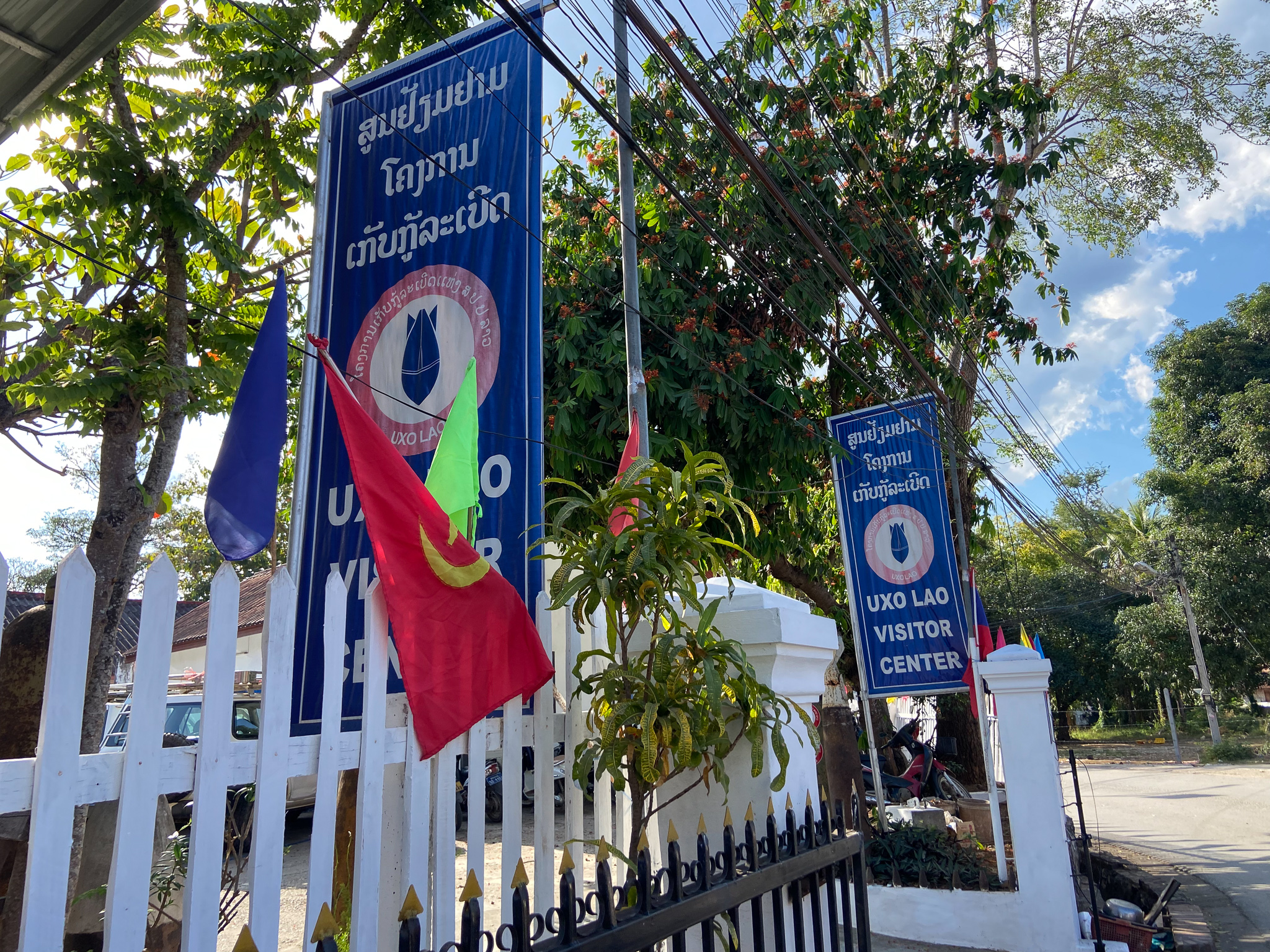

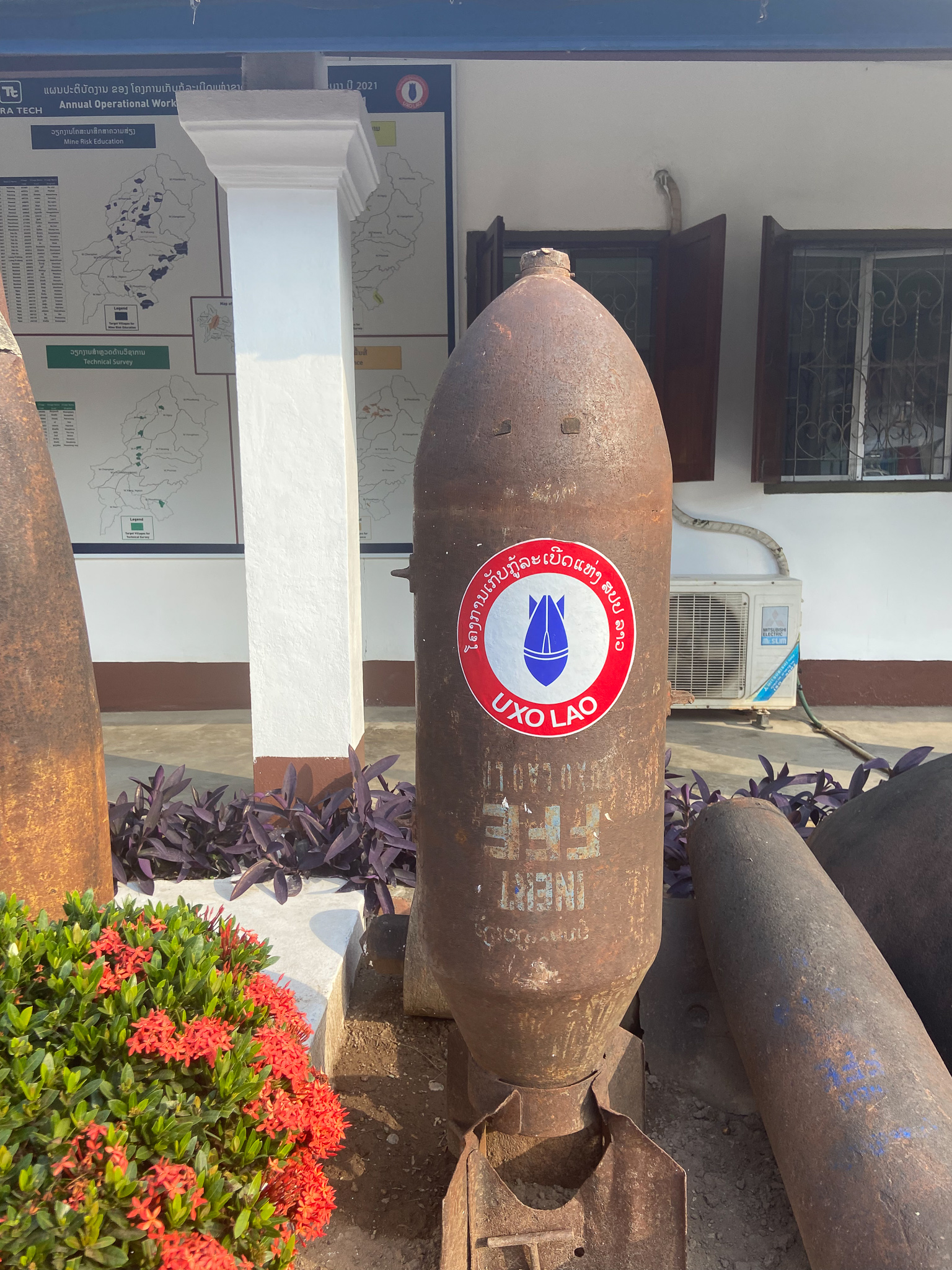
This is a must-see in Luang Prabang. It’s free entry (of course donations are encouraged or you can buy a souvenir), and if you are like me and were completely ignorant about this “secret war” you’ll come out of it with new information and likely very shocked. The stories of survivors are also displayed, making them even more real and incredibly moving. The reason why I’m writing here about it is to contribute as much as I can in this little corner of the internet to raise awareness about this issue that continues to affect Laotian people to this day.
Personally, I felt enraged. No one is actually taking responsibility for this. I wish I could just call the US president (at the time of writing, Joe Biden) and demand they go and clean the very literally bloody mess they have created.
The people of Laos depend on farming to survive. Because of this problem, hundreds are too afraid, because they know about the danger of one day accidentally hitting a bomb, losing a limb or limbs, becoming blind and even dying. A lot of these locations don’t even have proper healthcare facilities, so injuries are left untreated until they can reach a hospital in a bigger city – if they can even afford it. This causes further impoverishment of the population.
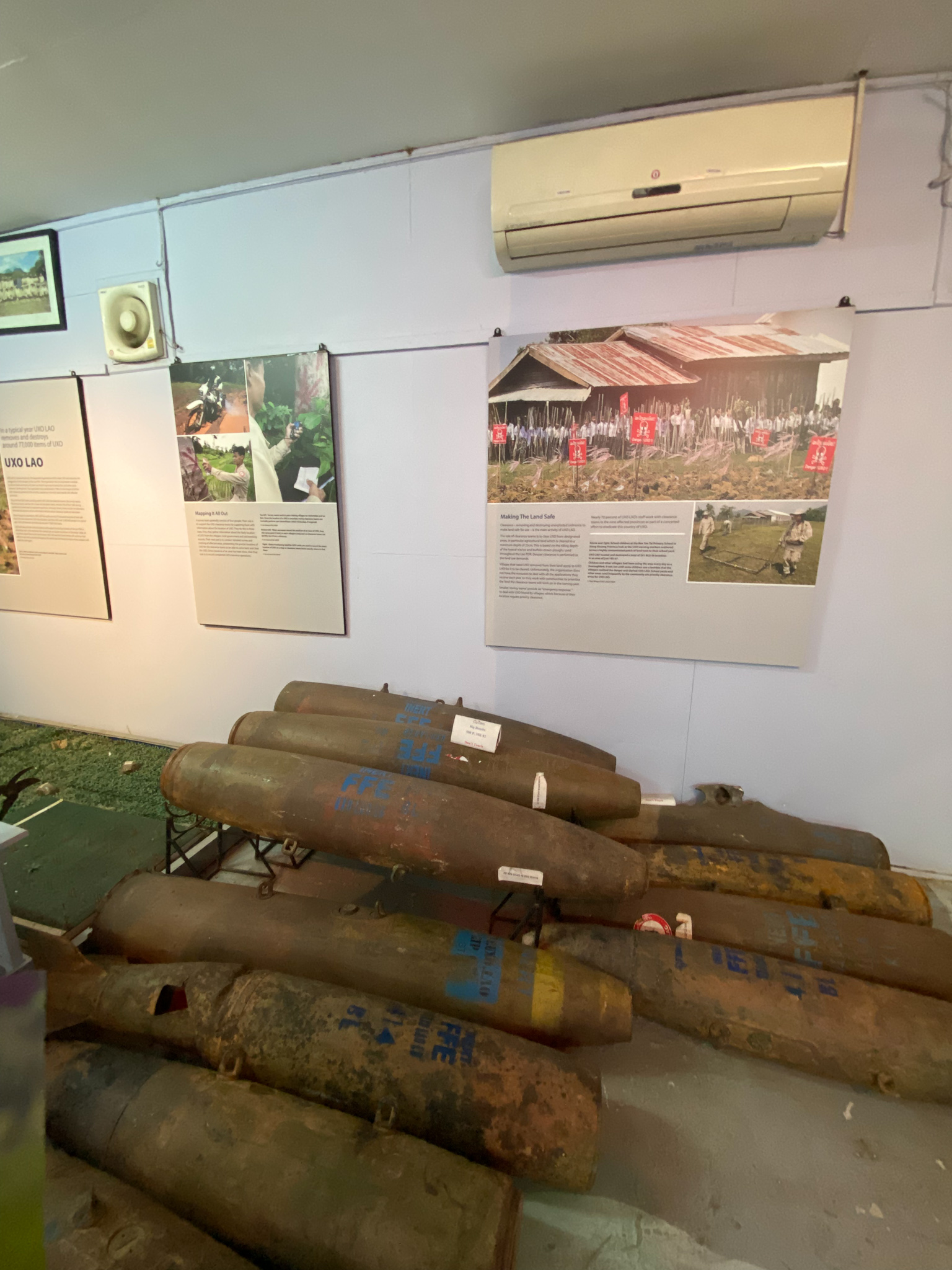
There is also another problem – when you struggle to put food on the table, you take risks that can put your life in danger. Some people try to earn some extra money with the collection of scrap metal, often putting themselves at reach by attempting to defuse these bombies themselves, to sell the metal.
The stories displayed in this exhibit are deeply moving, shedding light on the real consequences of war, how they go beyond borders and even dates, how they continue to affect people decades and decades later. How can we humans be so cruel… and so forgetful. These people are victims of a war that ended decades ago. As per usual, the innocents take the hit, whilst the criminals remain unscathed.
Up to that moment, I had no idea Laos was the most bombed country per capita in all of history. I had never heard about this secret war which bombed a country indiscriminately, disregarding innocent human lives and the very real consequences of what they were doing, trying to “catch” an invisible trail as if what they were throwing weren’t bombs. As if Laos was a fucking piñata (pardon my french).
The United States is still killing people in Laos. It’s been over 50 years.
Love, Nic
 The Winged Bone
One thought on “50 years later, the U.S. is still killing civilians in Laos”