
Another cold welcoming
Laos. A country that is still relatively under the radar, but perhaps for that reason it attracted me so. I landed in Luang Prabang shortly after 6pm, but the sun had set already and it was a dark night. During the late hours, the temperatures were also some of the lowest I’d find in my entire trip, at around 15-18 degrees Celsius, a huge contrast with the thirties of the height of day.

When I arrived at my accommodation, I was again disappointed with the lack of hospitality. At reception, I was received by a grumpy teenager, probably not older than seventeen years old. If he uttered a word, I did not hear it. I arrived, said I had a room, told him my name and he picked up a key that had already been waiting for me at the top of the counter who knows for how many hours of the day.
I followed to my room, on the ground floor. He opened the door, gave me the key, and went back to his place at reception to continue to consume what I can only imagine were very compelling videos either on Instagram or Tik Tok, the platforms of the moment for people that age (and younger and older, let’s face it). I was about to observe that people in Southeast Asia are addicted to social media at a level that is very different from what I’m used to back in Europe.
When he opened the door, I was greeted with the unpleasant smell of humidity and mould. Great, I thought. Even the bedsheets seemed wet. The room clearly hadn’t been ventilated in a while. There was quite a lot of mould in the bathroom, seemingly never properly scrubbed around the edges. I turned the AC on in the dry mode, hoping that would make a difference. In reality, the windows needed to be opened, but it was night and I really didn’t want mosquitoes to get into the room. Plus, being on the ground floor, it meant if I opened the windows I’d have zero privacy. I seemed to have been cursed with windowless rooms or rooms with windows one doesn’t really want to open.
Either way… I hesitantly put my backpack down and changed to go to bed early. When I woke up the next day, the sunlight was going to make everything better.
The idyllic beauty of Luang Prabang
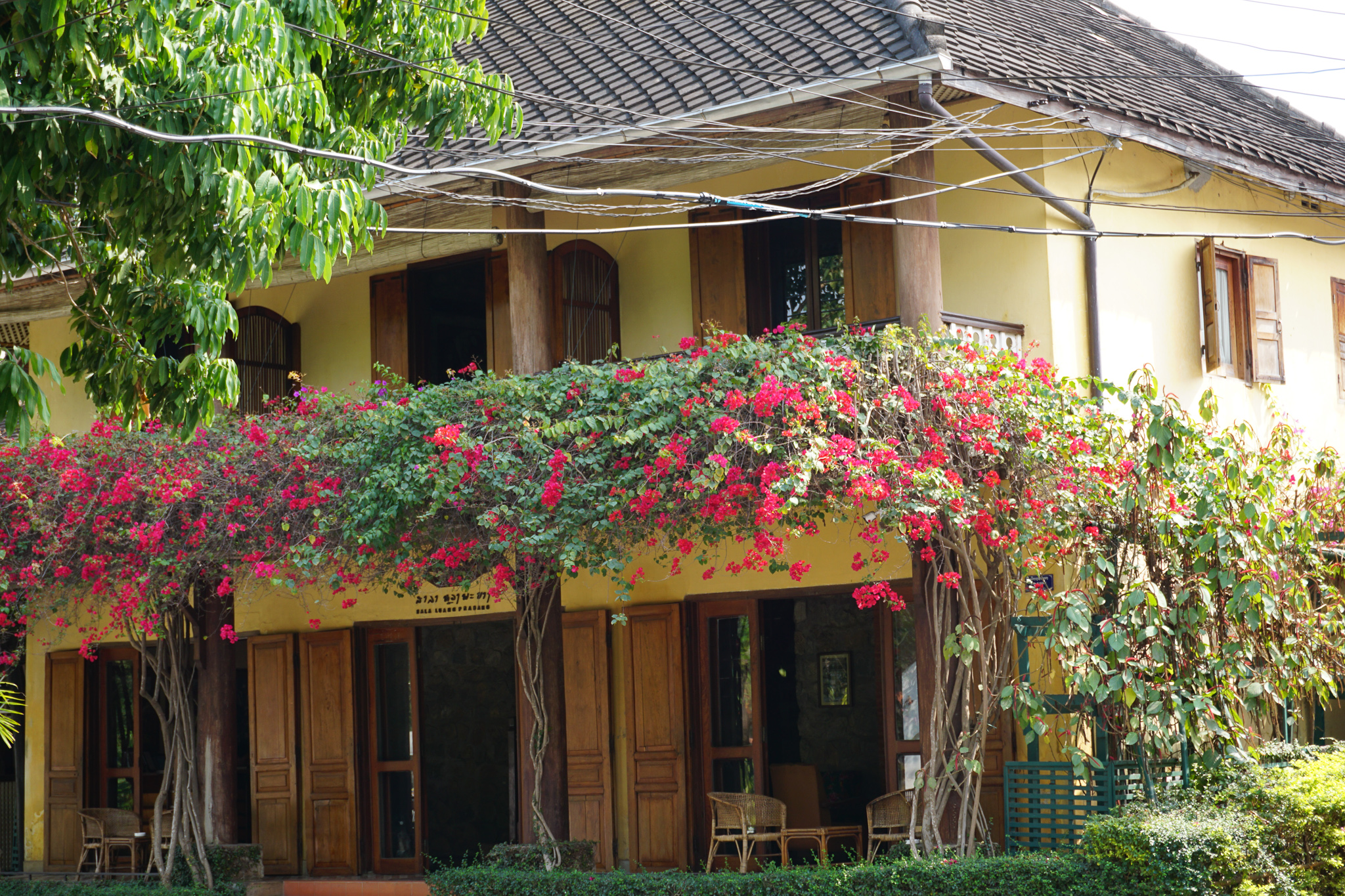
And it did. Despite the smell and the lack of maintenance of the room, the place was beautiful. It had a nice garden with a view of a little lake just next to the building. That definitely explained the high humidity. Breakfast was served and it was delicious and the staff was much nicer than what I had witnessed the night before. Soon I set off to explore Luang Prabang and was greeted by a postcard-worthy view of the Mekong River. Absolutely stunning. It had in me the effect of a light tranquiliser. It took the edge off me, and I felt I could breathe in a way I hadn’t felt since I had started my trip. While I had been enjoying myself so far, the anxiety had been burning me in the underlayers of my mind. But at that moment, I remember crystal clear I felt whole. I felt I was where I was supposed to be. I felt at peace, wholeheartedly so.


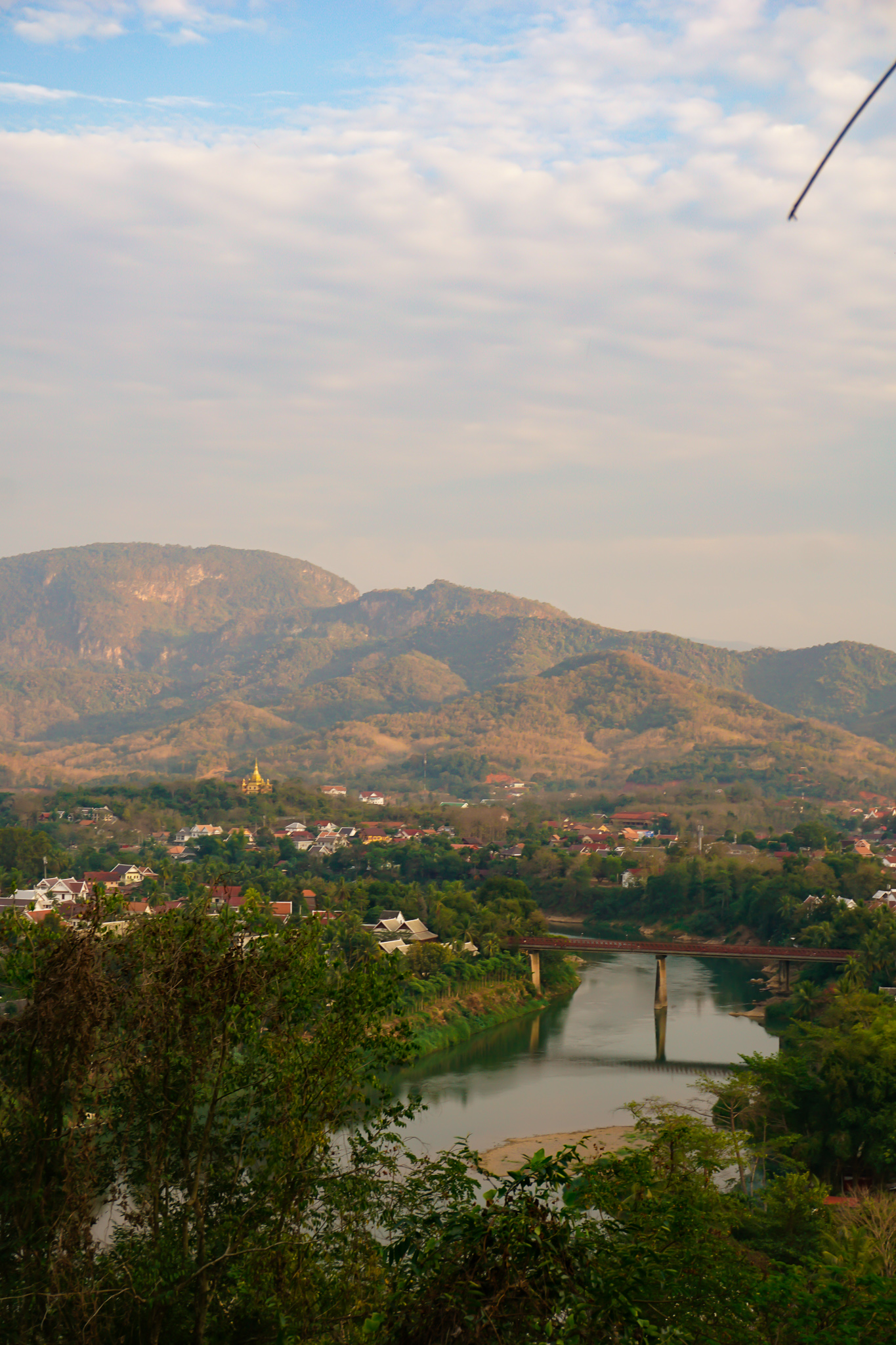
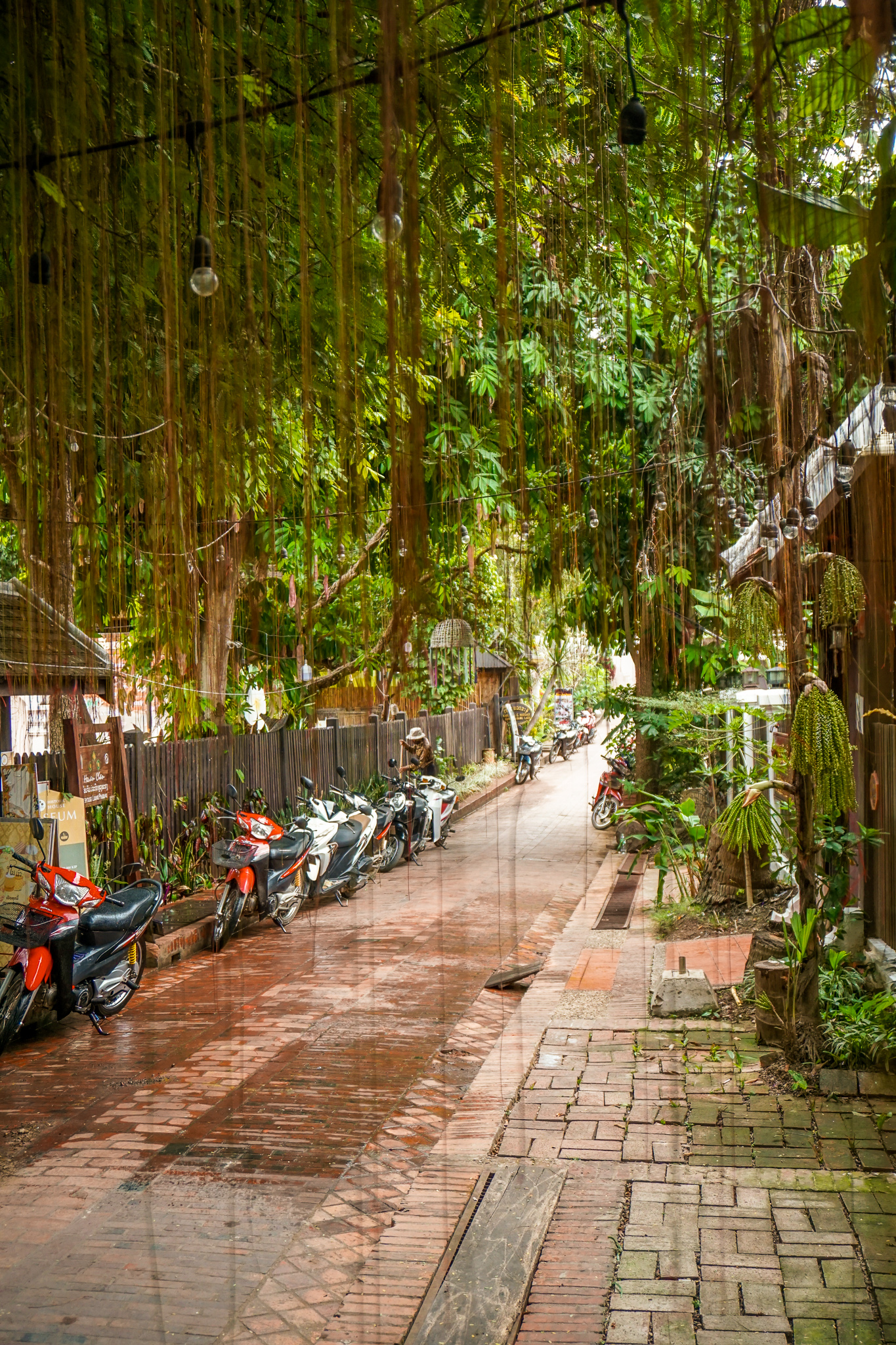
And so I started what would be the first actual leisurely walk of my trip. Luang Prabang is a small town. Traffic is bearable, and it is walkable. There aren’t annoying tuk tuk drivers and sellers jumping in front of you every time and everywhere you turn. In fact, you don’t even see a lot of people. Some locals here and there. Some tourists there and here. But for the most part, Luang Prabang is a sleepy but absolutely stunning town. I was enchanted to meet the ancient capital of Laos. Yes – Luang Prabang was the capital of Laos for more than 200 years until 1565 when the power was moved to Vientiane.
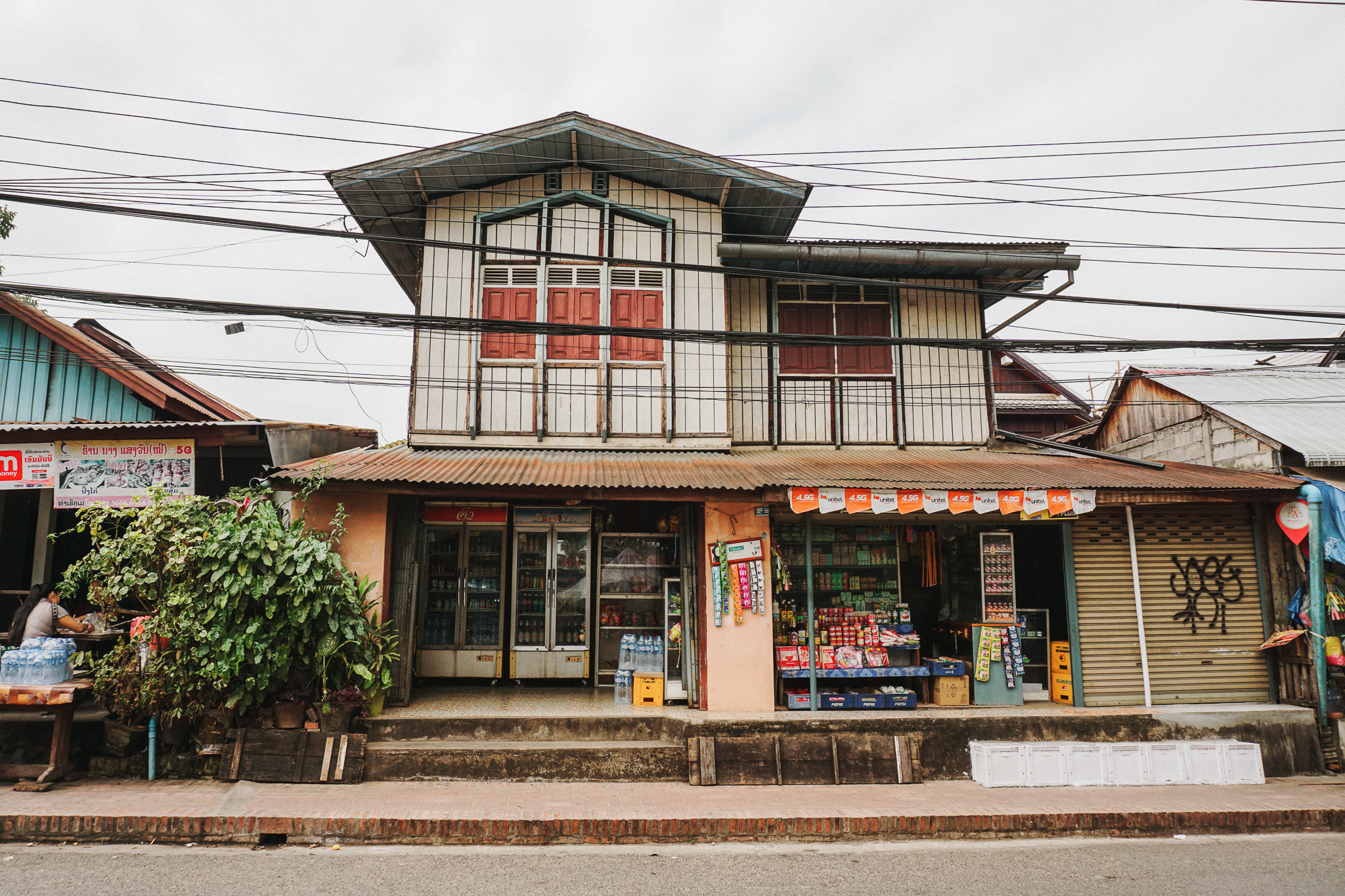


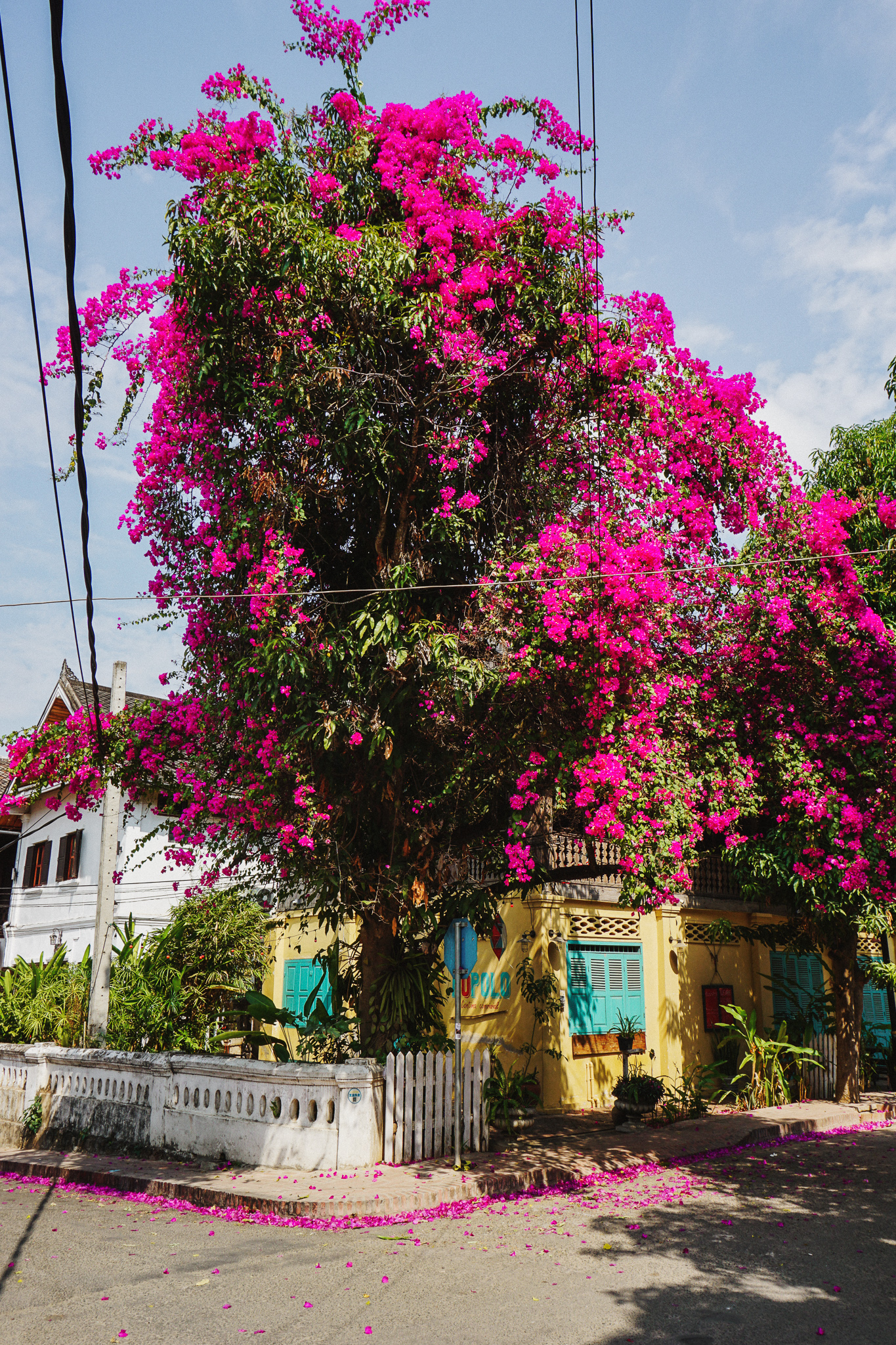
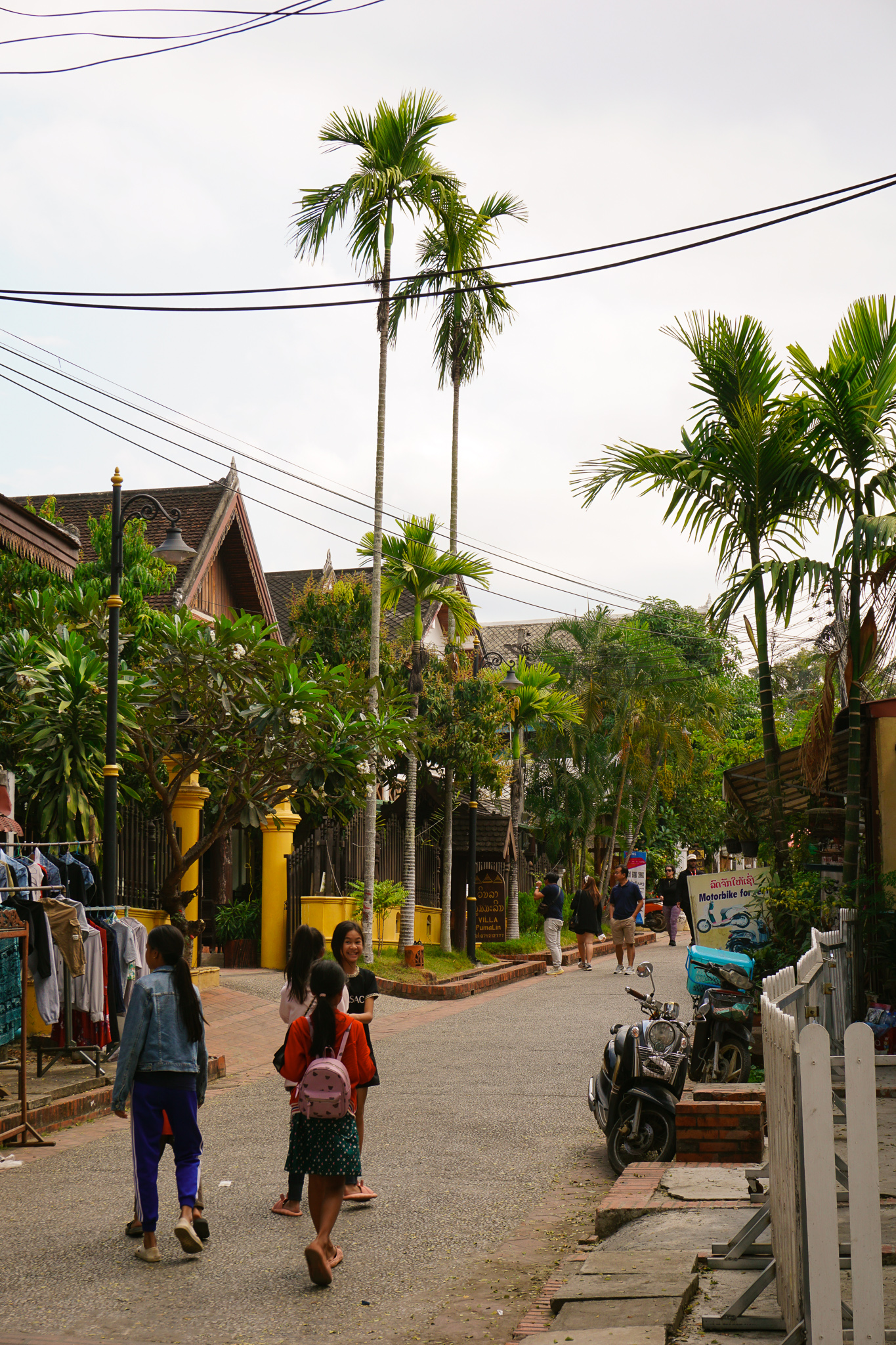
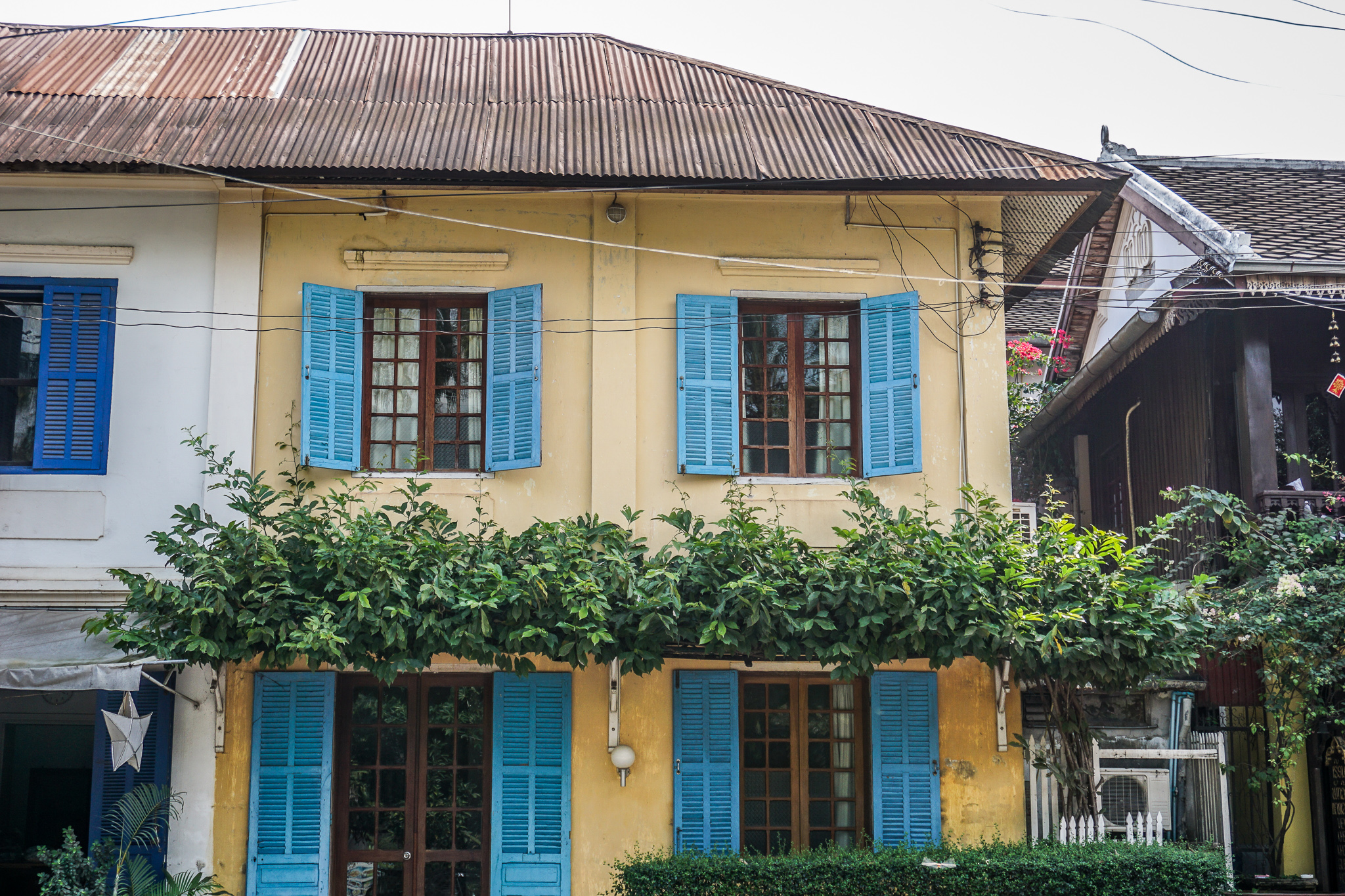
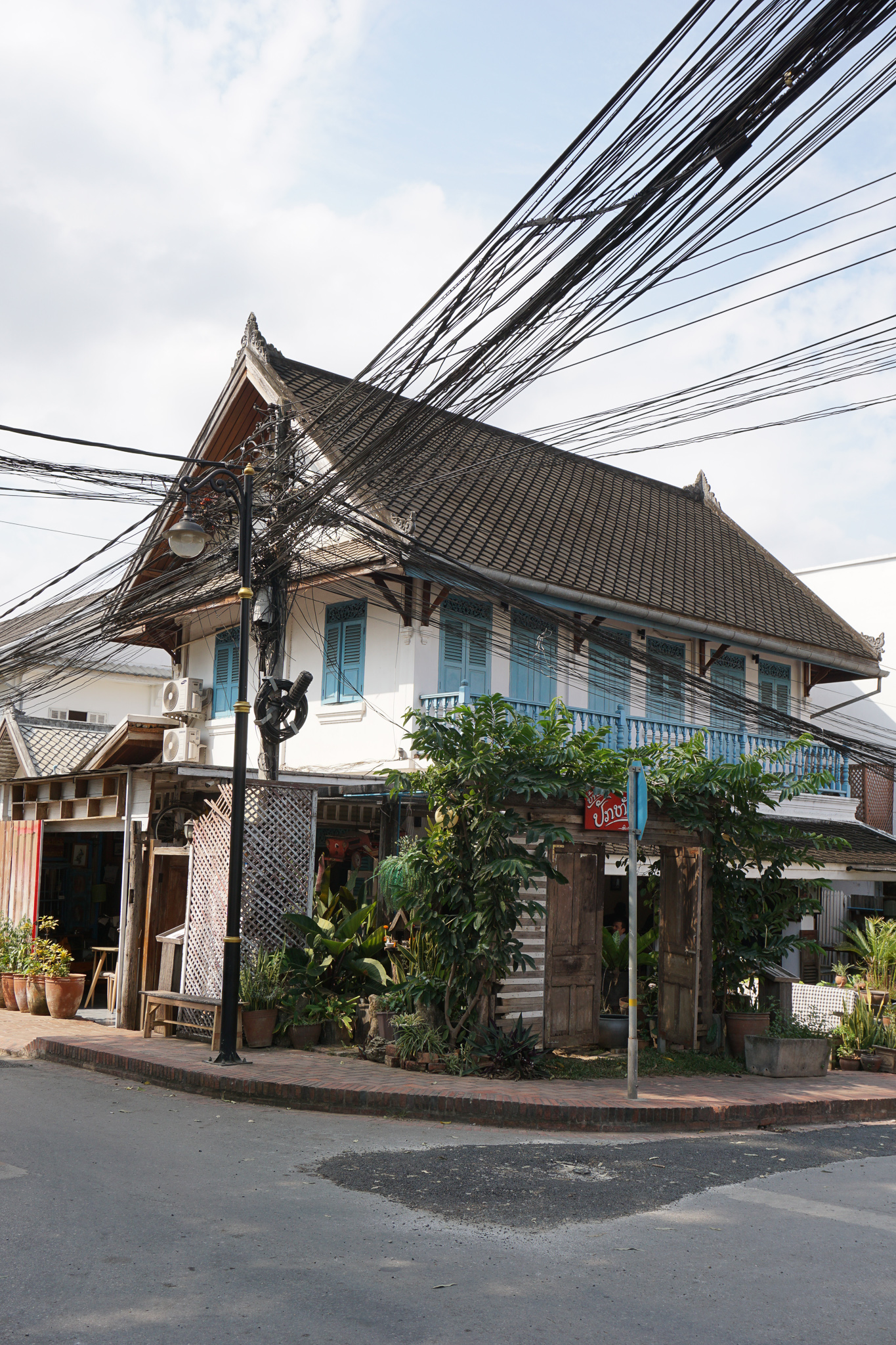
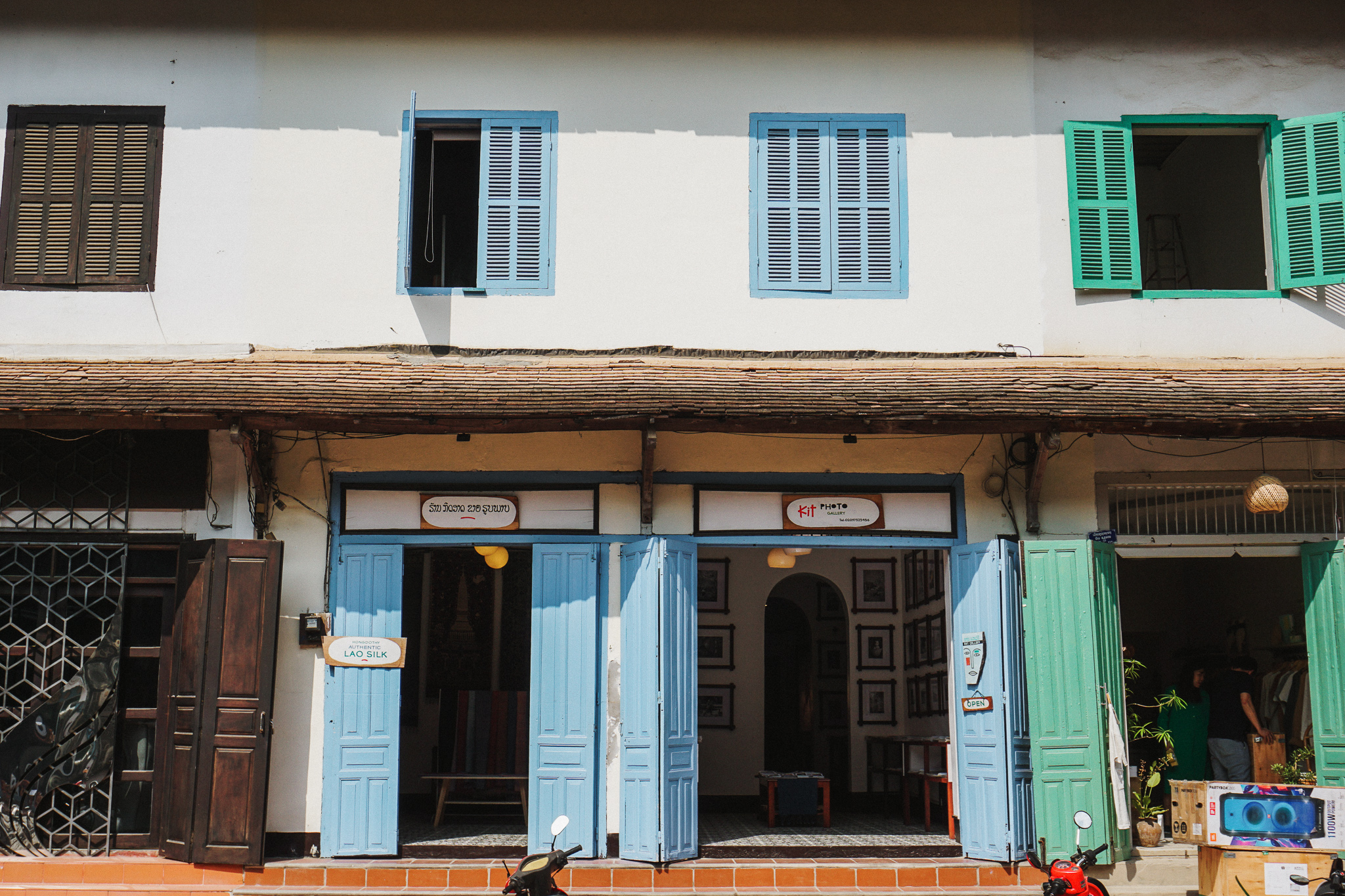
The town reminded me of Hoi An in Vietnam. It is picturesque, with a very unique charm, inviting, cosy even. It is so pretty and kept that way. Colourful, and alive with Nature. It may even look a little manicured, not as much as Hoi An, but perhaps it’s starting to go in that direction. It’s becoming a tourist hub. And once again I started to wonder how much good was that actually bringing to the town and its locals.
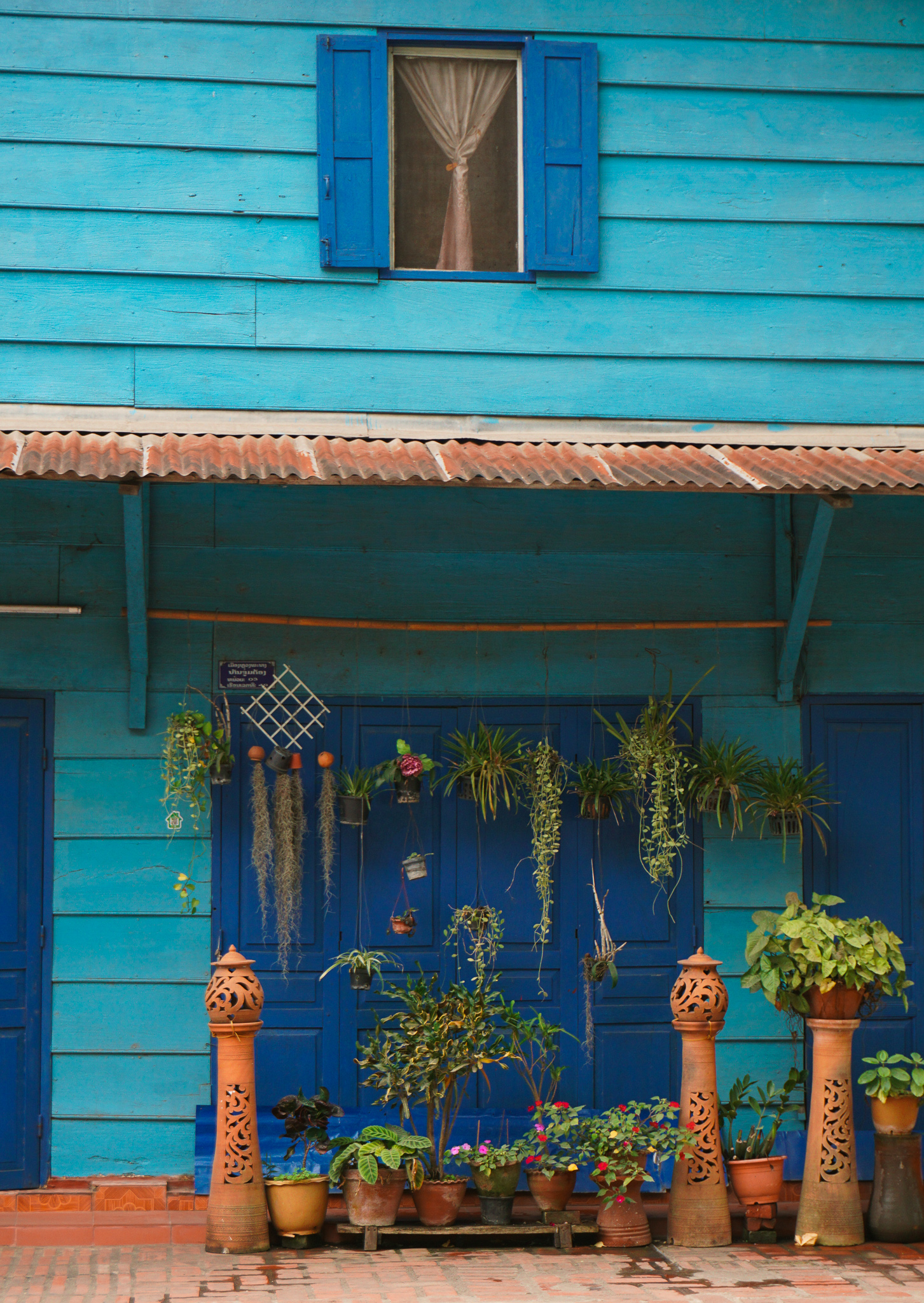
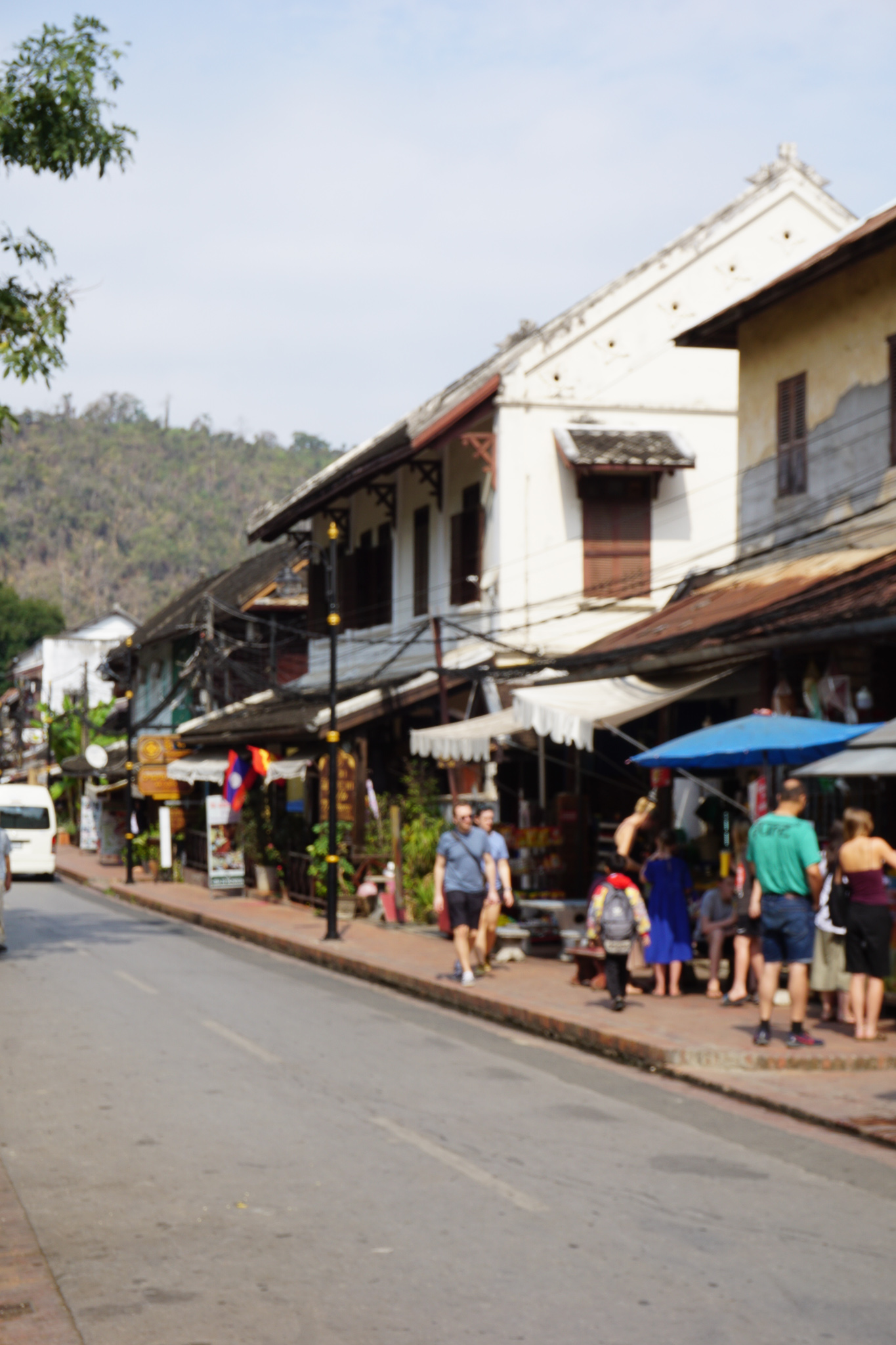
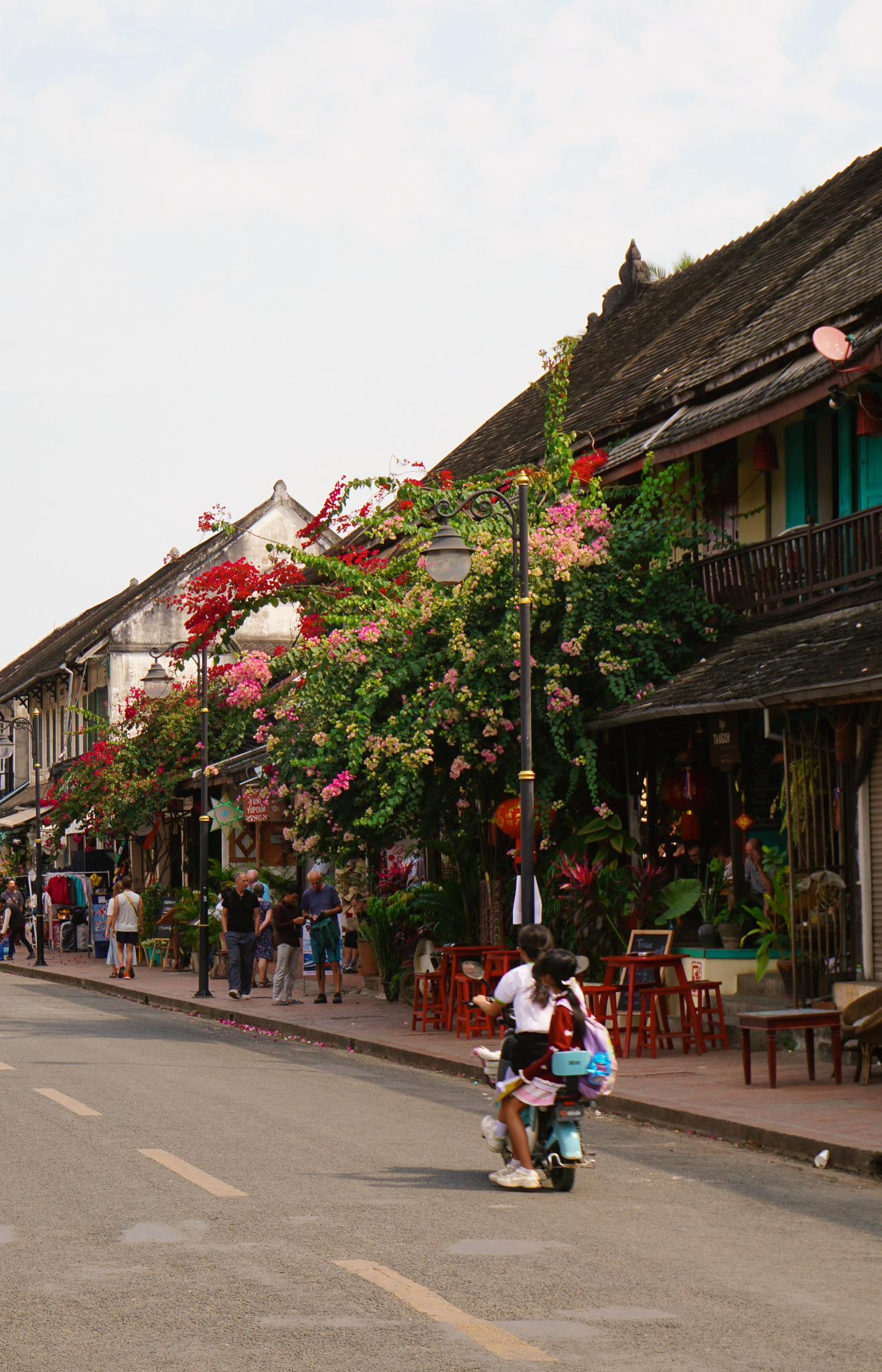
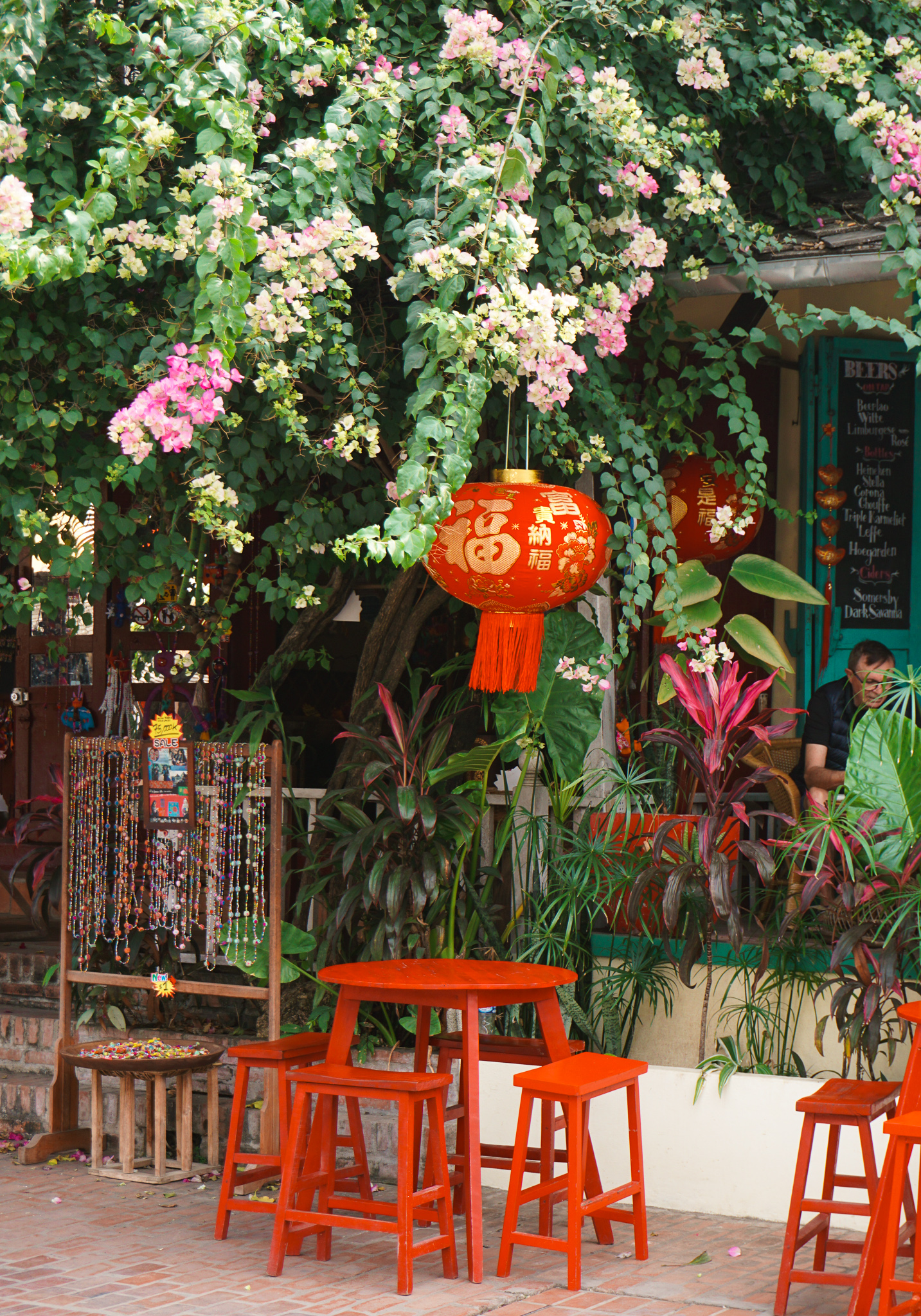
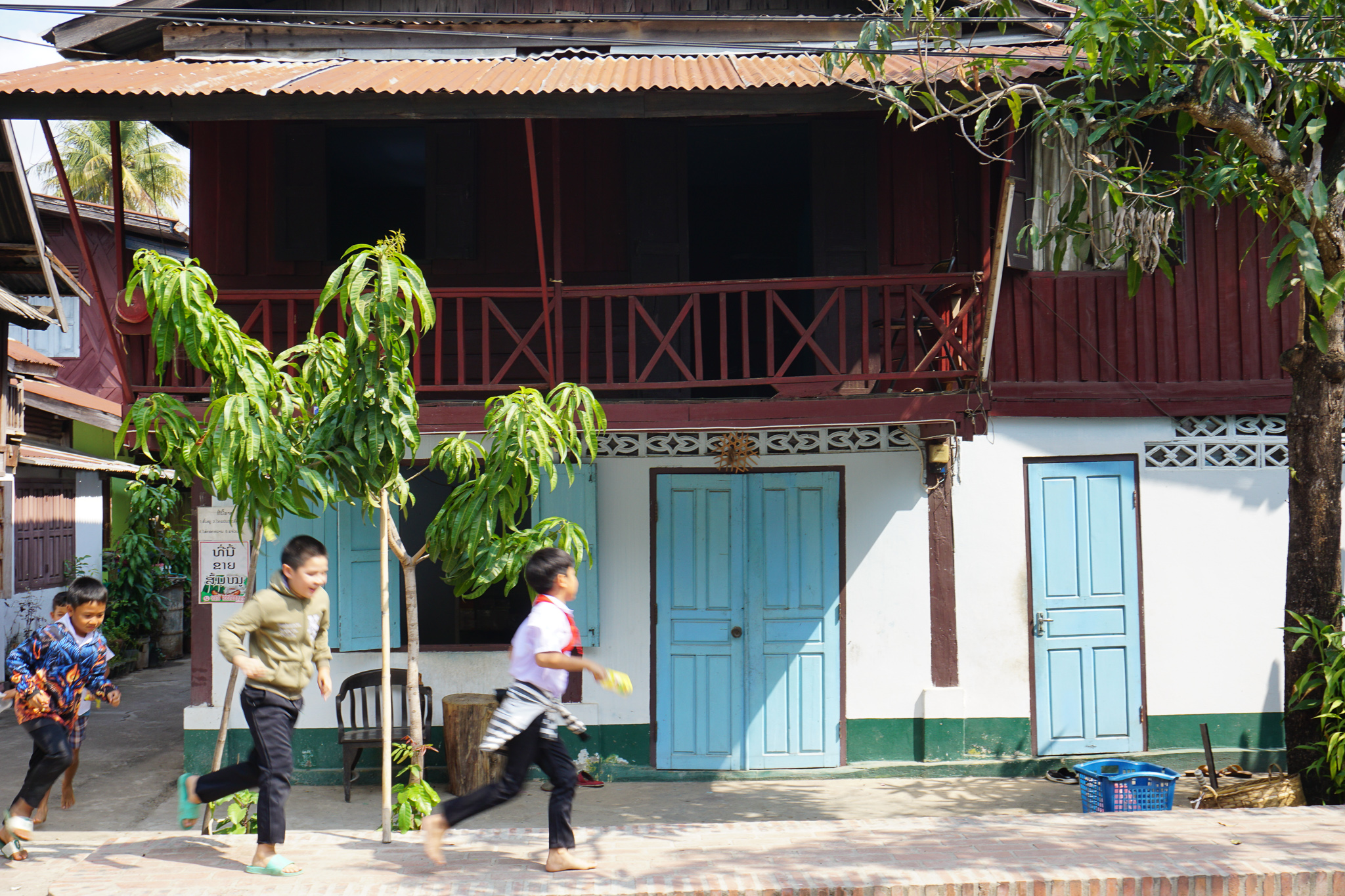
Laos is a very cheap country to visit. Yet, the accommodation was somehow at higher prices than in Cambodia or even Vietnam, which took me by surprise. A lot of traditional houses have been converted into tourist inns, and I wonder where are the locals staying. I remember one evening as I was walking back to my inn after visiting the night market, I started to allow myself to look through the windows, inside the houses, where the open curtains and indoor lighting revealed a little of the private lives of the locals. I saw how some rooms had a mattress on the floor, where two or three kids sat playing and watching television. That seemed like it was their living room, their bedroom and perhaps even where they ate. Perhaps one family per room.
Reflections on inequality and overtourism
During this trip, with very few exceptions, I did my best to stay in locally owned accommodations. Most of them were owned by families. But it was hard to swallow that while I was staying alone in a whole bedroom with a private bathroom, these numerous families often lived in the same room. At the start of my trip, what was also a cause of my anxiety, was my constant and belligerent guilt. I kept arguing with myself. Contradicting myself. And feeling even more guilty for feeling that guilt. Either for my privilege to be able to quit my job and travel, being able to pay for my own private quarters, pondering about over-tourism and its effects on local communities and natural resources, but also knowing very well that I was likely part of the problem. On the few occasions I stayed in chain hotels (which happened only in Siem Reap and much later in Kuala Lumpur and Singapore) I felt disgusted that I was seeking that comfort.


I confided in a couple of friends about this, and their words were what brought me back to a more positive state of mind. They told me that I was not the problem. That me having these thoughts showed how I was doing my best to be a responsible and respectful tourist. Actually the locals needed me to spend my money there because tourism had indeed made their lives better in many ways. I reasoned again and again with myself. I knew they were right. And there isn’t nothing that I as an individual can do to make the world fairer. Whatever is happening is not my fault, as a tourist. It is not my responsibility to carry it alone on my shoulders.
So why the hell was I carrying such weight?
It became lighter and lighter, mostly through my own writing in those days. Mostly seeing the smiley faces of locals. Mostly because I knew I was doing my best to understand these cultures, to be respectful, and be as sustainable as possible. This is all I can do as an individual. Nothing more.
Even if over-tourism is killing the soul and authenticity of some places, is that my individual fault, or is it of the local governments, international organizations, and those others who carry real power to create better legislation, and to action better policies?
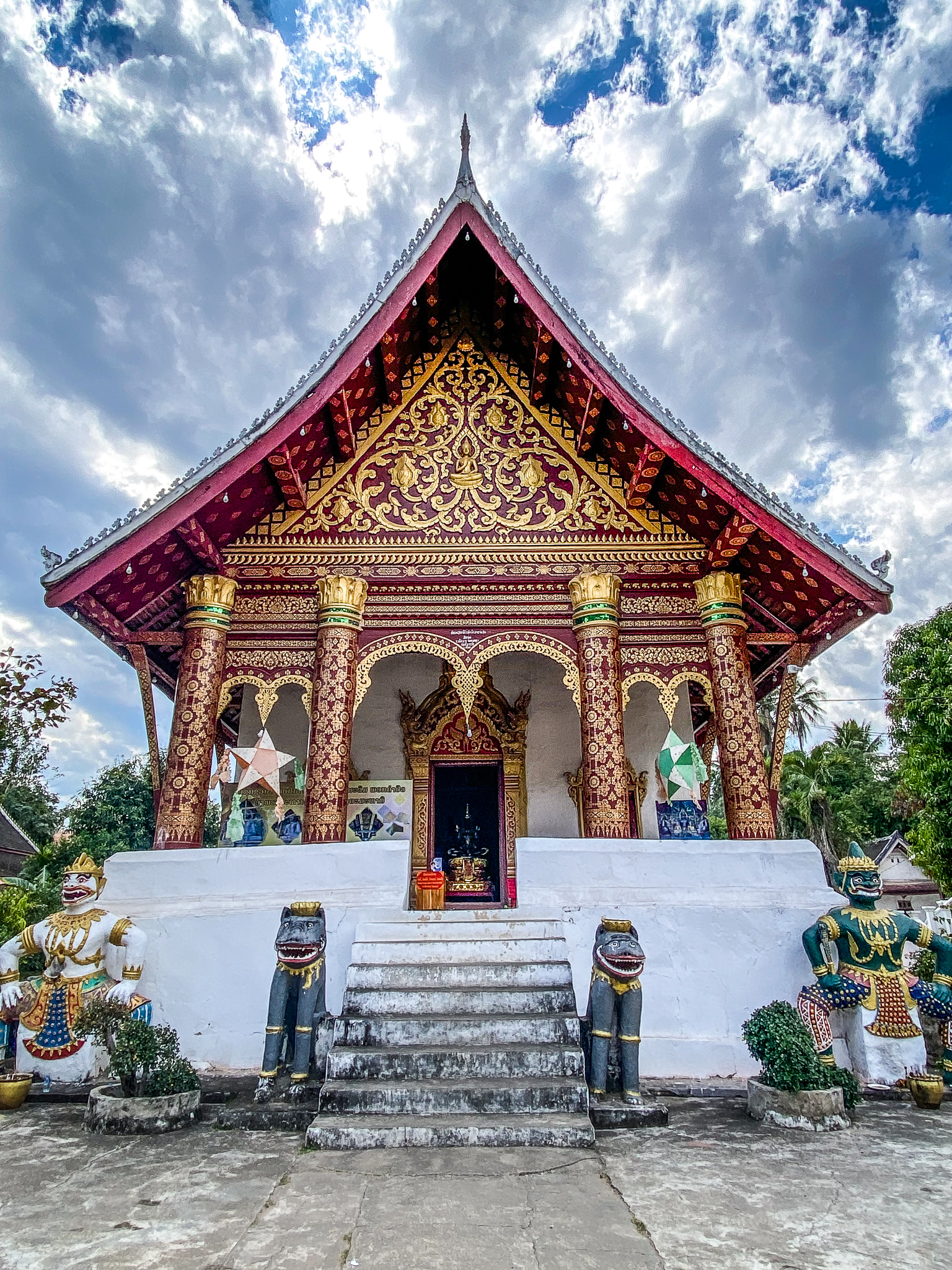
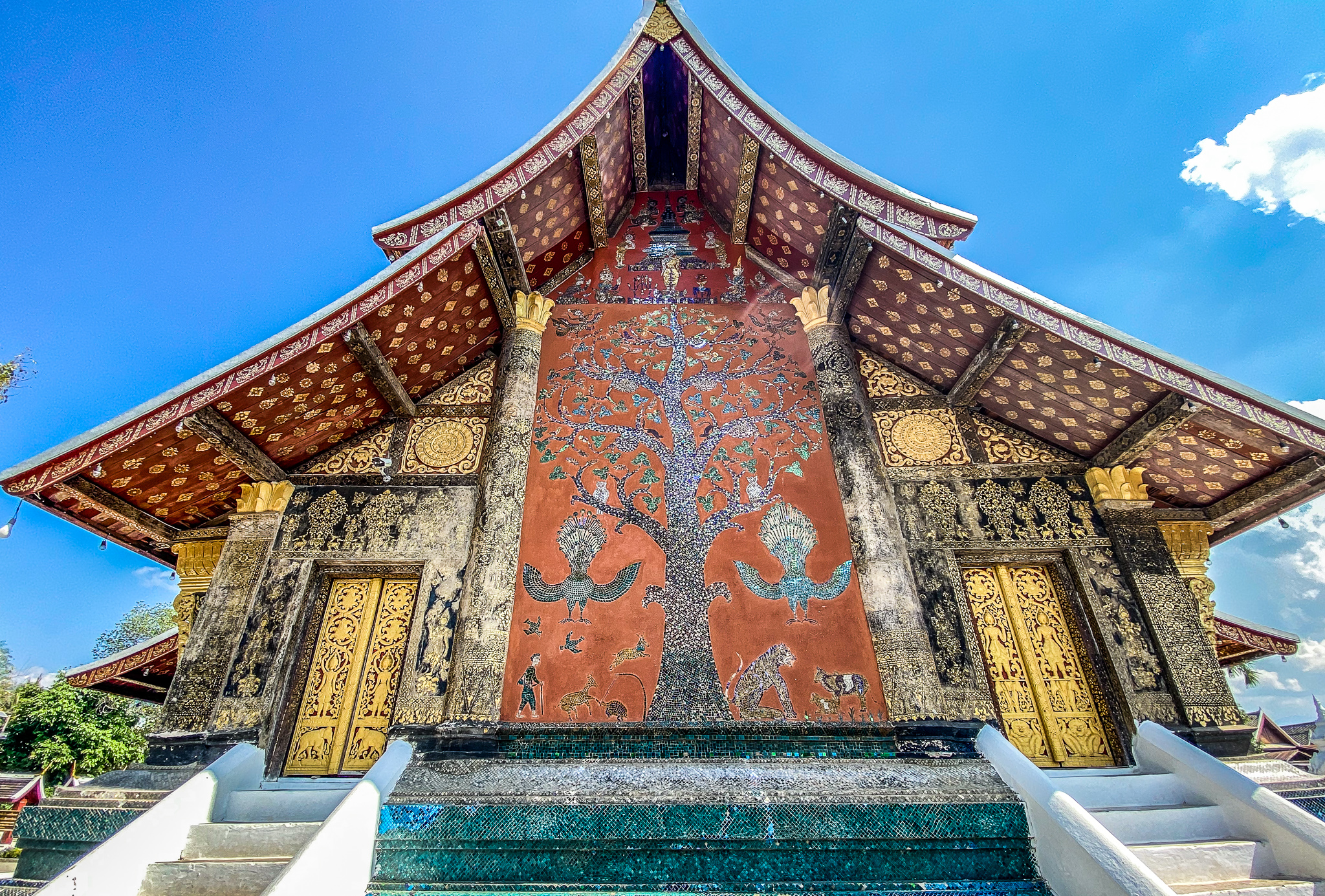
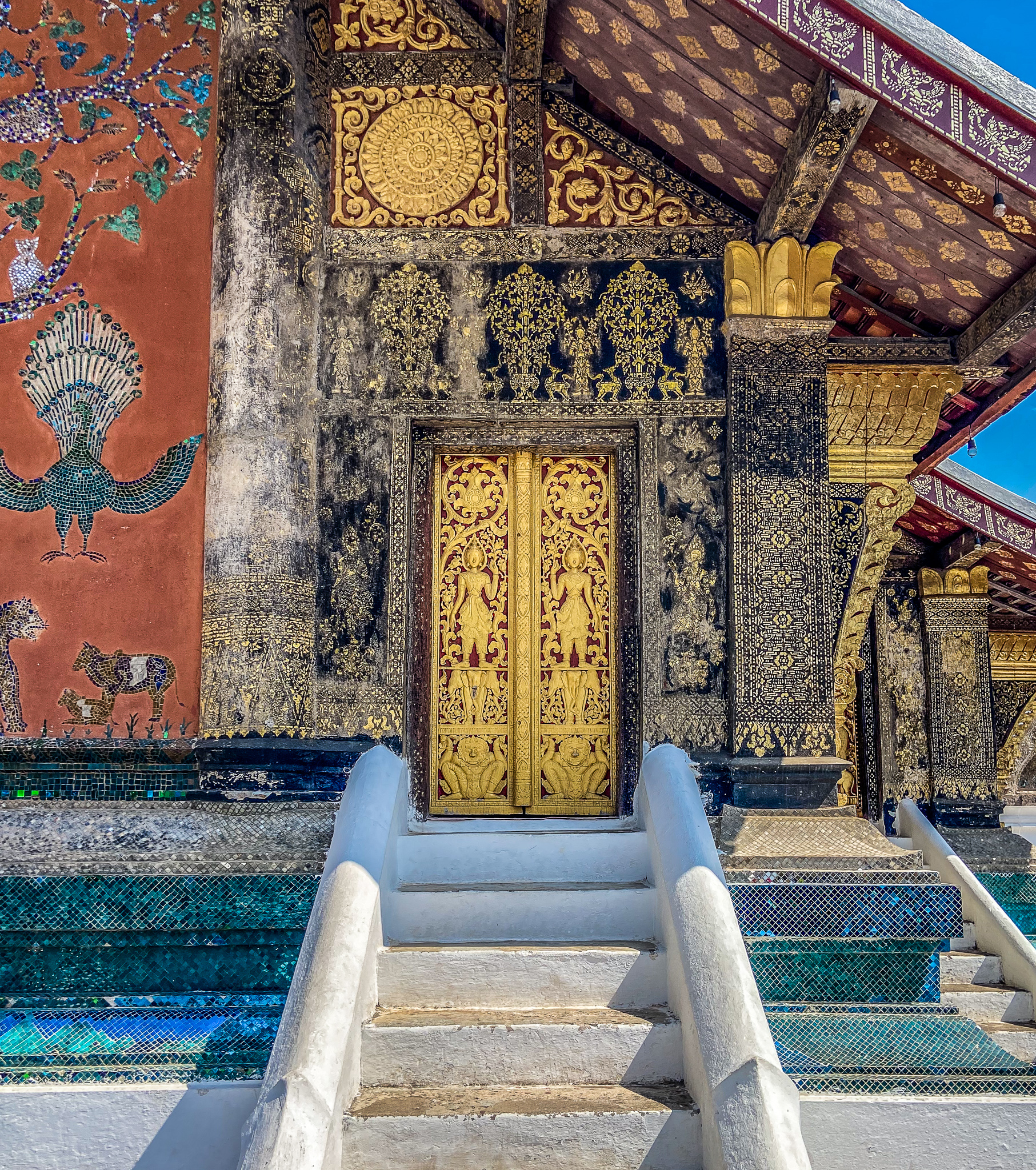
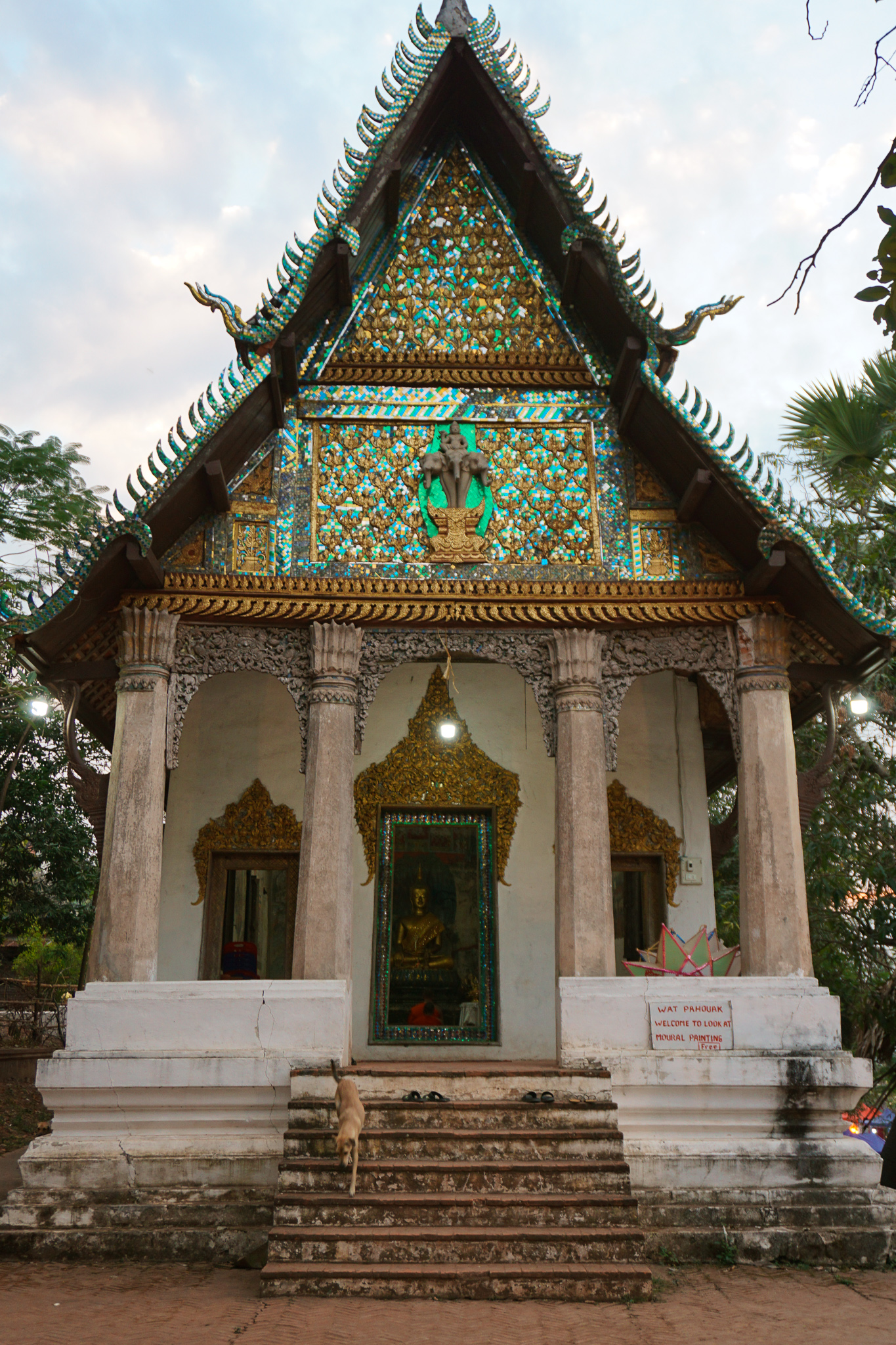
It is important to note that Luang Prabang is a UNESCO World Heritage Site – after all it is filled with stunning and well preserved gilded temples and authentic Laotian architecture. Yet, I came to realise, UNESCO does very little to ensure its own stamp of approval doesn’t destroy the soul of what makes a place unique – its culture, its traditions but also its people.
These musings entertained my mind in the evenings, often even when I was witnessing something as beautiful and simple as a sunset. That’s me. Someone who can’t turn off the thoughts. That’s my cross to carry.
In awe of Luang Prabang Temples & a class on Buddhism

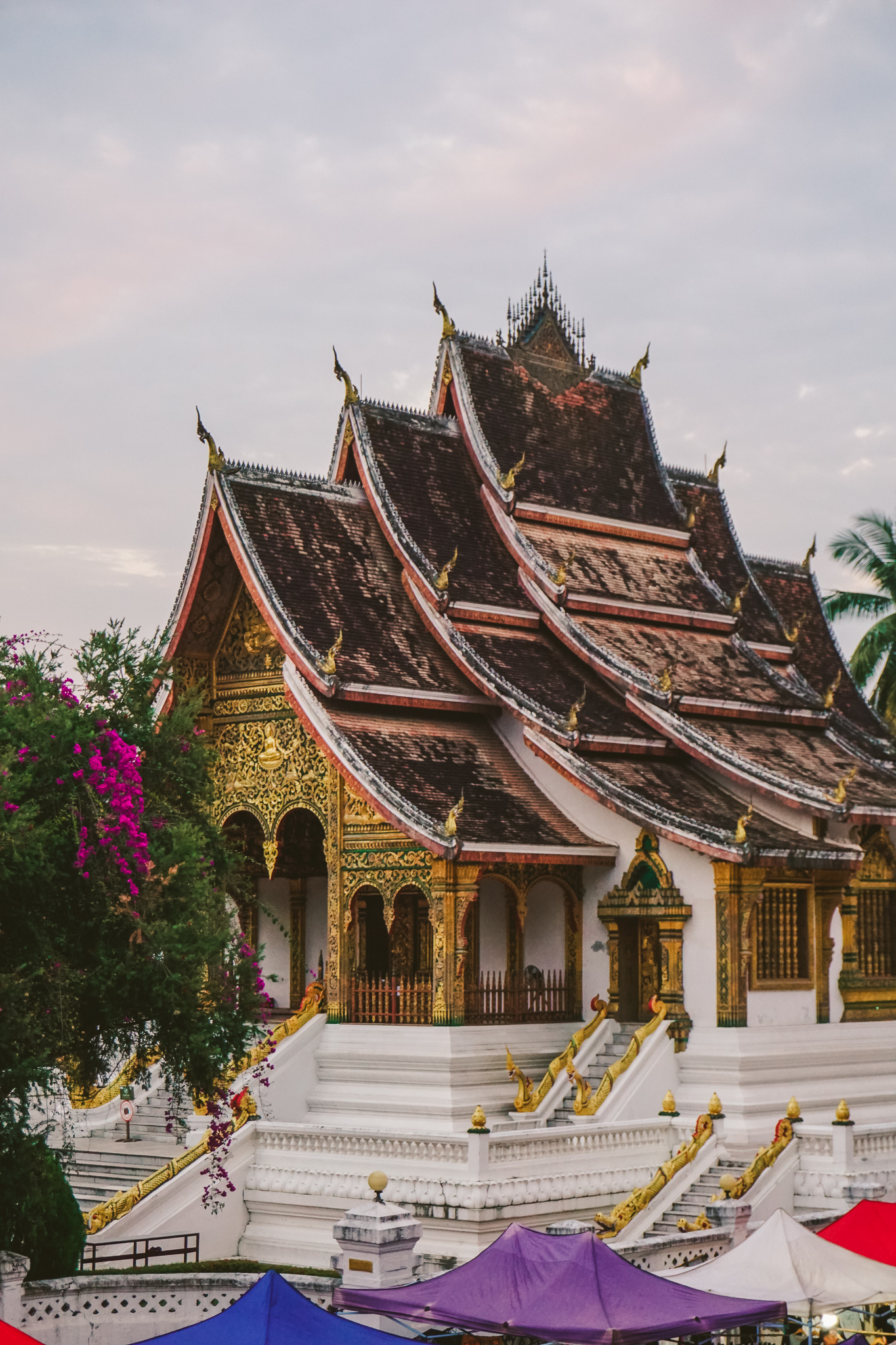
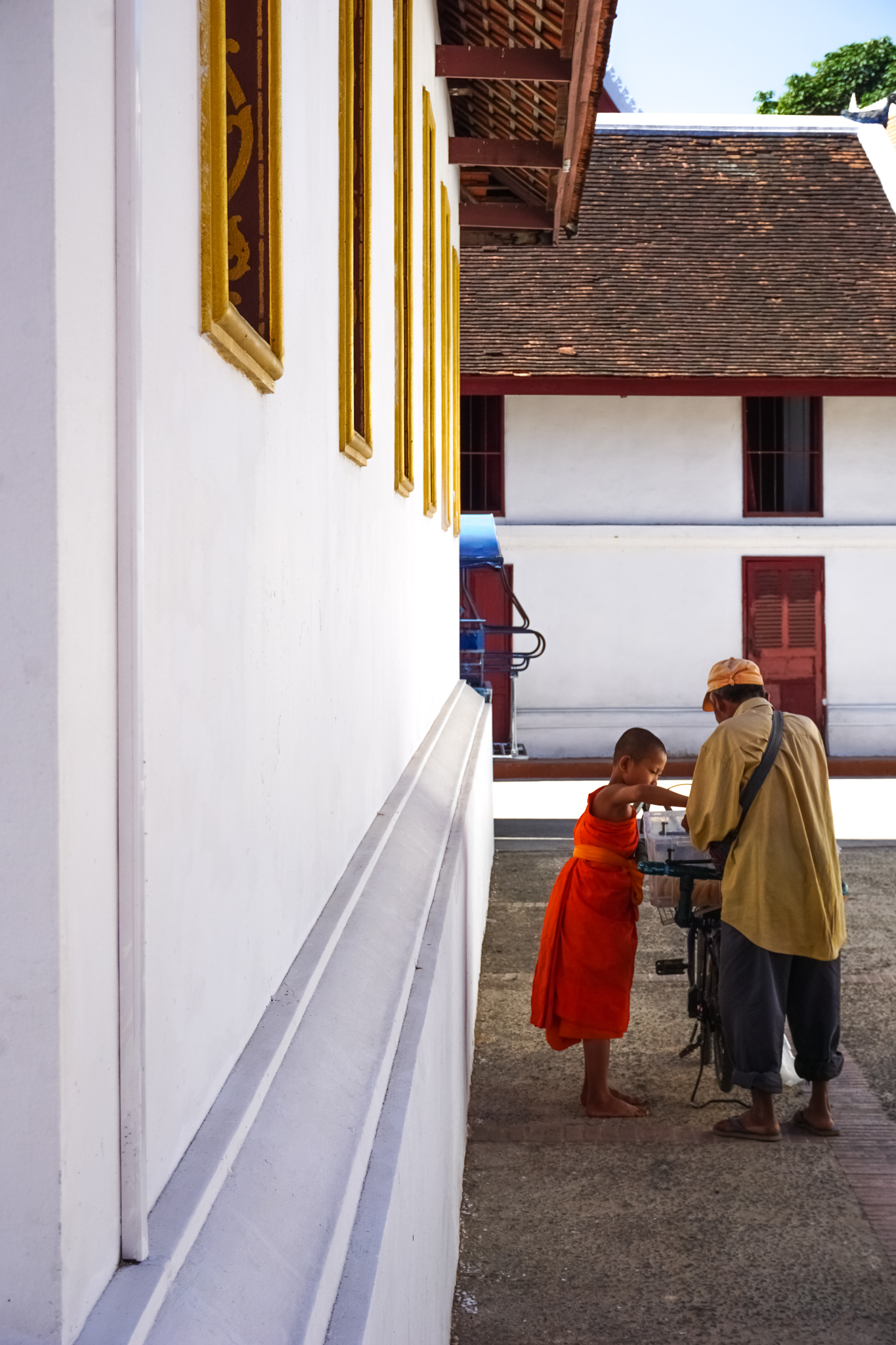

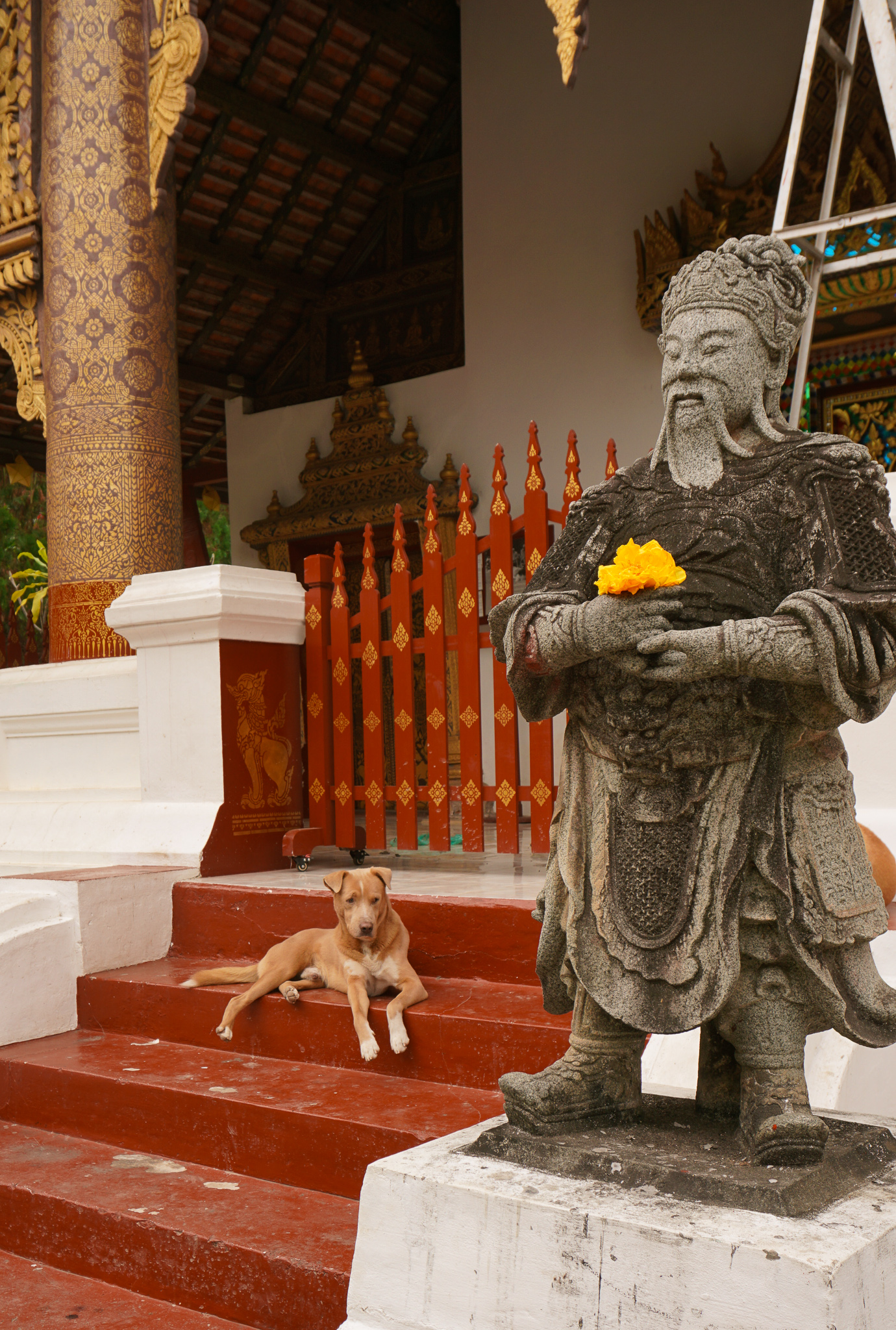
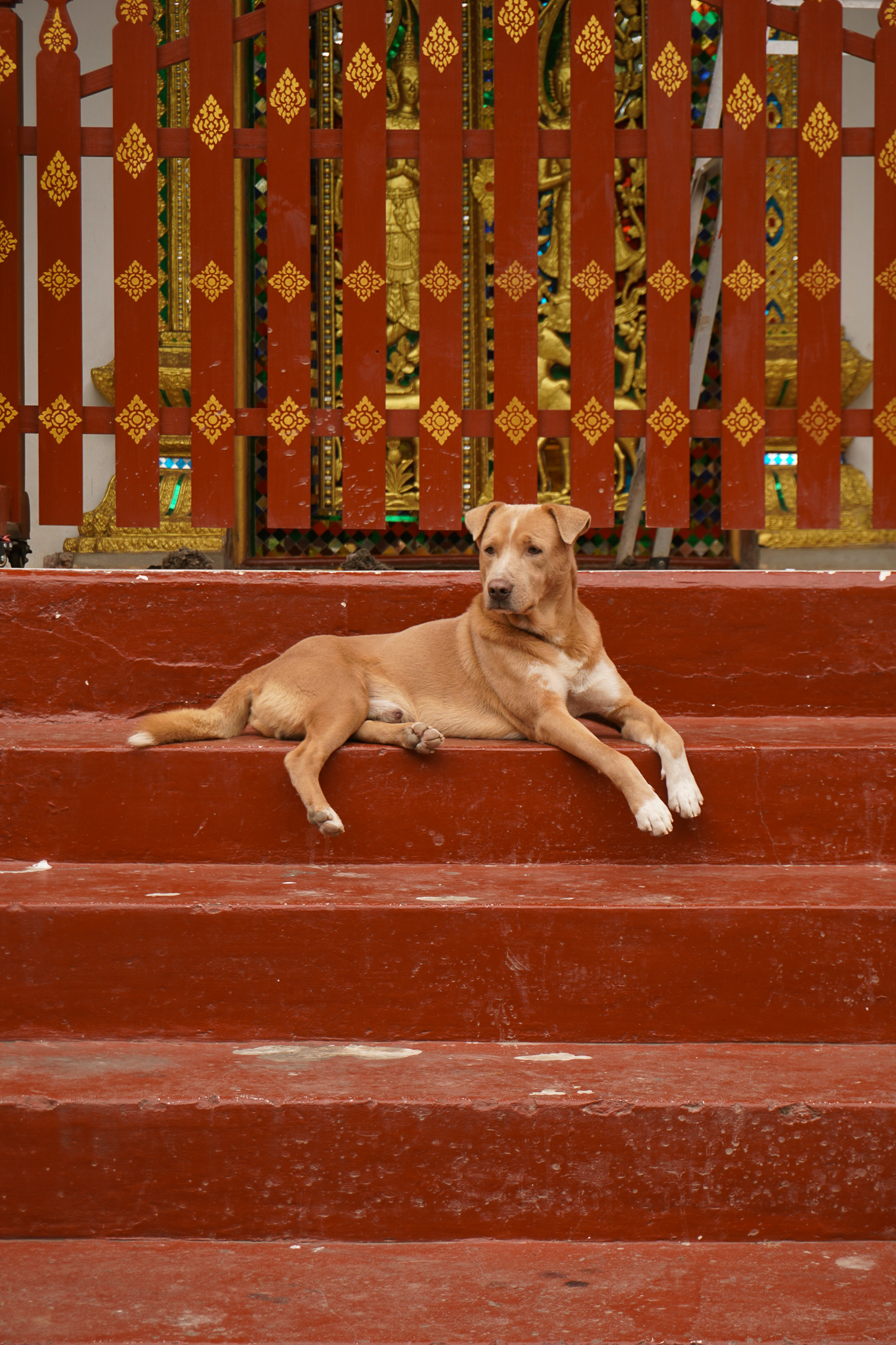
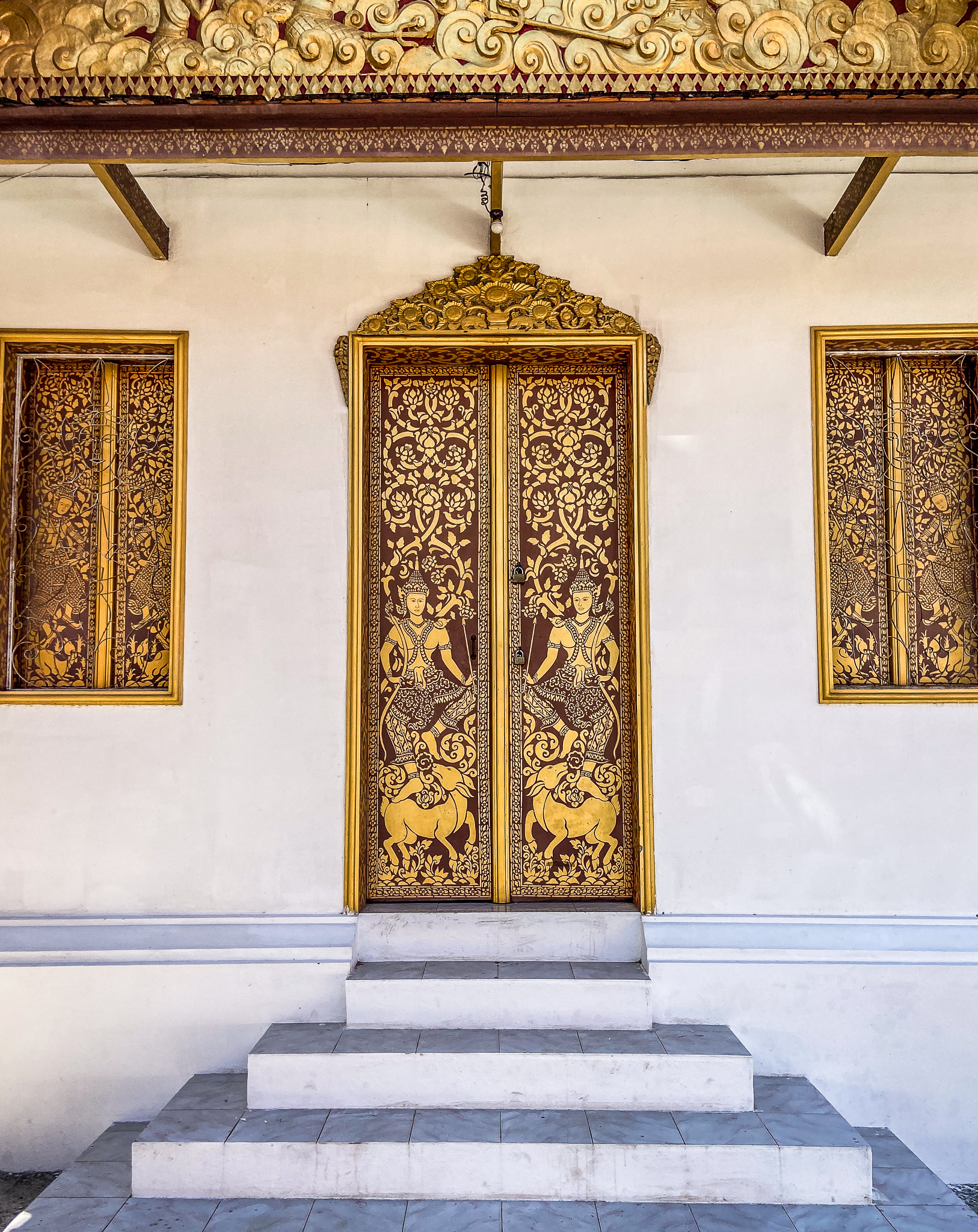
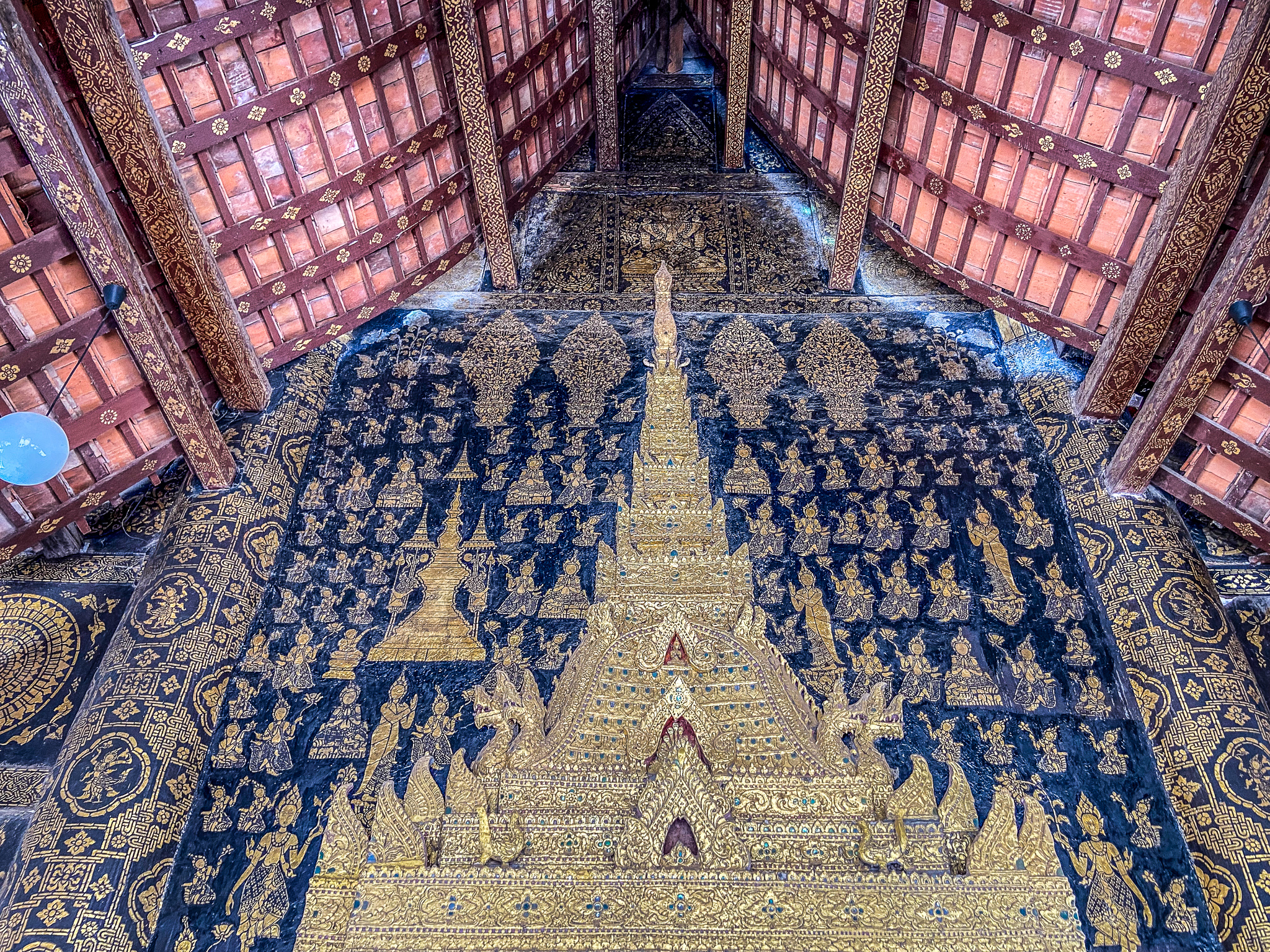
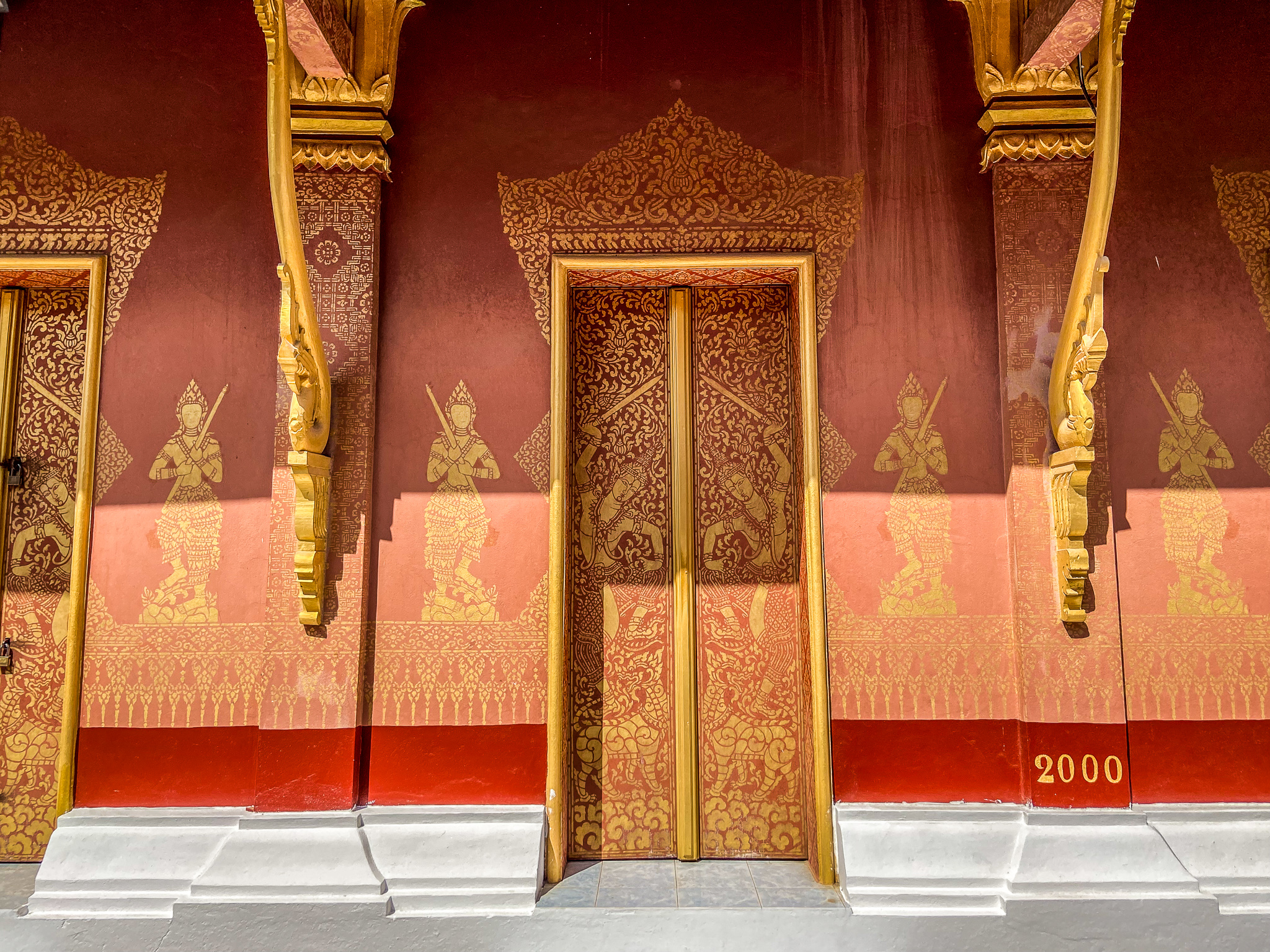
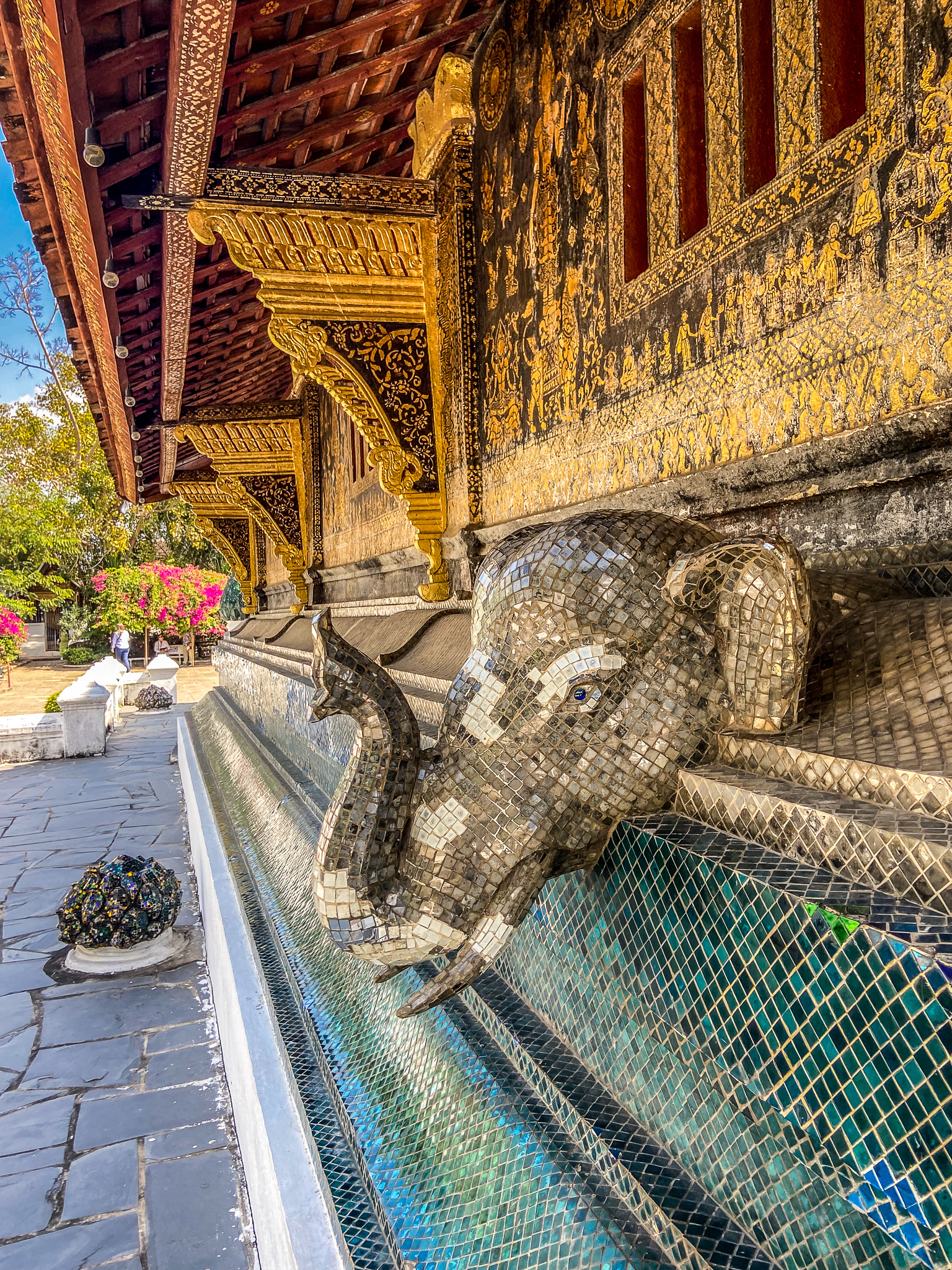
The charm of Luang Prabang isn’t limited to the calming views over the river, and the mountains. This place breathes ancient spirituality unlike any other I had been to. Dotted with beautiful temples, it is a delight to explore the town, observing the monks working from afar, either on their little gardens or restoring their beautiful temples, or even finding them singing in prayer, meditating, aiming to achieve only what’s intangible. Detachment from the material world is one of the big premises of Buddhism after all.
One of the things you can do in Luang Prabang is to have a two-hour “class” with an ex-monk apprentice. In the first hour, they give you some information about Buddhism and life as a monk or a monk apprentice, and you can ask them any questions you like. In the second hour, you have a meditation lesson. The second hour is optional, but wanting to do something different, I signed up for it, and of course failed miserably at meditating, as I knew I would. Either way, it requires a lot of practice. And let’s face it… I just explained how my brain is as restless as the wings of a hummingbird.
It was interesting, but it was not as enlightening as I thought it was going to be, and the first hour passed way too fast. I also felt he didn’t understand English well enough to understand some of our questions, and so the answers were often quite inarticulate, which defeated the whole purpose of the “class”. But there was something he said about Buddhism and its stoic practice of… catching the emotion before letting ourselves feel it.
When I was writing my notes later in a café about this, all I wrote was how the fuck can you even do that. You see anger coming, do you catch it in mid air, before it reaches you and explodes in your chest. Funny enough, the way I wrote about this, was me being angry. And perhaps even jealous. That people can actually do this, with practice, with patience. I’ve always been someone who feels intensely. I might not always express it, but even when I do I am expressive about it. Sometimes I even feel I am too intense, leading others to feel intimidated by me. Especially when it comes to my own values and principles, I can be ferocious. Even when those values don’t really serve me. Even when they make me miserable. Pretty much the state I was letting myself be in when thinking about my own role as a tourist, a backpacker, exploring South East Asia, contributing to over tourism and resource exploration. Was it serving me being this self-righteous? Absolutely not.


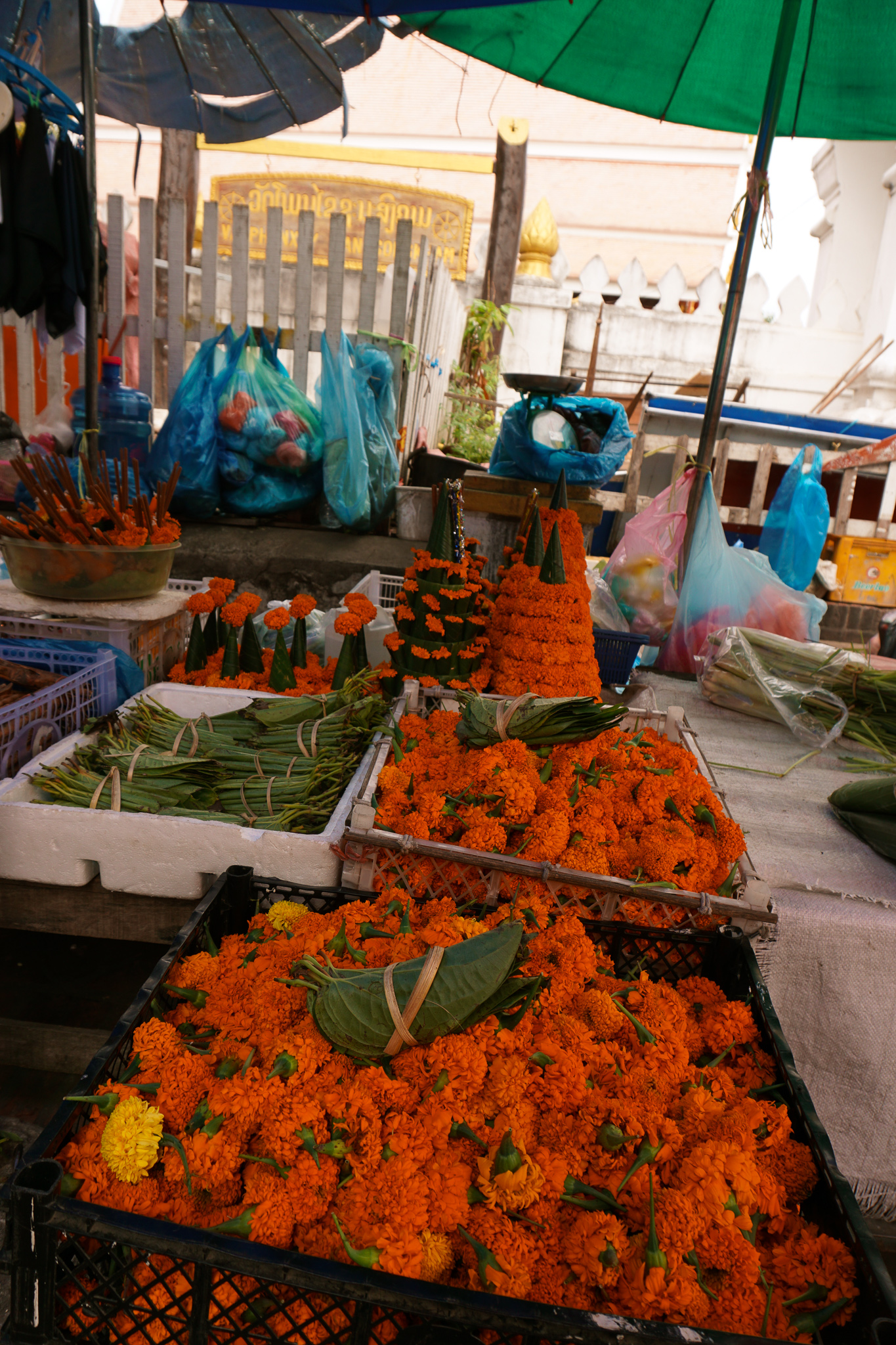
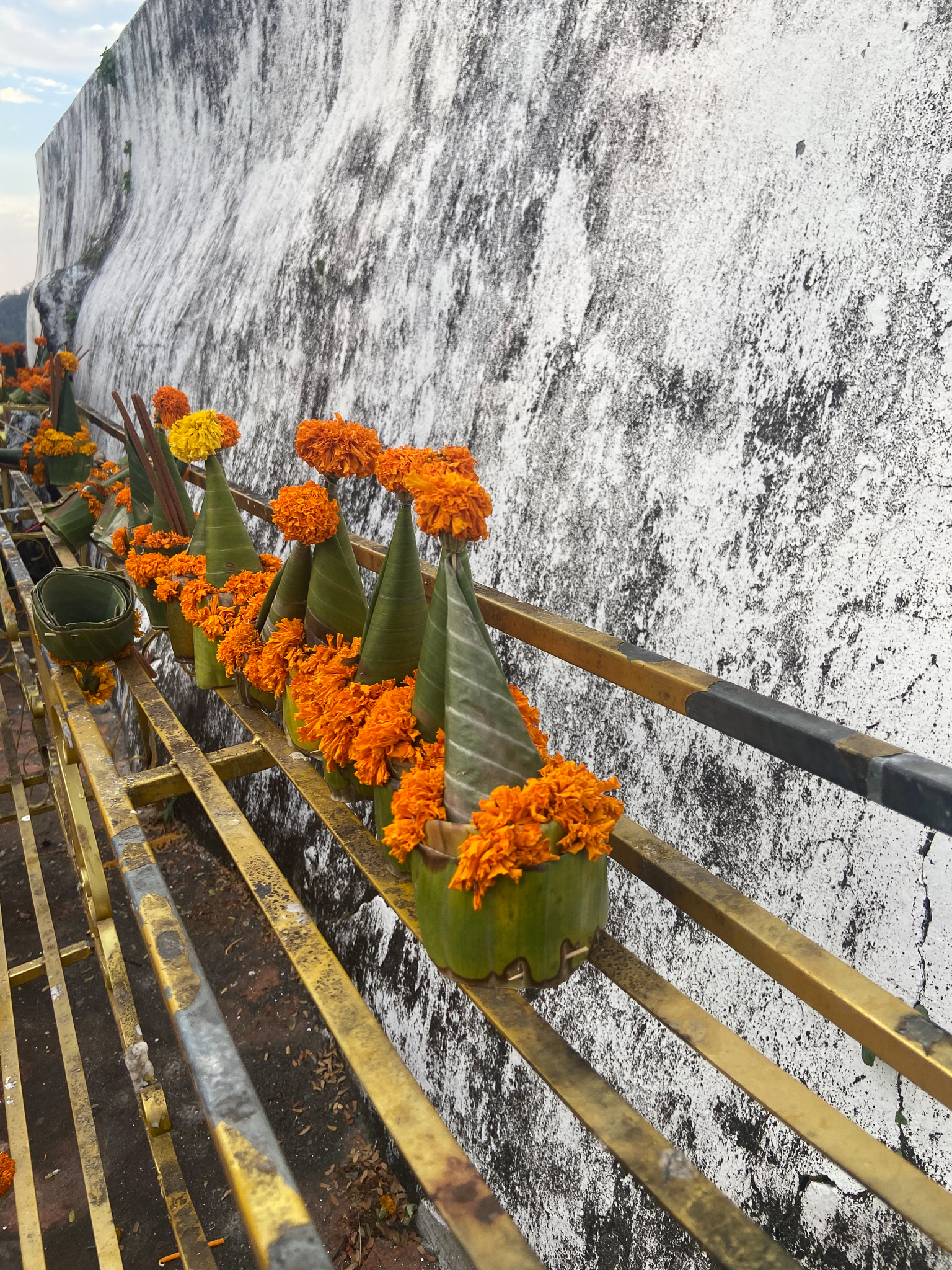
Our teacher for that hour kept highlighting how in reality Buddhism was done wrong by most. As in many places in South East Asia, people practice a mixture of religions, Buddhism mixed up with Animism. He highlighted how Buddha was just a person, not a god. To this I asked him why we see people making offerings – I enquired particularly about the meaning of the pyramid-shaped offerings I had seen in Laos, made with banana leaves and decorated with orange flowers, and to everyone’s surprise, he didn’t seem to know what I was talking about. Or perhaps he just truly didn’t understand my English, even though others tried to explain to him what I was asking about.
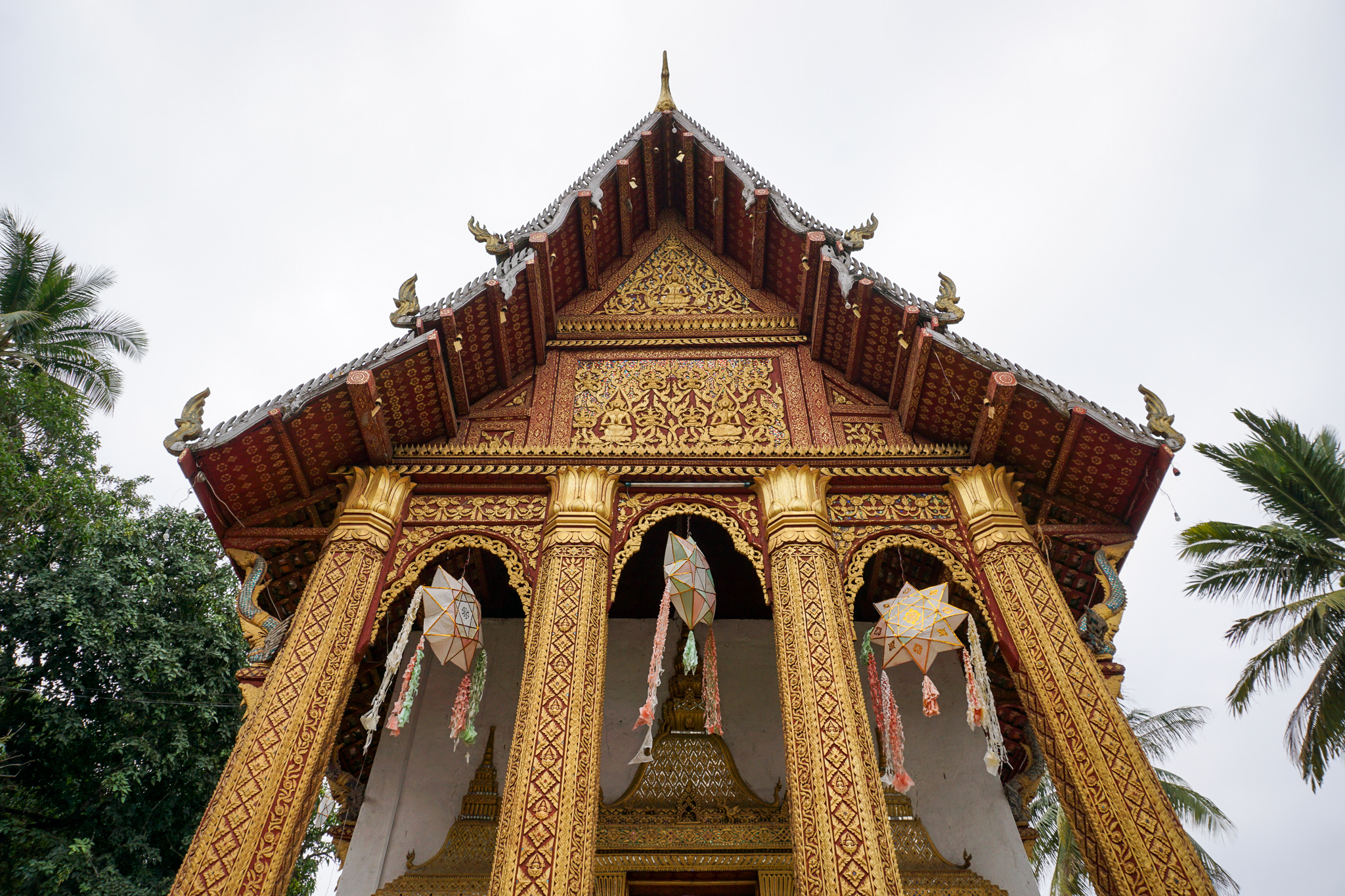
Luang Prabang is definitely a place for those seeking to experience a little of the Laotian culture, learn about its history and visit some truly beautiful temples, whilst enjoying nice cafes, galleries and restaurants, with beautiful views of the river. Because it’s such a quiet town, it is perfect to relax, and its chilled atmosphere will make you feel automatically at ease.
Love, Nic
 The Winged Bone
4 thoughts on “Luang Prabang: exploring the spiritual ancient capital of Laos”